50 Free Online Marketing Classes to Take This Year
It’s no secret that individuals who hold a bachelor’s degree or higher are more likely to find employment and earn higher incomes than those who don’t. But did you know that earning a certification can follow this same trend?

Given the rate at which new digital marketing technologies and software are developed, it can be overwhelming to learn through blog posts and ebooks alone. That’s where self-paced online courses come in — but which do you choose?
Below are the best free online courses you can take to strengthen your digital marketing skills.
- Content Marketing
- Social Media Marketing
- SEO Marketing
- Email Marketing
- Web Development and Site Design
- Online Advertising Courses
- Other Digital Marketing Courses
Want to learn more about brands and organizations that offer the courses on the list below? Scroll to the end of this post, or jump to the section.
Free Online Marketing Courses
Free Content Marketing Courses
1. HubSpot Inbound Marketing Certification – HubSpot Academy
2. HubSpot Content Marketing Certification – HubSpot Academy
3. Internet Marketing for Smart People – Copyblogger
4. Viral Marketing and How to Craft Contagious Content – Coursera
5. The Strategy of Content Marketing – Coursera
6. Copywriting Blunders – Udemy
7. Content Marketing for B2B Enterprises – Udemy
8. Semrush Content Marketing Toolkit Course – Semrush
9. Copywriting Quick Start: Top FREE Writing Tools & Hacks – Udemy
Free Social Media Marketing Courses
10. Free Social Media Certification – HubSpot Academy
11. Developing an End-to-End Instagram Marketing Strategy For Your Business – HubSpot Academy
12. Diploma in Social Media Marketing – Alison
13. Social Media Marketing Professional Certificate – Meta BluePrint
14. Social Media Analytics – Quintly
15. Social Media Quickstarter – Constant Contact
16. Semrush Social Media Toolkit Course – Semrush 17. Become a Social Media Marketer – LinkedIn Learning (one month free)
Free SEO Marketing Courses
18. SEO Training Course – HubSpot Academy
19. Digital Marketing Course – Google Digital Garage
20. SEO Training Course by Moz – Udemy
21. SEO – QuickSprout
22. SEO Specialization – Coursera
23. Semrush SEO Toolkit Course – SEMRUSH
24. Online SEO Training – Yoast
Free Email Marketing Courses
25. HubSpot Email Marketing Certification – HubSpot Academy
26. Email Marketing Course – Sendinblue Academy
27. Email Marketing Made Easy for Beginners – Udemy
28. Email Marketing for Beginners – Skillshare
Free Web Development and Site Design Courses
29. Make a Website – CodeAcademy
30. Learn Javascript – CodeAcademy
31. Learn Ruby – CodeAcademy
32. Learn Python 3 – CodeAcademy
33. Learn HTML & CSS – CodeAcademy
34. Learn to Code Awesome Websites – General Assembly
Free Online Advertising & PPC Courses
35. What Digital Advertising Is and How to Do It – HubSpot Academy
36. How to Build a Paid Media Strategy – HubSpot Academy
37. PPC University – Wordstream
38. Advertising Your Business Online – Alison
39. Advanced Competitive Research Practices with Semrush
40. Copywriting 101: Crafting Your First Ad Campaign – Skillshare
41. Semrush Advertising Toolkit Course – Semrush
Other Free Digital Marketing Courses
42. Graphic Design Basics – Canva
43. Graphic Design Specialization – Coursera
44. Photoshop 2020: One-on-One Fundamentals – LinkedIn Learning
45. InDesign 2020: Essential Training – LinkedIn Learning
46. Video Marketing Course- HubSpot Academy
47. Event Marketing Course and Certification – Eventbrite
48. Event Sponsorship Course and Certification – Eventbrite
49. Affiliate Marketing for Beginners – Udemy
50. YouTube Ads Certification – YouTube
Benefits of a Digital Marketing Certificate
The most well-known benefit of earning a marketing certificate is the potential for better pay and career advancement, but there are plenty more rewards to reap by honing your skills. Here are a few of the top advantages of earning a digital marketing certificate.
1. Specializing in a Marketing Niche
The “jack of all trades, master of none” mantra is the marketer’s enemy.
Any experienced marketing professional will advise someone looking to enter or grow into the field to narrow their focus.
There are simply too many roles within marketing to specialize in all of them.
Certifications come in handy because they’re narrow enough in scope to give you a high-level overview of how the skill fits into a larger marketing strategy but tactical enough to show you exactly how to execute the skill in your day-to-day work.
2. Communicating Advanced Marketing Concepts
Whether you’re interviewing for a marketing role or pitching a client, one thing’s for sure — you’ll need to sound like a skilled marketer.
Sure, you can fake it ‘till you make it, but I don’t advise this route. Shibboleths will only get you so far before someone notices a gap in your experience.
Certification courses are comprehensive education tools that will teach you essential marketing lingo and exactly what it all means.
Best of all, you’ll be able to communicate advanced concepts confidently without over or under-explaining which can undermine your credibility.
3. Building Your Resume
When it comes down to it, your resume will almost always precede your presence.
Before an interview or a client meeting, people will look to your resume and portfolio first to verify your skills.
Adding the certifications you’ve received after completing marketing courses is a smart way to get picked up by resume scanners and it’ll catch the attention of human eyes, too.
Even if you have several years of experience, a certificate can still help get your foot in the door so you can speak in detail about your experience during an interview.
Where to Find Free and Affordable Courses
The free courses we mentioned above are amazing resources for budget-conscious marketers. They’ll teach you the basics of the subject and give you some tactical knowledge you can apply right away.
If you want to become more competitive in the job market or if you have a bit more time and resources to dedicate to furthering your education, check out the following platforms. They’re not all free, but they’re affordable and will provide you with up-to-date course material.
1. HubSpot Academy
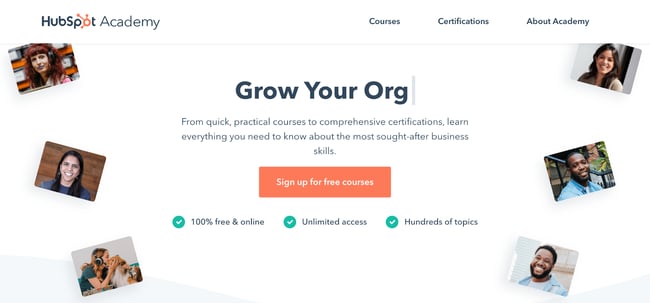
HubSpot Academy offers certification and training courses to teach people how inbound marketing and HubSpot software work. Classes are often taught by marketers at HubSpot and are made up of video lessons, quizzes, and tests.
Most HubSpot Academy classes are available free of charge, and if you pass the certifications, such as the two below, you get a nifty certificate and badge to share on your social media profiles.
2. Copyblogger
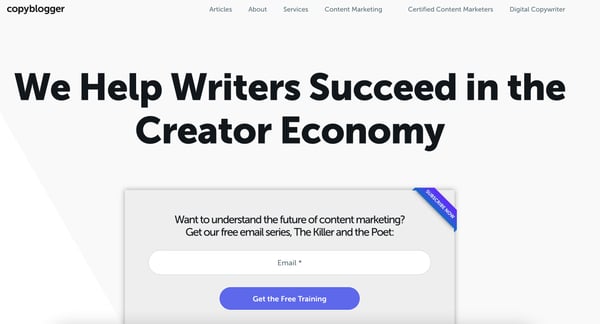
Copyblogger is a content marketing company that creates content about content (so meta).
Its blog provides a ton of great resources about digital marketing, and this class, “Internet Marketing for Smart People,” is made up of ebooks and emailed lessons, and other course materials.
Copyblogger adopts four pillars of content marketing success, which it delves into over the course of this class.
3. Coursera
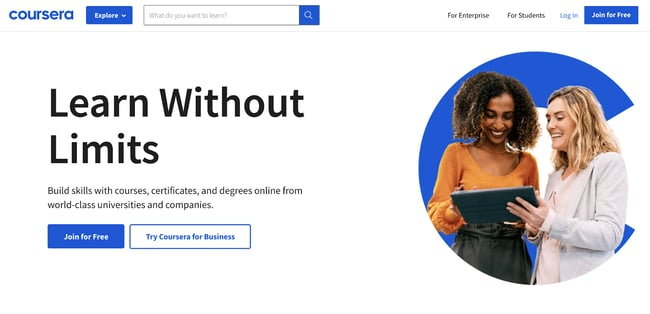
Coursera offers MOOCs (massive online open courses) created and taught online by universities such as Northwestern University, the University of Pennsylvania, and the University of California system.
These courses start at various times throughout the year, so browse the catalog to see when one lines up with your schedule.
4. Udemy
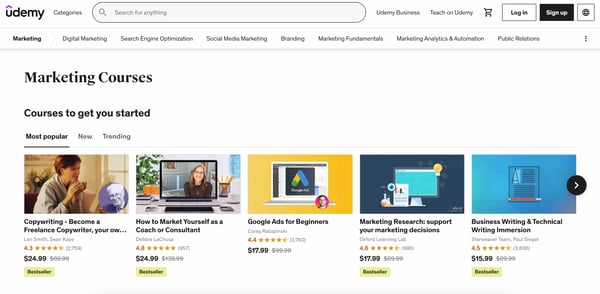
Udemy is another online learning platform that focuses specifically on courses related to skill building for working professionals.
One thing to note about Udemy: The classes we’ve highlighted are free, but the site features a myriad of other paid options for as little as $10, in some cases.
If you have a good experience with a free course, try a paid one to get even more value from the content on this site.
5. WordStream
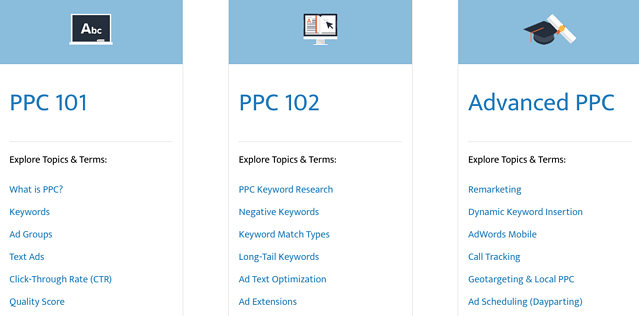
Wordstream is a search engine and social media marketing software company that helps marketers drive the greatest ROI from their paid search and social media campaigns.
These free guides and ebooks distill learnings and best practices for users with varying levels of expertise running pay-per-click (PPC) campaigns. Here are some of its topics and offerings:
6. Social Lock
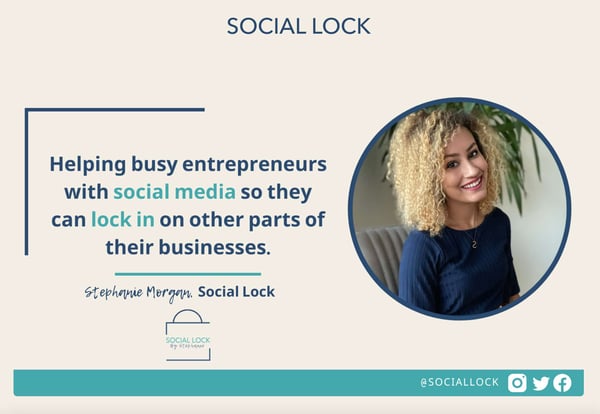 Social Lock is a social media consulting, management, and strategy agency that also provides educational content and courses.
The Standout Social Content Course is a comprehensive guide for small business owners who want to grow sales through social media. Although this course isn’t free, it’s available at an affordable rate and can even be paid in installments if you’re on a tight budget.
If you need free resources that can teach you how to generate revenue that can pay for a course like this, Social Lock offers a Hustle with Hashtags eBook and Social Media Post Ideas.
7. edX
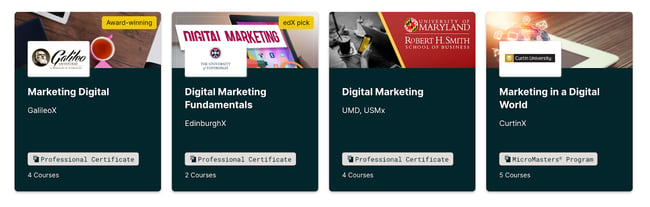
edX is another MOOC provider that features courses offered by top-tier universities, including Harvard University, Massachusetts Institute of Technology, and Boston University.
Like Coursera, classes are taught online and start at specific times throughout the year. Here are just a few of the many courses you can find on edX:
8. LinkedIn Learning (formerly Lynda.com)
LinkedIn Learning hosts hundreds of courses taught by industry experts from all around the world.
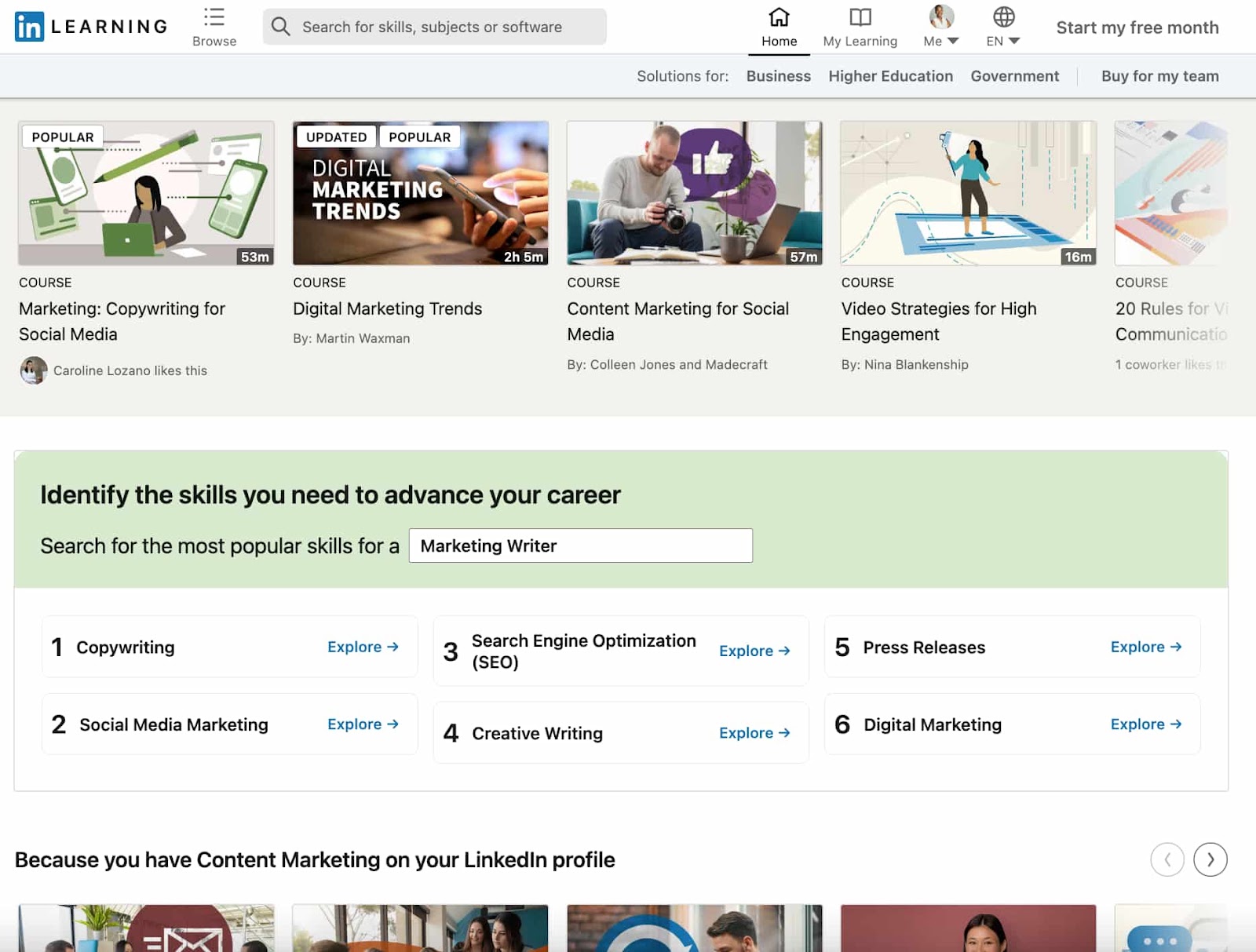
The best part of LinkedIn Learning is that the course suggestions are customized to your profile.
If you have content marketing as a skill in your LinkedIn profile, the algorithm will suggest relevant courses, such as how to start a podcast or track the ROI of a content marketing strategy.
Similarly, your role will also influence the suggestions you see. As a marketing writer, I get recommended copywriting, SEO, and social media marketing courses. If I were a data scientist, I may be recommended courses on programming languages and machine learning.
To access the platform, the first month is free then up to $39.99/month.
9. Alison
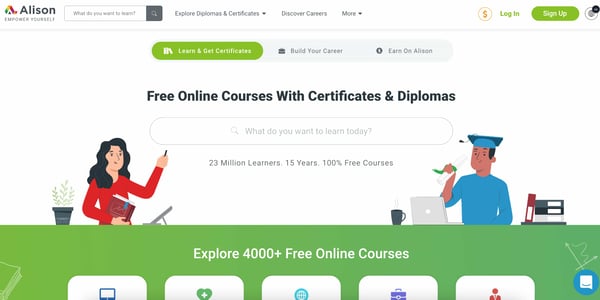
Alison offers over 4,000 online classes in various professional skills users can take at their own pace.
This content repository includes courses that lead to certificates and diplomas — you choose which is best for your goals.
For an even more rigorous curriculum, you can choose a learning path that combines several lessons and courses into one learning track that gives you a well-rounded learning experience.
10. Meta Blueprint
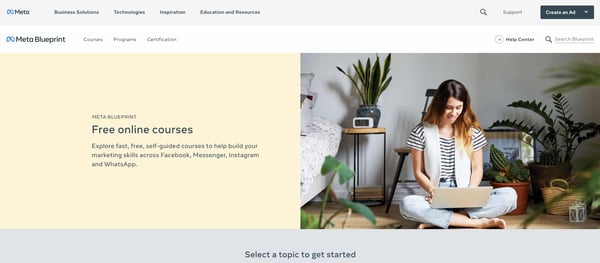
At this point, you probably already know what Meta is (formerly Facebook) and what it does.
What you might not know is that the platform offers several training and certification programs.
Meta Blueprint offers self-paced and live e-learning courses for marketers seeking to grow their organizations using Facebook.
Blueprint offers classes in different languages on how to use Facebook and Instagram.
11. quintly Academy
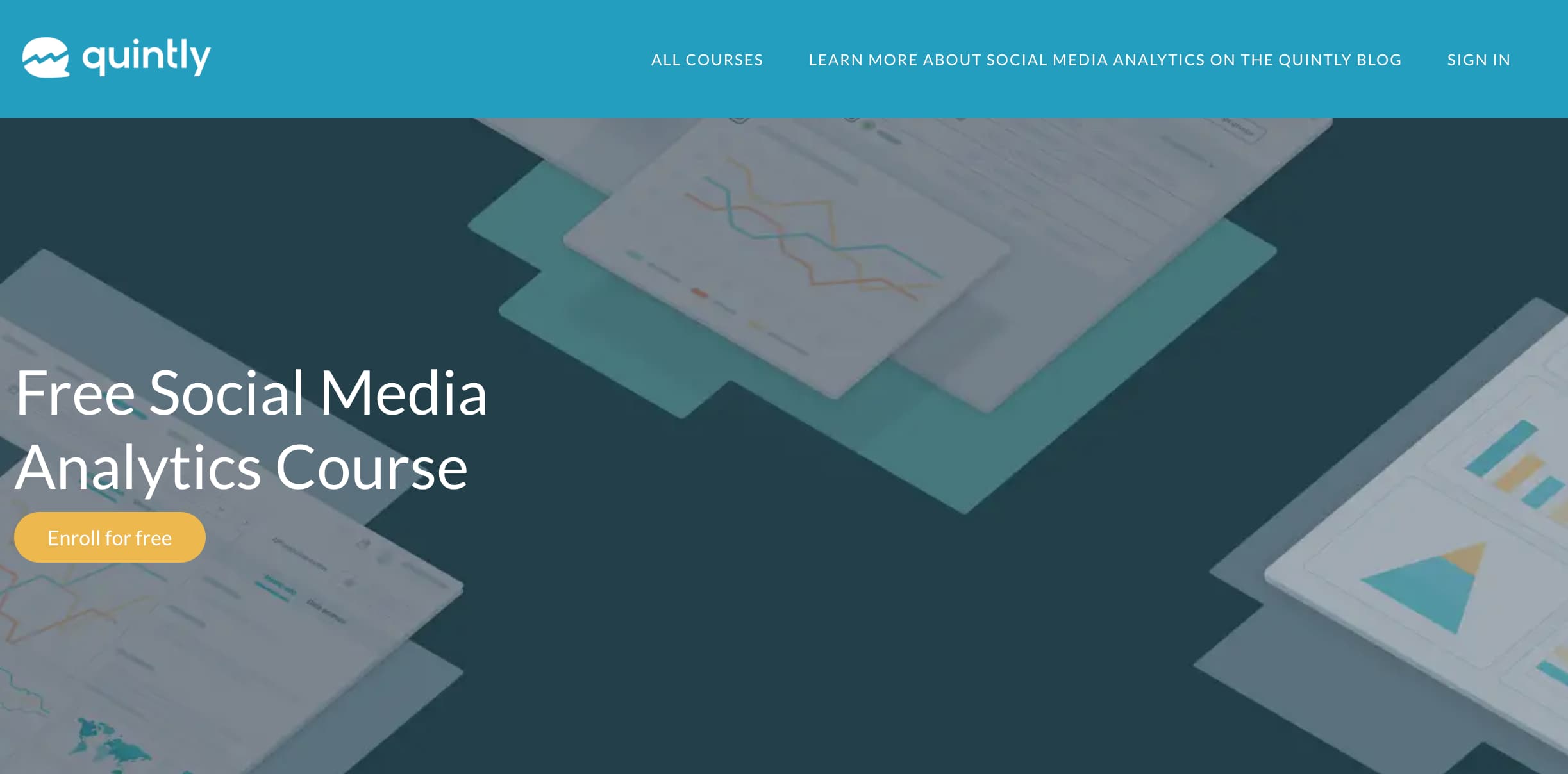
quintly is a social media analytics tool that offers courses through quintly Academy.
The self-paced course provides an overview of social media analytics, benchmarking, and goaling using downloadable written materials and video lessons. These courses are available to take at no cost — simply sign in to enroll for free.
12. Google Digital Garage
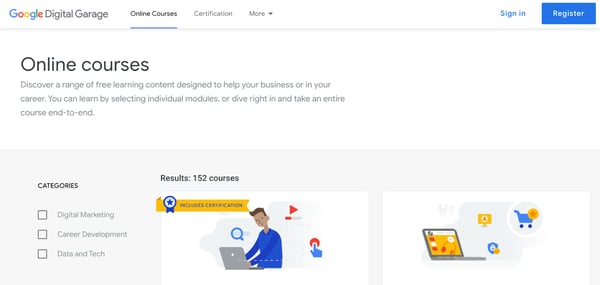
Google is another company you’ve probably heard of before, and its digital marketing course offers a ton of valuable information if you plan to advertise on the search engine.
You can even take a Google AdWords certification at the end of the process that helps you beef up your resume.
Google has expanded its course offerings to include other types of digital marketing, too, so check out the site for up-to-date insights in the marketing world.
13. Codeacademy
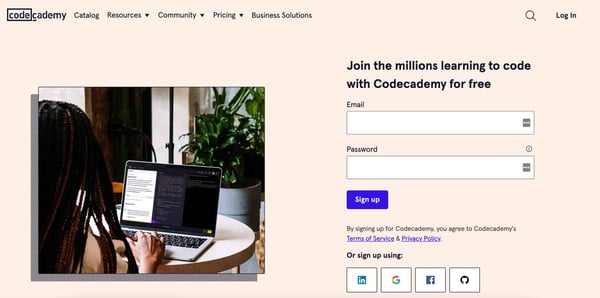 Codeacademy offers free, interactive coding classes that take you from bare-bones to building a fully functioning website.
The courses we’ve highlighted below just scratch the surface, though. Codeacademy offers a variety of course topics so you can truly focus on your niche.
These classes include lectures and a workspace in the same browser window so you can see the effect of your work as you create it — how cool is that?
14. General Assembly
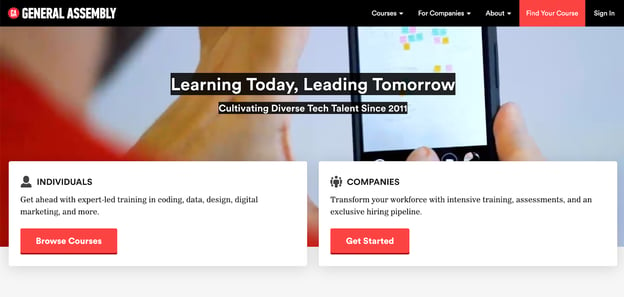
General Assembly offers live online courses that can be accessed for free or for a fee.
These courses specialize in technical skills and disciplines like the fundamentals of HTML5, CSS3, and Javascript.
Each one is categorized as one of five types that range from full-time immersive learning to on-demand learning. Once you choose your time commitment, simply find a course that works with your schedule.
15. Canva

Canva helps people easily make beautiful images for web design, and Canva Design School offers design courses that are valuable for any kind of storyteller.
The Creativity course explores the challenges of constant creation and innovation and how to do it well — with visuals, of course.
Become a Marketing Powerhouse with These Free Certifications
I’m sure all marketers (myself included) can agree that furthering our education in this field is a worthwhile way to advance our careers or businesses.
Earning a certificate from a reputable online course is one of the most convenient ways to accomplish this.
Whether you want to take a free online marketing class or you’d like to devote more time and resources to a paid one, you can’t go wrong with one from this list.
Just remember to focus your studying on a specific sector of marketing and develop a niche skillset — you’ll be well on your way to success as a consummate marketer.
Editor’s Note: This blog post was originally published in May 2018, but was updated in July 2020 for comprehensiveness and freshness.

29 Companies With Really Catchy Slogans & Brand Taglines
Keep it simple, stupid.
We don’t mean to offend you — this is just an example of a great slogan that also bears the truth of the power of succinctness in advertising. It’s incredibly difficult to be succinct, and it’s especially difficult to express a complex emotional concept in just a couple of words — which is exactly what slogans and taglines do.

That’s why we have a lot of respect for the brands that have done it right. These are the companies that have figured out how to convey their value propositions to their buyer personas in just one, short sentence — and a quippy one, at that.
So if you’re looking to get a little slogan inspiration of your own, take a look at some of our favorite company slogans and taglines from both past and present. But before we get into specific examples, let’s quickly go over what a slogan is, how it differs from a tagline, and what makes these branded one-liners stand out.
What Is a Slogan?
In business, a slogan is “a catchphrase or small group of words that are combined in a special way to identify a product or company,” according to Entrepreneur.com’s small business encyclopedia.
In many ways, they’re like mini-mission statements.
Companies have slogans for the same reason they have logos: advertising. While logos are visual representations of a brand, slogans are audible representations of a brand. Both formats grab consumers’ attention more readily than a company’s name or product might. Plus, they’re simpler to understand and remember.
The goal? To leave a key brand message in consumers’ minds so that, if they remember nothing else from an advertisement, they’ll remember the slogan.
What Makes a Great Slogan?
According to HowStuffWorks, a great slogan has most, or all, of the following characteristics:
1. It’s memorable.
Is the slogan quickly recognizable? Will people only have to spend a second or two thinking about it? A brief but strong few words can go a long way in advertisements, videos, posters, business cards, swag, and other places.
2. It includes a key benefit.
Ever heard the marketing advice, “Sell the sizzle, not the steak”? It means sell the benefits, not the features — which applies perfectly to slogans. A great slogan makes a company or product’s benefits clear to the audience.
3. It differentiates the brand.
Does your light beer have the fullest flavor? Or maybe the fewest calories? What is it about your product or brand that sets it apart from competitors? (Check out our essential branding guide here.)
4. It imparts positive feelings about the brand.
The best taglines use words that are upbeat. For example, Reese’s Peanut Butter Cups’ slogan, “Two great tastes that taste great together,” gives the audience good feelings about Reese’s, whereas a slogan like Lea & Perrins’, “Steak sauce only a cow could hate,” uses negative words. We could argue that the former leaves a better impression on the audience.
Slogan vs. Tagline
Although both “slogan” and “tagline” tend to be used interchangeably, they actually serve two different purposes.
As we mentioned in Entrepreneur.com’s definition above, a slogan identifies a product or company. So does a tagline, for that matter. Where these terms differ is in how they position a company in its industry.
- A slogan encompasses a company’s mission, what it stands for, and even how it’s helping customers in the individual campaigns the company might run. Slogans can therefore be longer than taglines, as you’ll see in the list below.
- A tagline is a catchy quip that evokes an image of your brand in the minds of your customers. Taglines enable people to make lighthearted associations with your business: “When I see [tagline], I think [company].”
Featured Resource: 60 Slogan Writing Tips & Examples
Taglines are more often next to the company’s logo on official advertisements and are dedicated more specifically to brand awareness than slogans. Slogans carry a brand’s values and promises as the company grows and evolves, and can be promoted under an overarching company tagline.
Your organization doesn’t have to develop both a slogan and a tagline — it might succeed with just a solid, recognizable tagline. But as you develop new products and identify new types of customers, you might find your brand launching a campaign that is primed for its own slogan.
Now that we’ve covered what a slogan is and what makes one great, here are examples of some of the best brand slogans of all time.
When you want a brand slogan you want to make sure they are memorable and that they bring your brand to life. The right slogan will have key words that encapsulate what your brand is so that consumers will always have it in the back of their heads. Below we have listed some business slogans that range from fast food, cars, essential items, pet essentials, etc. to show that a good slogan encapsulates being concise, catchy, and classic.
1. VRBO: Where Families Travel Better Together

Vacation rental company VRBO has successfully carved out a family-friendly niche within the hospitality sector. Their slogan and corresponding tagline ‘Travel Better Together’ work to drive their mission: to find every family a space to relax, reconnect and enjoy their time together.
VRBO’s tagline is not only catchy, but its focus on families sets them apart from the competition in the vacation rental space.
2. Dollar Shave Club: “Shave Time. Shave Money.”
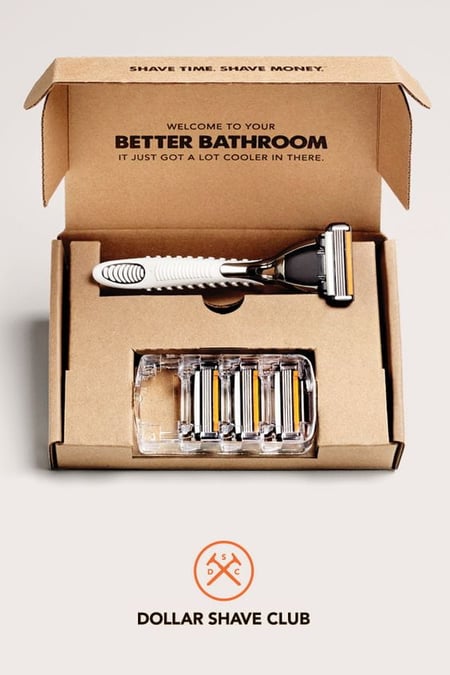
The folks at Dollar Shave Club have made their way onto quite a few of our lists here on the blog, and it’s safe to say that when it comes to marketing and advertising, this brand’s team knows what it’s doing. And its slogan — “Shave Time. Shave Money.” — is an excellent reflection of their expertise.
This little quip cleverly incorporates two of the service’s benefits: cost and convenience. It’s punny, to the point, and it perfectly represents the overall tone of the brand.
3. MasterCard: “There are some things money can’t buy. For everything else, there’s MasterCard.”
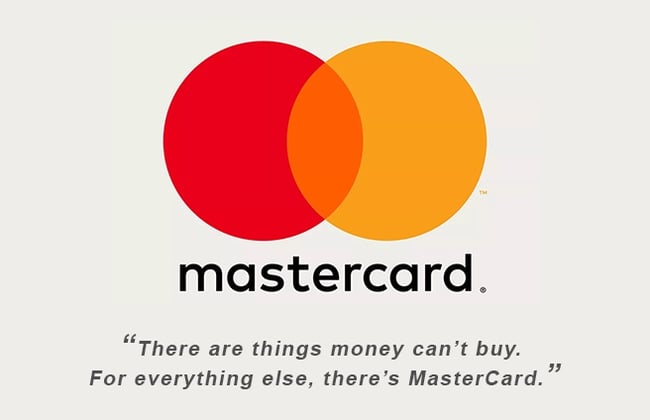
MasterCard’s two-sentence slogan was created in 1997 as a part of an award-winning advertising campaign that ran in 98 countries and 46 languages. The very first iteration of the campaign was a TV commercial that aired in 1997: “A dad takes his son to a baseball game and pays for a hot dog and a drink, but the conversation between the two is priceless,” wrote Avi Dan for Forbes.
“In a sense, ‘Priceless’ became a viral, social campaign years before there was a social media,” Dan explained. Today, “Priceless” is widely considered MasterCard’s tagline — borne out of the longer mission-focused slogan stated above.
One key to this campaign’s success? Each commercial elicits an emotional response from the audience. That first TV commercial might remind you of sports games you went to with your dad, for example. Each advertisement attempted to trigger a different memory or feeling. “You have to create a cultural phenomenon and then constantly nurture it to keep it fresh,” MasterCard CMO Raja Rajamannar told Dan. And nostalgia marketing like that can be a powerful tool.
4. M&M: “Melts in Your Mouth, Not in Your Hands”

Here’s one brand that didn’t need much time before realizing its core value proposition. At the end of the day, chocolate is chocolate. How can one piece of chocolate truly stand out from another? By bringing in the convenience factor, of course.
This particular example highlights the importance of finding something that makes your brand different from the others — in this case, the hard shell that keeps chocolate from melting all over you.
5. De Beers: “A Diamond is Forever”

Diamonds aren’t worth much inherently. In fact, a diamond is worth at least 50% less than you paid for it the moment you left the jewelry store. So how did they become the symbol of wealth, power, and romance they are in America today? It was all because of a brilliant, multifaceted marketing strategy designed and executed by ad agency N.W. Ayer in the early 1900s for their client, De Beers.
The four, iconic words “A Diamond is Forever” have appeared in every single De Beers advertisement since 1948, and AdAge named it the best slogan of the century in 1999. It perfectly captures the sentiment De Beers was going for: that a diamond, like your relationship, is eternal. It also helped discourage people from ever reselling their diamonds. (Mass reselling would disrupt the market and reveal the alarmingly low intrinsic value of the stones themselves.) Brilliant.
6. Meow Mix: “Tastes So Good, Cats Ask for It by Name”
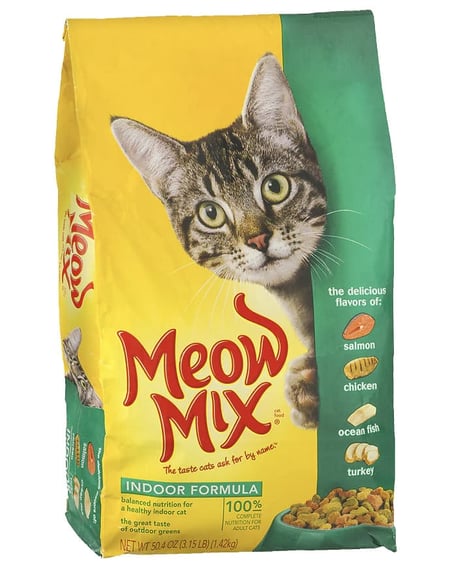
Meow meow meow meow … who remembers this catchy tune sung by cats, for cats, in Meow Mix’s television commercials? The brand released a simple but telling slogan: “Tastes So Good, Cats Ask For It By Name.”
This slogan plays off the fact that every time a cat meows, s/he is actually asking for Meow Mix. It was not only clever, but it also successfully planted Meow Mix as a standout brand in a cluttered market.
7. The U.S. Marine Corps: “Semper Fi”
Semper Fi, short for “Semper Fidelis,” is Latin for “always faithful” or “always loyal.” The saying has long been the official motto of the U.S. Marine Corps and is used to represent them in public appearances and the Marines’ official seal.
What makes “Semper Fi” a great slogan for the Marines? It reveals the Marines’ defining characteristics in the armed forces — faithfulness and loyalty. It’s also a memorable proverb that explains why this organization can be counted on by the public.
8. Allstate: “You’re in Good Hands With Allstate”
If there’s one thing people want from an insurance company, it’s reliability. Who wouldn’t be put at ease after hearing “You’re in good hands wiht Allstate?” It’s worked so well the slogan has been in service for nearly six decades.
Davis Ellis came up with slogan in 1950 after his daughter had a health scare. Remembering how being told “JoAnn (his daughter) is in good hands with Dr. Keyser” relieved his anxiety, Ellis was inspired to use the phrase in an ad campaign. Variations of this phrase have been used in the company slogan ever since.
9. Ronseal: “It Does Exactly What It Says on the Tin.”

Ronseal is a wood stain and dye manufacturer from the United Kingdom, and its 20-year-old slogan is perfect for the humble message the company is known for.
Ronseal’s slogan doesn’t go above and beyond. It doesn’t make lofty promises to its customers. It simply endorses a functional product. So why is this slogan so catchy? Because its lack of volume actually speaks volumes to its audience. Too many companies try to break through the noise of their competitors by being so loud and ambitious, they forget what they stood for in the first place. Ronseal saw true value in basic reliability and founded a slogan that allowed the company to stay right where its customers like it.
10. The Mosaic Company: “We Help the World Grow the Food It Needs”
The Mosaic Company’s slogan also happens to be its mission statement, which guarantees that this fertilizer maker’s brand strategy aligns with the company’s main interests.
Something all slogans should strive to do is look past the needs of the company, or even its users, and describe how the product or service helps the community. In this way, “We Help the World Grow the Food It Needs” is a heavy slogan that expresses not just what The Mosaic Company wants for its customers, but also what it wants for the public.
11. Pitney Bowes: “We Power Transactions That Drive Commerce”
Pitney Bowes, the mailing and shipping software provider, has a slogan that follows a similar theme as The Mosaic Company in the section above: It’s focused not on the end user, but on the industry.
Pitney Bowes’ slogan shows us that its products don’t just help businesses track and deliver merchandise — it makes the entire ecommerce community more efficient. It’s a good strategy, considering the alternative. How lame would the company’s slogan be if it were “We Power Transactions That Serve Our Clients’ Bottom Line”?
Taglines
When creating your brand tagline you want to have a tagline that explains the essence of the value you provide to your customer using one to two sentences. A tagline is a great way to understand what your business does for your customers. The right tagline will be concise yet brings out the essence of what the business is. Below we have listed some business taglines that encapsulate being concise while telling the value of the business.
12. Target: “Expect More. Pay Less.”
Target has been using its tagline since 1994 and the brand has developed a dedicated following ever since. Its stores and branding makes people feel like it’s cut above the competition.
This tagline embodies the experience of shopping at Target. From home goods to toiletries to clothing — it all can be found at Target and for a great price without feeling like low budget store.
13. Verizon: “5G Built Right”

Here’s another brand that took its time coming up with something that truly resonated with its audience. Verizon’s previous slogan “Can you hear me now” was created in 2002 under the umbrella of the tagline, “We never stop working for you.” Now with Verizon has switched things up with “5G Built Right” to mark themselves as the first to launch a 5G network .
While Verizon was founded in 1983, it continued to battle against various phone companies like AT&T and T-Mobile, still two of its strongest competitors. But what makes Verizon stand out? No matter where you are, you have service. You may not have the greatest texting options, or the best cell phone options, but you will always have service.
14. Nike: “Just Do It”

Now, for the more well-known Nike message. “Just Do It” hovers over every product and event Nike creates or sponsors, and that’s exactly what makes it the company’s official tagline.
It didn’t take long for Nike’s message to resonate. The brand became more than just athletic apparel — it began to embody a state of mind. It encourages you to think that you don’t have to be an athlete to be in shape or tackle an obstacle. If you want to do it, just do it. That’s all it takes.
But it’s unlikely Kennedy + Weiden, the agency behind this tagline, knew from the start that Nike would brand itself in this way. In fact, Nike’s product used to cater almost exclusively to marathon runners, which are among the most hardcore athletes out there. The “Just Do It” campaign widened the funnel, and it’s proof positive that some brands need to take their time coming up with a tagline that reflects their message and resonates with their target audience
15. Apple: “Think Different.”
This tagline was first released in the Apple commercial called “Here’s to the Crazy Ones, Think Different” — a tribute to all the time-honored visionaries who challenged the status quo and changed the world. The phrase itself is a bold nod to IBM’s campaign “Think IBM,” which was used at the time to advertise its ThinkPad.
Soon after, the tagline “Think Different” accompanied Apple advertisements all over the place, even though Apple hadn’t released any significant new products at the time. All of a sudden, people began to realize that Apple wasn’t just any old computer; it was so powerful and so simple to use that it made the average computer user feel innovative and tech-savvy.
According to Forbes, Apple’s stock price tripled within a year of the commercial’s release. Although the tagline has been since retired, many Apple users still feel a sense of entitlement for being among those who “think different.”
16. L’Oréal: “Because You’re Worth It”

Who doesn’t want to feel like they’re worth it? The folks at L’Oréal worked with the theory that women wear makeup in order to make themselves appear “beautiful” so they feel desirable, wanted, and worth it. The tagline isn’t about the product — it’s about the image the product can get you. This message allowed L’Oréal to push its brand further than just utility so as to give the entire concept of makeup a much more powerful message.
17. California Milk Processor Board: “Got Milk?”
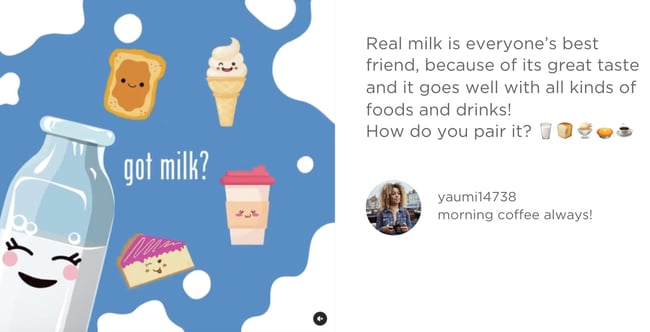
While most people are familiar with the “Got Milk?” campaign, not everyone remembers that it was launched by the California Milk Processor Board (CMPB). What’s interesting about this campaign is that it was initially launched to combat the rapid increase in fast food and soft beverages: The CMPB wanted people to revert to milk as their drink of choice in order to sustain a healthier life. The campaign was meant to bring some life to a “boring” product, ad executives told TIME Magazine.
The simple words “Got Milk?” scribbled above celebrities, animals, and children with milk mustaches, which ran from 2003 until 2014 — making this campaign one of the longest-lasting ever. The CMPB wasn’t determined to make its brand known with this one — it was determined to infiltrate the idea of drinking milk across the nation. And these two simple words sure as heck did.
18. BMW: “Sheer Driving Pleasure”

BMW sells cars all over the world, but in North America, it was known for a long time by its tagline, “The Ultimate Driving Machine.” This phrase was created in the 1970s by a relatively unknown ad agency named Ammirati & Puris and was, according to BMW’s blog, directed at Baby Boomers who were “out of college, making money and ready to spend their hard-earned dollars. What better way to reflect your success than on a premium automobile?”
The newer tagline, “Sheer Driving Pleasure,” is intended to reinforce the message that its cars’ biggest selling point is that they are performance vehicles that are thrilling to drive. That message is an emotional one and one that consumers can buy into to pay the high price point.
19. Tesco: “Every Little Helps”
“Every little helps” is the kind of catchy tagline that can make sense in many different contexts — and it’s flexible enough to fit in with any one of Tesco’s messages. It can refer to value, quality, service, and even environmental responsibility — which the company practices by addressing the impacts of their operations and supply chain.
It’s also, as Naresh Ramchandani wrote for The Guardian, “perhaps the most ingeniously modest” slogan or tagline ever written. Tesco markets itself as a brand for the people, and a flexible, modest far-reaching slogan like this one reflects that beautifully.
20. Bounty: “The Quicker Picker Upper”
Bounty paper towels, made by Procter & Gamble, has used its catchy tagline “The Quicker Picker Upper” for almost 50 years now. If it sounds like one of those sing-songy play on words you learned as a kid, that’s because it is one: The tagline uses what’s called consonance — a poetic device characterized by the repetition of the same consonant two or more times in short succession (think: “pitter patter”).
Over the years, Bounty has moved away from this tagline in full, replacing “Quicker” with other adjectives, depending on the brand’s current marketing campaign — like “The Quilted Picker Upper” and “The Clean Picker Upper.” Although the brand is branching out into other campaigns, they’ve kept the theme of their original, catchy tagline.
21. Lay’s: “Betcha Can’t Eat Just One.”
Seriously, who here has ever had just one chip? While this tagline might stand true for other snack companies, Lay’s was clever to pick up on it straight away. The company tapped into our truly human incapability to ignore crispy, salty goodness when it’s staring us in the face. Carbs, what a tangled web you weave.
But seriously, notice how the emphasis isn’t on the taste of the product. There are plenty of other delicious chips out there. But what Lay’s was able to bring forth with its tagline is that totally human, uncontrollable nature of snacking until the cows come home.
22. Audi: “Vorsprung durch technik” (“Advancement Through Technology”)

“Vorsprung durch technik” has been Audi’s main German tagline everywhere in the world since 1971 (except for the United States, where the slogan is “Truth in Engineering”). While the phrase has been translated in several ways, the online dictionary LEO translates “Vorsprung” as “advance” or “lead” as in “distance, amount by which someone is ahead in a competition.” Audi roughly translates it as: “Advancement through technology.”
The first-generation Audio 80 (B1 series) was launched a year after the tagline in 1972, and the new car was a brilliant reflection of that tagline with many impressive new technical features. It was throughout the 1970s that the Audi brand established itself as an innovative car manufacturer, such as with the five-cylinder engine (1976), turbocharging (1979), and the quattro four-wheel drive (1980). This is still reflective of the Audi brand today.
23. Dunkin’: “America Runs on Dunkin”
In April 2006, Dunkin’ Donuts launched the most significant repositioning effort in the company’s history by unveiling a brand new, multi-million dollar advertising campaign under the tagline “America Runs on Dunkin.” The campaign revolves around Dunkin’ Donuts coffee keeping busy Americans fueled while they are on the go.
“The new campaign is a fun and often quirky celebration of life, showing Americans embracing their work, their play and everything in between — accompanied every step of the way by Dunkin’ Donuts,” read the official press release from the campaign’s official launch.
Ten years later, what the folks at Dunkin Donuts’ realized they were missing was their celebration of and honoring their actual customers. That’s why, in 2016, they launched the “Keep On” campaign, which they call their modern interpretation of the ten-year tagline.
“It’s the idea that we’re your partner in crime, or we’re like your wingman, your buddy in your daily struggle and we give you the positive energy through both food and beverage but also emotionally, we believe in you and we believe in the consumer,” said Chris D’Amico, SVP and Group Creative Director at Hill Holiday.
Fun fact: Dunkin’ Donuts rebranded itself — and named itself Dunkin’ in 2018 while releasing new packaging in 2019. One store in Pasadena, California is called, simply, Dunkin’.
24. McDonald’s: “I’m Lovin’ It”

The “I’m Lovin’ It” campaign was launched way back in 2003 and still stands strong today. This is a great example of a tagline that resonates with the brand’s target audience. McDonald’s food might not be your healthiest choice, but being healthy isn’t the benefit McDonald’s is promising — it’s that you’ll love the taste and the convenience.
Fun fact: The jingle’s infamous hook — “ba da ba ba ba” — was originally sung by Justin Timberlake.
25. The New York Times: “All the News That’s Fit to Print”
This one is my personal favorite. The tagline was created in the late 1890s as a movement of opposition against other news publications printing lurid journalism. The New York Times didn’t stand for sensationalism. Instead, it focused on important facts and stories that would educate its audience. It literally deemed its content all the real “news fit to print.”
This helped the paper become more than just a news outlet, but a company that paved the way for credible news. The company didn’t force a tagline upon people when it first was founded, but rather, it created one in a time where it was needed most.
26. General Electric: “Imagination at Work”
You may remember General Electric’s former tagline, “We Bring Good Things to Life,” which was initiated in 1979. Although this tagline was well-known and well-received, the new tagline — “Imagination at Work” — shows how a company’s internal culture can revolutionize how they see their own brand.
“‘Imagination at Work’ began as an internal theme at GE,” recalled Tim McCleary, GE’s manager of corporate identity. When Jeff Immelt became CEO of GE in 2001, he announced that his goal was to reconnect with GE’s roots as a company defined by innovation.
This culture and theme resulted in a rebranding with the new tagline “Imagination at Work,” which embodies the idea that imagination inspires the human initiative to thrive at what we do.
27. State Farm: “Like a good neighbor, State Farm is there.”
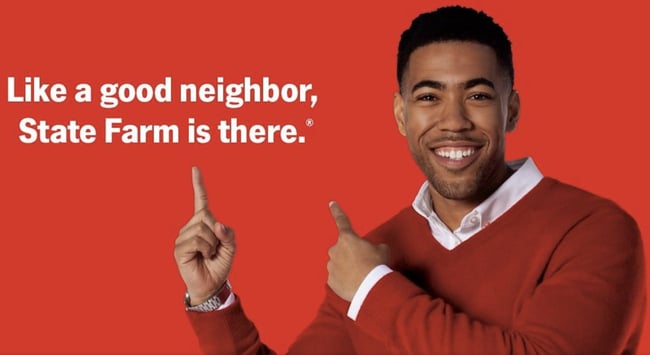
The insurance company State Farm has a number of taglines, including “Get to a better State” and “No one serves you better than State Farm.” Additionally, the company updated its tagline to “We’re here to help life go right.”
But State Farm’s most famous tagline is the jingle, “Like a good neighbor, State Farm is there,” which you’re likely familiar with if you live in the United States and watch television.
These words emphasize State Farm’s “community-first” value proposition — which sets it apart from the huge, bureaucratic feel of most insurance companies. And it quickly establishes a close relationship with the consumer.
Often, customers need insurance when they least expect it — and in those situations, State Farm is responding in friendly, neighborly language.
28. Maybelline: “Maybe she’s born with it. Maybe it’s Maybelline.”
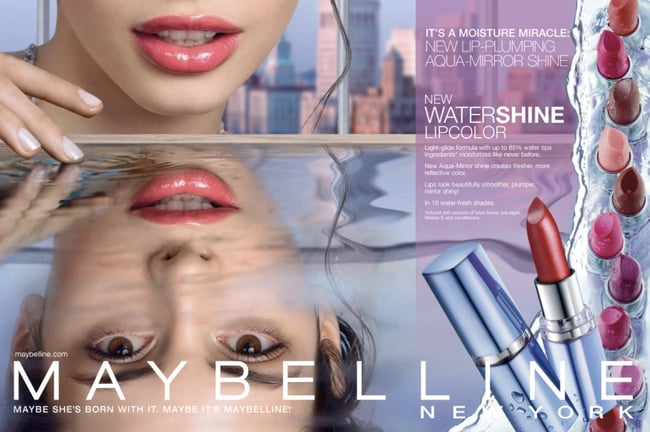
Can you sing this jingle in your head? Maybelline’s former tagline, created in the 1990s, is one of the most famous in the world. It makes you think of glossy magazine pages featuring strong, beautiful women with long lashes staring straight down the lens. It’s that confidence that Maybelline’s makeup brand is all about — specifically, the transformation into a confident woman through makeup.
Maybelline changed its tagline to “Make IT Happen” in February 2016, inspiring women to “express their beauty in their own way.” Despite this change, the former tagline remains powerful and ubiquitous, especially among the many generations that grew up with it.
29. The U.S. Marine Corps: “The Few. The Proud. The Marines.”

While “Semper Fi” is one the U.S. Marine Corps’ most coveted slogans (or, more officially, mottos), it has had a handful of top-notch recruiting taglines over the decades as well. These include “First to fight” starting in World War I, to “We’re looking for a few good men” from the 1980s.
However, we’d argue that “The Few. The Proud. The Marines.” is among the best organization taglines out there.
This tagline “underscores the high caliber of those who join and serve their country as Marines,” said Maj. Gen. Richard T. Tryon, former commanding general of Marine Corps Recruiting Command. In 2007, it even earned a spot on Madison Avenue’s Advertising Walk of Fame.
A catchy slogan and tagline will make a difference in your business.
Now that you have delved into some classic and catchy slogans and taglines, it’s time to set your business up for success. Remember a slogan and a tagline are similar but a slogan is used to sell an item whereas a tagline brings awareness to the item while being concise, catchy, and classic. Both are essential when making sure your business will remain in the minds of consumers.
Editor’s note: This post was originally published in July 2020 and has been updated for comprehensiveness.

9 SMART Social Media Marketing Goals For You to Set in 2022
Social media matters for brand success. But it’s not enough to simply have a social presence; instead, businesses need social media marketing goals that help them attain specific outcomes in the short-term and keep users engaged over time.
Statistics tell the tale of social impact: 77 percent of social media marketers say that their efforts have been somewhat to very effective in 2022, 79 percent of companies are buying ad space on Facebook and the same number plan to keep investing in Twitter Spaces.

Ready to take your social media marketing to the next level? Here are nine goals to help your brand get noticed.
Social Media Marketing Goals for 2022
While you don’t need to meet every social media marketing goal listed to succeed, these objectives offer a solid starting point for a measurable marketing increase.
Goal 1: Increasing brand awareness
Goal 2: Driving website traffic
Goal 3 Getting more leads
Goal 4: Boosting user engagement
Goal 5: Improving customer service
Goal 6: Enhancing brand reputation
Goal 7: Creating more conversations
Goal 8: Understanding your customers
Goal 9: Tracking your mentions
Goal 1: Increasing Brand Awareness
Increasing brand awareness is all about getting the message out to potential customers. In practice, this means more than just posting content to social media — it’s about posting content to social media sites where it will be seen by your target audience.
Potential KPIs and metrics:
- Total number of social channel followers
- How many users are interacting with your content daily/weekly/monthly
- Volume of shares, mentions, and retweets
Goal 2: Driving Website Traffic
Getting more traffic to your website from social media sources can help boost lead generation and sales conversion. Here, social analytics tools are useful for measuring key social metrics and how many unique visitors are viewing your site.
Potential KPIs and metrics:
- Number of visitors referred from social media sites
- Percentage of overall traffic from social media
- Bounce rate of social traffic (how many users visit but don’t stay)
Goal 3: Getting More Leads
More leads mean more opportunities for sales. And while getting leads is typically part of the larger sales funnel process, social media offers a way to start collecting basic lead information.
Potential KPIs and metrics:
- Contact information such as email addresses provided by customers
- Downloads of content assets from social media links
- Participation in social media events such as polls or contests
Goal 4: Boosting User Engagement
User engagement with your social posts is measured by actions such as comments, likes, and shares, and helps give a sense of how well your social media marketing is working to drive user interest.
Potential KPIs and metrics:
- Post engagement rate — how many users interact with a post
- Share rate — how many users choose to share your content
- Time-based engagement — how many users share your content over a specific time period
Goal 5: Improving Customer Service
Customers come for the product or service but stay for your customer service. As a result, it’s worth evaluating your ability to ensure customer satisfaction via social channels.
Potential KPIs and metrics:
- How quickly you respond to customer messages
- The number of complaints or concerns received via social media
- Overall satisfaction with your service, often measured using an email or social survey
Goal 6: Enhancing Brand Reputation
If customers don’t trust your brand, they won’t buy what you’re selling. And social media makes it easier than ever for customers to share exactly what they’re thinking — good or bad — about your brand, making effective reputation management critical.
Potential KPIs and metrics:
- Mentions — how often is your brand mentioned in any social media posts?
- Hashtags — what are people saying about your brand with relevant hashtags related to your product or service?
- Sentiment — what is the overall user sentiment toward your brand? Good? Bad? Impartial?
Goal 7: Creating More Conversations
Social media is, well — social. This means it’s a place for conversation and interaction, and if your brand can get in on the action, so much the better for your sales.
Potential KPIs and metrics:
- Number of users making posts on your Facebook page or in your Twitter chats
- Number of daily active users on platforms such as Slack
- Number of reviews for your products or services on social platforms
Goal 8: Understanding Your Customers
The more you know about your customers, the better. By understanding what they’re looking for, what they want to avoid, and how they want brands to treat them, your team can better tailor marketing and sales messages to your target audience.
Potential KPIs and metrics:
- The kinds of posts do your customers comment on
- Their most common pain points (from mentions and hashtags)
- Their expectations in terms of brand response time and marketing content
Goal 9: Tracking Your Mentions
This goal expands mention monitoring from customers to the press: Where is your brand getting noticed by industry publications or thought leaders (or is it getting mentioned at all?)
Potential KPIs and metrics:
- The number of users who saw your PR campaign
- Questions about your product or service from industry leaders or journals
- Coverage from social media influencers
Social Media SMART Goals
It’s always good to be smart, but when it comes to social media it’s even better to be SMART.
Jokes aside, SMART is a goal-setting acronym that makes it easier to meet intended targets. SMART stands for:
S — Specific
M — Measurable
A — Attainable
R — Relevant
T — Time-bound
If your goals meet SMART criteria, you’re more likely to see success. And when it comes to social media, SMART goals are essential to help brands master this medium.
Why? Because social media is constantly changing. From what consumers want to how they interact with brands to what they’re saying online, social media is never static. SMART goals give companies the ability to better manage the ever-evolving nature of social media discourse and the interaction between marketing impressions and overall reach.
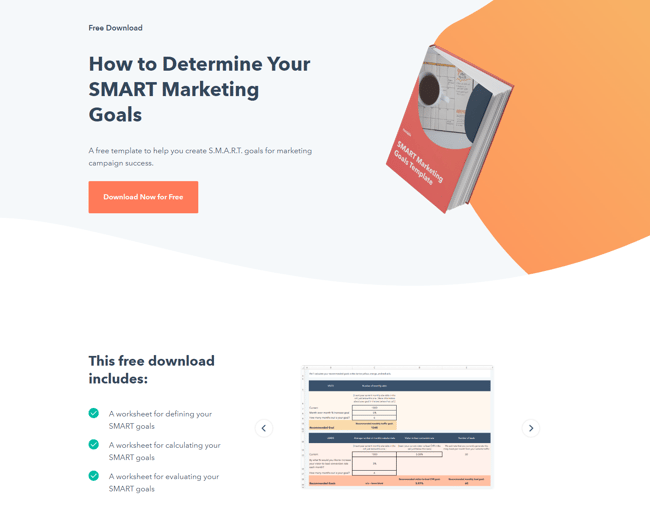
If you’re feeling overwhelmed, don’t worry: We’ve got you covered with our SMART marketing goals template. Get it here.
Social Media SMART Goals Examples
Now, let’s take each of our nine social media marketing goals above and apply the SMART framework.
SMART Goal 1: Increasing Brand Awareness
Specific: We want to increase brand awareness by creating and posting new content twice per week.
Measurable: Our goal is a 5% increase in our total number of social media followers.
Attainable: Our followers increased by 2% last month when we began posting content more frequently.
Relevant: Increasing brand awareness will help drive more interest in our products and services.
Time-bound: One month.
SMART Goal 2: Driving Website Traffic
Specific: We want to drive more traffic to our website by increasing the number of referrals from social media sites.
Measurable: Our goal is a 10% increase in traffic from social media sites.
Attainable: Targeted content publishing last month saw a 3% increase in traffic from social sites.
Relevant: More website traffic means more users browsing our products and services.
Time-bound: Six months.
SMART Goal 3: Getting More Leads
Specific: We want to get more leads from social media sites by creating content that encourages users to share their contact information.
Measurable: Our goal is to generate 10 new leads per week.
Attainable: Previous efforts at engaging content have increased the total number of users subscribed to our newsletter.
Relevant: More leads means more opportunities to find prospective buyers.
Time-bound: Four weeks.
SMART Goal 4: Boosting User Engagement
Specific: We want to increase the number of users that interact with our social media posts by creating more compelling content.
Measurable: Our goal is 30 shares per week.
Attainable: Our last engagement campaign saw a measurable increase in post comments.
Relevant: Increased user engagement leads to more hashtags and mentions and in turn drives more website traffic.
Time-bound: Two months.
SMART Goal 5: Improving Customer Service
Specific: We want to improve social customer service by ensuring that customers receive timely and relevant answers to their questions.
Measurable: Our goal is to reduce customer waiting time for responses by 20%.
Attainable: Leveraging social media marketing apps helped us streamline the messaging process.
Relevant: Improved customer service means higher satisfaction and increased consumer loyalty.
Time-bound: Three weeks.
SMART Goal 6: Enhancing Brand Reputation
Specific: We want to enhance brand reputation by better understanding customer sentiment.
Measurable: Our goal is to increase positive brand mentions by 30%.
Attainable: Analysis of customer hashtags helped pinpoint key areas of frustration.
Relevant: Better brand reputation means increased customer trust and leads to more reliable conversion rates.
Time-bound: Four months.
SMART Goal 7: Creating More Conversations
Specific: We want to create more conversations by increasing our total number of followers on Facebook.
Measurable: Our goal is to boost the total number of Facebook followers by 5%.
Attainable: Efforts to engage our Twitter community resulted in a 10% boost to conversations over time.
Relevant: More conversations means more brand mentions — and potential referrals.
Time-bound: Two months.
SMART Goal 8: Understanding Your Customers
Specific: We want to gain a better understanding of customers to better align with their expectations by evaluating the types of posts they comment on.
Measurable: Our goal is to collect and analyze customer data to discover key trends.
Attainable: Evaluation of customer pain points provided insight into what they didn’t like about our social presence.
Relevant: Better knowledge of customer preferences helps tailor content to meet their needs.
Time-bound: One month.
SMART Goal 9: Tracking Your Mentions
Specific: We want to track the number of mentions by both journalists and influencers.
Measurable: Our goal is to increase the total number of press mentions by 25%.
Attainable: Previous PR efforts have led to increased press interest.
Relevant: Mentions in the press or by influencers can drive both social and website traffic.
Time-bound: During the length of the PR campaign.
Get SMART for Social Media Success
SMART social media marketing goals offer the dual benefit of short-term impact and long-term gain.
While it requires some legwork to ensure you’ve got a solid goal format, you can streamline the process with HubSpot’s SMART goal template — pair it with any of our nine social media goals to help your brand track key social metrics get noticed for all the right reasons.
Editor’s Note: This article was originally published in October 2016 and has been updated for comprehensiveness.

What Are Agile Metrics?
Agile marketing focuses on creating high-value deliverables by working in short bursts to achieve goals. An agile marketing process is also constantly iterated to ensure productivity and efficiency.
Measuring the success of an agile marketing process is critical as it helps monitor processes and ensures everything is on track — this is where agile metrics come in.
In this post, we’ll discuss:

What are agile metrics?
Agile metrics is a tool that helps marketing teams measure the progress and productivity of marketing activities, stay on track, and address roadblocks. Agile metrics are most effective when tailored to the specific needs of individual projects.
You can use agile metrics at both the team level and individual level. At the team level, they help assess the overall health of marketing activities and identify potential bottlenecks. At the individual level, they can help identify areas of improvement for each team member based on their progress.
Importance of Agile Metrics
Agile metrics are important because they help track progress and identify areas for improvement.
Agile metrics also:
- Increase productivity by providing visuals of project timelines so stakeholders can understand what comes next.
- Build accountability and transparency between stakeholders because everyone knows what’s expected of them and their teams.
- Improve communication between team members because agile metrics give specific insight into project progress so people can begin conversations based on metrics and data.
- Help managers and leaders identify risks and potential problems early on from historical agile metrics data, helping them correct processes and save time.
Types of Agile Metrics
There are three main types of agile metrics, and we’ll outline them below.
- Scrum Metrics: A Scrum is a process where work is done in sprints to quickly deliver small projects that make up larger projects over time. Scrum metrics analyze sprint effectiveness and show how much work was completed during a given sprint.
- Kanban Metrics: Kanban processes use visual cues to track progress over time. It usually is based on a project board that is divided into columns that represent stages in a workflow. Kanban metrics help you understand workflow effectiveness, organize and prioritize work, and the amount of time invested to obtain results.
- Lean Metrics: Lean processes help decrease the amount of time it takes from when a task or project is requested to when teams complete it. Lean metrics measure productivity and quality of work output, helping get rid of activities that don’t benefit outcomes or getting work done quickly.
Key Agile Metrics
Below we’ll go over some of the most common agile metrics.
1. Sprint Burndown Chart
Type of Agile Metric: Scrum
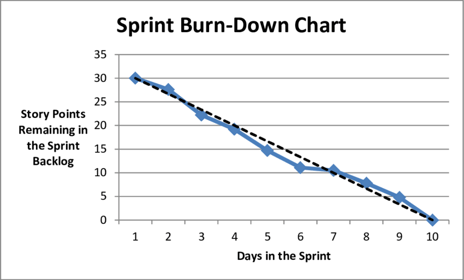
A sprint burndown chart shows the work that remains and has already been completed in a designated sprint. It also shows the amount of work that has been completed over time.
Sprint burndown charts provide a visual for this data and can predict a team’s likelihood to complete their work in the time available.
2. Cumulative Flow Diagram
Type of Agile Metric: Kanban
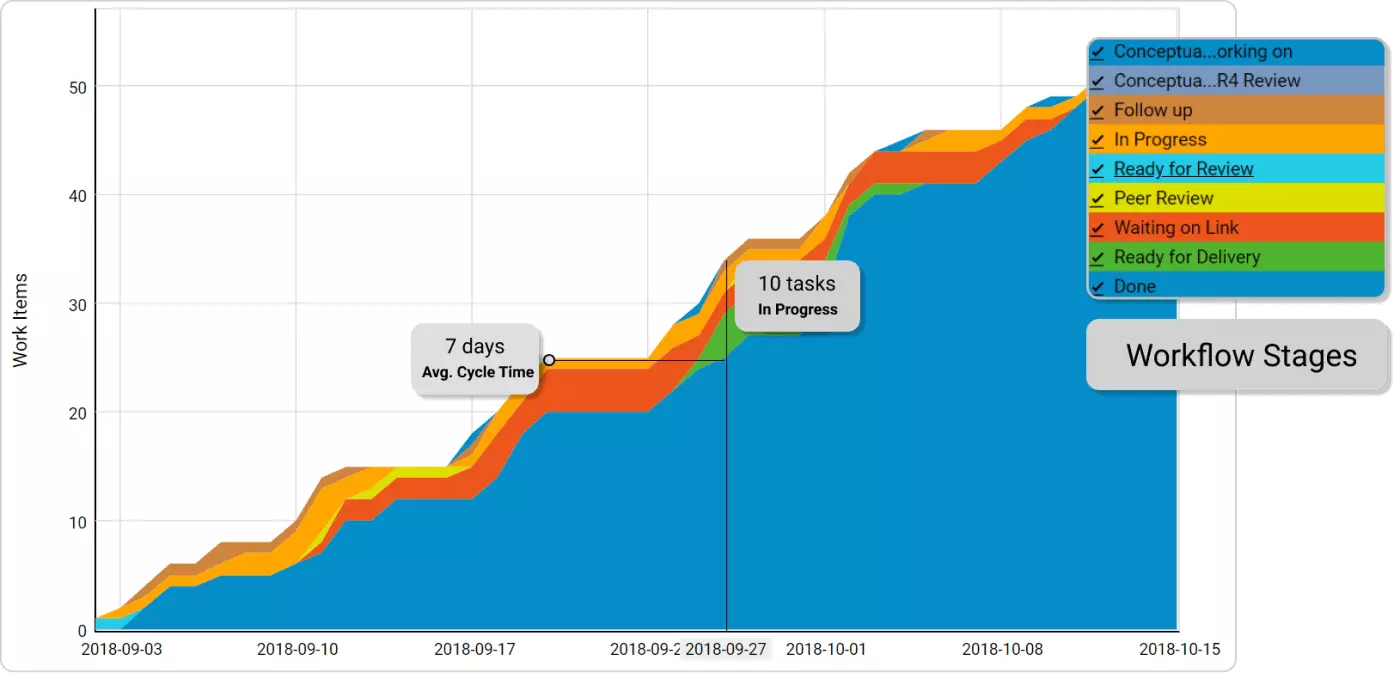
The cumulative flow diagram is a graphical representation of work in progress. Specifically, it displays the work already completed, the work currently in progress, and tasks that have yet to begin. The diagram helps you visualize how stable your process is and helps you identify problem areas to address.
3. Cycle Time Diagram
Type of Agile Metric: Kanban
A cycle time diagram displays the amount of time it takes to complete a task. It helps you identify areas where your process can be updated and streamlined for future productivity and understand the effects of the strategies you implement.
As your overall goal is likely to have a shorter cycle time across all projects, the diagram will help you understand the length and identify areas for improvement. Cycle time is a smaller section of the lead time metric, which we’ll discuss below.
4. Lead Time
Type of Agile Metrics: Kanban
Lead time is the time it takes for a task to be completed from start to finish. It builds off of the cycle time metric but adds on the amount of time between when a task or project was requested to when it was started.
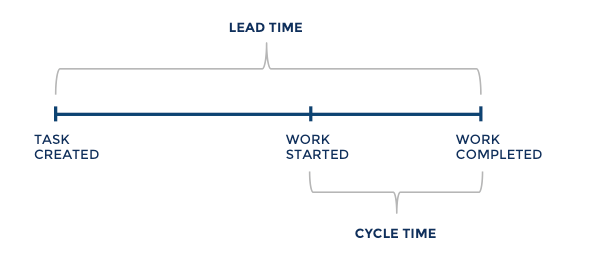
For example, you could use the lead time metric to analyze how much time it takes from when a new marketing copy is requested to when it is delivered.
5. Velocity Chart
Type of Agile Metric: Scrum
Velocity is the rate at which a team can deliver work during a sprint. It measures how fast teams complete a task and identifies whether they are on track to meet deadlines. It can also predict a team’s future abilities, helping ensure you don’t commit to a timeline you can’t achieve.
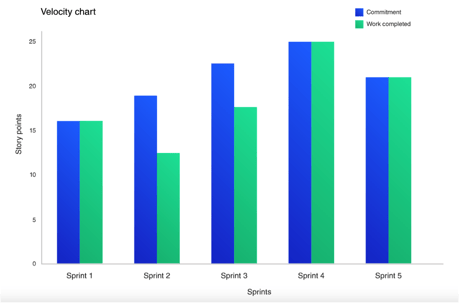
A lower velocity means it takes teams more time to complete a task, so it could be worthwhile to identify areas you can streamline to speed up the process.
6. Burn Up Chart
Type of Agile Metric: Scrum
A burn-up chart tracks progress over time. The graph features two lines, one that displays the projected amount of work and another that shows actual work completed.

This metric helps you compare expectations to how much work is delivered, which can help you understand team efficiencies and identify areas for improvement.
The right agile metric helps you and your teams stay productive and focused.
Choosing an agile metric depends on the specific needs of your marketing activities. Once you choose one, you’ll get a bigger picture of your team’s productivity and marketing processes, helping you identify roadblocks, optimize your strategies, and meet your business goals.

UTM Codes: How to Create UTM Tracking URLs on Google Analytics
How do you know if Facebook is a worthy investment, or if you’re getting enough traffic from your recent promotional campaign? The answer: UTM tracking links.
UTM codes help you track where traffic is coming from, allowing you to properly measure each campaign’s, platform’s, or medium’s ROI.
In this blog post, you’ll learn what UTM codes are, how to use them, and how to build them in both Google Analytics and HubSpot.
UTM codes are also known as UTM parameters — or tracking tags — because they help you “track” website traffic from its origin.
Now, you might be thinking, “Ginny, I have HubSpot, so I already know if my website traffic is coming from Google, email, social media, and similar marketing channels. What does a UTM code tell me that I don’t already know?”
HubSpot Marketing Hub provides you with these high-level sources of traffic, but UTM also helps you drill down into specific pages and posts within these traffic sources. If you’re promoting a campaign on social media, for example, you’ll know how much traffic came from social media. Building a UTM code, however, can tell you how much of that traffic came from Facebook or even a particular post on Facebook.
UTM Code Example
UTM codes can be overwhelming at first, so let’s take a look at an example. Here’s a URL with its own UTM code:
http://blog.hubspot.com/9-reasons-you-cant-resist-list?utm_campaign=blog_post &utm_medium=social&utm_source=facebook
Let’s break this link down.
- https://ift.tt/3QL6O9s: This is the base URL of the page.
- ?: This signals to your analytics software that a string of UTM parameters will follow.
- utm_campaign=blog_post: This is the first UTM parameter, specifically for the campaign the visitor engaged with (in this case, a blog post campaign).
- &: This denotes that another UTM parameter will follow.
- utm_medium=social: This is the second parameter, specifically for the channel the visitor came from (in this case, social).
- &: This denotes that another UTM parameter will follow.
- utm_source=facebook: This is the last parameter, specifically for the specific website the visitor came from (in this case, Facebook).
In the example above, you’re saying that once traffic comes in from people who click this link, the traffic should be attributed to Facebook. The “medium” is social media, while the “source” is Facebook.
Adding these snippets of code after the question mark above doesn’t affect anything on the page — it just lets your analytics program know that someone arrived through a certain source inside an overall marketing channel, as part of a specific campaign.
How do UTM links help marketers?
Crucial aspects of being a great marketer are being able to measure your success and measure your impact. No matter which metrics you use, you want to prove to your boss (and the company) that you’re worth your salt.
You deserve your budget — and maybe need more of it — and you deserve to dedicate time to the marketing activities that work. Building UTM codes that track your campaigns’ success is the best way to prove it.
Relying on your analytics tool’s source and medium breakdown isn’t enough to prove whether a certain strategy is working. UTM links provide more granular data that allow you to drill down to the specific source of the traffic. You can use the following UTM parameters, which we’ll cover in more detail later:
- Campaign
- Source
- Medium
- Content
- Term
With that in mind, UTM tracking codes can help you determine:
1. Where the traffic is coming from (Source).
First up, you’ll be able to tell the specific website the traffic is coming from. Examples include:
- Social websites (Instagram, Facebook, Pinterest, YouTube, LinkedIn, etc)
- Search engines (Google, Bing, Yahoo, etc)
- Paid posts and sponsored listings (paid ads, sponsored posts, etc)
- Other websites (your own site, competitor’s sites, publisher’s sites)
2. Which general channel the traffic came from (Medium).
It’s also important to know the general categorization of the source. That way, you can determine whether social media in general is a worthwhile investment, as an example. Organic search, social, CPC, and email are a few mediums you can use.
3. What type of content people clicked on (Content).
What gets the most clicks? An image, a sidebar link, or a menu link? You can tell this information with the content UTM parameter. This is essential for determining whether you need to add more images, for instance, or improve your sidebar link structure if no clicks are coming through that content.
4. Which term they used to access the page (Term).
UTM links can also help you see which terms are driving traffic to a specific page. By using the term parameter, you can determine which keywords are driving the most traffic to you, and which need more love.
Putting it all together, here’s what a UTM-tracked URL can look like:
blog.hubspot.com/marketing/what-are-utm-tracking-codes-ht?utm_medium=paid&utm_source=google&utm_content=sponsored_ad&utm_term=utm+codes
Now, let’s take a closer look at the UTM parameters you can use.
UTM Parameter Examples
UTM codes can track a medium and a source within that medium. Where it gets more flexible is in the language you use to describe that source. Maybe you want to attribute website traffic to a social network, a type of content, or even the exact name of an advertisement on the web.
Here are the five things you can track with UTM codes and why you might track them:
1. Campaign
Campaign-based tracking tags group all of the content from one campaign in your analytics. The example UTM code below would help you attribute website traffic to links that were placed as a part of a 20% discount promotion you’re hosting.
Example: utm_campaign=20_off
2. Source
A source-based URL parameter can tell you which website is sending you traffic. You could add the example code below to every link you post to your Facebook page, helping you to track all traffic that comes from Facebook.
Example: utm_source=facebook
3. Medium
This type of tracking tag informs you of the medium that your tracked link is featured in. You can use the example UTM code below to track all traffic that comes from social media (as opposed to other mediums, like email).
Example: utm_medium=social_media
4. Piece of Content
This type of UTM code is used to track the specific types of content that point to the same destination from a common source and medium.
It’s often used in pay-per-click (PPC) campaigns or with two identical links on the same page, as shown in the sample UTM code below.
Example: utm_content=sidebar_link or utm_content=header_link
5. Term
A term- or keyword-based tracking code identifies the keywords you’ve paid for in a PPC ad. If you pay for a Google Ads campaign to rank under the keyword, “marketing software,” you might add the following UTM code to the end of the link you submit to Google to run this ad.
Example: utm_term=marketing+software
The best part about UTM parameters is that you can make any combination you like of these codes — use the bare minimum (campaign, source, and medium) to track all of your links, or use all of them to get super specific about your tracking.
UTM Tracking
UTM tracking entails adding a UTM code, a snippet of code, to the end of a URL in order to track the performance of your marketing campaigns and content as well as your website’s traffic sources.
UTM Tracking Best Practices
Here are some best practices to keep in mind when creating and using UTM tracking URLs:
- Make your URLs and links are consistent, clean, and easy to read (you may create a standard for link tagging/UTM parameter guide to ensure consistency here).
- Keep a list of your UTM links so everyone on your team knows which tagged links currently exist.
- Connect UTM tracking to your CRM (like HubSpot) to gain insight into how your bottom line looks.
- Be specific with your URL UTM parameters so your tags clearly state what you’re tracking and where.
- Stick with all lower or upper case — UTM codes are case-sensitive.
- Keep names short but descriptive (e.g. “US” versus “United_States”).
Okay, so you’re on board with UTM codes … but how the heck do you set them up? It’s easy.
Below are instructions for setting up and measuring UTM parameters in Google Analytics and HubSpot.
How to Build UTM Codes in Google Analytics
Here are the steps involved in building UTM codes in Google Analytics.
1. Open Google’s Campaign URL Builder.
There are three different types of tracking tags you can create in Google, two of which help you track traffic to new apps on app marketplaces. You’ll be using the Google Analytics Campaign URL Builder — the third option on this list.
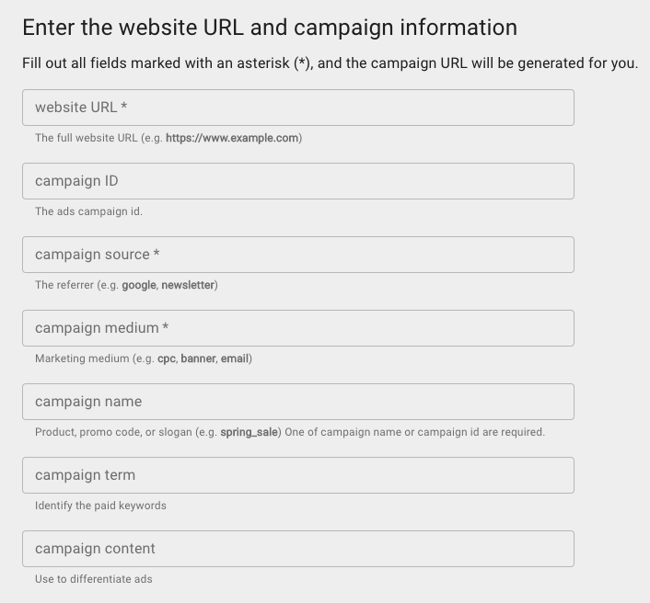
2. Fill in each link attribute in the following form.
Visit the page linked above and click the link to see this URL builder. Then, you’ll see the UTM builder shown below. Add the URL, Campaign, Source, and Medium information into their respective boxes.
3. Use the link in your marketing campaign.
If you’d like to shorten it, you’ll need a tool like bit.ly … or just use HubSpot’s URL Builder if you’re a HubSpot customer.
4. Measure your success.
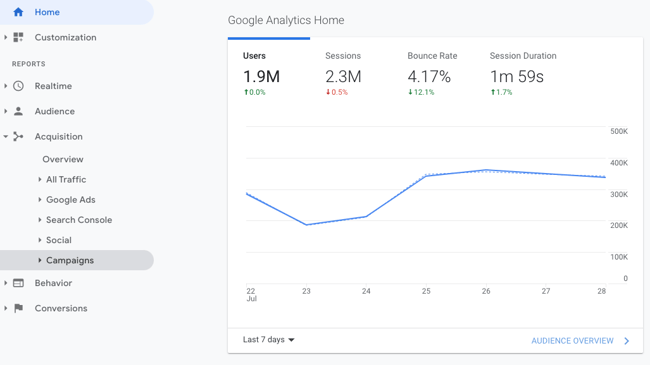
If you already have Google Analytics set up for your site, Google will automatically track incoming campaigns. Like in HubSpot, you can access them under “Audience,” then “Sources,” then “Campaigns.” Click on each campaign to view the source and medium.
And that’s it — you’ll have custom tracking codes set up and running in no time! In a few weeks, you’ll be able to make a case for what you need because you’ll have the right metrics available.
How to Build UTM Codes in HubSpot
Here’s how you’d go about building UTM codes in HubSpot.
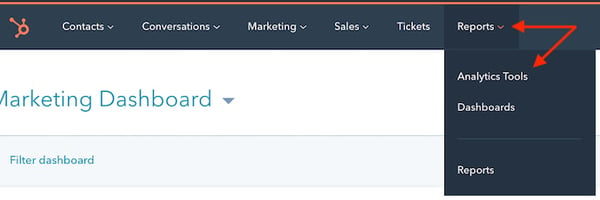
1. Navigate to your Analytics Tools.
In your Marketing Hub dashboard, select “Reports” on the top navigation bar. Then select “Analytics Tools” in the dropdown, as shown below.
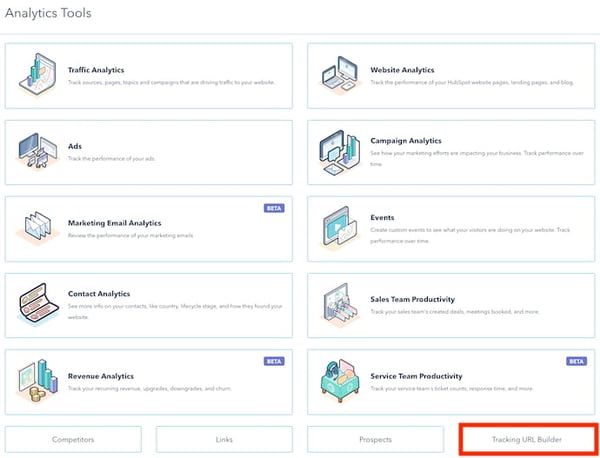
2. Open the Tracking URL Builder.
In the menu of analytics tools that appears, look to the very bottom-righthand corner. You’ll see the option, “Tracking URL Builder.” Click this option at the bottom of the page, as shown in the red box below.
3. Open the Tracking URL form to create a new UTM code.
Whenever you create a web campaign that includes at least one UTM code, you’ll see this campaign listed on the page shown below.
This page outlines a tracking tag’s source, medium, term, content, and creation date, which you can see along the bottom of the screenshot below. Click “Create Tracking URL” in the top-righthand corner.

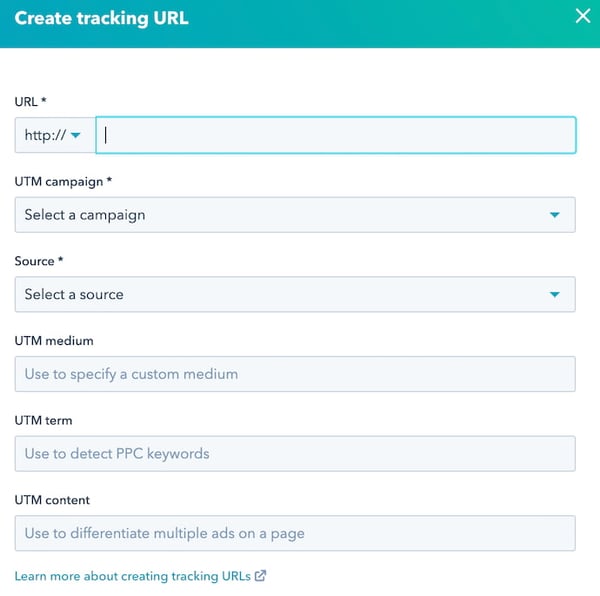
4. Fill in each attribute of your UTM code and click “Create.”
In the form that appears, fill in the URL, Campaign, Source, and Medium fields. If you’d like to add Content and Term, you can do so in the bottom two fields of this form. When you’re done, you’ll see an orange “Create” button become available at the bottom.
Click it, and HubSpot will log your UTM code as a new campaign, and this link will be ready to include on any webpage from which you want to track the traffic.
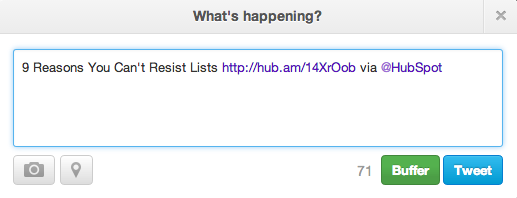
5. Use the shortened link in your marketing campaign.
6. Measure your success.
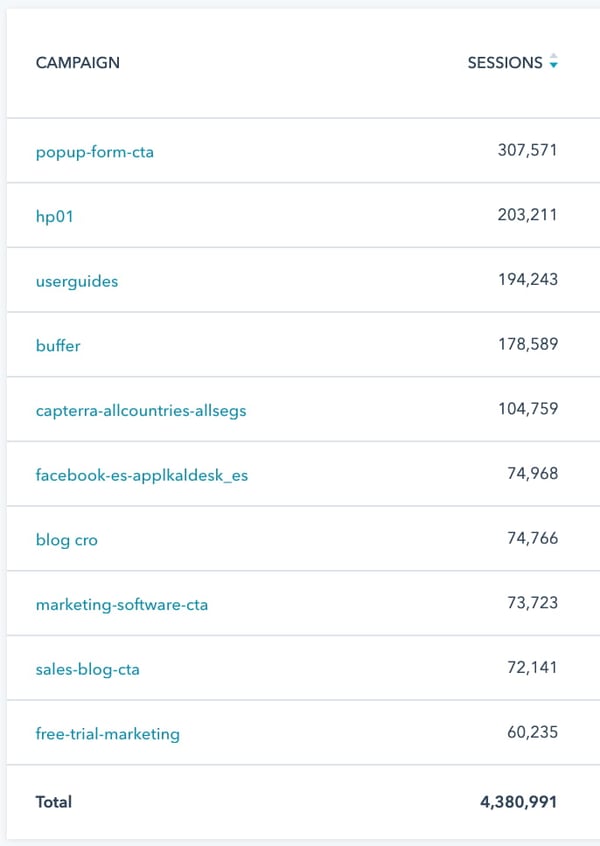
You can track your UTM parameters in your Traffic Analytics dashboard under “Other Campaigns,” as shown below. Click on the individual campaign to break down the source and medium.
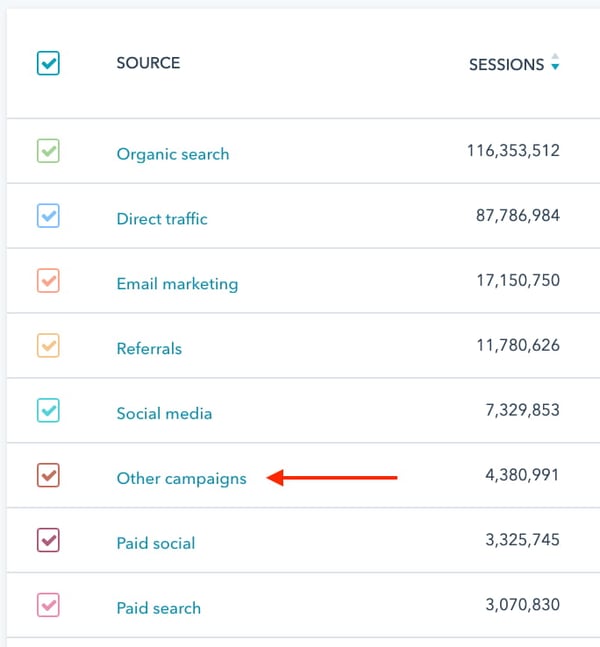
As you can see in the second image, below, the name of the campaign appears to the left — based on the text in the UTM code you created — with the traffic from people who used each URL to arrive at your campaign’s main webpage.
Now that you know how to set up UTM links, how do you use them? Let’s take a look.
How to Use UTM Links for Your Campaigns
You can use a combination of UTM codes and parameters in a lot of ways. Here’s how you can use them in your day-to-day as a marketer.
1. Track the success of a promotional campaign.
Dropping product prices or launching a new product can be daunting, because if there’s no measurable ROI, it’ll be wasted effort. Luckily, you can tell whether users are effectively arriving to your site from your promotional efforts using UTM codes.
Here’s one example for a product launch:
mywebsite.com/new-product?utm_campaign=product_launch&utm_medium=cpc&utm_source=facebook
Or, if you’re running a discount campaign through Instagram influencers, here’s what a UTM link can look like:
mywebsite.com/sale?utm_campaign=20_off&utm_medium=paid&utm_source=instagram&utm_content=bio
2. See how well your social channels promote your content versus when your followers promote your content.
How do your organic social efforts stack up against your followers’ promotional efforts? You can create two UTM campaigns to find out.
For your own posts, you can share a link as follows:
mywebsite.com?utm_campaign=inhouse_social&utm_medium=social&utm_source=facebook&utm_content=post
Then, prompt your followers to share the word about you, but let them share the following link:
mywebsite.com?utm_campaign=followers&utm_medium=social&utm_source=facebook&utm_content=post
3. Measure the effectiveness of guest posting referral traffic.
If you’re guest posting on several industry websites, it’s essential to know whether those posts are driving traffic to your site. Guest posting can be a time-consuming, costly endeavor, especially if you’re paying a freelance writer or for a spot on the publication.
Whenever you create a guest post for another publisher, ensure all the links pointing to your website on that post have UTM parameters that tell you where the traffic came from. Here’s one example:
mywebsite.com?utm_campaign=guest_post&utm_medium=paid&utm_source=guest_post_site&utm_content=body
4. Track the same piece of content across multiple marketing channels.
This is probably one of the most useful ways to use UTM tracking codes: Creating different ones for the same piece of content, and using it across different platforms. You can drop the campaign parameter for this use case, and simply track the medium, source, and content.
Let’s say you want to track referral traffic from a video you posted on LinkedIn, YouTube, and Facebook. Here are the three different links you could use:
LinkedIn: mywebsite.com/my-content?utm_medium=social&utm_source=linkedin&utm_content=caption
YouTube: mywebsite.com/my-content?utm_medium=social&utm_source=youtube&utm_content=description
Facebook: mywebsite.com/my-content?utm_medium=social&utm_source=facebook&utm_content=caption
5. See where most people click on your internal links in a blog post.
Is your internal linking strategy working as intended? You can track where your content gets the most clicks by adding UTM parameters. Here are three examples:
Image: mywebsite.com/my-content?utm_source=blog&utm_content=image
Above the Fold: mywebsite.com/my-content?utm_source=blog&utm_content=above_the_fold
Bottom of the Post:mywebsite.com/my-content?utm_source=blog&utm_content=bottom
Note: Use this strategy with caution, as using too many UTM parameters in internal links can cause confusion to Google. You should use it on a small batch of internal links, collect the clicking patterns, delete the UTM links, and then act on those results for your future internal linking efforts.
As always, ensure that you’ve set a canonical URL for each link to minimize confusion and prevent duplicate indexing.
Start Creating UTM Tracking URLs
Use the steps, best practices, and tools above to start creating and using UTM tracking URLs so you’re able to track the performance of your marketing campaigns and content. That way, you can reliably boost your metrics and improve the ROI of your digital marketing strategy.
Editor’s note: This post was originally published in September 2013 and has been updated for comprehensiveness.

Decision Trees: A Simple Tool to Make Radically Better Decisions
Have you ever made a high-stakes decision? If yes, did you contemplate for some time before landing on the “right” decision — and even then, still felt unsure about the best course of action?
In cases like those, you might need a decision tree. It’s more formal than a chat with a friend or a pros-and-cons list.

Here, we’ll show you how to create a decision tree and analyze risk versus reward. We’ll also look at a few examples so you can see how other marketers have used decision trees to become better decision makers.
Table of Contents
How to Create a Decision Tree in Excel
When it comes to marketing, decision-making can feel particularly risky. What is my colleague is so attached to a new product, she doesn’t want to mention any of its shortcomings? What if my marketing team doesn’t mind office growth, but they haven’t considered how it will affect our strategy long-term?
The visual element of a decision tree helps you include more potential actions and outcomes than you might’ve if you just talked about it, mitigating risks of unforeseen consequences.
Plus, the diagram allows you to include smaller details and create a step-by-step plan, so once you choose your path, it’s already laid out for you to follow.
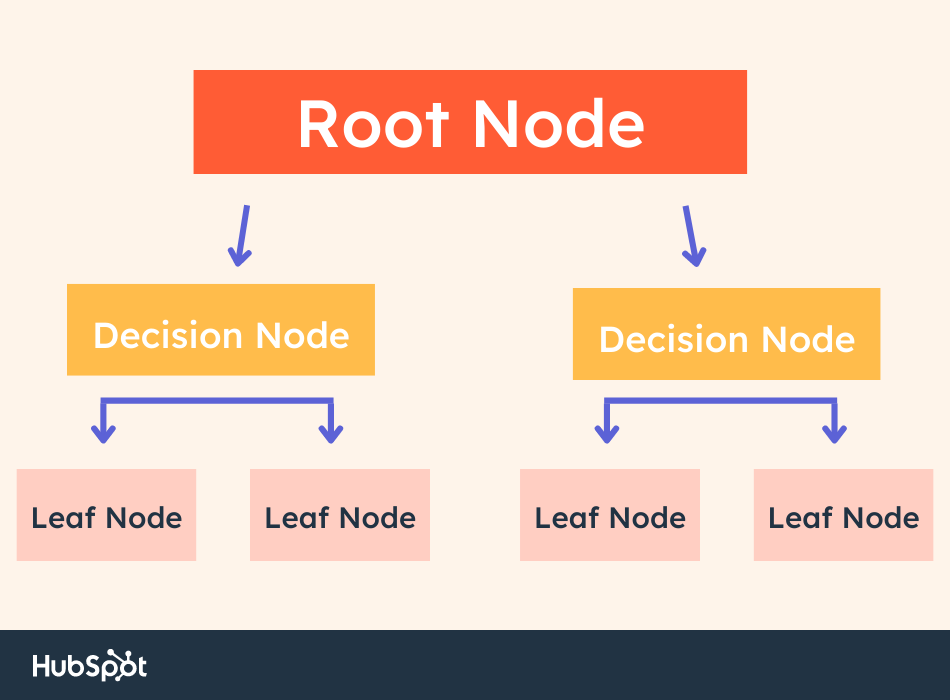 A decision tree contains four elements: the root node, decision nodes, leaf nodes, and branches that connect them together.
- The root node is where the tree starts. It’s the big issue or decision you are addressing.
- As the name suggests, the decision nodes represent a decision in your tree. They are possible avenues to “solve” your main problem.
- The lead nodes represent possible outcomes of a decision. For instance, if you’re deciding where to eat for lunch, a potential decision node is eat a hamburger at McDonald’s. A corresponding leaf node could be: Save money by spending less than $5.
- Branches are the arrows that connect each element in a decision tree. Follow the branches to understand the risks and rewards of each decision.
Now let’s explore how to read and analyze the decisions in the tree.
Decision Tree Analysis [Example]
Let’s say you’re deciding where to advertise your new campaign:
- On Facebook, using paid ads, or
- On Instagram, using influencer sponsorships.
For the sake of simplicity, we’ll assume both options appeal to your ideal demographic and make sense for your brand.
Here’s a preliminary decision tree you’d draw for your advertising campaign:
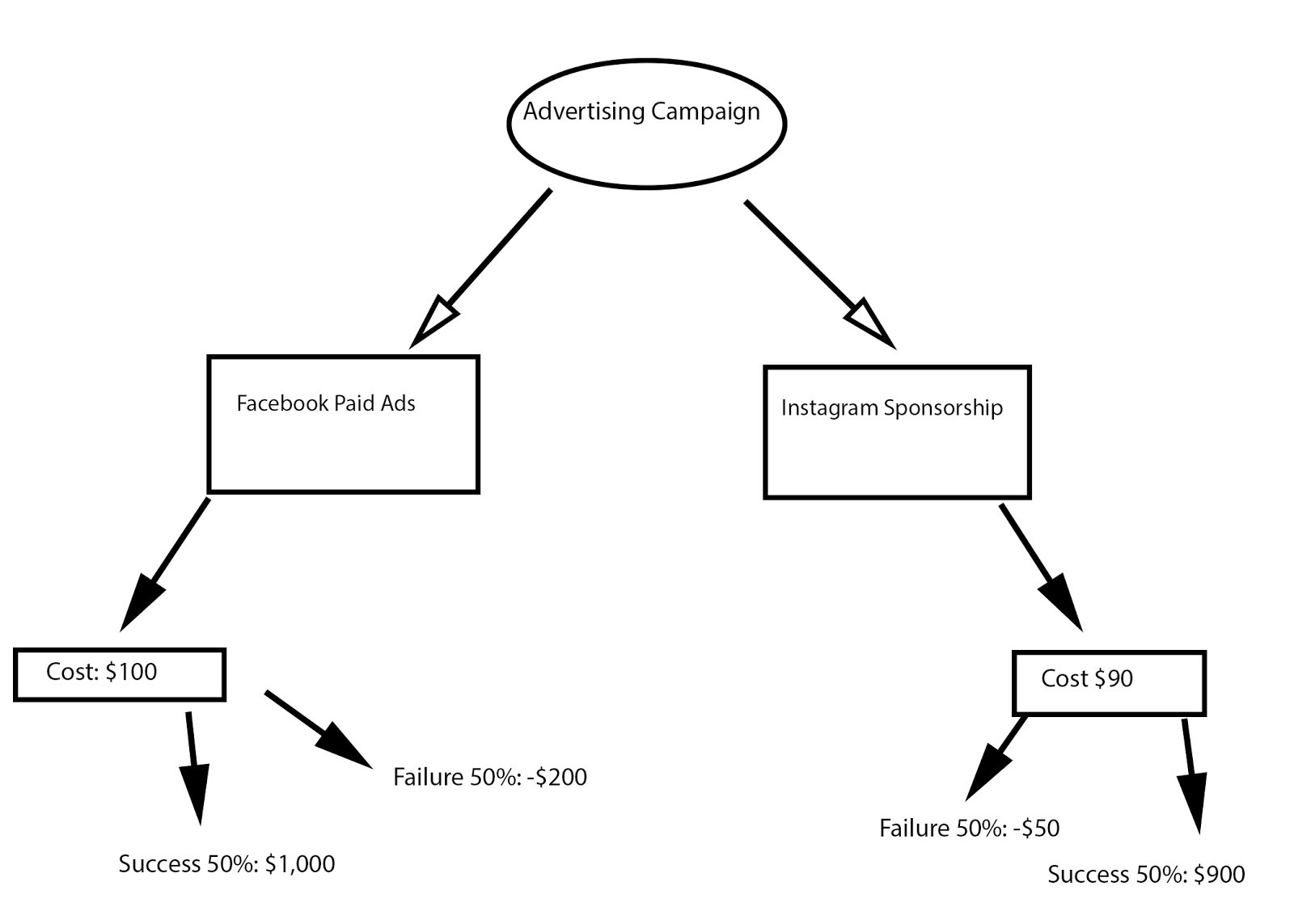
As you can see, you want to put your ultimate objective at the top — in this case, Advertising Campaign is the decision you need to make.
Next, you’ll need to draw arrows (your branches) to each potential action you could take (your leaves).
For our example, you only have two initial actions to take: Facebook Paid Ads, or Instagram Sponsorships. However, your tree might include multiple alternative options depending on the objective.
Now, you’ll want to draw branches and leaves to compare costs. If this were the final step, the decision would be obvious: Instagram costs $10 less, so you’d likely choose that.
However, that isn’t the final step. You need to figure out the odds for success versus failure. Depending on the complexity of your objective, you might examine existing data in the industry or from prior projects at your company, your team’s capabilities, budget, time-requirements, and predicted outcomes. You might also consider external circumstances that could affect success.
Evaluating Risk Versus Reward
In the Advertising Campaign example, there’s a 50% chance of success or failure for both Facebook and Instagram. If you succeed with Facebook, your ROI is around $1,000. If you fail, you risk losing $200.
Instagram, on the other hand, has an ROI of $900. If you fail, you risk losing $50.
To evaluate risk versus reward, you need to find out Expected Value for both avenues. Here’s how you’d figure out your Expected Value:
- Take your predicted success (50%) and multiply it by the potential amount of money earned ($1000 for Facebook). That’s 500.
- Then, take your predicted chance of failure (50%) and multiply it by the amount of money lost (-$200 for Facebook). That’s -100.
- Add those two numbers together. Using this formula, you’ll see Facebook’s Expected Value is 400, while Instagram’s Expected Value is 425.
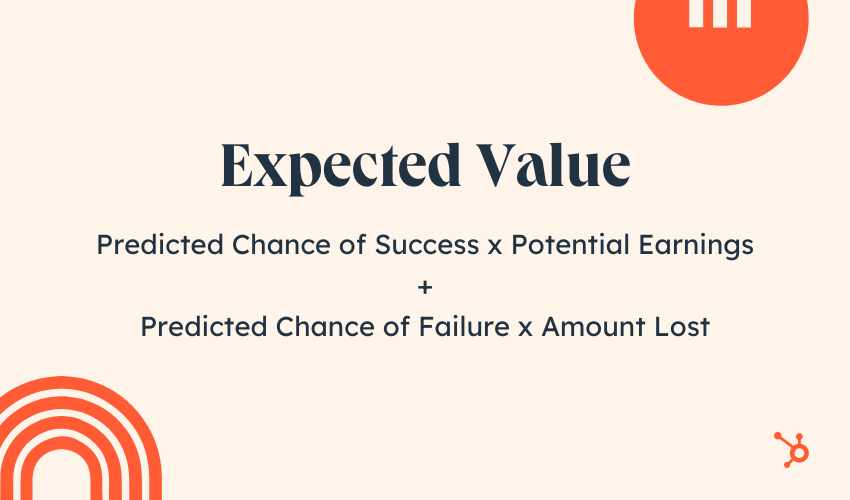
With this predictive information, you should be able to make a better, more confident decision — in this case, it looks like Instagram is a better option. Even though Facebook has a higher ROI, Instagram has a higher Expected Value, and you risk losing less money.
How to Create a Decision Tree
You can create a decision tree using the following steps. Remember: once you complete your tree, you can begin analyzing each decision to find the best course of action.
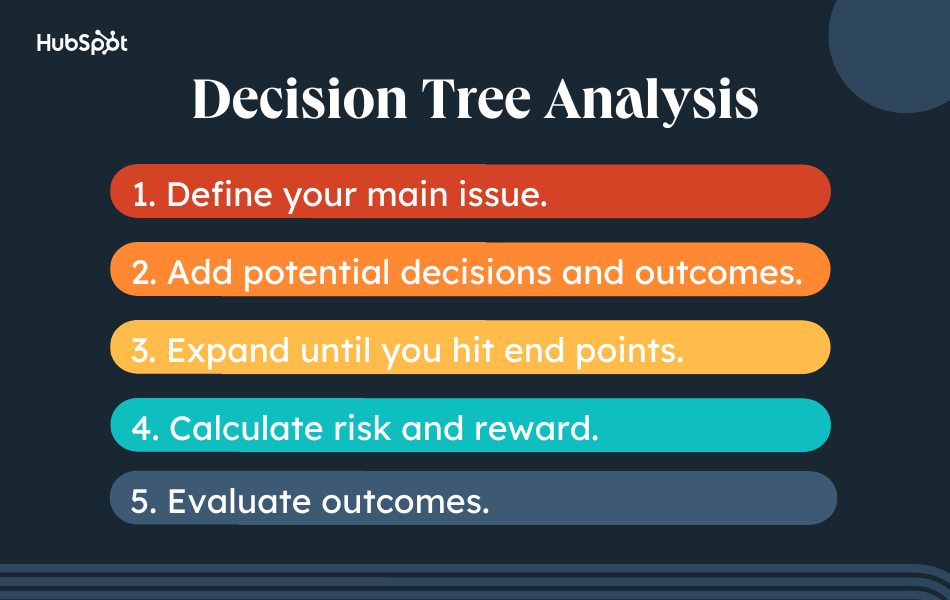
1. Define your main idea or question.
The first step is identifying your root node. This is the main issue, question, or idea you want to explore. Write your root node at the top of your flowchart.
2. Add potential decisions and outcomes.
Next, expand your tree by adding potential decisions. Connect these decisions to the root node with branches. From here, write the obvious and potential outcomes of each decision.
3. Expand until you hit end points.
Remember to flesh out each decision in your tree. Each decision should eventually hit an end point, ensuring all outcomes rise to the surface. In other words, there’s no room for surprises.
4. Calculate risk and reward.
Now it’s time to crunch the numbers.
The most effective decision trees incorporate quantitative data. This allows you to calculate the expected value of each decision. The most common data is monetary.
5. Evaluate outcomes.
The last step is evaluating outcomes. In this step, you are determining which decision is most ideal based on the amount of risk you’re willing to take. Remember, the highest-value decision may not be the best course of action. Why? Although it comes with a high reward, it may also bring a high level of risk.
It’s up to you — and your team — to determine the best outcome based on your budget, timeline, and other factors.
While the Advertising Campaign example had qualitative numbers to use as indicators of risk versus reward, your decision tree might be more subjective.
For instance, perhaps you’re deciding whether your small startup should merge with a bigger company. In this case, there could be math involved, but your decision tree might also include more quantitative questions, like: Does this company represent our brand values? Yes/No. Do our customers benefit from the merge? Yes/No.
To clarify this point, let’s take a look at some diverse decision tree examples.
Decision Tree Examples
The following example is from SmartDraw, a free flowchart maker:
Example One: Project Development
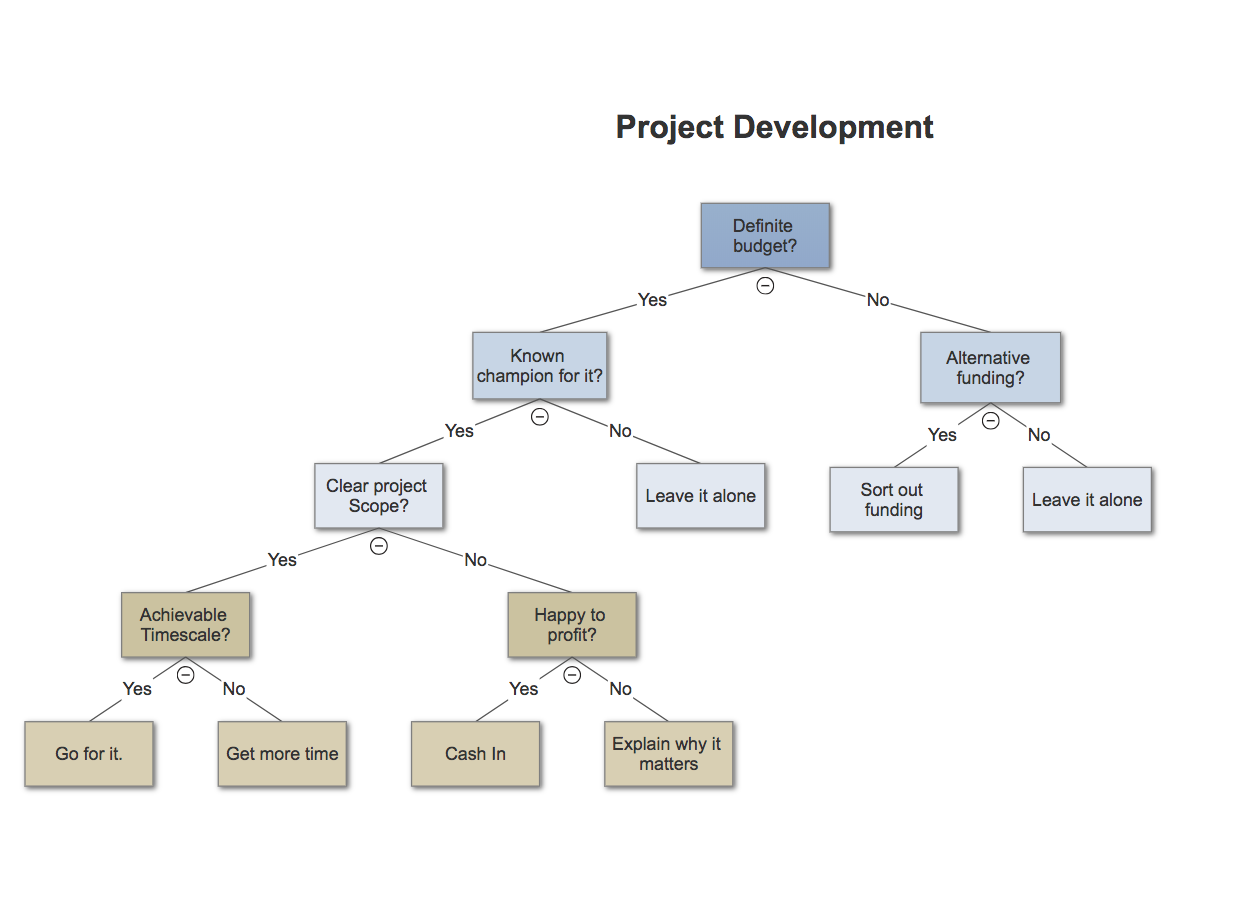
Here’s another example from Become a Certified Project Manager blog:
Example 2: Office Growth
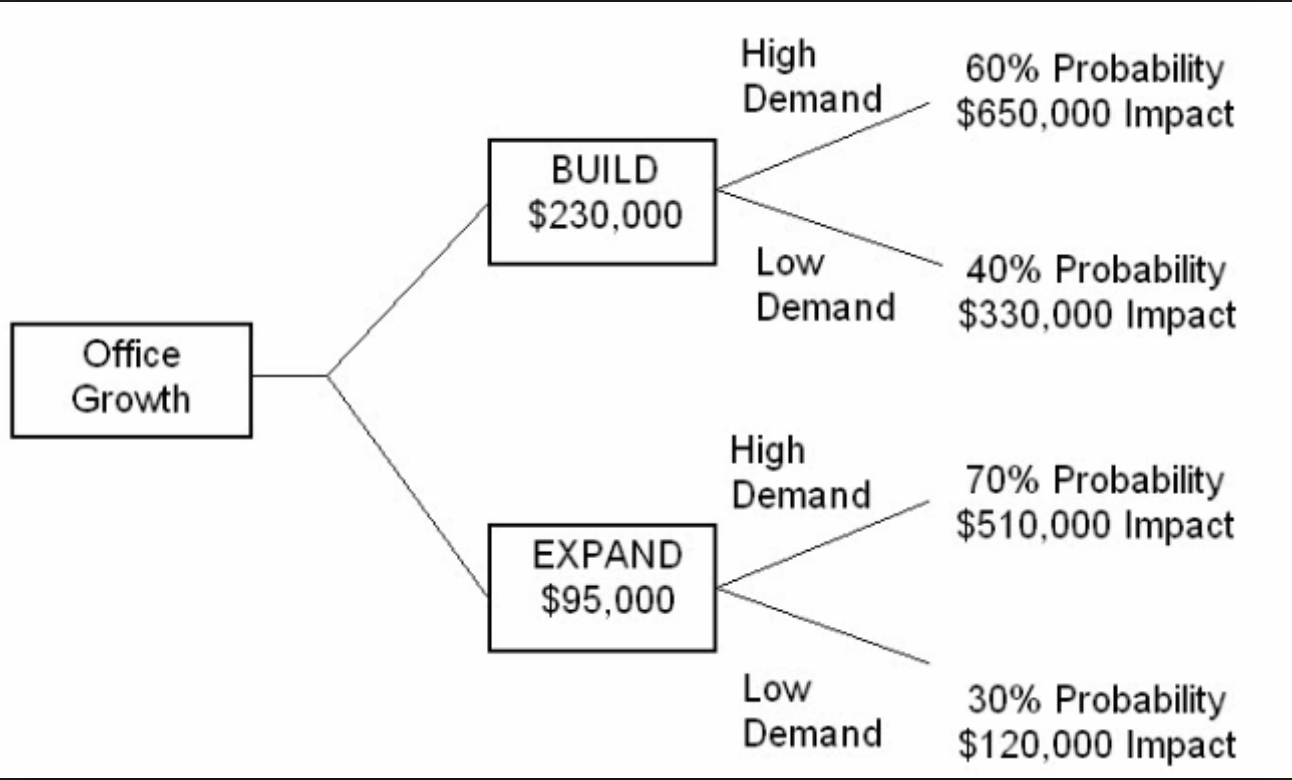
Here’s an example from Statistics How To:
Example 3: Develop a New Product
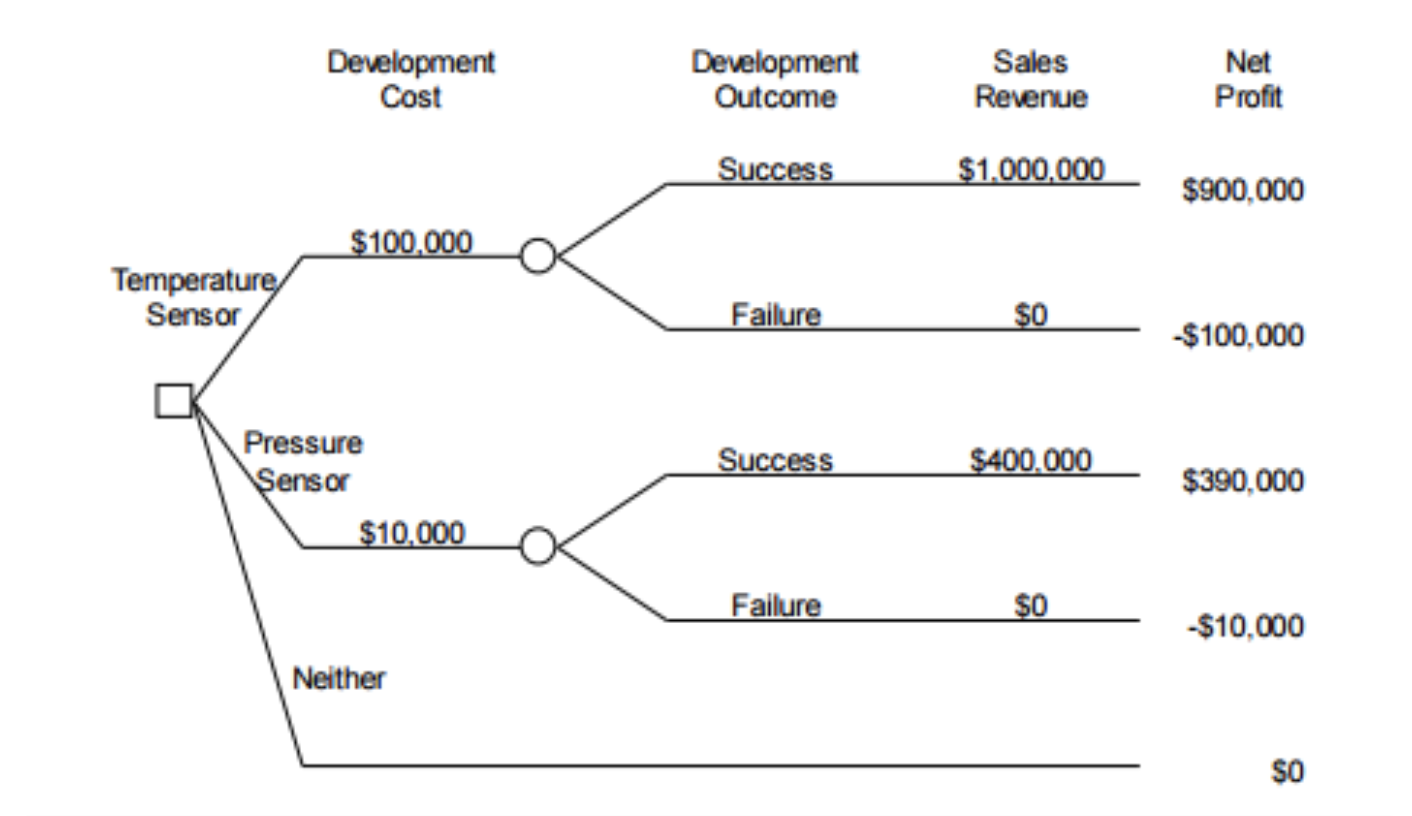
To see more examples or use software to build your own decision tree, check out some of these resources:
- IBM SPSS Decision Trees
- LucidChart Decision Tree Software
- Zingtree Interactive Decision Tree Template
Back to You
Remember, one of the best perks of a decision tree is its flexibility. By visualizing different paths you might take, you might find a course of action you hadn’t considered before, or decide to merge paths to optimize your results.


How to Start a Podcast on Spotify for Free
If you’re reading this, you’ve likely found a topic you could talk about for hours — and now you’re ready to launch a podcast.
The good news: Spotify is becoming a go-to destination for podcasts. In 2021, Spotify listeners spent 78% more time listening to podcasts than the year before.
Even better news: it’s relatively easy to start a podcast on Spotify — no fancy equipment or advanced skills required.

Here, we’ll cover everything you need to know about podcasting on Spotify, and how to upload your next episode to the platform.
How to Meet Spotify’s Podcast Requirements
The first step to starting a podcast on Spotify is making sure you meet its podcast requirements. Here’s a quick rundown.
Your podcast should have:
- A title along with relevant details (i.e., category and primary language).
- Cover art in a 1:1 ratio and PNG, JPEG, or TIFF format. The higher the resolution, the better.
- A high bitrate MP3 format (128 kbps+) or MP4 with AAC-LC.
- Episodes that do not exceed 12 hours.
Once you meet the conditions in this checklist, you’re officially ready to upload your podcast to Spotify. Check out the steps below.
1. Create a Spotify account.
Unsurprisingly, you’ll need a Spotify account to upload your podcast to the platform. If you’re new to Spotify, use this form to sign up.
2. Choose a podcast hosting platform.
Despite its podcast-friendly nature, you can’t actually host your podcast on Spotify. That’s right: Spotify only provides access to podcasts that are hosted elsewhere.
That said, Spotify has its own hosting platform — Anchor.fm — that enables you to record, edit, and share a podcast to Spotify in one location. It also offers plenty of analytics to better understand your audience.
Of course, there are plenty of other hosting platforms — both free and premium — to choose from, most notably Buzzsprout, Podbean, and Castos. Remember not all hosting sites are created equal, so pay close attention to the amount of storage and analytics each one provides.
3. Copy your RSS feed link.
After uploading your podcast to a hosting platform, the next step is to copy the RSS feed link. You can think of your RSS feed as the address for your podcast. And, like an address, there is only one RSS feed per podcast.

4. Open Spotify for Podcasters.
Next, open Spotify for Podcasters and log in with your Spotify account. Then, hit “Get Started.”
 Then, paste your RSS feed link into the text box. Hit “Next.”
Once you submit the RSS link, Spotify will verify that you own the podcast. What does this look like? Typically, Spotify will send you a code via email to verify. More than likely, this is the same email you use to log into your hosting site.
5. Add your podcast info.
Once verified, the next step is to add essential information about your podcast— including where it’s made, its primary language, your hosting provider, and its primary category.
 Once you select a primary category, you can select three corresponding sub-categories. This is especially helpful if you’re podcast spans multiple topics or genres.
After filling out the form, hit “Next.”
6. Review and submit your podcast.
The final step is reviewing the information you filled out in the previous step. Once you’re happy, hit “Submit.”
After submitting your podcast, the Spotify team will review your info and then push your podcast live. Expect this process to take a few hours. It’s also worth noting that Spotify does not alert you when it goes live, so keep an eye out for your new episode.
Back to You
In six easy steps, you can share your podcast on one of the biggest podcasting platforms today. Once your podcast goes live, remember to share it far and wide. Make this a regular practice with each episode to boost your listenership.


Best 12 Finance Podcasts To Get Your Money Right in 2022
If you’re looking for some great finance podcasts to listen to in 2022, you’ve come to the right place.
In this article, we will share with you a list of the best finance podcasts available.

Whether you’re just getting started in your financial journey or you’re looking for some new tips and tricks, these podcasts will help you out.
Best for Learning About The Economy: Planet Money
 NPR’s Planet Money describes itself as a show where listeners can learn about the economy from a friend – at a bar.
While the economy may seem like a boring topic to many, Planet Money makes it interesting by doing deep dives on who it impacts and how – everything from inflation to fast food delivery to crypto and city building.
What’s more, the show takes a global approach, tackling all countries and the economic issues they face.
Although this isn’t the show to teach you how to manage your 401K, you will learn how a lot about where the economy is and where it’s headed – which is valuable knowledge for long-term investments.
Standout episodes:
- Buy Now, Pay Dearly
- No Such Thing as a Free Return
- Of Oligarchs, Oil, and Rubles
Best for Beginners: Brown Ambition
 If you are new to the financial literacy game, you’ve probably heard of The Budgenista. She is a well-known finance educator and author with a large social media following and a frequent daytime TV show guest.
She, along with her co-host Mandi Woodruff, another personal finance expert, started a podcast so you can get their advice every week.
They cover traditional finance topics like retirement accounts, debt management, and loans while also tackling current events, such as rising inflation and the pandemic.
Brown Ambition is perfect for those who don’t know where to start to manage their finances as well as those who have the basics down but still want to do more.
Standout episodes:
- Why I-Bonds are Suddenly a Sexy Investment
- Juggling Your Business with a 9-5
- Can you buy your way to an early retirement?
Best for Seasoned Investors: Invest Like The Best
 One of my favorite ways to learn is by listening to experts. This finance podcast leverages this by bringing in investment leaders from all sectors to offer advice and share their journey with listeners.
What’s great about this podcast is that it doesn’t just focus on standard investments like 401Ks, stocks, and bonds – they also discuss artificial intelligence, ecommerce, NFTs, gaming, and more.
This show is for business-driven folks who want to learn how to diversify their income streams and scale their businesses.
Standout episodes:
- Factories of The Future
- The Past, Present and Future of Digital Infrastructure
- The Art of Software Buyouts
Best for Building a Millionaire Mindset: Manifesting Money
 Manifesting Money is a show that focuses on the psychological, spiritual, and emotional side of making money.
It’s all about attracting and retaining money to build long-term wealth.
The show tackles everything from breaking harmful generational beliefs around money to getting out of financial hardship.
This podcast is ideal for those who not only want to get their money right but also their mind.
Standout episodes:
- Releasing Your Emotional Attachment to Money
- Step-by-Step Process of Getting Through Financial Hardship
- Is Your Family Blocking Your Financial Blessings?
Best For Beginners: Clever Girls Know
 Created for women by women, this podcast is an extension of the Clever Girl Finance brand, which is personal finance media and education platform in the U.S.
From personal success stories to pop culture lessons to expert tips, Clever Girls Know has a little bit of everything in its podcast. This is what makes the podcast exciting – every week, you get something fresh and different.
Standout episodes:
- The Parallels between Your Health/Diet and Your Finances
- The Good, The Bad, and the Backlash of Saving $100K
- How Stephanie Increased Her Income, Then Identified & Addressed Her Money Trauma
Best For Side Hustlers: Yo Quiero Dinero
 We can’t talk money without talking about generational disparities stemming from race, gender, and sexual orientation. Yo Quiero Dinero tackles this and more.
Led by a Latina woman, Yo Quiero Dinero helps its listeners tap into their potential by offering the steps needed to succeed in entrepreneurship while navigating real-life challenges.
From the path to investing as a first gen to the mental health impact of pursuing financial independence, this podcast is a well-rounded podcast that teaches about money and beyond.
Standout episodes:
- How to Manage Wealth Guilt
- Why Entrepreneurship is Emancipation for Women of Color
- Taxes and Accounting for Side Hustlers
Best For Parents: Parents Making Profits
 Are you a parent struggling to balance family and business? Then, this podcast is for you.
Parents Making Profits is all about ways to earn money while balancing raising a family.
The best part? It’s led by two Dadpreneurs who practice what they preach – so, you know you’re getting advice from those who understand exactly what you’re going through and how to tackle those challenges.
Standout episodes:
- How to Get PR without a Publicist
- Who is more helpful when starting your business: Strangers or Friends/Family?
- 4 Tips for You to be an Effective ParentPreneur
Best for Short-and-Sweet Tips: Nerd Wallet’s Smart Money
 Nerd Wallet has already established itself in the blogging space as a reputable. financial education platform. In 2017, they expanded into the audio space by launching “Smart Money.”
Compared to most podcasts which usually range between 45 minutes to an hour, Nerd Wallet is short and sweet, with most episodes around 20 to 30 minutes.
These bite-sized episodes cover everything from leveraging credit card points to vetting mortgage lenders. They also do “nerdy deep dives” into niche industries like child care and weightlifting.
Standout episodes:
- When Travel Insurance is Worth It and Buying an Electric Car
- Why File Your Taxes Early and Tapping Your Home’s Equity
- Small Business Inflation and Sign-Up Bonuses
Best for Beginners: Money Please
 Money conversations can get complicated very quickly. Think of Money Please as your go-to friend for all things finances who can give you the scoop and offer advice without shaming or judging you.
The host, Berna Anat, regularly brings in experts to help listeners go from a fear of money to a love of personal finance.
Standout episodes:
- How Do I Avoid the Budgeting Guilt Cycle?
- Is It Too Late to Become Part of the CryptoClub?
- Financial Feminism
Best for Those Seeking Early Retirement: Choose FI
 Ever watch those “I’m retired at 30” videos and wished that was you? Then, start listening to Choose FI.
This podcast focuses on reaching financial independence (FI) early by exploring tactics used by those who have achieved it. They tackle debt management, tax hacks, passive income streams, real estate, free travel, and more.
Standout episodes:
- SWOT Analysis for Financial Independence
- The Art of the Career Pivot
- $1K 100 Ways
Best For Novice Investors: Coffee and Coin
 Some of the best conversations are had while drinking a cup of coffee.
This podcast aims to do just that: Real, honest conversations about money. From where to invest to how to double your earning potential.
Although the podcast was created with women in mind, anyone can benefit from listening to this podcast.
Standout episodes:
- Investing Strategies: How Erique Leveraged Automation to Turbo Charge Her Net Worth
- Why Compound Interest Is Your New Best Friend
- Bad Pocket Business Plans: What They Are & Why You Need One
Best For Real Estate Investors: On the Market
 Want to keep up with the real estate market but don’t have the time to keep up with the news? That’s where On The Market comes in.
This podcast serves as your one-stop shop to learn and get updates on everything related to the market.
From crash predictors to recession investments to interest rates, real estate enthusiasts are sure to stay ahead of the curve.
Standout episodes:
- What to Invest in During a Recession
- The Not-So-Scary Way to Start Buying Real Estate in 2022
- Host vs. Hotels: Is there still room in the short-term rental market?
Whether you’re new to personal finance or you’re a seasoned investor, there’s a financial podcast in this list for you.

Flexible Schedules: The Pros, Cons, & Surprising Outcomes
I’m willing to bet we’ve all felt stifled by the rigid 9-to-5 work schedule — especially on our productivity both in and out of the office.
For many workers, a flexible schedule is the answer. This types of schedule allows you to work when you’re most productive and gives you the autonomy you need to create an ideal work-life balance, however that looks to you.

Here, we’ll cover what a flexible work schedule looks like and explore its pros. cons, and surprising outcomes.
It’s important to remember that flex hours doesn’t equate to less hours. In fact, as you’ll read later, employees actually clock in more hours working from home. Further, there is still structure to this type of schedule: employees must work a certain number of hours, or come up with an alternative agreement with their employer regarding office hours versus remote time.
There’s plenty of science to suggest flexible work schedules are critical for happier, more productive employees and a more successful company overall.
For instance, a recent study by Qualtrics found a whopping 93% of employees feel the way they work has “fundamentally and forever” changed since the pandemic, with the most favorable changes being flexible schedules.
According to the same study, 43% of employees feel their work-life balance has increased over the past two years, along with their overall happiness and job satisfaction.
Of course, there are pros and cons to flexible schedules, just like there are pros and cons to a rigid nine-to-five job. But, since flexible schedules are becoming more typical nowadays, we’ve compiled a list of everything good, bad, and surprising about implementing flexible work hours at your office. Take a look:
1. You can adapt your schedule to fit family needs.
If you make your own hours, you can ensure those hours adapt to your family and social life demands. For instance, we have parents at HubSpot who make their hours fit around their children’s daycare schedules: they work early in the morning, take a break in the afternoon to pick up their kids, and then resume work later in the evening.
Or, perhaps your flex schedule is less rigid than that — maybe you just want time to see your son’s soccer games, or your sister’s graduation, and you need flexibility to manipulate your work schedule without taking time off.
Emily MacIntyre, HubSpot’s former Marketing Team Development Manager, agrees that there are pros and cons to flexible schedules in regards to parenting.
She tells me, “There are often in-office events after work that I have to miss out on, because I need to be home. But I get to see my daughter, and spend time with her each night, so it’s a trade-off.”
Ultimately, a flexible schedule can go a long way towards maintaining a healthy work-life balance and protecting important relationships in your life.
2. You can indulge in self-care.
It might sound strange, but having the option to occasionally put your personal needs before work can help you find more joy throughout your day.
Self-care can be anything from a noon cycling class to finding time to meditate in the park — anything activity that makes you feel better able to tackle your responsibilities with a clear mind.
3. Your employees can pursue passions outside of work.
Unfortunately, your employee’s passions can’t always fit outside a nine-to-five work schedule. Sometimes that poetry class starts at four, and other times your hiking group leaves at noon on a Friday.
There are a few reasons it’s important to give employees the freedom to pursue other passions. First, passion can encourage innovative ideas. The more well-rounded your employees are, the more likely they are to apply unconventional solutions to your company’s problems.
Also, as previously mentioned, happier employees are more productive. And, lastly, if your employees can find outlets outside of work to pursue their passions, they’re less likely to feel unsatisfied in their current role.
4. Your employees can work whenever they’re most productive.
For me, personally, this is the single most important benefit to flexible schedules: I work insanely well in the mornings. On some mornings, it feels like I can finish two-weeks worth of work before noon. But then, three or four p.m. strikes, it becomes a struggle to even write a grocery list.
On the other hand, one of my coworkers does best when he can come into the office around 10 a.m., and then work, head-down, later into the night.
Tony Schwartz, author of The Way We’re Working Isn’t Working, writes about the importance of working like a sprinter. He says it’s important to work intensely and distraction-free for a period of time, but equally critical to take regular renewal breaks to recover from that intense work period.
Ultimately, your employees aren’t all going to be productive at the exact same time. Flexibility allows them to become better workers — they will get everything accomplished during the hours they want, and they won’t feel burnt out from sitting at their desks during times they are unproductive.
5. Your employees can avoid rush hour.
Recently, the average one-way commute in the US increased to a new high of 27.6 minutes. That’s almost five hours a week wasted.
Another study found employee happiness decreases as commute times increase. Ultimately, a long commute can drive employees to search for companies closer to home or with different hours.
An easy way to improve employee satisfaction is to allow commuters the option to avoid traffic by leaving even just thirty minutes later. It can also positively impact your employee’s level of energy and productivity.
6. You give employees a sense of autonomy.
People like control over their schedules — it enables them to feel fully in charge of their work and personal lives, and makes them feel like their company trusts them.
HubSpot’s Culture Code recognizes the importance of autonomy, saying, “Results matter more than the number of hours we work. Results matter more than where we produce them.” And, referring to the Economist graph we mentioned earlier, we can see it’s true — people are more productive even when they work fewer hours, so why not let people choose whichever time they need to commit to deliver the best results?
Siobhán McGinty, a Senior Team Manager in HubSpot’s Dublin office, says her flexible schedule gives her the opportunity to “live my best life. I enjoy getting up at 7 a.m., clearing my emails, enjoying my coffee and getting some work out of the way early on in the day. I also enjoy taking two hours off in the middle of the day to go to the gym, or do yoga, or — if it’s pay day — get a massage.”
7. You can recruit and retain better talent.
Flexible schedules have been shown to increase employee productivity and overall morale. Ultimately, you can use the benefits of a flexible schedule as a selling point for hiring better talent.
Offering flexible schedules is a good way for your company to attract talent and stand out from competitors in the industry, particularly as flex hours and remote work rise in popularity and employees begin to expect it from their next job.
We’ve covered seven different ways flexible schedules can benefit both employers and employees. But like any work arrangement, there are also some downsides to consider before committing to becoming a flexible workplace. Here are a few risks associated with flexible schedules.
1. It’s more difficult for you to arrange meetings with your team.
If everyone has different schedules, figuring out everyone’s availability can get tricky — for instance, perhaps you can’t have any nine a.m. meetings because three people on your team don’t arrive until 10 a.m. This gets even harder if your team works around the globe, or if you need to schedule meetings with clients who work the traditional nine-to-five.
2. Lines between work and life blur more drastically.
Maybe you’re working from home and your roommate asks you to go to a cycling class at noon, and suddenly it’s three p.m. and you’ve still got a ton of work to do. Or maybe your kids interrupt meetings and calls with pleas for trips to the pool.
Whatever the case, life intervenes more drastically when you’re working flexible hours, particularly if you’re working remote. Plus, if all the people in your life work nine-to-five, they might try to pressure you into plans that are inconvenient for your schedule, since you “make your own schedule anyway.” Drawing boundaries between personal life and work can get difficult.
Besides having a tough time getting into work mode when you’re tempted by your personal life, it’s also often challenging to shut off “work mode” when you can technically work whenever you want. Maybe it’s eight p.m. and you simply can’t relax when your desk, and all those piles of work, is within view.
During such instances, it’s important you separate work from the rest of your life as much as possible, even creating a physical boundary by closing your office door when you leave.
3. You won’t find much structure at home.
If you’re working remote, there’s very little structure. With that freedom to take breaks, you might suddenly find you’re getting very little done.
Working remotely often requires more focus and discipline than working in an office. You’ll need to set your own rigid structure and stick to it, or you might risk your performance sliding as you take more TV breaks or spend precious productivity hours folding laundry.
4. It can be difficult to create a bonded team.
If you’ve got a team that works from wherever, whenever, it can be hard to pencil in time to develop organic, authentic relationships between your team members. It just doesn’t happen as naturally as it would if everyone sat beside one another 9 to 5 and digressed into talks about the latest Bachelorette episode.
One way to counteract this is to plan fun corporate team-building activities, but you might still need to work with everyone’s flex hours or remote time.
Siobhán McGinty admits remote work in particular can get lonely. Here’s what she suggest: “To overcome that, I set up virtual ‘water cooler chats’ with people on the team if I have 15-30 mins between meetings. It also helps to maintain rapport.”
She also says she “practiced” going remote by initially working from home a few days a week, and eventually working her way up to full-time remote, and admits while rewarding, it’s also difficult.
Flexible Schedules: The Surprising
We’ve explored some pros and cons of a flexible schedule for employees and employers, but there are some additional surprising facts you should know when deciding if flexible schedules is right for you and your company.
1. The more flexible your employees’ schedules are, the longer they’ll work.
If you’re worried about employees taking advantage of flexible hours and working an hour a day before hitting the beach, don’t be — a recent report by Owl Labs found that 55% of respondents say they work more hours remotely than at the physical office.
One explanation for this is known as the gift exchange theory, which is the idea that you’re grateful when your employer gives you a flexible schedule and you see it as a gift, which you feel obligated to repay by working harder and longer. You want to prove you deserve the flexible schedule, so you push yourself to work over eight hours a day.
2. Flex hours make your employees happier — and their children.
A study conducted by the American Sociological Review found workers with flex hours slept better, felt healthier, and were less stressed than their nine-to-five counterparts. Overall, the group with flex hours felt happier than the group with a rigid schedule.
But, most surprisingly, as noted by the New York Times, is “the effects even cascaded down to employees’ children, who reported less volatility around their own daily stresses; adolescents saw the quality of their sleep improve.”
Happiness is contagious — and so is stress — so it makes sense parents with lower levels of stress and higher levels of happiness were able to spread those emotions to their children.
3. Remote workers are taking less sick days.
For many remote workers, a sick day is just another day. A recent report found two-thirds of US workers feel remote work adds pressure to work through sickness. Another report suggests workers feel obliged to clock in remotely, even if they’re ill.
Of course, not taking breaks — whether sick or not — can quickly lead to exhaustion and stress. In fact, remote work is not a “cure” for employee burnout. In fact, a 2021 study found those who work virtually are more likely to say burnout has worsened over the years (38%) than are those working on site (28%).
Final Thoughts
Ultimately, providing flexible schedules for employees won’t work for every company or every department.
For instance, if your employees work in the services industry and often speak both on the phone and in-person with clients, perhaps you need them to maintain a nine-to-five schedule.
Hopefully, weighing these pros and cons will help you make the best decision for your team, or even brainstorm alternative ways to combat some of the negative consequences of a traditional work schedule.

The 5 Best Cities for Black Entrepreneurs
Welcome to Breaking the Blueprint — a blog series that dives into the unique business challenges and opportunities of underrepresented business owners and entrepreneurs. Learn how they’ve grown or scaled their businesses, explored entrepreneurial ventures within their companies, or created side hustles, and how their stories can inspire and inform your own success.
White-owned businesses receive an average of $18,500 in outside equity at funding, compared to just $500 for Black-owned businesses.
On top of that, it can also be challenging for Black entrepreneurs to find mentorship, resources, and even community with other business owners with their shared experiences.
Thankfully, there are cities where Black entrepreneurs, past, present, and future, thrive and have access to the resources and support they need. Read on to discover five of the top cities for Black entrepreneurs.

Top Cities for Black Entrepreneurs
1. Washington, D.C.
Sometimes called the Chocolate City, Washington D.C. was the first majority Black major city in the United States in 1957.
Its Black population has lessened since then, but LendingTree ranks it the second-best city for Black Entrepreneurs, with 8,649 of its 111,872 businesses being Black-owned with an average revenue of 95,230 (according to IncFile).
Black entrepreneurs in the city have access to various programs, resources, and support, like the Greater Washington DC Black Chamber of Commerce, Black Owned Small Business Expo, and the Washington Area Community Investment Fund.
It’s also home to HBCU Howard University, where HubSpot has made significant investments in helping students with entrepreneurial interests develop their skills, some of whom might be interested in working for a new business venture.
2. Houston, Texas
Houston, Texas, is the birthplace of Beyoncé and Megan Thee Stallion, two famous Black women with successful entrepreneurial ventures.
Almost four thousand of over 111,041 businesses in the city are Black-owned, but the city makes up for it in its offerings. For example:
- The Business Readiness Training Program provides support and development opportunities
- Black Book Houston brings visibility to Black-owned businesses
- The entire state of Texas ranks in the top 10 best states for women in business and has the second highest startup survival rate of 81.90%
The Black Marketing Initiative brings Black entrepreneurs through a training, mentoring, and networking program to help them succeed.
3. Atlanta, Georgia
Dubbed the Black Mecca, Atlanta is home to famous Black entrepreneurs like Rick Ross and Cardi B. In a city of 113,110 businesses, 7,539 (6.75%) are Black-owned, meaning that there is a community of Black entrepreneurs that already live there.
Atlanta also has ample resources and opportunities for Black business owners, like the Atlanta Black Chambers, the University of Georgia Office of Small Business Development’s Multicultural Business Division, and events like WeBuyBlack that champion Black-owned businesses and their products.
Morehouse College and Spelman College, two HBCUs, are also in the city, so recent business and entrepreneurship graduates eager to learn and make an impact are likely open to advancement opportunities.
4. Charlotte, North Carolina
Charlotte, North Carolina’s biggest city, is home to the Mecklenburg Investment Company, the first Black financed and occupied building in the city. When it first opened it housed numerous Black businesses, and the area around the building became known as Black Wall Street as businesses prospered.
With such a rich history of Black entrepreneurship, Charlotte is worth considering for entrepreneurs looking to establish roots and grow their businesses — 14,000 Black entrepreneurs have already done so.
Organizations like the North Carolina Black Entrepreneurship Council and Black Business Owners of Charlotte offer support, community, advice, and representation from those with similar experiences. The city is also home to BLCKTECHLT, a business that assists startups in bringing their ideas to market, helping with branding, funding, finding resources, and mentoring opportunities.
5. Richmond, Virginia
The Jackson Ward Neighborhood of Richmond, VA, is one of the first Black Wall Street communities. Richmond’s Maggie Lena Walker was the first African-American woman to charter a bank and serve as bank president.
This entrepreneurial community is still prevalent and thriving, and LendingTree has ranked it third in its list of best cities for Black entrepreneurs, with 7% of businesses in the city being Black-owned and a 79.54% startup survival rate for the state of Virginia.
Entrepreneurs in Richmond will also find support and community in the Northern Virginia Black Chamber of Commerce, Virginia Black Business Expo, BLCK Street Conference, and the Jackson Ward Collective, which connects Black entrepreneurs with the resources they need to achieve their goals.
Black Community Support Can Help Black Entrepreneurs Thrive
One of the essential things for Black entrepreneurs is having community support from people with shared experiences. Take stock of what is most important to you as you start your new venture — all of the cities on this list have a lot to offer and might just be the birthplace of your successful business.