Why You Shouldn’t Ignore the Role of Social Media in Brand Building
90% of people buy from the brands they follow on social media. But the role of social media in brand building is more complex than it used to be.

Brand saturation, creator communities, and more have changed the way that people interact with brands on social media. You can’t just build a brand with a great logo, quirky copy, and a pleasing palette. Audiences today are looking for something more.
The Role of Social Media in Brand Building
To successfully build your brand on social media, you can start with creating a great visual brand. But you can’t stop there. You need to dig deeper into your users and what they’re looking for online. Let’s talk about the big ideas that impact branding on social media.
1. Social media is where subcultures connect.
While pretty much everyone you know is online, they’re not there to talk to just anyone. On social media, it’s common for users to connect with small groups of people with similar interests.
These small groups usually stand out for a specific interest or topic. Together they look for ways to stand out from what’s typical.
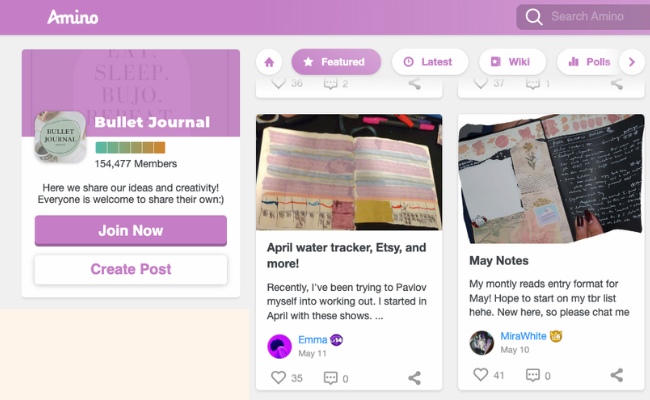
For example, Amino Apps is a space where members of K-Pop, Anime, and other fandoms connect. In these communities, they share original art, memes, and other content.
These online spaces empower members of subcultures a place to engage and grow their interests. They are also a powerful space for businesses to engage with vocal influencers.
Tactical tip: Target a specific group and have something useful to say.
It’s tempting to go for the largest possible audience with your advertising budget. But social media has changed the way that businesses connect to an audience.
Instead of using your resources to create a big audience, seek to build an engaged one. Do your research and connect with online communities that are relevant to your business.
Once you find these groups of potential buyers, don’t spam them with ads. Subgroups tend to be wary of popular culture and are quick to call out the fake and superficial.
Take time to learn about these communities and their likes and dislikes. This information can help you shape your product and make updates that can improve sales.
While it used to be the norm for branding to shy away from politics and other divisive topics, buyers today want brands to take a stance. When you do choose to post and respond, show your awareness of the group and how they feel about current events.
Use social media to prove that if you’re not already part of the group, you have something useful to offer.
2. Every social media platform is unique.
Businesses tend to approach social media based on ROI. But it’s different for users. Many things impact which platform you spend the most time using, including:
- Posting format
- Algorithms
- Brand message and values
- Privacy
- Where your friends are
Each user factors these ideas into their decision about which platform to use. And even if they have every app on their phone, they’re bound to use some more than others.
These decisions lead to the data that businesses use to choose the right platform for brand building. Because there is so much data out there, brands sometimes try shortcuts.
For example, 90% of Instagram users follow at least one business. This might lead a business to build a brand only on Instagram, even if the customers they want spend more time on Pinterest.
Buzz around the brand says that most of Pinterest’s users are female. But a closer look at their demographics shows that 45% also have an income over $100K.
It’s important to trust your gut, but don’t jump on the superficial differences. Instead, use the uniqueness of each platform to choose the right social media platform and hone your branding strategy.
Tactical tip: Choose the right platform for your target audience.
After you’ve built a detailed buyer persona, do a deep dive into the specifics of each platform. There is a lot to consider, including the number of users, demographics, and features. If you’re not sure where to start with your review, this article can help you choose which social networks are best for your brand.
Next, create test accounts and spend some time interacting in the spaces where you think your target audience will be. This research won’t only help you get a sense of which social media platforms are best for your brand. It can also help you decide what kind of brand content you want to create.
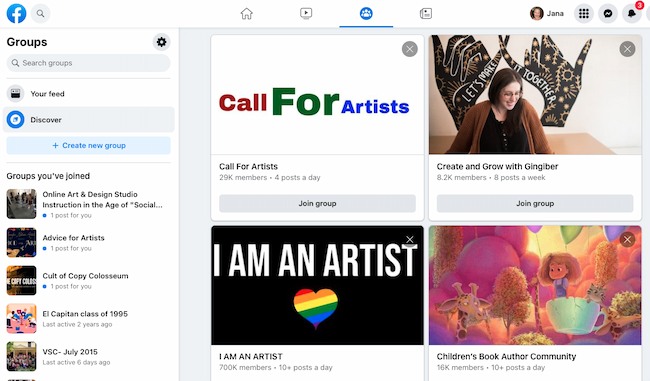
And don’t forget about emerging platforms. These could be the best place to connect your new brand with an audience that’s looking for the exciting and new.
While you CAN post the same content to every platform in an attempt to save time and resources, it’s not a great idea. Each social platform is distinct. You’ll want to post content that reinforces your brand identity for the specific audience on each platform.
3. The average person spends 147 minutes a day on social media.
That’s a lot of time. These users are sharing and posting photos and videos. They’re building their personal networks and discovering new skills, hobbies, and events. While some social media users are there to watch, many others want to take part and grab some attention.
But brands are seeing lower engagement on Instagram, Facebook, and Twitter. This shift is leading many businesses to spend more on social advertising and to post more often. But are these efforts the best strategy?
Tactical tip: Show up every day.
Consistent authentic communication builds trust and awareness. Regular posting can help your brand build consistent imagery, colors, and voice with public feedback.
But a constant flood of posts may not be the best approach for your chosen platform. In fact, algorithm-based platforms may create a frustrating experience for your followers. This guide to publishing frequency can help you create a rhythm that works.
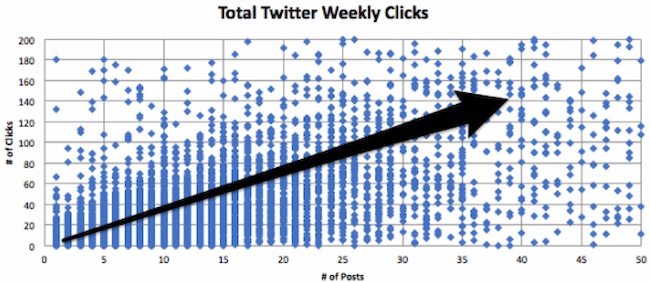
It’s also important to remember that people on social media want attention just as much as you do.
An effective social media strategy should be more than a posting schedule. It’s about honest engagement with a community. The best place to start engaging is by posting comments on relevant threads.
4. People are always looking for something new and interesting.
It’s difficult to create something completely new. Being creative, fun, and business-focused is even tougher. But those aren’t the only challenges of building an original brand on social media.
People aren’t just spending a lot of time on social media today. For many, these online communities are where people spend the majority of their time.
This means that they don’t just see a meme once or twice. For 55% of Gen Z and 48% of Millenials, viral social media content is more valid than the latest song, movie, or video game.
This is a cultural shift to consider as you build your brand identity on social. Many people aren’t passively consuming your brand content. They see social media content as a starting point. They want to add to or change the conversation.
People are sharing 3.2 billion images and 720,000 hours of video every day. This means that your brand messaging can’t just look great on a mobile device, it has to stand out. This volume of media consumption also creates a healthy amount of skepticism. Any brand message on social media today needs to stand up to close examination by a global audience.
Tactical tip: Be yourself.
Originality can seem like an impossible goal. So, if you can’t be original, be honest. While it’s tempting to riff off what’s already out there, the best strategy for any brand is to just be you.
It can be uncomfortable getting personal and showing your imperfections online. It’s also a huge business risk. It’s not unusual for global brands to use test audiences and surveys before any campaign launches.
But with the growing awareness of social media audiences, honesty is opportunity. Influencers like Elyse Meyers and Ajani Huff are growing audiences of millions being their authentic selves.
Instead of seeking perfection, audiences are looking for brands that are clear about what they stand for and ask them to engage. Brand building this way on social media is scary, but it also may be your best path to success.
5. 76% of U.S. consumers expect brands to respond to social media messages within 24 hours.
13% expect a response within ONE hour. While most people spend an hour and a half or more on social media every day, that time isn’t consecutive. According to Accurion in 2021, Americans check their phones 96 times a day.
Once they’ve sent a message, part of what they’re checking is whether they’ve heard back from you.
But most businesses don’t check their social media accounts on their phones. They might schedule social media posts from a third-party platform but rarely log in. A customer service team might check social messages once a week or less if social isn’t connected to the tool they use to respond to customer inquiries.
To put it simply, there are a lot of chances for a brand to miss customer outreach. That can harm your branding efforts.
Tactical tip: Talk back.
To develop your brand on social media, find a way to be available to anyone who reaches out. This might mean:
- Shared social media schedules
- Clearly posted hours to set response expectations
- Community message boards
- Connecting your service portal to social media
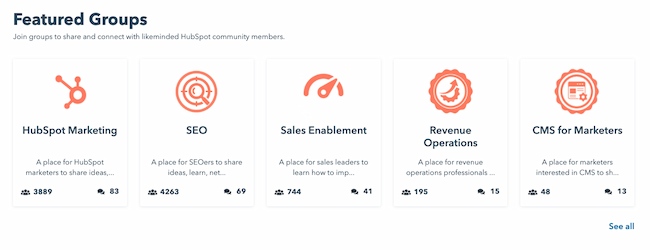
85% of surveyed service professionals say that customers are likely to share their experiences with others. Whether it’s positive or negative feedback, social media is for sharing opinions.
What can your brand do to make it easy for you to give your customers the social media service they expect?
6. Social media audiences are more likely to listen to each other than a brand.
Social listening can help you pay attention to what people are saying about your brand. But how can you insert yourself into the conversation?
Tools like AdRoll can serve ads that build awareness of your brand through social media, but this strategy may impact trust. It can erode the brand relationship if your brand shows up too often or in a place the user isn’t expecting.
To find their favorite brands, most people contact someone they’re comfortable with. 60% of shoppers refer to friends and family for shopping advice.
So, the best way to build your brand is through networks of connections, not just specific users.
Tactical tip: Leverage influencers.
Social media influencers and creators are starting to impact buyer decision-making. The reach of social media makes it easy for influencers to build your brand with their reputation.
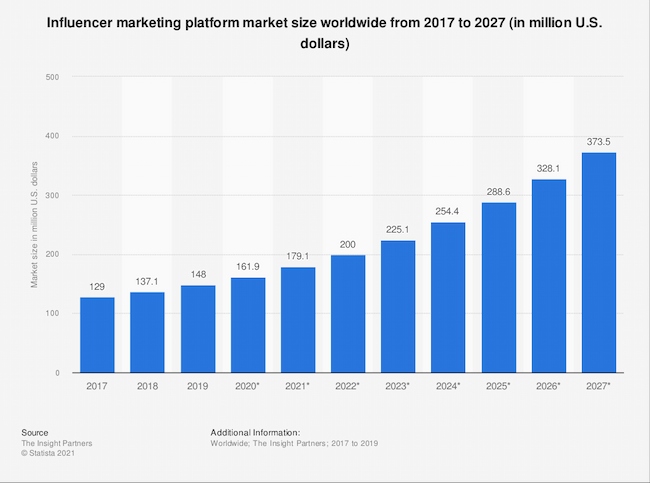
And an influencer doesn’t have to be one of the top influencers on Instagram to make a difference. Nano influencers can be less expensive to work with and may be more effective at targeting the right subgroup to boost your brand identity.
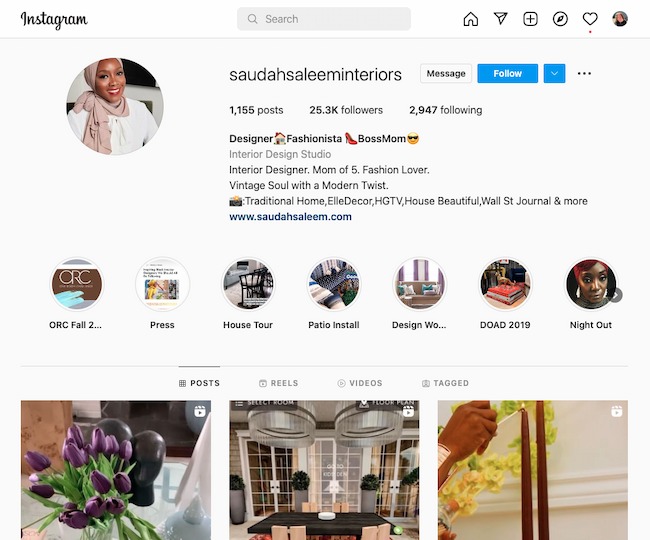
If you haven’t already started working with influencers for branding, start now.
7. Audiences want brands to keep up with what’s happening.
Your brand isn’t just competing with friends, family, and other brands for their attention on social media. According to Pew Research in 2021, about half of the consumers in the U.S. get their news from social media.
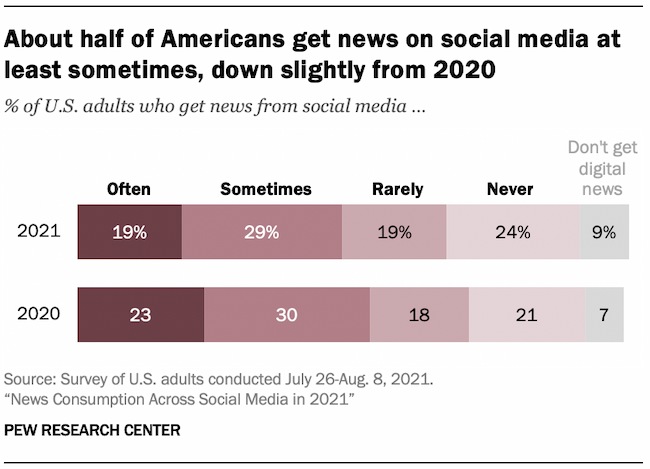
While brands that comment on current events sometimes get it wrong, users want to know where brands stand in politics and culture. And 58% of consumers feel that social media is the best place for these conversations.
Social media gives you a chance to add to important conversations as they’re happening. This helps you define your brand by its character, not just how it looks and sounds.
Tactical tip: Use data to keep pace with your audience.
Your audience also wants to know what you stand for as a company. They want to know how you are putting those sentiments into action.
But if you are tight on resources, it can be tough to know what’s most important. Many brands get stuck figuring out how to get their ideas in front of their audience at the right time.
Social media offers extensive data for brand analysis and improvement. You can use this data, along with alerts and social listening, to guide your social content.
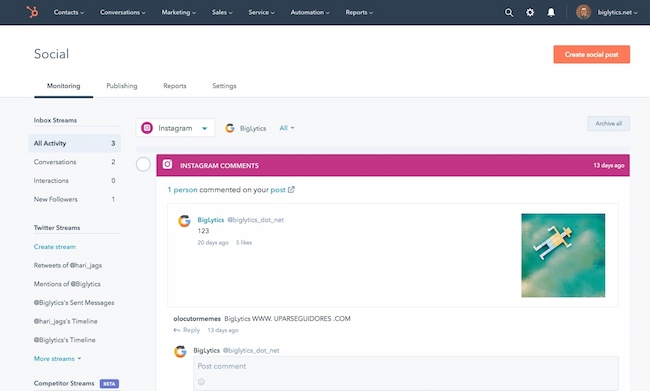
For example, using HubSpot’s social media management software you can track specific keywords. Besides tracking brand mentions, you can use this tool to follow relevant news in the areas that you and your users care about most.
6 Examples of Brands Thriving on Social Media
Now that you’ve got an idea of what you need to do, let’s take a look at some brands that rock branding on social media.
1. HubSpot
There are a few key ways we encourage discussion of the HubSpot brand online.
First, build an awesome product. If you create a powerful product, people will talk about it and build your brand for you. You can’t pay for comments like this one:

They’re authentic, and the only way to cultivate them is by creating an authentically great product.
Next, create a strong company culture. Share information across your company and encourage your employees to use social media. If you do this, and you hire great employees, they will help define your company’s brand for you every day.
2. Seasum
Also known as TikTok leggings, Seasum’s high waist yoga leggings took over the popular social video platform in late 2020. Hashtags like #TikTokMademeBuyIt and #tiktokleggings amplified the brand’s reach. And most videos show users’ surprise and delight as they try on the leggings and see their lifting and shaping effect for the first time.
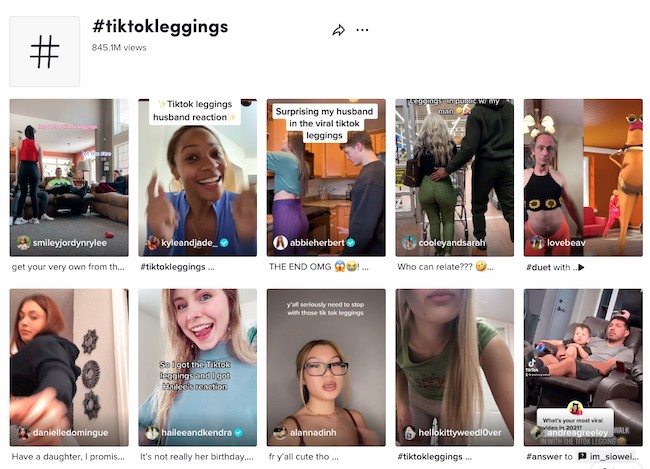
The leggings continued to dominate in 2021. The story of their viral popularity got a boost from many media outlets including Seventeen, People, and ET Online. To succeed on social media, start with a great product.
3. Planet Money
This NPR program is a favorite on social media because their social strategy matches the vibe of its programming. It uses Twitter to answer listener questions, creates offbeat low-fi educational videos for TikTok, and its Facebook posts offer a simple news feed of recent articles.
4. Louis Vuitton
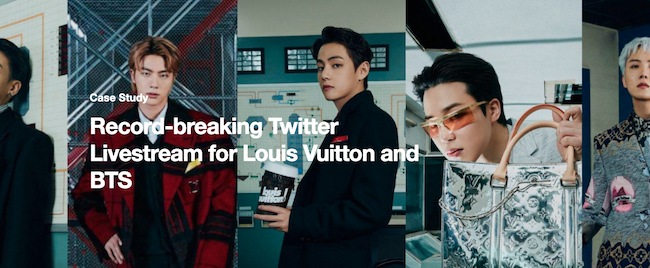
This luxury brand uses powerful visuals, including mesmerizing product videos, to cement brand impact on social media. Some luxury brands were slower to embrace social platforms. But Louis Vuitton engaged early and continues to shift its strategy with the times. A recent example is this celebrity collaboration with the pop group BTS.
5. Oreo
This brand takes every potential opportunity to engage audiences on social media. They do this with careful planning and thoughtful promotion of user-generated content.
Oreo uses current events, cultural movements, and customer suggestions in a considerate, fun, and respectful way. These are long-term strategies that come off as simple but take awareness, sensitivity, and effort.
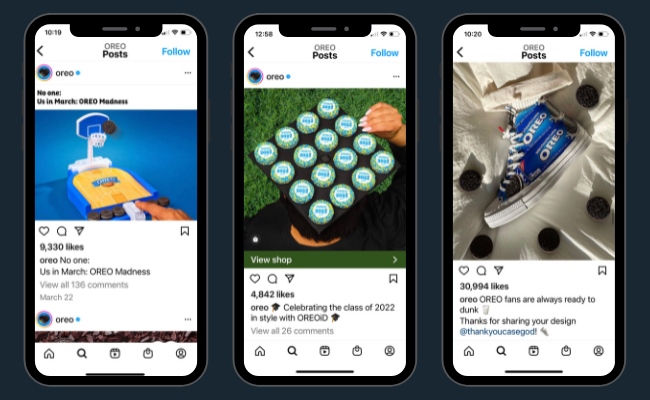
Whether they’re commenting on the Super Bowl or collaborating with Stranger Things in India, this brand has some great examples of real-time social engagement.
6. Fenty Beauty
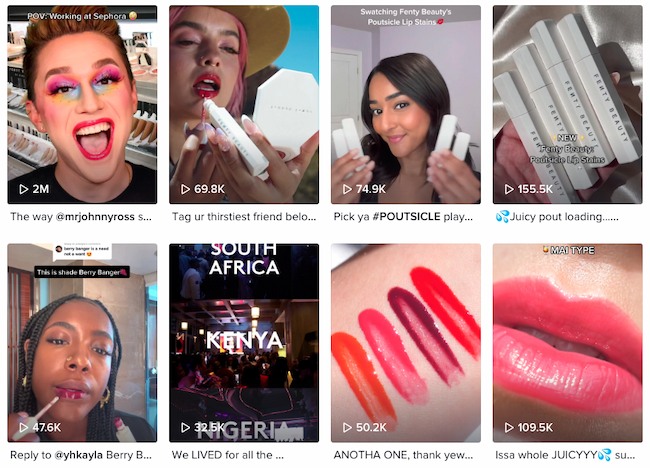
Another way to stand out is to support creators. Fenty Beauty launched its own TikTok house in 2020. Creating a space for creators to experiment and push boundaries amplified the voice of the brand while also expanding its reach.
7. Vans
This brand learned about the value of collaboration early on, sponsoring members of the Zephyr skateboard team in the late 70s. They’ve succeeded by continuing to highlight the value of creator communities. One example is this 2022 project with artist communities across the country.

If you’re looking for more inspiration, check out these branding success stories for the most popular social media platforms:
You Are the Secret to Social Media Brand Building
Branding on social media isn’t the same as it was just five years ago. But any brand can still grow with a personal touch and the power of social media. Keep building your brand, following your instincts, and putting yourself out there. You never know what could happen.
Editor’s note: This post was originally published in October 2009 and has been updated for comprehensiveness.


Your Guide to Summer Web Traffic, Conversion & Lead Performance Across Industries [Data from 150,000+ Businesses]
Last summer, as physical businesses began to reopen, analysts predicted one of the largest summer slumps we’d ever seen.
And, when analyzing over 130,000 businesses, we certainly saw dips in engagement and conversion that affected some industries more than others.
This year, we’ve seen a lot more of the economy open back up. But, unfortunately, businesses have still worried about which direction they’re going due to the rising costs of inflation and continued economic uncertainties. At this point, many business owners could be asking, “How do I stack up to others in my industry?”
To help you, we collected data from more than 150,000 businesses to see how web traffic, conversions, and inbound leads were trending up or down MoM and YoY in July.
Here’s what we learned:
Editor’s Note: These insights are based on data aggregated from 150,000+ HubSpot customers globally between July 2021 and July 2022. Note: Because the data is aggregated from HubSpot customers’ businesses, please keep in mind that the performance of individual businesses, including HubSpot’s, might differ based on their own markets, customer base, industry, geography, stage, and/or other factors.
Overall Outlook
While some businesses are seeing heavier dips in traffic MoM and YoY, they’re still increasing performance YoY when it comes to Inbound Leads and Web Conversions. This shows that while we might be seeing signs of online seasonality, business could still be increasing from 2021 when COVID-19 still played a major role in economic uncertainty.
Next, let’s dive into some more specific metrics.
Inbound Leads
Overall inbound leads were down 1.68% MoM, but up 14.04% YoY in July. So while companies might be seeing a bit of seasonality, they might not need to call it a summer slump just yet.
Noted in the chart below, three MoM and YoY increases worth noting were in Financial Activities (12.4% MoM and 23.22% YoY), Leisure and Hospitality (11.46% MoM and 20.41% YoY), and Education and Health Services (8.27% MoM and 9.26% YoY)
While Leisure and Hospitality’s growth is not too surprising given the opening of economies and the summer months, there seems to be a lot more interest in Financial Activities as well as Education and Health Services.
But where do these leads come from? Two common areas businesses gain conversions and contacts from are their website and email marketing strategies. So, let’s dive in and see how different industries compared in July.
Website Traffic and Conversion Rate Trends
Across industries, July web traffic was down 5.2% month over month (MOM) and 11.44% year over year (YOY). This trend was seen across all industries.
While it isn’t uncommon to see lower web traffic in the summer (a theme we saw last year), the 11.44% annual drop across all industries is quite interesting as more and more people are connected to the internet, have web-enabled mobile devices, and even have multiple social media accounts. Although this dip could be due to even more time outside of the house than in 2020 and 2021, we’ll have to continue watching these themes to gain more context.
While you don’t necessarily need to panic if your traffic is dipping this summer, you should still take steps to optimize the web content and URLs you have. Here’s a data-driven report on how web managers around the U.S. track and optimize site traffic.
The good news? Overall contact conversion rates were up 3.76% MOM and 8.89% YOY in July. While this is good news for those involved in web conversion optimization, you should still take this data with a grain of salt as conversion rates can go up when traffic dips down.
Two industries that did not see a monthly increase in contact conversion rates were:
- Technology, Information, and Media: down 1.45% MOM
- Trade, Transportation, and Utilities: down 2.49% MOM
These data points aren’t super shocking as these industries have been historically susceptible to summer slumps and economic uncertainty. If you’re a marketer in one of these spaces, it’s important to continue aiming for the highest traffic possible, while still taking dips during the summer with a grain of salt.
Email Engagement Data Trends
Although more and more marketers are leveraging email marketing each day, inbox clutter might be getting lighter for subscribers this summer.
In July, most industries sent 5.61% fewer emails than in the previous month. But, in the scheme of things, email seems like a more active channel with 19.26% more sends year over year.
|
Email Send Changes by Industry |
||
|
Industry |
MOM |
YOY |
|
Construction |
5.89% increase |
24.57% increase |
|
Education and Health Services |
4.27% decrease |
7.25% increase |
|
Financial Activities |
0.11% increase |
28.74% increase |
|
Leisure and Hospitality |
1.8% increase |
12.87% increase |
|
Manufacturing |
9.25% decrease |
21.69% increase |
|
Other Services (except Public Administration) |
5.69% decrease |
11.9% increase |
|
Professional and Business Services |
13.59% decrease |
14.48% increase |
|
Technology, Information and Media |
8.38% decrease |
1.77% decrease |
|
Trade, Transportation and Utilities |
7.95% decrease |
1.49% decrease |
Along with the number of emails sent MoM, nearly all industries saw a MoM open rate decrease in July, Leisure and Hospitality (up 1.42% MoM), Manufacturing (up 2.6% MoM), and Professional and Business Services (up 1.51% MoM).
This data could demonstrate that businesses are increasingly investing in email, but are adapting to send fewer emails during summer when engagement could be lower.
If you’re noticing dips in summer engagement and aiming to create an email cadence that works for your brand, without encouraging unsubscribes, check out this guide.
For email data and best practices directly from email marketers, read this post with even more original HubSpot Research.
More Resources and Research
Want to learn even more about the latest marketing trends, themes, challenges, and opportunities? Check out our State of Marketing Report below, plus this post which offers you a few of the major highlights we found from more than 1000 marketers.

How to Build a Robust Direct Marketing Strategy [+ Examples]
Every day, we’re on the receiving end of a direct marketing campaign. We just might not know it.

In this article, you’ll learn the benefits of a direct marketing strategy, how it works, and the benefits of leveraging it.
The Benefits of Direct Marketing
There are several key benefits to implementing a direct marketing strategy:
- Personalized messaging: With direct marketing, you can send highly personalized messages to your target market, increasing the likelihood that they’ll take action.
- Increased ROI: Because direct marketing is so targeted and specific, it often has a higher ROI than indirect marketing.
- Measurable: This approach is also measurable, which allow you to gain valuable insights on what worked, what didn’t, and what to do in the future.
How to Create a Direct Marketing Strategy
Now that you know the benefits of direct marketing, it’s time to learn how to create a direct marketing strategy. Here are the steps you need to take:
1. Define your target market.
Creating a direct marketing strategy can be a bit daunting, but step one is always to identify your target market.
This will help you determine what type of medium to use for your campaign as well as what type of message will resonate.
Start by asking yourself who your ideal customer is. What are their demographics? What do they like and dislike? What motivates them?
Keep in mind that your target market shouldn’t be everyone. In fact, the more specific you are, the better your strategy will be as it will resonate with a specific type of consumer.
By narrowing your focus, you can create a stronger connection with your audience and see better results from your marketing efforts.
Once you have a good understanding of your target market, you can start to craft a marketing strategy that will reach them directly.
2. Research your competition.
Once you know who your target market is, it’s time to research your competition. This will give you a good starting point for your own campaign.
See what type of direct marketing campaigns they’re running and what’s working well for them.
What are they doing that’s working well? What could be improved? Understanding their strengths and weaknesses will help you develop a stronger strategy of your own.
From there, you can brainstorm how you can make it better.
3. Choose your direct marketing channels.
When creating a direct marketing strategy, one of the most important steps is to choose the right channels.
There are a variety of options available, and each has its own strengths and weaknesses.
To make the best choice, you’ll need to consider your target audience, your budget, and your goals.
Some common direct marketing channels include:
- Social media
- Text messages
- Websites/landing pages
- Print ads (newspapers, magazines)
One popular option is email marketing. This can be an effective way to reach a large number of people quickly and relatively cheaply.
However, it can be difficult to stand out in someone’s inbox, and there’s always the risk that your message will be ignored or deleted.
Another option is direct mail. This can be a more personal way to reach your target audience, and it can be very effective if done correctly.
However, it can be more expensive than other methods, and there’s no guarantee that your message will be seen.
Ultimately, the best way to choose direct marketing channels is to experiment with different options and see what works best for your business.
There’s no one-size-fits-all solution, so don’t be afraid to try something new.
4. Develop your offer and create your assets.
Your offer is what you’re promoting to your target market. It could be a discount, a free trial, or something else entirely.
Whatever it is, make sure it’s valuable and relevant to your target market.
From there, you can move on to creating your assets.
This is the ad, email, flyer, or other that you’ll be using in your campaign. If there’s no budget to hire a designer, leverage tools like Canva to create a high-quality, on-brand design.
5. Test, measure, and refine.
Once you’ve launched your direct marketing campaign, it’s important to test, measure, and refine it to ensure maximum effectiveness.
Today, direct marketers now have access to a wealth of data that can be used to measure the success of their campaigns.
By analyzing this data, you can optimize your approach and improve your results.
You’ll want to focus on how many users converted as well as where they dropped off in the conversion path. That could indicate a point of friction that you’ll want to address, like a long form, vague copy, or missing CTA.
Direct Marketing Examples
Here are a few examples of direct marketing in action:
- A postcard in the mail from a company offering a discount on their products.
- An email from an online retailer with a special offer for subscribers.
- A text message from a cell phone company about a new plan.
As you can see, direct marketing can take many different forms. The important thing is to choose the right medium for your target market and offer them something that they’ll find valuable.
If you’re looking for a cost-effective way to reach your target market, direct marketing is a great option.
With a little planning and creativity, you can create a direct marketing campaign that will generate results.


How to Remove Duplicates in Excel (5 Steps With Pictures)
Duplicate data is costly, it skews reports and leads to wasted marketing resources. Here’s how to remove duplicates in Excel spreadsheets:

Let’s run through it with an example!
Note: If you want to see duplicate data before removing them, scroll down to learn how to find and highlight duplicates in Excel. Also, make a copy of your worksheet so you still have your original data if you delete something important.
How to Remove Duplicates in Excel
1. Select the cells you wish to remove duplicates from.
Click on a cell and hold down the left mouse button. Then drag the cursor over the other cells you want to select.
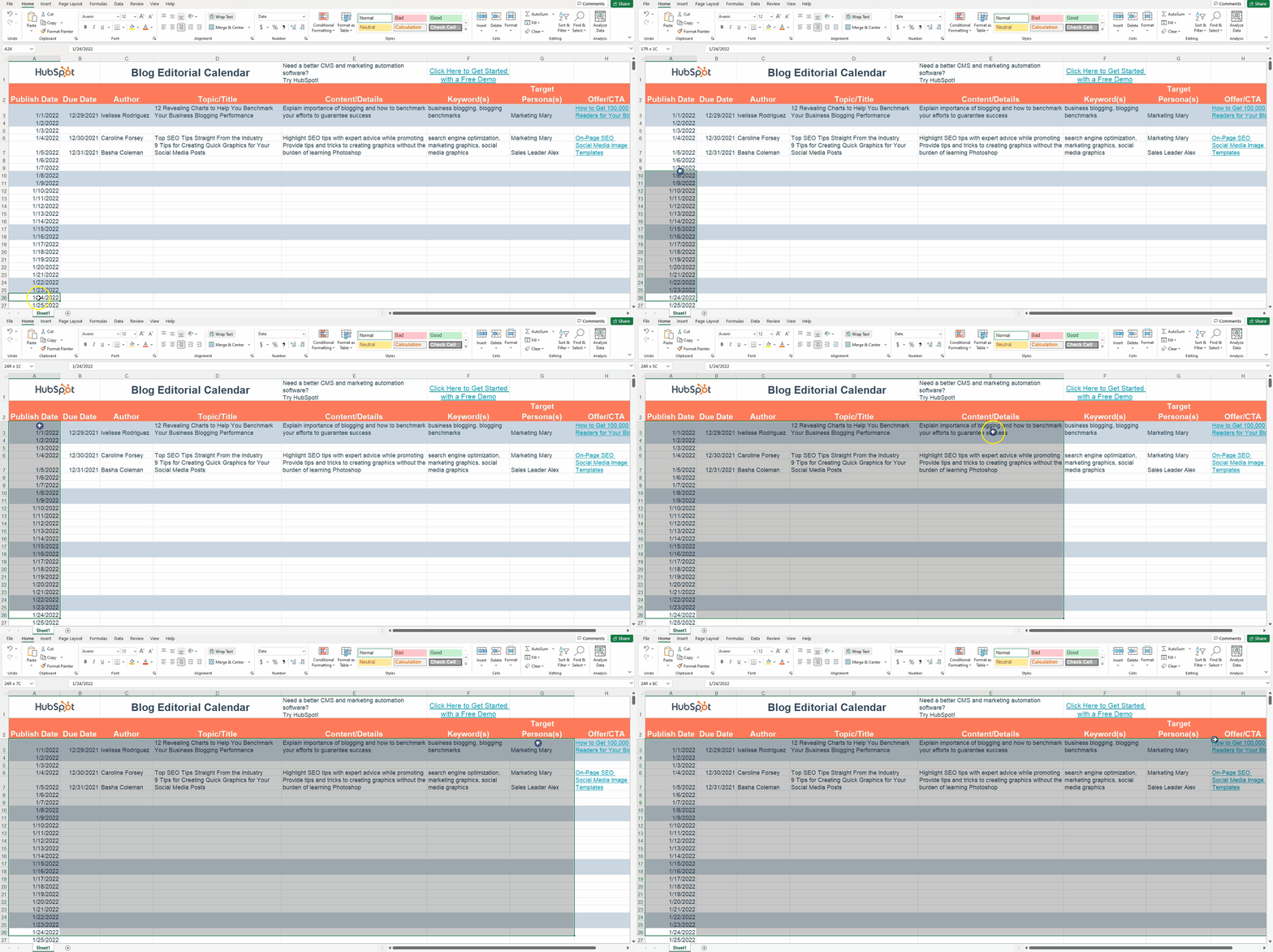
Or, use the Shift + arrow keyboard shortcut to select the range you want.
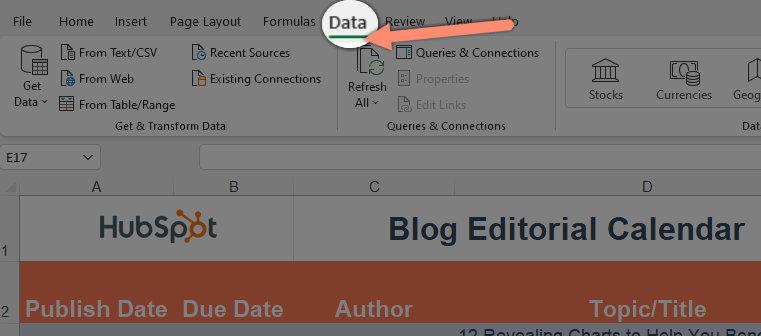
2. Click on the “Data” tab at the top.
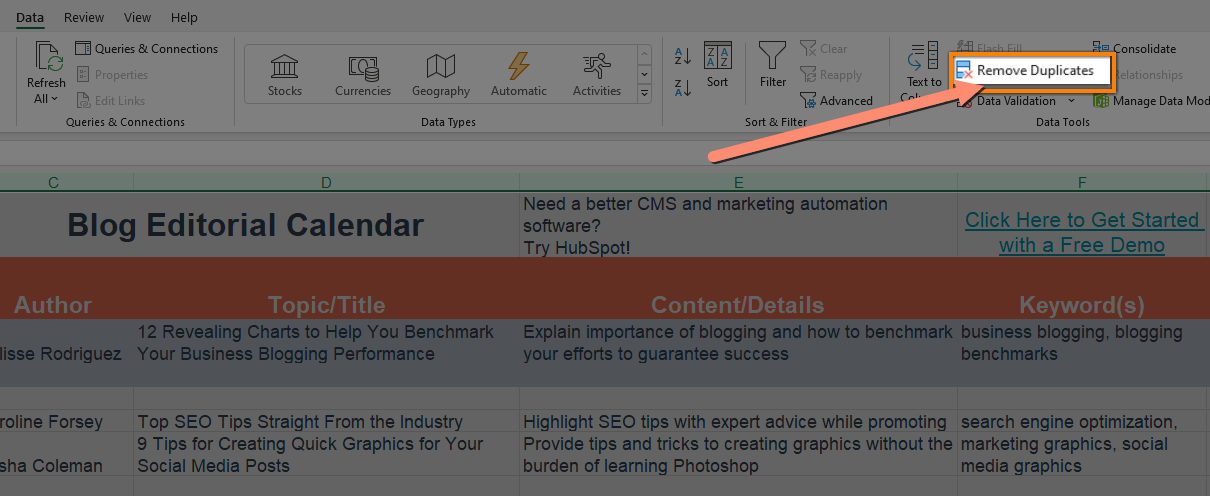
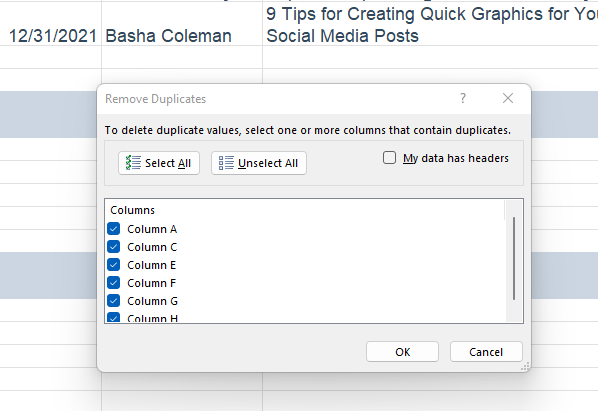
3. Click “Remove Duplicates” to reveal a pop-up.
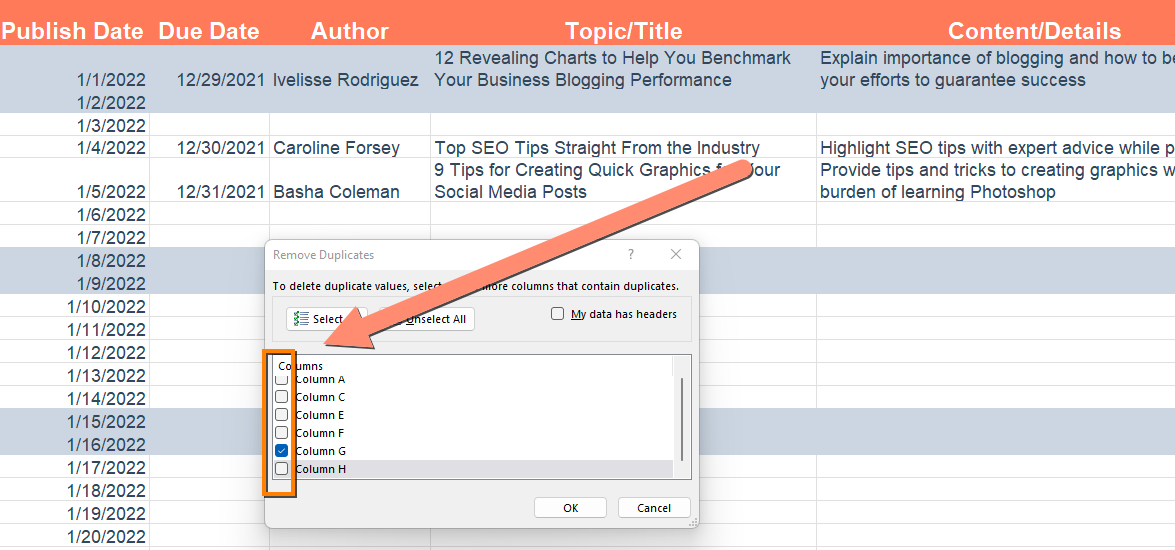
4. Uncheck any columns with data you want to keep.
5. Click OK to delete the duplicates.
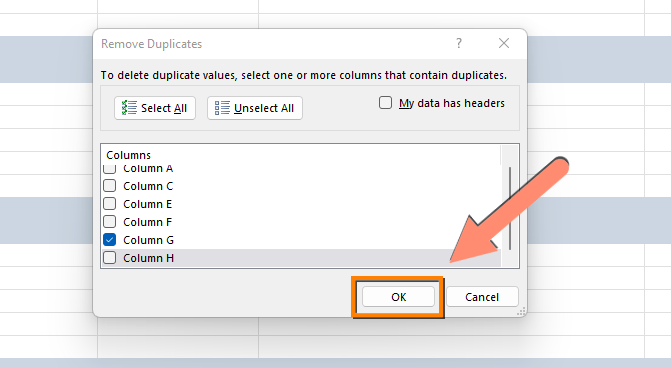
Excel will keep the first occurrence of the value by default.
How to Highlight Duplicates in Excel
Sometimes, you want to see the duplicate data before you delete it. Here’s how to find duplicate data in Excel:
1. Select the cells you wish to check for duplicates.
Click on a cell and hold down the left mouse button. Then drag the cursor over the other cells you want to select.
Or, use the Shift + arrow keyboard shortcut to select the range you want.
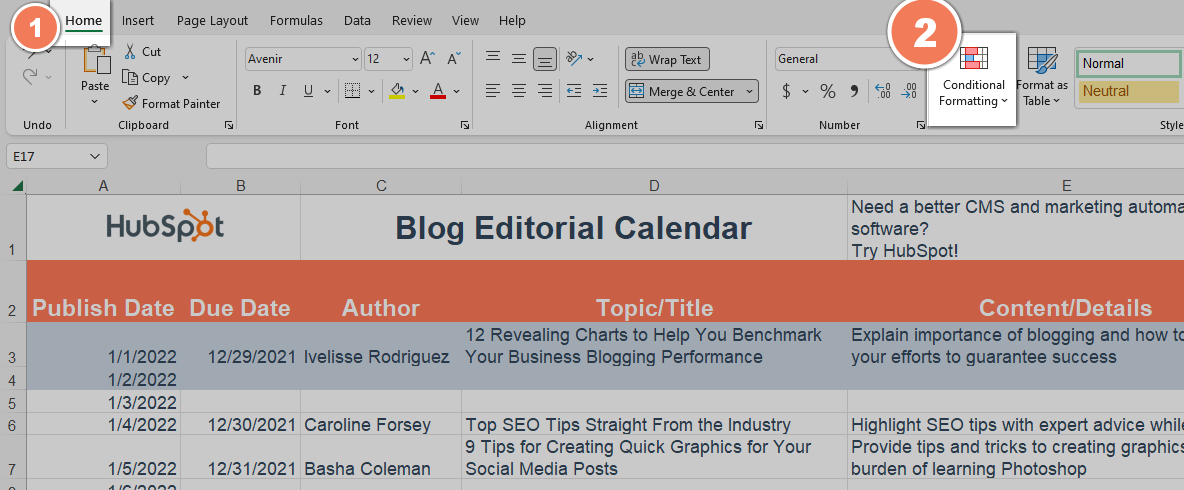
2. Click “Conditional Formatting” from the home tab to reveal a drop-down.
First, navigate to the home tab if you’re on a different tab.
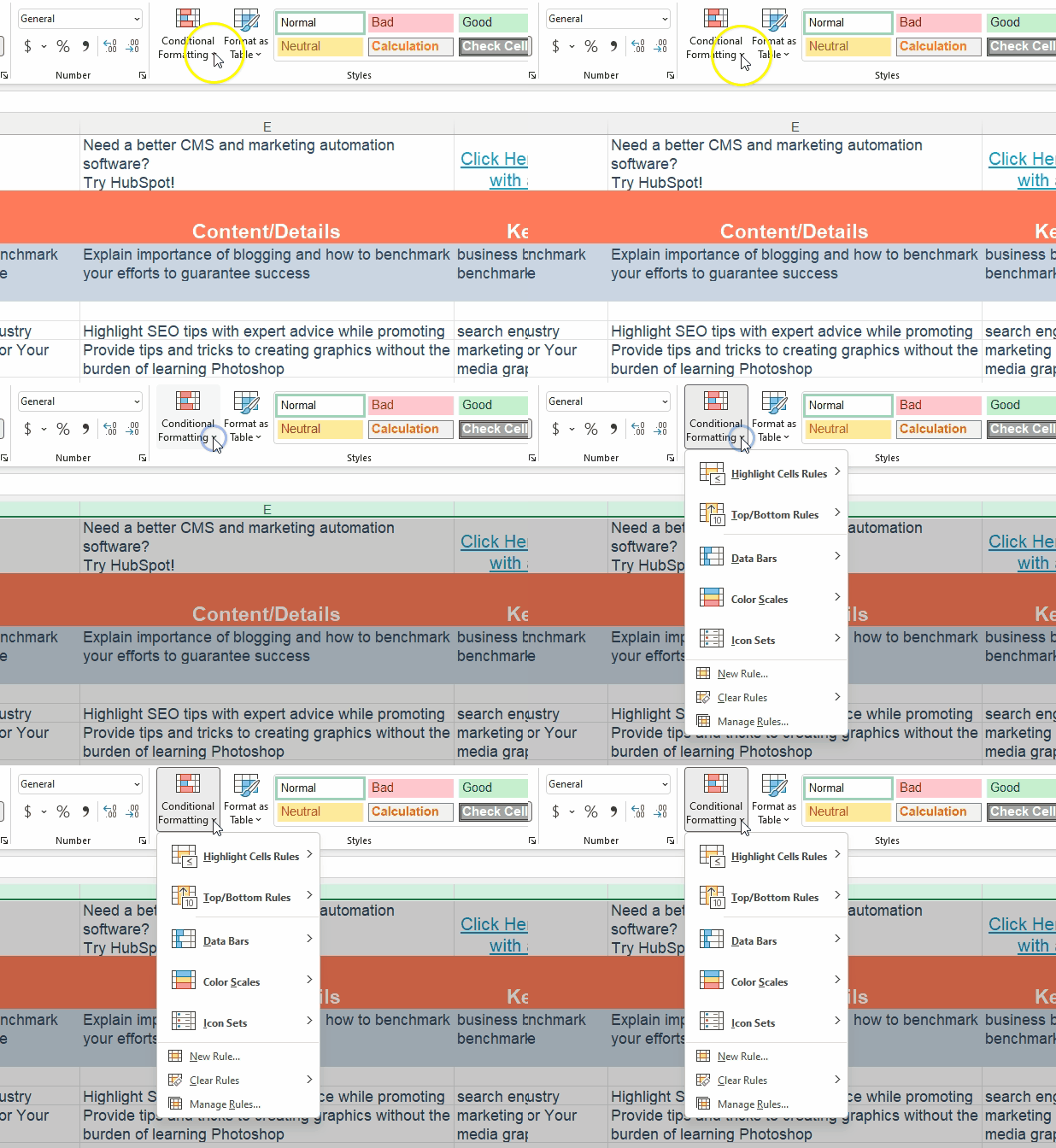
Click on “Conditional Formatting” to reveal a dropdown.
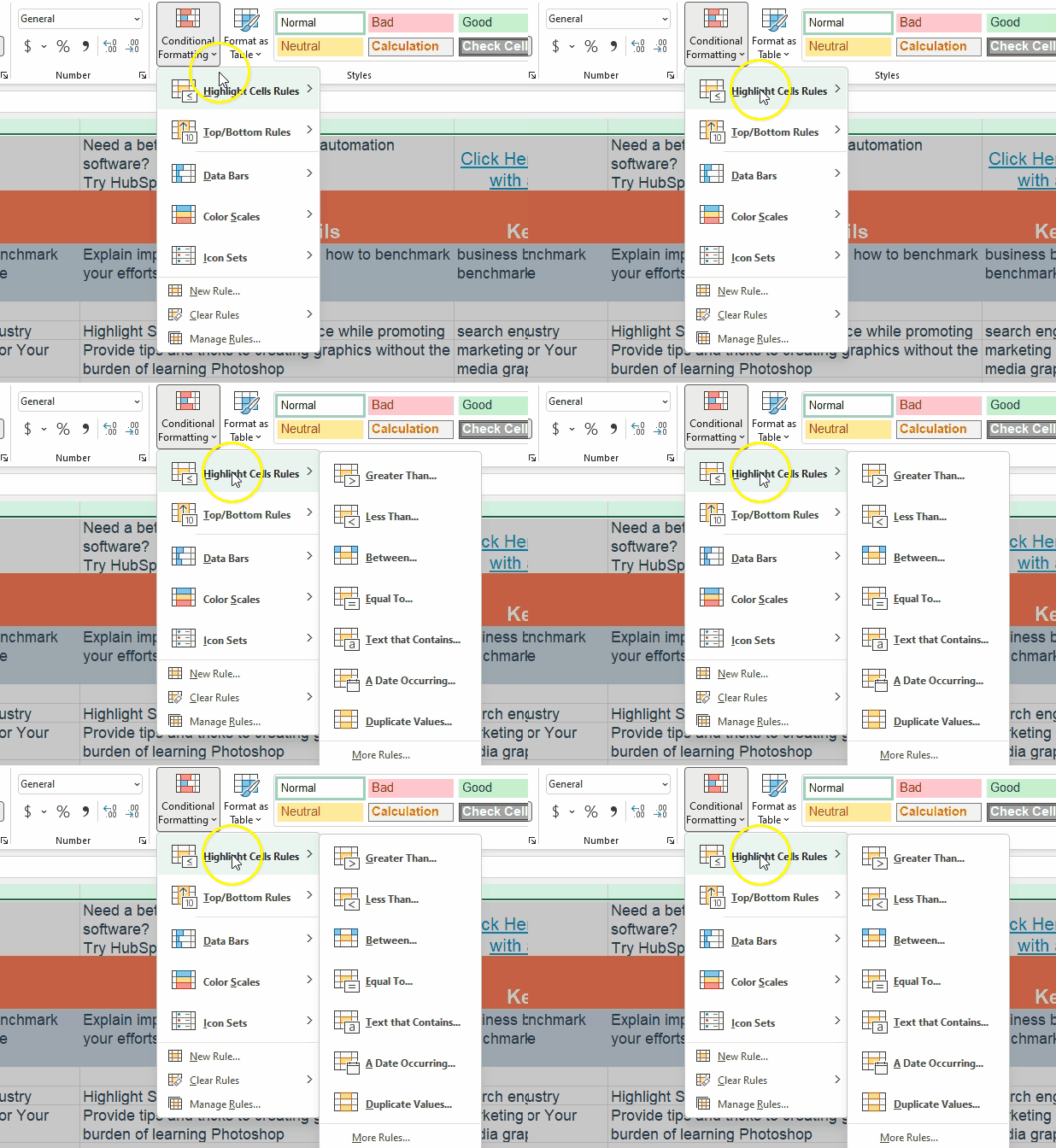
3. Hover over “Highlight Cell Rules”
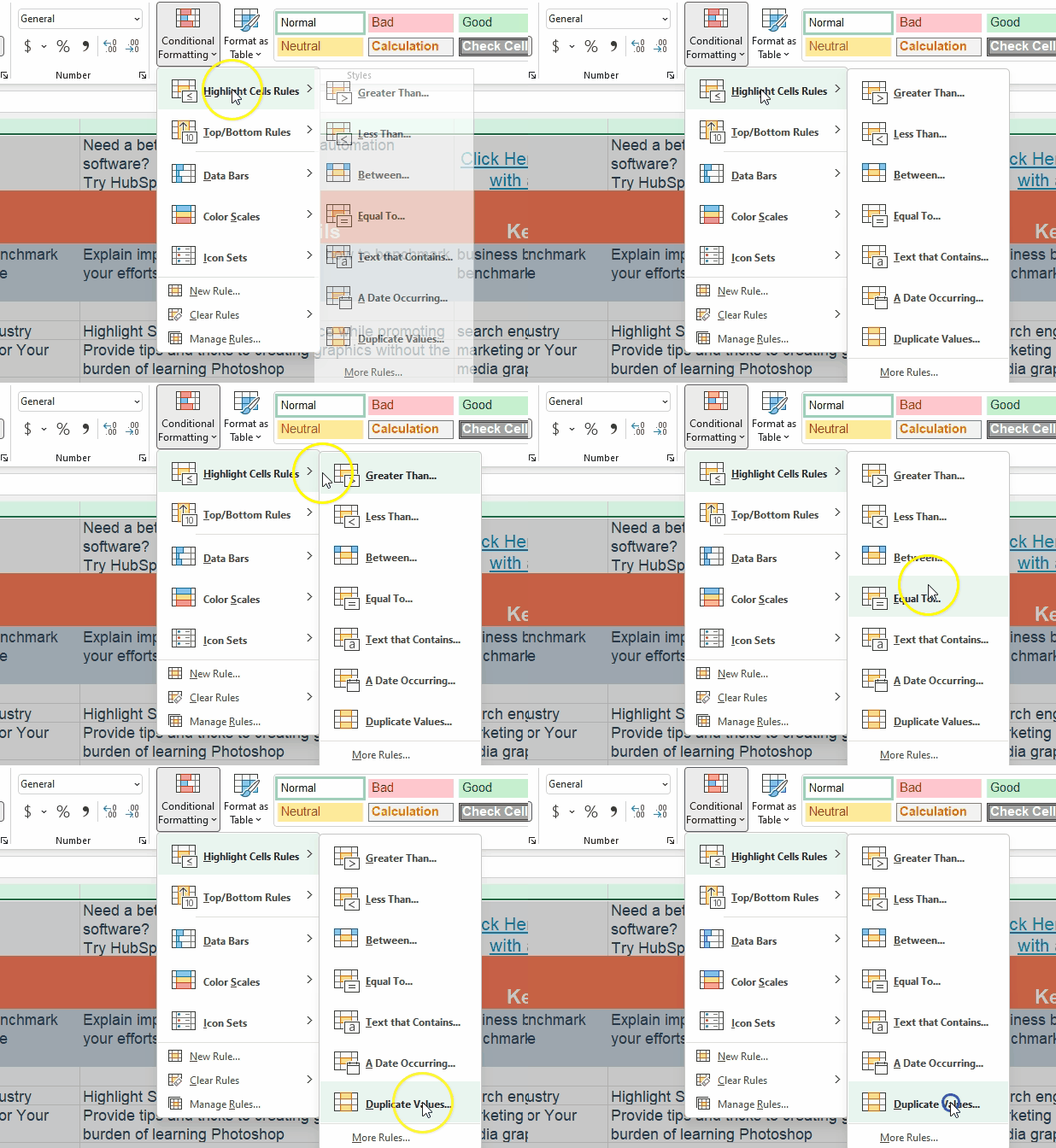
4. Choose “Duplicate Values” from the options.
5. Pick the formatting option you want and click OK.
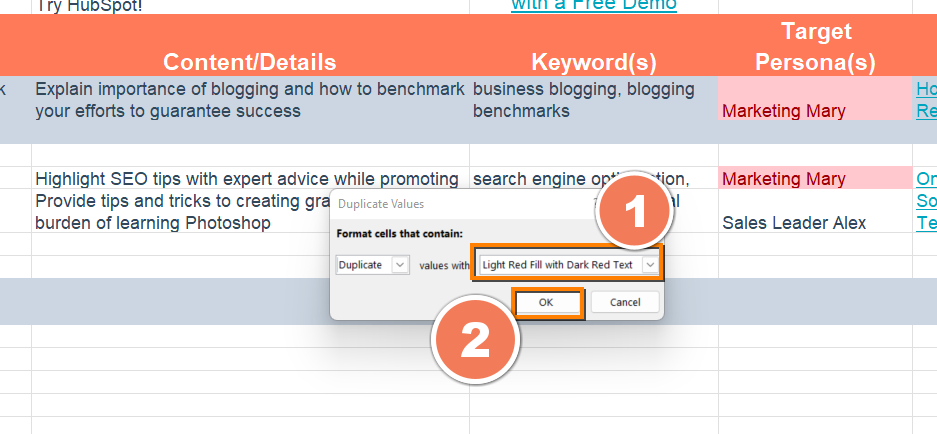
You’ll find all duplicates highlighted in the formatting style you choose.
Now you know how to find and remove duplicates in Excel!
Want more Excel automation hacks? Excel templates are a good place to start. They come pre-formatted with formulas that help you automate projections and more.
Editor’s note: This post was originally published in [Month Year] and has been updated for comprehensiveness.

15 Cover Letter Templates to Perfect Your Next Job Application
Are cover letters necessary? I’m not in HR, but I’ve been approached by applicants who wondered whether their cover letter would actually be read. My answer is one not many of them wanted to hear: “sometimes.” Sometimes it will be read. Other times, you can get away with just sending in your resume — like when you network your way into applying for a position.
The truth is, you can’t really predict on a case-by-case basis — and you’re better safe than sorry. For the most part, having a cover letter will give you an upper hand in ways your resume doesn’t. It allows you to show off your writing skills, provide details that you couldn’t fit on your resume, demonstrate your passion, and show your willingness to put in as much time and effort as possible.

If you’ve ever rolled your eyes or balked at an application that required a cover letter, this guide is for you. We’ll go over how to write a cover letter and provide cover letter templates to help you perfect your own.
Seems fairly basic, right? Cover letters can hold different levels of importance to an employer depending on the industry you’re in and the job you’re applying for. According to a CareerBuilder survey, 49% of recruiters say sendign a cover letter along with your resume boosts your chance of landing the role.
If you do plan to write a cover letter, keep in mind there are certain qualities it should have that are not included in the definition above.
What to Include in a Cover Letter
So, what should you include? We’ll let the 11 templates below this list do most of the talking. No matter which one you download, pay attention to the following elements — all of which should shine through in the letter you send to your future manager.
1. Contact Information
Cover letters shouldn’t just carry your contact information, but also that of the company to which you’re applying. Contact info includes your phone number, email address, and any social media accounts you’re willing to share and receive connections to.
Home addresses aren’t required, but they can be a helpful reassurance to the employer that you already live nearby and would have no trouble coming into the office.
Avoid offering phone numbers, email addresses, or actual addresses that belong to your current employer. Using your personal Gmail address over your work email, for example, ensures your correspondence with recruiters remains separate from all of your current work communication.
2. A Personal Address Line
For as often as you see “to whom it may concern” at the top of cover letters today, do your best to avoid writing this exhausted line.
Address lines that specify a person or company grab your reader’s attention much more quickly, and show the employer that you’ve taken the time to tailor your application letter to them. Don’t have the name of the hiring manager? “Employers at [company name]” will do just fine.
3. A Hook
A “hook” is a clever introduction that “hooks” your reader into wanting to learn more. Think about yourself as a job candidate — what makes you unique? What about your career might a recruiter be intrigued by that you can package into an interesting first sentence?
4. Why You’re Qualified
It’s a no-brainer that you should summarize your professional experience in your cover letter. However, today’s best applications describe why this experience qualifies the applicant for the job they’re applying for. For example, don’t just state that you spent three years writing for a company blog. Explain that this type of work lends itself to managing your new potential employer’s content calendar every week.
5. General Knowledge of the Business
Grammatical errors could mean your application is thrown in the trash, but that’s not the only thing that could get your letter tossed aside. Using a generic “one-size-fits-all” cover letter — especially if you forget to change the name of the company — will also hurt your chances of landing an interview.
So, if you take the time to write a cover letter, take the time to comment on the business itself. Why are you applying to this company? What about their business stuck out to you as a professional?
Now, let’s take a look at an example cover letter, what makes it effective, along with 11 templates you can download or draw inspiration from.
Cover Letter Example
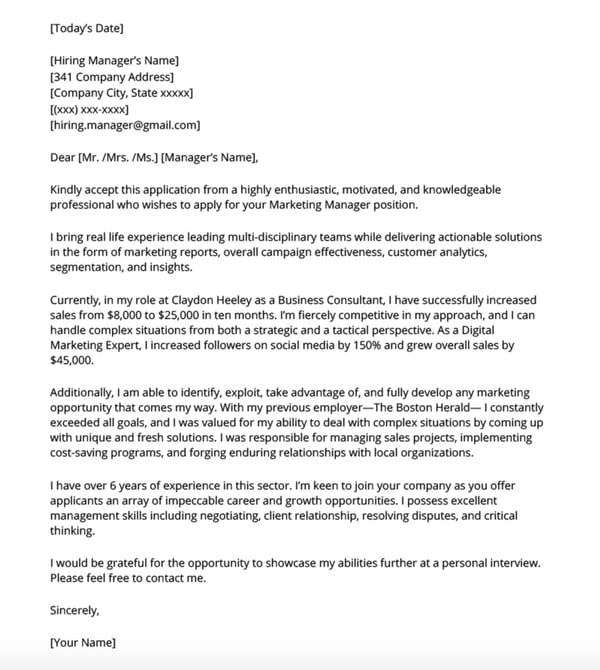
The example above illustrates how to write a marketing cover letter using the elements we listed.
Besides the contact information and the address line, the first few paragraphs explain why the candidate is qualified for the position. This example uses specific data to show why they would be a good fit.
Additionally, in the second to last paragraph, the candidate discusses why they’re interested in the specific company, demonstrating general knowledge of the business.
By combining all the elements to a cover letter, this is a great example to use for inspiration.
Featured Resource:5 Professional Cover Letter Templates
 Download These Templates for Free
14 Free Cover Letter Templates for Your Next Job Application
Template 1: Basic

The example above is a basic (but great) cover letter. The numbered sections are explained in more detail below.
1. Header
The level of formality your header has will depend on the company to which you apply. If you’re applying to a formal business, it’s important to use a formal header to open your cover letter, like in the sample above. Put your address, the date, and the company’s address. But if you’re applying to a company that isn’t as formal, you don’t need to include yours and the company’s addresses. You can still include the date, though.
2. Greeting
Using “To Whom It May Concern” is okay, but you may want to take the time to research the name of the recruiter or hiring manager online. If you do your research and aren’t confident you found the right name, then you should definitely use the generic greeting — but if you are sure, then it shows you put in the effort to find their name and it will catch the recruiter’s eye.
If you have the recruiter’s name, do you greet them by their full name, or by their courtesy title (i.e. Mr., Ms., or Mrs.)? Similar to the header, it depends on the company’s level of formality. If you’re applying to a corporate business, you may want to consider using “Mr. Snaper” instead of “Jon Snaper.” If you’re applying to a start-up or a business with a more casual culture, you can use “Jon Snaper,” as shown in the example.
3. Introduction
Your opening paragraph should, in 1-3 sentences, state why you’re excited to apply and what makes you the perfect candidate. Get right to the point, and don’t worry about explaining where you found the posting or who you know at the company. This isn’t a place to go into detail about why you’re a great candidate — that’s for the second paragraph. Here, simply list a few key reasons in one sentence to set up the rest of your letter. Keep in mind that the recruiter may cross-reference your cover letter with your resume, so make sure the two sync up.
4. Paragraph 2: Why You’re a Great Fit for the Job
Next, sell yourself and your experience by choosing one or two concrete examples that show why you’re a great fit for the position. What did you do at a previous company that gave you relevant experience? Which projects have you worked on that would benefit the new company? How will your prior experience help this company grow? Stay humble in your explanation of credentials while still showing that you would be an asset to the team. Use this paragraph to show you’re genuinely excited and interested in the position.
5. Third Paragraph: Why the Company Is a Great Fit for You
While it’s certainly important you’re a good fit for the job, it’s also important that the company is a good fit for you. “A cover letter typically describes why you’re great for a company — but how will you benefit from getting hired?” asks former HubSpot Team Development Manager Emily MacIntyre. “We want to know why our company appeals to you, and how it will be a mutually beneficial working relationship.”
In the third paragraph, show you’re serious about growing and developing your career at this new company. What impresses and excites you about the company? Is there something that you feel strongly about that aligns with the company’s goals? For example, the candidate in the sample letter used this space to show his personal commitment to environmental causes aligns with the company’s green initiatives.
6. Strong Closer and Signature
Don’t get lazy in the final few sentences of your cover letter — it’s important to finish strong. Be straightforward about your interest and enthusiasm about the new position, and tell them you’re available to talk about the opportunity at any time. Be sure to include your phone number and email address. At this point, the ball is (rightly) in the recruiter’s court to decide how to follow up.
Last but certainly not least, thank them for their time and consideration. Use a formal sign-off like “Best,” “All the best,” or “Sincerely,” and finish by typing out your full name. You don’t need to sign it with a pen.
Template 2: Data-Driven Marketing Cover Letter
Get it here.
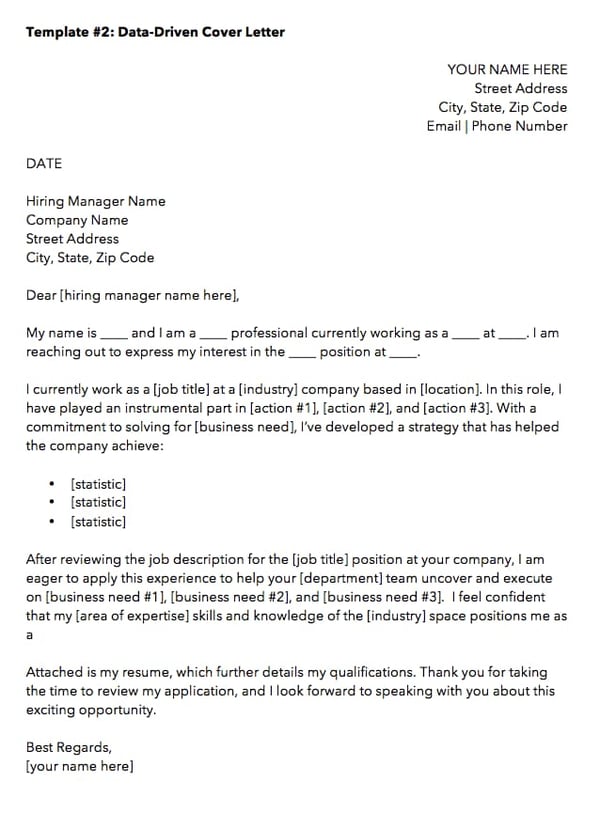
When applying to a data-driven position, it might be tempting to inject your cover letter with, well, the data to describe what you’ve done for other employers. But in an application letter — particularly for the marketing industry — how you convey this data is just as important as the data itself.
The cover letter template above, which we created here at HubSpot, can help you present the data that’s most important to you as a candidate such that it’ll matter to your future employer.
Notice the three bullet points near the center of the letter above, preceded by the statement: “… I’ve developed a strategy that has helped the company achieve …” This setup is important, because while you can add as many statistics as you want to this template, your data points should describe how your current/former business benefited from your work, rather than how you, yourself, benefited.
Template 3: Straight-to-the-Point Cover Letter
Get it here.
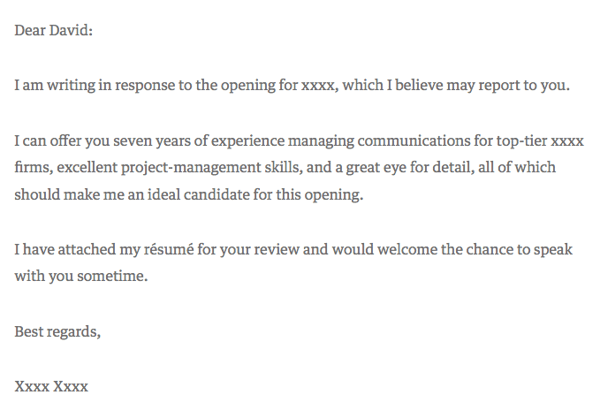
Harvard Business Review contributor David Silverman hailed the above cover letter example as “The Best Cover Letter I Ever Received.” For context, Silverman believes there are only a handful of times when writing a cover letter is actually necessary:
- When you know the name of the hiring manager.
- When you know something about what the job requires.
- When you’ve been referred to the job personally.
Under those three circumstances, a straight-to-the-point cover letter like the one above could be your best bet. Because it’s so concise, however, make a point to add your own letterhead above the message itself. It might be easy for a recruiter to sift through a short and sweet cover letter like the one above, but it’s just as easy for it to get lost in the shuffle of their application list without a unique design or format.
Template 4: Referral Cover Letter
Get it here.
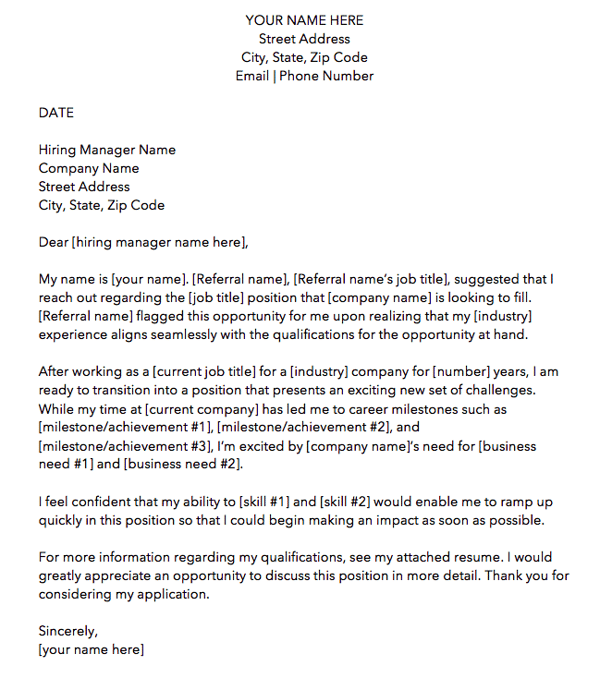
Just because a friend or colleague recommended you for a job doesn’t mean the company is all set to hire you. Therefore, the cover letter template above is written specifically for referrals. We made this one here at HubSpot. Download it here (it comes with four other cover letter templates, too).
As you can see in the picture above, the first paragraph of the cover letter is dedicated entirely to acknowledging the circumstances of your applying: You know someone who works there — no harm in that. But there might be harm in not mentioning it to the hiring manager. Telling the reader about your connection at the company shows you’re aware and confident of the actions you take to get the opportunities you’re interested in.
Ultimately, it’s better than the recruiter hearing about your employee connection from somebody else.
As for the rest of the cover letter, treat your message the same way you would if you had applied with no connection from within. Your skills and successes are no less important because of your internal referral.
Template 5: Photo Letterhead Cover Letter
Get it here.
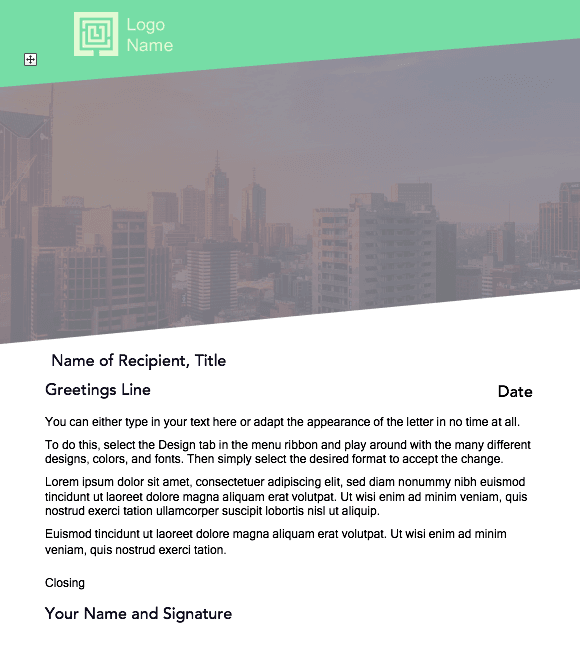
The cover letter template above was designed by Microsoft Office, and as comprehensive as it looks, it’s completely free to download and modify.
As it looks right now, this cover letter contains about half photo, half text. Feel free to shrink (and change) the image to give yourself more room to tell your story. Of course, a nice washed-out image that expresses who you are can be part of that story …
Template 6: Digital Creative Cover Letter
Get it here.
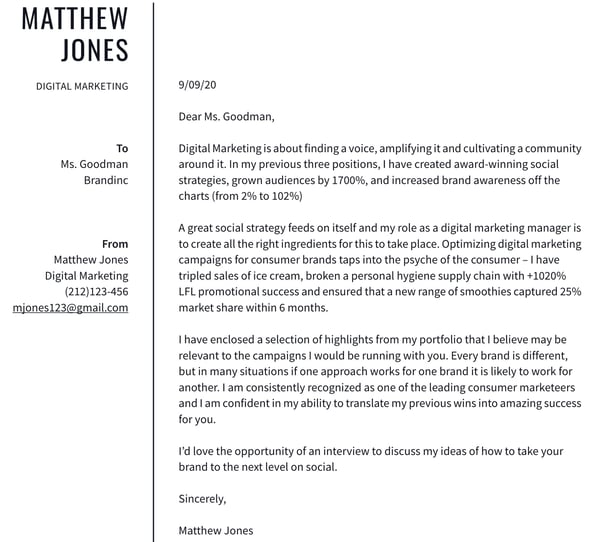
This sixth template is perfect for the applicant who wants to emphasize the many different digital channels they areon. This template goes well with a resume of the same format.
As you personalize this letter with your own experience, make note of the social networks and industry software included in this template. You’ll see there’s additional space along the top to add your LinkedIn and personal website to fill with your own information.
You can improve upon this template by formatting your most important highlights and accomplishments with bullet points. This will make the document easier to read for the hiring manager and emphasizes the value you provide.
Template 7: Marketing Manager Cover Letter
Get it here.
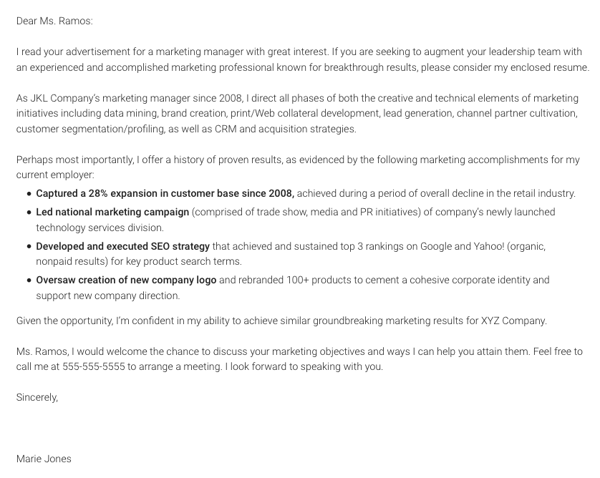
Our seventh cover letter comes from Monster.com. This cover letter, shown above, is focused specifically on a marketing role.
Notice how the writer includes references to important marketing metrics and terminology. If you’re applying to a data-driven role, you might not want to fill the page with a story of your experience in paragraph form, like Template 1 does at the beginning of this article. Instead, consider highlighting three (or four, or five) of your successes that you believe the hiring manager would resonate most with, in bulleted form.
As a marketing professional, breaking up your letter with bulleted details like the ones above shows a respect for the hiring manager’s limited time — a mentality that all marketers must understand when communicating with a brand’s audience.
Template 8: Career Day Follow-Up Cover Letter
Get it here.
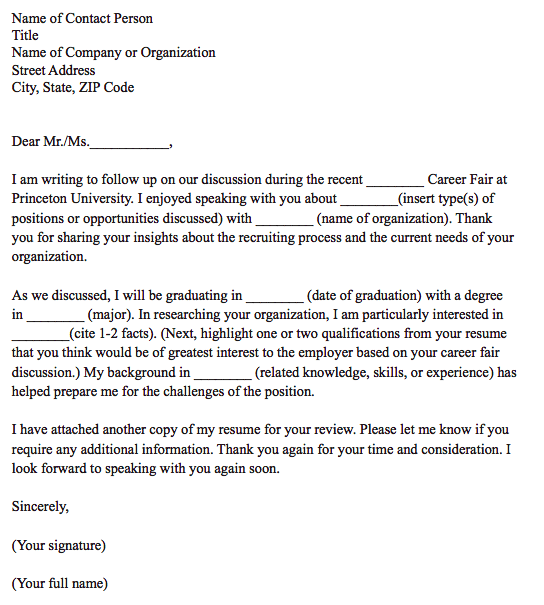
This is a unique kind of cover letter from Princeton University.
LinkedIn, Glassdoor, Monster, and Indeed might take the lion’s share of your job searches online, but still some employment opportunities come out of a trade show, job fair, or similar networking event. For those occurrences, you have the follow-up cover letter template above.
This cover letter has everything you need to help an employer recall a conversation you had with him/her at a career fair. As you can see in the second paragraph, the letter is particularly useful to people who are about to graduate college.
Template 9: Logo and Watermarked Cover Letter
Get it here.
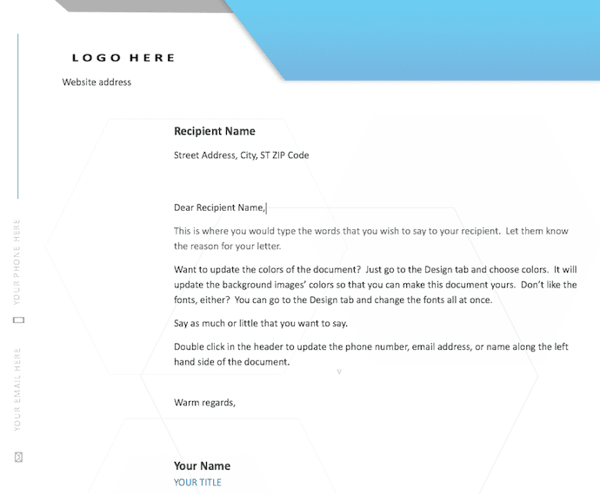
Here’s another cover letter template from Microsoft Office. This one has a light touch of color in the design just above the letterhead, but make no mistake — the template caters to any professional looking to make a good first impression on their future employer.
Don’t let the logo space on the top-right of the page confuse you. This can be the logo of the company to which you’re applying — to quickly get the attention of the recruiter — or your own logo. Perhaps you freelance on the side or simply like branding yourself. This cover letter template is meant for customization.
Template 10: Data Scientist Cover Letter
Get it here.
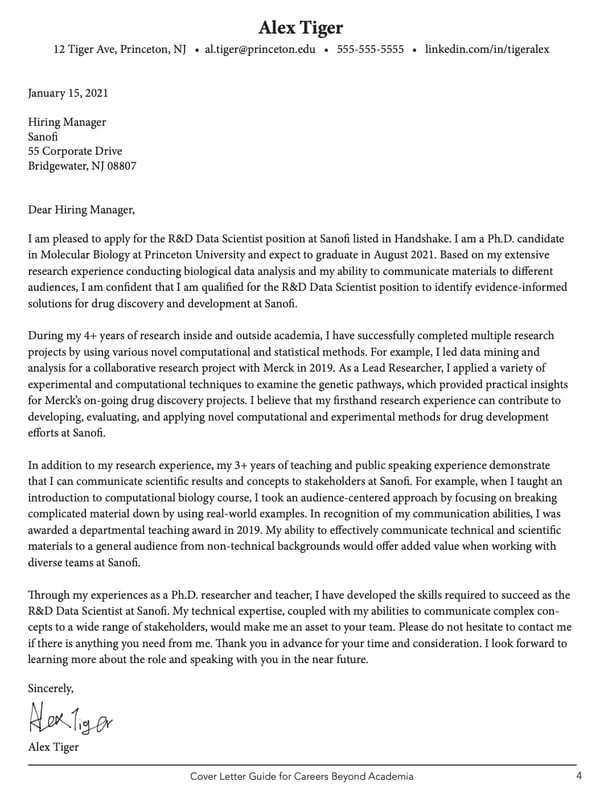 This is our second template from Princeton University. While this is focused on a data scientist role, it is an excellent template to use for students applying to jobs prior to graduation.
The text emphasizes how the applicant’s academic research and projects makes them an ideal candidate for the position. The format is also simple enough to submit as a pdf, as text in an email message or an application text box.
Template 11: Business Cover Letter
Get it here.
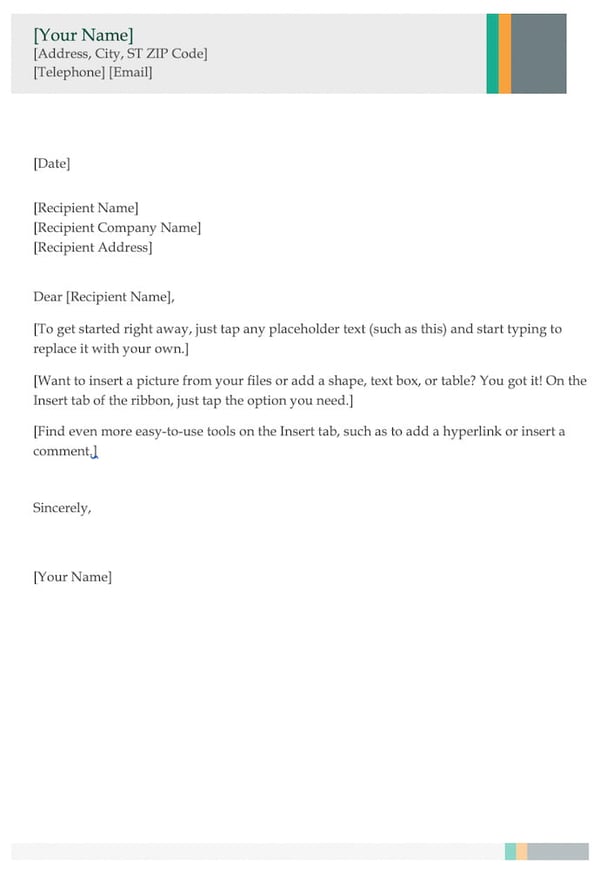
The cover letter template above is perfect for entry- and mid-level marketers who want to show a little extra professionalism in their opening note to a potential employer.
The multi-colored header (you can change the color if you wish) shows just the right amount of creativity and can go quite well with a resume of the same style. If you don’t have enough experience to fill the entire page, don’t worry. Feel free to write to a length you think is representative of who you are and what the hiring manager wants to see.
No matter how long your final cover letter is, the above template is your opportunity to show your attention to detail — from your contact information in the top header, to the personalized address line where you can include the name of the hiring manager. Like we said, “to whom it may concern” is pretty outdated, anyway.
Template 12: Entry-Level Cover Letter
Get it here.
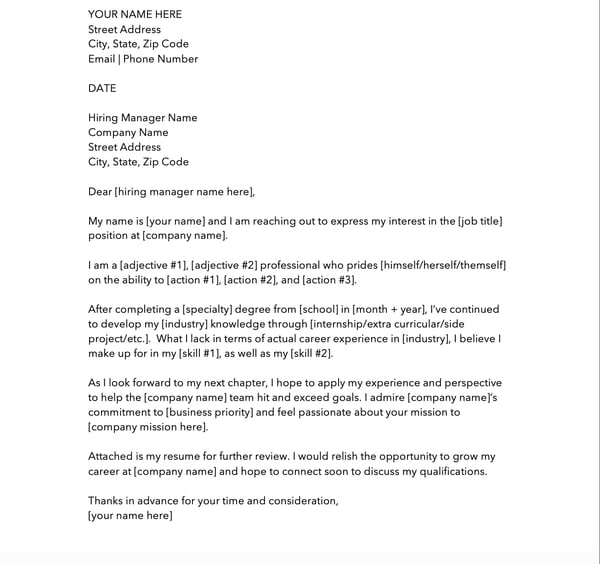
The cover letter template above, written by HubSpot, is specifically designed for entry-level applicants.
When you only have a few years experience, it’s important to display how you gained your skills and what you learned from your education or internships. Additionally, it’s important to mention why you want to work at the company you’re applying to.
No matter your experience, the template above will help you decide what skills you want to highlight and flesh out in your cover letter.
You can download it here (it comes with four other cover letter templates, too).
Template 13: Healthcare Cover Letter
Get it here.
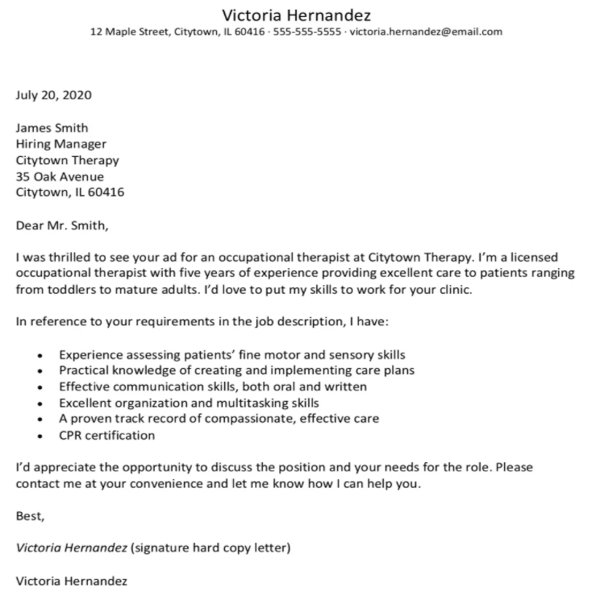 What stands out to me in this cover letter is the direct, straight-to-the-point bullet points that reference the job posting. The cover letter, created by The Balance Careers, cuts down on repetition by following the “I have” statement with six bullet points that highlight the applicant’s strengths, including “I have … practical knowledge of creating and implementing care plans” and “I have … a proven track record of compassionate, effective care”.
Additionally, phrases like “I’d love to put my skills to work for your clinic” and “Please contact me at your convenience and let me know how I can help you” focus on what the business will gain as a result of hiring the applicant, rather than what the applicant is looking to gain.
Template 14: Freelance Cover Letter
Get it here.
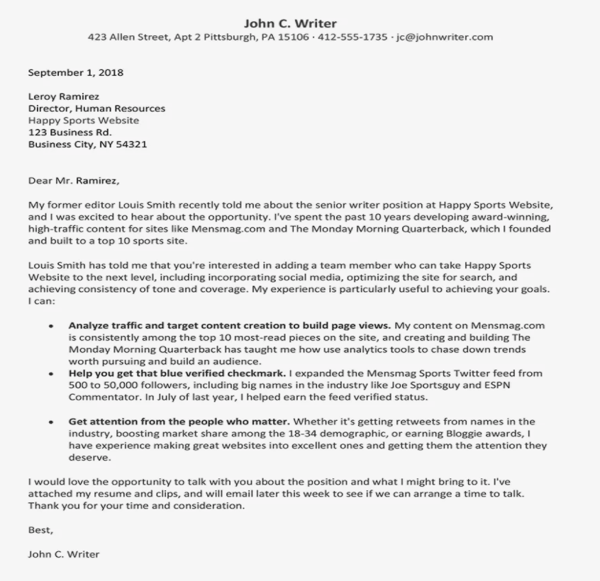
If you’re looking for freelance work, your biggest goal is to get your strengths across quickly, so busy clients won’t pass by your cover letter entirely. Additionally, if you’re sending out multiple cover letters to different clients, you’ll want to target each one to that client’s unique goals.
For instance, if one client is looking for SEO-optimized content related to marketing, you’ll want to highlight past experience writing marketing content; this will change if, for instance, the client is looking for fitness content.
For this reason, it’s a good idea to structure your cover letter so you start with a) past credentials or references, and b) bullet-point information related to the client’s goal, as shown in the cover letter above.
Template 15: Director Cover Letter
Get it here.
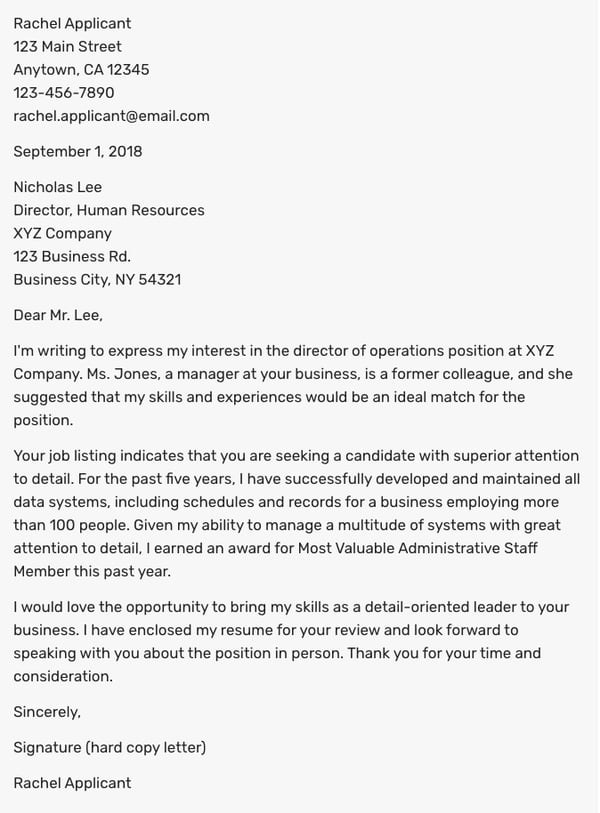 If you’re applying for a Director position, you’ll want to start by explaining how you’ve either successfully handled a similar role in the past, or why you believe you’re qualified and ready to handle new responsibilities for the first time.
In the cover letter above, the candidate does a good job outlining how she succeeded in a leadership role previously: “For the past five years, I have successfully developed and maintained all data systems, including schedules and records for a business employing more than 100 people.”
You’ll want to demonstrate how your skills align with a Director position — both through organization and leadership — and, when possible, where you received recognition for your hard work (i.e. “I earned an award for Most Valuable Administrative Staff Member”).
Write a Winning Cover Letter
Writing a cover letter is easier said than done. Don’t hesitate to spend a lot of time writing and editing it. Or, ask a friend or family member to read it over and give you feedback. If the recruiter does end up reading it, you’ll be thankful you did.
Editor’s note: This post was originally published in November 2014 and has been updated for comprehensiveness.


What Is Twitch? How Do Brands Use It?
Like many people, I discovered Twitch through my love for video games,watching YouTubers play and review some of my favorites. Most of the YouTubers I watched promoted their Twitch accounts where they would broadcast live play-throughs, and I eventually started to wonder — what is Twitch?
Ultimately, Twitch is a streaming platform, but is there more to it? In this post, we’ll explore what Twitch is and how you might use it to engage with prospects and increase brand awareness.

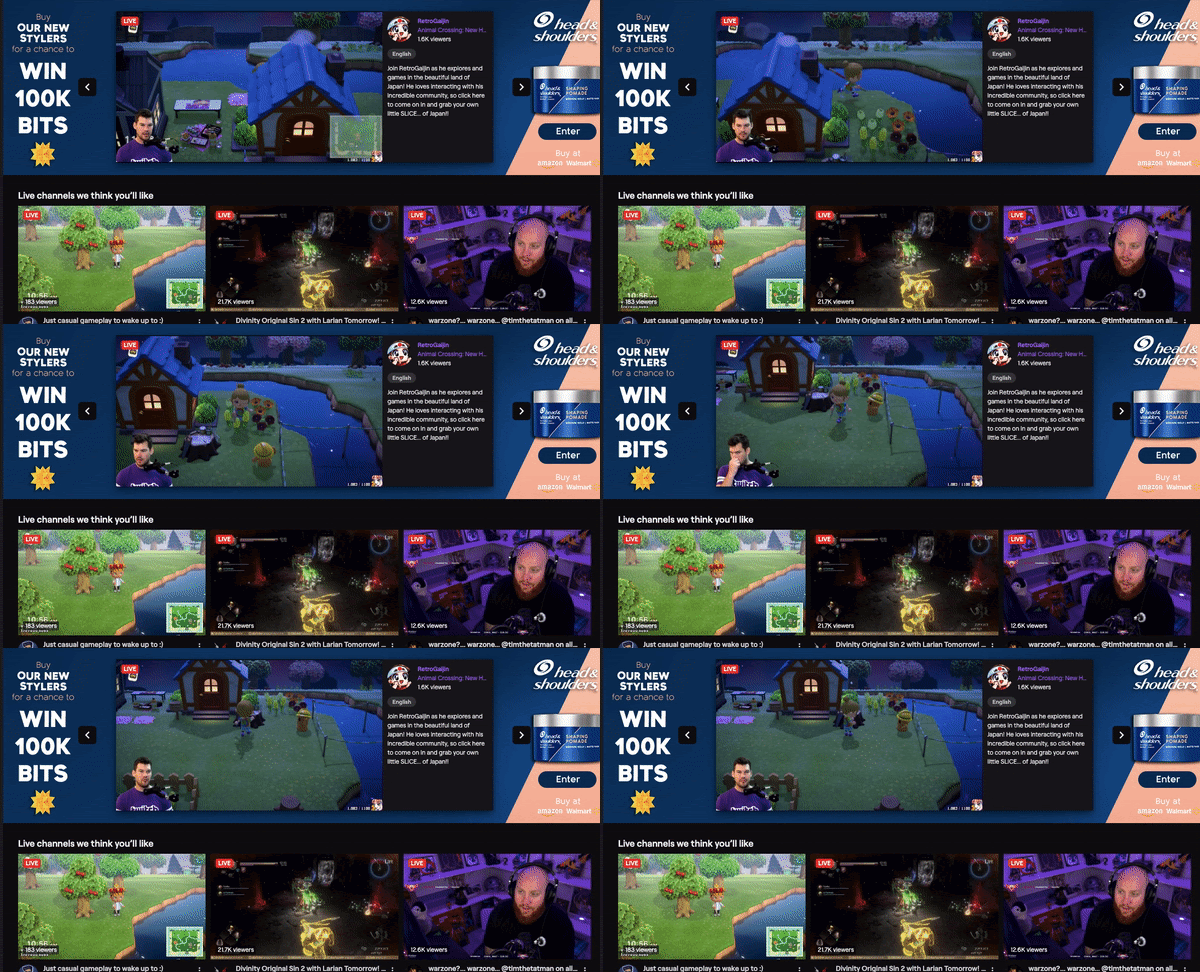
When you visit Twitch, you’ll see a screen very similar to the image below. The homepage is curated based on previous activity, so while this screen is covered with gaming content, streamers don’t have a limit on what they produce.
What is Twitch Used For?
Twitch is mainly a platform for gamers to watch and perform live play-throughs and commentary. However, there are other programs such as talk shows, cooking shows, sporting events, and gaming conventions that also pop up on the site. Twitch enables fans to connect with streamers, and it allows users to watch content they’re interested in on a platform that supports long-form, live broadcasts. In fact, it’s common for streams to last for an hour or two.
The platform also has its own convention called TwitchCon — a bi-annual event celebrating the streaming industry as well as a chance for the platform’s broadcasters to connect with their fans and peers in person.
Fans can attend sessions led by their favorite streamers and buy branded merchandise from a slew of vendors and event sponsors. For example, Doritos is a proud sponsor of TwitchCon.
Though the streamers produce the content, Twitch has a dedicated fanbase that expands across the globe. To get some perspective on Twitch’s users, we’ll take an in-depth look at Twitch’s primary audience.
Who uses Twitch?
According to research by SimilarWeb, 79.62%% of Twitch’s users are male as of May 2022, and the bulk of the platform’s audience (about 37.11%) are between the ages of 18 and 24 years old.
When SimilarWeb studied the web behavior of Twitch users, they found primary keywords this audience searched for were “video games consoles and accessories,” “games,” “software,” and “news.” From that information, we can infer that the majority of Twitch users are interested in games and the technology needed to play them.
In the same report, it was also noted that 21.41% of traffic comes from the U.S., making it the country with the most representation on the platform — with Germany, Korea, Russia, and France not too far behind.
Though the audience has a large young male presence, that demographic isn’t the entire platform’s user base.Twitch’s most popular female streamer, Pokimane, has 9.2 million followers — making her one of the platform’s top 10 most popular streamers.
Still, as marketers know, those numbers could be an essential part of your target audience.
If, by now, you are mulling over a few ideas about how you can fit Twitch into your marketing efforts, let’s talk about how brands are using Twitch, next.
11 Ways Brands Use Twitch
Brands use Twitch to increase brand awareness, target specific audiences, produce branded streams, and leverage influencer marketing. The site is powered by visual content, so let’s explore some examples to back up these goals.
1. PepsiCo
Tactic: Sponsorship Marketing
To promote a limited time Brisk product, PepsiCo sponsored an off-season video game tournament for the game Rocket League. Company-sponsored tournaments aren’t a new phenomenon, but PepsiCo’s sponsorship allowed the beverage company more control than most other sponsorships.
Ads for Brisk ran throughout the tournament and a Brisk-themed car was released into the game for players to use. Viewers could also cheer for the live commentators to drink Brisk, and the phrase “Take the risk, drink the Brisk” formed organically among participants and became a meme for the brand.
2. EA
Tactic: Micro-Influencer Marketing
Video game company EA teamed up with streamer RoryPlays to promote The Sims 4: Cats & Dogs. The campaign was pretty straightforward — RoryPlays played the game live on Twitch and included an EA logo overlay. She also promoted the game and brand verbally on her platform.
It’s snowing at EA Play! Standing here playing #TS4Seasons and it’s AAAMAAAAAAZING!!!
If you’re coming to EA Play, come by @TheSims booth to get HANDS ON Seasons!! pic.twitter.com/LYABmWHDiH
— RoryPlays (She/Her) 🏳️🌈 ♿️ (@RoryPlays_)
June 9, 2018
RoryPlays is a micro-influencer with a smaller following of about 14,000 people, but micro-influencers with a smaller following can still pose a huge advantage for brands. That’s because micro-influencers often have a closer relationship with their followers and a more dedicated fanbase. This makes promoting content to their audience much easier. Think about it — that’s 14,000 more people who are aware of the game and how it’s played.
3. The Hershey Company
Tactic: Influencer Marketing
To promote Reese’s Pieces chocolate bar, Hershey partnered with multiple influencers, like Ninja and DrLupo, who have millions of followers on Twitch. During the campaign, those influencers ran livestreams while tasting the new product.
Through the campaign, millions of people were introduced to the new candy bar via their favorite streamers enjoying the candy live.
4. Lexus
Tactic: Content Marketing
Luxury car maker Lexus partnered with popular video game streamer Fulsie for the company’s “All In” Twitch campaign. During the campaign, 23,000 Twitch users voted on how to modify and customize the 2021 Lexus IS sedan. Twitch users wound up designing the ultimate vehicle for gamers and included a 3D-printed controller inside the car as well as gaming consoles.
AHHH I am so excited to reveal the new @Lexus Gamers’ IS that we designed together last month! Lexus took their sport sedan to the next level and built our dream gamers’ IS. Join the stream – I’ll be giving you guys a detailed tour of the car 😀 https://t.co/0e3xBSXNSH #ad pic.twitter.com/I1LPVPtfoZ
— leslie (@fuslie)
February 17, 2021
5. UberEats
Tactic: Influencer Marketing
UberEats partnered with Ninja to offer subscribers a 25% off coupon. The promotion came in the form of a challenge. Every time Ninja “killed” a character in Fortnite, he would win fans 1% off their UberEats order. The catch was that there was a time limit — Ninja could only take part in the challenge from the moment he ordered his food with UberEats until the food arrived at his door.
By the time the challenge was over, Ninja won his fans 25% off their order and the offer had been used to its maximum capacity.
6. 1,000 Dreams Fund
Tactic: Brand Awareness
The 1,000 Dreams Fund is a non-profit devoted to providing 1,000 university women with grants to help them achieve their dreams. The non-profit provides new grants every academic semester, and the people behind 1DF partnered with Twitch to bring the program to streamers.
Through the Twitch partnership, the fund provides financial assistance to female streamers currently attending college. The fund is meant to help with their school expenses. Twitch might provide financial aid for conventions like TwitchCon, conferences, new hardware, or educational programs that are devoted to creative pursuits.
During Women’s History Month, Twitch’s Facebook account ran an ad that supported the fund, bringing awareness to 1DF and what it does for women streamers.
This gave an entirely new audience an introduction to the non-profit. It also showed Twitch’s diverse user base and highlighted a cause the company supports.
7. WildEarth
Tactic: Target Specific Audiences
WildEarth (WE) is a broadcaster that shows the day-to-day lives of animals — led by expert zoologists in Johannesburg, Australia. Recently, the site’s leaders decided to expand their broadcast to Twitch in order to broaden their audience.
The streams are short, which is unusual for Twitch, but makes sense for WildEarth. Content includes a sunrise safari led by expert Lauren, in which she focuses on animals she sees on her drive and provides information about them.
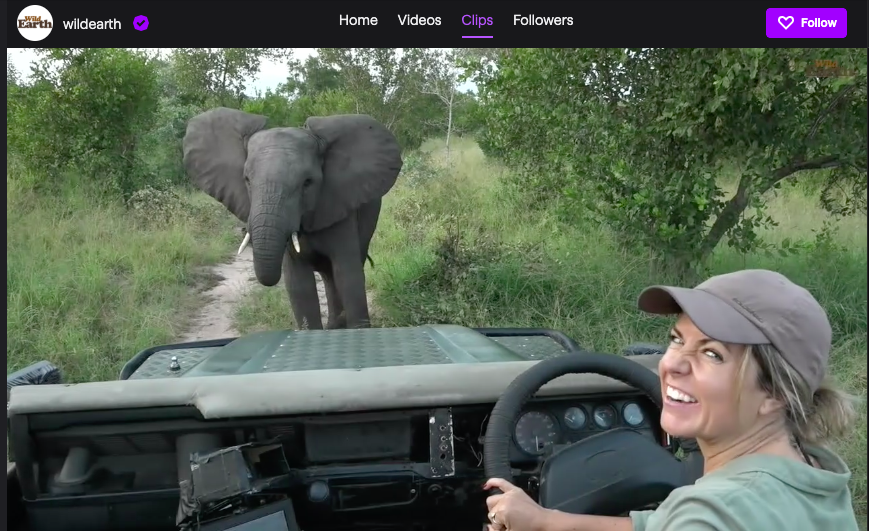
WE is aimed towards younger viewers, so it’s no surprise that broadcasts have expanded to Twitch and YouTube. Some clips even have kid-friendly titles with emojis and current slang to attract these younger viewers.
8. Nissin Noodles
Tactic: Lead Generation
Streamer Pokimane plays mostly role-playing fantasy games. Recently, she partnered with Nissin Foods to produce a branded League of Legends broadcast.
The broadcast featured her making the instant noodles during a stream. To keep the content fun and engaging, Pokimane added a ‘Slurp Meter’ graphic on-screen that measures the volume of her eating her meal.
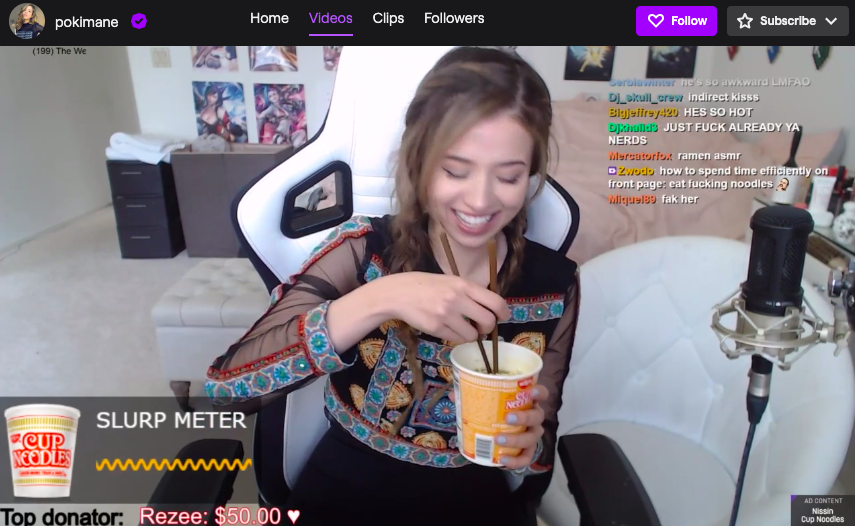
Nissin’s branded stream has been seen by over 11,000 of Pokimane’s fans. This marketing technique cemented Nissin as a brand associated with her community, showing how their product fits into the gaming lifestyle.
9. PSD Underwear
Tactic: Influencer Marketing
Ninja is one of Twitch’s most-followed streamers with 18.3 million followers. To get those followers interested in their brand, and to celebrate TwitchCon 2018, athletic underwear brand PSD gave the streamer a bus:
Hitting the road and heading to TwitchCon with our newly wrapped @ninja bus! 🔥🔥 pic.twitter.com/AHKDI1ocVC
— PSD Underwear (@PSDunderwear)
October 25, 2018
PSD’s marketing campaign used TwitchCon to build brand awareness with its ‘Ninja Bus’ and corresponding Twitter post.
This partnership is a change for PSD, which usually partners with basketball, football, or wrestling athletes. A video game athlete partnership could be part of a strategy to attract audiences on a different platform. It also shows the flexibility of the product.
10. Indeed
Tactic: Paid Advertising
In a similar practice to Facebook and YouTube, Twitch plays video ads before their streams, also known as pre-roll ads.
This Indeed ad shows a case study about how a Twitch streamer and digital artist used Indeed to connect. The streamer was looking for a designer to make her streams more engaging and found her talent on Indeed, a career search engine.
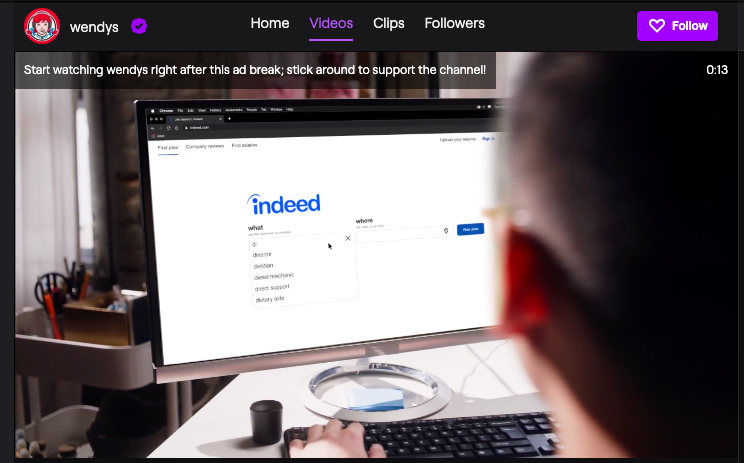
The ad paints a picture of how gamers, streamers, developers, and creatives can use Indeed to find support for their work on Twitch. It shows how a streamer can leverage Twitch to find talent — and how talent can find work.
11. Wendy’s
Tactic: Lead Generation
Animal Crossing: New Horizons came out in March 2020. Marketers at Wendy’s knew Twitch would be flooded with Animal Crossing streams upon the release, so they decided to capitalize on that.
The campaign is simple: a gameplay broadcast following the Animal Crossing adventures of the store’s mascot Wendy. There are several clips and streams on the account, and most of the titles include “Free Delivery” to remind Twitch users that they don’t have to leave the site to eat Wendy’s.
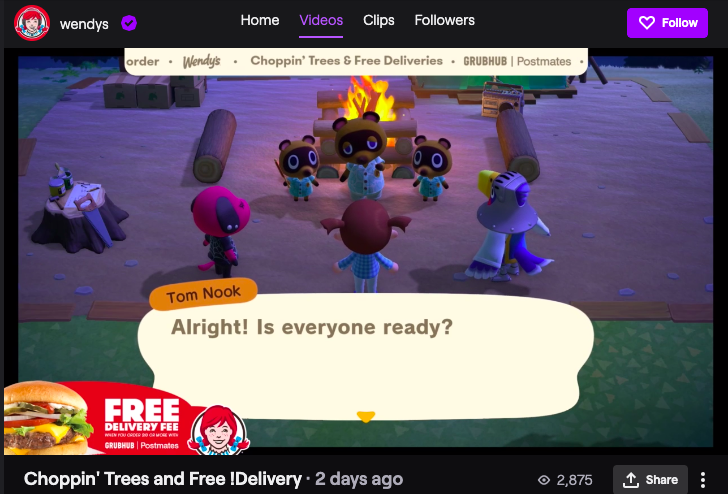
Notice the extra steps the campaign takes for the branded stream. In the bottom left, there’s an advertisement for free delivery from Postmates and GrubHub. At the top is the title of the campaign, ‘Choppin’ Trees & Free Deliveries,’ as well as the logos of participating brands.
Should your brand leverage Twitch?
Multiple companies use Twitch to promote their brand by catering to a young audience. If your company has a similar goal, then Twitch might be a great asset to you. Twitch is especially useful if you’re looking to leverage influencer marketing. Influencers have a very loyal fanbase and can use their following to expand your audience by endorsing your brand. We saw this with Pokimane’s noodle stream as well as with the collaborations between Ninja and multiple companies.
Another benefit of leveraging Twitch is boosting leads with ads. For example, shampoo brand Head & Shoulders used Twitch to market its new men’s styling creams. This was achieved by partnering with the platform to run a contest in which Twitch users could win 100,000 Bits, which is the site’s virtual currency.
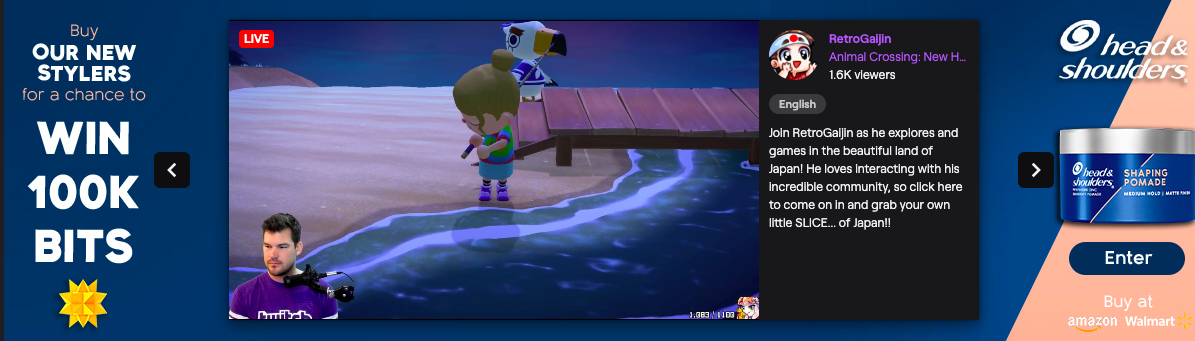
The target audience for this campaign is men, so the team behind the campaign knew they would have an audience on Twitch thanks to its largely male demographic.
Alternatively, if your audience is using Twitch as part of their web behavior, you might look into investing in Twitch content. While you don’t have to create a Twitch account and start uploading numerous streams, you can go the Indeed route and use an ad that relates to Twitch’s users.
For instance, maybe the company you work for sells computers. A great way to leverage Twitch in a product marketing campaign is by making an ad that shows a popular PC game on the platform right now, like League of Legends, and how it works with the computer you’re aiming to sell.
Twitch is an expansive platform where creatives can engage with subjects that interest them. You can leverage Twitch in multiple ways and reach an expansive audience by doing so. As a casual Twitch user, I look forward to seeing what you come up with for your Twitch campaign.

Facebook Business Manager: How to Use Meta Business Suite in 2022
You’ve likely heard of Meta Business Manager, formerly known as Facebook Business Manager. Meta describes this as their tool to “manage ad accounts, Pages, and the people who work on them — all in one place.”
 If you haven’t heard of it, or if you don’t know much about it, Meta Business Manager is a valuable tool if you have more than one ad account, if you need to track separate clients’ ads or pages and create reports for them, or if your company uses Facebook for different services related to your business.
In this post, you’ll learn everything you need to know about Meta (Facebook) Business Manager and how to use it to generate brand awareness on Meta’s social platforms.
Essentially, Facebook Business Manager helps your team stay organized and focused while monitoring, creating, and publishing ads, pages, and other business assets on Facebook.
Here, we’ll delve into how to create a Meta Business Manager account; how to add your business pages, ads, and people; how to use the analytics tools in your account; and how to extract the most value from the ads manager tool.
For the purpose of keeping this article easy to follow, we’re going to assume your business is interested in using Business Manager for your own pages and ads rather than for your client’s pages and ads. We’ll also use the names “Meta Business Manager” and “Facebook Business Manager” interchangeably.
Is Meta Business Manager different from your Facebook account?
While Meta Business Manager isn’t tied to your personal account, you do need a personal Facebook account to use Facebook Business Manager.
Don’t worry. Your personal Facebook account won’t be visible. Facebook Business Manager only shows you your business assets, including ad accounts, pages related to your business, and advertising or social media analytics. It doesn’t have a newsfeed and won’t send you notifications from your personal account.
Setting up your Facebook Business Manager account is simple. The Facebook Business Manager account is a different set-up process than a personal Facebook account. The Business Manager set-up simply requires your business name and email to begin. It’s an easy four-step process that took me approximately two minutes.
Here’s what you do:
1. First, go to business.facebook.com and click the blue “Create Account” button.
To create a new Business Manager account, click the “Create Account” button next to or below the “Log In” button. If you have not already logged in to your Facebook account, you’ll be prompted to log in. You’ll also need your business information ready to enter in the next pop-up screen.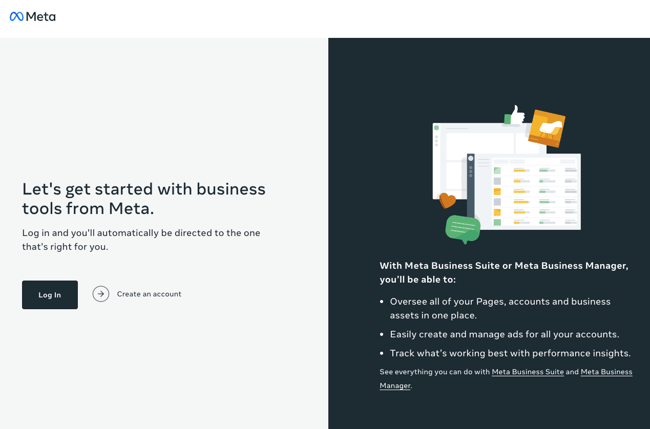
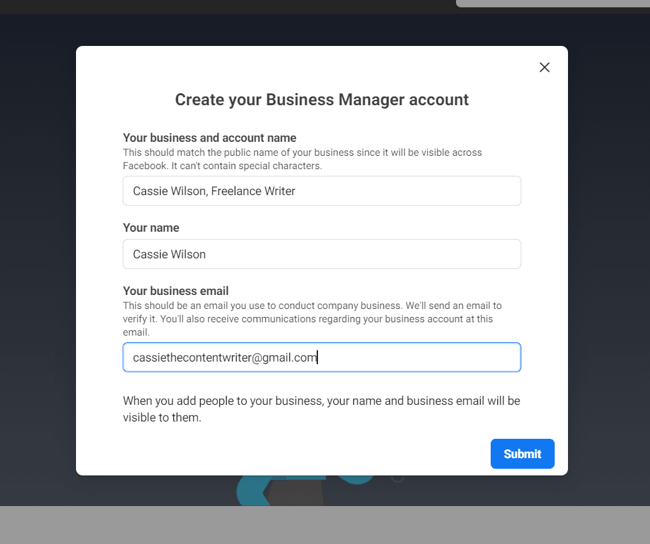
2. Next, fill in your business name and email in the pop-up, and click “Submit.”
You’ll be asked to enter your business name and email on this pop-up screen. Since you are logged in to Facebook already, your name will already be populated in the box.
You’ll want to make sure you are using a business email that your employees recognize, as this is the email you’ll use to invite and assign roles to your employees. Meta does not allow the use of special characters in the business name field, so you’ll want to leave those out.
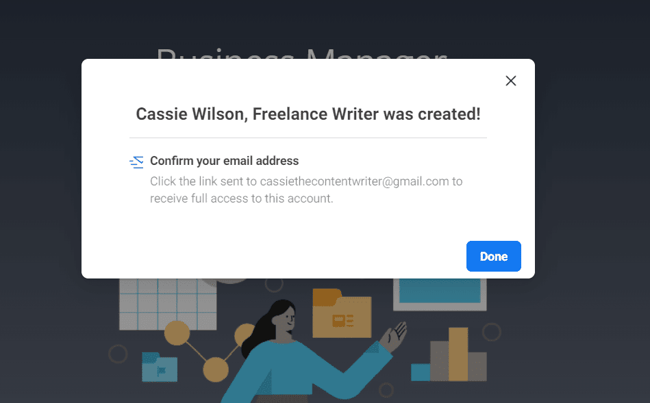
3. The pop-up screen will then ask you to confirm your email. Go to your inbox and open the email with the subject line, “Confirm your business email.”
After entering your information and submitting it, Meta will ask you to confirm your business email. The pop-up screen will direct you to check your email.
You will see an email that reads, “Confirm your business account.” If you don’t immediately see this email in your inbox, be sure to check your junk, spam, or social folders.
4. Open the email from Facebook and click “Confirm now.”
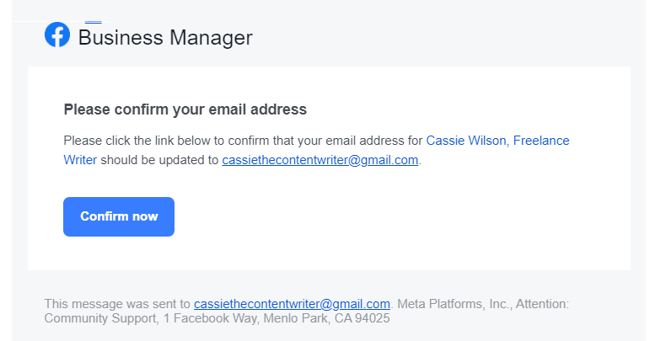
When you click the “Confirm now” button, a new Meta Business Manager window will open. This window will give you access to your Business Manager account. If it looks intimidating at first glance, don’t worry, Facebook Business Manager is actually pretty intuitive.
Let’s delve into how to add pages and ad accounts to your Business Manager account.
How to Add Facebook Business Pages to Your Meta Business Manager Account
On your Meta Business Manager homepage, you’ll immediately see an Ad Account Performance module. You may need to scroll down to see the Pages module in your Business Account.
1. First, scroll to the Pages module and click “Go to business settings.”
Since your Meta Business Manager is new, you will have to connect your Facebook Pages to your account. To connect a Facebook page to your Meta Business Manager, scroll down to the Pages Module. Then, click the “Go to business settings” button.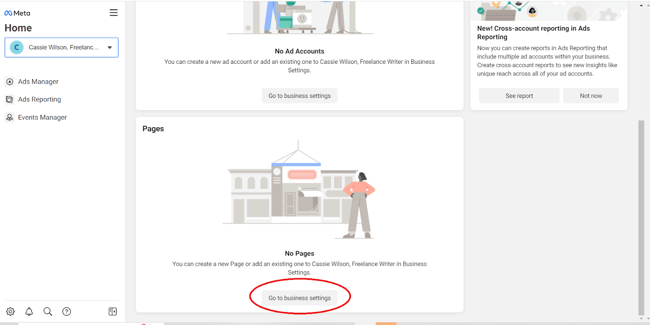
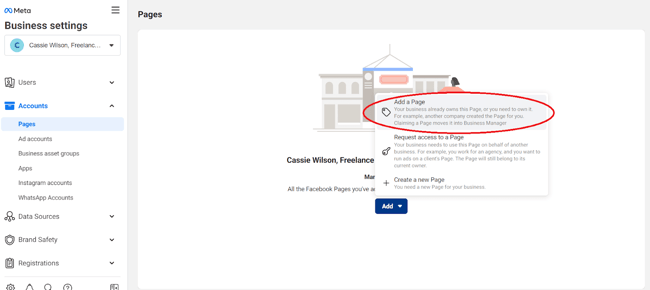
2. Click the “Add” button in the new window. In the menu, choose “Add a Page.”
When you click “Go to business settings,” a new window will open. In this window, you will be able to connect your Facebook pages to your Business Manager account. Click the “Add” button to connect a page.
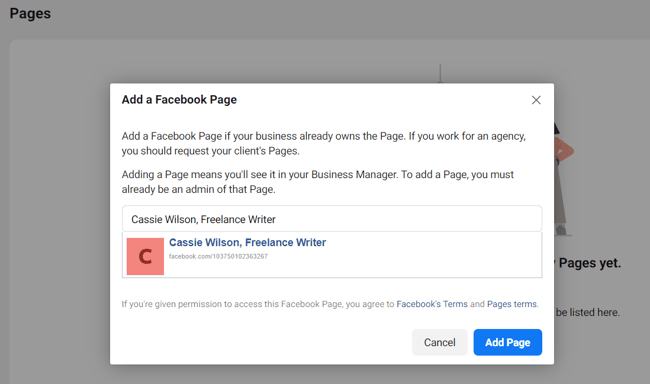
3. In the pop-up screen, type the name of your Facebook Page or enter your URL. Then click the “Add Page” button.
This pop-up screen will prompt you to type your Facebook Page in the bar or paste your Page’s URL. If you type your Page name in the bar, your Page should be the first available option. If not, paste the URL. Once you have selected your Page, click the “Add Page” button.
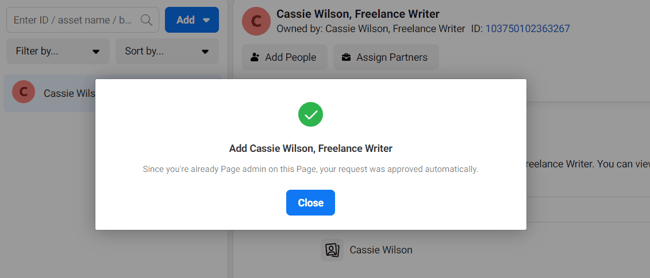
4. If you see this pop-up with a green checkmark, you’re all set! Your page is successfully added.
That’s it! Now that you’ve successfully added your Page, you’ll be able to see it in your Meta Business Suite portal.
How to Add Your Facebook Ad Accounts
Adding your Facebook ad account is an almost identical process to adding a page, but I’ll walk you through the steps here so you can see them in action.
It’s important to note you can only add one ad account at first, and then you’ll be able to add additional ad accounts once you start spending money in your first ad account.
However, you can’t host more than five ad accounts at any one time.
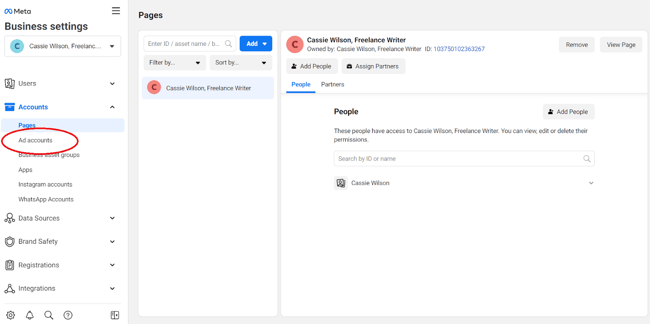
1. Click the “Ad accounts” link on the side panel of your homepage.
Underneath Business settings, you’ll see the side panel. Click on the “Ad accounts” link to connect your Ad account to your Meta Business Suite.
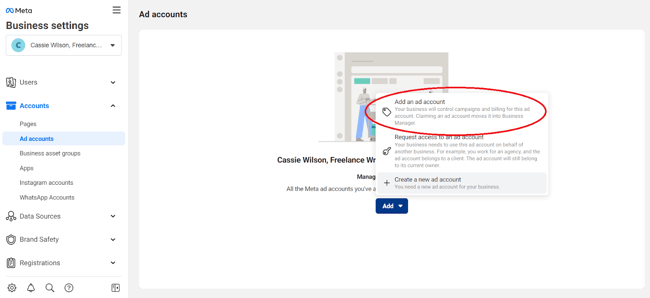
2. Click the “Add” button. In the pop-up menu, choose “Add an ad account.”
After you click “Add an ad account,” you’ll notice three options. You can add your own account, add someone else’s account, or create a new account. For the purpose of this post, we’ll assume you already have your own ad account for your Facebook Page. To add the ad account, click “Add an ad account.”
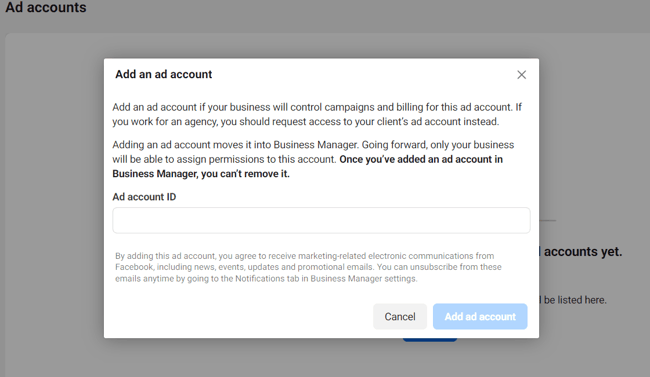
3. Enter your “Ad account ID” into the box. When you’re finished, click “Add Ad Account.”
To connect your ad account to your Meta Business Manager, you need your account ID. If you do not know your ID, log into your existing Ads Manager. You should see your ID in the dropdown menu of the search bar. This is the ID you’ll use to connect your account to the Business Manager.
Once you have your ad account ID, enter it into the ad account ID box. Double-check that your ad account ID is the correct account and number sequence. Once you enter your ID and connect it to your Business Manager, you cannot delete it.
How to Add People to Your Business Manager Account
For this example, we’ll focus on adding internal employees to your Business Manager Account, not clients or external advisors.
Adding people to your account is easy, and you can limit the amount of access each employee gets.
Limiting access to “employee only” is helpful if, for instance, you want to assign one employee to handle your Instagram account and monitor those analytics, but then you want another employee on the team to manage your ad accounts and those analytics.
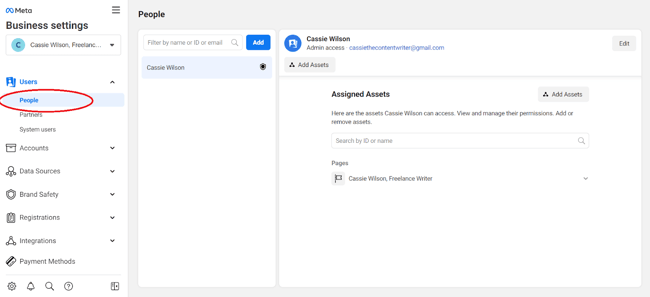
1. First, go to the side panel under Business settings and choose “Users.” In the dropdown menu, select “People.”
To add an employee to your Business Manager, locate the “Users” tab on the side panel of the main screen. Then, select “People.” This will open a new screen.
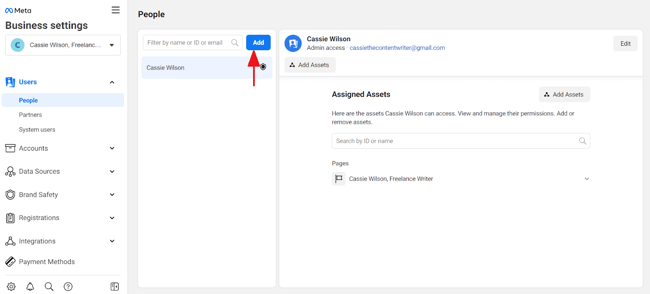
2. Next, click the blue “Add” button highlighted below.
Adding a user is simple. Click the blue “Add” button to start the process. You’ll need to know the email of the employee you are adding to your Business Manager.
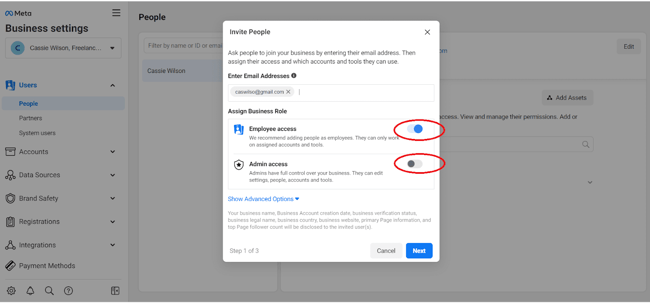
3. Type in an employee’s email address (so Facebook can send them an email with access permissions), and then select “on” for either “Employee access” or “Admin access.” Then, click “Next.”
To add an employee, you’ll need to enter their email address. Before clicking “Next,” decide if you will assign the user to “Employee access” or “Admin access.” Setting a user to “Admin access” will give them complete control of your Business Manager account. To assign additional roles, such as Finance Analyst, Finance Editor, or Developer, click the “Show Advanced Options” button.
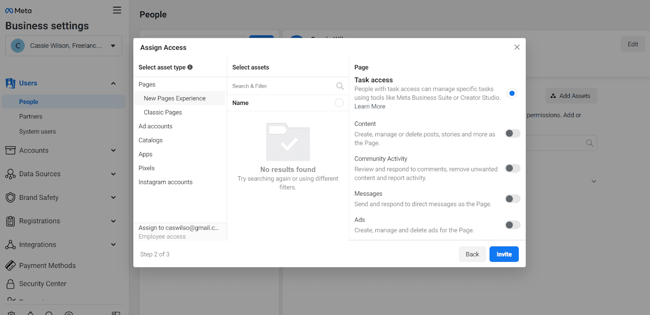
 4. Assign your employee to any of the assets on the right of the pop-up screen. Click on each asset to assign roles and tasks. Once you are finished, click “Invite.”
Here, you have a couple of different options. You can assign your employee to any of the assets on the right of the pop-up screen (Pages, Ad Accounts, Catalogs, Apps, Pixels, and Instagram Account). If you click on each asset tab, you can assign different tasks and roles for the employee within the asset. For example, under the Pages asset, you may task your employee with content creation or task them with moderating comments.
Once you have assigned roles and tasks for your employee, click “Invite.”
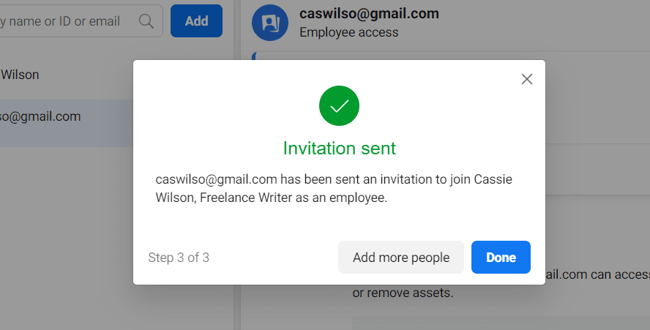
5. Now, your employee has been sent an invitation. Click “Done” or “Add more people.”
Great! You’ve added an employee to your Meta Business Manager account. Make sure your employee knows to check their email and follow the instructions in their email to finish confirming their account. If you are finished adding people to your Business Manager, click “Done.” If you have more employees to add to your account, click “Add more people.”
Ads Manager Tools
Now that we’re all set up, you might be curious about some of the additional benefits of creating an ad inside Business Manager.
When creating an ad in Ads Manager, one of the best advantages (as you’ll soon see) is the ability to create a highly-targeted core demographic group with the “create new audience” feature.
You can choose a gender, age, region, and language to reach and dive into the specific interests you want your audience to share.
Then you’re given estimates based on your audience and budget, like how many people you’re expected to reach daily and how many people will click your link. Those performance metrics are critical when deciding whether to increase or decrease audience size or whether your budget is big enough.
Here’s how to create an ad in Ad Manager:
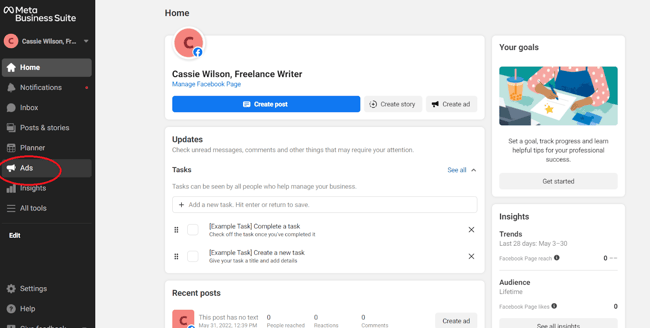
1. On the side panel of the homepage, click “Ads Manager.”
Under the Meta Business Suite logo, you’ll see the side panel. To access the Ads Manager, click the “Ads Manager” button.
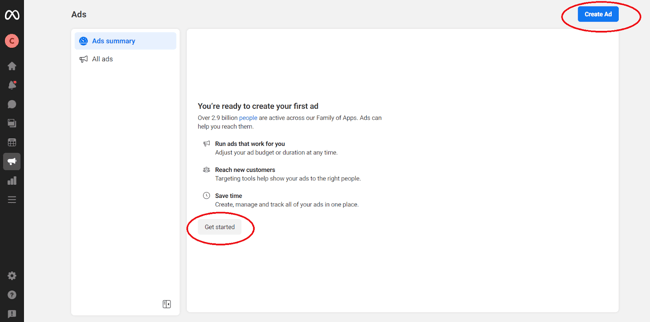
2. To create an ad, click “Create Ad” in the right corner of the screen. Or, click on “Get started.”
If you have not previously created Facebook ads, Facebook will prompt you to start. Click the “Get started” button at the bottom of the screen. Or click “Create Ad” in the right-hand corner of the screen. Both buttons will open the ad creation page.
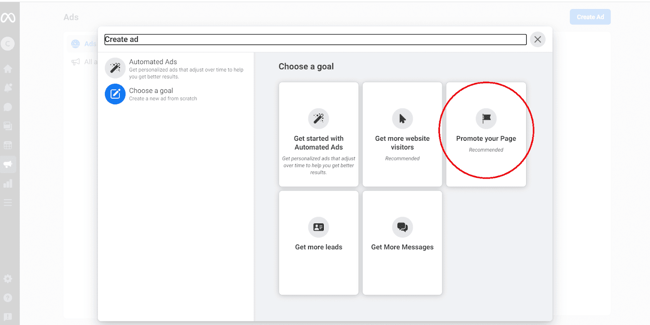
 3. Select your goal.
When creating a Facebook ad, you need to choose a goal for your ad. You can create an automated advertisement, drive traffic to your website, promote your Facebook Page, generate more leads, or create an ad to generate inbound messages. For the purpose of this example, we will choose the goal “Promote your Page.”
4. Next, fill in the details to design your Facebook ad.
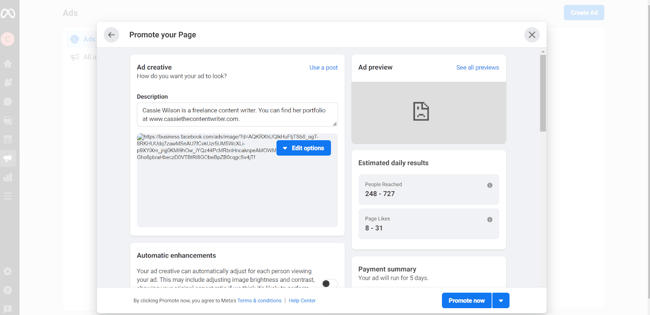
To promote your Page with a Facebook ad, you need first to write a description for your ad. Next, click “Edit options” to choose a photo for your ad. You can upload an image or select a photo that you already have linked to your pages. The Ad box will give you an idea of what your ad will look like to your audience.
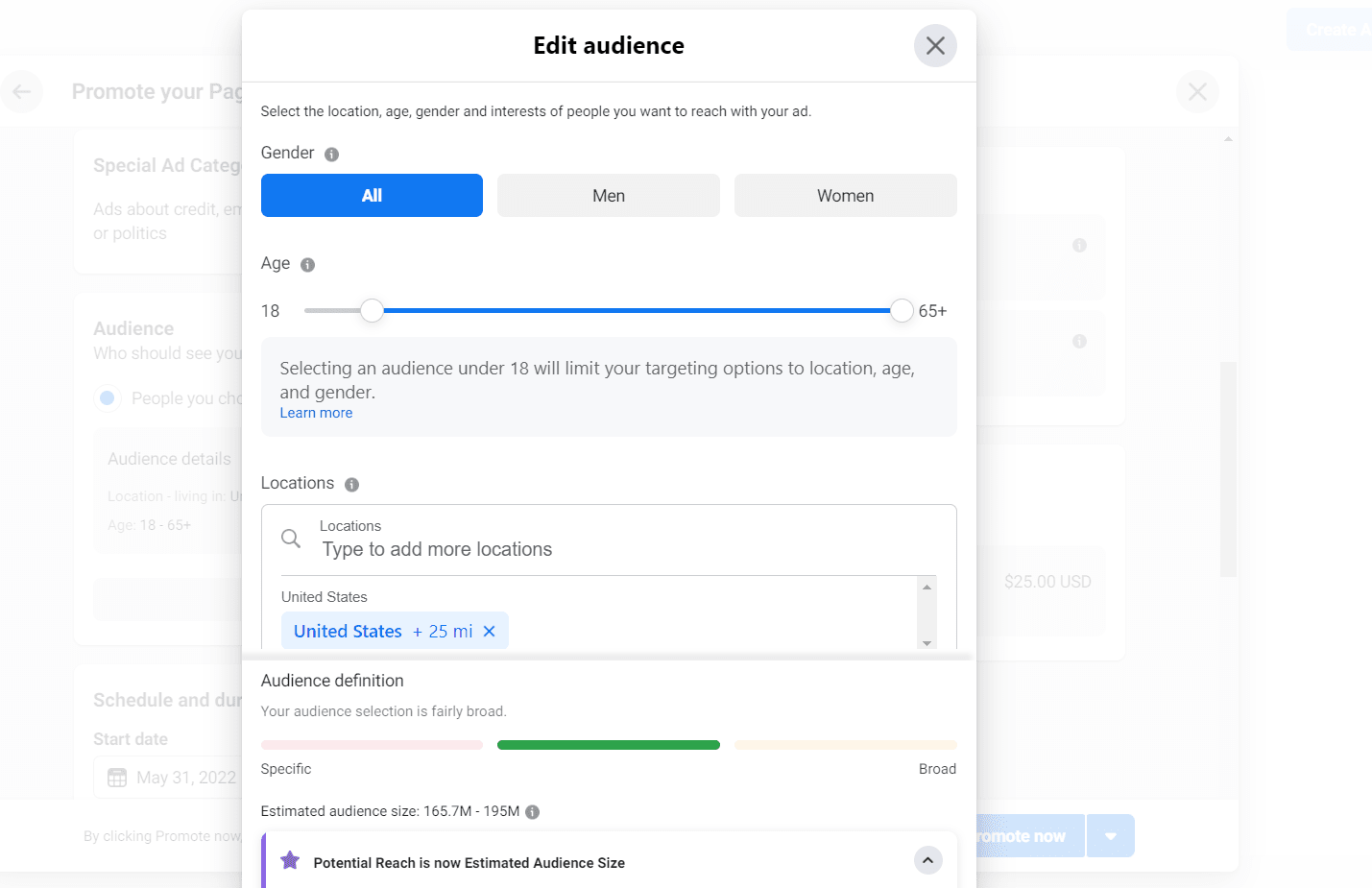
5. Then, scroll down to create your audience. Click the pencil icon to edit the audience description.
In the pop-up window, scroll down to the “Audience” module. Click the pencil icon in the corner of the module to edit the audience description. Fill out the information according to the audience that you wish to reach. You don’t need to fill out all of the information, but the more information you include, the more likely you’ll reach your target demographic.
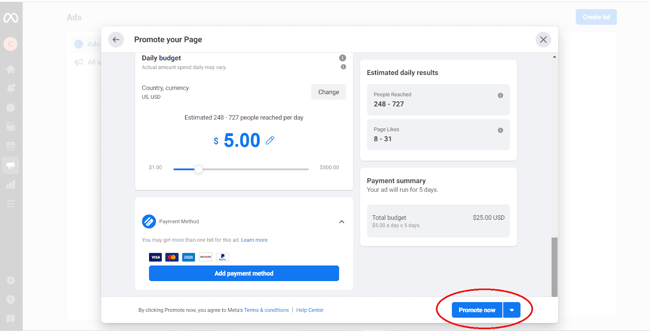
6. Once you are finished designing your Facebook ad, enter your payment information and click “Promote now.”
Before clicking “Promote now,” review your ad. If you are happy with your ad, you’ve selected your target audience, and you’ve decided on the timeframe to run your ad, enter your payment information in the Payment Method module. Click “Promote now” to finalize your ad.
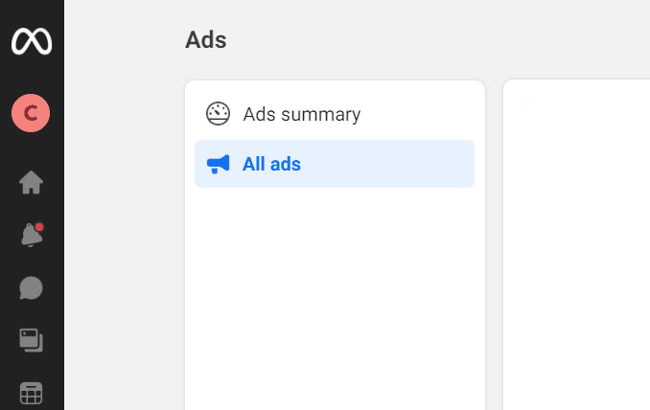
7. Congratulations! You have created your first Facebook Ad. To review your ad, click on the Ads Manager tab and click on “All ads.”
The Ads Manager tab is the easiest way to review your ads. Click on “All ads” to see a list of your ads. This tab will provide relevant information and analytics such as reach, impressions, cost per result, and relevance score.
Meta Business Manager Insights
Lastly, here’s a general overview of your “Insights” tab and what the Insights page looks like:
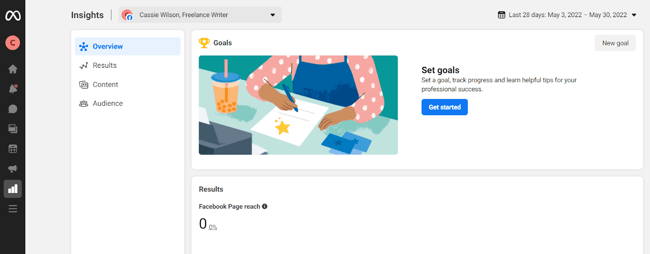
We won’t go too in-depth with analytics, or insights, since it’ll vary drastically depending on your business’s advertising goals, budget, and audience.
However, it’s important to note a few significant components of the Business Manager’s insights to ensure you understand the tool’s most impressive functions.
Hot tip: Check out Meta Business’s advertising information page to learn more about Facebook ad functions, read success stories for industry-specific businesses, and get inspiration and ideas to improve your own ads.
Business Manager Insights Functions You’ll Want to Know About
- Facebook Pixel: If you install Facebook Pixel, your website can reach people with ads on Facebook after they’ve visited your site.
- Split testing: Use A/B testing to figure out which ads lead to the highest conversion rate.
- Conversion lift: Use this tool to ensure your ads are actually generating conversions and sales.
- Mobile SDK: If your business has an app, use Mobile SDK to see what actions people are taking within your app and use that information to improve ad campaigns across devices.
- Brand lift: Find out how your ads are impacting your brand image to optimize ads for better brand awareness.
Use Meta Business Manager to Improve Your Reach on Facebook
Meta Business Manager will help you manage your Facebook presence down to the team members who can access your account. Take advantage of this tool to launch effective ads on Facebook, examine your Facebook strategy, and boost your KPIs across Meta’s social platforms.
Editor’s note: This post was originally published in May 2018 and has been updated for comprehensiveness.


Back to the Office? Remote and Hybrid Employees Would Rather Quit [Data from 1000 Consumers]
Remember when we used to wake up bright and early and commute to the office five days a week?
Thinking back, it feels like a distant memory of a time before Covid-19. But for some workers, the days of rolling out of bed and hopping on a computer from the comfort of home could be coming to an end.
With the pandemic winding down, many companies like Apple and Google are going for a hybrid model, asking employees to come in a few days a week. But others, notably Tesla and Goldman Sachs, are requiring workers to come back to the office full-time.
Despite studies showing that workers are happier — and more productive — when working from home, the possibility of a full return to the office looms over remote and hybrid workers.
But will those employees rush back into the office when asked to? We did our own consumer research to find out.

Will In-Office Work be a Dealbreaker for Employees?
When we asked over 200 remote/hybrid workers if they’d consider leaving their job if forced to go back to the office full-time, 54% say they would look elsewhere.
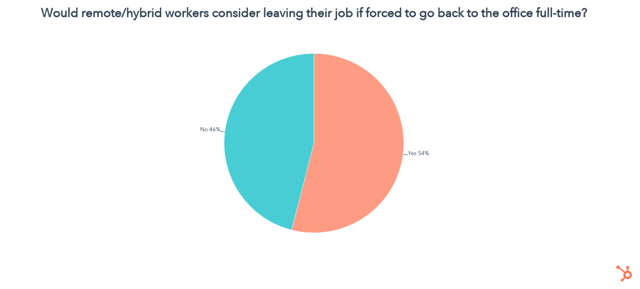 Why? Workers Crave Flexibility
We found that flexibility in working remotely, a flexible work schedule, and a healthy work/life balance are among the top reasons remote or hybrid workers stay in their jobs.
In fact, flexibility in working remotely is almost as important as pay:
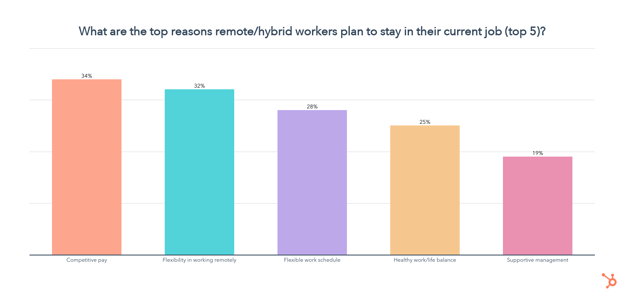
Who’s Still Working Remotely?
You might also be wondering what percentage of workers are currently remote, fully in-office, or using a hybrid model.
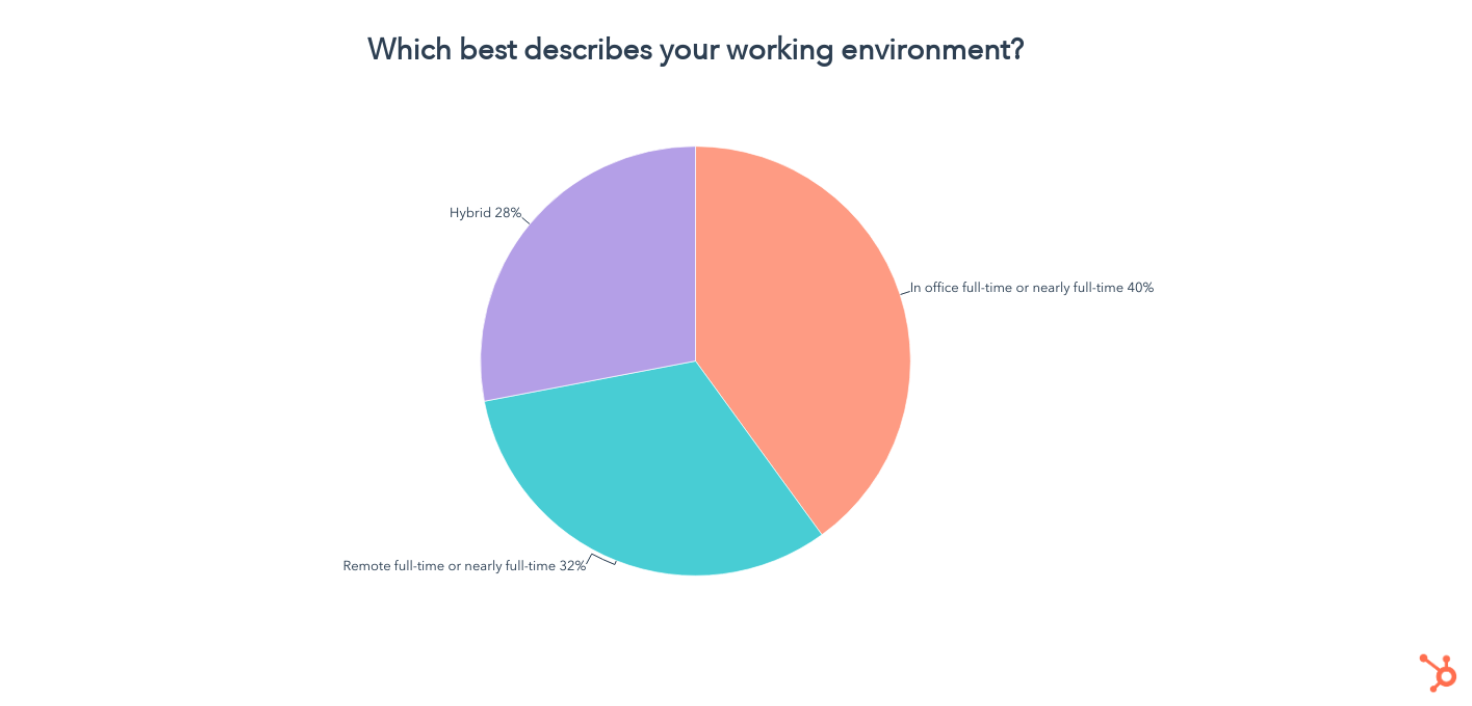 Working on-site is the dominant model, with 40% of employees in the office full-time, while 32% are fully remote and 28% are hybrid.
What Business Leaders and Managers Should Keep in Mind
Of course, some work simply can’t be done remotely, but the pandemic proved that even those jobs could have more flexibility than we thought.
While we can’t predict all the effects of making employees go back to the office full-time, it’s clear that doing so when unnecessary could make many employees consider their exit.
If you’re an employer thinking of requiring a full-time return to the office, make sure to proceed with empathy and patience, transparently explain to your team why the work must be done in office, and consider the possibility that some of your talent could move to another company if they prefer flexibility.
To help your employees transition back to the office, while still retaining a healthy level of work-life balance, you could also consider alternatives like:
- Flexible office and home hours on light meeting weeks.
- A company-wide meeting free day each week (Our HubSpotters love our Meeting-Free Fridays!)
- A few more vacation days in summer or during the winter holidays.
- Extra time off for work anniversaries. (An example of this would be HubSpot’s 5-Year Sabbatical Program)
- Additional family, sickness, or mental health leave options when possible
Lastly, if remote and hybrid work are doable for your marketing department or business, but you or other managers on your team have less experience with a remote workforce — don’t let that hold you back from building great virtual strategies. To learn the ins and outs of remote or dispersed team management, with tips from HubSpot leaders who’ve mastered it, check out this ultimate guide.
More Insights on Trends That Matter
The data in this article came from our bi-annual trends survey where we asked 1,000 people about topics ranging from the metaverse to shopping habits, online communities, and the great resignation.
To learn all about the key consumer trends that could impact your business or marketing strategy in the next six months, check out our upcoming State of Consumer Trends Report.

The Best Video Marketing Channels to Grow Your Brand in 2022
Video marketing isn’t “quick.” On average, it takes 2 weeks to create a video from start to finish.
To get the most traction out of your work, it’s essential to pick the best video marketing channels to leverage. However, since most social media channels are pivoting to video, it’s hard to know which ones are worth your time.
Here, we’ll list the best video marketing channels for your long-form, short-form, and live videos — based on ROI, engagement, and lead generation.
Best Channels for Long-Form Video
1. YouTube
In the social media sphere, YouTube feels like a steady ship in choppy water. In fact, it’s nearly impossible to talk about video marketing without mentioning the behemoth that is YouTube.
Launched more than a decade ago, YouTube has kept a competitive edge against new players in the field, like TikTok and Instagram. But it’s not just an entertainment hub — it’s a powerful marketing tool.
According to a HubSpot Blogs report of 500+ video marketers, almost half (48%) of marketers plan to increase their investment in YouTube this year.
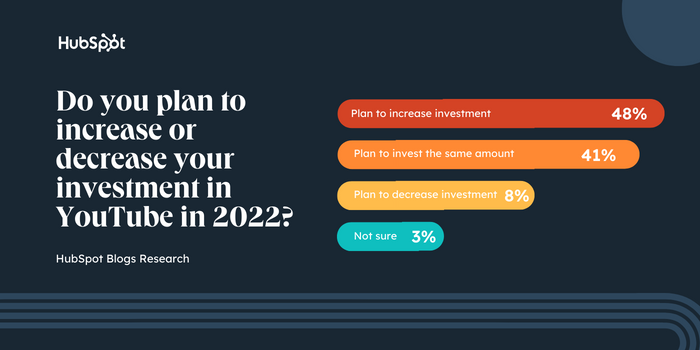
Participants also ranked YouTube as the second best platform for ROI. While many marketers find success on YouTube for different reasons, its large user base (2.6 billion active users, to be exact) and advanced ad targeting certainly help.
If you’re looking for the best place to host your long-form videos — like product demos, Q&As, behind-the-scenes content, and more – YouTube may fit the bill.
Check out this article to see how brands are getting creative on YouTube in 2022, plus this guide on YouTube marketing 101.
2. Instagram Video
Video marketing is no small feat — it’s an investment in time, money, and effort. So if you’re looking to get the most bang for your buck, here’s one stat you need to know: 65% of video marketers say Instagram has the best ROI of any other platform.
Here’s more good news: 64% of video marketers say Instagram also has the best engagement and lead generation out of any other social platform.
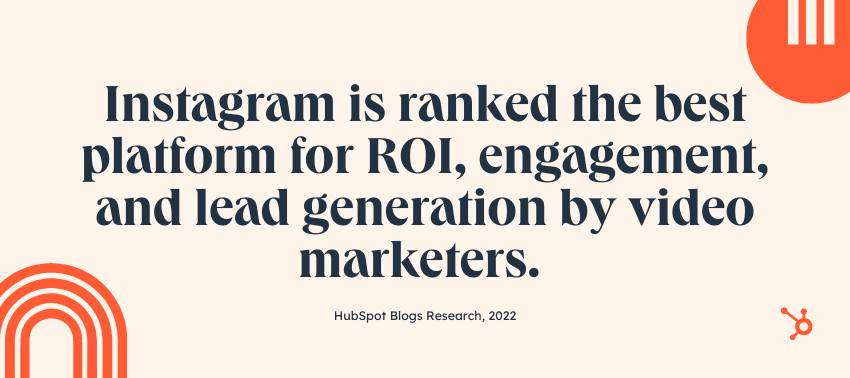
All this to say, if you’re looking to engage with your audience, build a community, and nurture brand loyalty with video, Instagram deserves a chance on your marketing roster.
Best Channels for Short-Form Video
1. TikTok
Since launching in 2016, TikTok has seen a meteoric rise, cementing itself as a powerhouse for short-form video while keeping more mature platforms, like YouTube and Facebook, on its toes.
Despite its popularity, some marketers initially dismissed TikTok as a platform for lighthearted dancing and lip-synching — and nothing more. But in 2022, things have changed.
According to a 2022 HubSpot Blogs report of 500+ video marketers, participants ranked short-form videos as the most engaging and effective type of content today — and TikTok is their platform of choice. In fact, 54% of marketers plan to increase their investment in TikTok this year.
When it comes to engagement, TikTok secures third place behind YouTube and Instagram — which is impressive considering its relative “newness.” Also impressive: the average user session on TikTok is 10.85 minutes — far exceeding any other social platform. In short, users are engaged.
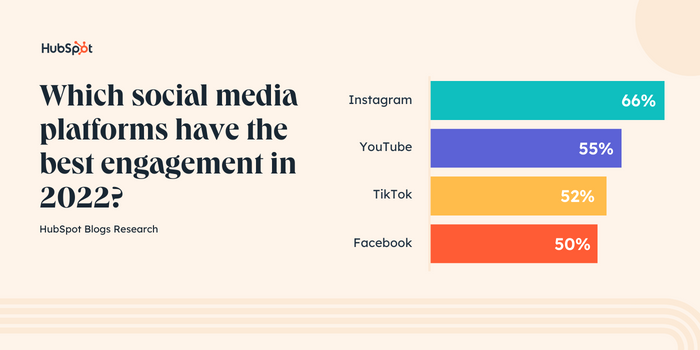
TikTok also falls into third place for ROI, closely trailing YouTube and Instagram.
Despite its quirkiness, TikTok has become a viable marketing option for those willing to get creative — and these stats prove it. To learn more about TikTok marketing, check out this helpful guide.
2. IG Reels
Instagram’s answer to TikTok is here, and it’s called Reels. Reels are short videos that users can film, edit, and share on the app.
While you can create short-form content on a number of platforms, Reels has one major advantage: its discoverability. They appear on the platform in various places, from the Explore page to a user’s feed.
Since Reels are heavily promoted on the platform, the feature is almost unavoidable — sometimes to the chagrin of users. In fact, 91% of active Instagram users say they watch videos on Instagram at least once a week.
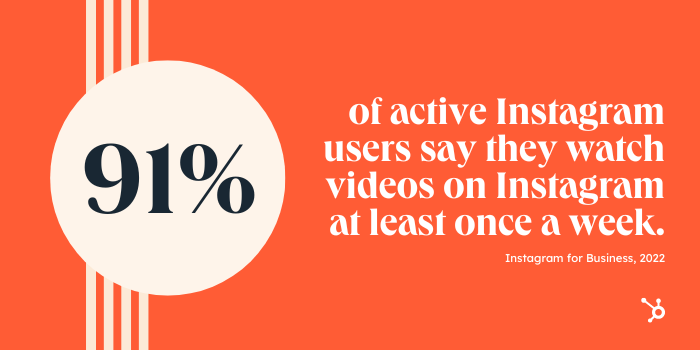
For marketers, Instagram is a great option if you want to play with multiple content formats — like carousels, Reels, Lives, and Stories — while capturing the attention of an already engaged audience.
Best Channels for Live Video
1. YouTube Live
With its massive user base, reach, and diverse audience, YouTube Live is an appealing option for your streaming needs.
It’s also a great time to get started: YouTube is currently expanding its live stream features, including Super Chats and Super Stickers, membership gifting, and more. These features enable greater engagement with your audience and additional monetization avenues.
YouTube also provides powerful analytics on live videos. Check real-time analytics like concurrent viewers, likes, and chat rates, as well as post-stream stats like new subscribers, total watch time, and more.
2. Instagram Live
Did you know Instagram captures 13% of all live stream viewers on social media?
With Instagram Live, you can stream from anywhere — and invite guests to join your stream. There’s plenty of opportunity for engagement: viewers can send emojis, write comments, and send donation badges.
Additionally, when you go live on Instagram, your followers receive a notification to tune in so your stream won’t get lost in the crowd — which is more likely to happen on YouTube or Twitch.
3. Facebook Live
Like YouTube, Facebook boasts a massive audience spanning multiple age groups, although Millennials take up the largest share.
Facebook Live is an excellent option if you’re already active on the platform and have a healthy following. But if you’re still growing an audience, fear not — you can go live from a personal profile, page, or even a group.
With Facebook Live, you can edit previously recorded streams, chat with users using the live chat feature, and schedule your streams in advance. However, keep in mind that Facebook limits your stream length, and your monetization options aren’t as robust as other platforms.
But what about Twitch?
It feels odd to exclude Twitch from a conversation about live streaming. That said, marketers report low engagement and ROI on the platform, and only 10% of marketers plan to leverage Twitch for the first time this year. Additionally, Twitch is highly saturated with gamers – so if that’s outside your niche, it’s worth exploring other options.
Back to You
It takes time, money, and energy to create videos — making it imperative to find the best home for your content. Start by defining your goals — such as lead generation, engagement, or brand awareness. Once you nail down your goals, it’s easier to pick the platform that can achieve them.

50+ YouTube Stats Every Video Marketer Should Know in 2022
YouTube has experienced explosive growth since it was founded in an office garage in 2005 and has since opened up avenues for brands and content creators alike.

Check out these 2022 YouTube stats about the platform’s mobile usage, demographics, subscriber growth, ROI, and history.
YouTube Stats Every Video Marketer Should Know in 2022
General YouTube Stats

- Over 500 hours of video are uploaded to YouTube every minute. (Statista)
- Over one billion hours of videos are watched on YouTube every day.
- “Baby Shark Dance” by Pinkfong Kids’ Songs & Stories is the most watched video on YouTube, with over 11 billion views since 2016.
- YouTube has more than 2 billion users.
- Based on a custom Nielsen meta-analysis, a full-funnel YouTube strategy drives 10% higher ROI compared to awareness advertising alone. (Think with Google)
- A recent study shows that YouTube advertisers see Awareness formats driving 28% of their conversion assists. (Think with Google)
- 75% of people surveyed say advertising in YouTube videos makes them more aware of new brands or products,1 while 70% of them say they bought a brand as a result of seeing it on YouTube (Think with Google)
- A 2021 Google study found that on average, YouTube full-funnel advertisers see their awareness campaigns drive reach that is 75% more incremental than their action campaigns. (Think with Google)
- 51% of U.S./UK consumers use YouTube to research or find products to buy. (GWI)
YouTube Content Stats
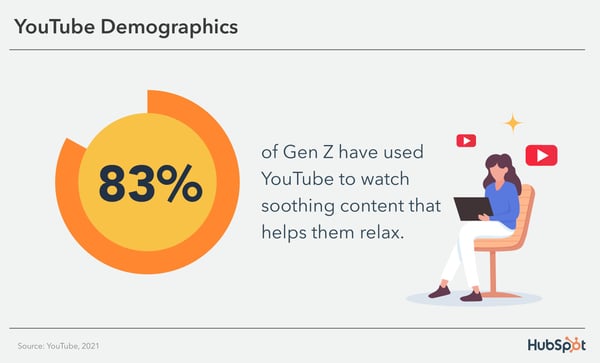
- 65% of Gen Z agree that content that’s personally relevant to them is more important than the content that lots of other people talk about. (YouTube)
- There were more than 65 billion views of videos related to ASMR in 2021. (YouTube)
- 76% of Gen Z agree that YouTube has the most content that lets them deeply explore topics they are interested in. (YouTube)
- 82% of Gen Z have used YouTube to watch content in order to feel nostalgic. (YouTube)
- 83% of Gen Z have used YouTube to watch soothing content that helps them relax. (YouTube)
- 78% of people agree that they use YouTube because it serves them with content that’s personally relevant to them. (YouTube)
ROI and Usage by Marketers
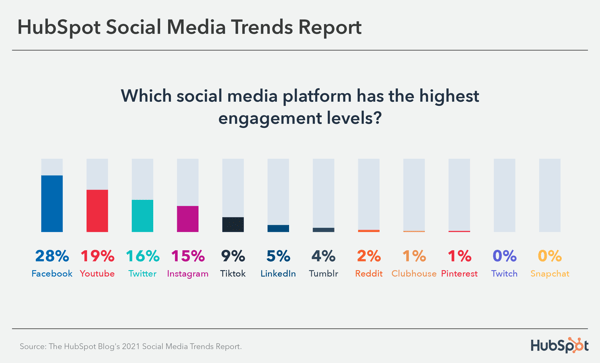
- YouTube channels with 100K-1M followers have the highest engagement rate. (Influencer Marketing Hub)
- On most social platforms, engagement rates usually trend down as follower count grows. On YouTube, the opposite is true. The average engagement rate on YouTube for content creators with over 1 million followers is 4.06% while the average rate for those with 1K to 5K followers is only 2.04%. (Influencer Marketing Hub)
- 77% of video marketers use YouTube to host videos. (HubSpot Blog Research)
- When asked which social media platform offered the highest engagement rate, 500+ marketers ranked YouTube second highest. (HubSpot Blog Research)
- YouTube is the most widely-used platform among video marketers used by 88%. (Wyzowl)
- 56% of marketers surveyed in 2022 say YouTube offers the biggest ROI, ranking #2 behind Instagram. (HubSpot Blog Research)
- Marketers plan to invest the most in YouTube in 2022. (HubSpot Blog Research)
- 27% of marketers surveyed in a Video Marketing Report say they plan on investing in sharing videos on YouTube more than any other platform. (HubSpot Blog Research)
- YouTube ranks second highest in generating leads when sharing marketing videos behind Instagram. (HubSpot Blog Research)
- 44% of influencers leveraged YouTube for their campaigns in 2021, up 8% from 2021. (Influencer Marketing Hub)
YouTube Mobile Stats
- 21.2% of the global traffic on YouTube in 2021 came from mobile devices. (Statista)
- More than 70% of YouTube watch time is generated from mobile devices.
- In Q2 of 2021, mobile devices accounted for 63% of YouTube viewing time worldwide. (Statista)
- In 2020, YouTube was the fourth most popular IOS app after ZOOM, TikTok, and Disney+.
- in December 2021, 72% of respondents aged 18 to 34 years used their smartphones to watch online video content weekly. (Statista)
YouTube Demographics Stats
- Millennials trust YouTube more than any other generation. (HubSpot Blog Research)
- 81% of U.S. adults say they use YouTube in 2021, up 8% from 2019. (Pew Research)
- YouTube attracts the most visitors from India, the United States, and Indonesia. (Statista)
- YouTube is the second most visited website in the world. (Hootsuite)
- 82% of U.S. adults who identify as male report using YouTube. (Pew Research)
- YouTube is available in more than 100 countries.
- YouTube is available in 80 languages.
YouTube Subscriber Growth Stats
- YouTubers collectively earned a record-breaking $300 million in 2021, up 40% from the previous year. (Forbes)
- T-Series, a Hindi music channel, is the most popular YouTube channel with 171 million subscribers, followed by PewDiePie with 109 million subscribers.
- The most popular branded YouTube channel is LEGO, which has over 10.04 billion views. (Statista)
YouTube Usage Stats
- YouTube is the world’s second-largest search engine. (Search Engine Journal)
- Viewers are four times more likely to use YouTube to find information about a brand, product, or service (versus other platforms). (YouTube Ads)
- YouTube is the second most visited website behind Google.
- YouTube users collectively watch over 1 billion hours of content daily.
- The majority of the most popular YouTube videos are music videos.
- 70% of viewers say that YouTube makes them more aware of new brands. (YouTube Ads)
- Viewers say they’re twice as likely to buy something they saw on YouTube. (YouTube Ads)
YouTube History Stats
- “YouTube.com” was activated on February 14, 2005.
- “Me at the zoo” was the first video uploaded to YouTube on April 25, 2005.
- Google purchased YouTube for $1.65 billion on October 9, 2006.
- YouTube launched InVideo ads in December 2007.
- YouTube streamed the United States presidential debates for the first time in 2012.
- One of the youngest successful YouTubers is Ryan ToysReview, who is a 8-year-old boy who makes $22 million a year and has 22 million subscribers.
- The song “Gangnam Style” which surged in popularity in 2014 broke the video’s view counter.
- The first YouTube video to reach 1 million views was a 2005 Nike ad featuring football star, Ronaldinho.
- The YouTube video that received the most views in 24 hours is BTS’s “Dynamite” music video, which attracted 101.1 million views in a single day.
- The most liked video on YouTube is the music video for the song “Despacito” by Luis Fonsi featuring Daddy Yankee, with over 49 million likes.
- YouTube’s own YouTube Rewind 2018 video is the most disliked video on the platform. It has received over 19 million dislikes and owns an 86.60% dislike percentage.
Editor’s note: This post was originally published in February 2019 and has been updated for comprehensiveness.