
How to Use Informational Marketing to Actually Help Your Audience
In the 1970s, you couldn’t watch an episode of Monday Night Football without seeing the Big Mac commercial and trying to sing that catchy jingle.
For those who don’t know, the Big Mac jingle was a fun way to market McDonald’s newest sandwich while getting a song full of ingredients stuck in your head.
Don’t believe me? Check it out, here:
With this commercial, McDonald’s used informational marketing to their advantage. Even if you didn’t know what the Big Mac was, if you had a TV in the 70s, you knew what was in it — two all-beef patties, special sauce, lettuce, cheese, pickles, and onion on a sesame seed bun.
If you’re not sure what informational marketing is, or are wondering how you can use it for your own marketing purposes, keep reading.
What is Informational Marketing?
Informational marketing displays details about a product or service. Simply put, it educates your audience about the basics — including how you stand out from competitors, where your product is sold, and your product’s core features.
Think of informational marketing as showing the specs of a product. It provides factual details, right there in the campaign — like the Big Mac song.
You’ve most likely interacted with informational marketing before, even if you’ve never heard the term. Ebooks, “How-to” videos, blogs, and brochures are all types of informational marketing because they present you with an exact explanation of a service or product, and what sets it apart from other products or services in the industry.
This method of marketing shows your audience the nitty-gritty so they won’t have to leave your website to find out what your product or service is. It can be especially useful for products with a lot of specs, like phones or cars.

For instance, consider the advertisement above, from Keurig. Keurig’s website takes advantage of informational marketing by providing specs and comparison details for their brewers, as well as information about their products, like the now infamous K-Cup.
By telling you how it works and why you’ll love it, Keurig leaves a memorable impact on someone looking for an alternative to coffee machines. Additionally, since they provide this information directly on their website, Keurig ensures potential customers don’t have to search on Google to learn about K-Cups or compare K-Cups to competitors’ products.
Next, let’s look at some other examples of informational marketing.
Informational Marketing Examples
1. HubSpot’s infographic.
Let’s look at this infographic from HubSpot. It provides details of how customers want to receive marketing, and the caption gives advice on how to put the customer first. In other words, it gives information on how HubSpot’s CRM is useful.
2. Yelp’s infographic.
When people need professional help with their homes, they turn to Yelp to search for the types of services that are distinctively indicative of their local region & climate. Do you have a popular home service in your city? Tell us your Yelp story! https://t.co/QW6C6tmWcB #Yelp15 pic.twitter.com/K4b2GKn1Nz
— Yelp For Business (@yelpforbusiness)
October 7, 2019
Yelp took market research and user-generated specs to create this brilliant infographic. The illustration gives audiences in the U.S. a state with which to identify, and shows them Yelp categories they might not have known existed based on “most popular categories” per state.
Ultimately, it’s a hidden tutorial on how to use Yelp to maximize your shopping trips.
You can use an infographic to take a large portion of data and make it easier to swallow for visual-oriented audiences. If you’re looking for a new way to present data other than an Instagram gif, why not try an infographic?
3. Cars.com website specs.
Like the Keurig example, above, website specs give consumers details on the business’s website so consumers don’t need to conduct any additional research. Popular car shopping website Cars.com does just that, providing tons of information about cars on one website so you don’t have to have a million tabs open when researching cars.
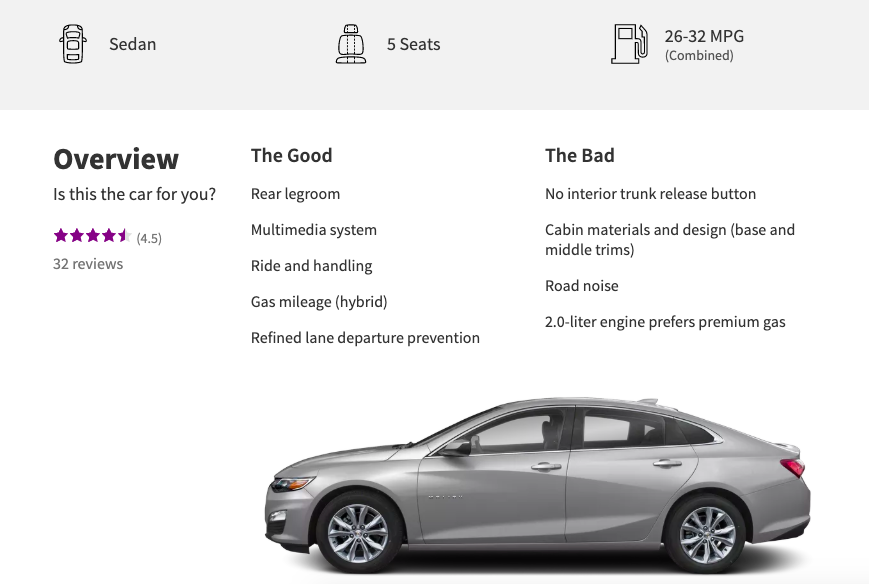
Because cars are such a big purchase, car websites benefit greatly from having all the specs car buyers are looking for in one place. If you’re marketing products that are considered big purchases, having specs on your website might be a good idea.
3. Tasty videos.
This commercial features Tasty’s most popular content creators, Alix and Rie, who both develop and film recipes for Tasty and vlog about their daily activities in the Tasty office. When fans of Alix and Rie see the two content creators on the YouTube thumbnail, they’ll likely immediately click. (As a big fan of Rie, I absolutely did).
Additionally, Tasty presented the products’ specs in a relatable way. Rather than having Alix say, “This is a nonstick pot,” she said, “I made a sticky sauce in this pot and it slid right out,” demonstrating the product’s quality. This is an example of informational marketing that’s casual, and more personable.
Remember, the point of informational marketing is to help your audience find what they’re looking for through the content you create. If someone wanted to know how K-Cups worked but Keurig didn’t provide that information, prospects might be hesitant to purchase the product, especially if they’d never heard of it.
4. Colourpop’s eyeshadow video.
What better way to market a visually-aided product than to provide a video tutorial? This video by cosmetics brand Colourpop takes full advantage of informational marketing by creating a look using most of the colors in their new eyeshadow palette.
By doing this, prospective buyers are educated about how the colors look and how pigmented they are. Additionally, prospects can learn about other Colourpop products that work well with this palette.
5. Adobe’s logo video.
Create your own animated logo in #AfterEffects with this simple 2-minute tutorial. pic.twitter.com/HN2FLcKUib
— Adobe After Effects (@AdobeAE)
October 9, 2019
Adobe’s take on informational marketing comes in the form of a logo tutorial. With this video, Adobe customers and potential customers can learn how to use Adobe’s software to create a logo.
This short, impactful video goes in-depth regarding Adobe’s capabilities. Video length is important here, because it suggests that making a logo can be easy and time-effective.
The next time you are drafting your upcoming campaign, think about how you can educate your target audience about your product.
Additionally, pertaining to the interest of your audience is a critical component of any informational marketing strategy. If your marketing doesn’t relate to your product, it probably won’t interest your audience, either. Keeping this in mind will help your next informational marketing tactics shine.

The Ultimate Guide to Hiring a PR Agency in 2020
Vanessa Carlton said it best: Your company is making its way downtown, faces pass, and you’re “success” bound. See what I did there? Anywho, your company is on its way. But how do you communicate that with your stakeholders and the public?
Between blog writing, drafting ad copy, and setting up an email workflow, it’s hard to make time for brand awareness and media management. That’s where a public relations (PR) agency can help.
According to the Public Relations Society of America (PRSA), “Public relations is a strategic communication process that builds mutually beneficial relationships between organizations and their publics.” In today’s world, PR and marketing overlap and intertwine, making it necessary to work together.
You might have questions about how your marketing team and a PR agency can work together like, “What will a PR firm do?” or “What services does a PR agency provide?”
Below, you’ll learn everything you need to know about hiring a PR agency.
While the duties of public relations and marketing can overlap, the two serve different functions. Allie Decker, a writer on HubSpot’s pillar page team, wrote about public relations and marketing in this blog. She says, “The main goal of PR is to boost the reputation of your brand. On the other hand, the main goal of marketing is to drive sales.”
PR and marketing can work together by aligning their goals. For instance, people may become aware of your brand through PR tactics such as organic social media presence, and then convert into sales from your marketing tactics such as Facebook ads. With PR and marketing collaborating on strategic messaging, you’ll build your reputation and drive more sales.
1. Reputation management
Reputation management is one of the main services that public relations firms offer. Tactics might include email newsletters, messaging on website copy or blog content, social media management, responding to reviews, and engaging with followers.
For instance, Taco Bell uses social media to build its reputation. In the example below, Taco Bell responds to a customer on Twitter with an authentic, engaging tweet making the brand relatable and boosting its reputation.
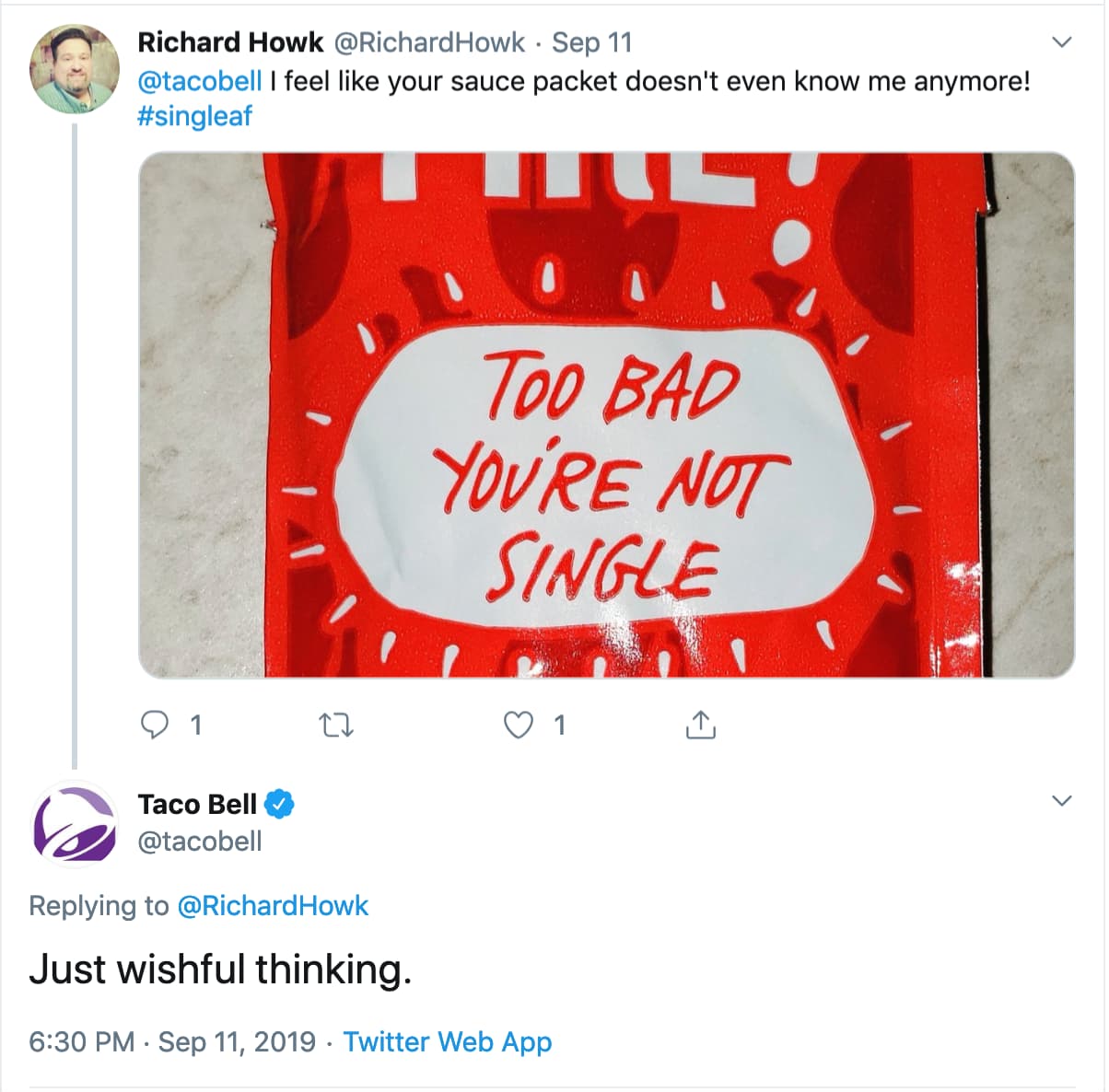
Image source: Twitter
2. Crisis management
According to data from PwC, 69% leaders have experienced at least one corporate crisis in the last five years — with the average number of crises experienced being three. Your company will most likely face at least one crisis during your tenure. That’s why you might have a PR firm come up with a crisis communication plan so you’re prepared when the time comes.
For example, Susan G. Komen for the Cure, a leading breast cancer charity, faced the consequences of lacking a crisis communication plan in 2012. They stopped funding Planned Parenthood’s breast cancer screenings after 7 years of funding. When the announcement was made by Planned Parenthood, the story went viral on social media with attacks coming from all sides. Komen waited a while to respond, put up a video failing to take responsibility, and then reversed the decision.
According to PRSA, there are many lessons to learn from Komen’s mistakes, including “Don’t position yourself as a victim. It won’t work.”
3. Media relations
One way to build your reputation and get your name out there is through the media. PR firms can handle the relationship between the media and your company. Tactics include writing pitches to journalists and influencers to attain mentions in industry news and get more media coverage.
For example, if you own a sustainable beauty company, a PR firm might pitch you to the Organic Bunny blog for an interview about sustainable beauty products.
4. Social media
Social media is a large factor in reputation management and one of the main ways to communicate with your audience, so maintaining your social media accounts can become a public relations tactic. Since you own your social media accounts they’re an easy way to build your brand. Plus, your social media strategy might involve engaging with influencers in your niche.
In the example below, Poo-Pourri uses its own social media account to boost its reputation and spread the word about an earned media opportunity. Also, note how the founder is active in the community, attains media coverage, and builds her company’s brand.
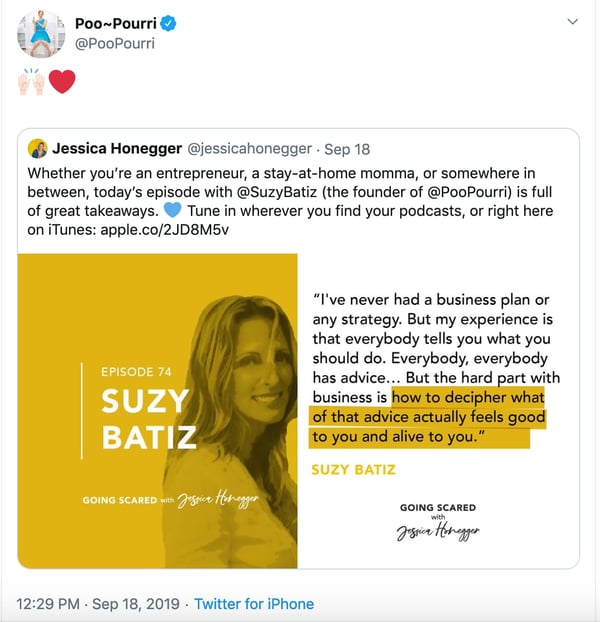
Image source: Twitter
5. Speech writing
Speech writing is a useful public relations tactic that you might use if your company holds press conferences and events or your employees speak at industry events. Any speeches given on behalf of your company should represent your brand as a whole. If anyone in your company has to give a speech, you might consider hiring a PR agency to handle the strategic messaging.
In the example below, Tim Cook, Apple’s CEO, and other members of his team, give several speeches about new products and updates during Apple’s annual innovation event. Apple may or may not have worked with a public relations firm, but this is a great example of an event where you might talk to a PR firm about the strategic and brand messaging.
6. Press releases
Your company might have to write a press release to announce new products, launches, campaigns, or movements. This tactic goes hand-in-hand with media relations. For example, if you work at a shoe company and want to start a movement on Twitter to #walkmore, a PR firm can write a press release to announce the campaign and hopefully attain media coverage.
7. Event planning
Event planning can be a marketing and public relations tactic to promote your brand, product, or service. If your company puts on an event for the purpose of boosting your brand reputation, you might consider working with a PR agency. A PR agency can help communicate with your stakeholders and publics, attain media coverage, and plan your event.
For example, INBOUND, an annual experience event for those in the marketing industry, is an event that is used to elevate the INBOUND brand. At this type of event, INBOUND provides value to the public, while also boosting its brand reputation. While this event is planned internally by INBOUND, it’s a good example of the type of event that a PR agency could help plan.
8. Outreach
Do you want to ensure your company is active in your niche’s community, including trade shows and events? A PR agency can help with that. Public relations firms use outreach as a tactic to boost brand reputation and increase brand awareness. For example, if you work at a fish store, your public relations firm might reach out to the Global Pet Expo to attain a booth at the event. Then, they might promote your involvement through social media, a press release, and media interviews.
9. Market research
The most important element to communicating and building relationships with your publics is to understand them. That’s why a PR firm would likely use market research as a tactic. They might use surveys, feedback forms, or focus groups to learn about your target audience. For example, if you own a protein company, a PR firm might send out surveys to see who buys your protein, what kind of flavors they want, and what they value in a protein company.
10. Media training
Many companies and brands in the public eye undergo media training. Media training is a tactic public relations firms use in order to produce consistent, strategic messaging for the brands they work with. If your company or brand will have several employees speaking in public, everyone should be on the same page in regards to messaging. If there is only one person who will be the face of your brand, it’s important to anticipate common reporter questions and have canned answers prepared.
In the example below, the Kardashians attend media training to practice answers to the most controversial questions reporters ask them. As a brand, the Kardashians have a lot of moving parts, and the family had never discussed or practiced the messaging they’d use when talking to the media.
11. Internal copywriting
Writing internal copy is a public relations tactic PR agencies use to communicate with employees. Your employees are a stakeholder and public of your company, so a PR firm could manage that relationship. You might need to communicate with your employees to discuss major changes, build morale, or celebrate successes.
Our tip from HubSpot is to have a main communication channel where communication is stored and disseminated. For example, HubSpot has an internal Wiki (see screenshot below), where our employees, who span seven countries, can communicate.
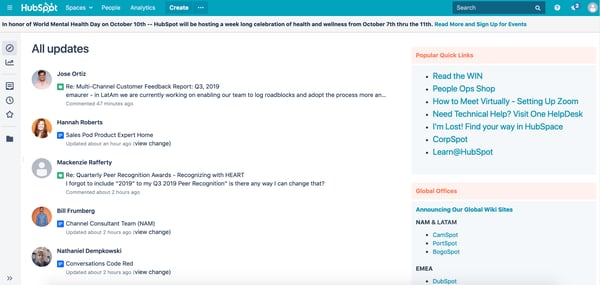 Image source: HubSpot
The different types of PR firms vary depending on the services they offer and the publics they serve. There are general and specialized PR agencies.
1. General strategic communication
A general public relations firm will handle all aspects of your PR strategy. They will be responsible for building your reputation and brand awareness through many of the tactics described above, including social media, media relations, internal communication, and more. A general communication PR firm is a good fit for you if you need help with several public relations tactics.
2. Press communication
A PR agency that specializes in press communication will focus on media outreach, pitch writing, attaining media coverage, and getting interviews with journalists or influencers. If you only need to work with a PR agency in order to improve your media coverage, a specialized firm might be an option to consider.
3. Crisis management
A crisis management PR agency can strategize and implement a crisis communication plan. Typically these firms are used on a temporary basis, to either draft or implement a plan when your company experiences a crisis.
4. Internal communication
Internal communication PR firms specialize in disseminating information to your employees. Whether it be through a monthly newsletter or an internal hub, they will facilitate employee communication.
5. Community management
A community management PR firm focuses on managing customer relations. They will handle the communication between you and your community in places like Facebook Groups and social media.
6. Nonprofit public relations
A nonprofit PR firm specializes in working with specific organizations rather than focusing on certain tactics. Nonprofits will typically have different rules and regulations when it comes to communicating with its publics, which is why many firms specialize in nonprofit. A nonprofit PR firm will work with organizations in industries such as health, medical, or charity.
7. Public affairs public relations
Similar to a nonprofit firm, a public affairs PR firm specializes in working specifically with government officials as a communication tool. For example, if your company wants to endorse a political candidate or a government official wants to be a spokesperson for your company, a public affairs PR firm can manage that relationship.
1. Set your objectives
Now that you’ve decided to hire a PR agency, your next question might be something like, “How do I even start?”
To begin, start thinking about your goals. Answer questions like “What do I want to accomplish by working with a PR agency?” and “How can a PR agency help my company?” When you begin working with a PR firm, you’ll most likely draft SMART goals. SMART goals are specific, measurable, attainable, relevant, and time-bound.
Once you have an idea of your goals, our next tip is to think about what type of PR firm can help you meet those objectives (see types of PR firms above). For example, if your company has experienced a social media crisis like Komen (described above) you might want to work with a crisis management firm. On the other hand, if you work at a nonprofit charity foundation like the Red Cross, you might work with a nonprofit public relations agency.
2. Create a budget
Before you begin researching which PR agency you want to work with, create a budget. Consider how much you’re willing to spend on public relations efforts. You should be able to answer questions like “Will this come out of our marketing budget?” or “What percent of our budget can we contribute to PR?”
Megan Conley, a video editor/animator at HubSpot, writes about creating a budget in this blog. To create a budget, she says:
- Align your goals with your budget
- Consider hidden costs
- Remember your priorities (think of those SMART goals)
To get better at prioritizing your PR line items, download the PR Budget Template (included in the 8 Budget Templates to Manage Your Marketing Spend).
You can also check out the average 2019 rates for a PR agency below.
3. Research PR firms
With your goals and budget in hand, begin researching the right kind of PR agency you’ve decided to work with. Gather information on their reputation, reviews, cost, social media presence, testimonials, clients, etc.
Aja Frost, a senior SEO strategist and former writer for the Sales blog at HubSpot, writes about creative prospect research strategies in this blog. These same strategies can be applied to researching a PR agency.
Frost suggests:
- Look at their company’s job page: This will give you an idea of their current objectives and what tactics they’re focusing on. For example, are they developing a social media team or looking to hire an expert in crisis management?
- Look for strategic announcements: By researching for announcements, you can learn about initiatives, successes, new strategies, and their own brand reputation. It’s important to consider how they handle their own PR.
- Read the shareholder letter: This gives you an idea of their financial strength, unique value proposition, and accomplishments. You want to find a reputable PR agency to work with.
- Go on Glassdoor: Glassdoor is a great place to learn about employee reviews, company culture, and goals. This will give a good idea of their reputation.
4. Write a list of questions to ask
After thoroughly researching different PR agencies, create a shortlist to contact. Before you contact an agency, write down a list of questions to ask.
You’ll want to learn about:
- Price
- Experience/expertise
- Previous clients
- Prior successes
- Reviews/testimonials
See examples of questions to ask a PR agency below.
5. Have meetings
Armed with your questions, your next step is to have meetings with different PR agencies. Go through your list of questions and gather the information you need to make a decision. For these meetings, our tip is to pay attention to who you have chemistry with. It’s always easier to work with people who are adaptable and can have an intelligent conversation about your strategies. After your meetings, compare the proposals you receive, from price to strategy.
6. Set expectations
Once you’ve decided which PR firm you want to work with, ensure you’ve made your objectives and goals clear. Set up a clear line of communication, while also defining your expectations. Talk with your PR agency about your SMART goals and identify how you’ll measure success.
7. Onboard your PR firm
The final step to hiring a PR agency is to go through the onboarding process with them. Figure out who your main point of contact is and discuss your communication goals. Ask questions like, “How often will we touch base?” or “How will we track the results of our work together?”
Questions to Ask a PR Firm, Agency, or Rep
1. “Do you specialize in a certain industry?“
There are different types of PR firms (see examples above) that you might work with. Before you hire a PR agency, find out if they specialize in a certain industry or have only worked with certain kinds of businesses. This will give you an idea of how and if they can help your company.
2. “How will you get us media coverage?“
It’s important to find out what tactics the agency uses to gain media coverage. In addition, see if they mention their media list when they answer this question. Most PR agencies have a media list and have built relationships with people in the industry. Also, see if they have any new strategies or tactics that you haven’t heard of before, such as influencer marketing or guerilla marketing.
3. “How do you measure success?“
An important quality of any marketing or public relations agency is to be able to track ROI. Every agency should have a system in place for tracking results and analytics for their campaigns. Also, see what success looks like for them. Ask questions like “How have you tracked success for previous clients?”
4. “How do you plan to work with our marketing team?“
When you hire a PR agency, you should consider how they will work with your marketing team. The two go hand-in-hand, especially because some tactics might overlap. Ask questions like “How do you account for our marketing team when you plan a campaign?” or “How do you communicate what your agency is responsible for versus our marketing team?
5. “What do the first few months look like?“
Figure out how they plan to get started. Do they focus on market research in the first few months? How long would that take? It’s important to figure out how they get started with their clients and what their strategy would look like for your company.
6. “What’s your pricing structure?“
Of course, budget is one of the main points you want to inquire about. Learn about their pricing structure. Ask questions like “Do you price per project, per hour, or a retainer fee?” and “How often do you charge?” Affording your PR agency is the main priority.
7. “Can I see work you’ve done for businesses in my industry?“
Again, you want to see that they’ve had success with other businesses or brands in your industry. This tells you that they might have a media list they can contact right away. It also lets you know they can be successful for you, because they’ve done it before.
8. “Can I contact past clients?“
Once you know that a PR agency has seen success with other brands, ask for references. Ask previous clients questions like “Was [PR agency] enjoyable to work with?” and “How did they measure success for you?”
9. “Do your employees have experience working in marketing and sales as well?“
This is an important question to ask because your PR agency should understand how marketing, sales, and PR all work together to drive sales. If its employees have experience in marketing and sales, they will understand the context of how PR fits in your strategy.
10. Who would I be working with?
Ask about their systems. The PR agency you work with should have a communication plan in place. Figure out what their team structure is like. Will you have one point of contact, like an account manager? Or will you work with several people on the team depending on the project?
11. How can your company grow with us?
As your company grows, you want to have a PR agency that can understand your needs from startup to scale up. Ask if they’ve worked with brands of all sizes and see if they’ve worked with anyone from the startup to enterprise.
How much does PR cost? Average 2019 Rates
According to the 2019 Holmes Report, PR budgets and agency spend has been increasing. This year, the number of CMOs and CCOs who were managing budgets of more than $100 million reported PR has accounted for 31% of the budget. On the other hand, for companies with a budget between $75 million and $100 million, budgets dropped to 6%. For those handling a budget between $50 million and $75 million, PR has accounted for 17% of their budget.
Overall, the amount you pay for PR will vary depending on the services you need as well as by location. It’s also important to take into consideration that PR agencies offer many different pricing structures. Agencies can charge on an hourly, retainer, or project basis.
Ellie Flanagan, a senior corporate communications manager at HubSpot, says “The cost of hiring a PR agency can vary depending on the size of the firm and the types of services you”re looking for. Most agencies bill hourly against a retainer, which guarantees a certain amount of work each month. Those costs can be between $100-500 per hour per each person on the team, depending on the seniority of each team member. You can work with the agency to determine how much work is required and how experienced the team needs to be.”
During my research for this piece, I found the current average cost of public relations is about $3,000-5,000/month. Project-based costs tend to be lower, running at about $1,000.
For example, Paranoid PR charges anywhere from $1,450-5,000/month for a retainer fee, depending on the intensity of the ongoing support. They also offer per-project pricing, charging around $250-500 for individual projects or $750-1,250 for mini-campaigns, depending on the complexity of the projects.
On the other hand, PRA Public Relations offers pricing based on different level programs offering different levels of service. Their programs range from $2,500/month to $7,000/month.
Pitch PR offers a standard PR program costing $3,000. No other options were listed on their website.
Bridgeview Marketing offers several PR programs ranging from $2,500/month to $8,000/month.
A PR agency could be a great complement to your marketing efforts, drive more traffic to your site, and facilitate reputation management and brand awareness.
Want to learn more about public relations? Check out our ultimate guide.

What’s a Finsta? We Explain This Confusing Instagram Trend
I first heard the term “Finsta” from my 16-year-old cousin. She had just taken a ridiculous selfie of herself, and had declared it “Finsta-worthy”.
When I asked what she meant, she explained a “Finsta” is a fake Instagram, or a “Finstagram” (shortened for cool factor, probably).
“But … Why do you need a fake Instagram account? Isn’t one enough?” I asked her.
She showed me her real Instagram account — a perfect, edited collage of great moments with high school friends, her prom date, and vacation shots with family.
“My real Instagram account is kind of fake — like, only pictures of my ‘best’ life,” My cousin explained. “I use my Finsta to share funny, inside jokes with my closest friends. My real Instagram has like, 400 followers. My fake one only has like, eight.”
As you probably already know, Instagram is often used as an opportunity to present an “ideal” life to your followers — even if that life is, in fact, a poor representation of reality. It’s not the place to post embarrassing photos, or unedited “I just woke up” selfies.
However, Instagram’s mirage of perfect, well-filtered lives doesn’t always lend itself to happiness. For instance, one recent study found a correlation between the amount of strangers you follow, and depressive symptoms including fearfulness, loneliness, or fatigue. Unfortunately, Instagram can lead users to feel their lives aren’t good enough, compared to everyone else’s (edited) ones.
Which is why Finsta’s might not be such a bad idea. Ultimately, a Finsta is a chance to share a goofier, less-edited version of yourself with a trustworthy group of friends — and for those friends to see less ‘perfect’ posts, and more real ones.
Ironically, a “Fake Instagram” just might be a solution to feelings of inadequacy on the platform, as friends learn to share more honest stories about their lives — the good, and the bad. If you want to learn how to make a Finsta for yourself, keep reading.
What’s a Finsta?
A Finsta is a shortened term for Fake Instagram, which is an Instagram account used by teens and young adults to document more real, candid posts they share with only close friends.
Oftentimes, an Instagram account is used to curate a public collage of edited images for upwards of hundreds or thousands of followers. By contrast, a Finsta is a private account only followed by 10-20 people. A Finsta allows users to post more funny, unedited snapshots of their daily lives, or share inside-joke moments with friends.
How to Make a Finsta
Creating a Finsta is a simple process. However, before you begin adding an additional account, you’ll want to brainstorm a unique username that doesn’t use your real first or last name — additionally, you’ll want to make sure you don’t use a real photo of yourself as your profile picture. Remember, your Finsta should be impossible to find unless you share the username with friends.
To create a Finsta, follow these easy steps:
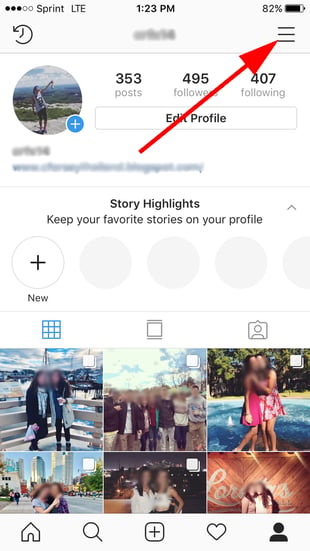
1. Open your Instagram account, and click the three-line icon in the top right.
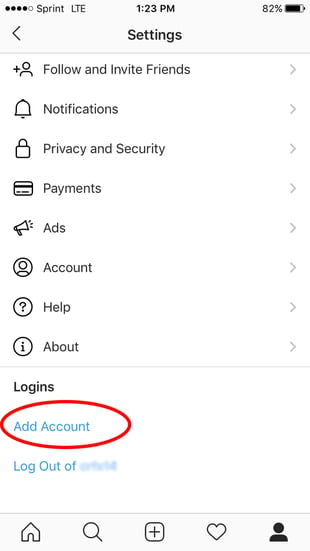
2. At the bottom of “Settings”, click “Add Account”.
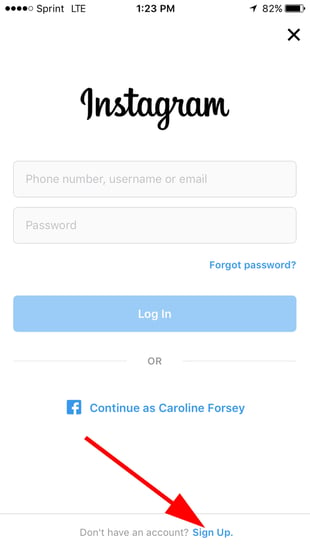
3. At the bottom of the next page, click “Sign Up” to create your new account.
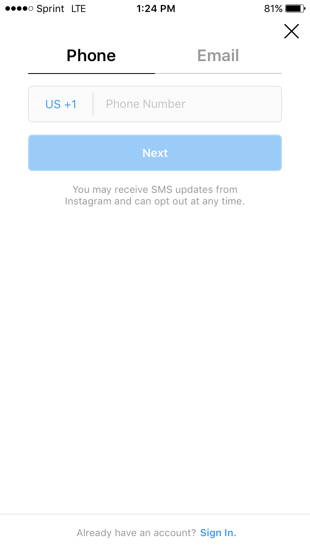
4. Next, input your phone number.
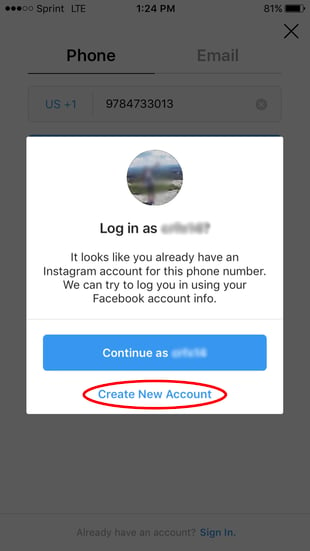
5. Click Create New Account.
Once you input your phone number, a box will pop-up to ask whether you’d like to log into the account you already have. Click “Create New Account” to continue creating your Finsta.
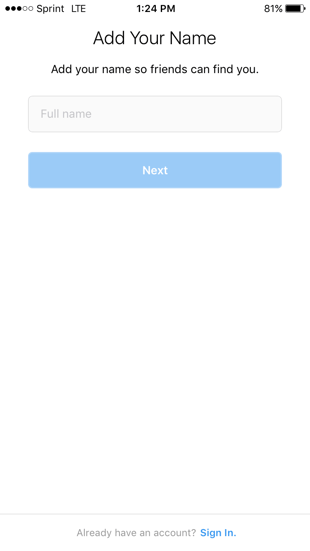
6. Next, add your username.
Remember, you don’t want to use your real first and last name here. Instead, consider coming up with a clever username only good friends will understand.
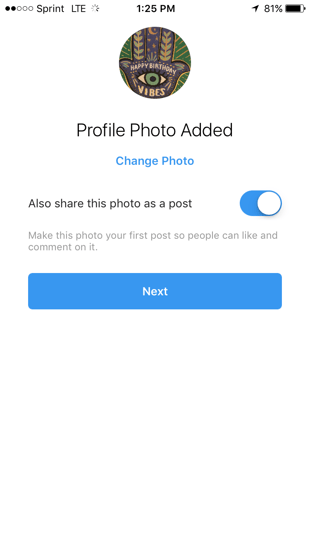
7. Don’t link to outside accounts.
Skip the option to link your Finsta to your Facebook account (which could make it easier to link the Finsta to you). Add a profile picture, then click “Next”.
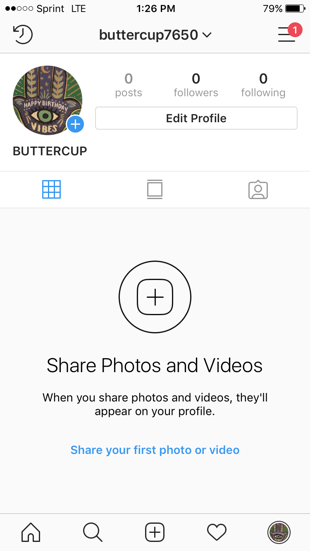
8. Start posting.
Voila! Your Finsta is ready. You can now post pictures and videos, and invite your closest friends to follow you.
Finsta Examples
@RebekkaHarajuku
Did you know that celebrities make Finstas too? Last year, Bella Hadid created a Finsta account for her blonde alter ego named Rebekka Harajuku. The Instagram was similar to a normal influencer account, however, it featured Bella in disguise as the character she created.

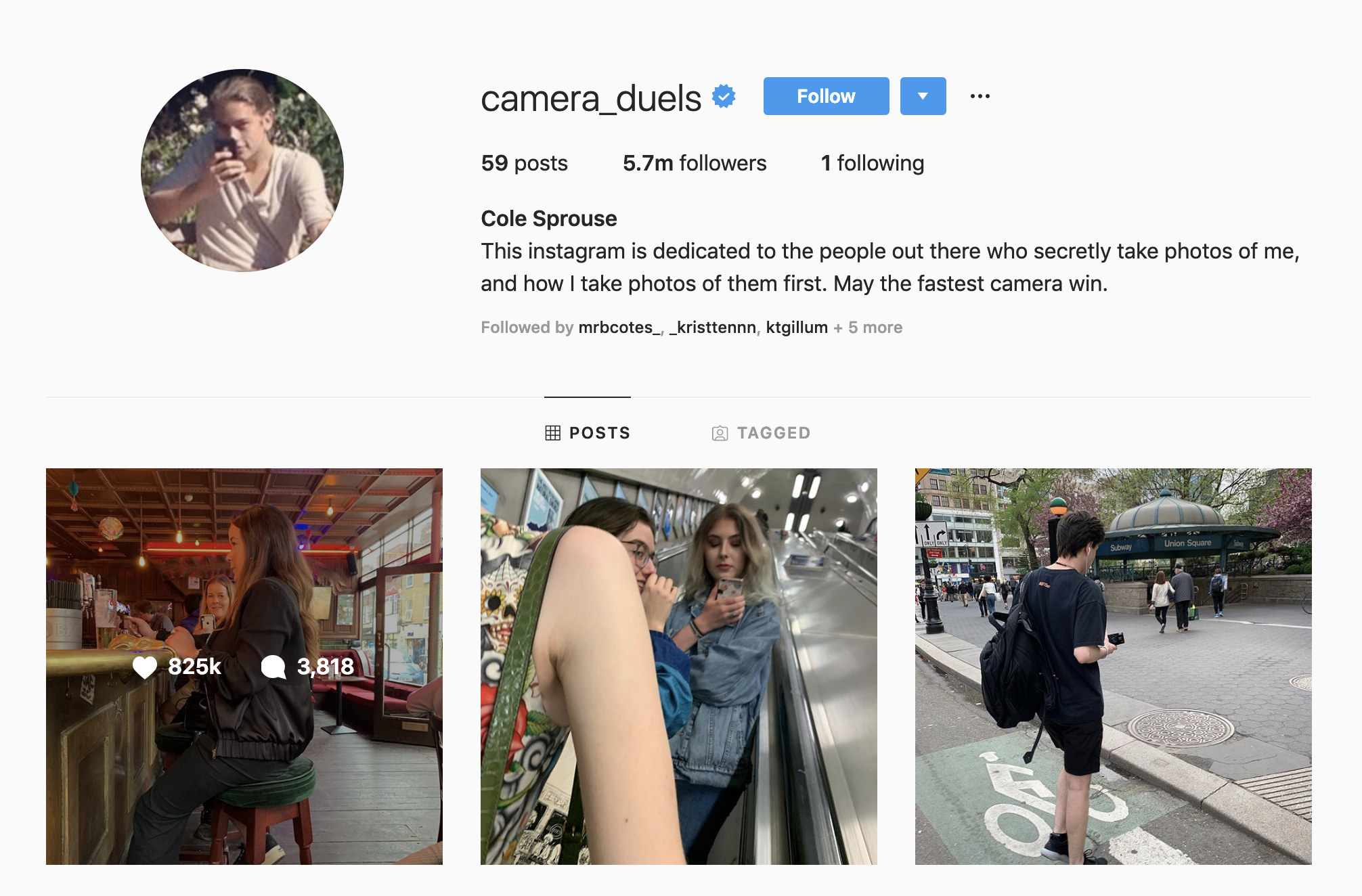
@Camera_Duels
This Finsta, managed by Riverdale star Cole Sprouse is where he posts pictures of people who take pictures of him. While he’s not chronicling his life as he does on his more traditional Instagram, this account still shows off his humorous side.
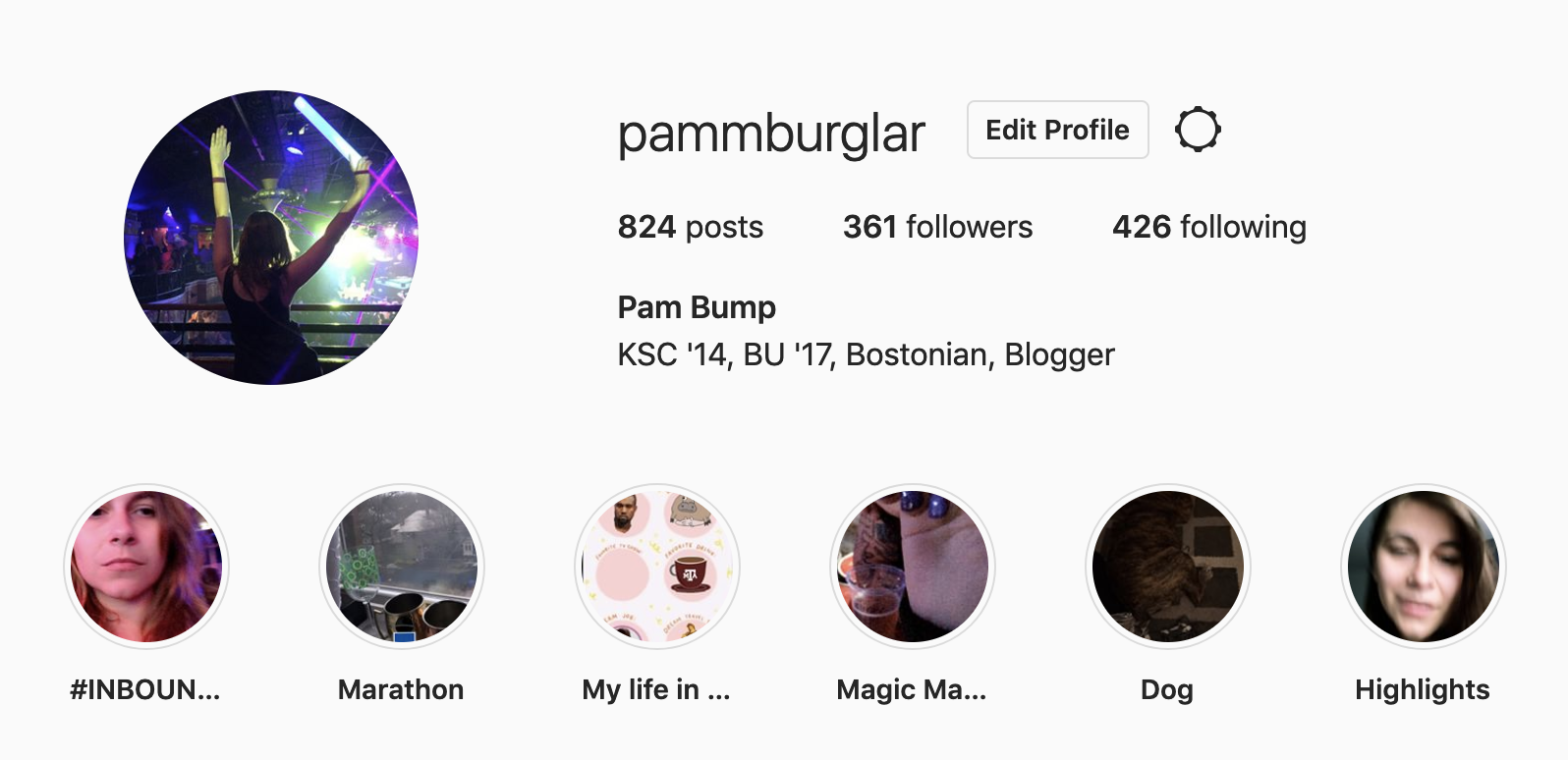
@Pammburglar
Pammburglar is the Finsta identity of Pam Bump, a fellow HubSpot blogger. Because she loves fast-food, her Finsta name is a quirky combination of Pam and Hamburglar. On her Finsta, she posts photos and videos of events she attends, food, and travel. Along with posting about daily happenings, she also shares plenty of selfies and funny memes.
While her profile is private, you can scroll down to see a few Finsta picture examples that she’s permitted for this post.
Finsta Post Ideas
Because Finsta’s don’t necessarily need to follow rules — or social norms, you can express yourself with a variety of different posts. Here are two styles that are fairly common on Finstas.
Food Posts
While you might use your professional Instagram to show photos or videos of yourself networking, in the office, or talking about your company, you might want to share a lighter side of day, like lunchtime, on your Finsta.
In the post below, @Pammburglar, noted in the example above, enjoys a ginormous turkey leg.

Throwback Posts
In this post, @Pammburglar reminisces on the time she was “rejected” as a Starbucks model back in 2014. In reality, she was actually starring in a student produced film that took place at the coffee chain while in college.
Nostalgic throwback posts like these are both funny and interesting to people who have or haven’t known you in the past.

Finsta Names
To ensure random followers can’t find your Finsta, and to keep it private amongst close friends, you’ll want to create a fake name for your Finsta account.
A website called SpinXO offers a free tool that helps generate potential Finsta names based on your name or nickname, hobbies, interests, or other random words or numbers.
For instance, without inputting any of my own information, SpinXO initially offered these random Finsta names:
- JavaPerfect
- ChellFalls
- KinGambit
- RadiantEnjoy
- VividGiggly
- SimpleEye
- Airbiosav
Alternatively, you might brainstorm a unique Finsta account name by considering inside jokes you share with your friends, or TV shows or movies only your good friends know you like. You’ll want to avoid using any abbreviation of your first or last name, and try to be as obscure as possible.
For instance, if I were making a Finsta (which, trust me, I’m not), I might call it “Buttercup”, the name of my cat (on second thought … a lot of people have heard me talk about Buttercup. So, scratch that).
Editor’s note: This post was published in November 2018, but was updated in October 2019 for comprehensiveness.

How to Create a Professional Promo Video on a Shoestring Budget
There are millions upon millions of blog posts published every single day. That’s been true for a few years now.
And these numbers continue to grow exponentially with the increase in new online sites all competing for the same precious site visits especially when the benefits of organic traffic has become more and more of common knowledge for online marketing.
In turn, content marketing in the form of blogging has become the norm for driving organic, inbound traffic.
Want better search engine optimization? More organic traffic?
Blogging is what most people will recommend. But it’s steadily become one of the most saturated marketing tactics you can use.
How can you expect to compete with thousands of other sites who have already been blogging for years?
It’s a real challenge. Especially when they’re writing longer, higher-quality posts with more backlinks and higher rankings.
Thankfully, there’s an alternative emerging.
Right now, content creation is moving towards video-based mediums. Even for landing pages, videos have shown to convert better than text. So why isn’t every single business abandoning their blog in favor of a video first strategy?
The biggest barrier? Videos have a reputation as an inaccessible marketing tactic, especially for businesses on the smaller side. And while it is partly true that videos are usually more time-consuming and more expensive to create than text-based content, smaller businesses can still have success investing in the tactic.
You Need Video
Video is dominating online traffic. In fact, it’s predicted to take over the internet in the next few years. Cisco estimates that video traffic will account for 82% of all global internet traffic by 2021.
The majority of internet traffic is already video based. And that number is only going to increase. Why? People haven’t stopped reading text-based content, but it’s getting harder to capture and keep their attention.
55% of all pageviews online get less than 15 seconds of attention. Even in an old 2008 study from Nielsen Norman Group, we were seeing the beginning of this trend. That study found that visitors on average only read 20% of a given page online. Meaning 80% of the text and content on your page isn’t even being seen or read by real people.
In a recent study, CoSchedule analyzed their blog pages with heat and scroll maps to detect how people interacted with their page. They found that most readers only read the top 20-30% of their content.
The scariest finding? Only 10% of users who landed on a given post read to the bottom.
People want information immediately.
They don’t always want to read a 5,000-word blog post to get their information. They don’t want to read a long-form sales page to know how the product will improve their lives.
This trend is becoming more apparent in digital marketing as more and more companies are focused on implementing video-based content distribution:
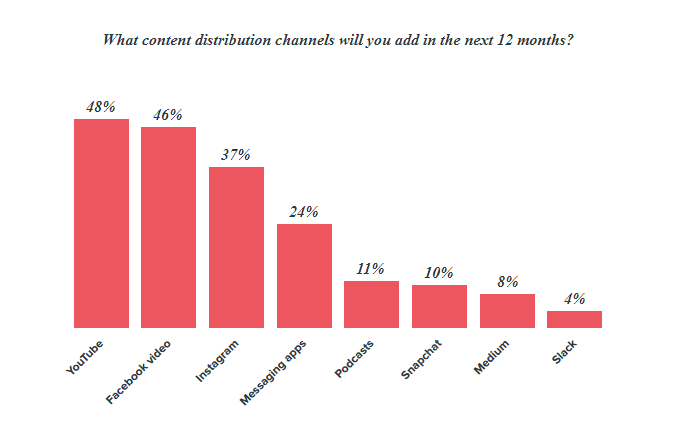
YouTube and Facebook Video are slowly taking over the content scene online.
As blogging becomes more saturated and user behavior shifts towards video-based traffic, it’s no wonder why these platforms are gaining traction.
Currently, Facebook has over two billion monthly active users, and YouTube is just behind it at 1.5 billion monthly users.
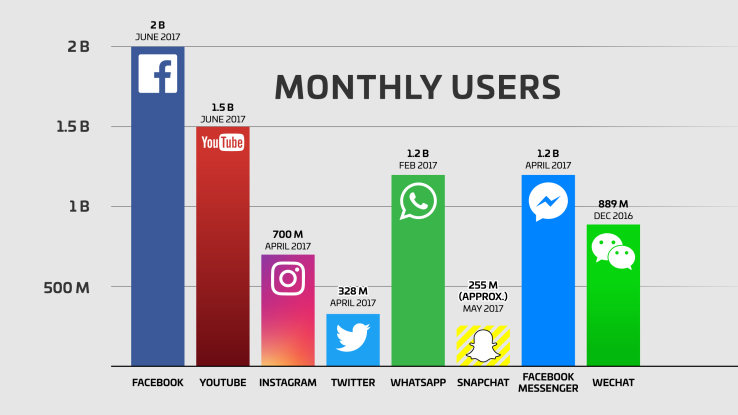
Currently, YouTube boasts nearly two billion monthly users who watch more than an hour of video content daily, on average. Facebook video posts aren’t far behind, either. The total amount of videos on Facebook has increased by 94% annually from 2014 to 2015. In November of 2015, Facebook hit over 8 billion daily video views, doubling the video traffic in less than a year.
The savvy brands who have jumped on this trend are already seeing the benefits of early adoption.
For example, 3D printer ecommerce brand Robo took advantage of this trend and generated $4.7 million in revenue running video ads on Youtube and Facebook.
Video-based content is the present and the future (as we know it). It’s gaining steam, and it’s only poised to gain even more traction as the years progress.
Video content is going to be necessary when it comes to driving more traffic and sales.
The Key Elements of a High-Converting Video
Not all video content converts. You can’t just throw up a random video on your landing page and expect it to increase conversions.
Here we’re going to look at a few of the most important elements of a converting video and companies have used them to drive more sales.
Keep it short and sweet.
This is perhaps the most important element in driving conversions with video-based content. As we went over earlier, studies are showing that people are growing more impatient when it comes to online content.
Very few people want to read a 20-minute blog post anymore.
We are reading less than ever before because it’s too time-consuming. We all want answers now. ASAP. Yesterday.
And to keep up with that, we can’t simply replace a blog post or a long-form landing page with a 10-minute video. Nobody will stick around to watch the whole thing.
According to a 2016 study by Wistia, as video length increases, you see big drops in engagement levels.
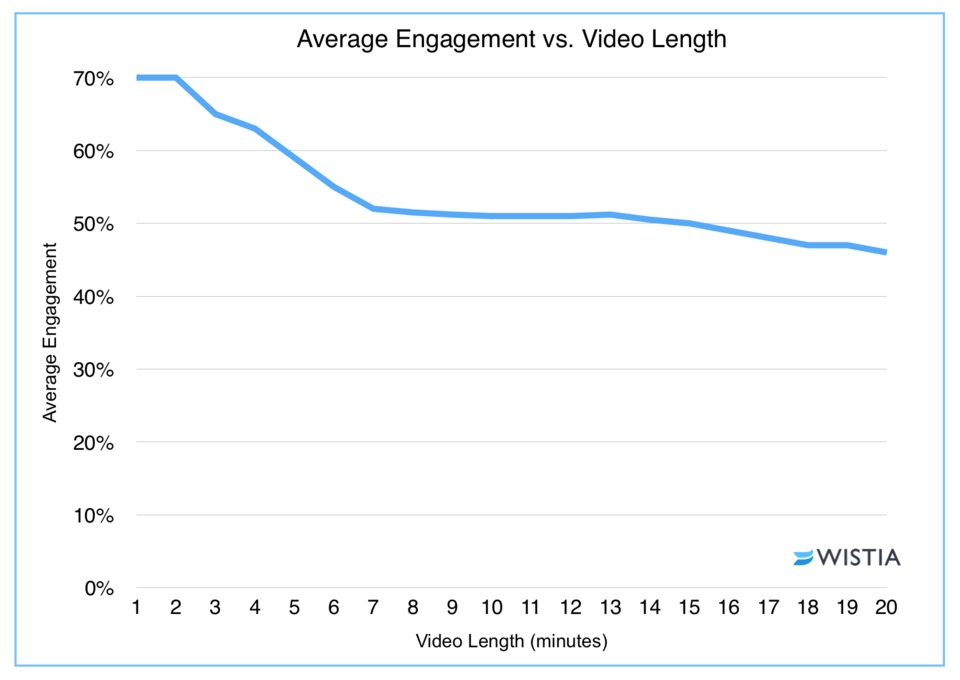
One to two minutes is shown to be the golden rule of online video content according to this Wistia study. They analyzed 564,710 videos and more than 1.3 billion video views to compile this data.
When you look closely at the graph, you can see that there is a sharp drop-off after two minutes in length:
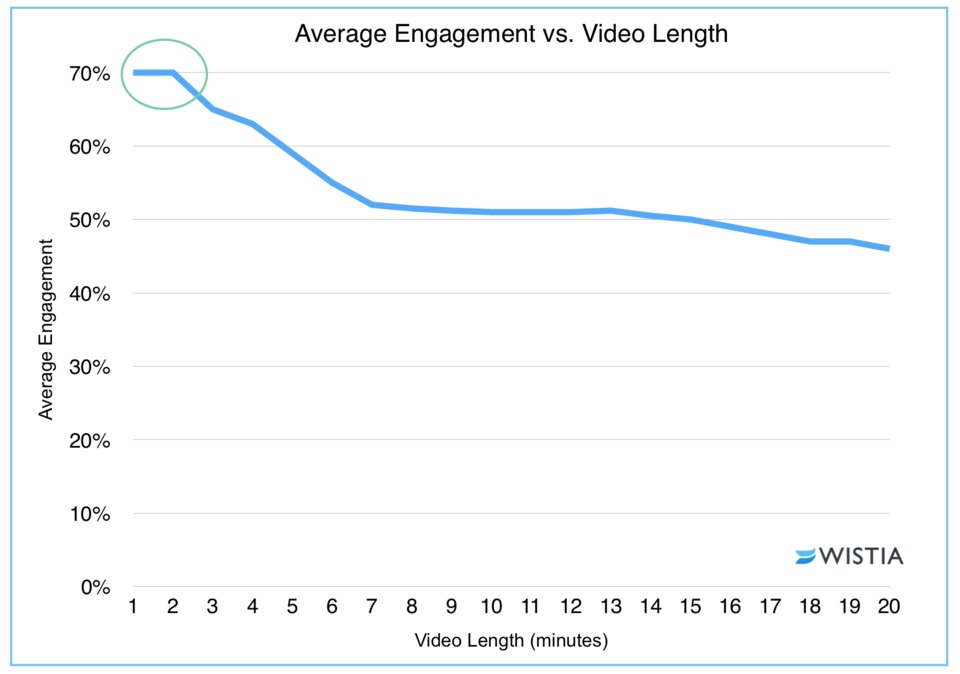
The longer you take to get to the point, the fewer people will stick around. But, if your video strategy needs to be long-form, don’t sweat it.
The second sweet spot that Wistia identified was 6-12 minutes:
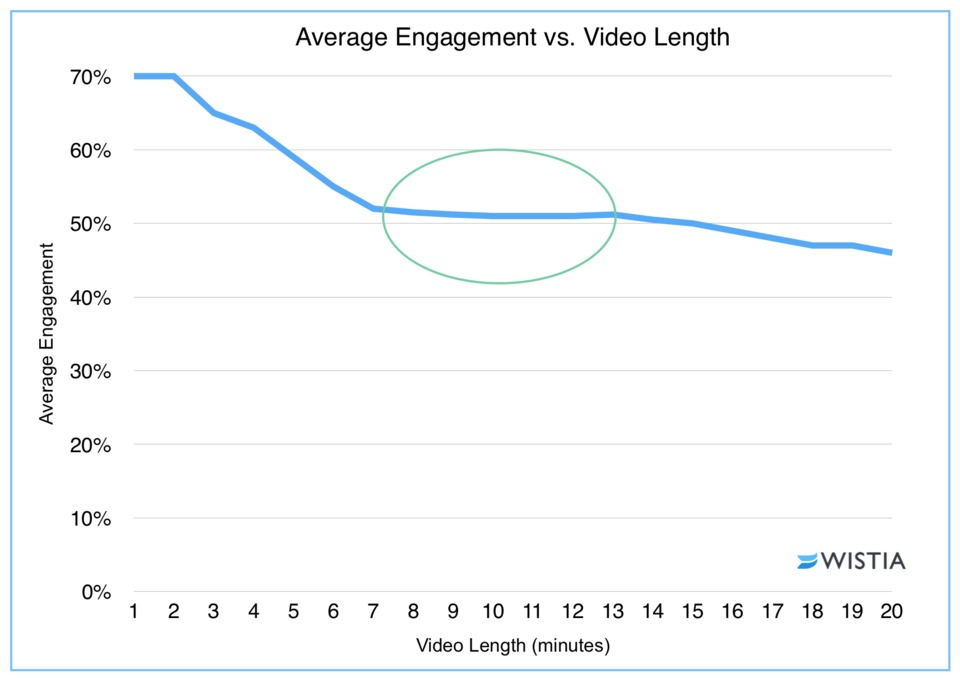
According to their research, if someone stays past six minutes, they more than likely will continue that engagement for a few more minutes.
Anything more than that and you aren’t going to see optimal results.
The best bet is to keep your video content within the 1-2 minute mark if you want to maximize your impact. An example of effective short landing page video is BuildFire’s home page explainer video:
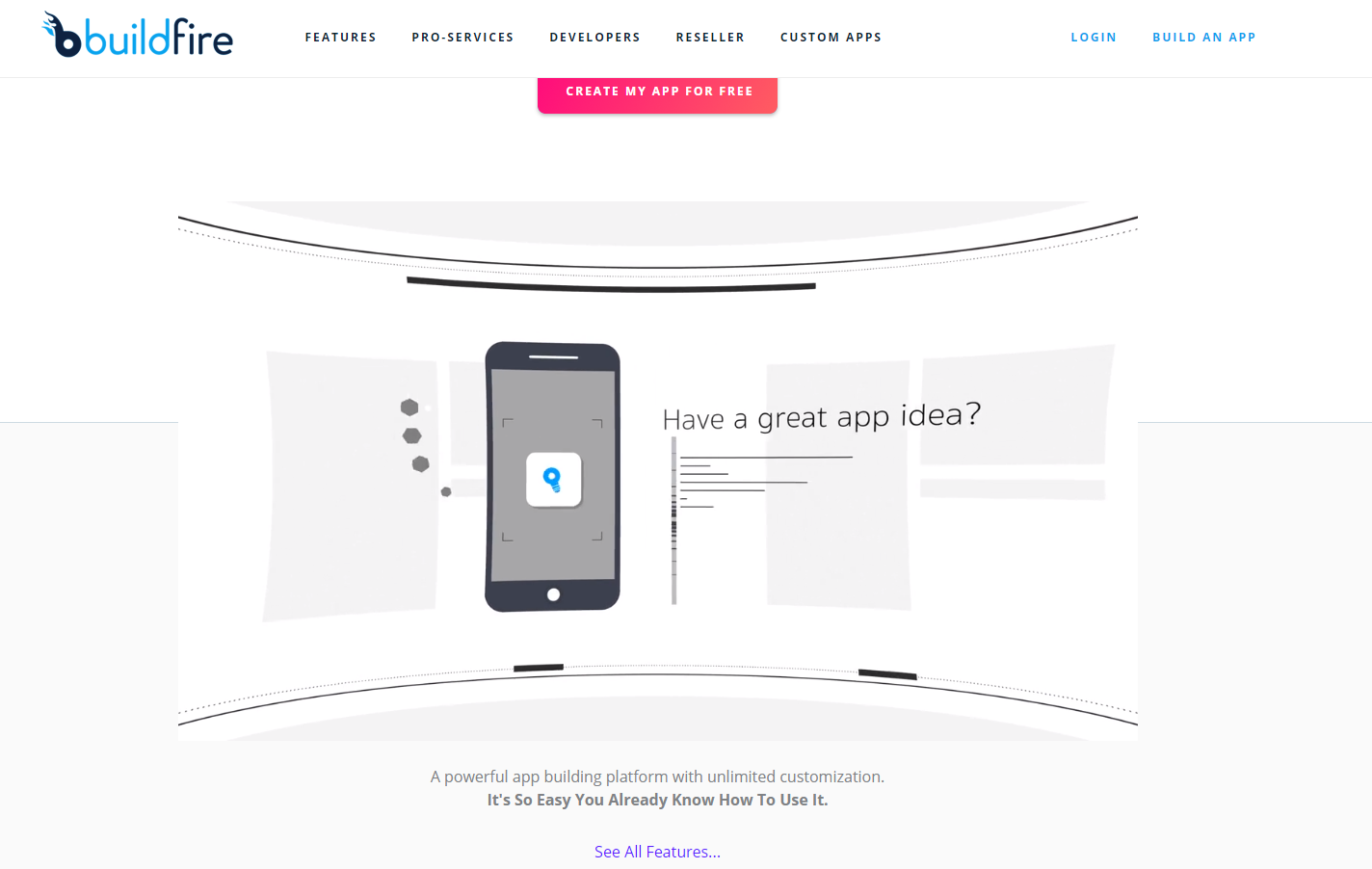
“Our current homepage conversion rate for signups is around 22%. It wouldn’t be that high without the explainer video.” – Ian Blain, Co-founder and CMO of BuildFire
They use a promo-style video explainer that lasts for 1:15 and sums up the business and value proposition. And they get straight to the point. They keep it short and sweet by explaining how users can benefit from their product.
Want to create a video that converts at a high rate? Follow the data. Keep your videos between the 1-2 minute mark for better conversion rates.
Optimize your video size and placement.
Everything makes a difference when it comes to video content. You can’t slap together a video and assume that conversions will roll in.
Even the video size, placement, and dimensions can have a big role in conversion rates.
And when it comes to your landing pages, you need to do anything you can to increase conversions. Your business depends on it.
Wistia conducted a study where they crawled 95,000 different pages to understand how size impacts conversion rates on landing pages. To start, they divided the typical landing page into seven distinct zones:
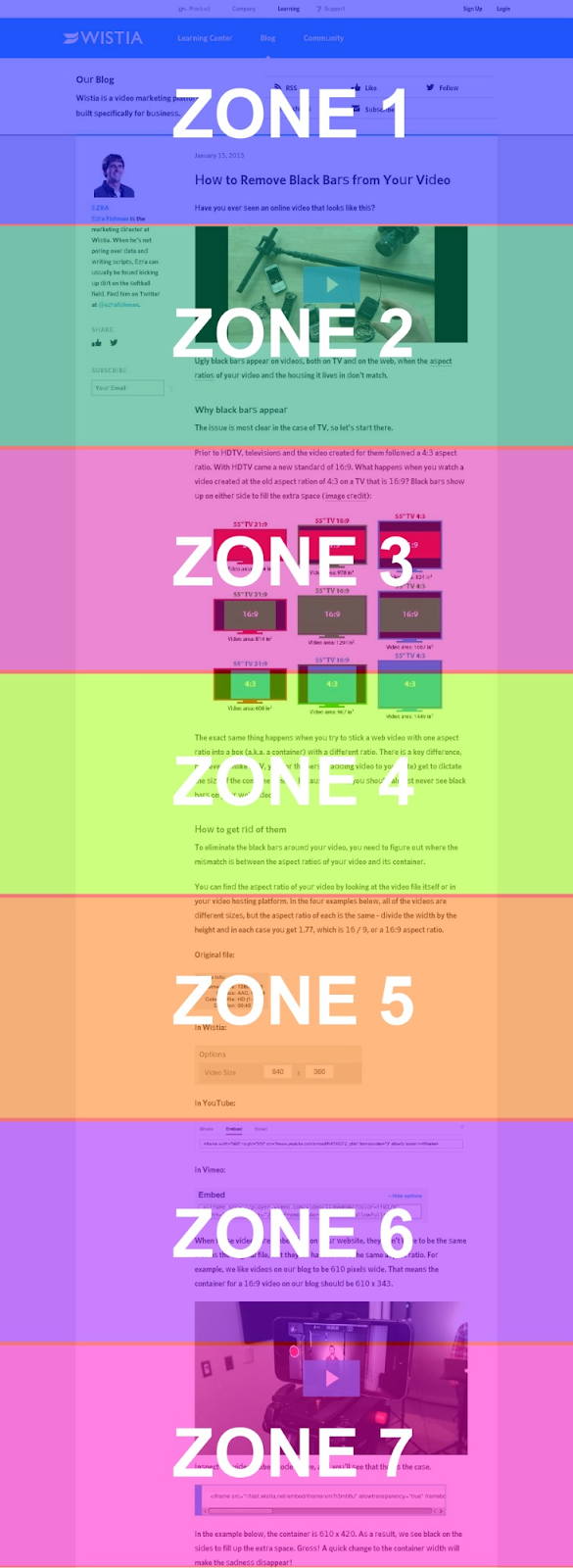
As you can expect, video content got more plays when it was higher in zones, or above the fold:
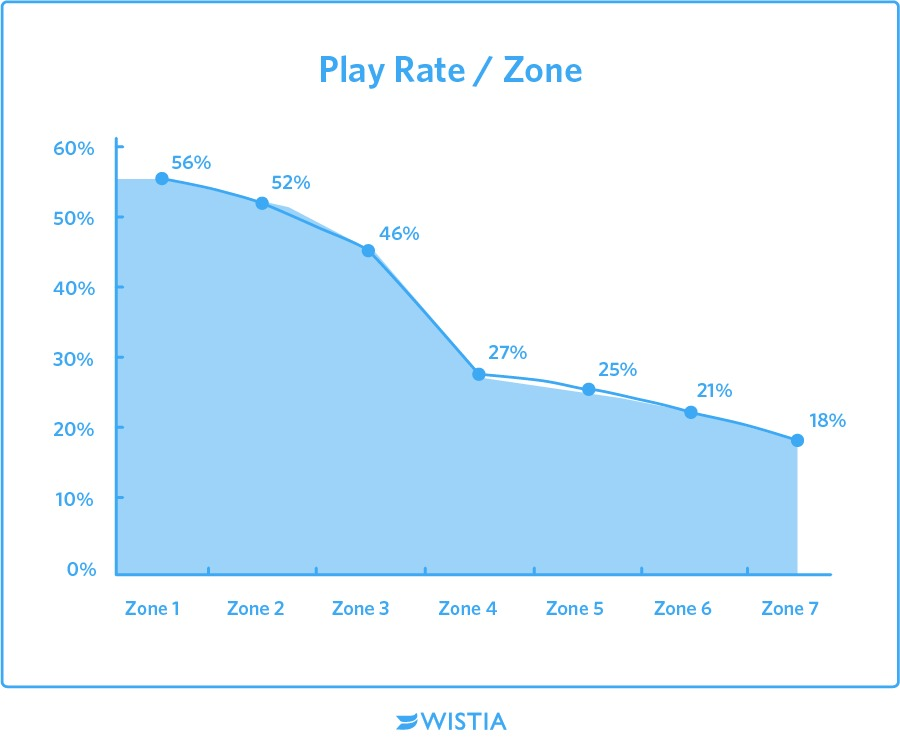
If you want more conversions, make sure to keep your video content in zones 1-3. That means above the fold or just before your page starts to get too long. For example, check out where BuildFire places their video content, in zone 3:
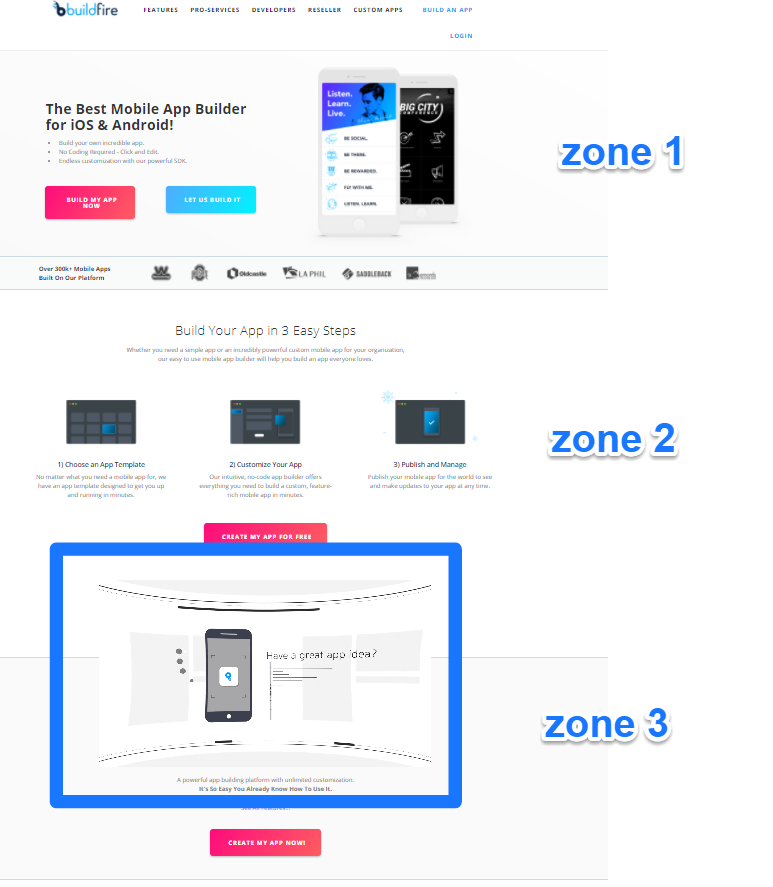
This helps to warm up visitors with basic introductory content on your landing page without overwhelming them. If you jump straight into a video without context, you might risk lower conversions.
Warm up your visits with a snappy headline and then get into the video content.
But that’s not all. Video height and width are big factors in play rates and conversions. According to Wistia, videos with a width of 401 to 600 pixels are going to be best for driving more plays:
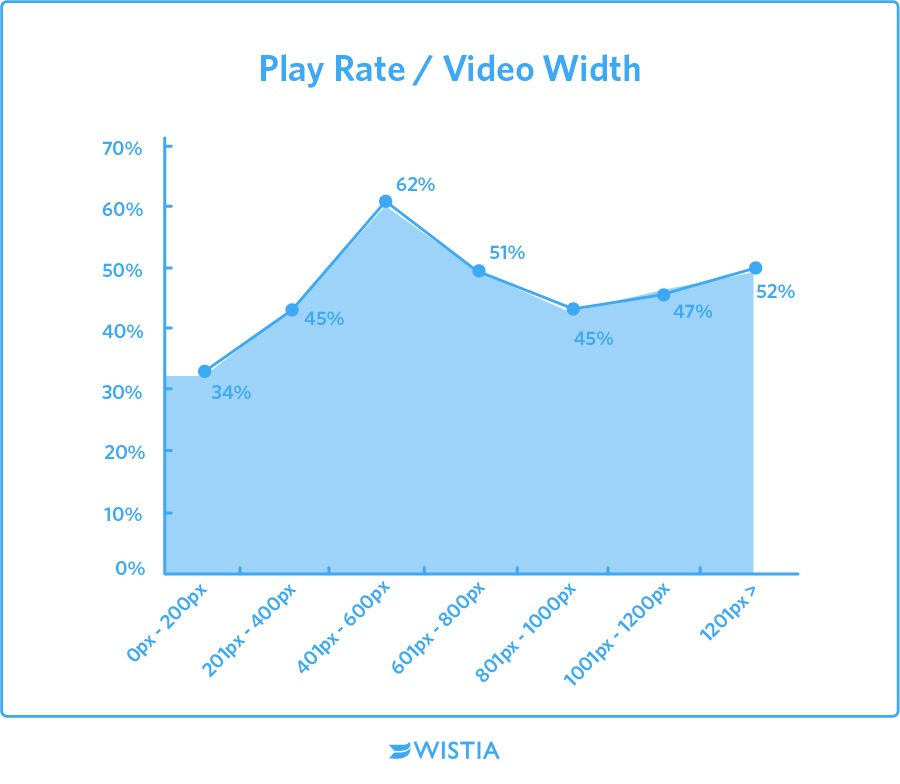
On top of that, the optimal video height is 301 to 450 pixels:
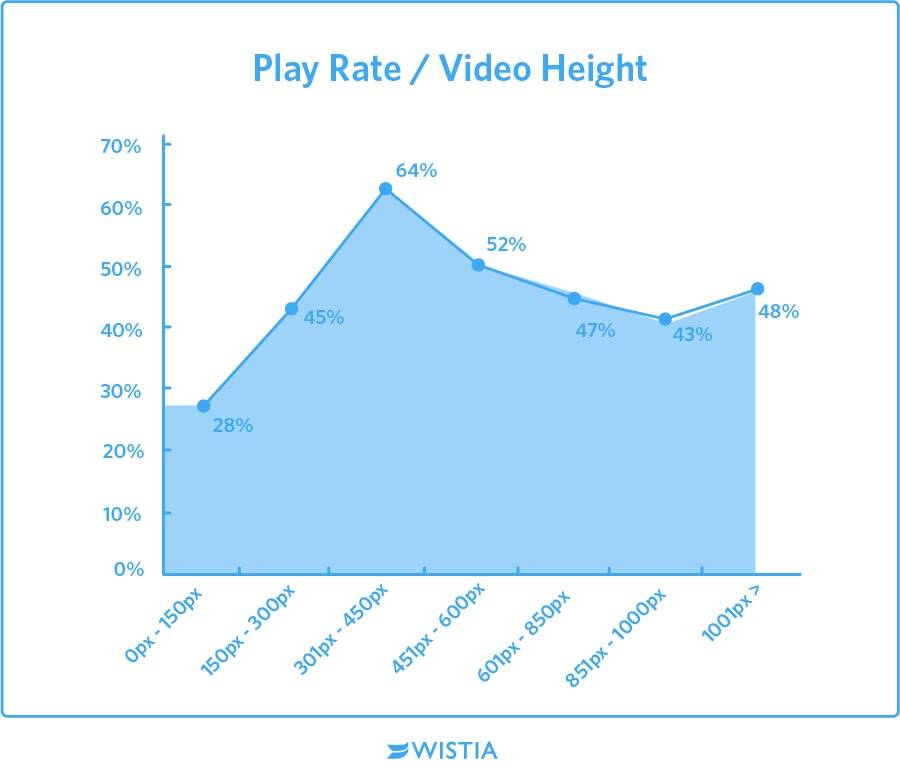
These are common dimensions that are great for producing video that doesn’t dominate your screen or appear too small to click.
Optimization is key to getting more plays. If you can get more plays, you have a great shot at getting higher conversion rates. To sum it all up, focus on these elements:
- Play your video in zones 1-3 on your landing page, ideally above the fold after you’ve provided context
- Use a video width of 401-600 pixels
- Use a video height of 301-450 pixels
How to produce a promo video with a limited budget.
Now that you know the key elements in a converting video, it’s time to create one on your own with a limited budget.
Keeping conversions in mind, you’ve got to create a short and sweet video. Here’s how to produce a promo video with a limited budget that is sure to convert.
1) Develop a compelling script.
The first step in producing any great promo video for cheap is coming up with your own script. Most marketers will hire a company right out of the gate to develop a video script, but to save money, you can complete this step within your own team.
You need a video script that resonates with your audience. Thankfully, you can often come up with a script based on your existing landing page.
For example, look at how BuildFire structures their landing page.
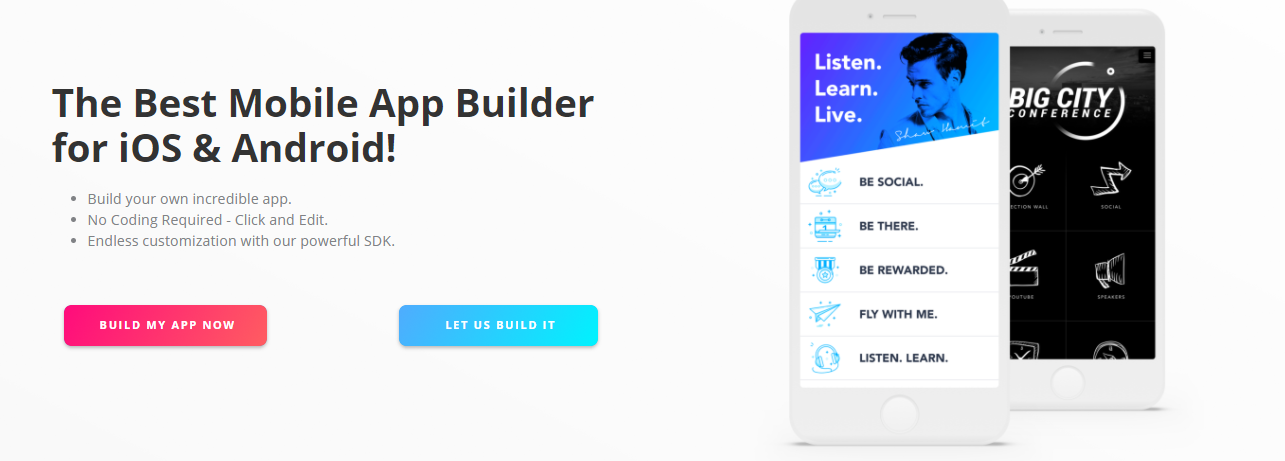
First, they use a compelling headline to generate some initial interest.
Next, they use social proof to back up their claims:

Now they show you exactly how any user can use their service for success:
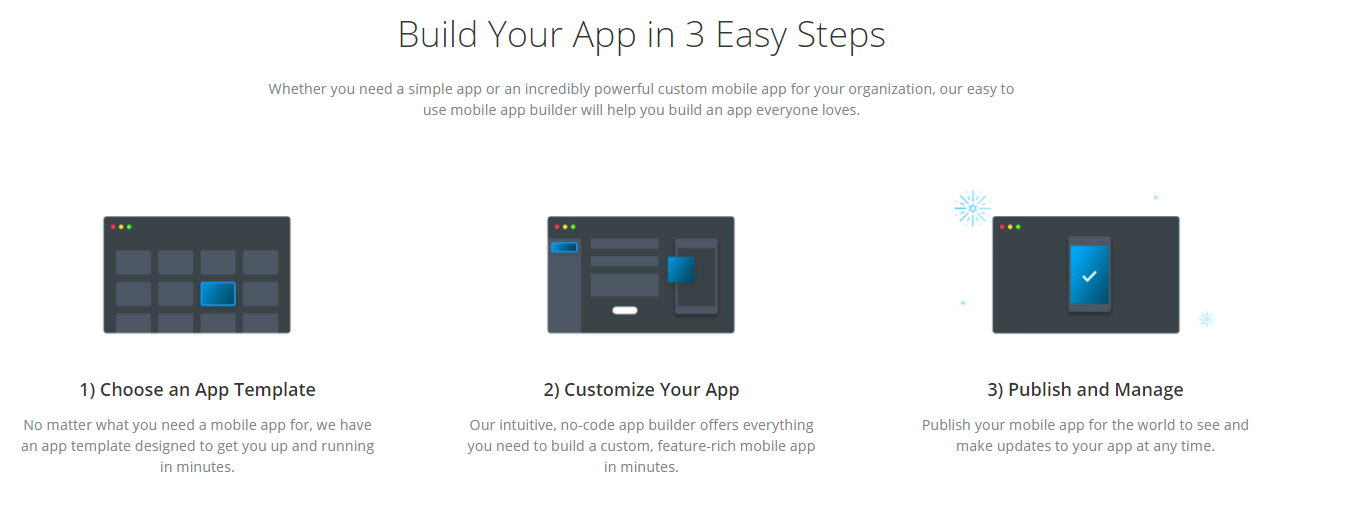
Then they tease it even further with specific features and benefits:
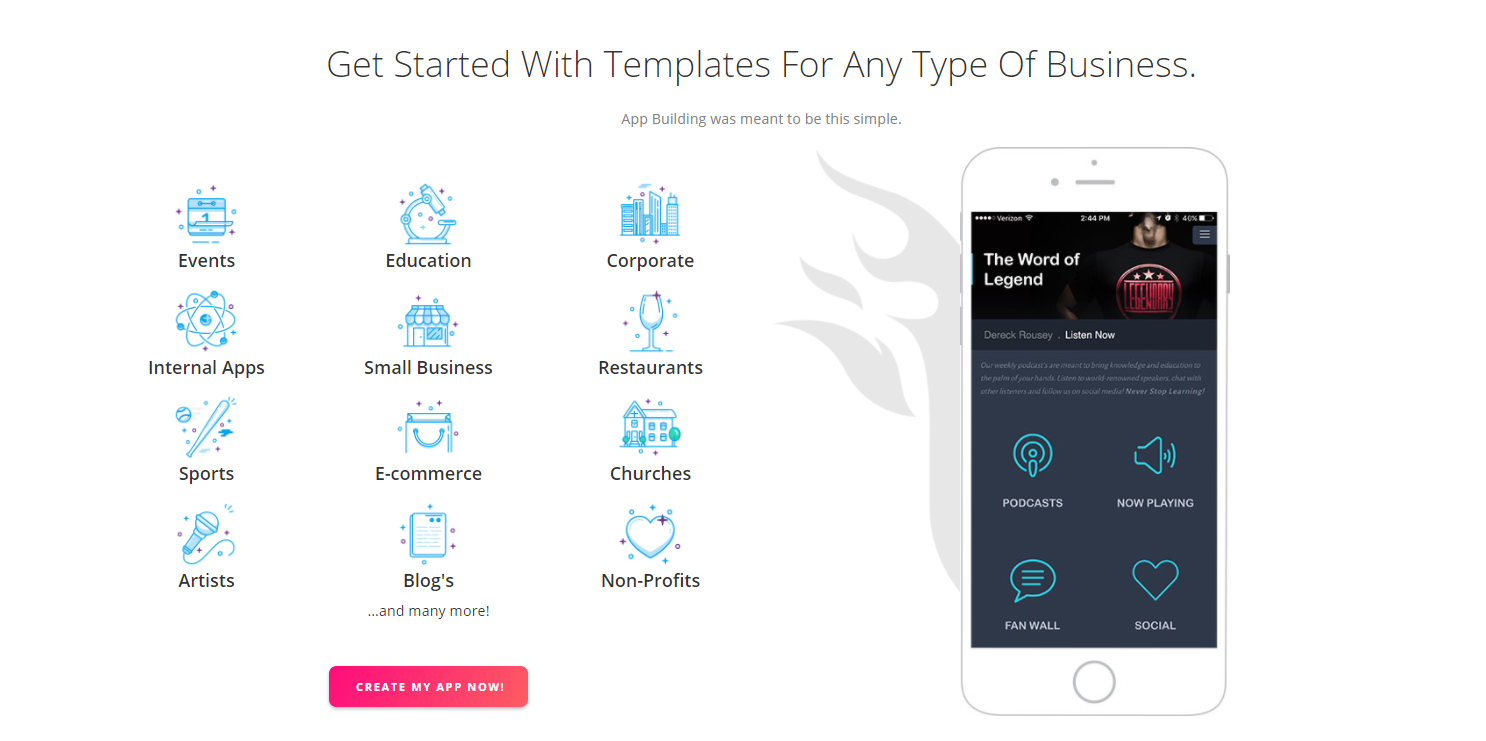
The entire landing page flows like a pre-written script, because it is. The keys to your first video are already hiding within your landing page.
To break it down, here are some of the key factors to include in your script:
- Use an intriguing opening line to capture attention.
- Use social proof to back up those claims.
- Show how easy it is to use your product.
- Show what your product does and what benefits it provides.
- Explain how the user derives value from it (more conversions, better sales, etc.).
2) Find the right style for your target market.
Next up, you need to figure out what style of video is best for your target market. For example, a video on a landing page for a GoPro is going to be vastly different from a SaaS product, right?
The GoPro video will show the product in use in real time, showing actual footage, rather than animated clips. The SaaS product video will likely show the application in use and animated shorts to add style and appeal to the video.
The key here is to understand your market and what they want to see. To get started, conduct some basic competitor research, or search for the top companies in your niche. For example, if you have a mobile app, you can search for the top applications of 2017:
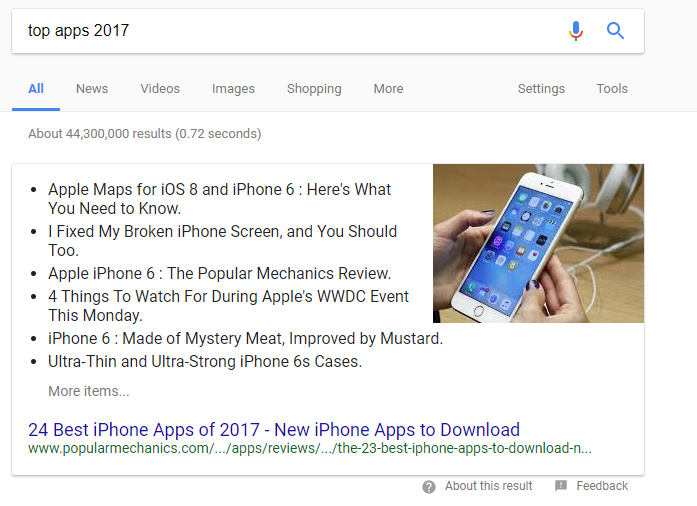
Locate a few of them on the list and head to their site to scout the landing page for video-based content. You should easily be able to locate their product promo videos to see what content they feature:
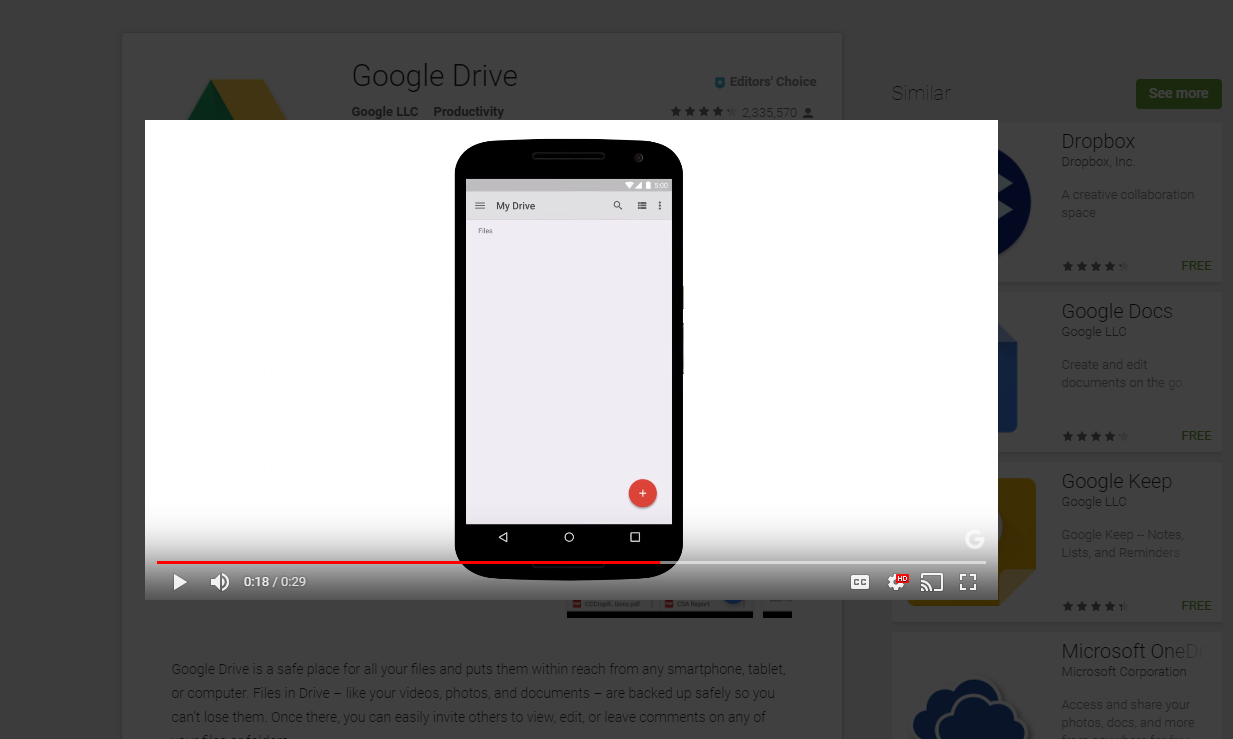
You can even copy their script style and video type.
The goal here is to get familiar with the most popular companies in your niche to create video that performs just as good if not better than theirs. Once you’ve done this, it’s time to get the video produced.
3) Produce it for cheap to minimize risk.
Creating compelling video content isn’t cheap. Agencies can cost thousands of dollars to produce a single video for your business. And when it comes to getting conversions, you need specificity.
But not when it comes at the risk of bankrupting your budget on a failing video. Minimizing risk is key when introducing a new medium to your landing pages or content marketing plan.
You can’t afford to invest thousands of dollars in something that doesn’t work. The goal here is to identify ways to produce it for cheap, allowing you to test the waters before diving in head first.
A great place to start is by heading to a freelance service like Fiverr, depending on your needs. If you need an animated-style video short for your landing page, Fiverr is your best bet for getting it done on a budget.
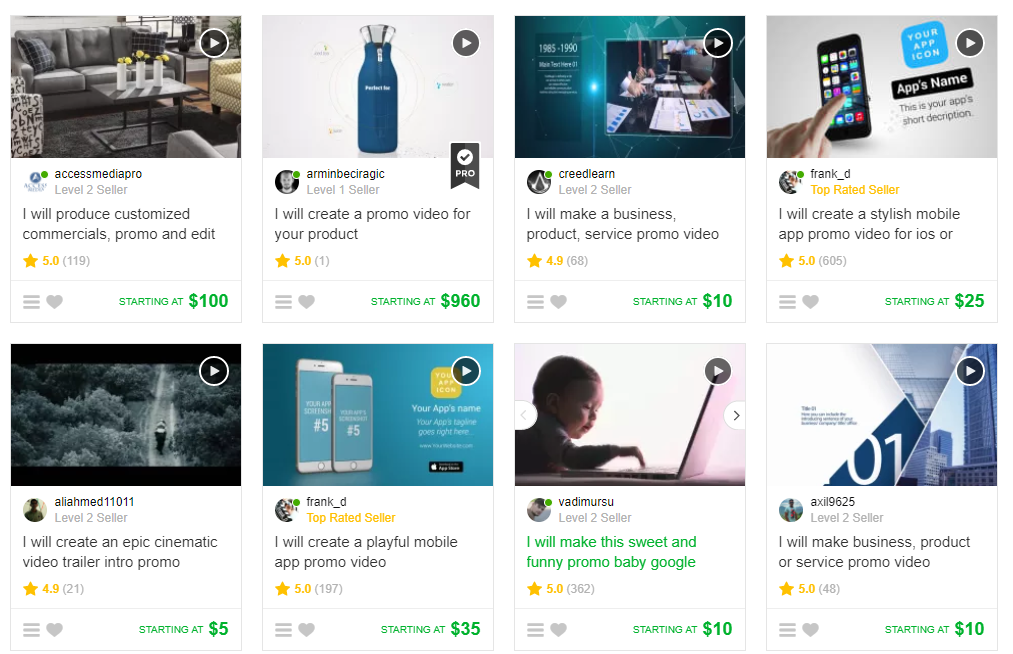
You can quickly find great video animators and production specialists for minimal amounts of money. Even five dollars can get you a well-done promo video.
If you can’t find a good production specialist on Fiverr, try locating one on UpWork. You can also post a job listing to have qualified freelancers apply to your job. If you prefer to make your own animated video, you can easily do that using Biteable.
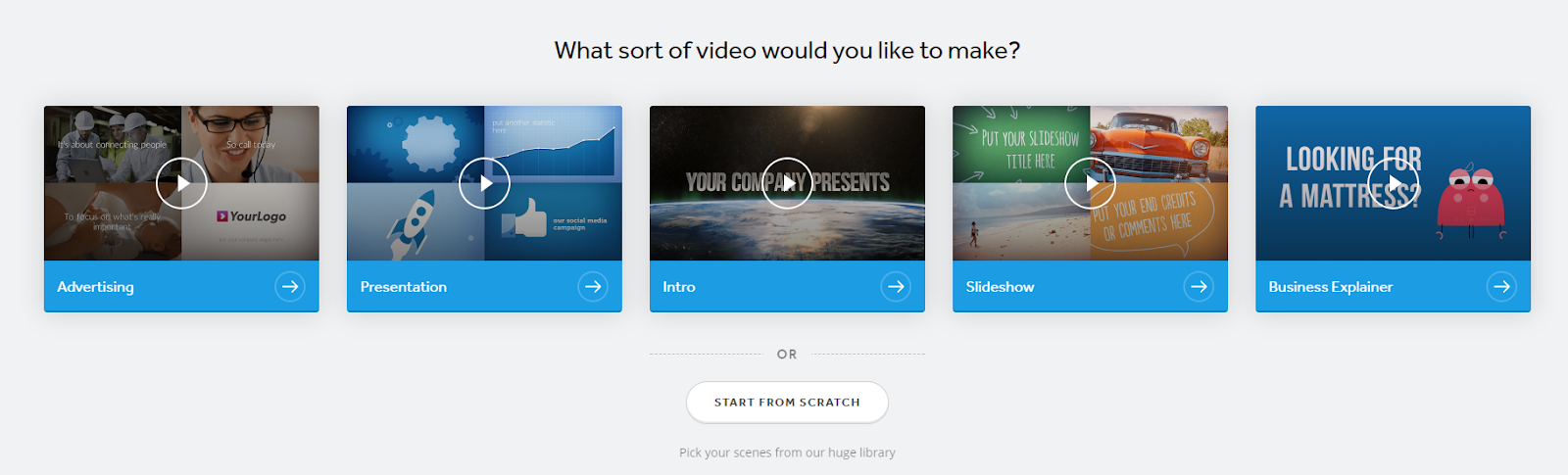
It’s a free software online that allows you to create amazing animated promo videos and product explainers. They have tons of pre-crafted animation slides that you can drag and drop to create a fantastic promo video for your business.
If you have an animation-focused product that is online based, Biteable is a great starting place.
Video content doesn’t have to be expensive.
As blogging becomes more saturated and the market gets crowded, marketers will find new ways to reach customers. It’s not always easy moving your budget into new mediums. Especially costly ones like video marketing.
But in this case, it’s necessary.


How to Get on Board With the Digital Transformation [+ Templates]
Ten years ago, I couldn’t have cared less if the new burger place downtown had a website. Now, I don’t trust one that doesn’t. Consumer buying behavior has drastically changed — today, the majority of consumers are purchasing products online, including almost 70% of millennials.
In 2019, almost two-thirds of businesses (64%) have a website. If you don’t have one, you could be falling behind your online competition.
If your business is online, you’re a part of the digital transformation. But it’s not enough these days to just “be online”. Businesses in 2019 that thrive are operating online — with the aid of different apps, sites, and CRMs to help them out.
So, while it’s a great step to have a website and a Facebook page, there’s more to the transformation than just that.
Here, we’ll explore what the digital transformation is, and how you can get on board to ensure your operations run smoother than ever.
What is the digital transformation?
Digital transformation is simply a term for the shift we’re experiencing as a society. As the world becomes increasingly digital, so is the way businesses work. It’s not changing what businesses do — rather, it’s just changing which platforms businesses use.
For example, instead of reading a map to find directions to that new burger place, you can simply type the business’s name into Google or a Maps app, and retrieve the same information. The only difference is that the information is online.
Finding information online transfers to businesses’ recruitment processes, as well. Instead of a prospective employee filling out a paper application in-person, now most companies post applications on LinkedIn or Indeed.
Additionally, customer experiences have become increasingly digital with social media marketing.
Tech-savvy companies nowadays have interactive, beautiful websites. Plus, in 2019, a company’s tracking process transfers to online analytics.
The transformation is everywhere, and becoming more commonplace each day.
What does digital transformation mean for you? Well, it’s a reminder that any paper materials your company is using in the day-to-day might need a new medium — the internet.
Next, let’s take a look at why the digital transformation is happening, and go over a strategy to make sure your company isn’t falling behind when it comes to being online.
Why are businesses experiencing a digital transformation?
Simply put, things are often easier when they’re online. Additionally, new technology is making website building more accessible, and creating more opportunities for businesses to connect with their audiences.
In fact, 70% of businesses today are finding that the digital shift is worth it, and these businesses either have a digital strategy in place, or are earnestly working towards one.
A digital shift not only saves you trees, but time.
You may be using some methods of digital strategy already. SOPs, social media campaigns, and instant messaging apps like Slack are all examples of small digital transformations that replace paper instructions, outbound marketing, and an extra trip to your manager’s desk.
Other methods of shifting digitally aren’t as easy to implement, like social media. However, with 63% of businesses going the social media route with their marketing, the increasing importance of the medium is rapidly becoming prevalent.
Next, let’s explore some examples of digital transformation more in-depth, so you can consider implementing some of these processes for your own business.
Digital transformation examples
1. Instant messaging
Instead of having a meeting or a long email thread for a quick message, send it to your company’s workspace channel. Some instant messaging services are made for corporate settings, like Slack or Flock.
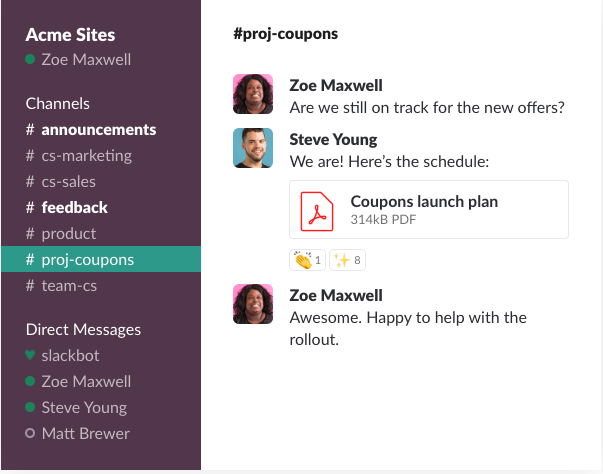
With these services, you can file share, direct message, and create channels where teams can collaborate and discuss projects. Think of it as the office water cooler — just online.
2. Application tools
Are you looking for new talent? The best candidates (especially ones who prefer to work digitally) are online.
For instance, LinkedIn, a site for professional networking, is a great source for recruiting candidates:
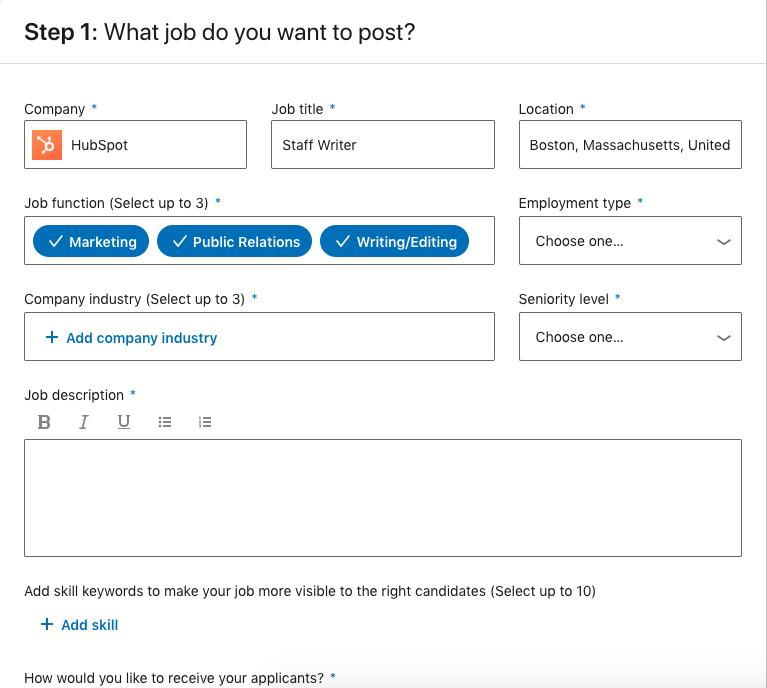
Using LinkedIn’s template will help you post an incredible listing, and you can use LinkedIn’s industries function to help the right candidates find it. LinkedIn will alert you of new applicants and send you their applications, making the selection process an online breeze.
3. Sales management
As aforementioned, software is available to help manage many facets of your business, including sales. This software helps you manage calls, pipelines, reporting, and follow-up resources to help your process migrate smoothly online.
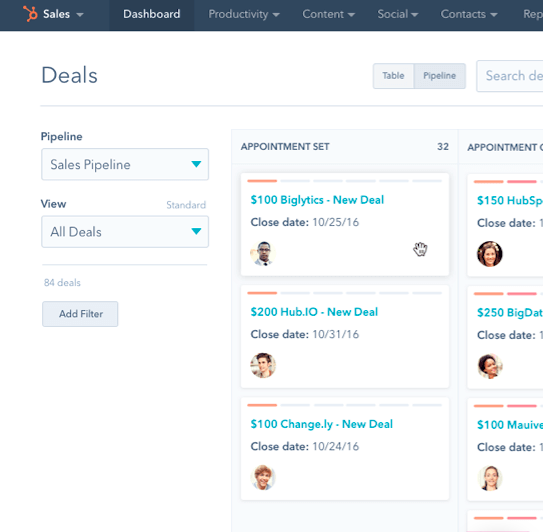
For instance, HubSpot offers a free Sales hub to organize all of your sales materials online. In the tool, you can manage deals, filter contacts, and create different tasks via dashboard to help you keep track of your sales processes.
4. Standard operating procedures (SOPs)
If you have certain aspects of your day-to-day that require multiple steps written down somewhere, dig it out and post it online. This will reduce the paper trail and make the processes shareable among employees.
For instance, this is an example of a standard operating procedure and yes, you can find them online, too:
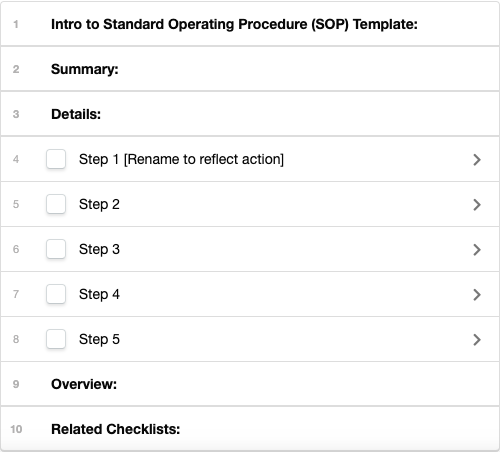
Online SOP software makes listing the procedures of job functions easy to do and comprehend. To help make the transition smooth, talk to your employees and ask them to collaborate with you in the process.
5. Customer relationship management (CRM) software
A CRM is going to be your best friend when shifting to an all-digital business. Our research checklist consolidates the process because it’s extensive, but necessary. Ultimately, CRMs help you maintain relationships with customers.
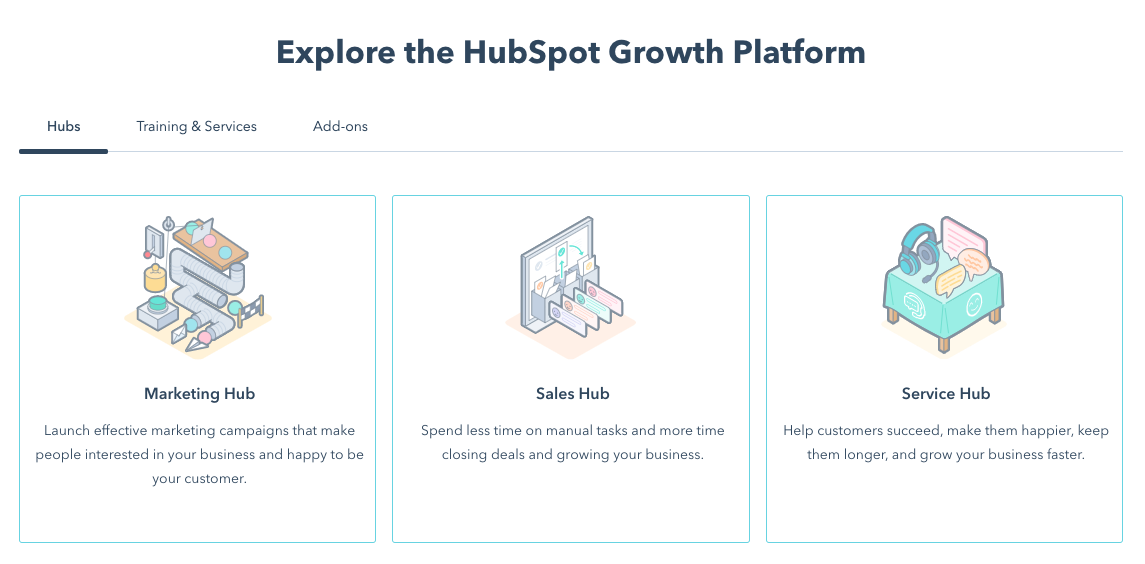
HubSpot’s free CRM offers three hubs that give you an all-in-one business platform experience. From customer service reps to sales leaders and business owners, this free CRM helps you fully transfer your business online and drive growth.
6. Video chat software
Is your team out of town but you need to schedule a meeting? Use video chat software to meet virtually. Software like Skype for Business and Zoom offer free web-chatting services for professional use.
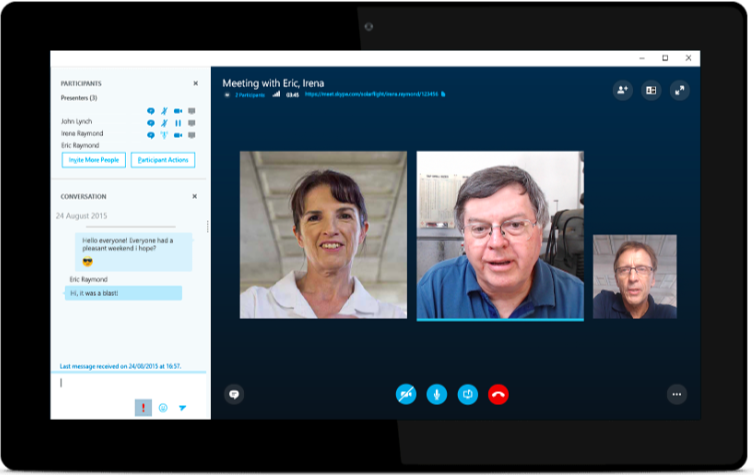
Skype has automatic subtitle settings and 1:1 capabilities as well as the option to host multiple people on calls at once. Most software also has a phone version, to make sure you’re accessible anytime, anywhere (during the work day).
Though these tools are designed to make your life easier, every process won’t be as seamless as it could be, and digital transformations are no exception. Let’s explore some major challenges of shifting to a digital process, next.
Digital Transformation Challenges
Even though the advantages of shifting digitally are abundant, there are challenges in making that transfer happen. Like previously mentioned, two-thirds of small businesses are online. However, that still leaves one-third that are likely hesitant to make the push.
Common challenges to beginning a digital transformation are employee pushback, limited budget, technical difficulties with integration, and poor business models. Each of these challenges come with their own set of solutions.
With a proper strategy, these challenges can be alleviated. For instance, you can work with managers to ensure your employees are informed about the changes that matter to them.
Alternatively, you might start your digital transformation with cheaper components, like social media or a free CRM, rather than more expensive foundational switches like creating high-quality advertising campaigns.
HubSpot offers a free template that will help you schedule and work through a digital transformation process, broken down into seven weeks. Week one is all about gathering existing sales and marketing materials on paper, while week two dives into transferring your business online, and so on. These small steps are designed to fit into your busy schedule and help you remain organized as you transition.
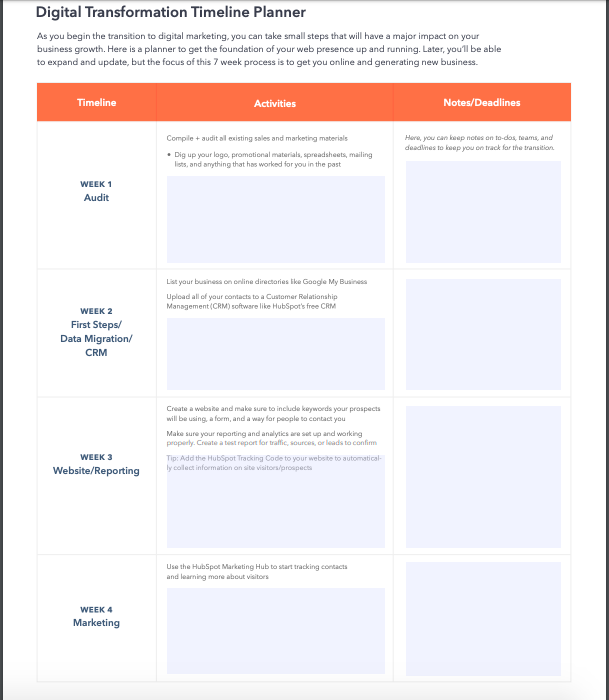
Week two is also the data migration step. A free CRM, like HubSpot, can help you input business data like contacts in one place that’s easy to access.
By weeks three and four, you’ll have a functioning website and marketing resources to help you learn more about integrating processes online.
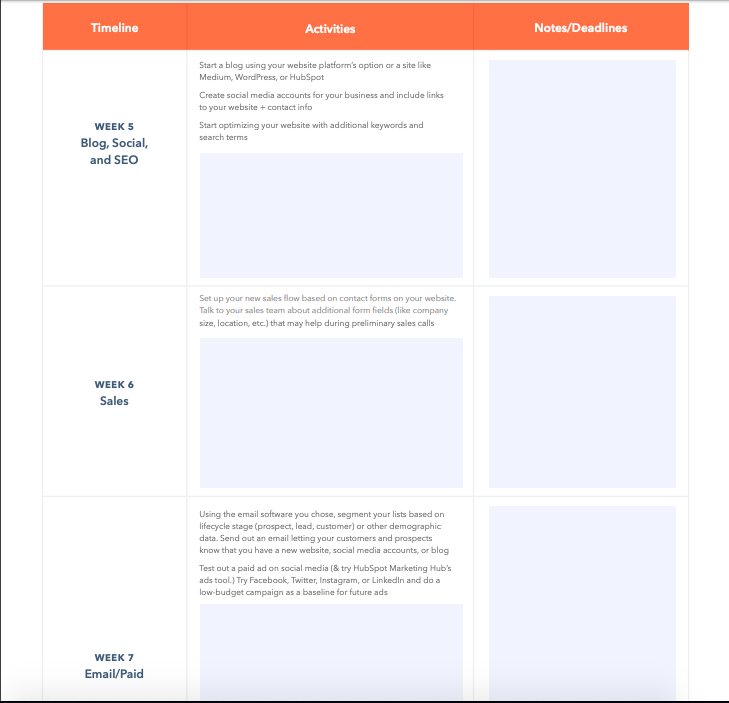
The latter half of the weekly plan ramps up your online presence. Using this template can help you organize your new digital shift by area, to avoid doing one huge push all at once and confusing employees.
Creating a blog during week five will help you find your target audience online. Posts should be about your target market (if you’re a tech marketing company, for instance, posts should center around the intersection between the two) to demonstrate your expertise. This will build your reputation as a thought leader in your industry.
Setting up a sales flow by week six will transition your sales process to be completely digital. Online sales tools allow you to keep track of all your contacts, log your conversations, and keep tabs on call schedules and upcoming meetings.
Email and paid ads should be rocking-and-rollin’ by week seven. The email software you choose will help you through the process of sending automated emails to subscribers, and let you test out paid ad software.
In a month and a half, most of your business processes will be digital.
Best of all, this template gives you the wiggle room to expand as your business continues to incorporate digital components — but as a starting point, it gets you up and running. Hopefully with this template, those challenges mentioned above — like working with hesitant employees, a weak business model, or limited budget — seem a little less daunting.
Now, I bet you’re thinking of a way to start researching. The internet is a vast place, after all. Well, there’s a template for that, too. This checklist is part of the set of free templates HubSpot offers that help you filter through different tools and resources to find the one that’s right for you.
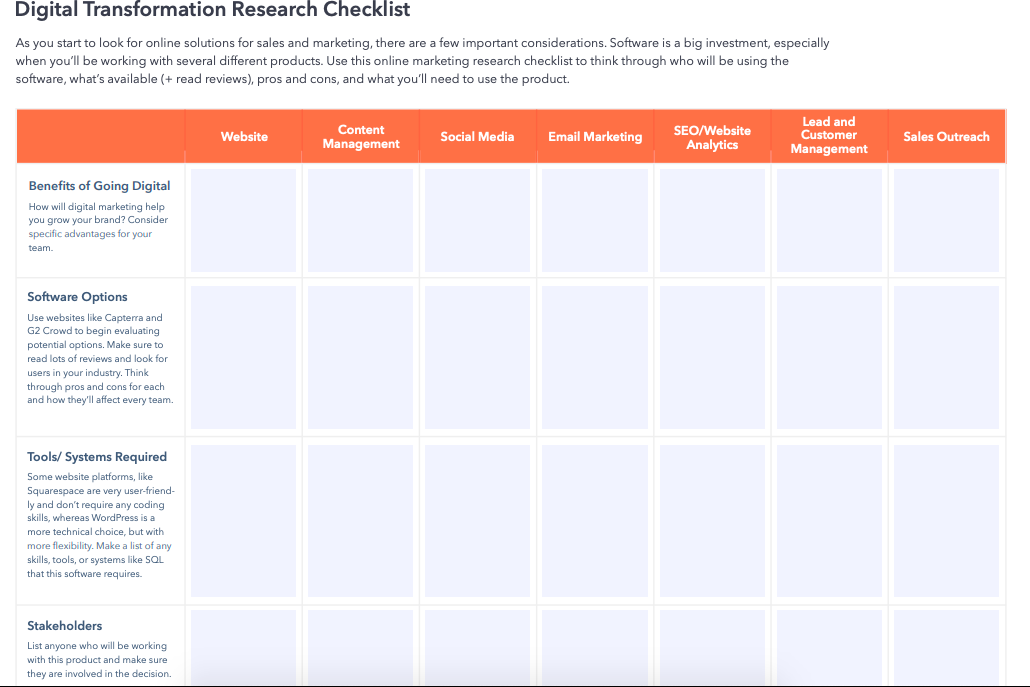
The checklist is made with your business in mind, to think about how restructuring online will benefit you. Additionally, it gives you room to think about the pros and cons of different software out there, including what will likely work best with your operations and budget.
Additionally, you can use these resources to present the benefits of a digital transformation to involved stakeholders. Everyone can have access to this template to keep current on the transformation, so you can all stay on the same page.
Soon, the majority of businesses will conduct at least part of their business online. To make sure you’re one of them, it’s critical you take part in the digital transformation. Make sure you’re well prepared and amping up for the change, now.

Remote HubSpot Employees Give 8 Tips for Working From Home
At INBOUND this year, HubSpot CTO and co-founder Dharmesh Shah announced that our company now has more than 200 remote employees globally
Remote work is becoming so valuable to prospective employees that the second-most searched word on HubSpot’s career page is “remote.”
Clearly, people love the idea of working from home or a location outside the office. And this makes sense. Have you ever wanted to work for a far-away company you couldn’t move to? Or have you ever wanted to cut a tough commute out of your schedule to spend more time with family? These are just a few great reasons why people might want to work remote.
If you’re an employer concerned about how offering remote work as an option to employees could impact productivity,, a number of studies have concluded that remote work can be incredibly effective at increasing productivity
A 2016 survey found that 91% of participants said they get more work done when working from home. Many of this study’s participants also said they felt happier at their job when they worked remote as opposed to in-office.
Later, in 2019, a two-year Stanford University study found that remote employees can boost a company’s productivity.
As the remote workforce has grown, HubSpot has embraced the work style. In fact, our Marketing team recently held a remote quarterly meeting. Instead of booking a large conference room, all HubSpot marketing employees — even those who worked in-office — simply logged on to the video call from remote locations. At the end of the virtual meeting, we heard from a small group of remote HubSpot marketers about their experiences with working out of the office.
Although this all seems pretty promising way to work, you might still be thinking, “Remote work sounds great, but is it possible for managers or leaders?”
At HubSpot, the answer is yes. In fact, our blogging team alone has six fully remote members, including two people managers from across the United States.
Sounds great, right?
If and when you transition to your first semi or fully remote job, you might be excited about your role’s helpful out-of-office location. But, you might also have concerns like, “How will I get visibility in my company?” or “Will I miss important meetings or be out of the loop?”
To help answer some of your burning work-from-home questions, I spoke with a handful of remote HubSpot employees from different departments to get their eight most valuable tips.
1. Determine if remote work is right for you.
For some people, working remote on a full-time basis feels ideal and most productive. However, some people prefer having meetings in person in the office during the week with only one or two full remote days. And, lastly, others might feel like they get the best work done in an office.
Everyone is different, so if you think you’d like to work remote, testing out all three of the work styles noted above can be a helpful way to make a decision about where you’d like your role to be on a daily basis.
At HubSpot’s internal quarterly marketing meeting, which I mentioned above, those who spoke on the remote panel suggested that employees should test a few work-from-home schedules if they think this working style is right for them. These panelists also suggested that it can be helpful to start with one remote day a week and then expand to two or three days as you get used to the new environment.
2. Schedule meetings and work hours in chunks.
When you’re remote, it’s easy to get distracted by family, friends, errands, or other aspects of your day-to-day life. Working in your own house might cause distractions as you think of chores or tasks you need to do related to your home. Meanwhile, prepping for multiple scattered work calls might distract you from completing bigger projects that require heads-down attention.
To avoid distractions from life or your other duties, establish a solid schedule when you start your remote position.
According to Rebecca White, a California-based junior staff writer for the HubSpot Blog, planning and sticking to a firm schedule can be incredibly important if you’re transitioning into a remote position for the first time.
“Set up a schedule and routine for yourself as quickly as you can. This means setting boundaries for what you do during the day,” says White.
White explains that setting schedule boundaries can involve designating offline times when you aren’t working. Since you might be working during or outside of your office’s standard hours, you could also set time blocks for yourself to be online when your team is in office.
During work hours, White warns that a schedule with vague boundaries can cause you to end up working at odd hours.
“It’s easy to fall into the trap of getting things done during the day, but still feeling like you’ve wasted your time and now need to work later in the evening,” White explains. “Setting boundaries for yourself and having a routine schedule will help avoid those pitfalls.”
Scott Tousley, a California-based senior team lead on thef user acquisition team, echoed this sentiment, saying he also schedules his entire workday, as well as breaks, in large blocks.
Tousley says that his first work chunk occurs from 7 a.m. to noon. Then, he takes a break from noon to 2 p.m. followed by his last work block from 2 to 7 p.m.
Many of the other remote employees we talked to also encouraged scheduling multiple meetings within the same day or in dedicated blocks of time.
For example, you could consider dedicating the first few days of the week to meetings and smaller tasks. Then, use the meetingless days to focus on the bigger projects.
“If you can, group all your meetings so they happen over the course of two or three days. Leave a couple of days wide open to get that heads-down, max-effort work done,” says Allie Decker, a content writerbased in Chicago.
Scheduling meetings all together will not only prevent you from having to stop working on a big project for a 30-minute call, but it will also allow you to streamline the time you spend preparing for meetings.
Decker adds, “You can also use these [meetingless] days to get out of the house, change up your workspace, and not have to worry about taking video or phone calls in loud public spots.”
Scheduling a workday when you can’t be in the office can be tricky. While you might be able to schedule your own meetings on specific days, your in-office or remote coworkers in another time zone might need to meet at a time that doesn’t always work for you. While you should make exceptions for important meetings, you’ll still want to try your best to stick to a regular week-to-week schedule and communicate your working hours with your team.
If your office has a calendar system where any of your colleagues can see your schedule and book time with you, check with your manager to see if it’s okay to schedule a block of time that says something like, “Do Not Book,” “Writing time,” or “Email me to book meetings during this time.” With notes explaining why you’re unavailable for meetings on your calendar, colleagues will be able to see that this time is dedicated to bigger projects and tasks.
3. Over-communicate with everyone.
When you’re remote, your colleagues in another time zone might unknowingly invite you to video calls at a late hour that doesn’t work for you. Or, even if you are in the same time zone, you might find that there are consistent miscommunications happening because you sent an email rather than having a face-to-face conversation about what you wanted to achieve from a team project.
To avoid confusion points between you and your in-office team, err on the side of over-communicating. Be sure to regularly check in with colleagues on phone calls, during video chats, or through your office’s direct messaging system.
“Over-communicate everything,” says Christina Perricone, a manager on the blogging teambased in Atlanta.
“Since people can’t stop by your desk to clear up misunderstandings, it’s important to explain everything with thorough detail and share more information than you think is necessary,” Perricone adds.
While you should still be polite and professional, be transparent and firm about your schedule, your current list of tasks, your bandwidth, and your expectations of other team members so that your colleagues and managers know what you’re up to and what you need from them.
4. Plan virtual coffee chats with colleagues.
When you work outside of the office, it can be hard to get that valuable visibility that could move your career forward. Because your team will be bonding during informal office chats, outings, lunches, coffees, or events that you won’t be able to attend, it’s important to come up with creative ways to get to know your colleagues and improve key relationships with team managers.
“As a remote employee, it’s easy to be out of sight and out of mind,” says Henry Franco, an Illinois-based social media manager. “Setting up regular one-on-one meetings with every member of your team on a weekly, bi-weekly, or monthly basis is a great way to stay connected.”
Perricone ads, “Capitalize on any opportunity to connect with colleagues — use team meetings, one-on-one meetings, or impromptu video calls to work through problems.”
“You want to use every opportunity to make up for the lack of in-office interactions that typically build rapport,” Perricone explains.
On the Blog team, one great one-on-one strategy we use to catch up with coworkers is called “virtual coffee.” During these virtual coffee chats, you schedule a time to simply get to know your remote or in-office colleagues over coffee or lunch, without a set agenda.
You don’t necessarily have to use the virtual coffee time to talk about work. Instead, you could use that time to learn more about your coworkers or managers. Building these relationships can help you create more meaningful relationships with colleagues who are farther away. These chats will also help you learn more about how your team works together in the office.
5. Create an efficient working space.
Working in your bed or kitchen could make you want to sleep, cook, or clean when you’re on the clock. Meanwhile, a noisy space in your home might open you up to distractions. If you want to get serious about working from home, you’ll ideally want to have an effective office or quiet workspace that has a designated work surface, great lighting, internet, and limited distraction points.
“Try to designate a space in your home exclusively for work,” says Perricone. “Taking calls from your bed or writing memos in front of your TV likely won’t be very effective. You need a space that allows you to focus and be productive. That way, you can keep your work and home life as separate as possible.”
As Perricone mentions, when you’re working from your own home, the line between work life and your personal life can get blurry. To avoid bringing your work stress into your personal life, do your work in one isolated location of your house so that you can mentally and physically walk away from your job when you’re off the clock.
“Avoid working from your bedroom or living room because there are more distractions there and it’s hard to draw a firm line between work and relaxation,” Franco explains. “If you use an office, it’s much easier to close the door at the end of the workday and transition into another mindset.”
6. Work outside of your house.
Sometimes, your house can still be the most distracting place to work, even if you’ve created a solid workspace.
On top of the distracting environment, associating your home with work all the time might not be so great for your mental health. For example, a recent Buffer survey found that 22% of remote employees have trouble tuning out at the end of the workday.
Difficulty tuning out of work might mean you miss out on happenings in your personal life or feel stressed about your job or a deadline even when the workday is over.
As Franco mentions in the fifth tip, a home office offers you an opportunity to leave your work behind at the end of the day. But, if you don’t have a home office, it might be hard to escape looking at your computer or answering emails at night when you should be focused on your personal life.
If you’ve tested out a number of home workspaces and find that your house or apartment isn’t a great place for getting tasks done, consider going to another location — like a coffee shop, library, or shared working space.
“I work from home primarily, but sometimes I need a change of scenery to boost productivity or simply chat with other humans,” says Decker.
Decker notes that finding the best workspaces can be a process, so you’ll need to do a bit of trial and error testing.
“Don’t beat yourself up if the first few locations aren’t a perfect fit. Over time, you’ll find your favorites,” Decker says, adding, “Bonus points if you work regularly at a coffee shop and you’re recognized by the baristas!”
7. Prepare for video calls.
As a remote employee, regular video chats will most likely be part of your role. So, make sure your working space is properly lit and offers a professional, non-distracting background.
While it might be tempting to keep your camera off and avoid showing your surroundings to your team, Perricone says that attending a video call with the camera turned on is important for interpersonal communication and office visibility.
“Turn on the video during your calls,” Perricone advises. “Ninety-three percent of communication is non-verbal. Being remote puts you at a disadvantage when it comes to reading facial expressions and body language during meetings. Video calls mitigate the disconnect that can arise from not being in-person.”
8. Don’t forget to take breaks.
At a normal nine-to-five job in an office, you’ll usually take one or two breaks throughout the day as well as lunch. But, when you’re at home and focused on a big project, time can slip away from you and you might forget to take a much-needed breather. That’s why you might want to schedule breaks on your calendar.
“Since you miss out on the social cues to head out for lunch or end the workday that are inherent in in-office settings, you have to create them,” says Perricone. “Set calendar appointments for lunch or a walk or a midday workout. Otherwise, you might find yourself sitting in front of your computer for 10+ hours a day.”
When you do take breaks, it can be helpful to do something relaxing but still productive, like going out to lunch or taking a nice walk outside.
Tyler Littwin, HubSpot’s Art Director, echoed Perricone’s thoughts on scheduling break times and encourages remote workers to get some fresh air during the workday.
“Without coworkers there to grab lunch or coffee breaks with, it’s easy to stay in one place for far too long. In my humble opinion, walks are an essential part of keeping your sanity and improving your productivity. Even 15 to 20 minutes is enough of a recharge,” says Littwin.
Establishing a Healthy Remote Routine
As my remote colleagues noted continuously, the key to successful remote work is establishing a routine that allows you to effectively complete different tasks while allowing you to still keep work and home life separate — even when you literally have to bring work home with you.
As you begin working from home, or test out a partially remote lifestyle, be sure to nail down your work and life-related schedules and set vital boundaries for yourself and your team. These strategies will keep your workdays productive and could help your remote career thrive successfully.
Want to learn more about what it takes to be a great remote employee? We recently published a post about research reveals five more researched-based tips for a successful remote career.

An Introduction to Persuasive Advertising vs. Informative Advertising
Out of all the entertaining ads that played during Super Bowl 53, there’s only one commercial that I woke up thinking about the next morning: Pepsi’s “More Than OK”.
“More Than OK” poked fun at how Pepsi usually takes a back seat to Coke, especially at restaurants. And by featuring a star-studded cast that included Steve Carell, Lil Jon, and Cardi-B (who hilariously and fervently backed up Pepsi’s OKness) their boldness to call people out for undermining Pepsi’s quality got a lot of laughs and persuaded a massive audience to reconsider their own perception of the soft drink.
As marketers, we know that if we want to persuade an audience, we need to evoke an emotional response from them. But how do you actually do that? Below, we’ll examine six persuasive advertising techniques you can use in your advertisements, five examples you can reference if you ever need some inspiration, and three informative advertisement examples that are surprisingly just as compelling as the persuasive advertising examples.
Persuasive Techniques in Advertising
- The Carrot and The Stick
- The Scarcity Principle
- One Message Per Advertisement
- Write In the Second Person
- Give Your Audience a Sense of Control
- Use a Call-to-Value Instead of a Call-to-Action
1. The Carrot and The Stick
Humans are hardwired to move towards pleasure, like a horse towards a carrot, and away from pain, like a donkey avoids a stick. When people read or watch your advertisements, “carrots”, or promises of gain, can fill your prospects with hope and compel them to pursue that potential feeling of pleasure. “Sticks”, possibilities of loss, evoke fear in your prospects, which will compel them to flee from that potential feeling of pain.
Both tactics can pull your prospects into a narrative and evoke emotions that inspire your desired action. Carrots, like a product’s benefit, entice people to take a desired action. Sticks, on the other hand, like anti-smoking campaigns, evoke fear in people to stop doing a certain action and start doing the alternative. To better understand how to craft advertisements that feature a carrot or stick, check out these insurance copywriting examples below.
Carrot: “15 minutes could save you 15% on car insurance.” — Geico
Stick: “Get All-State. You can save money and be better protected from Mayhem like me. ” — All-State
As you can see, Geico’s ad uses a small time investment that could potentially produce big gains as a lure to get you to buy their product. Conversely, All-State’s ad uses the character “Mayhem” to evoke fear into people to stop using their “inferior” insurance and start using All-State’s.
2. The Scarcity Principle
People value objects and experiences that are rare — having something that most people want, but can’t have, boosts our sense of self-worth and power. If you use words and phrases that imply scarcity and evoke a sense of urgency, like “Exclusive offer” or “Limited availability”, you can skyrocket your product’s perceived scarcity and consumer demand.
3. One Message Per Advertisement
To immediately hook people and persuade them to read or watch the rest of your advertisement, try sticking to only one message. Spotlighting your product or offer’s main benefit or feature will make it easy for your customers to understand its value and increase the likelihood of their conversion because you’re only conveying one message to your audience: your product’s main feature will benefit your customer’s life somehow, someway.
4. Write in the Second Person
Since your prospects primarily care about how you can help them, and pronouns like “you” and “your” can engage them on a personal level and help them insert themselves in the narrative you’re creating, writing advertisements in the second person can instantly grip their attention and help them imagine a future with your product or service bettering their lives.
5. Give Your Audience a Sense of Control
According to a research study conducted by three psychology professors at Rutgers University, the need for control is a biological and psychological necessity. People have to feel like they have control over their lives.
If you want to give your audience a sense of control, you need to give them the ability to choose. In other words, after reading or watching your advertisement, they must feel like they can choose between the option you suggest or another path. If they feel like you’re trying to force them to buy your product, they’ll get annoyed and disengage from your message.
To give your audience the ability to choose, and in turn, a sense of control, use phrases like “Feel free” or “No pressure” in your advertisements, like this example from Hotwire.com below.
6. Use a Call-to-Value Instead of a Call-to-Action
Call-to-actions are crucial for getting prospects to take the next step, but a “Download Now” or “Call Now” CTA isn’t always going to convince the more skeptical prospects to take your desired action. You need to make sure your ad’s last line of copy or quip is the best of them all.
So instead of writing an uninspiring, final line of copy like “Download Now”, write one that clearly communicates your offer’s value and gives a glimpse into your prospects’ potential life if they take your desired action, like this call-to-value prompting readers to download a blogging eBook: “Click today and be a blogger tomorrow.”
Persuasive Advertising Examples
1. Nikol

Image Credit: Brilliant Ads
Showing — not telling — your audience about your product’s benefits is one of the best ways to capture attention and get an emotional response. Obviously, Nikol’s paper towels can’t actually turn grapes into raisins, but this ad highlights the product’s absorbent powers in a such a clear and clever way, they didn’t need write a single line of copy.
2. Heinz

Image Credit: Brilliant Ads
In relation to food, the word “hot” has multiple meanings: having a high temperature and being spicy. Heinz brilliantly used the connotation of high temperature to highlight the spiciness of their ketchup, and their creative method of communicating the value of their product helped them instantly attract people’s attention.
3. Mondo Pasta

Image Credit: Brilliant Ads
With this crafty use of guerrilla marketing, Mondo Pasta perfectly aligns their copy with their creative — the guy slurping the noodle literally “can’t let go” because its a rope tied to a dock. By designing such a visual, unexpected, and literal ad with a seemingly one-dimensional prop, people’s eyes can’t let go of this ad either.
4. Bic

Image Credit: Brilliant Ads
Another example of guerrilla marketing, Bic takes advantage of an unkept field to highlight the power of their razors. By just mowing a small strip of grass on a field, this ad is an unconventional, simple, and extremely creative way to catch people’s attention and spotlight a razor’s shaving capabilities.
5. Siemens

Image Credit: Brilliant Ads
Siemens’ skillful ad shows the benefits of their product by unexpectedly placing their washers and dryers in a library to show you that they’re so quiet, even a librarian wouldn’t need to shush them.
Informative Advertising
Compared to persuasive advertising, informative advertising focuses more on the facts, and less on emotions. It highlight how your product’s features and benefits solve your customers’ problems and can even compare your product to your competitors’ product. Although this type of advertising relies on facts and figures to trigger a desired action, the ad’s message is usually framed in a compelling way.
Informative Advertising Examples
- Drink Responsibly
- Miller Lite
- Siskiyou Eye Center
1. Drink Responsibly

Image Credit: Bloggs74
Even though this ad might seem like it’s only aiming to evoke fear in its target audience, it actually leans on the facts to get their message across. If you drink and drive, your risk of crashing skyrockets 11 fold. And by focusing on this alarming reality, this ad can persuade people to get an Uber or Lyft home after a night out instead of getting behind the wheel.
2. Miller Lite
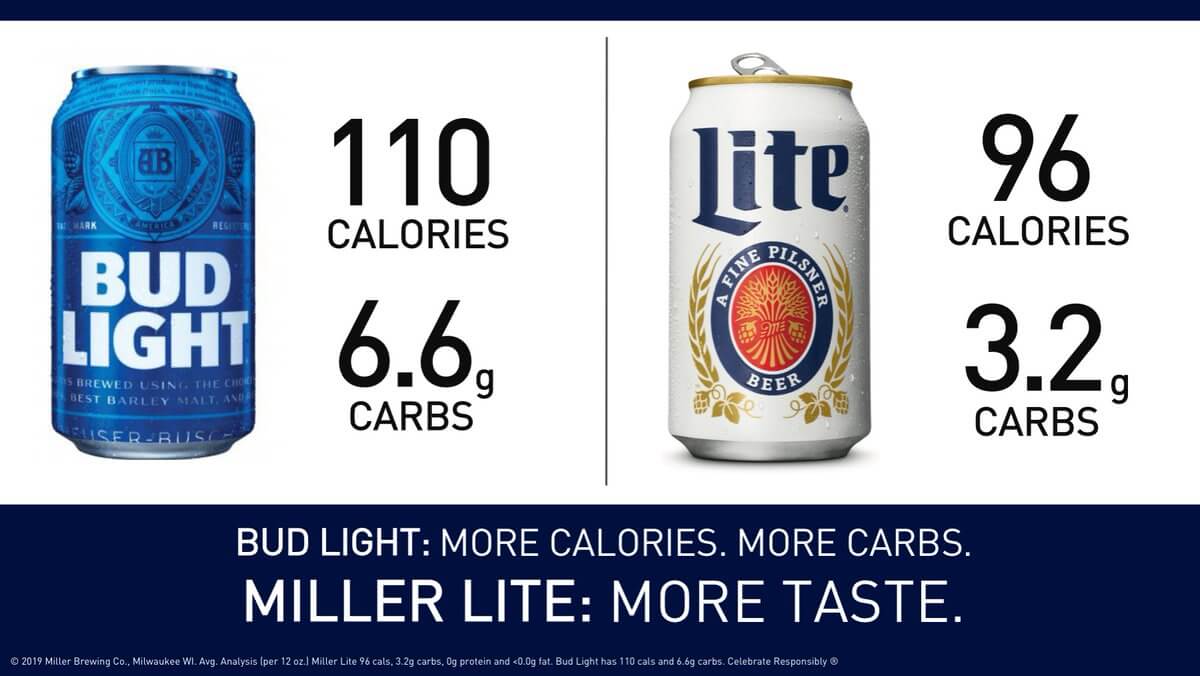
Miller Lite
After Bud Light took some jabs at Miller Lite for using corn syrup in their beer during their Super Bowl 53 ads, Miller Lite decided to throw a few punches back. A day later on Twitter, they revealed that their beer actually has less calories and carbs than Bud Light, which helped them persuade people that drinking Bud Light and Miller Lite actually have similar health benefits.
3. Siskiyou Eye Center

Entractech
There’s an old folk tale that carrots can improve your eyesight, but science has actually debunked this myth. That’s why this Siskiyou Eye Center ad is such a creative informative advertisement. While it pokes fun at this common fable, it’s still relying on the facts of carrots not being able to improve your vision and the Eye Center’s ability to provide quality treatment for your eyes to persuade people to do business with them.
Persuasive advertising vs. informative advertising: which one is better?
Persuasive advertising and informative advertising definitely focus on different aspects of persuasion, but they still aim to achieve the same goal: convincing your audience to take a desired action. So whether you pursue one advertising strategy or another, remember that if you can trigger an emotional response, regardless of the stimuli, your ad will be a success.

What Exactly is a Company’s CMO?
Whether you interact daily with your company’s CMO or are considering hiring one for your own company, it can be tricky to identify what a CMO does and why a CMO is critical to your company’s success.
In fact, a quick LinkedIn search of “Chief Marketing Officer” results in people with bios ranging from “creating customer-first interactions that ultimately drive loyalty and evangelism” to “coordinating marketing budgets in accordance with our organizational goals on a daily basis”.
In short, a CMO is often a broad title that can vary depending on the size of the business, the company’s goals, or the leadership team’s vision and priorities.
To help you better understand the role and daily function of a CMO, keep reading.
What is a chief marketing officer (CMO)?
A chief marketing officer (or CMO, for short), is a C-level corporate executive who faciliates growth for the business by developing and implementing an extensive marketing plan.
The CMO’s marketing plan needs to help the company increase brand awareness, earn or retain a competitive advantage in the marketplace, and ensure each internal team’s marketing strategy is aligned with the company’s broader goals.
To better understand the role of a chief marketing officer, I asked Kipp Bodnar, HubSpot’s CMO, to describe the position in his own words.
Bodnar told me — “Today, a CMO has to balance establishing the brand and point-of-view for their business while being deeply analytical in their ability to drive business demand and test strategies.”
Bodnar added, “CMO’s are technologists and use more technology than ever before to deliver a remarkable customer experience. As technologists they have orchestrated systems, workflows, and data at scale to the entire go-to-market. ”
Here’s a list of a CMO’s typical responsibilities:
- Develop innovative marketing strategies that result in increased revenue and brand recognition
- Implement processes that result in greater efficiencies across the organization
- Lead and inspire marketing teams to arrive at unique solutions for their customers
- Work hand-in-hand with other departments, like sales and service, to ensure marketing objectives are aligned with overall company goals and will ultimately drive business growth
- Research and assess the company’s current position in the market, and stay up-to-date on industry trends
- Work with internal and external PR teams to create a coordinated message
In short, a CMO needs to drive both awareness and demand for a company’s products or services.
Additionally, as a member of the executive team, a CMO needs strong leadership and communication skills, as well as a level of business acumen that enables them to effectively communicate with internal marketing and sales teams, the executive board, and external stakeholders to ensure the company is aligned in their marketing efforts and vision.

13 Examples of Re-Engagment Emails for the Subscribers You Miss
A whopping number of emails hit your subscribers’ inboxes each day. With so much competition for attention, it’s inevitable that a percentage of your subscriber list will lose interest in and stop engaging with your email marketing campaigns. It may not seem like a huge deal, but as a great percentage of your list stops engaging, the greater the risk you run of damaging your sender reputation and your email deliverability rates.
So, how can you address this issue? By creating special re-engagement emails targeted directly at your “inactive” subscribers.
Re-engagement emails play a vital role in the email lifecycle
Marketing Sherpa reports that, on average, marketers lose 25% of their email list each year (simply to attrition). Therefore, list retention should be an absolute must for all email marketers.
When done well, re-engagement emails can reduce list churn rates and boost incremental engagement. In terms of deliverability, re-engaging your inactive subscribers can enhance or at least help you maintain inbox placement rates for your emails. Often, if your overall engagement levels drop significantly, ISPs are more likely to consider you a low-quality sender, block, and make your engagement problems even worse.
So what does an effective re-engagement email look like? Here are 10 examples to inspire your next campaign effort.
10 Re-engagement Email Examples to Woo the Inactive Subscribers
1. Lowe’s
This re-engagement email draws attention to the improvements in their products since the last subscriber engagement. They have tactfully highlighted how more than 5 million members are using their services. Social sharing buttons are clearly visible in the email footer — hoping to push more engagement in other channels as well.
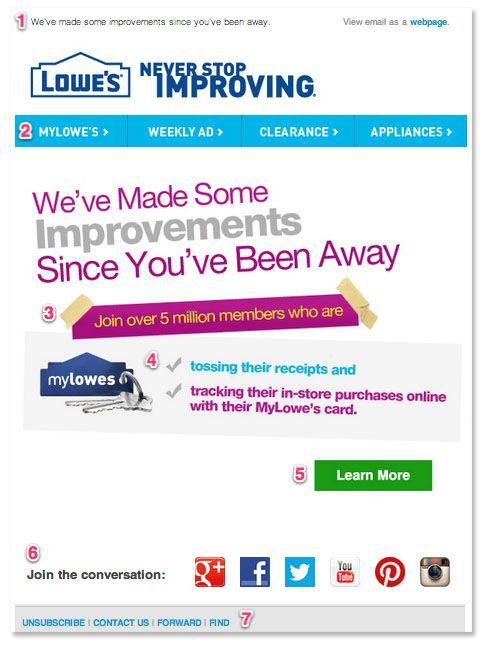
2. Animoto
Animoto sends out a simple question: Do you still want to hear from us? Their focus is on allowing subscribers to update their email preferences through a prominent CTA button that directs them to a preference center.
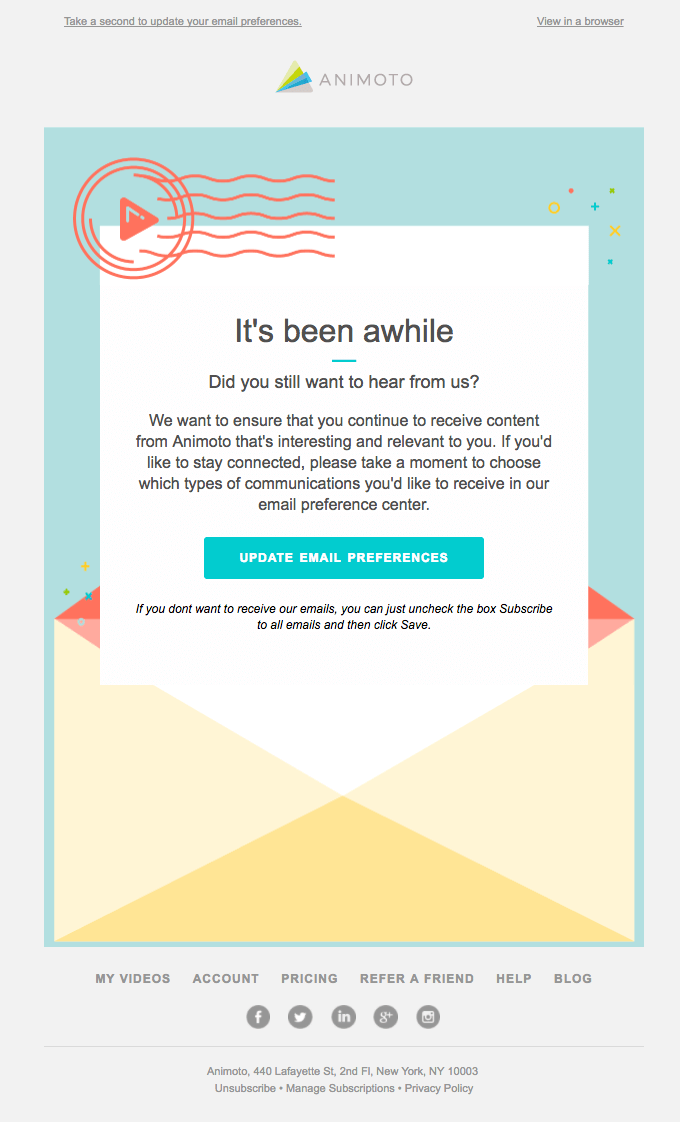
3. BirchBox
We all love surprises. BirchBox makes use of that emotional instinct in their re-engagement emails. They provide subscribers with two interesting options — a very rewarding way to re-engage!
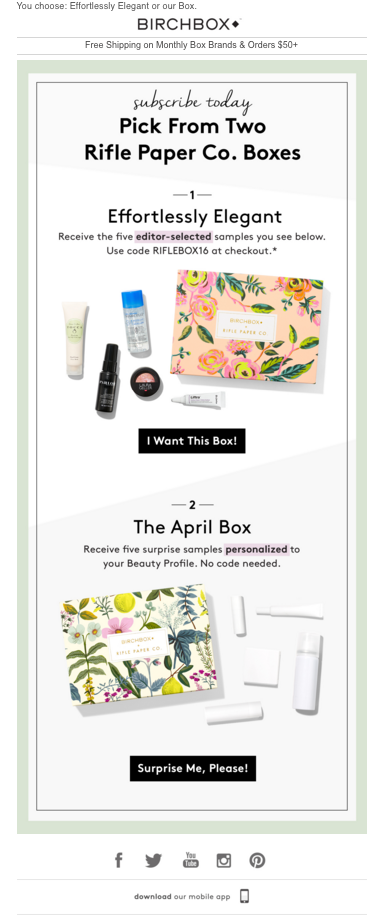
4. Grammarly
Grammarly re-engages inactive subscribers by presenting them with a “Wrinkle in Time” badge. The prominent CTA button ‘GO’ tempts the users to use their service again. They also promote their premium version at the bottom of the email and hint at a special price as well.
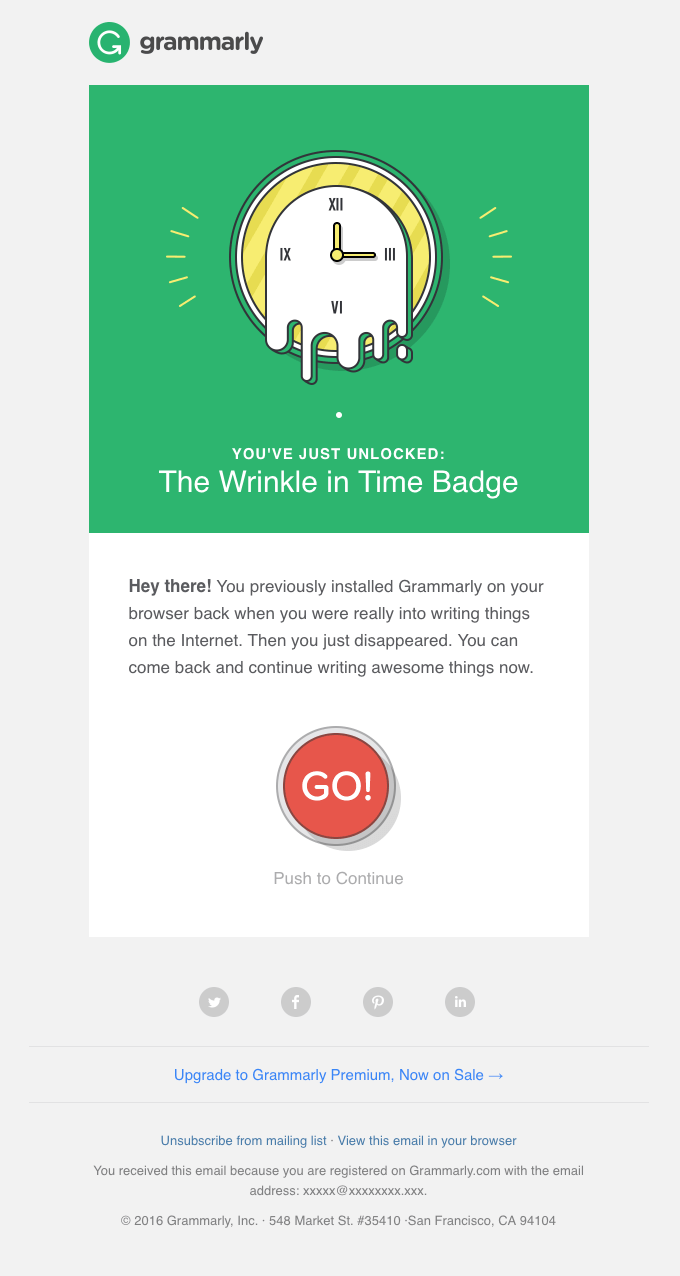
5. Path
Path is a photo-editing app that showcases all their new features to entice inactive subscribers. The ‘Update Now’ CTA stands out and drives engagements by pushing subscribers to update their app.
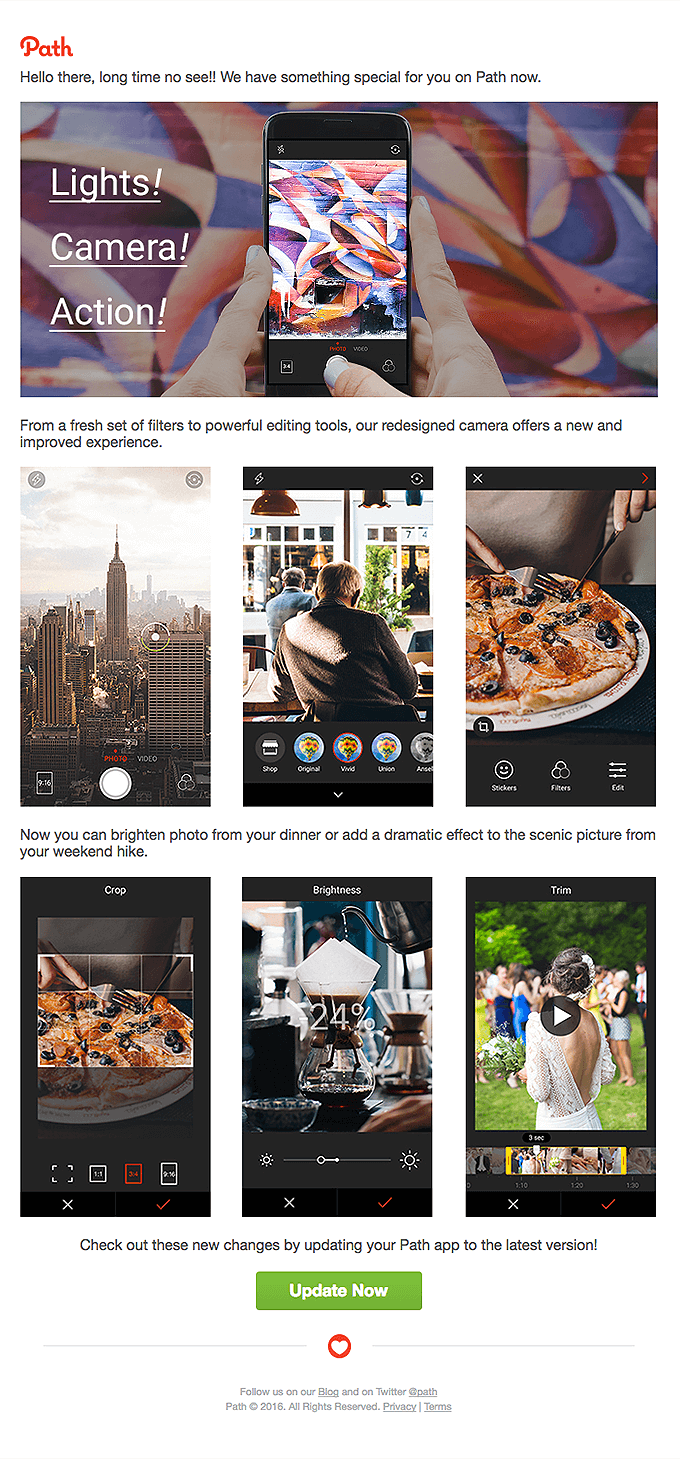
6. ReturnPath
ReturnPath builds a brief background for the re-engagement and allows the subscriber to choose the types of communications they wish to receive. They demonstrate how the preference center works and end the email with two cute illustrations accompanied with related CTA buttons for options for engagement.
7. SurfStitch
This re-engagement email attempts to feature everything that an inactive subscriber might have missed. They include a provision for the subscriber to adjust email frequency. And they don’t miss out on this opportunity to remind subscribers of their value propositions at the bottom (free express delivery, return policy, and customer service).
8. Urban Outfitters
This re-engagement email by Urban Outfitters is a perfect blend of humor and emotional appeal. It’s brand-appropriate, and likely stands out very well from their normal marketing emails.
9. Paul Mitchell
Paul Mitchell starts off their re-engagement email with an emotional ‘We hate goodbyes,’ informing the subscriber that it’s the last email to them. They include their products in a sad or worried face and drive readers prominently to a CTA to stay subscribed.
10. Asthma Foundation
Non-profit organizations can use re-engagement emails effectively as well — especially when it comes to convincing previous donors to demonstrate their generosity once more. This email by the Asthma Foundation deftly illustrates asthma triggers and quickly goes into persuasion mode to get the subscriber to make another contribution.

11. Planet Fitness
Sometimes the easiest way to re-engage someone is by offering them a great and exclusive deal. In this email Planet Fitness offers a discounted deposit for people who re-join their gym within a certain period of time. Their usual deposit it $10 for a non-commitment subscription, so they’ve offered a 90% discount in the example below.

12. Hootsuite
Hootsuite regularly sends emails to inactive customers that tell them what’s changed since they’ve logged in last. The company also explains how and why its changes, recommended by customers, have improved the platform.
In this humble approach, Hootsuite admits that its a growing platform that wants to hear from its customers and that it has improved on things that might have caused the inactive user to leave.
We Miss You Email
We Miss You emails one obvious way that some brands might reach back out to previous customers or website users. Rather than calling out someone for being inactive or not visiting a site in a while, “We Miss You” can sound like a nice way of saying, “We care about customers that haven’t returned back. Example 13, below, shows how this can be effective.
13. HBO Shop
In this email, HBO Shop, the official HBO store shows inactive old customers the new products its now offering. The email also nicely admits that the HBO store misses the customer.
Like Planet Fitness, HBO Shop also aims to reward previous customers for returning to the store with a 20%-off welcome back promo code.

Get ready to re-engage.
Subscriber inactivity is a fact of life. How you handle it makes all the difference. Take these subscribers as an opportunity to try new content and innovative approaches to see how you can bring your old customers back and get you new sales.
Editor’s note: This blog post was originally published in December 2017, but was updated in October 2019 for comprehensiveness.

5 Marketers Reveal How They Understand & Influence Consumer Behavior
As Elle Woods once said, “Whoever said orange is the new pink was seriously disturbed.”
If you haven’t seen Legally Blonde, Elle was referring to an attempt made by a brand to influence consumer behavior. However, its attempt fell short because the fictitious company failed to align with its target audience.
According to Salesforce, 76% of consumers expect companies to understand their needs and expectations.
In other words, customers want companies to understand their behavior. That’s why understanding and influencing consumer behavior is essential for a marketer.
Below, let’s discuss the theory of consumer behavior, then review some expert strategies for understanding and influencing customers.
The Theory of Consumer Behavior
Consumer behavior is the study of how people spend their money. This is typically studied by economists so we can better understand how personal taste and income shape the economy. However, marketers also use this information to market their products.
To study consumer behavior and learn more about your buyer persona, consider the answers to these questions:
- How do your customers feel about certain brands or products?
- Why do they select one product over another?
- What’s their research process like?
- Do they prefer to shop online?
- How important are reviews to their purchasing decisions?
Ultimately, the goal is to understand why consumers make the decisions they do so you can better market to them.
To fully understand consumer behavior, consider these factors that go into making a purchase:
Psychological
When people buy something, their mental headspace and mindset play a large factor. Ultimately, their perception, attitude, and background influence their final purchase.
Personal
Personal identification factors like age, financial background, culture, interests, and hobbies also play a role in a purchasing decision.
Social
Customers consider other people’s thoughts and opinions before buying a product. They think, “What do my family and friends think of this product?” and, “How are the reviews?” Sometimes, they’ll consider these elements without even thinking about it.
Consumer behavior as a marketing method emerged in the 1940s and 50s when marketing shifted away from relying on economics and instead focused on other disciplines like psychology and sociology. This lead to the development of an array of theories that analyze consumer behavior.
Consumer Behavior Theories
There are five main schools of thought regarding consumer behavior:
1. Psychoanalytic Theory
This theory states that consumers make purchasing decisions based on their feelings, hopes, aspirations, and fears. For example, if someone aspires to be a singer they’re likely to purchase voice lessons or music recording software.
2. Veblenian Social-Psychological Theory
This model asserts that humans are social creatures and make purchases based on societal and cultural norms. For example, as gluten-free, vegetarian, and vegan options are becoming more prevalent in society, consumers are becoming more likely to purchase those options from restaurants.
3. Reasoned Action Theory
This is the theory that consumers make purchases when they expect a specific result. That’s why marketers need to associate a positive result with purchasing their product. For example, marketers for a personal trainer associate overall health and weight loss with their workout program.
4. Maslow’s Motivation-Need Theory
Maslow, a psychologist in the 1950s, created a needs-based hierarchy that explains why people make purchases. The hierarchy asserts that people buy things to fulfill needs: psychological (survival), safety, love, esteem, and self-actualization. For example, people buy alarm systems for their homes because they value and need safety.
5. Hawkins Stern Impulse Buying Theory
Although there are many reasons people buy things, sometimes very little thought goes into it. Impulse purchases occur when people buy products based on external stimuli. For example, if people see a candy bar in the checkout line, they might purchase it just because it’s there.
For all these theories, creating a buyer persona will help you better understand your customer’s motivations.
So, how can you influence consumer behavior in your marketing campaigns? Let’s consult the experts.
Marketing Experts Reveal Consumer Behavior Strategies
In this section, we’ve gathered some consumer behavior strategies from expert marketers across various industries. Take a look at their tips to improve the impact of your next marketing campaign.
1. Dave Cherry – Cherry Advisory
Marketing Strategy: Predicting consumer behavior
An executive strategy advisor at Cherry Advisory, Cherry speaks about predicting consumer behavior.
He says, “The insights gained by knowing what a customer is going to do with accuracy is exponentially more valuable than knowing what they previously did (transactional data) or their demographic profiles.”
With this in mind, if marketers can accurately predict consumer behavior, they’ll see great success in their marketing campaigns.
For retailers, predicting consumer behavior can be as easy as understanding how the holidays impact purchasing decisions. Cherry says, “Using data from Prosper Insights, NRF frequently publishes their outlook on total spend, (e.g. Mother’s Day spending is expected to increase by x% this year) as well as category spend, (e.g. flowers are predicted to be up y% and candy down z%). Many retailers can predict category/department, and sometimes choice level sales across their chain accurately.”
While not all industries can use holidays as a predictor, especially B2B companies, seasonality can impact most industries. Think about when companies spend the most money. Is it the first quarter or the fourth quarter? When do people invest? These questions can help predict consumer behavior for B2B companies that can’t necessarily rely on the same predictors for B2C companies.
Predicting consumer behavior essentially means to have the right product at the right price at the right time. Cherry says, “The right time not only refers to having inventory but also establishing that connection with customers within the right context. That’s a challenge that many are still working to resolve.”
2. Alex Birkett – HubSpot
Marketing Strategy: Collecting consumer behavior
As a senior marketing manager at HubSpot, Birkett is focused on achieving growth.
He says, “the best way to understand consumer behavior is to define your analytics strategy, map out critical behavioral events on the customer journey, define your business-critical goals and metrics, and find a way to instrument tracking for all of these. Through experimentation, segmentation, and cohort analysis, you can begin to learn more about what factors actually influence consumer behavior and what the impact of an experience is.”
On the other hand, “the worst way to predict consumer behavior is by asking consumers directly what they’re going to do or what they think; revealed preferences are generally different than stated preferences, and consumers are normally quite bad at articulating what they actually want and will do. Qualitative data can be great for experimentation ideation and discovering pain points, but it’s very bad for diagnosis, causality, or telling you how to fix that pain point.”
With this in mind, the best way to learn what factors influence consumer behavior is by running trustworthy controlled experiments.
3. Dayne Topkin – HubSpot
Marketing Strategy: Understanding consumer behavior
As a marketing manager at HubSpot, Topkin focuses on user experience (UX) and understanding user behavior.
He says, “There are several ways you could go about capturing your customers’ motivation for interacting with your brand, and a lot of it will depend on how you have things structured and where your audience is engaging with the brand/company.”
You could consider surveys, social media, or customer interviews. Engaging with your customers can help you understand their decisions.
Topkin adds, “You would be surprised at how willing users are to chat with you and share their experiences. These sessions should only last between 15-20 minutes and you should come prepared with specific questions to ask. We use Zoom for these user interviews/sessions and I’ve gained a ton of insight from these. Additionally, if you have any workflows set up for nurturing you might include an email that invites a user to talk about their experience with someone at your company then have a specific set of questions prepared for that session.”
Additionally, you have to think about scalability as well. “A lot of organizations struggle with this because their methods are too grandiose and aren’t scalable in the long run. Automate as much as you can as well — surveys, form fields, workflows, etc.,” Topkin says.
4. Tim Friesner – Marketing Teacher
Marketing Strategy: Studying consumer behavior
As a marketing teacher, Friesner designs online marketing courses and training.
To study consumer behavior, he says you need to provide value and customer satisfaction as well as effectively target your customers.
Additionally, you want to understand how customers view your product versus your competitors. What’s your competitive advantage? How can you improve your products and services?
If you keep these things in mind, you should begin to understand how to market your product or service to your customers.
5. Lars Perner – USC Marshall
Marketing Strategy: Applying consumer behavior
As a marketing teacher, Perner is an assistant professor of clinical marketing at USC.
He says, “The most obvious application of consumer behavior is for marketing strategy—i.e., for making better marketing campaigns. For example, by understanding that consumers are more receptive to food advertising when they are hungry, we learn to schedule snack advertisements late in the afternoon.”
Additionally, you can apply your knowledge of consumer behavior in social marketing. Social marketing involves getting ideas across to consumers rather than selling something. This comes down to the social factor of purchasing something. Consumers consider cultural norms and think about how other people view them.
Understanding consumer behavior isn’t an easy task. However, you can use these theories of consumer behavior to strategize your next marketing campaign.
Want to learn more about analyzing consumer behavior? Check out our beginner’s guide.
