
Cryptocurrency Mining Explained: A 2-Minute Rundown
Since cryptocurrency isn’t a physical commodity like gold or oil, it might be hard to understand how people mine it. It’s a currency, so the fact that people “mine it” could boggle your mind. It’s also entirely digital — you can’t just dig up some bitcoins with a pickaxe — so how and why do people mine cryptocurrency? Let’s read on to find out.
Cryptocurrency Mining Explained
To truly understand how cryptocurrency mining works, you first need to know the basics of Blockchain, which is the underlying technology for cryptocurrencies like Bitcoin, Litecoin, and Ethereum.
Blockchain is like a digital ledger that records each transaction of a cryptocurrency, copies itself, and sends the copies to every computer, or node, in its network.
To make sure the ledger’s true state is verified and updated, each node in the network references and communicates with each other to see if all the copies are the same. This decentralizes, secures, and publicizes every single transaction of the cryptocurrency.
If one of the copies isn’t the same, due to a manipulation of a transaction’s record after the fact, the network rejects the transaction. This security protocol halts people from altering the ledger to spend the cryptocurrency more than once or send someone else’s digital funds to themselves.
To update a blockchain with new transactions, a new block, which is a bundle of these transactions, needs to be created and added to it. But to create and add the block, its transactions needs to be validated by the answer to an incredibly intricate math problem. So individuals, groups, or businesses use mining rigs, which consists of mining hardware and software, to try and solve it. These validators are called miners, and the first miners to solve the problem will be rewarded with a payout of the cryptocurrency.
Once a miner figures out the correct answer to the math problem, which is verified by each node in the network, the new block is created and added to the blockchain and the winners earn a block reward. For Bitcoin miners, the block reward for validating one megabyte worth of Bitcoin transactions is 12.5 tokens. And since the value of one token currently hovers at around $6,450, a successful miner could rake in approximately $80,625 today.
Validation methods like cryptocurrency mining are called proof-of-work or PoW, and it’s one of the reasons why cryptocurrency and blockchain are considered so innovative.
Incentivizing miners with payouts of a certain cryptocurrency to validate its transactions makes the cryptocurrency safe, secure, and trustworthy to use. Mining also mints and releases the cryptocurrency into circulation, which increases the odds that consumers and merchants will be more willing to adopt and accept it, boosting the currency’s value.
But even though cryptocurrency mining is economically beneficial to miners, consumers, merchants, and the cryptocurrency itself, digging for crypto can actually harm the environment.
As more people mine more cryptocurrency, it gets extremely difficult to solve the math problems that validate the cryptocurrency’s transactions. You need massive amounts of electricity to power your mining rigs and solve these complex problems, especially for cryptocurrencies with a limited supply, like Bitcoin. In fact, by the end of this year, Bitcoin miners are predicted to consume more electricity than all of Argentina.
But whether or not you’re willing to contribute to the massive energy use of cryptocurrency mining, you can definitely earn a profit mining, if you live in low-cost power regions.
If you want to mine cryptocurrency in a more environmentally-friendly way, you can mine lesser-known cryptocurrency that require less energy and effort to dig up. There’s even some cryptocurrency that you can mine with your own personal computer.
To find the best fit cryptocurrency for your specific situation, check out CoinMarketCap, a website that lists all the active cryptocurrencies today.

The Ultimate Guide to IGTV
In recent years, we’ve seen the power of video on the internet — Facebook alone gets eight billion average daily views, and YouTube’s video platform has enabled young teens to become national superstars (Justin Bieber, anyone?).
It’s no surprise to hear people often prefer video over other types of online content. In fact, a Cisco report predicts internet video traffic will account for 80% of total Internet traffic by 2019.
You’ve probably already heard of a few options when it comes to publishing and promoting long-form video content — like YouTube, or Facebook Live.
Now, there’s another option: IGTV. In June 2018, Instagram released its own long-form video feature. While Instagram Stories only allows users to publish short, 30-second clips, IGTV allows users to publish vertical, long-form videos, either within the Instagram app or in the new IGTV app.
What is IGTV?
IGTV is Instagram’s new standalone app that allows creators to make vertical, long-form video content. Unlike Instagram Stories, IGTV videos can be up to 10 minutes for all users, and up to 60 minutes for popular or verified users. The videos are meant to be consumed on a mobile device.
There are a few benefits to IGTV over other video platforms like YouTube — for instance, IGTV doesn’t have ads (yet). In a press conference after the launch, Instagram CEO Kevin Systrom said, “Right now we’re focused on building engagement.” This could incentivize users to choose IGTV over other video platforms for consuming content.
Additionally, IGTV is primarily meant for smartphones. The videos are vertical so users don’t need to rotate their phones to watch. Vertical video is also easier to record and upload straight from a phone, but editing professional videos could get more difficult.
If you’re interested in testing out the app for your own business, or simply want to know which brands to watch, you’re in luck — here, we’ve compiled all the tips and information you need to get started with IGTV.
How do you download IGTV?
To download the IGTV app, simply go to the the App Store or Google Play. Find the IGTV app, and click “install”. If you don’t want to download the app, you can still access IGTV by clicking on the TV-shaped icon in the top right corner of your Instagram home screen.
IGTV Video Length
Anyone with an Instagram account can upload an IGTV video. Most videos must be between 15 seconds and 10 minutes long.
However, Instagram has said larger accounts and verified accounts can upload videos that are up to an hour long. If you’re publishing an hour-long video, you must upload it to IGTV from a computer.
How do you make an IGTV channel?
To make an IGTV channel, simply download the IGTV app, and sign in with your Instagram account’s username and password. Next, select the “Settings” gear icon (beside your account picture), and click “Create Channel”.
Editing IGTV Video Titles and Descriptions
To upload and edit your IGTV video title and description, follow these steps:
1. Open the IGTV app and click on the icon of your profile. Then, click “Upload Video”.

2. Allow IGTV access to your videos, and then click on one.

3. Click “Next” in the top right.

4. Here, you’re able to type a “Title” and “Description”. You can also edit the cover photo.

5. When you’re done, click “Post” to publish your video.

IGTV Analytics
Once you’ve published a video to IGTV, it’s easy to find analytics on your video. IGTV provides in-app insights including how many views, likes, and comments it has received, audience retention, and at which points of the video most people stopped watching.
To get these insights, open your IGTV app and click on one of your published videos. Then, follow these steps:
1. Open your video, and then click the “…” icon at the bottom.

2. Select “View Insights”.

3. Here are your insights, including engagement metrics and audience retention metrics.

How to find videos and channels on IGTV
- When you open the IGTV app, you can use the search bar to find videos or channels.
- If you’re not sure what you’re looking for, you can scroll through videos from “accounts you’re following”, “popular videos”, or “recommended for you” videos.
- If you’re in the Instagram app, you can find someone’s IGTV content on their page if they’ve uploaded videos to IGTV. Look beside an Instagram user’s Story Highlights, and you’ll see an IGTV circle. If you click the circle, it will bring you to that person or brand’s IGTV channel.
Watching Videos on IGTV

As soon as you open the IGTV app, a video will immediately start playing — presumably with the hope that users will become immersed in the content.
To watch a video, you simply click on it. If you’re not interested in watching it anymore, you can scroll up to see other options.
There are four video categories: “For You” “Following” “Popular” and “Continue Watching”.
Underneath each category, there’s a carousel of videos. Scroll left and right to see your options, and click one you want to watch.
There’s also a search bar, if you are interested in watching a specific channel. Additionally, if you’re in the Instagram app and looking at someone’s page, you might see an IGTV circle beside their Story Highlights. If you click on the IGTV circle, you’ll be redirected to that user’s IGTV page.
Best IGTV Channels and Brands to Follow
There are a few brands and channels that create particularly impressive and unique content on IGTV. If your business is starting from scratch on IGTV, here are a few channels and brands you’ll want to add to your must-watch list for inspiration:
- Netflix
- Spotify
- Vistaprint
- Airbnb
- Tastemade
- Buzzfeed
- National Geographic
- BBC News
- The Daily Show
- Nike Football
- CBSThisMorning
- MTV
- Food Network
Top Influencers on IGTV
While IGTV doesn’t have nearly the same audience reach as Instagram or YouTube, it can offer unique benefits for its early adopter influencers. For instance, IGTV allows influencers to create long-form content, compared to Instagram Stories. Additionally, IGTV caters to a younger demographic who are interested in watching less-edited, more candid videos on their smartphones.
A few influencers in particular are worth checking out on IGTV. These content creators are using IGTV as a platform to create original content and appeal to a specific audience. If you’re looking for influencer inspiration, take a look at videos from these creators:
- Lele Pons
- Zoella Beauty
- Chiara Ferragni
- Hannah Stocking
- Anwar Jibawi
- Huda Kattan
- King Bach
- Murad Osmann
- Nash Grier
- King Keraun
How to share an IGTV video
- Select a video, and swipe down on the video preview image to make the browse menu disappear.
- If you want to share within Instagram, click the paper airplane icon at the bottom of the video. Type a name (or create a group) into the search box, click the username, and press “Send”. You can also add your own message before sending the video.
- If you want to share the IGTV video outside of Instagram, press the three-dot icon at the bottom of the video. Then, select “Copy Link”. Now you can paste the link in a text or email to send to friends.
Ultimately, it’s up to you to decide whether IGTV offers worthwhile benefits for your business. It’s critical you consider your audience’s preferences when making a decision — would they prefer to watch your brand on IGTV, or are they consuming content elsewhere?
If you feel your brand does well in relatively unmarked territory, perhaps you want to give IGTV a try. Get out your camera, record some unedited behind-the-scenes looks at your company, and press “Post”. Your audience insights will tell you soon enough whether it’s an avenue worth pursuing.

19 of the Best Personal Websites to Inspire Your Own
Some refer to it as a full-time job in itself. Others compare it to dating. And several cats over at BuzzFeed think it just plain stinks.
But it doesn’t have to be that way.
When you’re applying for a job, you’re typically asked to submit a resume and cover letter, or maybe your LinkedIn profile. But there are better ways to stand out from your competition, and building a personal website is one of them.

Why You Need a Personal Website
Here’s the thing about resumes and cover letters: No matter how unique you try to make your own, for the most part, they tend to read dry. And there’s a good reason for it: It’s supposed to be a single, no-frills page that documents your work experience. And while being concise is good, there’s very little opportunity to convey your uniqueness, or for your personality to shine through at all for that matter.
While a resume is a sole, largely unchanging document, a personal website can be customized and updated according to what you’re working on, or what you want to emphasize. It’s both fluid and current.
Overall, a personal website can serve different goals, but perhaps what it does best is provide you with an opportunity to tell your story. And with 53% of employers reporting that the resume alone did not provide enough information to determine if the candidate would be a good fit, that storytelling element can really help to improve your odds.
If you’re thinking about creating a personal website of your very own, check out the examples below that hit the nail on the head.
Best Personal Websites
- Gary Sheng
- Raf Derolez
- Brandon Johnson
- Quinton Harris
- Sean Halpin
- Tony D’Orio
- Gari Cruze
- Melanie Daveid
- The Beast Is Back
- Daniel Grindrod
- Everywhereist
- fifty coffees
- Minimalist Baker
- Kendra Schaefer
- Mr. Money Mustache
- Albino Tonnina
- Robby Leonardi
- Samuel Reed
- Devon Stank
Resumes
Whether you create a single-page site or a larger portfolio, the web resume serves as a more personalized option for sharing information and demonstrating your technological skills — and it can be used by all types of job seekers.
Even if you have very little work experience, you can leverage a website to build a better picture of your capabilities and yourself as a candidate, while leaning on your traditional resume to provide the basic background information.
1. Gary Sheng

Unlike a standard resume document, Sheng’s website makes it easy for him to include logos and clickable links that allow his software engineering and web development skills to shine.
We love that visitors can choose to scroll down his page to view all of the website’s categories (“About Me,” “My Passion,” etc.), or jump to a specific page using the top navigation.
The “My System” section reads like a company mission statement, and this personal touch helps humanize his work and make him more memorable.
2. Raf Derolez

Derolez’s web resume is modern, cool, and informative. It shows off his personality, branding, and developing skills in a way that’s still very simple and clear. Not to mention, his use of unique fonts and geometric overlays ascribes personality to his name in an eye-catching way.
Want to get in touch with Derolez? Simply click the CTA located at the bottom of the page to open up an email that’s pre-addressed directly to him. Or select one of the social media links to connect with him on platforms like Twitter — where the look and feel of the visual assets happens to seamlessly align with the branding of his website. Well played, Derolez.

3. Brandon Johnson

Johnson’s incredible resume must be seen to be believed. Beautiful images of planets help to complement his planetary science background, and animations make his resume more of an experience than a document.
In terms of design, the textured, multi-layered background adds greater depth to the two-dimensional page in a way that evokes feelings of space and the planetary systems, which Johnson’s work focuses on.
4. Quinton Harris

Harris’ resume uses photos to tell his personal story — and it reads kind of like a cool, digital scrapbook. It covers all the bases of a resume — and then some — by discussing his educational background, work experience, and skills in a highly visual way.
Not to mention, the copy is fantastic. It’s clear that Harris took the time to carefully choose the right words to describe each step of his personal and professional journey. For example, the section on storytelling reads:
NYC, my new home, is filled with the necessary secrets to not only propel my craft forward, but my identity as an artist. With every lens snapped and every pixel laid, I am becoming me.
Finally, at the final navigational point (note the scrolling circles on the left-hand side of the page), users are redirected to quintonharris.com, where he goes on to tell his story in more detail.

5. Sean Halpin

Halpin’s resume is short, sweet, and to the point, which is authentic to his voice and personal branding outlined on the site. The white space allows his designs and copy to pop and command the reader’s attention, which helps to improve readability — especially on mobile devices:


Best Practices for Resume Websites
- Code your resume so it can be crawled by search engines.
- Offer a button to download your resume in PDF so the hiring manager can add it to your file.
- Keep branding consistent between the website and document versions: Use similar fonts, colors, and images so you’re easy to recognize.
- Be creative and authentic to yourself. Think about the colors, images, and media you want to be a part of your story that you couldn’t include in a document resume.
Portfolios
Building an online portfolio is a highly useful personal branding and marketing tool if your work experience and skill set call for content creation. In fact, photographers, graphic designers, illustrators, writers, and content marketers can all use web portfolios to show off their skills in a more user-friendly way than a resume or hard copy portfolio.
6. Tony D’Orio

It’s important to keep the design of your visual portfolio simple to let images capture visitors’ attention, and D’Orio accomplishes this by featuring bold photographs front-and-center on his website. His logo and navigation menu are clear and don’t distract from his work. And he makes it easy for potential customers to download his work free of charge.
Want to give it a try? Click on the hamburger menu in the top left corner, then select + Create a PDF to select as many images as you’d like to download.

Once you open the PDF, you’ll notice that it comes fully equipped with D’Orio’s business card as the cover … just in case you need it.

7. Gari Cruze

Cruze is a copywriter. But by turning his website into a portfolio featuring images from different campaigns he’s worked on, he makes visitors want to keep clicking to learn more about him. Also, there’s a great CTA at the top of the page that leads visitors to his latest blog post.
His site’s humorous copy — specifically in the “17 Random Things” and “Oh Yes, They’re Talking” sections — serves to show off his skills, while making himself more memorable as well. These pages also include his contact information on the right-hand side, making it easy to reach out and connect at any point:

8. Melanie Daveid

Daveid’s website is a great example of “less is more.”
This developer’s portfolio features clear, well-branded imagery of campaigns and apps that Daveid worked on, and she shows off her coding skills when you click through to see the specifics of her work.
While it might seem overly minimal to only include three examples of her work, Daveid did her portfolio a service by including her best, most noteworthy campaigns. At the end of the day, it’s better to have fewer examples of excellence in your portfolio than many examples of mediocrity.
9. The Beast Is Back

Christopher Lee’s portfolio is busy and colorful in a way that works. When you read more about Lee on his easily navigable site, you realize that such a fun and vibrant homepage is perfect for an illustrator and toy designer.
Known by his brand name, “The Beast Is Back,” Lee’s web portfolio highlights eye-catching designs with recognizable brands, such as Target and Mario, along with links to purchase his work. This is another gallery-style portfolio with pops of color that make it fun and give it personality, thus making it more memorable.
10. Daniel Grindrod
This freelance videographer is another example of a simple but sleek portfolio, organizing the many types of media Daniel’s done into the categories by which his potential clients would likely want to browse. The opening video spot on the homepage — labeled “Daniel Grindrod 2018,” as shown on the still image — also ensures his site visitors that he’s actively creating beautiful work.

Best Practices for Portfolio Websites
- Use mainly visuals. Even if you’re showcasing your written work, using logos or other branding is more eye-catching for your visitors.
- Don’t be afraid to be yourself. Your personality, style, and sense of humor could be what sets you apart from other sites!
- Organization is key. If your portfolio is full of photos, logos, and other images, make sure it’s easy for visitors to navigate to where they can contact you.
- Brand yourself. Choose a logo or icon to make your information easily identifiable.
Blogs
Consistently publishing on a blog is a great way to attract attention on social media and search engines — and drive traffic to your site. Blogging is a smart way to give your work a personality, chronicle your experiences, and stretch your writing muscles. You might write a personal blog if you’re a writer by trade, but virtually anyone can benefit from adding a blog to their site and providing useful content for their audience.
11. Everywhereist

This blog looks a bit busier, but its consistent branding helps visitors easily navigate the site. The travel blog uses globe iconography to move visitors around the site, making it easy to explore sections beyond the blog.
It also features a “Best Of” section that allows new visitors to learn about what the blog covers to get acclimated. The color scheme is warm, neutral, and free of excess clutter that could distract from the content.

12. fifty coffees

The website fifty coffees chronicles the author’s series of coffee meetings in search of her next job opportunity, and it does a great job of using photography and visuals to assist in the telling of her lengthy stories.
The best part? Each post ends with numbered takeaways from her meetings for ease of reading comprehension. The high-quality photography used to complement the stories is like icing on the cake.

13. Minimalist Baker

I’m not highlighting Dana’s food blog just because the food looks delicious and I’m hungry. Her blog uses a simple white background to let her food photography pop, unique branding to make her memorable, and mini-bio to personalize her website.
14. Kendra Schaefer

Kendra’s blog is chock-full of information about her life, background, and professional experience, but she avoids overwhelming visitors by using a light background and organizing her blog’s modules to minimize clutter. She also shares links to additional writing samples, which bolsters her writing authority and credibility.
15. Mr. Money Mustache

Mr. Money Mustache might take on an old-school, Gangs of New York-style facade, but his blog design — and the advice the blog offers — couldn’t be more fresh (he also doesn’t really look like that).
This financial blog is a funny, browsable website that offers sound insight into money management for the layperson. While his personal stories help support the legitimacy of his advice, the navigation links surrounding his logo make it easy to jump right into his content without any prior context around his brand.
Best Practices for Blogs
- Keep your site simple and clutter-free to avoid additional distractions beyond blog posts.
- Publish often. Company blogs that publish more than 16 posts per months get nearly 3.5X the web traffic of blogs that published less than four posts per month.
- Experiment with different blog styles, such as lists, interviews, graphics, and bullets.
- Employ visuals to break up text and add context to your discussion.
Demos
Another cool way to promote yourself and your skills is to create a personal website that doubles as a demonstration of your coding, design, illustration, or developer skills. These sites can be interactive and animated in a way that provides information about you and also shows hiring managers why they should work with you. This is a great website option for technical and artistic content creators such as developers, animators, UX designers, website content managers, and illustrators.
16. Albino Tonnina

Tonnina is showcasing advanced and complicated web development skills, but the images and icons he uses are still clear and easy to understand. He also offers a simple option to view his resume at the beginning of his site, for those who don’t want to scroll through the animation.
17. Robby Leonardi

Leonardi’s incredible demo website uses animation and web development skills to turn his portfolio and resume into a video game for site visitors. The whimsical branding and unique way of sharing information ensure that his site is memorable to visitors.
18. Samuel Reed

Reed uses his page as a start-to-finish demo of how to code a website. His website starts as a blank white page and ends as a fully interactive site that visitors can watch him code themselves. The cool factor makes this website memorable, and it makes his skills extremely marketable.
19. Devon Stank

Stank’s demo site does a great job of showing that he has the web design chops and it takes it a step further by telling visitors all about him, his agency, and his passions. It’s the perfect balance of a demo and a mini-resume.
Plus, we love the video summary. It’s a consumable summary that at once captures Stank’s personality and credentials.
Best Practices for Demo Websites
- Brand yourself and use consistent logos and colors to identify your name and your skills amongst the bevy of visuals.
- Don’t overwhelm your visitors with too many visuals at once — especially if your demo is animated. Be sure to keep imagery easy to understand so visitors aren’t bombarded when they visit your site.



68% of Americans Still Get Their News on Social Media, Even If They Don’t Trust It
A new study from the Pew Research Center shows that over two thirds of U.S. adults (68%) get their news on social media, even if rarely.
Out of that population, just under half say that they get their news from Facebook.

Source: Pew Research Center
Facebook has been working through something of a fake news crisis over the past two years, since it was revealed that the network was weaponized by government-backed Russian in a coordinated misinformation campaign, with the hopes of influencing the 2016 U.S. presidential election.
Since then, the company has implemented a number of changes to curb the creation of fake accounts that often distribute this inauthentic information, and has uncovered at least two similar misinformation campaigns.
It poses the question: With fake news continuing to be a problem on social media, why do so many people continue to rely on it as a source of information on current events?
The answer, it seems, is two-fold.
First, the same survey conducted by Pew also found that even though so many people continue to primarily consume news via social media, they don’t always trust it. Over half (57%) expect the news they find on social media to be inaccurate.

Source: Pew Research Center
So despite this mistrust, what’s to explain for the continued consumption? HubSpot VP of Marketing Jon Dick believes it comes down to our established news-reading routines.
“Ultimately,” he says, “I think people have an existing habit that’s hard to break.”
It makes sense — Pew also found, in separate research, that 74% of people visit Facebook at least once a day, reinforcing their consumption behavior during time spent on the site.

Source: Pew Research Center
That said, Facebook Page engagement has dropped about 50% since a January News Feed algorithm change that shifted priority to content from users’ immediate connections over that from Pages.
Which is why, Dick says, there could be other explanations for users continuing to turn to social media for news discovery.
For example, there’s the 42% of people who trust that the news they see on social media is likely accurate.
“People don’t think it’ll happen to them,” Dick explains, referring to falling victim to misinformation.
But given the amount of time that, collectively, we spend on social media, our news consumption through those channels might not dissipate in the near future.
“Heck, I still get my news from social media,” Dick admits. “But for some irrational reason, I assume the news I see on social media isn’t fake.”

How to Become Instagram Famous (From 14 People Who Did)
Instagram is no longer just about connecting with friends — in 2018, it has become an incredibly powerful platform for finding your voice and creating a business. In fact, Instagram’s estimated mobile advertising revenue is expected to reach 6.8 billion U.S. dollars in 2018, compared to 1.8 billion two years ago.
Nowadays, Instagram is capable of turning stay-at-home moms into successful hat designers, or a woman working in corporate wealth management into a world traveler. So it’s no surprise you want to become an Instagram influencer, and reach a large audience with your own personal brand.
Since I myself am not an Instagram influencer (I think an average 60 likes per post falls a little short of most brands’ minimum for sponsorship opportunities), I set out to interview some real Instagram influencers in the industry, so you can get the full scoop.

Throughout my conversations with these influencers, one thing became abundantly clear — the term “famous” makes most of them uncomfortable. Apparently, “famous” denotes something less substantial than what most of these people are chasing. As Emma Hoareau (@emmahoareau), a beauty and travel influencer who boasts nearly 40k followers, tells me, “Don’t set out to be Instagram famous! Create beautiful work and use the app as a source of inspiration … not a numbers competition.”
If you think about it, “fame” and “influence” are two drastically different measures of success. While fame is measured by a certain number, influence is measured by something a little less quantitative — a deep, authentic connection with your audience.
Here, we’ve compiled some critical tips from fourteen Instagram influencers, so you can get one step closer to sharing your brand with the world and influencing your own audience.
How to Become Instagram Famous
- Make sure your content is genuine and authentic.
- Remain flexible and authentic as your brand shifts.
- Focus on your audience.
- Find micro-brands.
- Refine your photography skills.
- Be persistent.
1. Make sure your content is genuine and authentic.
Across the board, all the influencers in this list insisted on one tried-and-true practice — authentic content.
Emily Roberts (@thelipstickfever) a fashion and beauty influencer with over 57k followers, told me, “Focus on quality over quantity when it comes to your content. It’s better to post top notch images less frequently, than to post something subpar very frequently.”
To me, this makes sense — the same is true for any type of content creation. An audience would rather read one high-quality Facebook status than a hundred less interesting ones. At HubSpot, we’d prefer to publish a few exceptional pieces of content per day, rather than laboring away to produce hundreds of barely average pieces.
Emma Hoareau (@emmahoareau) concurred: “Make sure the content you’re sharing is true to yourself, and try not to compare yourself to others.”
Of course, authenticity is easier said than done, particularly when you’re following other accounts and feeling envious of their posts or their brand image. You might, at times, doubt your ability to remain honest about your life when it’s tempting to portray something a little shinier.
Nic and Nat (@sneakymommies), two women who create kid-friendly, healthy recipes on their Instagram account and have over 6,000 followers, say you should “stay authentic and always be you. This means being truthful and honest about who you are both online and offline and staying true to your personal brand.”

Morgan Raphael (@bun_undone) a health, wellness, and inspiration influencer with nearly 15k followers, offers some advice when it comes to whether or not you need to find a niche. “I heard a lot of advice to find your niche and what makes you stand out, but truthfully, if you share your real self, people will relate and therefore respond by continuing to follow you and engage with your content.”
Finally, Chelsea Martin (@passporttofriday), a travel blogger and influencer with over 17k followers, says commitment to your brand is critical — “don’t take just any collaboration offer that comes through the door. Stay loyal to your personal brand and your followers will stay loyal to you.”
While it can be tempting to take the first sponsorship offer you receive, long-term growth is about remaining committed to partnering with brands that can offer meaningful value to your audience, as well.
2. Remain flexible and authentic as your brand shifts.
When you follow Instagram influencers, you might feel like they joined the app with an inherent and instant understanding of their brand — at least, that’s how I’ve always felt. To verify this, I asked Nicole Loher (@nicoleloher), a health and fitness influencer with over 14k followers, whether she knew what she wanted her brand to be when she first created her Instagram account.
Nicole told me, “I’ve always had a really pure goal to share a super authentic glimpse into my life — no matter if it’s good or bad — because I ultimately moved to New York not knowing anyone … And ‘making it’ here was never and still is not easy. I think as my following began to amass, I realized I had a real platform to be an advocate for projects, communities and brands, I’m passionate about — the most notable one being the Leukemia and Lymphoma Society. That said, about three years ago, my brand started to shift. I went from being a girl who worked in fashion and beauty, to a competitive triathlete. It wasn’t something I set out to do — it just shifted as my life shifted!”
It seems a key factor in remaining authentic and true to your audience is, ironically, allowing yourself to change direction. If your audience believes they’re getting a glimpse into the real you, and if they feel connected to you, they’ll ideally want to grow and change with you as you move throughout stages of your Instagram, and real life, journey.
3. Focus on your audience.
We’ve discussed remaining authentic and flexible as you create a brand identity on Instagram. Now, let’s consider why this is important — audience loyalty.
An influencer doesn’t become an influencer without creating a strong community, and developing a connection, to her audience. Emily Roberts (@thelipstickfever) says, “Always make sure you’re focused on driving value to your audience, and hone in on what makes you truly unique.”

Ultimately, becoming an Instagram influencer is a professional role like anything else, so it’s important you consider what you can offer your audience. Lauren Caruso (@laurencaruso_), a fashion influencer who boasts nearly 35k followers, advises, “Step one is definitely finding your niche, then figure out how to offer some sort of a service to the audience. It can be anything from outfit ideas, creative direction ideas, or helping them discover new brands — just make sure you stay true to your aesthetic, rather than trying to be everything to everyone.”
Finally, Nic & Nat (@sneakymommies) told me, “People will want to connect with you if they view you as being relatable (human!), so being honest and sharing the good and the bad is what they want to see.”
There’s a reason the hashtag #nofilter has been used over 235 million times, compared to #sponsorship, which barely passes the 400,000 mark. Ultimately, Instagram is a platform meant to connect real people with true experiences. Make your audience feel like they’re getting a glimpse into your challenges, and they’re more likely to cheer on your successes.
4. Find micro-brands to work with.
Once you’ve created a brand and grown a loyal following, you might feel ready to reach out and get endorsed by certain brands. But direct messaging Nike or L’Oréal might not be your best initial strategy.
Instead, Puno (@punodostres), a micro-influencer and business founder with over 14k followers, emphasizes the importance of micro-brands: “Micro-brands on Instagram are awesome, mostly because they are small businesses that are open to trade. Similar to you, they’re looking to build their following. If you’re an influencer with under 10k followers, product for trade is a great place to start creating content you want to get paid for, especially if you can find brands you love and are in the same boat (socially). Plus, they are more likely to mention and regram you.”
To find micro-brands, Puno suggests you use PeopleMap.co, a micro-influencer tool she created (the tool is used by clients like Refinery29 and Etsy). You can also find micro-brands by searching for hashtags related to your expertise. For instance, #healthyeating might connect you with brands, or other influencers, in a similar industry. Once you find brands you’re interested in working with, you can either direct message or email them.
 Additionally, Jackson and Graham Buoy (@thebrothersbuoy), two food influencers with over 11k followers, told me, “One of our absolute favorite things to do is work with smaller brands or new restaurants who are still finding their voice and help them tell their story visually. We only promote things on our feed that we genuinely care about or use … We just don’t see the point behind content that is so obviously paid for and doesn’t align with someone’s personal brand, as it really defeats the whole idea of ‘influencing.'”
For more information on sponsorships, check out, “How to Get Sponsored on Instagram (Even if You Currently Have 0 Followers)“.
5. Refine your photography skills.
Oftentimes, it’s easy to feel like your iPhone and Instagram filters are enough — and, sometimes, they are. But to set yourself apart as an influencer, versus just an Instagram user, it might be worthwhile to invest in better photography and editing equipment.

Chelsea Martin (@passporttofriday) says, “A professional camera and a great lens could make the difference between a good photo and an amazing photo — which has more potential of being reposted by other accounts, therefore growing your audience.”
To set yourself apart, consider going the extra mile. Invest in equipment or a photography course to improve your skills.
Jackson and Graham Buoy (@thebrothersbuoy), advise, “Investing in equipment is a great idea, but if you don’t know how to use it, it won’t get you anywhere. We would recommend spending money on sites like Skillshare, or even investing time in YouTube tutorials about photography and editing basics. Once you feel comfortable with that stuff and know you can take a good photo, then graduate to some higher quality equipment.”
Ultimately, you want to provide your audience with something valuable. Like any service, using the proper tools and taking online courses could lead to a bigger pay-off in the long run.
6. Be persistent.
As with any profession, one of the most critical components to becoming successful on Instagram is persistence.
Morgan Raphael (@bun_undone) says, “I preach patience and self-love. Don’t give up, continue to write or post consistently and in time it will flourish. The comparison game can easily get in your head if you’re focused on numbers, so instead, focus on the meaningful content you’re sharing, remain proud of your work and keep going.”
Becoming an influencer isn’t easy, and while it can be incredibly rewarding, it’s only possible if you’re willing to put in the time. Being passionate about your content will help you push through the challenging times.
Christina, Jeannie & Eli (@fitcityblonde), three fitness influencers with over 8,000 followers, advise, “Post content that you’re passionate about, build genuine and authentic connections, and GRIND. Don’t be afraid to reach out to people to build your network, especially in person. Instagrammers often hide behind their pages, so it’s unique when you’re willing to establish actual human connections. All in all, keep it real, and work your tail off.”
I think we can all agree, whether it’s influence or fame you’re after, worthwhile endeavors are never easy — but, hopefully, these influencer tips make your experience a little easier.



10 Augmented Reality Apps That Are Better Than Pokemon Go
During the summer of 2016, Pokemon Go revived countless amounts of people’s inner Ash Ketchum, making street corners, parks, and backyards look like an arcade from the 80’s. Over 100 million people lived their childhood fantasies of catching, training, and battling Pokemon in (augmented) real life that summer, and the app’s enourmous popularity stimulated public interest in augmented reality technology as a whole. In fact, since Pokemon Go’s release, the number of AR app downloads has exploded by 366%.
If you want to see what all the augmented reality hype is about, but don’t want to download and test out the more than 2,000 AR apps on the App Store right now, we’ve got you covered.
We curated a list of the mobile AR apps that are better than the app that popularized augmented reality, helping you grasp and enjoy the technology’s current capabilities.
10 Augmented Reality Apps That Are Better Than Pokemon Go
- MondlyAR
- Inkhunter
- Star Chart
- Housecraft
- Roar Augmented Reality
- GIPHY World
- Holo
- Just a Line
- Splitter Critters
- Euclidean Lands
1. MondlyAR
App Rating: 4.7/5.0
Available On: IOS & Android
Price: Free
Even though my parents are native speakers of Mandarin and I took a year-long Chinese course in college, I’m still terrified to speak the language. My American accent and lack of fluency is personally too embarrassing, so I just don’t speak Mandarin — ever.
But one of my goals in life is to become fluent in the language, and the only way to accomplish this is by constantly conversing with native speakers. I can’t seem to muster enough courage to reveal my weak speaking abilities to them, though.
If you’re in similar situation, you might feel like you’re trapped in a vicious cycle, where your embarrassment leads to inaction, which leads to decline and, ultimately, more embarrassment.
Luckily, Mondly, a language learning platform, created an AR app to help you practice your speaking abilities with your very own virtual language assistant.
Your digital assistant can converse with you in seven different languages — Spanish, French, Italian, Portuguese, German, British English, and American English — and with MondlyAR’s advanced features like speech recognition, chatbot technology, and artificial intelligence, she can also give you feedback on your pronunciation and make your lessons as engaging as possible by summoning virtual animals, instruments, and other objects to your room.
2. Inkhunter
App Rating: 4.7/5.0
Available On: IOS & Android
Price: Free
Getting a tattoo can be one of the most stressful decisions of your life. If you get the wrong one, it’ll stay with you forever — until you opt for laser tattoo removal.
Fortunately, though, Inkhunter leverages augmented reality to take the guesswork out of getting a tattoo. After you upload your own art to the app or choose designs from Inkhunter’s gallery, all you have to do is mark the potential area for your tattoo and hover your phone over the mark to see how it’d look on your body, letting you think before you ink.
3. Star Chart
App Rating: 4.5/5.0
Price: Free
Stargazing has been a pastime for thousands of years. Who doesn’t love admiring a bright, dusty sky full of stars and learning about the wonders above? Unfortunately, if you didn’t study astronomy, the heavens can be quite challenging to understand.
With Star Chart, though, you can identify any star, constellation, meteor shower, comet, and planet in our solar system. All you have to do is point your phone to the night sky, and the app will automatically follow your movements, chart the sky, and teach you some cool tidbits about space.
4. Housecraft
App Rating: 4.5/5.0
Available On: IOS
Price: Free
Designing a room is just like getting a tattoo. If you buy the wrong furniture, it could ruin the room’s entire aesthetic. And you’d have to deal with the embarrassment of living in an eye-sore — unless, of course, you shell out more money on some new furniture. But even if you buy the most expensive furniture, it still might not fit your room’s look. The same thing could happen all over again.
To avoid this regretful situation, consider downloading Housecraft before you buy any new furniture. The app uses augmented reality to place fully rendered 3D models of a variety of furniture in your home. And all the furniture is resizable to fit your room’s dimensions, observable from any angle and in any light, and you can even save specific room designs for future reference.
You can also use Housecraft just for your own amusement. With the app’s video recording feature, you can document your dream home or something utterly absurd, like a room filled with potted plants, and send them to your friends and family.
5. ROAR Augmented Reality
App Rating: 4.3/5.0
Price: Free
ROAR is like Shazam, but for food and beverages. The app lets you can scan over 10,000 different products to learn about their prices, nutrition facts, ingredients, reviews, and relevant promotions.
You can also compare any product’s price in ROAR’s database by retailer, buy select items within the app, and even scan movie posters to buy tickets for the next show at certain theaters.
With all this valuable information at your fingertips, ROAR is like your personal shopping advisor.
6. GIPHY World
App Rating: 4.6/5.0
Available On: IOS
Price: Free
GIFs are already one of the most popular and lovable ways to communicate through messaging and social media, but Giphy didn’t want to end their empire there. After the viral success of Snapchat’s dancing AR hot dog, they developed an AR app called GIPHY World, which arguably makes AR communication just as fun and engaging as Snapchat does. The app lets you record AR GIFs and stickers directly into your videos, post them to the internet, and share them with your friends who also use the app.
Nowadays, not a lot of people complain about the amount of GIFs they receive — they usually rave about them. And since AR GIFs are novel, unique, and hilarious, their popularity will most likely soar.
7. Holo
App Rating: 4.4/5.0
Available On: IOS & Android
Price: Free
Similar to GIPHY World, Holo lets you place AR visuals into your photos and videos. But the main difference between the two apps is that Holo’s AR visuals, or holograms, are of celebrities and famous fictional characters. Taking a selfie with Spider-Man is entirely possible on Holo, and regardless if your friends believe you’re tight with Peter Parker or not, the AR app is still an incredibly unique and fun way to interact with people.
8. Just a Line
App Rating: 4.6/5.0
Available On: IOS & Android
Price: Free
As one of Google’s flagship AR apps, Just a Line is surprisingly simple — the only thing you can do on the app is make simple drawings.
But Just a Line can actually be just as fun and engaging as a more sophisticated AR app, if you’re creative. To draw things in the app, all you have to do is doodle on your phone’s screen. Then, you can press record to document your AR masterpiece.
Just a Line can also sync your phone with your friend’s phone, letting you both share the same drawing space and potentially play the most engaging Tic-tac-toe game of your life.
9. Splitter Critters
App Rating: 4.8/5.0
Available On: IOS & Android
Price: $2.99
Splitter Critters is an AR game that projects aliens who are lost in a forest onto a white box the game’s developer sends to you. By slicing the forest with your finger, your goal is to lead the aliens back home to their UFO. Splitter Critters might seem simple and straightforward at first, but there are a whopping 57 levels, so it’s definitely a challenge to beat the entire game.
10. Euclidean Lands
App Rating: 4.7/5.0
Available On: IOS
Price: $3.99
Euclidean Lands is like the 3D version of the popular mobile phone game 2048. To win, you need to hone your spatial awareness, geometry skills, and perspective taking. Thankfully, you can play the game in any wide-open space, making it easier to devise a strategy that will help you beat each level.

11 Examples of Experiential Marketing Campaigns That’ll Give You Serious Event Envy
Work events are really hit or miss. Let’s be honest: How many times have you found yourself anxiously fidgeting with a paper napkin in the corner of a stuffy networking happy hour?
Here’s the thing: It’s not the event itself that prevents you from coming back the following year. It’s the experience you remember having. In this blog post, we’ll look at some of the best experiences brands have ever offered their customers.
I have a big problem with generic trade shows and industry conferences. That’s why I was not only relieved, but surprised and delighted, when I attended a holiday party that featured a live, interactive version of an arcade game.
An entire room had been curated to look like a video game setting, and people were dressed up as characters from it. There was a giant, real-life scoreboard, boppy electronic music, and best of all, there was no tedious small talk.

It wasn’t just another tired work event … it was an experience. And in our line of work, that sort of thing has a name: experiential marketing.
While a surprising number of people haven’t heard of the concept, it’s kind of a big deal — there’s an entire three-day summit dedicated to it, and 65% of brands that use it say that it positively correlates with sales.
But what is it, exactly? And how has it been used effectively? We found 11 of the coolest experiential marketing campaigns that really break down how it works, and how you can apply those lessons to grow your business.
Experiential Marketing
Experiential marketing, also called “engagement marketing,” is a marketing strategy that invites an audience to interact with a business in a real-world situation. Using participatory, hands-on, and tangible branding material, the business can show its customers not just what the company offers, but what it stands for.
Experiential marketing might sound a bit like event marketing, which makes sense — experiential campaigns do tend to be event-centric. But there are also times when they have nothing to do with a specific event, as you’ll see from the examples we picked.
When an engagement marketing campaign is event-centric, it’s dedicated less to the type of event — like a concert, festival, conference, etc. — and more to interactions between the brand and the customer. (If you already have an event in the works, check out this guide to adding experiential elements to it.)
These campaigns can take an integrated approach. The primary purpose is to experience a brand in a tangible, offline way, but you’ll still want an online dialogue around it. When you consider that 49% of folks create mobile video at branded events — 39% of which is shared on Twitter — it makes sense to incorporate a digital element. A branded hashtag, for example, can get people talking about the experience.
11 of the Coolest Experiential Marketing Examples We’ve Ever Seen
1. Refinery29: 29Rooms
For about three years now, lifestyle brand Refinery29 has hosted the 29Rooms event: What it calls “an interactive funhouse of style, culture, & technology.” As the name suggests, it consists of 29 individually branded and curated rooms — and attendees can experience something different in each one. The rooms are designed and created with brand partners, who range from personalities like artists and musicians, to consumer-facing companies like Dunkin’ Donuts, Dyson, and Cadillac.
Each year, 29Rooms has a different theme, with this year’s being “Turn It Into Art.” Attendees, it seems, are encouraged to enter each room and use the surroundings to create something — one room, for instance, invites participants to put on punching gloves and hit punching bags that each produce a different sound when contacted to create a symphony of sorts. A truly hands-on experience, indeed.
Takeaways for Marketers
- Go nuts, but keep it on-brand. An experience should be memorable, but relevant to the people attending.
- Partner with creators like artists and musicians to create experiences, especially if they are recognizable within the region where you’re trying to build or augment an audience.
2. Red Bull: Stratos
If you were online October 14, 2012, you probably came across a live stream of the “Stratos” jump.
Red Bull has been at the forefront of extreme sports coverage for almost as long as the brand has existed. But in 2012, the company brought its content marketing to new heights — a world-record height, actually.
Affectionately named Stratos, Red Bull’s superterrestrial marketing campaign featured Felix Baumgartner, a skydiver from Austria who partnered with Red Bull to set the world record for highest skydive.
That record: 128,000 feet, about 24 miles above Earth’s surface. Gulp.
To pull off this amazing stunt, Red Bull housed Felix in a small communication capsule and sent him up to the stratosphere using a large helium-filled balloon. And what’s truly remarkable is that his ascent and preparation to jump, alone, allowed him to break another record before landing safely back on Earth (spoiler alert): Red Bull streamed the entire event online, and saw the highest viewing traffic of any live stream ever broadcast on YouTube — at just over 8 million viewers.
Want to see that experience again? Check out Red Bull’s recap video below. I won’t lie, I indulged in a rewatching as I wrote this article.
Takeaways for Marketers
- Don’t underestimate the power of suspense when hosting an event your audience can own a piece of themselves. Being able to witness something new, and maybe a little scary, is such a personal experience. And the better the result, the longer your audience will remember and reminisce over it.
- Oh, and if you can put your brand in the record books while you’re at it, that’s pretty cool too.
3. Lean Cuisine: #WeighThis
It’s disconcerting how many commercials today tell women to change something about themselves. Sitting on the couch and watching TV for just two minutes, I had already lost count of the number of times that message came up.
That’s why it’s so refreshing to see brands like Lean Cuisine, whose marketing used to center solely on weight loss, stray from diet-centric messaging. And its #WeighThis campaign is a great example of just that.
As part of the campaign, Lean Cuisine curated a gallery of “scales” in New York’s Grand Central Station, and invited women to “weigh in.” But here’s the catch: The scales were actually small boards where women could write down how they really wanted to be weighed. And rather than focusing on their weight in pounds — or anything pertaining to body image — the women opted to be measured by things like being back in college at 55, caring for 200 homeless children each day, or being the sole provider to four sons.
What’s particularly cool about this experience is that none of the participants actually interact with a Lean Cuisine product. No one was interrupted, asked to sample something, or stopped to answer questions. In fact, no one was really asked to do anything — the display itself was enough to make people stop, observe, and then voluntarily interact.
Lean Cuisine figured out what message it wanted to send: “Sure, we make stuff that fits into a healthy lifestyle. But don’t forget about your accomplishments. That matters more than the number on the scale.” But instead of blatantly advertising that, it created an interactive experience around the message.
Still, the experience was clearly branded, to make sure people associated it with Lean Cuisine. The company’s Twitter handle and a branded hashtag were featured on the display in large text, which made it easy for people to share the experience on social media. And that definitely paid off — the entire #WeighThis campaign led to over 204 million total impressions.
Takeaways for Marketers
- Don’t interrupt — especially if you’re trying to grab someone’s attention in New York City, like Lean Cuisine was. If you create an experience that provides value to the people who pass by it, they’re more likely to participate.
- Figure out the message you really want to your brand to send — that may or may not be directly tied to an actual product, and it might be something that your brand hasn’t said before. Then, build an experience around it.
4. Volkwagon: Piano Staircase
Smile, you’re on piano camera!
In 2009, Volkswagen caught people at their most musical by turning a subway staircase in Stockholm, Sweden into a giant piano when nobody was looking. The next day, each step produced the sound of a different piano key as people climbed up and down the stairs. The campaign was a part of “The Fun Theory,” which suggests people are more likely to do something if it looks fun (I happen to agree).
For Volkswagen, however, the message of fun goes a bit further than just catching people discovering a musical staircase on their way to work.
As the automotive industry started to take big leaps into environmentally friendly products, Volkswagen wanted to help make people’s personal habits healthier to go along with it. According to Volkswagen — and its partner, DDB Stockholm, an ad agency — “fun is the easiest way to change people’s behavior for the better.”
According to the video below, 66% more people chose the stairs over the escalator at that particular subway terminal, as a result of Volkswagen’s piano staircase.
Takeaways for Marketers
- With every marketing campaign you launch, find the “fun” factor. It’s easy to get caught up in how much your brand helps solve your customer’s problem. But what about them, as people, would also bring them enjoyment?
- Once you find your campaign’s “fun” factor, find the “good” factor. Hosting an experience is your chance to make an impact on your community, not just the users of your product.
5. Google: “Building a Better Bay Area”
Corporate philanthropy is definitely on the rise. Between 2012-2014, 56% of companies increased charitable giving, and Google is no exception. But when the search engine giant gave away $5.5 million to Bay Area nonprofits, it let the public decide where that money would go — in an unconventional, interactive way.
Google allowed people to cast their votes online, but they also wanted to involve the Bay Area community in a tangible way. So they installed large, interactive posters — in places like bus shelters, food trucks, and restaurants — that locals could use to vote for a cause.
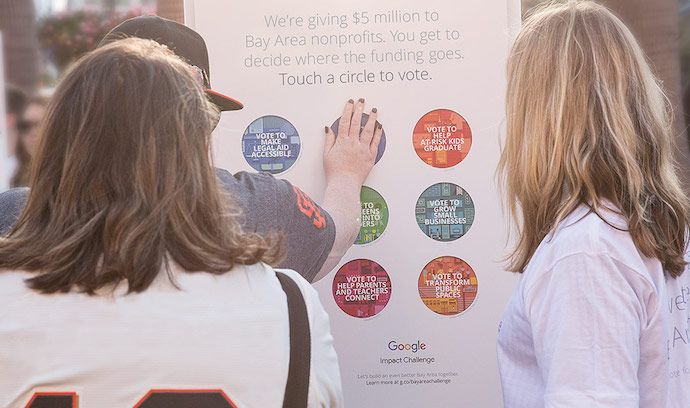
Source: Google
In the video below, the narrator notes that this experience reaches “people when they had the time to make a difference.” That’s a big thing about experiential marketing: It allows people to interact with a brand when they have the time. Maybe that’s why 72% percent of consumers say they positively view brands that provide great experiences.
And that concept works in this experience because it takes advantage of a “you’re-already-there” mentality. In San Francisco, finding people waiting for the bus or going to food trucks is pretty much a given. So while they were “already there,” Google set up a few opportunities:
- To learn about and vote for local nonprofits
- To interact with the brand in a way that doesn’t require using its products
- To indirectly learn about Google’s community outreach
With the help of the online voting integration — and a branded hashtag: #GoogleImpactChallenge — the campaign ended up generating 400,000 votes over the course of about three and a half weeks.
Takeaways for Marketers
- Create a branded hashtag that participants can use to share the experience on social media. Then, make sure you’ve integrated an online element that allows people to participate when they learn about it this way.
- Keep it local! It’s always nice when a large corporation gives some love to its community — in fact, 72% of folks say they would tell friends and family about a business’s efforts like these.
- Remember the “you’re already there” approach. Find out where your audience is already hanging out and engage them there, instead of trying to get them to take action where they don’t usually spend their time.
6. Misereor: Charity Donation Billboard
When was the last time you used cash to pay for something?
Tough to remember, right? We’re kind of a species of “mindless swipers” — globally, an estimated 357 billion non-cash transactions are made each year. And knowing how often we whip out our cards, German relief NGO Misereor decided to put our bad habit to good use with its charitable giving billboard.
It was what they called SocialSwipe. Set up in airports, these digital posters would display images of some problems that Misereor works to resolve — hunger was depicted with a loaf of bread, for example.
But the screen was equipped with a card reader, and when someone went to swipe a card — for a small fee of 2€ — the image moved to make it look like the card was cutting a slice of bread.
Even cooler? On the user’s bank statement, there would be a thank-you note from Misereor, with a link to turn their one-time 2€ donation into a monthly one.
Needless to say, this experience required a lot of coordination — with banks, airports, and a mobile payment platform. Because of that, the experience couldn’t just be a one-time occurrence. The people who interacted with it were later reminded of it during a pretty common occurrence: receiving a bank statement.
Takeaways for Marketers
- Visually represent the impact of participating in the experience. People interacting with this display were shown exactly where their money was going — like slicing bread for a hungry family. (Infographics work nicely here, too — check out our templates.)
- Partner with another brand to create an even better experience. In this instance, Misereor worked with Stripe.com for the payment technology, and with financial institutions to get a branded message on users’ bank statements. (And stay tuned — we’ll talk more about the value of co-branding here later.)
- Don’t be afraid to nurture your leads. Even if you don’t use something like a branded hashtag to integrate the experience with an online element, find a way to remind someone that they participated.
7. Guinness: Guinness Class
One of my favorite types of marketing is the “aspirational” kind — or as the Harvard Business Review defines it, marketing for brands that “fall into the upper-right quadrant.” Think: luxury cars, haute couture, and private jets. Things we aspire to own.
It’s that last one — private jets — that set apart the Guinness Class experience. For a few weeks, ambassadors dressed in Guinness-branded flight attendant uniforms entered bars across the U.K., where they surprised unsuspecting customers with a chance to win all kinds of prizes.
In order to participate, bar-goers had to order a pint of Guinness. After doing that, they would shake a prize-generating mobile tablet that displayed what they won. They could win everything from passport cases to keychains, but one player per night would get the ultimate prize: A free trip to Dublin — via private jet, of course — with four mates.
What we like about this experience was its ability to associate Guinness with something aspirational, like traveling by private jet. And according to Nick Britton, marketing manager for Guinness Western Europe, that held the brand up as one that doesn’t “settle for the ordinary.“
That’s important — and can be tricky — for a brand that’s nearly 257 years old: to maintain its authenticity, while also adapting to a changing landscape and audience. But Guinness didn’t have to change anything about its actual products in this case. Instead, it created an experience that addressed changing consumer preferences — for example, the fact that 78% of millennials would rather spend money on a memorable experience or event than buy desirable things.
Takeaways for Marketers
- Think about the things your target audience might aspire to, and that you’d like to associate with your brand. Then, build an experience around that.
- If you do require a product purchase in order to participate in the experience, make it convenient. In this case, people had to buy a pint of Guinness to win a prize, but they were already in a bar that served it.
8. GE: Healthymagination
Think experiential marketing is just for B2C brands? Think again — 67% of B2B marketers say that events make for one of the most effective strategies they use.
That’s why it made sense for GE to invite industry professionals to experience its Healthymagination initiative. The point of the campaign was to promote global healthcare solutions, especially in developing parts of the world.

Source: agencyEA
To help people see the impact of this initiative, GE worked with agencyEA to create “movie sets” that represented different healthcare environments where Healthymagination work took place: a rural African clinic, an urban clinic, and an emergency room. The idea was that doctors would share their stories — live, in front of 700 attendees — that illustrated how GE’s healthcare technology played a major role in each setting.
When people measure the success of experiential marketing, one thing they measure is how much of a dialogue it prompted. And that makes sense — 71% of participants share these experiences. In GE’s case, the point ofHealthymagination was to get people talking about a pretty important, but uncomfortable issue: Access to healthcare in impoverished parts of the world.
But when you create a way for people to become physically immersed in the issue, it also allows them to acknowledge a topic that isn’t always easy to talk about. And that can have quite an impact — this particular campaign, in fact, won a Business Marketing Association Tower Award.
But fear not: That concept also works for not-so-serious, but equally uncomfortable discussion topics. Just look at how well it worked for Charmin.
Takeaways for Marketers
- Experiential marketing does work for B2B brands. Think about who you’re selling to, and create an engagement that would not only attract that audience, but also present an opportunity for them to experience your product or service first-hand.
- Get uncomfortable. If your business centers around something that’s difficult or “taboo” to talk about, creating an experience around it can prompt a conversation. But make sure you keep it respectful — don’t make people so uncomfortable that they have nothing good to say about your brand.
9. Facebook: Facebook IQ Live
Facebook — who also owns Instagram — has always understood how much data it has on how people use these platforms. For that reason, it created the Facebook IQ Live experience.
For this experience, that data was used to curate live scenes that depicted the data. Among them was the IQ Mart: A “retail” setting that represented the online shopper’s conversion path when using social media for buying decisions. There was also a quintessential Instagram cafe, chock full of millennial-esque photo opportunities and people snapping them — latte art and all.
The campaign wasn’t just memorable. It also proved to be really helpful — 93% of attendees (and there were over 1500 of them) said that the experience provided them with valuable insights on how to use Facebook for business.
But what makes those insights so valuable? Momentum Worldwide, the agency behind Facebook IQ Live, puts it perfectly: “When we understand what matters to people … we can be what matters to them.” In other words, we can shape our messaging around the things that are important to our target audiences.
And by creating this experience, Facebook was able to accomplish that for its own brand. In creating this experience, it also created a positive brand perception for a few audiences — including, for example, the people who might have been unsure of how to use the platform for business.
Takeaways for Marketers
- Build an experience for people who aren’t sure about how they would use your product or service. Find ways for them to interact with your brand in a way that creatively spells out how it can benefit them.
- Bring your data to life. We love numbers, but creating a live installment that illustrates them can help people understand exactly what they mean. And since 65% of people think that live events help them understand a product, this setting is a great place to do it.
10. Zappos: “Google Cupcake Ambush”
To help promote its new photo app, Google took to the streets of Austin, Texas, with a cupcake truck in tow. But people didn’t pay for the cupcakes with dollars — instead, the only accepted currency was a photo taken with said app.
And really, what’s better than a free-ish cupcake? We’ll tell you what: A free-ish watch or pair of shoes.
That was the answer from Zappos, anyway. That’s why the brand playfully “ambushed” Google’s food truck experience with one of its own: A box-on-feet — strategically placed right next to Google’s setup, of course — that, when fed a cupcake, would dispense a container with one of the aforementioned goodies.
In order to reap the rewards of the Zappos box, people had to have a cupcake. So while only one brand came away from the experience with an epic sugar high, both got plenty of exposure. And since 74% of consumers say a branded experience makes them more likely to buy the products being promoted, Google and Zappos both stood to gain new customers from this crowd.
But what we really like about this example is how much it shows the value of experiential co-branding. Because Google and Zappos pursue two different lines of business, they weren’t sabotaging each other, but rather they were promoting each other (which is what happens when you pick the right co-marketer).
Takeaways for Marketers
- Use experiential marketing as a co-branding opportunity.
- Pick a partner with an audience that would be interested in your brand, but might otherwise be difficult to reach.
- Make sure your partner would benefit from your audience, too — you want the experience to be a win-win-win: for you, your co-brand, and the consumer.
- When you do pick a marketing partner, build an experience that requires an “exchange” of each brand’s product or service. That way, the audience is more likely to interact with both of you.
11. Docker: Docker Dash
Docker is a software platform that allows developers to make and run apps on different operating systems — a technology known as “containerization.” By some standards, it’s not the sexiest product you can buy. By an enterprise’s standards, it’s not even the easiest product to understand. Enter: Docker Dash.
In partnership with Jack Morton, Docker used its developer conference, DockerCon 2017, to nurture its core enterprise market with a unique product demo called Docker Dash. What made it so unique? It wasn’t a demo — it was a game. And conference guests weren’t guests — they were players.
Docker Dash was a live video game-style simulation of Docker’s application platform, and it recruited 5,000 of its enterprise attendees to create an app together by solving a series of fun challenges inside the game. Each challenge presented in Docker Dash allowed the “players” to engage a feature of Docker’s product and ultimately complete their app. It was a fun, collaborative way to show enterprise software developers why Docker is invested in the containerization market and the value these people can get from Docker’s product.
Docker Dash got the attention of more than 3.6 million people — those who watched and posted about the event from social media, in addition to those who attended DockerCon in person.
Takeaways for Marketers
- Conference hosts thrive on attendees who network with one another. By creating opportunities for your attendees to collaborate and play together, you allow them to share their ideas — making for more educated customers as a result.
- “Gamify” your brand. Give people the ability to play and compete for something, and you’ll instill in them a sense of accomplishment that makes them more passionate about your industry.
Clearly, taking some very calculated risks worked out pretty well for these companies. So when it comes to creating an experience with your brand, don’t be afraid to think outside of the box — and don’t be afraid to work together on it with someone else.
Invest some time into thinking about the ways people could interact with you, even if it seems a little nutty. If it’s aligned with what you do and executed thoughtfully, people will be talking — in the best way possible.


3 Science-Backed Ways Perceptual Set Theory Can Increase Your Conversions
What do you see in the below image?

A duck?
Look again … a rabbit?
You’ve probably encountered this image before. The duck or rabbit optical illusion is one of the oldest and most controversial optical illusions.
First used by American psychologist Joseph Jastrow in 1899 to prove that perception involves not just visual activity but also mental activity, the duck or rabbit drawing is one of the earliest, most popular examples of the perceptual set theory.
Besides the fact that different people tend to see the image differently, what makes the duck or rabbit illusion more interesting is that people tend to see different things at different times of the year: for example, during the Easter period (thanks to the “bunny” association) people are more likely to see a rabbit thank a duck while they are more likely to see a duck in October.
Which goes to show that what we see is about more than just what is actually there — but more about what is happening to — or around — us.
An even more interesting and related example is the 13 or B illusion. Take a look at the image below:

Is that a B or a 13?
While you could confidently wager on it being 13, or B, you’re most likely biased.
Here’s why — in two images:
Image 1:

Image 2:

As you can see from the above examples, what precedes the controversial “B or 13” influences what you see. You’re most likely going to see the figure if figures precede and you’re most likely to see the letter if letters precede.
That, in essence is perceptual set in action: Whether it’s looking at ducks or rabbits, the letter B or figure 13, or an image of the famous Loch Ness monster (which is arguably a tree trunk), psychologists have observed that people are likely to see different things while looking at the same object — and that what they see is influenced by several factors, including their culture, gender, background, and even information previously available to them.
In essence, this means you could show people the same statement or image and they’ll see it in a different way.
This is good news for you as a marketer.
With a clear understanding of the perceptual set theory, you can more intently position your marketing messages and offers in a way that people see exactly what you want them to see regardless of their background, positioning you for maximum ROI from your marketing efforts.
Here are some ideas:
1. Don’t stray from user expectations on your website.
When users visit your website, they have certain expectations when it comes to certain elements of the site. This includes your CTA, organization of form fields, and other elements of your website.
For example, most users expect CTAs to stand out and be easy to locate due to their general web experience. Also, most users expect the name field to come first before the email field and the password field in a signup form. These are norms across industries, and if you try to switch things up and use a different approach (such as by asking for the password first before asking for the name and email), you will be interrupting the flow and violating the perceptual set principle — and your conversions would suffer.
2. Leverage anchoring to influence user perception of your offer.
Bobby wanted to buy a pair of sneakers he really liked. He did research on the web and found that the kind of sneakers he wanted to buy costs $50. Shortly after, he saw another site listing the exact same pair of sneakers for $37. He quickly rushes to buy because he assumes he is getting a bargain. That’s anchoring in action.
In essence, anchoring refers to the reference point users use for comparison when considering an option. Usually, this is the first information available to them.
In Bobby’s case, he rushed to buy the sneakers because he felt he was getting a bargain since the sneakers “should cost” about $50, because that was the first piece of information available to him. He would compare any future information with the first range of price he was exposed to. If he saw the sneakers advertised elsewhere for $70 for example, he is highly likely to avoid buying because he feels it is expensive. If he sees it for less than $50, however, he feels he is getting a bargain.
Anchoring can be used in different ways, but you’ll be more effective at marketing if you work on controlling the “anchors” that influence the perception of your offer instead of leaving it to chance.
For a real life example, below is a screenshot from my review of the best website builders:

As you can see from the above screenshot (which is part of the introduction of the review), I mentioned the fact that a “good custom website could easily cost $2000 (on the low end).” This first piece of information (the price: $2,000) is my anchor.
Later in the article, I then go on to show that the website builders I feature cost a maximum of $16 monthly:
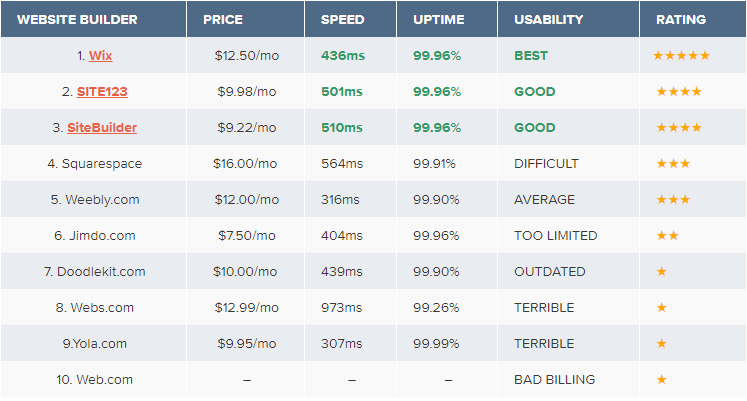
Using my anchor of “$2,000,” most users find the $16/mo price to be a bargain, resulting in a boost in conversions.
There are different ways you can use anchoring in your marketing. Some of the most common ones are:
Featuring a “discounted” price alongside a product’s “original” price: A good example of this kind of anchoring in action is this product page promoting the Asus VivoBook on Amazon:

As you can see, this product page indicated that the list price of the product is “$599” and that the user can get it on Amazon for $509.99. The list price is the anchor, and now users feel that they are getting a bargain.
Monthly vs. annual product price comparison: The screenshot below shows the OptinMonster pricing page, which uses the monthly price as an anchor to show people how much of a bargain they will be getting if they pay on an annual basis instead:
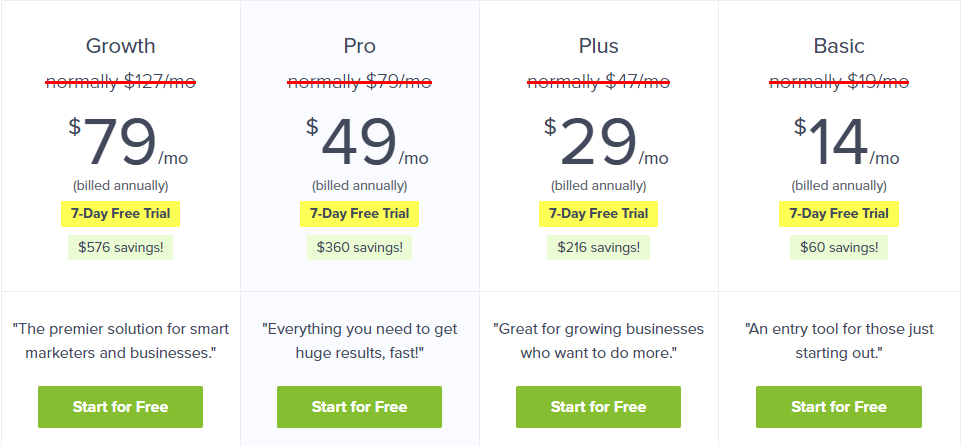
If your annual plans are cheaper and you’d like people to go with them instead of your monthly plans, you might want to consider using this kind of anchoring.
Be intentional about product order when trying to cross-sell to users: You want to pay even more attention to anchoring when cross-selling products to users – by ordering your products in such a way that the one that is more expensive comes first.
For example, if you want to sell a $2,000 smartphone and a $50 earpiece as an accessory for the smartphone, you will achieve more impact if the cheaper earpiece is introduced immediately after the user buys the $2,000 smartphone — not before, and not too long after. This is because the $2,000 price of the smartphone serves as an anchor that makes the $50 earpiece look like a bargain.
3. Prime users to act according to your expectations.
Priming is “when exposure to something influences the behavior of an individual later on, without that individual being aware that the first thing is guiding their behavior to a certain extent.”
For example, if you were recently exposed to a mug and were asked to complete the word “TE_,” you are likely to complete it with “TEA” instead of “TEN,” without necessarily knowing that your exposure to the mug influenced your response. Researchers have also found that being exposed to warm or cold substance can determine whether people respond warmly or coldly to situations shortly after the exposure.
In most cases, we are being primed without knowing it. Take a look at the following screenshot from the Starbucks app for example:
If you pay attention to the “Reload amount” in particular, you’ll notice that there is “$25,” “$50,” and then “$75.” While most users would probably not be aware of this fact, these higher amounts are likely to influence them to reload a higher amount if they were planning to reload a smaller amount like say $1, or $2. However, it could also prime them to reload a lower amount if they were planning to reload an amount higher than $75.
A 1974 experiment by Amos Tversky and Daniel Kahneman shows just how much we can be primed by factors we are not even aware of. In the experiment, Tversky and Kahneman surveyed participants and asked for an estimate of the percentage of African nations in the United Nations. However, participants were first asked to spin a wheel that has numbers from 0 to 100, not knowing that the wheel has been rigged to always display only 10 or 65. Tversky and Kahneman found that participants that were shown the number 10 estimated that 25 percent of African nations were UN members while participants that were shown the number 65 estimated that 45 percent of African nations were part of the UN — such a massive difference!
In your marketing, even when there doesn’t seem to be much justification for it, when the opportunity allows, throwing up huge numbers automatically primes users to pay more compared to throwing up small numbers.

Unriddled: Twitter Takes Washington, Facebook’s Follow-Up Changes, and More Tech News You Need
“Unriddled” is HubSpot’s mid-week digest of the tech headlines you need to know. Each week, we highlight the top stories in a quick, scannable way and break it all down. It’s tech news: explained.
Unriddled: The Tech News You Need
1. Twitter (and Facebook) Takes Washington
Twitter CEO Jack Dorsey made not one, but two appearances before U.S. lawmakers last week to testify on foreign interference on social media, as well as the company’s algorithms and content moderation policies.
Dorsey was joined by Facebook COO Sheryl Sandberg for the former — held before the Senate Select Committee on Intelligence (SSCI) — where it was revealed that between October 2017 and March 2018, Facebook deleted 1.3 billion fake accounts — an eyebrow-raising figure given the company’s current metric of “2.23 billion monthly active users on Facebook as of June 30, 2018.”
“How can 1.3 billion accounts account for only 3 percent to 4 percent of 2.2 billion users?” asks Siva Vaidhyanathan in a New York Times op-ed, noting the statistics from Facebook’s own transparency report. “The answer is that such pages are going up faster than Facebook can swat them down.”
Twitter also plans to release a revamped version of its own transparency report, Dorsey said during his latter hearing before the House Energy and Commerce committee — one that will disclose data on harassment reports and violations taking place on the platform.
The new report “will make that data more public,” Dorsey said, “so that all can learn from it and we can be held accountable.”
Thank you Chairman Walden, Ranking Member Pallone, and the committee, for the opportunity to speak on behalf of Twitter to the American people. I look forward to our conversation about our commitment to impartiality, transparency, and accountability.
— jack (@jack)
September 5, 2018
Since the hearings, both platforms have announced new initiatives to combat many of the issues about which Dorsey and Sandberg were questioned by lawmakers. After weeks of various excuses for not doing so, Twitter banned the notorious conspiracy theorist Alex Jones from its platform (following in the footsteps of peers Apple and YouTube), and Facebook announced more transparency tools to allow brands to see where their video ads might appear.
Google, meanwhile, was notably absent from the morning’s hearing, despite the SSCI’s wishes for CEO Sundar Pichai to testify, as well as an invitation extended to parent company Alphabet Inc.’s CEO Larry Page. The day prior to the hearing, a new report from the Campaign for Accountability revealed the ease with which Google’s safeguards against spreading misinformation can be manipulated and compromised.
Tony Romm and Craig Timberg of The Washington Post covered the day’s events in more detail. Read full story >>
2. Also From Facebook: New AI for Content Review
One of Facebook’s seemingly endless sources of grief (not to mention, controversy) is content moderation: finding the right and sufficient human resources, battling implicit biases, and varying shades of what does (not) violate its community standards.
Now, Facebook has unveiled Rosetta: a new AI technology that can extract text from images and video frames (in up to 24 different languages). It then feeds the text into a recognition model, which helps process and understand the combined context of both the text and image.
Why is this important?
First, let’s account for volume. Rosetta is equipped to process over one billion images and video frames on both Facebook and Instagram on a daily, realtime basis — likely far more than even the most efficient human content moderation can do in the same time period.
“Taking into account the sheer volume of photos shared each day on Facebook and Instagram,” the company explains in a blog post, “the problem of understanding text in images is quite different from those solved by traditional optical character recognition (OCR) systems, which recognize the characters but don’t understand the context of the associated image.”
Source: Facebook
The second point is the nature of the visual content historically used by foreign actors in coordinated misinformation and election interference campaigns. Much of it is comprised of memes: images with overlaid text. That could explain the emphasis on this combined context, which Rosetta could potentially detect more proactively than human review. Read full statement >>
3. 5G: Coming Soon (Maybe) to a Home Near You
5G — the latest generation of wireless technology — has been a hot topic among the mobile tech circle for at least a year. February’s Mobile World Congress, for instance, was something of a showdown among numerous wireless carriers to claim the title of the “best” 5G provider.
Now, 5G could be coming to a neighborhood near you. Starting today, customers within communications company Verizon’s four 5G launch markets — Houston, Indianapolis, Los Angeles and Sacramento — will be able to enroll in its 5G internet service, which is scheduled to launch October 1.
Customers can check FirstOn5G.com to see if their neighborhoods are covered.
Verizon’s 5G internet service shouldn’t be confused, however, with 5G mobile service — the goal of which is to support the rising number of mobile internet users. However, it should still (in theory) provide better speed and handle more data than previous generations of internet service.
“Verizon 5G Home customers should expect typical network speeds around 300 Mbps,” the company wrote in a statement, “and, depending on location, peak speeds of nearly 1 Gig, with no data caps,” making it “ideal for consumers looking to ‘cut the cord’ or upgrade from their current cable service.”
Ina Fried of Axios has more. Read full story >>
4. Twitter Makeover
Twitter is reportedly testing a a new look for its desktop site — which, if fully executed, would include the ability to bookmark tweets (a feature currently only available on its mobile app), as well as new options for embedding content elsewhere.
Love to use Bookmarks and want it on web? Into scrolling through Explore to see what’s happening?
We are testing out a new Twitter for web, which a small number of people will see today. Love it? Missing something? Reply and tell us. Don’t have the new experience? Stay tuned. pic.twitter.com/w4TiRrVFHU
— Twitter (@Twitter)
September 6, 2018
The company announced that it’s testing the redesign via — what else? — a tweet, which confirmed only a “small number of people” would be privy to the new look and features. Insider got a look at some of the changes. Read full story >>
5. Yesterday, Apple Told Us: It’s About More Than a New iPhone
It’s been over 11 years since the first iPhone was released. At yesterday’s Apple event — where a suite of new products and features were announced — we saw how that history has manifested. Read full story >>

8 of the Best Bitcoin Mining Software for 2018
You’ve got your Bitcoin wallet, address, and mining hardware. Now, all you have to do is get a free Bitcoin mining software that can help you effectively manage and oversee your hardware’s crypto dig.
Like any popular, free product, though, there’s a lot of options to choose from. Without testing them all out, how do you separate the Doctor Peppers of mining software from the Doctor Thunders?
Fortunately for you, we scoured the web to find some of the absolute best mining software options for 2018. We’ll cover their best benefits, features, and their compatible operating systems and mining hardware below. Read on to find your ideal Bitcoin mining software.
8 of the Best Bitcoin Mining Software for 2018
1. CGMiner
The crypto community generally considers CGMiner to be the best Bitcoin mining software on the market due to its great versatility. CGMiner is open source and written in C, runs on Mac, Windows, and Linux, and is compatible with three types of mining hardware: GPU, FPGA, and ASIC.
The mining software also has a ton of other benefits, like advanced detection of new blocks, remote interface capabilities, and an ability to scale to a hash rate of any size with zero delay.
2. BFGMiner
Just like CGMiner, BFGMiner is written in C, so it can run on most operating systems like Mac, Windows, and Linux. The modular software miner is also compatible with mining hardware like FPGA and ASIC.
Some of BFGMiner’s best benefits are its ability to simultaneously hash on popular mining algorithms, like Scrypt and SHA256d, and mine multiple cryptocurrencies at the same time. Its other useful features include integrated overclocking, full monitoring, and fan speed control.
3. EasyMiner
EasyMiner is a GUI-based, open-source frontend software upgrade for mining software like CGMiner and BFGMiner. The upgrade gives you a clean user interface and can integrate with your cryptocurrency wallet. It also allows you to mine various cryptocurrencies like Bitcoin, Litecoin, and others, but only with the Windows operating system and ASIC mining hardware.
When you start mining cryptocurrency with EasyMiner, you can either choose the “Moneymaker” mode, which sets you up with stratum pool to mine Litecoin, or the “Solo” mode, which lets you pick your own type of pool, the cryptocurrency you want to mine, and the custom hash algorithm associated with your chosen cryptocurrency.
4. BitMinter
Similar to EasyMiner, BitMinter is a GUI-based, open source mining software. But its versatility is what sets it apart from EasyMiner — you can run it on Windows, Mac, and Linux and it’s also compatible with mining hardware like GPU, FPGA, and ASIC.
To mine Bitcoin with BitMinter, you actually need to join its Bitcoin mining pool, which has had over 450,000 users register for an account since 2011. BitMinter requires you to join the mining pool before you can use the software because they want to make it easier for their users to mine Bitcoin and win higher payouts.
5. BTCMiner
BTCMiner is a cloud-based mining software with over 142,315 users. Anyone with a Bitcoin wallet and address, FPGA mining hardware, and an internet connection can mine cryptocurrency on the software.
One of BTCMiner’s coolest features is that its dynamic frequency scaling is based on error measurement, so the mining software automatically selects the frequency with the highest hash rate.
BTCMiner also boasts other great features like power save mode, overheating protection, and ready-to-use Bitstream, which lets you run the mining software without Xilinx software or a license.
6. DiabloMiner
DiabloMiner uses the OpenCL framework to swiftly conduct hashing computations and support unlimited amounts of mining pools for its users.
The mining software is compatible with GPU mining hardware and runs on Mac, but if you have any of the current Nvidia drivers or an ATI Stream SDK 2.1, it’ll run on any operating system. You also have the option of either doing solo or pool mining.
7. MultiMiner
Considered the easiest-to-use mining software with its intuitive graphical UI, MultiMiner is also one of the most versatile. You can run it on Windows, Mac, and Linux, seamlessly switch from one type of mining hardware to another with it, and use it to mine different types of cryptocurrency.
One of MultiMiner’s most advanced benefits is its ability to automatically scan and detect your mining hardware’s details, like its average hashing power and the pool that it’s linked to.
The mining software can also give you the option to automatically mine the most profitable or lowest difficulty cryptocurrency at any given time and even displays your projected profits.
8. Awesome Miner
Awesome Miner is a robust mining software that can simultaneously handle multiple types of mining hardware, supports more than 25 mining engines, is compatible with every popular mining algorithm, and lets you manage multiple miners’ pools at the same time.
The mining software also features a dashboard that displays each of your hardware’s temperature and status, which lets you monitor its progress and health. Awesome Miner runs on Windows, but you can access the web version of it on any type of computer and operating system.
