
How to Turn Off Instagram’s New “Last Online” Feature
Instagram scrollers beware: your favorite photo-sharing app recently released a new feature that shows friends when you were last online. Similar to the activity status found on Facebook Messenger and WhatsApp, Instagram’s new setting is now turned on by default in your account.
Only people you follow or have recently DM’d will be able to see when you were last active. So if someone follows you, and you don’t follow them back, they won’t be able to view your activity status. You can see exactly when your friends were last online by navigating to your direct messages:
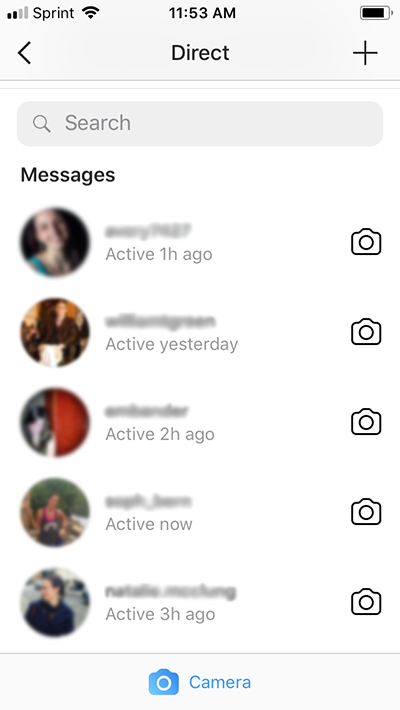
If you want to keep your late-night puppy picture scroll fests completely private, don’t fret. You can turn off Instagram’s “last online” feature with the following quick steps.
Keep in mind that once you turn the feature off, you won’t be able to view anyone else’s “last online” status.
How to Turn Off “Last Online” on Instagram
- Open up Instagram on your phone.
- Navigate to your profile by tapping your profile picture on the far right of the bottom navigation bar.
- If you’re on iOS, navigate to settings by tapping the gear icon next to the Edit Profile button on your profile. On Android, tap the three dot icon in the upper right corner of your profile.
- Scroll down until you see the option for “Show Activity Status” and toggle it off.
Here’s the setting you’re looking for:
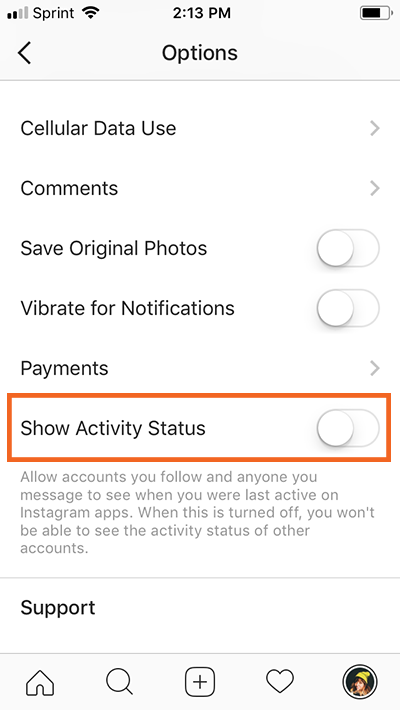
Once that setting is toggled off, you’re free to resume scrolling undetected.

YouTube vs. Vimeo: Which Video Platform is Best for Your Business?
By 2019, video content is predicted to command a hefty 80% of all web traffic. If you haven’t started thinking about how video fits into your long-term marketing strategy, now’s the time to start taking it seriously.
Before you dive into creating videos, it’s important to figure out where you’re going to host them. YouTube is obviously the largest video hosting platform on the web, but it might not be the best choice for every business. To help you find the best fit for your company’s unique needs, we compared YouTube directly against smaller, more niche platform Vimeo across a number of factors. Read on to see the results, and decide for yourself.
YouTube vs Vimeo
YouTube will be the better choice for most businesses. It’s free, generally performs better than Vimeo in search, offers solid analytics for businesses looking to track ROI, and commands a massive number of users. If you have specific branding requirements or need advanced support, Vimeo could be a better choice.
Number of Users
Winner: YouTube
There’s no real competition here. YouTube commands an audience of over one billion users — about one-third of the entire internet-using population. Vimeo’s 240 million monthly viewers and 35 million registered users seem insignificant in contrast. For maximum reach, choose YouTube.
Search Optimization
Winner: YouTube
YouTube leaves Vimeo in the dust here. YouTube is the second largest search engine on the internet, right after parent company Google. If you’re planning to create a video tailored to a specific search query, (e.g., how to pick a font for your website), your video belongs on YouTube. Not only will it appear in search results directly on YouTube, but Google also seems to favor videos from YouTube over those posted on other platforms.
Mobile
Winner: YouTube
More than half of all YouTube views come from mobile, and the YouTube mobile app is absolutely dominating the mobile streaming space — outranking even formidable competitors like Netflix, Hulu, and Twitch.
Videos uploaded to Vimeo and YouTube are both optimized automatically for mobile, but YouTube offers more opportunity for mobile discovery and reach.
Cost
Winner: YouTube
YouTube is free — even for businesses. Vimeo operates on a tiered pricing model, ranging from a free basic plan to a $50/month package aimed at businesses.
Support
Winner: Vimeo
With their paid packages, Vimeo offers several levels of technical support that could be a game changer for businesses without much video expertise. YouTube offers plenty of free help documentation and access to a (rather crowded) support community, but if you’re seeking higher-touch, personalized support on demand, a paid Vimeo account is the better option.
Storage
Winner: YouTube
YouTube offers unlimited, free storage for all accounts, while Vimeo charges for storage on a tiered basis. The basic, free Vimeo account option gives you 500MB of storage per week. With their highest level, $50/month package, you can store 5TB total with no weekly limits.
No Pre-Roll Ads
Winner: Vimeo
If you upload your videos to YouTube, there’s a good chance a pre-roll ad will play before it, which has the potential to deter some viewers from sticking around. Vimeo currently doesn’t allow ads, and it doesn’t look like they’ll be changing this policy anytime soon.
Running Ad Campaigns
Winner: YouTube
If you’re thinking of running your own ads on a video platform, you can’t beat YouTube (You also can’t purchase ad space on Vimeo, even if you wanted to, because they don’t allow it.)
YouTube offers an advanced, user-friendly ads platform, as well as personalized support from a “YouTube Advertising Expert” when you spend $10 a day on ads.
Community
Winner: Vimeo
User numbers don’t tell the entire story. With such a massive audience on YouTube, the environment is naturally more competitive. It’s easier for your video to get drowned out by thousands of others if you aren’t planning to feature it somewhere off YouTube. Vimeo’s smaller, more community-driven platform might be a better option if you’re hoping to tap into an existing creative niche, or get featured on their hand-curated staff picks page.
Advanced Privacy Options
Winner: Vimeo
Both YouTube and Vimeo give you the option to set videos to private or public (the default setting on YouTube is public), but Vimeo offers a handful of more nuanced, specific privacy options if that serves your interests. You can add a password protection option to videos, share a video only with people who follow your account, or even hide it from the Vimeo.com community — which could be useful if you plan on embedding the video on your website and want it to be viewable in only one place.
Customizable Player
Winner: Vimeo
Vimeo’s sleek embedded player offers a number of useful customization options that YouTube can’t match, including hex color customization and the ability to include a custom player logo (on Business and PRO accounts). Plus, when you change the default customization options on your account, all previously embedded videos will update to reflect the changes automatically, with no need to go back and tinker with any code.
Analytics
Winner: YouTube
YouTube takes the win here because all their analytics — ranging from basic statistics like views to more advanced options — are completely free. Vimeo does also offer powerful analytics tools to evaluate performance, but you’ll have to pay to access everything but basic stats.
So which one should you choose?
It depends largely on what exactly you want to accomplish with your videos. If you’re looking for a creative community where you can connect with other video creators and gain some exposure in a specific niche, Vimeo is a better place to start sharing your content. If you have business goals that revolve heavily around search optimization and ads, YouTube is your best bet.

9 New LinkedIn Features You May Have Missed Last Year
When you logged into LinkedIn around this time last year, you may have noticed something different. Actually, everything was different, because LinkedIn completely redesigned its desktop site.
And with new features like native video and smart replies, this update continues to be important heading into 2018.

LinkedIn is the world’s largest professional networking platform, with 530 million members worldwide. The company rarely discloses their number of active monthly users, but we do know the network has grown by more than 60 million total members since the third quarter of 2016. Is this a testament to the redesign? Perhaps, but there’s a lot to unpack from this overhaul.
For example, the LinkedIn desktop homepage used to look something like this:
 Source: LinkedIn
And this is what my LinkedIn homepage looked like when I wrote this article:

There’s more to this slick interface than what you see here. LinkedIn sought to “create more value” for its members since being acquired by Microsoft in 2016, and, hopefully, make them want to spend more time on the site. Let’s dive into some of the biggest changes to the site since the redesign and how marketers and users should be taking advantage of them this year.
9 Changes to LinkedIn You May Have Missed
1. A new homepage
Using a combination of human editors and new algorithms, LinkedIn has surfaced more content and fewer status updates. The homepage feed will increasingly suggest organic, sponsored, and native advertising content users might be interested in reading.
In keeping with this business focus, one clear addition to this layout is the “Work” button to the right of your profile picture on the new navigation bar. This is the control center for a user’s company page management, making it easier to advertise, find and attract talent, and conveniently equip employees with learning solutions right from LinkedIn.
These are deliberate moves to better connect professionals with the businesses they support and care about.
2. Trending topics
The feed will now also help users follow trending stories … sound familiar? If LinkedIn is trying to make its user base engage more on the platform, further modeling a newsfeed in the style of Facebook is a safe bet.
To the top-right of your newsfeed, you’ll now see the following news widget:

This function was reportedly seeded with popular topics picked by more than 20 editors, most of them former business journalists, and now integrates with LinkedIn’s algorithm to show trends that are more specific to a user’s connections and engagement behavior.
3. Calendar chatbot
Next, LinkedIn is introducing a chatbot. It will look at two connections’ calendars and find and set times for them to meet directly within LinkedIn’s messenger platform. It hasn’t been rolled out as of the time of this posting, but in another nod to Facebook Messenger and similar bots, this is an addition designed to keep users spending time on the site. Stay tuned for more news when the bot launches fully.
4. Smart replies
Although a working chatbot hasn’t yet gone live on LinkedIn, AI is already making its way into the user experience — with smart replies.

Inside LinkedIn Messaging, you’ll see three suggested responses below an open conversation, based on the messages that were most recently sent. Although it may not appear in every chat window, LinkedIn says it will further customize these smart replies based on the person to whom you’re writing. For example, “Thanks, John!” as opposed to simply, “Thanks!”
As LinkedIn users spend more time connecting with businesses and colleagues, especially via mobile, we can expect AI and machine learning to become a much more relevant to LinkedIn in the near future.
5. More analytics
LinkedIn now provides more analytics about how other users interact with the content you share — not just who views your profile or who likes one of your posts. Now, users can see not only who likes their content, but which companies they come from, where they’re located, what roles they’re in, and even where they found your content.
Here are analytics from an article I posted recently on LinkedIn:


The platform also suggests other articles I might share with my network for even more engagement.
6. Native videos
There was a time when you could only embed video content on your LinkedIn page from YouTube or a similar third party. But times have changed.
In one of the most decisive attempts at keeping people on LinkedIn’s website, you can now upload native videos directly to the LinkedIn mobile app from your smartphone. It’s a smart move that could set the company up for features you already see on social networks like Facebook (think Facebook Live).
Native video also makes it easier for LinkedIn company pages to appear more authentic as they tell their story, helping individuals connect with and follow brands they know they can trust.
7. New (and missing) search features
LinkedIn refined its search capabilities so users can search all of LinkedIn with a single, unified search experience based on certain keywords. Now, users can easily toggle between different categories related to search terms without having to move between different categories of the site.
Check out what the results look like when I search for “content marketing”:

Whereas previously, LinkedIn users had to go into each of these sections (“People,” “Jobs,” “Companies”) in order to conduct searches, now users can search from one place to get all of the results they’re looking for.
Notably, LinkedIn removed some of the Advanced Search filters that were previously available on LinkedIn Premium and are now only available for the more expensive Sales Navigator tier of LinkedIn Premium. These filters include “years of experience,” “function,” and “seniority level.”
8. Chat-like messaging
LinkedIn recently rolled out messaging, which allows users to send InMail like a chat instead of an email. Users won’t have to navigate to another pane to send a private message — instead, they can send a direct chat without leaving the LinkedIn homepage feed, as shown in the image below:
 Image via: TechCrunch
In another nod to Facebook’s Messenger layout, this change helps users easily spend more time clicking around the site. The difference is that this chat feature has also begun to include sponsored messages. This makes business professionals less likely to send the dreaded default InMail message if they know their outreach can appear like a chat instead of an email.
9. New blogging interface
LinkedIn also now features a slick new publishing platform. Before, publishers had to navigate to LinkedIn Pulse to write an original blog post. Now, users are one click away from a slick, easy-to-use blog publishing platform.
Check it out:

Blogging on LinkedIn could garner more attention to your brand’s site if LinkedIn grows in popularity. In fact, content consumption on LinkedIn has increased over the last few years, so marketers should consider LinkedIn as a platform for reproducing or creating original content.
What’s Next For LinkedIn?
Amidst these changes, marketers should keep an eye on where their audience is spending time. If LinkedIn’s number of monthly active users increases in its next quarterly report, it might be worthwhile to invest more resources in running campaigns and creating content for the site.
We’ll keep you posted on more changes to the platform and its usage as that news unfolds. In the meantime, click around the new website and experiment with the new analytics capabilities to see if your audience wants to spend time on LinkedIn with you. And if you need guidance for running a strong LinkedIn ad campaign, download our guide here.
Do you publish original content on LinkedIn? Share with us in the comments below.

The State of Video Marketing in 2018 [New Data]
It’s the start of a new year, and there couldn’t be a better time to look ahead at what the next 12 months might hold for video marketers.
Here at Wyzowl, we’ve just published the results of our fourth annual State of Video Marketing Survey, and the numbers suggest this is set to be another big year for video — among both marketers and consumers.
These statistics were gathered by surveying 570 unique respondents in December 2017. The respondents consisted of both marketing professionals and online consumers. Respondents were categorized as marketers or consumers according to their answer to a preliminary question, to ensure they were only prompted to answer relevant questions.
Let’s take a look at some of the big takeaways …
The State of Video Marketing in 2018
1. Video usage is on the rise.
- 81% of businesses use video as a marketing tool — up from 63%, the number reported in our 2017 survey.
- 99% of those who already do use video, say they’ll continue to do so in 2018.
- 65% of those who don’t currently use video, say they plan to start in 2018.
2. We watch a lot of video.
From the video content we watch at work, to online streaming services and beyond, video is a central part of how we live. We asked respondents specifically how much video content they’d watch in a typical day, and the average response was 1.5 hours. 15%, meanwhile, told us they watch more than 3 hours of video on a typical day.
3. Marketers rely on video to help them do their jobs.
Video is often cited as a tool that helps drive various areas of business performance, and the numbers back up those claims:
- 97% of marketers say video has helped increase user understanding of their product or service.
- 76% say it helped them increase sales.
- 47% say it helped them reduce support queries.
- 76% say it helped them increase traffic.
- 80% of marketers say video has increased dwell time on their website.
- 95% of people have watched an explainer video to learn more about a product or service.
- 81% of people have been convinced to buy a product or service by watching a brand’s video.
- 69% of people have been convinced to buy a piece of software or application by watching a video.
- 85% of people say they’d like to see more video from brands in 2018.
4. Consumers love video.
It’s probably unsurprising, but video seems to add tremendous value to our experience as customers, too …
Where both video and text are available on the same page, 72% of people would rather use video to learn about a product or service.
5. We love to share.
There’s a popular misconception that people will generally only share frivolous, entertainment videos (cats and epic fails!) Our findings suggest that, if you create video content that your specific audience enjoys, 83% of consumers would consider sharing it with their friends. Being a brand is not necessarily a disadvantage — content is king!
6. LinkedIn is poised to fly in 2018. Snapchat? Not so much.
We asked our respondents about all sorts of different platforms and techniques — YouTube, Facebook, interactive video and more. The most eye-catching metrics, surprisingly, came from LinkedIn, suggesting that a video revolution could be set to take place on the ‘professional’ social network in the coming year.
While currently only 38% of marketers share video content on LinkedIn, three-quarters of them reported it to be a successful tactic — and comfortably over half (55%) said they would continue, or start, in 2018.
Throughout the past few years, Snapchat has been one of a number of social channels branded ‘the next big platform’ for marketers. Our data paints a different picture. Clearly, Snapchat is a must-have for millions of consumers, but as a marketing tool, it’s floundering badly.
Only 11% of our respondents have used Snapchat as a video marketing platform, and only 27% of those reported finding it effective (comfortably the lowest rating of any other platform or technique.) More damningly, it’s usage is set to fall in the next 12 months, with a paltry 9% intending to use Snapchat for video marketing during 2018.
Are you prepared for video in 2018?
Those are just a few of the call-out stats, and we’d encourage you to check out the full report here for a nuanced study of how the landscape of video marketing might look in 2018. What are your thoughts on the data above — and are there any trends, tactics or techniques that you think will soar in the year ahead?

5 Social Media Trends to Expect in 2018
It’s the start of another year, which means you’re probably back in the office after vacation, hard at work on your New Year’s resolutions.
And if you’re a marketer, you may also be fine-tuning your strategic plan for success in 2018.
But before you finalize your social media strategy for the year, it’s important to look at what’s ahead to ensure that you’re allocating your time and efforts appropriately.
In this blog post, we’ll dive into what we think social media managers should expect in 2018, and how to plan for these changes.
5 Trends That Will Change Social Media in 2018
- Live video content will only continue to grow.
- Messaging apps will become a critical communication method.
- Virtual reality will find its way into more and more marketing experiences.
- More channels will make it difficult to monetize (and therefore, weaponize) content.
- Voice search and AI will change the way users discover brands and content.
1. Live video content will only continue to grow.
Earlier this month, Facebook announced changes to its News Feed algorithm that will once again shift the type of content users to be from their friends and family — instead of the Pages they follow.
In other words, posts that spark the greatest amount of discussion among users — especially when shared by those in their own personal networks — are expected to rank better.
And the one type of content that Facebook highlighted as seeing the most engagement? Live video.
According to Facebook, live videos receive 6X the engagement as non-live ones, which bodes well for their sharability and potential for such engagement as comments and Likes.
On top of that — perhaps to help boost this engagement — Facebook’s VP of Product, Fidji Simo, announced last week that the channel would be introducing a Watch Party feature, in which a group of Facebook users can all watch the same video at the same time. However, it’s worth noting that Watch Parties can take place even if the video isn’t streaming live.
“With everyone watching, commenting and reacting to the same moments together,” Simo’s statement reads, “it creates a shared viewing experience for video that helps build the kind of community and engagement we’ve seen with Live.”
So, does this indicate a decline in live video? Not quite. The only real shift that we expect to see is a potential rise in engagement with live videos after they’ve already ended — that is, a group of users who missed the broadcast who all missed it can watch it together later on.
Usership data aligns with these moves by Facebook. According to Social Media Examiner, 61% of marketers plan to increase their uses of live video, and 69% are eager to learn more about it. And in 2017, the number of marketers incorporating live video into their strategies increased by 14%.
So where should you be planning to focus your live streaming efforts in 2018? Well, if Facebook is an important part of your overall social media strategy and you’re looking for ways to adapt to the latest algorithm changes, live video is a great place to start (if you haven’t already).
Otherwise, you’ll want to consider where your audience already spends time on social media — and try to connect with them on those networks.
As for what to broadcast, there are a lot of brands out there that are nailing this strategy across several use cases. For example, many brands are using Facebook, Instagram, and Twitter to live stream events. This approach aims to keep your followers engaged with your brand by bringing an event they otherwise might not be able to attend directly to their screens.
At INBOUND 2017, for example, HubSpot shared Facebook Live interviews with speakers so our followers who couldn’t join us in Boston still had the opportunity to learn from the experts:
Brands can also use live video for customer service by hosting Q&A sessions and product demonstrations. These videos drive engagement because hosts can ask for comments, questions, and feedback from the audience.
2. Messaging apps will become a critical communication method.
If you’re only thinking about messaging apps such as Facebook Messenger, WhatsApp, and WeChat as alternatives to traditional text messaging, think again — messaging apps are used by 4 billion users worldwide, and there’s a tremendous opportunity for brands to leverage this presence.
More specifically, many brands are using messaging apps to communicate one-on-one with customers, which is completely changing the way customer service gets done. These apps provide a faster and easier way for customers to get the assistance they need, rather than being placed on hold or waiting for a returned email. Deploying messaging for customer service is more scalable and cost-effective for businesses, and by providing a better experience for the customer, brands can solve their problems quickly and retain them more easily.
When HubSpot CMO Kipp Bodnar wrote about how buyers want to talk to your business in 2018, messaging was one of the three major channels he cited. It’s less about “starting the conversation,” he wrote, “but more about automating it in a way that’s managed on the back end, to determine which human might be needed to respond to a particular question.”
For example, Hyatt uses Facebook Messenger for 24-hour customer service, where guests can make reservations, ask questions, and get recommendations for their trips:

Source: Digiday
So far, this theory is well-supported by the stats: nearly a quarter of all apps that are downloaded are abandoned after just one use — but that number is 11% lower for those with in-app messaging features.

Source: Localytics
In 2018 and beyond, marketers should anticipate less social networking — especially when considering Facebook’s recent changes — and more messaging for instant, real-time connection with audiences.
3. Virtual reality will find its way into more and more marketing experiences.
Virtual reality is still somewhat new to the marketing scene, and in 2018, we predict the market will get even more popular.
According to the Consumer Technology Association’s 2018 Tech Trends to Watch, virtual reality is expected to see an 18% increase in revenue, and a 25% increase in units sold.
What’s unique about virtual reality is that it encourages engagement by offering an immersive, memorable experience unlike any other medium — and brands are quickly recognizing that value.
For example, TOMS uses virtual reality to shed light on the mission and impact customers are having. Its mission, “One for One,” refers to its pledge to match with each pair of shoes purchased a new pair for a child in need around the world. While visiting children who received new shoes during a trip to Peru, TOMS shot the following 360-degree virtual reality video to create a firsthand account of the impact this initiative is making:
What’s so great about this video is how transportative it is. Most customers might not be planning a trip to Peru, but all of them can see the direct impact of their purchase. The experience is improved when they use a VR headset or viewer, but the video is still viewable on mobile or desktop devices, so the brand can effectively share its story.
If you’re already allocating resources to developing more live video this year, continue experimenting with different formats — including virtual reality — to see which audiences respond best to.
4. More channels will make it difficult to monetize (and therefore, weaponize) content.
When Facebook announced the aforementioned changes to its News Feed, we predicted that it was largely the scrutiny it’s received since it was discovered that the network was weaponized to influence the 2016 U.S. presidential election. And with Pages expected to receive less engagement, that also means it will become more difficult for brands to monetize any Facebook content — especially since it could require a greater spend on Ads to help that content reach the right audience.
But Facebook wasn’t alone in this scrutiny. Just last week, it joined Twitter and Google in appearing before U.S. Congress to explain how these networks will combat the extremist content that is said to have influenced the election and more.
Google, who partook in that testimony, owns YouTube — which the day prior to this appearance announced significant changes to its Partner Program (YPP) that would make it more difficult for Creators to monetize videos.
Instead of only requiring 10,000 lifetime views, Creators must have accrued 4,000 hours of watch time over the past year, in addition to 1,000 channel subscribers in order to participate in YPP. YouTube has also faced a high amount of scrutiny over the past year, most recently after one of its highest-earning creators, Logan Paul, posted graphic and offensive content to his channel.
In other words, as social channels are under more and more pressure to make their networks safer to use — that seems to be translating to it becoming more difficult for brands to gain visibility on them.
We don’t anticipate this scrutiny diminishing anytime soon, which means that this trend is something marketers should keep in mind for 2018. But in the face of these higher barriers, the best way to be discovered on social media continues to be by creating high-quality, personalized content that’s relevant to the audience you’re trying to reach.
That philosophy has always been core to the inbound methodology that we first introduced to marketers to help them become discovered by way of creating valuable content that their audiences might be searching for. And it still remains relevent, but has become applicable to a greater number of channels.
5. Voice search and AI will change the way users discover brands and content.
Voice-controlled personal assistants are being built into everything, from smart speakers, to TVs, to mobile devices.
And as the development of autonomous vehicle technology continues to progress, it’s almost certain that voice activation will be built into self-driving cars, too — after all, many vehicles already come with voice-powered capabilities that allow drivers to make phone calls, for example, without removing their hands from the wheel.
All the while, these voice-powered devices that respond and fulfill our verbal commands are learning more about us. They’re learning to differentiate our preferences and tones in households with multiple people, and they’re beginning to proactively know what information we might request.
Consider that 72% of voice-activated speaker owners already say that these devices have become part of their daily routines. As the type of content available for discovery on these devices continues to grow, along with the ways we look for it, it might not be long before they change the way we browse and consume content on social media.
After all, you can already ask Alexa to read your Twitter feed, for example — and that’s just one social media capability on one connected device.
As this type of technology continues to evolve and is adapted by more users, marketers can prepare in a number of ways. To start, begin thinking about what type of social media content can be optimized for consumption via a smart speaker, for instance. Creating a solution to a need that the user might not know it has is core to marketing — what type of information or content might your target audience seek on social media that’s easier when delivered in this manner?
If you need a little help getting started, check out this data from Google on the type of information users would like to receive from their voice-activated devices.

Source: Google
Social media is constantly changing, and one prediction we didn’t include above is to prepare for anything. And if you’re not sure where to get started with your social media plan, don’t worry — we’ve got you covered.

The Strange Thing That Happens In You Brain When You Hear a Good Story — And How to Use It to Your Advantage
In the classic tale In the Heart of the Sea: The Tragedy of the Whaleship Essex by Nathaniel Philbrick, a group of sailors were “zagging” off the coast of South America in 1821 when they came across something ghastly. They were in a whaling ship named the Dauphin, under the command of a captain named Zimri Coffin. One day on the horizon a small boat popped into view in the middle of the ocean. Here’s an account of what the Dauphin crew saw:
Under Coffin’s watchful eye, the helmsman brought the ship as close as possible to the derelict craft. Even though their momentum quickly swept them past it, the brief seconds during which the ship loomed over the open boat presented a sight that would stay with the crew the rest of their lives …
First they saw bone — human bones — littering the thwarts and floorboards, as if the whaleboat were the seagoing lair of a ferocious man-eating beast.
Then they saw the two men.
They were curled up in opposite ends of the boat, their skin covered with sores, their eyes bulging from the hollows of their skulls, their beards caked with salt and blood. They were sucking the marrow from the bones of their dead shipmates.
Quick! Think about how you read that. How did your actual physical surroundings feel as you pictured the salt-caked beards of the cannibal shipmates? Did someone in the room with you happen to cough while you read this? Do you recall any background noises outside? Any trucks or sirens?
Chances are your brain pulled you fully into the story. Your imagination filled in the scene, and your present circumstances and surroundings faded into the background of your consciousness. This is what Jonathan Gottschall, who shares this anecdote in his wonderful book The Storytelling Animal, calls “the witchery of story.” It’s what our brains have been biologically programmed to do.
We’re hardwired to be pulled into good stories. Think about the last time you watched a movie or read a book and were suddenly snapped back to reality by a loud noise in the room. You hadn’t realized that you’d lost most awareness of your surroundings. You didn’t notice when the line between reality and the story world inside your brain began to fade. That process — which we go through every night while we sleep — is a survival mechanism that helps us do a better job of storing information in our memory.

We also know the areas of your brain that light up when you hear or see a story.
Something surprising happens when information comes from a story rather than just simple facts: More of our brains light up. When we hear a story, the neural activity increases fivefold, like a switchboard has suddenly illuminated the city of our mind.
Scientists have a saying: “Neurons that fire together, wire together.” When more of your brain is at work at a given point of time, the chances that your brain will remember the work it did increases exponentially.
Pretend, for example, you are in high school health class, and your teacher is giving a slideshow presentation. The first slide features a chart filled with stats on how many people die or are ruined every year from drug use. The teacher says, “Drugs are dangerous.”
In this moment, the areas of your brain responsible for language processing and comprehension will be working to absorb this information.
Now say the teacher takes a different approach. She puts up a slide with a photograph of a handsome teenager. “This is Johnny,” she says. “He was a good kid, but he had a lot of family problems that made it hard to be happy some days. He was quiet and got picked on a lot. So he started hanging out with some of the other picked on kids. One day, one of them offered him drugs. He started doing lots of drugs to make himself feel better. Ten years later, he looked like this — ” cut to a photograph of a sickly looking mid-20s young man with missing teeth. And then, the teacher gives the same message as the first: “Drugs are dangerous.”
During this lecture, all sorts of areas of your brain will be active. Areas that help you imagine what Johnny’s life is like. How he feels. How you might feel some of the same things.
Unsurprisingly, the second kind of presentation — the story — is a lot more memorable. Students who see that presentation are going to be more likely to think about Johnny next time someone offers them drugs. No matter what choice they make, they are more likely to remember the message that drugs are dangerous.
Do you see where we’re going? When we get information through stories, we engage more neurons. As a result, the story is wired into our memory much more reliably.
Imagine how this could change your next presentation.
Stories Generate Empathy at the Chemical Level
A few years ago, scientists packed a bunch of people into a movie theater to see exactly how stories work on our brains. They put helmets on the participants’ heads, strapped on monitors to measure their heart rate and breathing, and taped perspiration trackers onto their bodies. The participants looked around nervously, laughed as they made small talk, and fiddled with their helmet straps.
And then a James Bond movie began.
As the movie played, the scientists closely monitored the audience’s physiological reaction. When James Bond found himself in stressful situations — like hanging from a cliff or fighting a bad guy — the audience’s pulses raced. They sweated. Their attention focused.
And something else interesting happened: At the same time, their brains synthesized a neurochemical called oxytocin.
Oxytocin sends us a signal that we should care about someone. In prehistoric times, this was useful for figuring out if a person that was approaching you was safe. Were they a friend, or were they going to club you on the head and steal your woolly mammoth steak? Through oxytocin, our brains helped us identify tribe members whom we should help survive. Because that would help us survive, too.
Our heart rates rise when James Bond is in danger because our brains have decided that he — this familiar character — is part of our tribe. We generate oxytocin when we see him, which makes us empathize with his story when we watch it. And, circularly, the more of his story we experience, the more oxytocin our brain secretes.
That means that we’re not just watching James Bond. We’re putting ourselves in his shoes. At the deepest physiological level, it means that we really care.
Oxytocin levels can actually predict how much empathy people will have for someone else.
Stories Bring Us Together
It’s hard to learn someone’s story and not feel connected to them. The oxytocin we get from stories helps us care, whether we like it or not.
This is basically the premise of the film The Breakfast Club. A group of misfits is forced to come together for detention one Saturday. After sitting miserably for a while — hating each other — they start to share stories about their personal lives, their parents, and, of course, their dreams. Over the course of the movie, they form a bond. When they leave detention and go back to their different worlds, they remain closer than before. They aren’t necessarily going to be best friends, but they now understand and respect one another. You can imagine them standing up for one another against a bully or becoming close friends after high school, when the artificial boundaries of their cliques start to disintegrate.
But even more interesting, we don’t even need to share our own stories to build a relationship with someone. Sharing almost any story makes a difference. In a 2011 research study in New Zealand published in the Journal of Teaching and Teacher Education, researchers put kids from different racial and economic backgrounds together for a series of story time activities. The scientists found that even when the kids weren’t sharing their own stories — when they were simply reading storybooks — they developed empathy for one another. They felt more connected. And as they grew up, they were less racist and classist than other kids.
Storytelling, the researchers concluded, “fostered empathy, compassion, tolerance and respect for difference.”
This is why it makes sense that people still go on dates to the movies. On the surface, a movie is a terrible date. Both people experience the movie separately. It’s a parallel activity that doesn’t involve interacting with your date at all. And yet, it becomes a shared experience. Because your brain is wired to remember experiencing the movie’s story more deeply and vividly than other experiences, that story becomes subconsciously more meaningful to you — even if the movie was bad. And the fact that you and your date experienced the same story together actually brings you closer.
This is another way storytelling played a part in how we survived as a human species. When we were first building civilization, we grouped up in tribes. We had this magnificent brain, but we had to protect it against saber-toothed tigers and poisonous berries and thousands of other things that could kill us at any moment. We had to work together to survive. We had to hunt together, gather food together, make shelter together, and pass on lessons that we learned so that our descendants would survive, too.
But how could we do that, when we didn’t have a written language to record what we’d learned, how we’d survived? The answer, of course, was stories.
Evolutionary biologists say that the human brain developed the ability to tell stories — to imagine them and to dream them — around the same time as our ability to speak. Storytelling was an essential piece of the development and endurance of language.
And so we would gather as tribes at the end of our workday. We would take the wide world of stimuli from our time hunting and gathering and building. And we would package it all into stories — the stories that helped us remember and care.
This is an excerpt from the Amazon #1 New Release, The Storytelling Edge: How to Transform Your Business, Stop Screaming Into the Void, and Make People Love You by Joe Lazauskas and Shane Snow. Order it today to take advantage of some awesome pre-order bonuses.

10 Logo Design Trends to Watch for in 2018 [Infographic]
We demand a lot from logos.
They have to be simple, yet still convey the ethos of the brand in a way that resonates with consumers. They have to be timeless and distinct, but still modern and consistent with contemporary graphic design trends.
It’s a lot to ask of a single symbol. As any designer will surely tell you, designing a logo that meets these varied expectations is no easy task.
To help you prepare for the new year, Logaster created the infographic below detailing their predictions for the most influential logo design trends of 2018. Keep an eye out for these design approaches in the coming year:


How to Handle Negative Emotions at Work [Infographic]
There’s a popular phrase that I’ve heard quite a bit throughout life: “Don’t get mad. Get even.”
Sure, that makes sense — if you’re a character on a major soap opera or teen drama. But at the workplace, this kind of sentiment can be harmful.
Anger, however — now that, surprisingly, can actually benefit you and your colleagues in the workplace. But only when it’s handled correctly.
No matter how much you love your job, chances are, you experience some semblance of negative thoughts and emotions. That’s part of the challenge, right? And without a challenge, well, what a bore that would be.
But what’s the right way to handle these less-than-positive sentiments?
QuickQuid put together the helpful infographic below to answer just that question. Have a look, and bookmark this post for the next time you find yourself experiencing these thoughts and emotions at work.



Use Design Thinking to Solve Your Toughest Marketing Challenges
Modern day marketing is a realm overflowing with data and tests aimed at shedding light on your customers’ true desires. Yet marketing teams still tend to prioritize gut instincts over insights. When faced with a big challenge or new initiative, we often rely on past experiences and existing knowledge to determine future actions.
In other words, we do what we think we should do.
I’ve seen groups of intelligent people play a guessing game, shooting from the hip while trying to figure out what will move the dial. They devote their department’s time and resources to a hunch, following it through for months on end — only to realize they were spinning their wheels the whole time.
While some marketing best practices prove to work time and again, we must also meet the unique needs of specific customers in order to drive significant business value. Professing to intuitively know those specifics is shortsighted; only once we go out and try to understand the challenges of our target audience can we truly accommodate their needs. This is what the designers at your company do every day.
They’re in the business of designing relevant experiences for consumers, and they don’t just use their gut to achieve this goal. Instead, they understand the challenge from all angles. They gather a breadth of insights from customers and stakeholders across the company, test their ideas on a small scale, and make sure they’re heading down the right path before making a full investment. The design team lives by a philosophy that can help any marketing or product team achieve desired outcomes: design thinking.
Use Design Thinking to Solve Marketing Problems
Design thinking is a methodology to drive innovation. It brings together what’s alluring to future customers with what’s technically feasible and economically viable for a business. This method inspires new thinking and develops breakthrough ideas, all while remaining realistic.
My background is in user experience design and marketing. For most of my career, I’ve led teams in design thinking to drive business results. Along the way, I’ve seen some incredible outcomes.
Recently, I noticed that the SEO division of a company was struggling to hit its numbers for two quarters in a row. To improve this, the team needed viewers to engage with the content, find value from pages, and ultimately enter the sales funnel.
The team relied on gut instincts from years of past experience and deployed every SEO best practice in its arsenal. Still, nothing stuck. So I suggested that our design team partner closely with the SEO division to lead a concentrated session to solve the problem.
During our focused five-day session, we collaborated with our SEO cohorts to make several strategic adjustments based on design thinking exercises. Ultimately, this resulted in double-digit growth exceeding our quarterly goal.
Here’s how we did it:
Day 1: Rally the Troops
First, we assembled the ideal cross-functional team for the project, which included a UX designer, a UX writer, a product manager, a marketing manager, and an engineer.
With this assorted collection of minds, the team spent the first day focusing on the alignment of ideas and the direction of the project. The team members reviewed the business opportunity, vision, relevant user research, and technical capacities with the executive team. The group then expressed any questions, risks, assumptions, and barriers to the long-term goals. We made a map of how everything fit together and kept all of this information up on the walls of our dedicated space for easy reference over the next four days.
Once all team players were briefed, we began brainstorming solutions. To avoid groupthink and to ensure no voice was left unheard, we distributed pads of sticky notes and asked everyone in the room to write down their initial thoughts on how we might solve our SEO problem. We then put the sticky notes up on the wall and grouped similar ideas into themes.
The two most important themes focused on the concepts of relevance and trust. We agreed that we needed to figure out how to make the site appear immediately credible and relevant to visitors’ interests.
This was a quick, collaborative way to align a diverse set of minds on a common goal and set our strategic direction for the project.
Day 2: Sketch It Out
The next morning, we asked everyone to come armed with examples of relevant, trustworthy sites. Some members offered up competitors’ sites, while others brought examples that had no similarities to our initiative yet offered innovative solutions. The goal was to evaluate how brands across all industries build trust with and offer relevance to consumers.
While keeping the company’s goals and technology constraints in mind, we asked every member of the group to draw a potential experience with all of the key elements. These sketches represented the core functionality and offered innovative approaches toward our goals of building trust and relevance.
By the end of the day, we identified a variety of key elements to integrate into our site. Among other insights, we knew we must spotlight the author’s credentials and ratings, include an introductory top-line summary, show high-quality imagery to increase the speed of comprehension, and employ an effortless user experience across devices.
Day 3: Make a Decision
From there, we posted the sketches on the wall and invited the executives back into the room before voting on what sketch had the potential to drive the biggest success. We also crafted a final storyboard of the user journey.
Afterward, we knew exactly what we needed to explore — and we had a strategic backlog of ideas for our future road map.
Day 4: Prototype and Review
After we agreed on the ideal strategy, our lead designer rapidly created a prototype of the experience. We shared feedback and revised areas to prepare for the next day’s testing. Knowing that our self-validated strategies were in a vacuum for the past three days, it was critical to get insight from real users.
Day 5: Test With Users
As soon as the prototype was ready, we posted it on UserTesting. This allowed us to reach our target audience within a few hours and identify whether we solved the core needs of trust and relevance with users. We gained hard data on what people loved about our solution and the remaining barriers in their experiences.
After addressing the issues found in user testing, it was time to launch our solution on a larger scale. The engineering team incorporated these new elements into the page template, and after the data matured, we saw a motivating lift in engagement.
There was double-digit growth in the number of users who clicked into the conversion path thanks to our new strategy — a result the team was extremely proud to present at the next company-wide meeting. In just five days, design thinking helped a division pull itself out of the red, which I found extremely exciting and rewarding.
Looking back, the key to this success was everyone’s part in our strategic journey. Our team certainly led the effort, yet the implemented ideas originated from our distinct disciplines, so each party played an important role.
When will you use design thinking to drive your next innovation?
I strongly encourage you to try this at your company. If you approach a problem backed with broad perspectives and a deep understanding of what your unique audience needs in specific situations, then you will delight customers and achieve the greatest possible results
Here Are the Top Marketing Design Trends for 2018 [Infographic]
Shutterstock — a familiar name to many creative professionals — released its 2018 Creative Trends Report today, shedding light on the design trends marketers need to know about this year.
The report is the result of synthesizing and analyzing the billions of searches for visual content on Shutterstock’s collection — which boasts over 170 million images. Based on those searches, Shutterstock determined which design concepts are most likely to influence creative marketing and design this year, from pop culture to emerging trends.
This is the seventh year Shutterstock has released a Creative Trends Report, and this year, there’s a common, underlying science-fiction-esque theme — at least when it comes to the top three trends, named to be “fantasy,” “new minimalism,” and “space.”
Intrigued? Check out the full report, which — how fitting — has been visually represented by the infographic below.
The Top Marketing Design Trends and Themes for 2018
1. Fantasy
Unicorns — the mythical creatures, not the high-valued startups — are cool again. Along with its friends like mermaids and centaurs, fantasy-themed images are predicted to see a rise in popularity.
2. New Minimalism
It’s not just any minimalism — it’s the clean, circu-linear kind that uses white space to draw greater attention to an image’s boldest features.
3. Space
Elon Musk, is that you? We’re not sure if SpaceX is behind it, but images pertaining to the solar system and beyond are expected to be a major trend this year.
4. Natural Luxury
Less screen, more green. Images with natural elements are on the rise — with a touch of “geological”-themed luxury, like marble.
5. Punchy Pastels
Spring has arrived early, with pastel hues and shades dominating 2018 design trends.
6. A Global March
The legacy of last January’s Women’s March lives on — searches for terms like “activism” and key occasions like “International Women’s Day” are on the rise.
7. Cactus
Honestly, your guess is as good as ours on this one. As Shutterstock describes it, this trend reflects “nature’s ultimate survivor” with “beauty and danger.”
8. Digital Crafts
It’s the latest generation of origami. Is a robot capable of crafting? Inquiring, visual minds want to know.
9. Ancient Geometrics
You might be familiar with the Mandala, which is an ancient, geometric symbol frequently associated with Hinduism and Buddhism. There’s been an uptick in searches for that type of image — a trend we expect to continue as many seek these zen-like images.
10. Cryptocurrency
We’re not at all surprised to see this one on the list. Cryptocurrency has been a major point for those in both tech and finance in recent months, with such headlines as bitcoin debuting on Wall Street and Kodak unveiling its very own cryptocurrency (which resulted in its stock price skyrocketing in an impressively short period of time).
11. Holographic Foil
Tech has been gradually permeating the mainstream and pop-cultural conversation, and that’s arguably never been truer than it has been in 2018. Holographics have long served as thematic, visual representation of tech — which is what we predict helped it earn a place on the list.