
8 Experiential Marketing Campaigns That Will Give You Serious Event Envy
Work events are really hit or miss. Let’s be honest: How many times have you found yourself anxiously fidgeting with a paper napkin in the corner of a stuffy networking happy hour?
That’s why I was not only relieved, but also surprised and delighted, when I attended a holiday party that featured a live, interactive version of an arcade game.
An entire room had been curated to look like a video game setting, and people were dressed up as characters from it. There was a giant, real-life scoreboard, boppy electronic music, and best of all, there was no tedious small talk.
It wasn’t just another tired work event … it was an experience. And in our line of work, that sort of thing has a name: experiential marketing.
While a surprising number of people haven’t heard of the concept, it’s kind of a big deal — there’s an entire three-day summit dedicated to it, and 65% of brands that use it say that it positively correlates with sales.
But what is it, exactly? And how has it been used effectively? We found eight of the coolest experiential marketing campaigns that really break down how it works, and how those lessons can be applied to marketers everywhere.
What Is Experiential Marketing?
To understand experiential marketing, just look to its name. It’s a type of strategy that engages an audience with a real-life invitation to engage with — or experience — a brand and what it makes or represents. It’s participatory, hands-on, and tangible.
It might sound a bit like event marketing, which makes sense — experiential campaigns do tend to be event-centric. But there are also times when they have nothing to do with a specific event, as you’ll see from the examples we picked.
And when they are event-centric, they’re less dedicated to the type of event — like a concert, festival, conference, etc. — and focus more on interaction a specific brand. (If you already have an event in the works, you might want to check out this guide to adding experiential elements to it.)
These campaigns can take an integrated approach. The primary purpose is to experience a brand in a tangible, offline way, but you’ll still want an online dialogue around it. When you consider that 49% of folks create mobile video at branded events — 39% of which is shared on Twitter — it makes sense to incorporate a digital element. A branded hashtag, for example, can get people talking about the experience.
8 of the Coolest Experiential Marketing Campaigns We’ve Seen
1) Refinery29: 29Rooms
For about three years now, lifestyle brand Refinery29 has hosted the 29Rooms event: What it calls “an interactive funhouse of style, culture, & technology.” As the name suggests, it consists of 29 individually branded and curated rooms — and attendees can experience something different in each one. The rooms are designed and created with brand partners, who range from personalities like artists and musicians, to consumer-facing companies like Dunkin’ Donuts, Dyson, and Cadillac.
Each year, 29Rooms has a different theme, with this year’s being “Turn It Into Art.” Attendees, it seems, are encouraged to enter each room and use the surroundings to create something — one room, for instance, invites participants to put on punching gloves and hit punching bags that each produce a different sound when contacted to create a symphony of sorts. A truly hands-on experience, indeed.
Takeaways for marketers:
- Go nuts, but keep it on-brand. An experience should be memorable, but relevant to the people attending.
- Partner with creators like artists and musicians to create experiences, especially if they are recognizeable within the region where you’re trying to build or augment an audience.
2) Lean Cuisine: #WeighThis
One night, when I was watching “The Bachelorette” (it’s okay — I judge myself, too) I started tallying how many commercials told women to change something about themselves. The result: I lost count after about two minutes.
That’s why it’s so refreshing to see brands like Lean Cuisine, whose marketing used to center solely on weight loss, stray from diet-centric messaging. And its #WeighThis campaign is a great example of just that.
As part of the campaign, Lean Cuisine curated a gallery of “scales” in New York’s Grand Central Station, and invited women to “weigh in.” But here’s the catch: The scales were actually small boards where women could write down how they really wanted to be weighed. And rather than focusing on their weight in pounds — or anything pertaining to body image — the women opted to be measured by things like being back in college at 55, caring for 200 homeless children each day, or being the sole provider to four sons.
What’s particularly cool about this experience is that none of the participants actually interact with a Lean Cuisine product. No one was interrupted, asked to sample something, or stopped to answer questions. In fact, no one was really asked to do anything — the display itself was enough to make people stop, observe, and then voluntarily interact.
Lean Cuisine figured out what message it wanted to send: “Sure, we make stuff that fits into a healthy lifestyle. But don’t forget about your accomplishments. That matters more than the number on the scale.” But instead of blatantly advertising that, it created an interactive experience around the message.
Still, the experience was clearly branded, to make sure people associated it with Lean Cuisine. The company’s Twitter handle and a branded hashtag were featured on the display in large text, which made it easy for people to share the experience on social media. And that definitely paid off — the entire #WeighThis campaign led to over 204 million total impressions.
Takeaways for marketers:
- Don’t interrupt — especially if you’re trying to grab someone’s attention in New York City, like Lean Cuisine was. If you create an experience that provides value to the people who pass by it, they’re more likely to participate.
- Figure out the message you really want to your brand to send — that may or may not be directly tied to an actual product, and it might be something that your brand hasn’t said before. Then, build an experience around it.
3) Google: “Building a Better Bay Area”
Corporate philanthropy is definitely on the rise. Between 2012-2014, 56% of companies increased charitable giving, and Google is no exception. But when the search engine giant gave away $5.5 million to Bay Area nonprofits, it let the public decide where that money would go — in an unconventional, interactive way.
Google allowed people to cast their votes online, but they also wanted to involve the Bay Area community in a tangible way. So they installed large, interactive posters — in places like bus shelters, food trucks, and restaurants — that locals could use to vote for a cause.
Source: 72andSunny
In the video below, the narrator notes that this experience reaches “people when they had the time to make a difference.” That’s a big thing about experiential marketing: It allows people to interact with a brand when they have the time. Maybe that’s why 72% percent of consumers say they positively view brands that provide great experiences.
And that concept works in this experience because it takes advantage of a “you’re-already-there” mentality. In San Francisco, finding people waiting for the bus or going to food trucks is pretty much a given. So while they were “already there,” Google set up a few opportunities:
- To learn about and vote for local nonprofits
- To interact with the brand in a way that doesn’t require using its products
- To indirectly learn about Google’s community outreach
With the help of the online voting integration — and a branded hashtag: #GoogleImpactChallenge — the campaign ended up generating 400,000 votes over the course of about three and a half weeks.
Takeaways for marketers:
- Create a branded hashtag that participants can use to share the experience on social media. Then, make sure you’ve integrated an online element that allows people to participate when they learn about it this way.
- Keep it local! It’s always nice when a large corporation gives some love to its community — in fact, 72% of folks say they would tell friends and family about a business’s efforts like these.
- Remember the “you’re already there” approach. Find out where your audience is already hanging out and engage them there, instead of trying to get them to take action where they don’t usually spend their time.
4) Misereor: Charity Donation Billboard
When was the last time you used cash to pay for something?
Go ahead. I’ll wait.
Tough to remember, right? We’re kind of a species of “mindless swipers” — globally, an estimated 357 billion non-cash transactions are made each year. And knowing how often we whip out our cards, German relief NGO Misereor decided to put our bad habit to good use with its charitable giving billboard.
It was what they called a “social swipe”: Set up in airports, these digital posters would display images of some problems that Misereor works to resolve — hunger was depicted with a loaf of bread, for example.
But the screen was equipped with a card reader, and when someone went to swipe a card — for a small fee of 2€ — the image moved to make it look like the card was cutting a slice of bread.
Even cooler? On the user’s bank statement, there would be a thank-you note from Misereor, with a link to turn their one-time 2€ donation into a monthly one.
Needless to say, this experience required a lot of coordination — with banks, airports, and a mobile payment platform. Because of that, the experience couldn’t just be a one-time occurrence. The people who interacted with it were later reminded of it during a pretty common occurrence: receiving a bank statement.
Takeaways for marketers:
- Visually represent the impact of participating in the experience. People interacting with this display were shown exactly where their money was going — like slicing bread for a hungry family. (Infographics work nicely here, too — check out our templates.)
- Partner with another brand to create an even better experience. In this instance, Misereor worked with Stripe.com for the payment technology, and with financial institutions to get a branded message on users’ bank statements. (And stay tuned — we’ll talk more about the value of co-branding here later.)
- Don’t be afraid to nurture your leads. Even if you don’t use something like a branded hashtag to integrate the experience with an online element, find a way to remind someone that they participated.
5) Guinness: Guinness Class
One of my favorite types of marketing is the “aspirational” kind — or as the Harvard Business Review defines it, marketing for brands that “fall into the upper-right quadrant.” Think: luxury cars, haute couture, and private jets. Things we aspire to own.
It’s that last one — private jets — that set apart the Guinness Class experience. For a few weeks, ambassadors dressed in Guinness-branded flight attendant uniforms entered bars across the U.K., where they surprised unsuspecting customers with a chance to win all kinds of prizes.
In order to participate, bar-goers had to order a pint of Guinness. After doing that, they would shake a prize-generating mobile tablet that displayed what they won. They could win everything from passport cases to keychains, but one player per night would get the ultimate prize: A free trip to Dublin — via private jet, of course — with four mates.
What we like about this experience was its ability to associate Guinness with something aspirational, like traveling by private jet. And according to Nick Britton, marketing manager for Guinness Western Europe, that held the brand up as one that doesn’t “settle for the ordinary.”
That’s important — and can be tricky — for a brand that’s nearly 257 years old: to maintain its authenticity, while also adapting to a changing landscape and audience. But Guinness didn’t have to change anything about its actual products in this case. Instead, it created an experience that addressed changing consumer preferences — for example, the fact that 78% of millennials would rather spend money on a memorable experience or event than buy desirable things.
Takeaways for marketers:
- Think about the things your target audience might aspire to, and that you’d like to associate with your brand. Then, build an experience around that.
- If you do require a product purchase in order to participate in the experience, make it convenient. In this case, people had to buy a pint of Guinness to win a prize, but they were already in a bar that served it.
6) GE: Healthymagination
Think experiential marketing is just for B2C brands? Think again — 67% of B2B marketers say that events make for one of the most effective strategies they use.
That’s why it made sense for GE to invite industry professionals to experience its Healthymagination initiative. The point of the campaign was to promote global healthcare solutions, especially in developing parts of the world.
Source: agencyEA
To help people see the impact of this initiative, GE worked with agencyEA to create “movie sets” that represented different healthcare environments where Healthymagination work took place: a rural African clinic, an urban clinic, and an emergency room. The idea was that doctors would share their stories — live, in front of 700 attendees — that illustrated how GE’s healthcare technology played a major role in each setting.
When people measure the success of experiential marketing, one thing they measure is how much of a dialogue it prompted. And that makes sense — 71% of participants share these experiences. In GE’s case, the point ofHealthymagination was to get people talking about a pretty important, but uncomfortable issue: Access to healthcare in impoverished parts of the world.
But when you create a way for people to become physically immersed in the issue, it also allows them to acknowledge a topic that isn’t always easy to talk about. And that can have quite an impact — this particular campaign, in fact, won a Business Marketing Association Tower Award.
But fear not: That concept also works for not-so-serious, but equally uncomfortable discussion topics. Just look at how well it worked for Charmin.
Takeaways for marketers:
- Experiential marketing does work for B2B brands. Think about who you’re selling to, and create an engagement that would not only attract that audience, but also present an opportunity for them to experience your product or service first-hand.
- Get uncomfortable. If your business centers around something that’s difficult or “taboo” to talk about, creating an experience around it can prompt a conversation. But make sure you keep it respectful — don’t make people so uncomfortable that they have nothing good to say about your brand.
7) Facebook: Facebook IQ Live
Facebook — who also owns Instagram — has always understood how much data it has on how people use these platforms. For that reason, it created the Facebook IQ Live experience.
For this experience, that data was used to curate live scenes that depicted the data. Among them was the IQ Mart: A “retail” setting that represented the online shopper’s conversion path when using social media for buying decisions. There was also a quintessential Instagram cafe, chock full of millennial-esque photo opportunities and people snapping them — latte art and all.
The campaign wasn’t just memorable. It also proved to be really helpful — 93% of attendees (and there were over 1500 of them) said that the experience provided them with valuable insights on how to use Facebook for business.
But what makes those insights so valuable? Momentum Worldwide, the agency behind Facebook IQ Live, puts it perfectly: “When we understand what matters to people … we can be what matters to them.” In other words, we can shape our messaging around the things that are important to our target audiences.
And by creating this experience, Facebook was able to accomplish that for its own brand. In creating this experience, it also created a positive brand perception for a few audiences — including, for example, the people who might have been unsure of how to use the platform for business.
Takeaways for marketers:
- Build an experience for people who aren’t sure about how they would use your product or service. Find ways for them to interact with your brand in a way that creatively spells out how it can benefit them.
- Bring your data to life. We love numbers, but creating a live installment that illustrates them can help people understand exactly what they mean. And since 65% of people think that live events help them understand a product, this setting is a great place to do it.
8) Zappos: “Google Cupcake Ambush”
To help promote its new photo app, Google took to the streets of Austin, Texas, with a cupcake truck in tow. But people didn’t pay for the cupcakes with dollars — instead, the only accepted currency was a photo taken with said app.
And really, what’s better than a free-ish cupcake? We’ll tell you what: A free-ish watch or pair of shoes.
That was the answer from Zappos, anyway. That’s why the brand playfully “ambushed” Google’s food truck experience with one of its own: A box-on-feet — strategically placed right next to Google’s setup, of course — that, when fed a cupcake, would dispense a container with one of the aforementioned goodies.
In order to reap the rewards of the Zappos box, people had to have a cupcake. So while only one brand came away from the experience with an epic sugar high, both got plenty of exposure. And since 74% of consumers say a branded experience makes them more likely to buy the products being promoted, Google and Zappos both stood to gain new customers from this crowd.
But what we really like about this example is how much it shows the value of experiential co-branding. Because Google and Zappos pursue two different lines of business, they weren’t sabotaging each other, but rather they were promoting each other (which is what happens when you pick the right co-marketer).
Takeaways for marketers:
- Use experiential marketing as a co-branding opportunity:
- Pick a partner with an audience that would be interested in your brand, but might otherwise be difficult to reach.
- Make sure your partner would benefit from your audience, too — you want the experience to be a win-win-win: for you, your co-brand, and the consumer.
- When you do pick a marketing partner, build an experience that requires an “exchange” of each brand’s product or service. That way, the audience is more likely to interact with both of you.
Clearly, taking some very calculated risks worked out pretty well for these brands. So when it comes to creating an experience with your brand, don’t be afraid to think outside of the box — and don’t be afraid to work together on it with someone else.
Invest some time into thinking about the ways people could interact with you, even if it seems a little nutty. If it’s aligned with what you do and executed thoughtfully, people will be talking — in the best way possible.
Are Micro-Influencers Or Macro-Influencers More Effective? [Infographic]
Chances are, if you spend time on Instagram, you’ve come across influencer posts on the platform.
You know the kind I’m talking about — featuring a product or service, usually with the hashtag #sponsored or #ad in the caption.
These influencers typically have hundreds of thousands of followers — or, in the case of people like Kendall Jenner and David Beckham — millions of followers. These macro-influencers undoubtedly have tremendous reach on Instagram to get brands in front of the eyes of their fans — but in some cases, less is actually more.
Micro-influencer marketing has also taken hold on Instagram, where users with smaller numbers of more engaged users are activated to promote brands on a smaller scale. These influencers cost less to work with, but the jury’s still out on if their impact is lesser, too.
Mediakix, an influencer marketing agency, analyzed hundreds of Instagram posts from top brands to try to uncover, once and for all, if bigger is truly better. Check out the infographic below to dig into their findings.
18 Personal Websites to Inspire Your Own
List of Blogging Websites
- HubSpot.com
- WordPress.com
- Squarespace.com
- Medium.com
- Wix.com
- Typepad.com
- Tumblr.com
Ah, the job search.
Some refer to it as a full-time job in itself. Others compare it to dating. And several cats over at BuzzFeed think it just plain sucks.
But it doesn’t have to be that way.
When you’re applying for a job, you’re typically asked to submit a resume and cover letter, or maybe your LinkedIn profile. But there are better ways to stand out from your competition, and building a personal website is one of them.
Why You Need a Personal Website
Here’s the thing about resumes and cover letters: No matter how unique you try to make your own, for the most part, they tend to read dry. And there’s a good reason for it: It’s supposed to be a single, no-frills page that documents your work experience. And while being concise is good, there’s very little opportunity to convey your uniqueness, or for your personality to shine through at all for that matter.
While a resume is a sole, largely unchanging document, a personal website can be customized and updated according to what you’re working on, or what you want to emphasize. It’s both fluid and current.
Overall, a personal website can serve different goals, but perhaps what it does best is provide you with an opportunity to tell your story. And with 53% of employers reporting that the resume alone did not provide enough information to determine if the candidate would be a good fit, that storytelling element can really help to improve your odds.
If you’re thinking about creating a personal website of your very own, check out the examples below that hit the nail on the head.
18 of the Best Personal Websites We’ve Ever Seen
Resumes
Whether you create a single-page site or a larger portfolio, the web resume serves as a more personalized option for sharing information and demonstrating your technological skills — and it can be used by all types of job seekers.
Even if you have very little work experience, you can leverage a website to build a better picture of your capabilities and yourself as a candidate, while leaning on your traditional resume to provide the basic background information.
1) Gary Sheng
Unlike a standard resume document, Sheng’s website makes it easy for him to include logos and clickable links that allow his software engineering and web development skills to shine.
We love that visitors can choose to scroll down his page to view all of the website’s categories (“About Me,” “My Passion,” etc.), or jump to a specific page using the top navigation.
The “My System” section reads like a company mission statement, and this personal touch helps humanize his work and make him more memorable.
2) Raf Derolez
Derolez’s web resume is modern, cool, and informative. It shows off his personality, branding, and developing skills in a way that’s still very simple and clear. Not to mention, his use of unique fonts and geometric overlays ascribes personality to his name in an eye-catching way.
Want to get in touch with Derolez? Simply click the CTA located at the bottom of the page to open up an email that’s pre-addressed directly to him. Or select one of the social media links to connect with him on platforms like Twitter — where the look and feel of the visual assets happens to seamlessly align with the branding of his website. Well played, Derolez.
3) Brandon Johnson
Johnson’s incredible resume must be seen to be believed. Beautiful images of planets help to complement his planetary science background, and animations make his resume more of an experience than a document.
In terms of design, the textured, multi-layered background adds greater depth to the two-dimensional page in a way that evokes feelings of space and the planetary systems, which Johnson’s work focuses on.
4) Quinton Harris
Harris’ resume uses photos to tell his personal story — and it reads kind of like a cool, digital scrapbook. It covers all the bases of a resume — and then some — by discussing his educational background, work experience, and skills in a highly visual way.
Not to mention, the copy is fantastic. It’s clear that Harris took the time to carefully choose the right words to describe each step of his personal and professional journey. For example, the section on storytelling reads:
NYC, my new home, is filled with the necessary secrets to not only propel my craft forward, but my identity as an artist. With every lens snapped and every pixel laid, I am becoming me.
Finally, at the final navigational point (note the scrolling circles on the left-hand side of the page), users are redirected to quintonharris.com, where he goes on to tell his story in more detail.
5) Sean Halpin
Halpin’s resume is short, sweet, and to the point, which is authentic to his voice and personal branding outlined on the site. The white space allows his designs and copy to pop and command the reader’s attention, which helps to improve readability — especially on mobile devices:
Best Practices for Resume Websites
- Code your resume so it can be crawled by search engines.
- Offer a button to download your resume in PDF so the hiring manager can add it to your file.
- Keep branding consistent between the website and document versions: Use similar fonts, colors, and images so you’re easy to recognize.
- Be creative and authentic to yourself. Think about the colors, images, and media you want to be a part of your story that you couldn’t include in a document resume.
Portfolios
Building an online portfolio is a highly useful personal branding and marketing tool if your work experience and skill set call for content creation. In fact, photographers, graphic designers, illustrators, writers, and content marketers can all use web portfolios to show off their skills in a more user-friendly way than a resume or hard copy portfolio.
6) Tony D’Orio
It’s important to keep the design of your visual portfolio simple to let images capture visitors’ attention, and D’Orio accomplishes this by featuring bold photographs front-and-center on his website. His logo and navigation menu are clear and don’t distract from his work. And he makes it easy for potential customers to download his work free of charge.
Want to give it a try? Click on the hamburger menu in the top left corner, then select + Create a PDF to select as many images as you’d like to download.
Once you open the PDF, you’ll notice that it comes fully equipped with D’Orio’s business card as the cover … just in case you need it.
7) Gari Cruze
Cruze is a copywriter. But by turning his website into a portfolio featuring images from different campaigns he’s worked on, he makes visitors want to keep clicking to learn more about him. Also, there’s a great CTA at the top of the page that leads visitors to his latest blog post.
His site’s humorous copy — specifically in the “17 Random Things” and “Oh Yes, They’re Talking” sections — serves to show off his skills, while making himself more memorable as well. These pages also include his contact information on the right-hand side, making it easy to reach out and connect at any point:
8) Melanie Daveid
Daveid’s website is a great example of “less is more.”
This developer’s portfolio features clear, well-branded imagery of campaigns and apps that Daveid worked on, and she shows off her coding skills when you click through to see the specifics of her work.
While it might seem overly minimal to only include three examples of her work, Daveid did her portfolio a service by including her best, most noteworthy campaigns. At the end of the day, it’s better to have fewer examples of excellence in your portfolio than many examples of mediocrity.
9) The Beast is Back
Christopher Lee’s portfolio is busy and colorful in a way that works. When you read more about Lee on his easily navigable site, you realize that such a fun and vibrant homepage is perfect for an illustrator and toy designer.
His web portfolio highlights eye-catching designs with recognizable brands, such as Target and Mario, along with links to purchase his work. This is another gallery-style portfolio with pops of color that make it fun and give it personality, thus making it more memorable.
Best Practices for Portfolio Websites
- Use mainly visuals. Even if you’re showcasing your written work, using logos or other branding is more eye-catching for your visitors.
- Don’t be afraid to be yourself. Your personality, style, and sense of humor could be what sets you apart from other sites!
- Organization is key. If your portfolio is full of photos, logos, and other images, make sure it’s easy for visitors to navigate to where they can contact you.
- Brand yourself. Choose a logo or icon to make your information easily identifiable.
Blogs
Consistently publishing on a blog is a great way to attract attention on social media and search engines — and drive traffic to your site. Blogging is a smart way to give your work a personality, chronicle your experiences, and stretch your writing muscles. You might write a personal blog if you’re a writer by trade, but virtually anyone can benefit from adding a blog to their site and providing useful content for their audience.
10) Everywhereist
This blog looks a bit busier, but its consistent branding helps visitors easily navigate the site. The travel blog uses globe iconography to move visitors around the site, making it easy to explore sections beyond the blog.
It also features a “Best Of” section that allows new visitors to learn about what the blog covers to get acclimated. The color scheme is warm, neutral, and free of excess clutter that could distract from the content.
11) fifty coffees
fifty coffees chronicles the author’s series of coffee meetings in search of her next job opportunity, and it does a great job of using photography and visuals to assist in the telling of her lengthy stories.
The best part? Each post ends with numbered takeaways from her meetings for ease of reading comprehension. The high-quality photography used to complement the stories is like icing on the cake.
12) Minimalist Baker
I’m not highlighting Dana’s food blog just because the food looks delicious and I’m hungry. Her blog uses a simple white background to let her food photography pop, unique branding to make her memorable, and mini-bio to personalize her website.
13) Kendra Schaefer
Kendra’s blog is chock-full of information about her life, background, and professional experience, but she avoids overwhelming visitors by using a light background and organizing her blog’s modules to minimize clutter. She also shares links to additional writing samples, which bolsters her writing authority and credibility.
Best Practices for Blogs
- Keep your site simple and clutter-free to avoid additional distractions beyond blog posts.
- Publish often. Company blogs that publish more than 16 posts per months get nearly 3.5X the web traffic of blogs that published less than four posts per month.
- Experiment with different blog styles, such as lists, interviews, graphics, and bullets.
- Employ visuals to break up text and add context to your discussion.
Demos
Another cool way to promote yourself and your skills is to create a personal website that doubles as a demonstration of your coding, design, illustration, or developer skills. These sites can be interactive and animated in a way that provides information about you and also shows hiring managers why they should work with you. This is a great website option for technical and artistic content creators such as developers, animators, UX designers, website content managers, and illustrators.
14) Albino Tonnina
Tonnina is showcasing advanced and complicated web development skills, but the images and icons he uses are still clear and easy to understand. He also offers a simple option to view his resume at the beginning of his site, for those who don’t want to scroll through the animation.
15) Bobby Kane
Kane’s site is aesthetically beautiful. And thanks to the cool background photo and minimalist site design, his experience really stands out. He further shows off his design and coding skills at the very bottom of his site, where he demonstrates his ability to code background design changes. This small touch makes his demo more interactive and will make visitors stop and think, “that’s cool!”
Want to check it out? Pull down the arrow at the top of his site to refresh the background.
16) Robby Leonardi
Leonardi’s incredible demo website uses animation and web development skills to turn his portfolio and resume into a video game for site visitors. The whimsical branding and unique way of sharing information ensure that his site is memorable to visitors.
17) Samuel Reed
Reed uses his page as a start-to-finish demo of how to code a website. His website starts as a blank white page and ends as a fully interactive site that visitors can watch him code themselves. The cool factor makes this website memorable, and it makes his skills extremely marketable.
18) Devon Stank
Stank’s demo site does a great job of showing that he has the web design chops and it takes it a step further by telling visitors all about him, his agency, and his passions. It’s the perfect balance of a demo and a mini-resume.
Plus, we love the video summary. It’s a consumable summary that at once captures Stank’s personality and credentials.
Best Practices for Demo Websites
- Brand yourself and use consistent logos and colors to identify your name and your skills amongst the bevy of visuals.
- Don’t overwhelm your visitors with too many visuals at once — especially if your demo is animated. Be sure to keep imagery easy to understand so visitors aren’t bombarded when they visit your site.
5 of the Coolest Bots of 2017
In case you haven’t already heard, bots are the new black.
Seriously. The new strategy of providing 1:1, instantaneous assistance to users and customers is proving successful for brands across industries.
And although we’ve rounded up AI and bot use cases for you as they relate to productivity and marketing, we wanted to round up other cool ones, too — that anyone can use, even for fun. So read on to learn about a few neat bots we’ve enjoyed using so far this year.
5 of the Coolest Bots of 2017
1) Poncho
You might recognize Poncho from the website or mobile app — it’s a friendly “weathercat” dressed in a raincoat, that delivers daily personalized weather reports. But this report goes beyond what time it will rain and if it’s sunny or cloudy. Poncho also shares relevant insights like allergen levels, transportation delays due to weather, and a heads up if it’ll be a bad hair day.
You’ll love the useful details — as well as Poncho’s quirky, sassy voice and daily lifehacks and mantras.
You can start using Poncho’s bot on Messenger, Kik, Slack, or Viber.
2) ResistBot
Have you ever wanted to send an angry message to one of your U.S. Congressional representatives? Or, do you love what they’re doing and want to send them a thank-you note? ResistBot makes it quick and easy to send messages to your representatives — without having to actually send a letter. Simply text “Resist” to 50409 (or drop them a Facebook Message), and Resistbot will walk you through a series of prompts to confirm your identity and representatives.
You can start using ResistBot on your native SMS messaging app or on Messenger.
3) Domino’s AnyWare
Domino’s Pizza made a name for itself with its 24-hour availability and delicious pizza. Now, hungry diners don’t even have to log onto a site or call to order delivery — they can just use Domino’s AnyWare (a.k.a., a bot for pizza.)
You can start using the bot, affectionately known as “Dom,” on Messenger, Amazon Echo and Google Home devices, or via SMS message (by texting a pizza emoji to 88607).
4) Kayak Travel Hacker
Kayak, a travel booking site, unveiled Travel Hacker to make finding and booking affordable trips even easier. The bot gives you insights on the most affordable times to travel, updates you on travel plans in real-time, and lets you plan and book travel with ease during a 1:1 message exchange. You can even put in filters for specific requests, like “nonstop flights only” or “four-star hotels.”
You can start using Travel Hacker on Messenger, Slack, or Amazon Echo.
5) Foxsy
Foxsy is a matchmaker bot — but not the kind you might think.
Foxsy leaves the romance aside and matches people together to help them find and chat with new friends. So if you’re looking to add a new member to your crew, start answering Foxsy’s questions so they can get to know you.
You can start using Foxsy on Messenger or Viber.
Editor’s note: HubSpot has acquired Motion AI, which enables everyone (developer or not) to build bots. Learn more here: HubSpot Acquires Motion AI.
7 Examples of Email Signatures That Drive Conversions
Email is still the workhorse of digital marketing.
In fact, the number of emails sent and received per day total over 205 billion, according to The Radicati Group Email Statistics Report.
There are no other marketing channels as effective and efficient as email — but there still might be a use for email your team is overlooking: employee email. Your employees interact with prospective customers, current customers, job candidates, partners, vendors, and industry influencers daily on a personal, one-on-one basis — and they already have valuable, authentic relationships with these important contacts.
Employee email is an often overlooked owned channel marketers can take advantage of to distribute content (both externally and internally) and drive conversions. But how? Through the employee email signature.
It seems simple, but by pairing an on-brand signature with a clickable call-to-action banner in every employee email signature, teams can use email signature marketing to help fuel their broader company goals.
Let’s take a look at a few examples of conversion-optimized email signatures, so you can get started on creating your own.
7 Email Signatures That Drive Conversions
1) Promote an Upcoming Event or Conference
Email signature marketing can help event marketers drive more registrations, increase live stream attendance, and improve post-event follow up.
Whether it be a conference hosted by your company, third-party event, or even a dinner, a registration CTA in all employee email signatures can result in additional views, clicks, and registrations.
We all know how much time and energy it takes to put on a world-class event, why not use employee email to get the right people there?
2) Share a New Ebook or Industry Report
The easiest way to provide consistent and meaningful value to a prospect or customer is to pass along helpful content. Each email interaction is an opportunity to do just this — and sharing thought leadership content helps build trust and establish credibility.
But how can you ensure everyone on the team is sharing your newest ebook or industry report in all of their sent emails without forcing it into the conversation? Include a bright and beautiful call-to-action under their email signature.
3) Get the Word Out About a Case Study
Your employees (most likely the sales team) are also emailing qualified prospects that are far into the sales cycle. These email recipients should learn how others are seeing ROI from your product or service.
To keep them engaged in your sales pipeline, share a case study, specific use case or testimonial and feature a customer the prospect can relate to or identify as a credible brand.
4) Drive More Registrations to Your Next Webinar
Need a new way to drive registrations and attendance to your upcoming webinar? Including a subtle call-to-action in every sent email is a fast and easy way to get the word out. After the webinar airs, you can even switch the CTA to read “watch the recording” and link to the video.
5) Let Customers Know About Product Offerings or Discounts
Your client success and service teams send thousands of emails to customers every year. They have the undivided attention of your most important audience, so use it as a way to promote an upcoming sale or can’t-miss discount. Don’t forget about new service offerings and pricing packages too.
6) Convert Qualified Leads to Demos or Opportunities
How is your sales development team following up with marketing qualified leads? Beyond a few triggered emails and/or phone calls, 1:1 email is the most popular option.
Personalization is important in these emails, and including a CTA for the “next step” is even more crucial. Be helpful, educate your audience, and provide a way to lead them to the next stage.
7) Incorporate Video to Engage With Your Audience
An average employee sends and receives 122 emails per day. Yet, some of these emails can be impersonal. How does your email differentiate from the 121 others?
We all know video is the most powerful form of content when it comes to building personal 1:1 connections, so why not use it in every email you send? Establishing a real human connection through typed words on a screen is difficult. However, if they’re able to see your face and maybe learn about your interests, you have a better chance of gaining their trust.
Email Signatures Are Your Next Secret Weapon
Personalized and relevant content that is sent to the right audience leads to great things for your team — and the employee email signature can help! Create your own email signature today and see how HubSpot is helping deliver on this mission.
You’re Pregnant! Just Kidding. Here’s the News You Missed This Week.
Sometimes, I wonder if the internet can be boiled down to a single sentiment: “Oops.”
That was certainly the underlying theme of some major news items this week, like the one our headline alludes to — more on that below.
After all, the digital landscape is a setting that can be described at once as a playground and a hellscape, where mistakes never really disappear (even if you quickly delete them, thanks to screen shots), contentious competition never ends, and consumers are often left wondering, “What the hell is going on? I just want a machine to read my schedule to me in the morning.”
This week — as with many others — was a busy one in the worlds of tech and marketing. Here’s what you missed.
It’s a Boy! Nope, It’s Just a Glitch From Amazon
If our headline freaked you out, you’re not alone: a yet-to-be-determined number of Amazon customers experienced a similar sentiment this week when they mistakenly received emails regarding phantom baby registries.
Last Tuesday, several Amazon customers reported receiving an email from the online merchant reading, “Someone great recently purchased a gift from your baby registry!” And while the internet typically can’t be used for a pregnancy test — unless you count Target’s 2012 public relations disaster after predicting a teen’s pregnancy by tracking her shopping habits — it still caused brief moments of panic among those who got the email.
There were some fears that the emails were a result of phishing attempts, but in the end, Amazon confirmed to TechCrunch that the emails were the result of a technical glitch, going on to send apology emails to the customers that received them. It’s not clear what exactly happened or what the the glitch entailed, but let this be a lesson to marketers: triple check your email workflows.
Among the panic, Twitter had quite a bit of fun with the error:
Oh. Hi @amazon. I don’t have a bun in the oven, I just maybe had too many snacks. #bezosthestork #amazonbabyregistry #justafoodbaby http://pic.twitter.com/HqSjHAJ4Tz
— Telisa Gunter (@telisann)
September 19, 2017
It certainly is a surprise…I didn’t even know I was pregnant.#amazonbabyregistry #pregnant http://pic.twitter.com/1bL06bT16w
— James O’Meara Sr (@jamesomearasr)
September 20, 2017
I couldn’t help but wonder … had everyone gotten the Amazon baby registry email except me? http://pic.twitter.com/DR3S6m2ejq
— Gabe Ortíz (@TUSK81)
September 19, 2017
More Trouble for Targeted Ads
Following last week’s ProPublica revelation that Facebook was allowing advertisers to use anti-Semitic targeting criteria for promoted content, it was quickly discovered that Google and Twitter had similarly flawed advertising technology.
BuzzFeed was the first to discover that the Google allowed advertisers to use anti-Semitic and racially-charged search terms to target certain audiences, and soon after, the Daily Beast reported that Twitter allowed similar targeting criteria, which resulted in an audience of roughly 26.3 million users.
All three companies have since responded that they either have or are working to remove this criteria, with Facebook COO Sheryl Sandberg publishing a very lengthy, formal apology on Wednesday:
And More From Facebook
Yesterday, Facebook released an official statement on its plans to hand over important documents regarding the ads it sold to Russian organizations to Congress, as well as a second one with answers to several “hard questions” on what happened to cause something like that to happen in the first place.
The gravity of that move is one that cannot be emphasized enough. As Mike Isaac writes for the New York Times:
” … the move to work with the congressional committees underscored how far the social network has strayed from being a mere technology company and how it has increasingly had to deal with the unintended consequences of the tools it provides to reach the more than two billion people who use the site regularly.”
Shortly after those posts went live, Mark Zuckerberg delivered a live address on his own Page to address the efforts it would make moving forward to “protect the integrity of the democratic process.”
Some believe that this address, along with Sandberg’s statement form the previous day, is the first of many efforts by Facebook to proactively dodge federal regulation by staying one step ahead of congressional actions or attempts to curb what such channels and platforms can actually do. It’s even, perhaps, a defensive move, as the legality of the aforementioned ad sale remains in question.
Meanwhile, Twitter is also due to appear at a Senate Intelligence Committee briefing nxt week to further examine its own possible role in influencing the most recent U.S. presidential election.
The Uber-Alphabet Lawsuit Got Even Messier
Last week, we filled you in on the ongoing lawsuit between Uber and Alphabet, Inc company Waymo over proprietary self-driving technology. Since then, there have been a few key developments.
First, over the weekend, Alphabet requested that the trial be postponed after receiving crucial information that the court ordered Uber to turn over. Seeing that information, it seemed, made Waymo realize just how much was at stake with Uber being in possession of these materials, and needed more time to review all of the evidence supporting its case. Megan Rose Dickey of TechCrunch tweeted a key portion of its statement on the issue:
Waymo wants to postpone the trial w/ Uber. Here’s Waymo’s statement. http://pic.twitter.com/SF8CrGDYak
— Megan Rose Dickey (@meganrosedickey)
September 17, 2017
Uber, of course, objected to that request, charging that Alphabet is trying the delay the trial — December 5 is the proposed postponed date — not because of surmounting evidence, but because of a lack of it. The full opposition can be found here:
Opposition by Johana Bhuiyan on Scribd
That same judge also gave Uber permission to publicly disclose some of what Waymo is hoping to gain from the lawsuit: $2.6 billion for one stolen (allegedly) trade secret. But there are still eight other secrets that Waymo says to have been stolen by Uber, and no monetary figure has yet been assigned to them.
At this point, the trial is still set to begin on October 10, and recently-appointed Uber has a decision to make: whether or not he wants to settle out of court, or continue to defend the company’s name in what promises to be a complex, drawn-out trial.
It’s just one of many problems for Uber these days. With the release of iOS 11 this week, Uber was forced to allow users to block the app from tracking their locations.
Additionally, the BBC broke news this morning that Transport for London would not renew the ride-sharing app’s private hire license, calling it “not fit and proper” to carry on operations there. Uber has 21 days to dispute that decision and can continue providing services in London until then.
Attack of the Flying Eggplants
I’ll admit it — my new favorite feature of iOS 11, the latest operating system available on the iPhone, is probably the ability to fill your iMessage recipient’s screen with the next, image, or emoji of your choice. But just for the sake of due diligence, I tested it by sending this gem to one of my colleagues:
But my low bar for amusement aside, the new operating system comes with some features that are actually, you know, productive. Here are our five favorites:
- Screen Recording. So, just how did I capture the magical moment above? iOS 11 has a screen record tool that saves the video in your camera roll.
- Do Not Disturb While Driving. This “do not disturb” feature uses your car’s bluetooth connection to turn on automatically while you’re driving.
- Screenshot Tools. The new iOS has a brilliantly simple new screenshot feature, which lets users draw on, crop, or highlight with ease.
- GIFs in Camera Roll. The camera roll now allows users to save and view GIFs, plus the newest editing tools even enable you to turn your live photos into GIFs.
- Notes App Upgrade. The notes app now features useful tools like a document scanner, and the ability to insert all kinds of formatting into your note.
And, finally — we can’t forget ARKit — Apple’s mobile augmented reality technology — which has been a big portion of the talk of the iPhone town in the days following iOS 11’s release. I tweeted about my experience with using it on Wayfair’s home shopping app:
So, I don’t think this is gonna fit. #ARKit http://pic.twitter.com/arPSnr1CIB
— Amanda Zantal-Wiener (@Amanda_ZW)
September 20, 2017
What’s Google Up To?
A lot happened for the search giant this week, beyond its parent company’s lawsuit and a significant team acquisition. First, there were some leaks around the rumored October 4th release of the Pixel 2 and Pixel XL, but they were mostly limited to the device’s available colors, as per Droid Life.
That same outlet also leaked the rumored Google Home Mini, a much smaller version of the Google Home, which many are calling the company’s response to the Echo Dot. And on Tuesday, a “media streaming device” — the same language used to describe the original Google home — with features remarkably similar to the first Google Home was submitted to the FCC. These developments all align with the timeline leading up to the October 4th press event.
Source: Droid Life
In non-Pixel or Home news, Google announced four new features this week:
- The Google app on iOS will now have a suggested content feature, in which users are provided with visual links to more information on what they’re reading about.Source: Google
- Contact information like phone numbers, addresses, and email addresses will now — finally — be automatically converted into hyperlinks on Gmail. Official announcement here.
Source: Google
- Natural language processing has been added to Cloud Search — a search tool within G Suite — to help users more quickly find information based on the words that Google deemed to be the most frequently used among G Suite customers: “what,” “who,” “how” or “when.” For example, if you remember which one of your colleagues sent you a shared document, but can’t remember what it was called, now you can search for it with a query like, “Docs shared by Karla.”
- Read receipts are coming to Gmail — kind of. On Wednesday, Google announced the launch of Email Log Search, which allows G Suite users to track the status of sent emails, such as where it is (e.g., the trash), or if it’s been opened.
Source: Google
Actually, No, Equifax Still Isn’t Handling This Data Breach Well
Remember all of those marketing takeaways from the Equifax hack that we outlined last week? Well, it turns out that Equifax hasn’t exactly heeded that advice — or that of too many others, it seems. In fact, it was revealed earlier this week that the company’s customer service agents on Twitter were directing customers to a fake website that, visually, was nearly identical to the site Equifax set up for users to enroll in free credit marketing.
The clone site was created by by software engineer Nick Sweeting, whose intentions weren’t malicious, but rather, were to show how poorly Equifax was monitoring and managing the situation.
Not only did they tweet the wrong link, they tweeted it 3 times. #Equihax http://pic.twitter.com/T8jrhSfhqw
— Nick Sweeting 🚲 (@thesquashSH)
September 20, 2017
Sweeting was quite transparent about that in creating the site, which has since been taken down, along with any tweets directing customers to it — it was titled, “Cybersecurity Incident & Important Consumer Information Which is Totally Fake, Why Did Equifax Use A Domain That’s So Easily Impersonated By Phishing Sites?”
The “fake” site did not collect any personal information, but Sweeting pointed out how easily it would be for other hackers to create an equally identical site that did using the Linux command “wget” — and he blamed that on Equifax’s choice to establish an entirely new domain, rather than create an equifax.com subdomain.
“wget” essentially permits anyone — yes, anyone at all — “to just suck their whole site down with wget and throw it on a … server,” Sweeting explained in an email to the New York Times. His version, he said, had “the same type of SSL certificate as the real version, so from a trust perspective, there’s no way for users to authenticate the real one vs. my server.”
Creating a subdomain should have been the obvious move for Equifax, Carnegie Mellon IS Professor Rahul Telang told the outlet, “so that if somebody tries to fake it, it becomes immediately obvious.”
This development comes amid news that Equifax actually suffered more than one hack this year. In addition to the headline-making breach in July, the company experienced an earlier one in March, creating even more confusion around the decision to wait until September to alert customers, as well as the massive August stock sale by its executives.
Odds and Ends
I Don’t Want to Grow up, Because That Means I Have to File for Chapter 11
For anyone who grew up begging their parents to take them to the toy store, this week came with some sad news: Toy store chain Toys ‘R’ Us filed for Chapter 11 bankruptcy protection this week. Many were quick to blame its demise on Amazon, which has been named the culprit for the financial woes of many other brick-and-mortar retailers, but in reality, the cause may have reached far beyond that. As Recode reports, the move is largely the result of a “cocktail” of limited product selection, a lack of competitive pricing, and piling debt after several 2005 buyouts.
For the sake of our own childhood memories, we hope Toys ‘R’ Us is able to turn things around.
The DHS Got Served … By an Association of VCs
Allow us to introduce you to the International Entrepreneur Rule: a federal measure that, had it passed in July 2017 as planned, would have made it easier for foreign entrepreneurs to obtain visas for the purpose of founding startups in the U.S.
However, the same month it was slated to be effective, the current presidential administration delayed it until March 2018, with many believing that it will only go on to be completely dismantled. But this week, Axios reports, the National Venture Capital Association (NVCA) has brought forth a lawsuit against the Department of Homeland Security, on the grounds that the decision to delay the enforcement of the rule violates the Administrative Procedure Act — which says that the department must first “solicit public comment.”
The formal complaint can be downloaded here.
No Empty Nest Here
Nest, which was acquired by Google back in 2013, held its first major press event this week, where it unveiled a number of new products. Among them were the Nest Cam IQ — this writer’s personal favorite unveiling from the launch — an outdoor security camera that can detect movement and differentiate whether it’s coming from a person or an object. If it’s a person, the system alerts you, as well as letting you know if it senses a barking dog or a talking person. Even better: it’s equipped with facial recognition, so that if someone familiar comes into the camera’s range, like your regular dog walker, the system will recognize that it’s likely not an intruder.
Also announced was the Nest Hello video doorbell, which uses similar camera technology to the above to alert users if a person is within range, even if they don’t ring. Finally, an overall comprehensive security system was unveiled called Nest Secure, which exists of three key components: Nest Guard, where the system is armed and disarmed with the second component, Nest Tag, which is similar to a key fob and can be used to turn off the alarm system. The first piece is Nest Detect, which can sense general motion and the opening or closing of windows or doors.
Check out the video summary here:
That’s all for this week! Next week, we’re off to INBOUND 2017: one of the world’s largest and most remarkable marketing and sales industry events. We’ll be back with our regular news coverage the first week in October.
Until then — happy autumn.
Why 2017 Is the Year of Bots [Video]
Last week, while I was using a website’s chat feature to get some much-needed customer service, I realized something shocking:
I couldn’t tell if I was chatting with a human or a bot.
Before 2017, my notion of bots — and chatbots, specifically — was that they could only provide canned, basic responses before escalating to a human being. In short, I thought chatbots seemed, well, robotic, and they couldn’t get me the help I needed with a human touch.
Now, of course, I know that chatbots are the future of marketing, and you might feel the same. More brands have started using chatbots for marketing, sales, and customer service — and these are just a few examples.
If you’re wondering why bots are proliferating so rapidly — and how they’ve advanced to the point where we can’t differentiate their capabilities from those of humans — watch our chat with Motion AI CEO David Nelson above. He sat down and chatted with my colleague, Jami Oetting, about how bots have grown so significantly this year and why businesses should consider implementing a bot strategy of their own.
Why 2017 Is the Year of Bots
1) Natural language understanding has progressed.
Remember my story earlier?
The progression of natural language understanding has made chatbots more human than ever, making 2017 an ideal time to deploy a chatbot to answer questions and provide information.
2) Customer service expectations have changed.
It’s harder than ever to keep customers happy. And that’s because they have more options than ever (from your competition), and they want assistance made for the 21st century — instead of having to wait on hold for hours and repeat their information over and over.
Now, bots can perceive context and use data to give people the relevant information they need, and customers are more willing to interact with bots that give them the help they need — they’re fast, efficient, and just as helpful when they need assistance, on any channel.
3) Chatbots can make your job easier.
Bots can now answer frequently-asked questions, qualify new leads, and even distribute content. Here on the HubSpot Blog, we’re using a Facebook Messenger bot to help readers subscribe and read blog posts like these. Bots can automate processes humans have to do over and over again — saving time and valuable resources.
4) Chatbots can use data you already have to personalize your marketing.
The key to good marketing content is personalization. Bots can help you mine and analyze data you’ve already collected about prospects and customers to send them more customized emails and to have helpful context on calls.
5) Chatbots are easier than ever to create and deploy.
With help from industry leaders like Motion AI, you don’t have to try to demystify bots on your own — it’s easy to create and deploy bots anywhere on your site to help achieve your goals.
Editor’s note: HubSpot has acquired Motion AI, which enables everyone (developer or not) to build bots. Learn more here: HubSpot Acquires Motion AI.
Google Acquired a Team From HTC and It Surprised No One
Late last night — at least, here on the East Coast — a formal announcement was made that, if you’re as obsessed with the business of mobile as we are, didn’t exactly come as a surprise.
The word: Google had acquired a team from mobile electronics company HTC in a $1.1 billion deal.
When the Taiwan Stock Exchange opened at 9:00 AM local time, where HTC is headquartered, many suspected the announcement was coming. The company, which has been struggling with its valuation for quite a few years now, had already planned to freeze trading on Thursday, sparking rumors that some sort of major organizational move would take place.
Source: HTC
Finally, at 10:00 PM EDT, the announcement came on Google’s blog: The search giant had signed an “agreement with HTC, continuing our big bet on hardware.”
The announcement, penned by Google’s SVP of Hardware Rick Osterloh, explained that the acquired team would be joining primarily to work on the company’s Pixel devices. It’s just one of many announcements, confirmed or not, leading up to the major October 4 event where several products, including the Pixel 2, are slated to be announced.
Google’s relationship with HTC isn’t new, nor is its move to acquire a mobile electronics manufacturer — in 2012, it acquired Motorola, only to amass several financial losses and eventually sell the company to Lenovo for $9.6 billion less than it bought it for. As Osterloh said, representatives from both companies have been collaborating for 10 years, a partnership which in its earliest days resulted in the first-ever Android phone: the HTC Dream. While Google builds and owns the Android operating system technology, it’s largely used by non-Google mobile manufacturers, like Samsung and LG, where the search giant has very little, if any, creative license over how those companies use it.
Which is part of what makes this deal so interesting.
It’s been a long time since HTC was considered a leader in the world of mobile devices. It hit the market with flashy TV commercials and a “fresh face” in 2008, but since then has faced numerous operating losses resulting in budget cuts that caused a blow to its research and development. In 2016, it managed to catch up a bit in the VR market with its Vive headset, over which HTC will retain control even with the Google deal.
All of that, to us, suggests two main implications from the deal. First, on the mobile device side, both Google and HTC stand to benefit. HTC will receive financial assets in the form of the deal’s monetary value, while Google can boast the growing buildout its mobile hardware team. It also moves the spotlight back onto HTC’s mobile innovation, especially at a time when Google is making headlines leading up to its October event. If Google is enlisting the help of HTC employees, one might say, then the latter must be doing something right.
It’s an interesting move on the heels of Apple’s many product announcements earlier this month, notably the launch of the latest generations of iPhones, including the iPhone X priced at $999. While the feedback on the first Pixel edition was largely positive, it hasn’t exactly garnered quite as much buzz as Apple or Samsung devices since its release. That raises the stakes for Google — will it be able to beat Apple’s latest mobile photography, user recognition, and AR features, and at a more competitive price?
Aha — note that last part about AR. Well, that’s where things really get twisted.
Despite the fact that HTC will retain control of its Vive VR properties, keep in mind that, as per the deal’s terms, Google will gain some non-exclusive licensing of HTC’s IP. It begs the question of whether this team acquisition will somehow play into Google’s potential attempts to compete with Apple on the mobile VR/AR front.
Source: HTC
Google has already been manufacturing its own VR headsets for quite some time now, with products ranging from the extremely affordable Cardboard to the $79 Daydream View. In fact, on the morning leading up to the official HTC deal announcement, Google published a design-focused post on its blog regarding the “best practices [of] creating art assets for VR.”
Source: Google
But both of these devices require VR-ready phones for a full experience — compare that to the $599 Vive, which comes with built-in hardware. The whole thing leaves us wondering if Google will “pull an Apple,” and create standalone AR experiences that don’t require additional gear.
In the weeks following Google’s October 4th event, we’ll be heading to both Oculus Connect and the Samsung Developer Conference, where we predict there will be talk — and perhaps even contention over — various VR and AR platforms. Where Google’s headsets and the Vive will specifically come into play is yet to be determined, and it will be nothing if not intriguing to hear developers’ perspectives on the deal’s implications and chain reaction.
Whatever they are — we’ll keep you posted.
Featured image source: Google
Which Blogging Tips Get Results? [New Survey Data]
When it comes to business blogging, how much time do people put into creating posts? How long are their articles? What goes into them? How often do they publish new content? How do they promote their posts? Do they measure the results?
The answers to any and all of the questions deliver interesting insights on the state of digital marketing. And thanks to the work of Orbit Media Studios, this data has been collected, made available and fun to consume.
For three years running, Andy Crestodina — the web design and development company’s co-founder — and his team have surveyed 1,000+ bloggers about how they create content and compiled their findings into blog posts, infographics, and SlideShares.
And now, behold: We have new data on how marketers view blogging in 2017. Let’s take a look at some of the trends over the years.
Fundamental Blogging Tips
Before we dive into the nitty-gritty of blogging ROI, we should establish the basics. When it comes to general, fundamental blogging tips, here are three key ones that we like to follow.
- Know your audience. Never before has it been easier to find out who your audience is. Using tools like Google Analytics and more, marketers can find out where their visitors are from (geographically), how long they stay on the page, and more. Plus, you can create buyer personas: semi-fictional representations of your ideal customers, based on market research and real data about your existing customers. Get started creating your own with these templates.
- Crowdsource. Now that you understand your audience, reach out. Using forum-like discussions or your social media communities, ask your followers for ideas and thoughts on a topic in exchange for a chance to be quoted. It’s a great way to drive visits back to your blog after the post is published — plus, it builds engagement on your social media channels. This also goes for the readers you already have. If you’re able to, reach out to them and genuinely ask for their opinions on what you’re doing well, and what they’d like to see more of from you.
- Teach people something. When you ask someone to read your blog, you’re essentially asking to borrow their brain for the amount of time they spend with their content. Make it worthwhile — entertain and inform. Otherwise, you risk two things: 1) a high bounce rate, or 2) the reader thinking that you just wasted her time. And on that note …
- Use a call-to-action. One sign that you’re doing something right on your blog is if readers want more of it. But don’t leave them hanging or asking, “Now what?” A quality CTA should be built to provide your readers with more information on the topic they’ve just read about. But don’t just use it for the sake of lead generation — make sure it actually provides value, too. (Check out this comprehensive list of CTA best practices.)
Now, let’s dive into those trends we promised you.
Business Blogging: A Look at Trends From 2014, 2015, 2016 & 2017
2014 …
In the 2014 research, Orbit Media established some baselines and concluded:
- The majority of bloggers spend two hours or less on a typical post.
- The typical blogger published several posts per week. 5% published daily.
- 80% were creating content of 1,000 words or less.
- Social media was the most common promotion tactic, typically used by 94% of bloggers.
Andy told us that, for bloggers, blogging isn’t a job; it’s a lifestyle. His research indicated bloggers were writing and producing posts everywhere, all the time.
2015 …
In 2015, Crestodina and I collaborated on an infographic to present the key findings, which reported:
- Average time writing blog posts increased to 2.5 hours.
- The number of bloggers publishing daily (or more) increased.
- Blog posts of 1,500 or more words increased by 72%.
- The use of images increased.
The research indicated more blogging was done during normal work hours. The findings at large inspired Andy to conclude, “Blogging is becoming a more serious, formal discipline.” He also said best practices were emerging.
2016 …
The 2016 results came together in November, and you can find a detailed analysis of the findings here. Once again, we have created an infographic, making its debut below.
I’ll allow it to reveal the findings, which have evolved to include the tactics that business bloggers believe produce the strongest results.
2017 …
Blogging was at the center of data revealed in the State of Inbound 2017 reports. What we found here is that blogging, when approached and executed with the right tactics and strategy — works. For that reason, it remains a focus of marketing activities and plans.
Specifically, blogging was the second-highest-cited top priority identified by marketers, with 53% identifying “blog content creation” as one of the most important areas of inbound marketing for their companies.
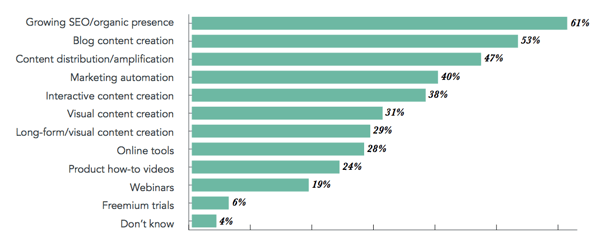
Plus, they know it works. A mere 5% of marketers identified blogging as an “overrated marketing tactic” — for the sake of comparison, 32% said that paid advertising is.
So, there you have it. Curious to see what 2018 has in store? So are we, and we’ll be keeping an eye out.
Should You Even Bother With Bots? An Expert Weighs In [Video]
If you’re a human with internet access in 2017, you’ve probably talked to a bot recently — even if you weren’t fully aware of it.
With over five billion monthly active users on messaging platforms like Facebook Messenger and WhatsApp, the current tech landscape is set for a veritable explosion of chatbots and AI-based assistants over the next few years. And marketers should be racing to explore the potential power of this exciting new space — with some thoughtful restraint, of course.
This isn’t the first time we’re talking about the importance of investing early in bots on the HubSpot Marketing Blog, but it’s one thing to recognize the potential of a new technology and quite another to start incorporating it into your exisiting business model.
Especially for businesses on the smaller side, pivoting towards a new strategy can feel like a terrifying leap. You’ve probably asked yourself: should I even bother with bots?
To learn more about practical use cases for bots, we turned to Vedant Misra, the founder and CEO of Kemvi (an AI and machine learning startup recently aquired by HubSpot), and current artificial intelligence tech lead here at HubSpot.
Check out the interview above, and decide for yourself: are bots the right next move for your business?