
Welcome to My Blog
Apple opens applications for online Entrepreneur Camp for female founders and developers

Following the announcement of the first Apple Entrepreneur Camp for Black developers and founders last week, Apple today opened applications for another Entrepreneur Camp for female founders and developers. The event will take place online in July and applications are now open.
The post Apple opens applications for online Entrepreneur Camp for female founders and developers appeared first on 9to5Mac.
Are Blogs Dead in 2021? We Asked 10 Marketing Experts
It seems we all have an obsession with killing things off.
Every couple of years, we revisit something and place it on the chopping block. In the new millennium, we had the Y2K computer scare. In 2012, we feared the world would end and we would all just poof. When technology took a more important role in our lives, we assumed all print publications would go bankrupt. Now, with the rise of video and podcasts, it’s blogging’s turn to feel the heat.

I reached out to marketers with backgrounds in product marketing, SEO, YouTube, podcasting, and more and asked them, “Are Blogs dead? ” Here’s what they said.
In all fairness, this question surrounding blogs is not without reason. Google Trends shows that in the last five years, the interest in blogs has steadily declined worldwide.

In the U.S. within the same five-year span, podcasts have risen in popularity and surpassed blogs in searches.

However, marketers still consider blogging a top marketing channel. Ross Simmonds, a B2B marketer and the founder of the content marketing agency Foundation, says blogging has helped his clients triple their traffic and accelerate their sales close rates.
“At Foundation, blogging with intent has helped us generate millions of dollars in the pipeline for both us and our clients,” says Simmonds. “It’s also armed us with the ability to elevate our brand’s position in the market and, most importantly, truly help others in our industry learn and unlock new opportunities.”
With that said, the blogging landscape has changed over the years. Lisa Toner, director of content at HubSpot, says it’s not enough to just have a blog nowadays.
“You need to consistently create content that is more valuable than your competition’s content. You need to be an SEO expert to get your articles ranking on page one of Google, and you need a distribution strategy to promote your content across all the channels your audience likes to consume content on,” says Toner. “It’s a lot more complex to win at blogging now, but if you can master it, it’s worth the investment.”
Transparency is a bigger responsibility, especially as social justice becomes more important to consumers.
“You need to think about how people see your brand compared to your competition. Everyone has their own unique selling position (USP) and what they want to put forward, but what users do is compare,” says Sandra Mpouma, head of digital marketing at RationalFX. “So, in terms of business strategy, create loyalty, trust, [and] be transparent and competitive, which is very important nowadays.”
Blogs vs. Other Marketing Channels
Now that other content marketing channels – namely video and podcasting – have surpassed blogs, will blogs soon become redundant? Well, it all depends on the user personas you’re targeting. But even as other platforms grow, blogs still offer many advantages.
“Podcasting is not without its own set of limitations. There are plenty of discoverability and audience growth challenges. At this point, blogs have a pretty well-dusted playbook for scaling. That’s not true for podcasts,” says Matthew Brown, senior podcast producer at HubSpot. “A company can use its likely limited resources to invest in a blog that will basically give consistent, easily measurable, and reliable performance. Blogs also have a direct line to the company’s bottom dollar, podcasts do not.”
Nelson Chacon, principal marketing manager for YouTube at HubSpot, highlights that there’s no reason to choose between two platforms if your team has the bandwidth to tackle both. If it aligns with your user personas, you can engage your audience from several angles.
“Creating a blog constructed of articles around the benefits of your product will be helpful. Having a video showcasing its use or how to install it would be beneficial for your audience,” says Chacon. “Home Depot has done a fantastic job of doing this. While they inform and educate their customers on their products, they also add a quick ‘how-to’ for the more knowledgeable person who just needs a short answer explained in a video.”
As for social media, Annabelle Nyst, a senior content strategist who focuses on social media initiatives at HubSpot, says it’s hard to compare it to blogs as each platform serves different purposes.
“Social content doesn’t always have the shelf life or the discoverability of blog posts,” says Nyst. “It’s more about consistently meeting your audience where they are, in the right moments, engaging with them one-on-one, and establishing trust via community building.”
She adds that social media can be a great way to amplify your blog posts. And vice versa, blog posts can serve as inspiration for social content. If using both, Nyst recommends pulling the most compelling points from your blog posts, creating social-first content, and using it to drive traffic back to your blog.
With all that said, blogs don’t come without their disadvantages. AJ Beltis, a content and acquisition manager at HubSpot, mentions the high drop-off rates often seen in blog posts.
“Blogs lack the interactivity that many crave due to its nature as written content,” says Beltis. “This challenges blog writers to hook their readers in a few short sentences without having the benefit of special effects or audio engineers available to their video and podcast creating counterparts.”
What it often comes down to is your brand goals and which channels will help you meet them. Podcasts, for example, are better for branding while blogs serve better for top-of-the-funnel engagement.
“Blog posts are an acquisition juggernaut. There’s a clear path that any seasoned marketer can follow. Podcasts, however, best serve as a brand opportunity,” says Brown. “You wouldn’t measure a series of blog posts on their brand uplift ability, just like you wouldn’t measure a podcast show’s lead generation. That is unless you like gray hairs and a serious lack of sleep.”
Why Blogs are Still Impactful
From an investment perspective, blogs may be a better long-term investment for lead generation.
“I could spend $200K to hire a full-time writer, SEO expert, and conversion rate optimization (CRO) specialist to work on my blog. By combining those skill sets, I’m going to be able to create a blog that drives organic traffic to my website and converts it into leads for my business all year long,” says Toner. “Or, I could put the same $200K into an advertising campaign and maybe get a couple thousand leads over the course of the ad campaign. But once the campaign ends, so does my lead flow.”
Toner adds that the majority of HubSpot’s blog-generated leads come from older blog posts. This means that blogging can be a great lead source long after posts are published. Aja Frost, who leads the English SEO team at HubSpot, echoes this sentiment.
“Organic traffic is more important than ever. Unlike paid traffic, which stops coming in the second your budget runs out, organic traffic is mostly self-sustaining after you’ve put in the time and effort to create a blog post,” she says.
She adds that most content management systems (CMS) have SEO tools integrated into their platforms, which makes it easier to optimize your posts.
Blogging can also be valuable in shaping a brand’s product positioning.
“Blogs are still one of the best channels we have to create narratives around our product,” says HubSpot Product Marketing Manager Alex Girard. “They offer us the opportunity to address trends we see in the market, how those trends impact the reader, and how our product might be able to help them meet that trend successfully. They’re also great for telling customer success stories.”
He adds that when using your blog to market your product, the content doesn’t have to be promotional. When you establish yourself as a thought leader and gain trust from your audience, they will organically look into your products and services.
With that said, it’s going to take more than good content to have a successful blog.
“Growth without a goal isn’t going to help your business – if 10,000 people are reading your blog, but none of them fit your persona, that’s not going to do anything for your company,” says HubSpot’s Senior Blog Manager Karla Cook. “Focus on something attainable, like generating new contacts, and make sure every post you’re putting out has that goal in mind.”
She adds that one of the biggest mistakes brands make is creating content only for people at the decision-making stage. With so many stages between reading a blog and making a purchase, marketers should have posts geared at users in every stage with corresponding offers. Learn more about that through HubSpot’s business blogging course.
From an SEO perspective, brands may also struggle with generating traffic because they’re thinking blog first, link building second.
“What I often notice is that marketers see ‘blogging’ and ‘link building’ as two different disciplines. First, they write the blog posts, then they think about how to earn backlinks to them,” says Irina Nica, a senior marketing manager at HubSpot who works on product awareness through outreach initiatives. “Instead, they should include linkable assets into their regular content calendar, alongside other types of articles that are maybe designed for generating organic or social media traffic.”
Despite the many benefits we’ve gone over, blogging isn’t always the best strategy for every brand. Why? Well, what if your ideal user persona doesn’t read blogs? What if they prefer emails instead?
“Some brands have great email communication and workflows where they provide people with downloadable offers where they don’t have to go somewhere else to get the information, it’s just in their inbox straight away,” says Mpouma. “You don’t necessarily need a blog as long as you’re offering something in exchange. I think the blog has always been that: Offer something for free in exchange for that user interaction.”
So, in that case, blogs wouldn’t exactly be dead, more so irrelevant.
Why Marketing Isn’t Dead
Looking at things from a broader perspective, blogs are just an extension of marketing. Some have suggested that marketing is dead, which makes marketers like me wonder if there’s something we don’t know.
Based on recent data, marketing is still influential. And that applies to both traditional strategies and digital initiatives. Statista reported that in 2019, content marketing generated over $42 billion in revenue worldwide.
“There’s a reason why Nike and McDonalds continue to invest millions every month in marketing even though they’re already household names. There’s a reason why the top musicians and artists still do promotion prior to their latest album release,” says Simmonds. “Marketing isn’t to be seen as just an expense. It’s an investment. And if you make an investment that is rooted in a strategic plan — that investment should return dividends for years (maybe decades) to come.”
The key takeaway is that while not all marketing tactics work for every brand, it’s unlikely that blogs will stop being valuable to brands in the foreseeable future. So for now, blogs, you can rest and step off the chopping block.


‘Follow the Sun’ is a new Mac app to automate brightness and color temperature of HomeKit lights
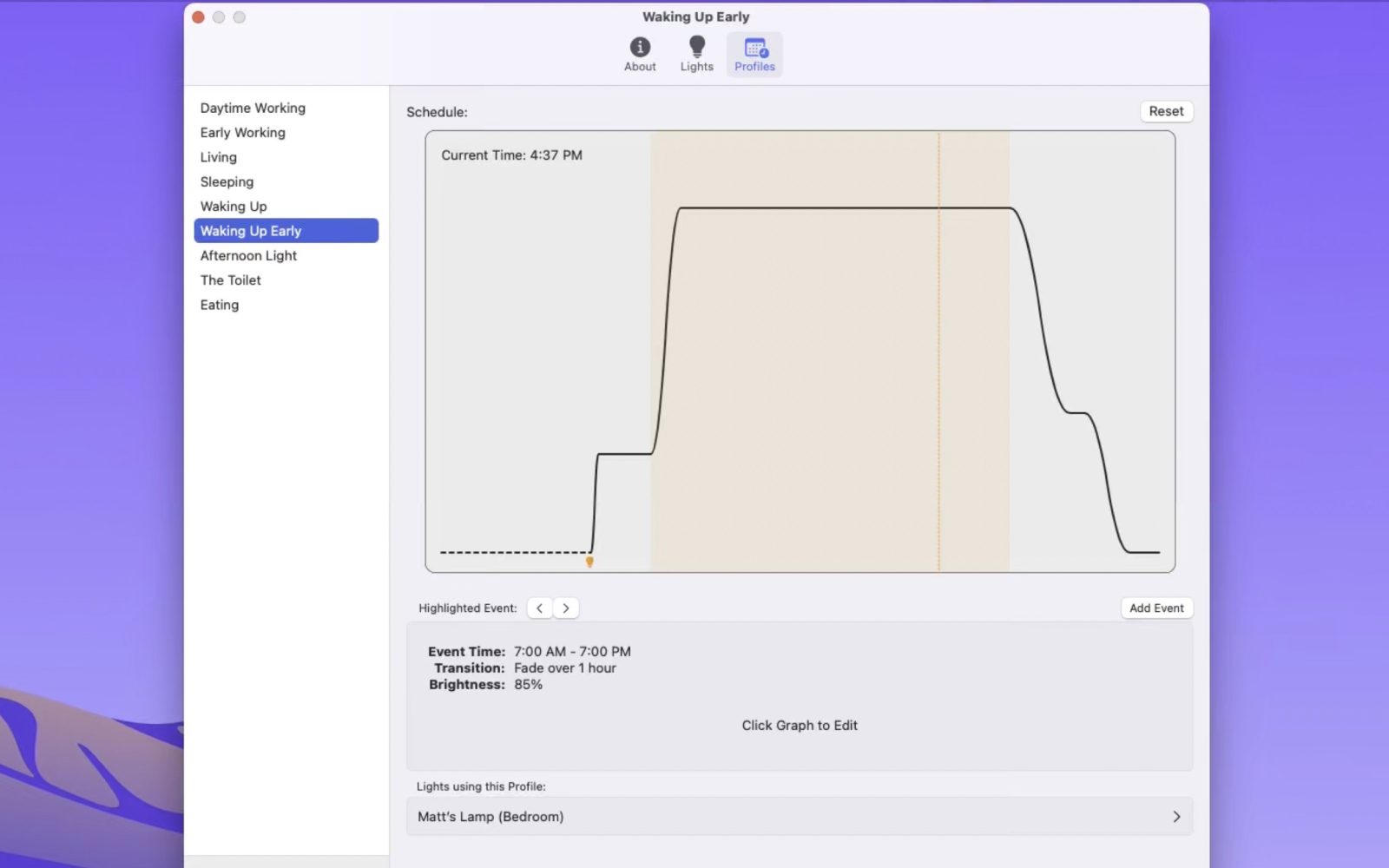
With iOS 14 last year, Apple added a new Adaptive Lighting feature to HomeKit. This feature allows lighting that can change to be automatically adjusted throughout the day. A new third-party HomeKit app has now hit the Mac App Store, giving you new ways to automate your lights.
The post ‘Follow the Sun’ is a new Mac app to automate brightness and color temperature of HomeKit lights appeared first on 9to5Mac.
[Update: Netflix denies] Netflix reportedly testing spatial audio support for AirPods Pro and AirPods Max

Netflix is reportedly quietly testing support for iOS 14’s new spatial audio functionality. According to a report from iPhoneSoft, citing an anonymous Netflix developer, the company has been testing spatial audio support on iPhone and iPad since December.
The post [Update: Netflix denies] Netflix reportedly testing spatial audio support for AirPods Pro and AirPods Max appeared first on 9to5Mac.
Genius Scan for iPhone gets overhaul with next-gen AI, shadow removal, smart renaming
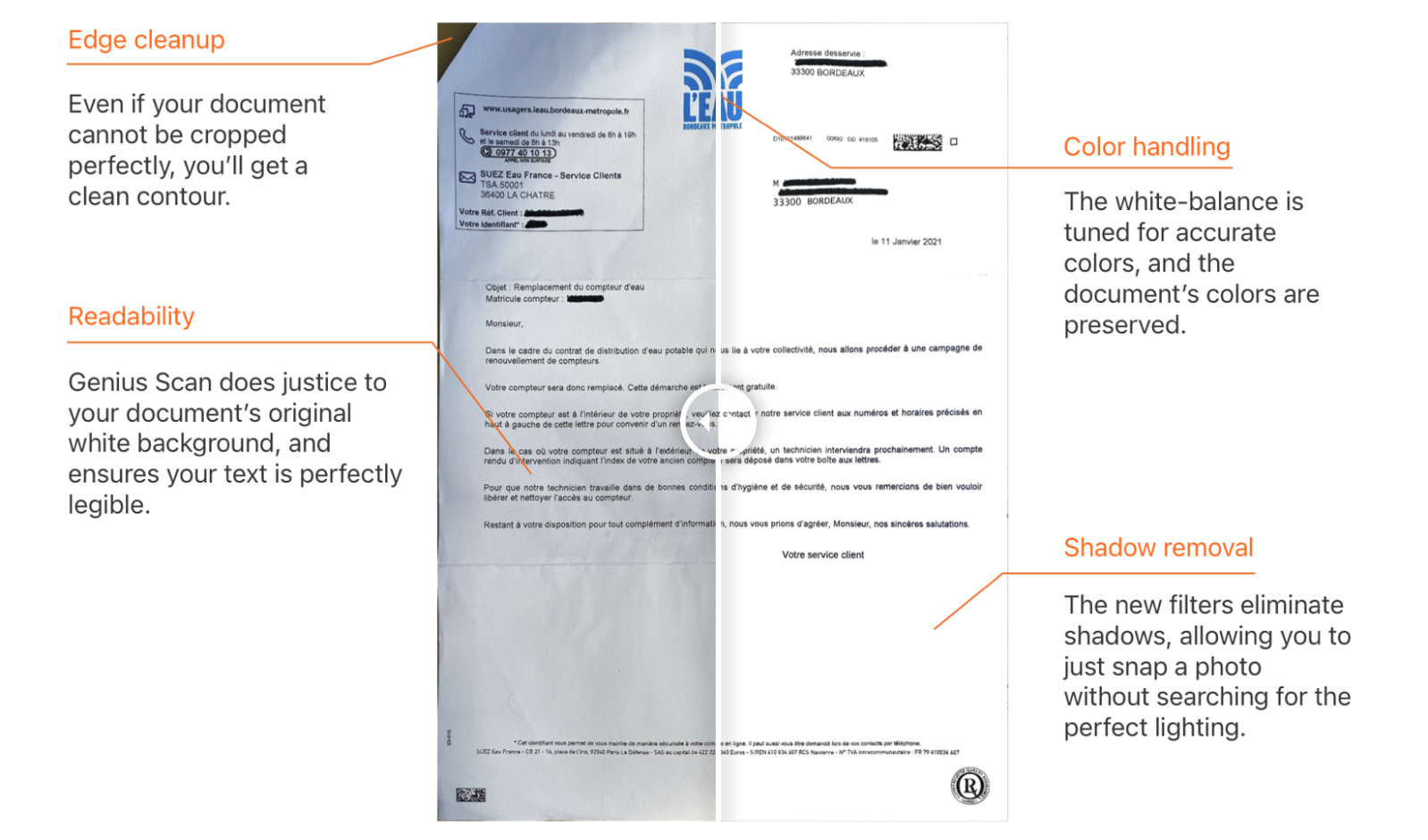
Developer The Grizzly Labs is out with a major update to its popular Genius Scan app for iPhone and iPad. The new build features a totally overhauled app with “a next-generation AI” under the hood for smarter and enhanced filtering, smart document renaming, shadow removal, and more.
The post Genius Scan for iPhone gets overhaul with next-gen AI, shadow removal, smart renaming appeared first on 9to5Mac.
Netflix announces new feature to automatically download shows and movies based on your tastes
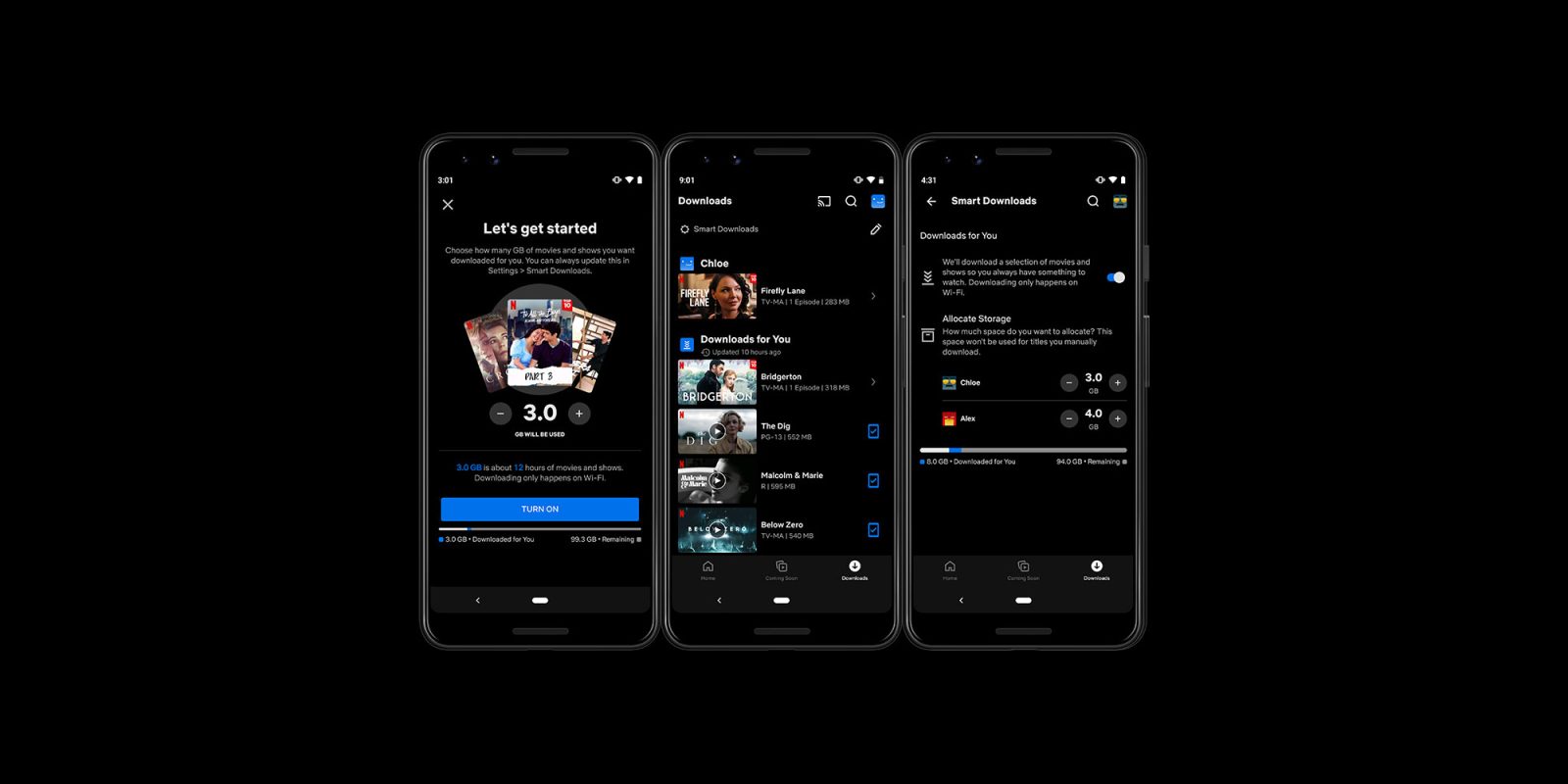
Netflix has announced a new “Downloads for You” feature for its iOS and Android applications. The company says that this feature will automatically download recommended TV shows or movies to your device “based on your tastes,” and it’s thankfully completely opt-in.
The feature is rolling out today on Android and will begin testing on iOS soon.
The post Netflix announces new feature to automatically download shows and movies based on your tastes appeared first on 9to5Mac.
Chick-fil-A turns to iPads and FaceTime to help speed up drive-thrus

Chick-fil-A is exploring a variety of ways to speed up its drive-thru lines, including turning to reliable Apple products and services. A new report from Insider today highlights Chick-fil-A’s new initiatives, ranging from ghost kitchens to iPads and FaceTime.
The post Chick-fil-A turns to iPads and FaceTime to help speed up drive-thrus appeared first on 9to5Mac.
Today at Apple Product Skills sessions are now available online for anyone
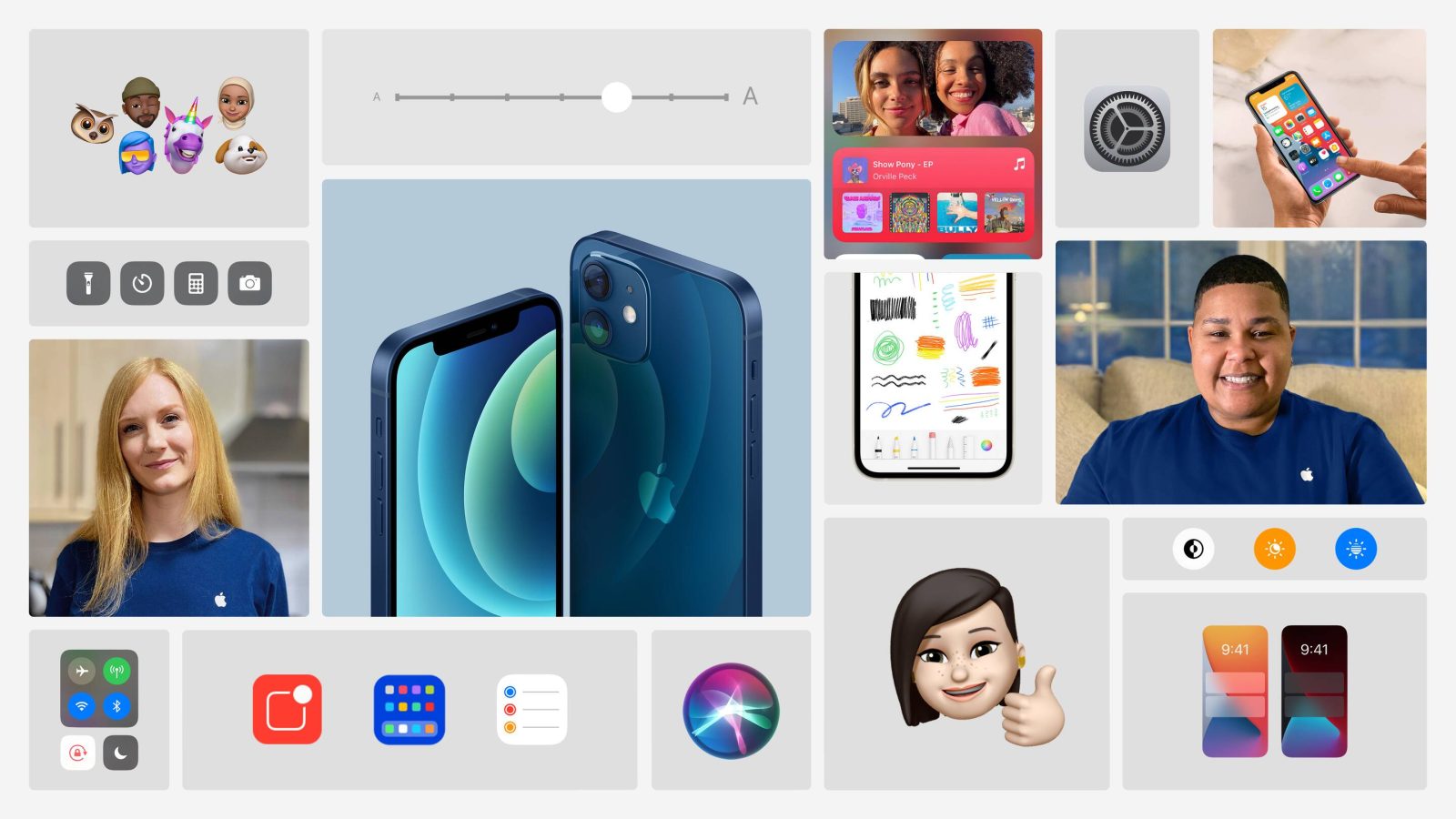
Today at Apple is bringing more of its free creative sessions online for anyone to attend. Beginning in March, Product Skills sessions covering the basics of iPhone, iPad, and Mac will be available in a new virtual format.
The post Today at Apple Product Skills sessions are now available online for anyone appeared first on 9to5Mac.
T-Mobile launches a real unlimited 5G plan with no throttling and 4K video streaming

The Uncarrier is out today with a new cellular plan that boasts truly unlimited data with no slowdowns. While that might sound strange at first, most US carriers’ “unlimited plans” actually become throttled after a certain amount of data use. T-Mobile’s new unlimited 5G plan also features support for streaming 4K video, and a solid hotspot allowance.
The post T-Mobile launches a real unlimited 5G plan with no throttling and 4K video streaming appeared first on 9to5Mac.
Apple Watch workout and sleep tracking is ‘the future of health’ in latest ad campaign

We saw Apple air a playful pitch for the ECG app on the Apple Watch last month, and now two more videos have dropped that promote Apple’s “The Future of Health is on Your Wrist” campaign.
The post Apple Watch workout and sleep tracking is ‘the future of health’ in latest ad campaign appeared first on 9to5Mac.
Spotify counters Apple Music with new HiFi tier, expands to 80 new markets, more

In a virtual event today, Spotify detailed a range of updates and new features coming to the audio platform. One of the most interesting announcements is the new lossless “Spotify HiFi” that will be an add-on option for premium subscribers as the platform looks to increase its lead over rivals like Apple Music.
The post Spotify counters Apple Music with new HiFi tier, expands to 80 new markets, more appeared first on 9to5Mac.
How to Use Clubhouse: A Step-by-Step Guide
Recently, Clubhouse — an invite-only, audio social media app — has gained viral levels of awareness.
In just a few weeks, Clubhouse, which allows members to host and join audio chat rooms, has jumped from 600,000 to 2 million active users, gained a $100-million valuation, and hosted some of the world’s top thought leaders.
Because of Clubhouse’s growing awareness, popularity, and chat-style interface, brands interested in building communities are getting more curious about how they could use it in their marketing strategies
But because Clubhouse is still invite-only and not available for Android users, many marketers are just logging on for the first time now. And, as with any new social media app, learning about all of Clubhouse’s features — and trying to catch up with its earliest adopters — can feel a bit overwhelming.
If you just got your Clubhouse invitation — or want to be ready to use the app when you do — read this guide to learn how to set up your account, follow others, and attend or host your first audio chats (also known as “rooms”).
![Download Now: Social Media Trends in 2021 [Free Report]](https://no-cache.hubspot.com/cta/default/53/3dc1dfd9-2cb4-4498-8c57-19dbb5671820.png)
1. Track down and accept an invite.
At this point, Clubhouse is still invite-only and only available for iPhone users. Luckily, because of its growing audience, you might have a friend or colleague who’s already on it and willing to give you one of their invitations.
If you aren’t sure if you know anyone on Clubhouse, you can still register for an account on the app. Once you set up a basic profile, give your contact information, and select a few topics you’re interested in (as noted in Step 2), you’ll see a screen that says you’ve joined the waitlist.
From there, contacts who are on Clubhouse will be notified that you’ve joined the waitlist and they can give you an invite to move you up to full user status. Here’s a text I received from Clubhouse when my HubSpot colleague, Amanda, bumped me up to the top of the waitlist.
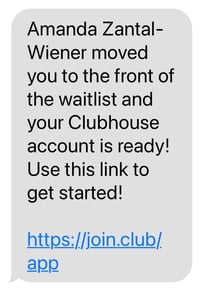
If and when you receive an invite from someone, be sure to register with the phone number they texted your invitation to — otherwise, the app might not register that you’re the same contact.
When you register, you’ll be prompted to add an email address. You’ll also choose a photo, username, and password. Alternatively, you can connect your Twitter to have the same username, photo, and profile information flow into the app.
2. Pick topics of interest and follow users.
After giving some basic information during registration, you can also choose topics you’re most interested in from a long list to help customize the content the app will suggest to you.
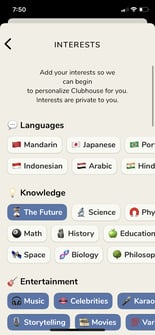
Then, Clubhouse will ask you to access your contacts and use your topic preferences to suggest both people you might know and influencers you might be interested in following.
If you don’t want to select any topics or follow any people just yet, that’s okay. You can do all of these things later.
3. Set up your profile.
If you didn’t link your Clubhouse account to Twitter to auto-generate a profile, you can set up your profile by adding or changing your photo and writing a description that notes your hobbies, interests, companies you work for, or industry.
While we aren’t quite sure if your profile description will optimize your page for the app’s search feature, it will be helpful for prospective followers to see when they decide whether or not to follow you.
Lastly, you can complete your profile by linking Twitter and Instagram. Once you do this, Twitter and Instagram icons linked to your profiles on those channels will appear under your description.
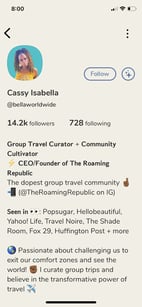
Here’s a great profile example from Cassy Isabella, a prominent influencer, entrepreneur, and travel expert on the platform:
4. Scroll through the homepage.
Once you’re all set up, start exploring. The first place to check out is Clubhouse’s homepage. While there isn’t an icon for it, you can access it by clicking the back button in the upper left corner of any other page on the app.
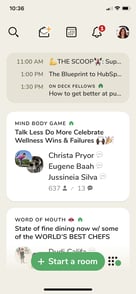
5. Use the Explore page to find other users, clubs, and rooms.
Not interested in what your homepage is showing you? Tap the magnifying glass icon to see Clubhouse’s Explore page.
From there, you can get suggestions of people to follow and click on certain topics to see ongoing rooms, people, or clubs related to them.
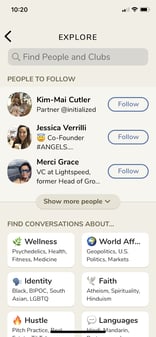
You can also use this tab’s search feature to look for specific users or clubs, which we’ll discuss in the next step.
6. Join Clubs.
Clubs are groups of users interested in the same specific topics, similar to the Facebook or LinkedIn Groups feature. Once you join a club, you can see notifications of Rooms hosted by it. You can also use clubs to find or connect with Clubhouse users that have similar interests.
To find clubs, you can either sift through the Explore tab or tap its search bar, select clubs and search a topic, as I did with “Growth Marketing” below:
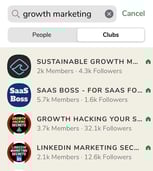
You can join a club by going to its profile page and tapping “Follow.” After doing this, you’ll be notified whenever its admins launch a room.
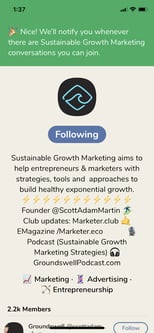
No longer interested in a club you joined? To leave it, just go to the club page and tap the “Following” button. This will unfollow you and the button will switch back to just saying “Follow.”
7. Start a Club.
Once you’ve hosted three discussions, or rooms, on Clubhouse, you can start applying for clubs. To do this, you’ll go to your profile and tap the gear in the top right corner to get to your settings.
From the settings page, you’ll click to Clubhouse’s FAQ page, or this Clubhouse Knowledge Center link, where you’ll find club rules and application instructions, as well as a Club application link.
Once Clubhouse approves the Club, you’ll see an app notification and get the ability to edit the club profile and launch rooms on behalf of the Club.
One important thing to note is that the Clubhouse team manually approves club applications. Because of the popularity of Clubs, the company is only allowing one club per user right now. This means you should be sure about the club you apply for as it might be the only one you’ll manage in the future.
8. Drop into a room.
When you see a room, or audio chatroom, you want to join (or “drop-in” on), all you have to do is tap it to start listening. Upon entering a room, you’ll be automatically muted as a listener. You’ll also see the room speakers and moderators at the top of the screen.
The unlabeled area of the room screen that highlights the speakers is referred to as “the stage” by moderators.
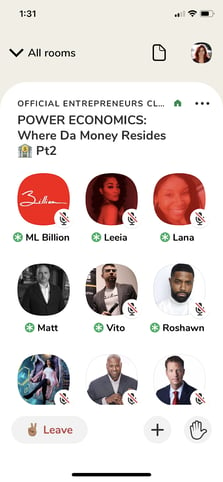
Below the “stage,” you’ll see attendees the speakers follow under the “Followed by speakers” heading, and a list of general attendees under “Others in the room.” All attendees who are not on the stage are muted and cannot speak unless they’re brought to the stage.
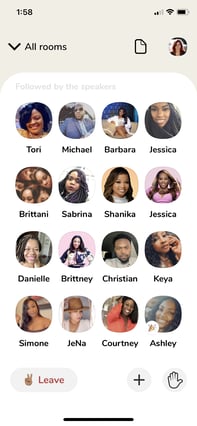
If you see a party popper emoji (or 🎉) on someone’s image, it means they’re new to Clubhouse.
9. Request to speak.
Want to speak? Press the hand icon in the lower right to be added to a speaker request list.

When you raise your hand, the moderator will be notified of your request to speak and can either unmute or ignore you.
If a moderator unmutes you, which will move your name and icon up to the speaker stage, ask your question or stay on topic with any points you add. You should also avoid hogging the mic, let others have time to speak, and follow any room rules that have been given by the moderator(s). This will help you stay marked as a speaker as long as possible.
As you enter rooms and raise your hand, keep in mind that hundreds of other users might also be requesting to speak. If you’re ignored, don’t be offended as a moderator can only allow so many people to the stage before losing control of the conversation.
10. Add friends to a room.
Love a room you’re listening to and want your friends to hear the discussion too? Press the “+” button in the lower navigation of a room to select and add followers.
11. Leave a room.
Because of the way Clubhouse is built, rooms with multiple moderators can go on for hours — or even days, so there’s no shame in leaving one before it ends. To do this, all you have to do is tap “Leave.”
If you’d like to surf the app a bit more without turning off the audio, you can alternatively tap “All rooms” at the top of the screen to minimize your room and tap through other screens.
If you click into another discussion, you’ll leave the minimized room automatically so you don’t hear two discussions at once.
12. See upcoming rooms.
Don’t have time to listen to a room right now, but want to explore Clubhouse later? Tap the calendar icon to see upcoming room suggestions.
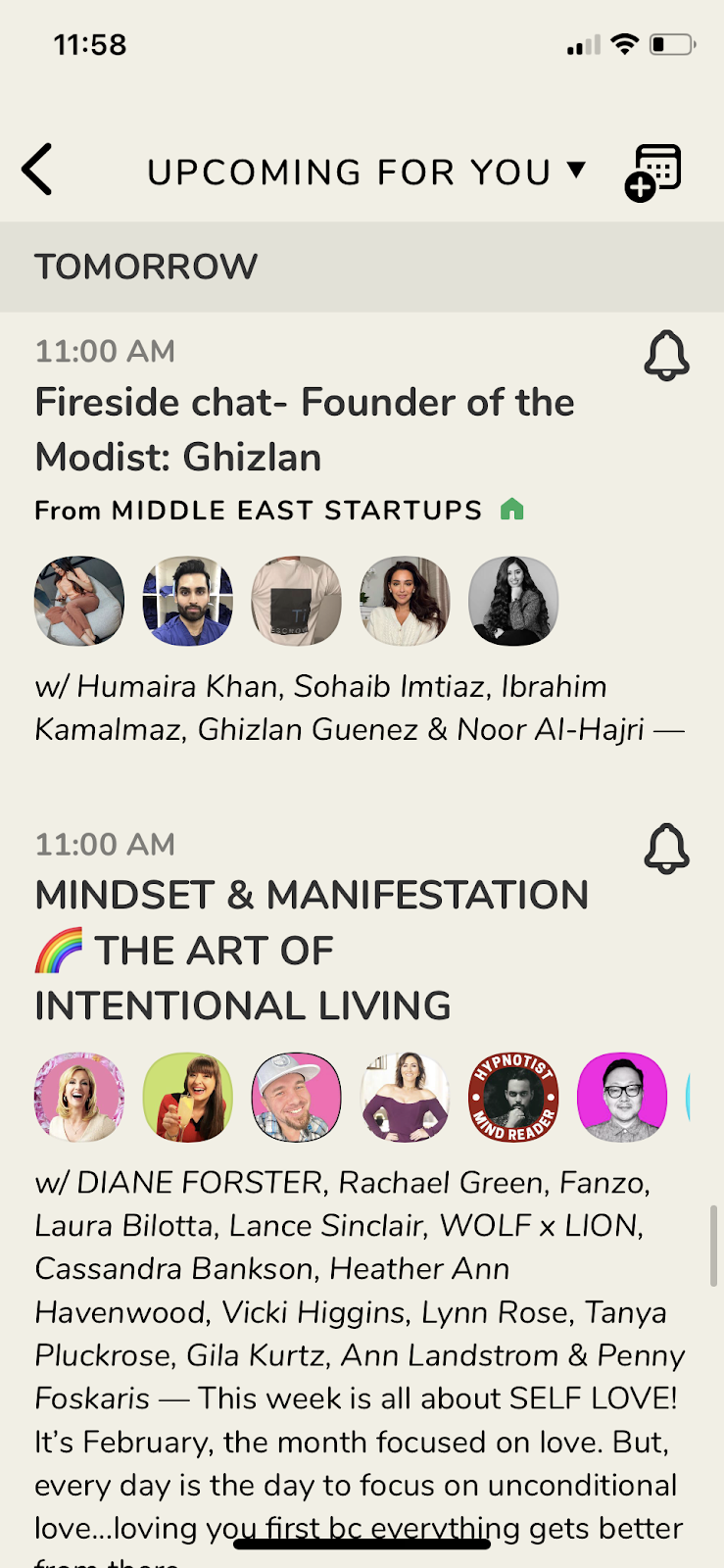
If you see a room you’re interested in, tap the notification symbol on it to get a phone alert when the event starts.
By tapping on the scheduled room, you can also share about it on social media or add a reminder to your calendar.
13. Invite friends.
When I started my Clubhouse account, I and many of my friends received just two invites. Then, about two days later, I received three more. While it’s unclear if everyone starts or continues to receive the same amount of invites, you’ll likely get at least two to start with.
If you have a phone contact that’s excited to join Clubhouse, tap on the icon that looks like an opened invitation to search and invite your contact list.
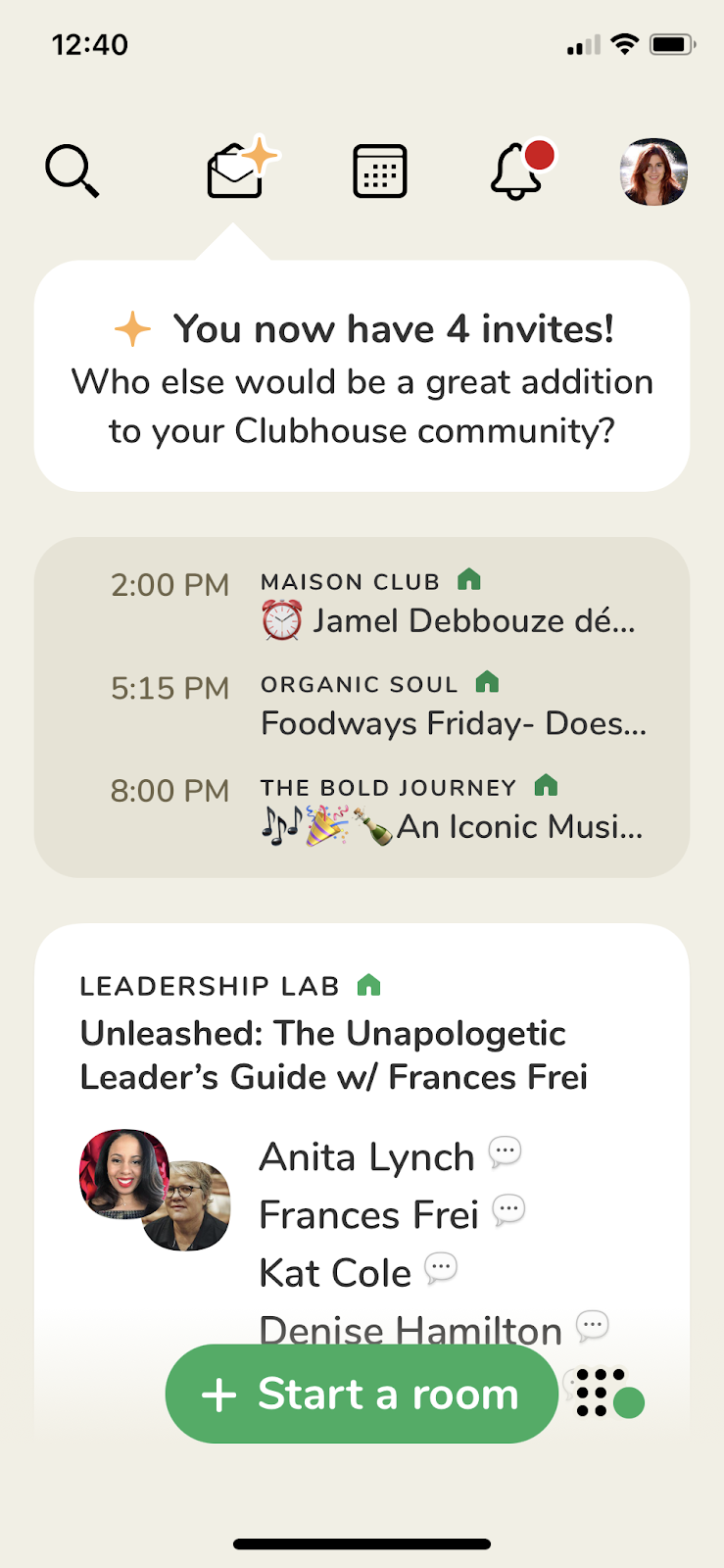
Once you invite someone, they should receive a message with instructions for how to join, similarly to the one I’ve shown in step one of this list.
Additionally, their profile will note that you nominated them to join Clubhouse which could help their friends or followers find you later.
1. Start or schedule a room.
Anyone on Clubhouse can start or schedule one of the following Rooms:
- Closed: Only open to people you invite to the room.
- Social: A room that’s only open to your followers.
- Open: A room that’s open to anyone on the Clubhouse app.
To start a room automatically. you can either click the “Start a room” button at the bottom of multiple Clubhouse app pages.
You can also tap the icon next to the “Start a room” button to see which of your followers are online and start rooms directly with them.

If you’d like to schedule a room, go to the Upcoming for You tab and tap the top right calendar button to preschedule one.

Below I’ll go over some differences between starting and scheduling rooms.
Starting a Room
To instantly start a room, you’ll tap the “Start a room” button, add a topic, and select your privacy setting. Once the room starts, you can expand the privacy settings from Closed to Social or completely Open. However, you cannot change the topic.
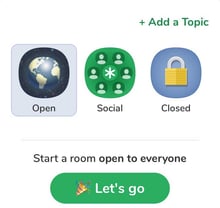
As the room launches, you’ll instantly be assigned as a moderator. You’ll retain these moderator privileges even if you leave the room and come back later.
Scheduling a Room
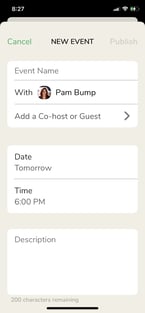
When you tap the calendar icon to schedule a room, you’ll see a page that allows you to determine an event name, co-hosts or moderators, an initial guest list, a date, and full description. When you press publish, the event will show up in the Upcoming tab.
When the time comes, you or your moderators will simply enter the room to start it.
2. Introduce yourself and your moderators to your audience.
When your room begins, your icon will show up at the top of the screen and you won’t be on mute. At this point, you should start introducing yourself, your moderators (if you have any), and other speakers.
At this time, you might also want to highlight what the room aims to discuss and any ground rules of the room. For example, if you’d only like people to raise their hands with questions, letting the audience know of that could be a ground-rule.
3. Look for hand raises — or requests to speak.
If your conversation is engaging, people in the audience might raise their hands to request to speak. When this happens, you’ll get a notification and the option to assign them to speaker mode.
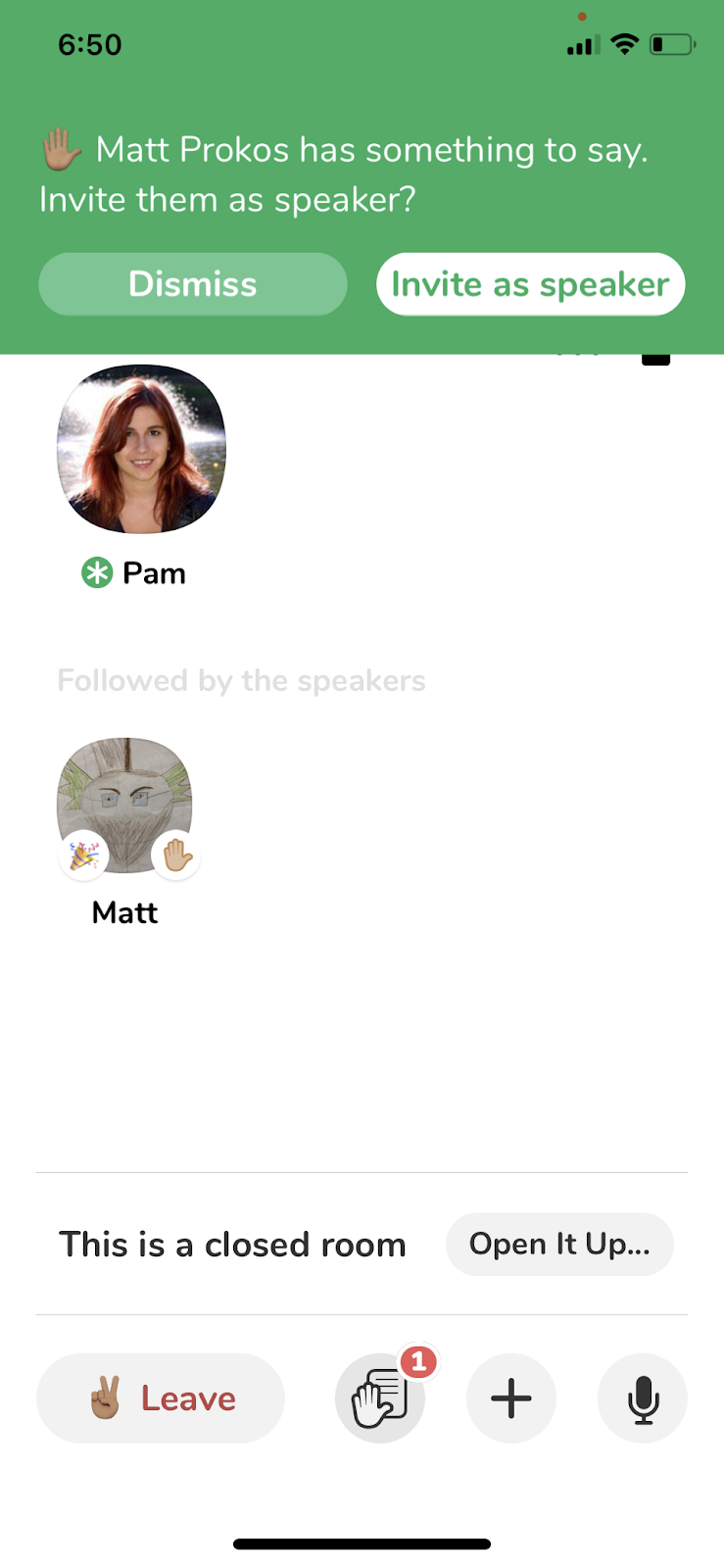
4. Bring attendees to the stage as speakers.
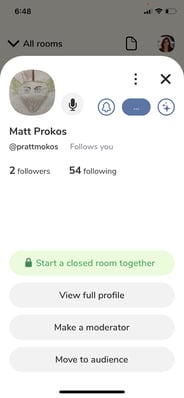
Even if someone doesn’t raise their hand, you can still invite them to speak. To do this, just tap their icon. You’ll then see options to “Make a moderator,” “Make a speaker,” or “Move to audience,” which will unmute them if they’re already speaking.
If you make the person a speaker, they’ll just be able to speak until you move them back to the audience. However, if you make them a moderator, they gain co-hosting privileges and can also allow speakers and hand raises.
5. Own the conversation.
Because you can’t change a room topic once it starts, an off-topic conversation might cause guest churn when people tune in and hear a completely different discussion. So, if you start or moderate a conversation, it’s important to take ownership to ensure it stays on track.
To own the conversation, make sure you only make seasoned speakers or friends who are good at managing conversations. Additionally, while you should let others speak, don’t let speakers hog the mic.
If you do feel like the conversation is going off-course, politely refresh audiences by reminding them of the room topic and ground rules.
6. Check out your attendee list.
If your other moderators or speakers have the room under control, give your attendee list a quick skim to see who’s listening. When you do this, look for high-profile listeners or Clubhouse members with a large following.
If someone interesting is in the audience, invite them to the stage if you feel they could contribute to the conversation. If they accept your invitation to speak, introduce them to the room.
7. Ask listeners to add their friends.
While room moderators can add more people to the discussion, or change privacy from Closed to Open at any time, room moderators can also encourage listeners to invite a few friends that would also enjoy the conversation.
8. Remove inactive moderators or speakers.
Occasionally, some speakers or moderators will leave the room but the Clubhouse app won’t automatically refresh. When this happens, I’ve seen moderators move inactive speakers back down into the audience. This helps control the number of moderators and speakers as well as the conversation.
9. Leave or end the room.
If you don’t have any other moderators, you can simply leave a room to end it. However, if you leave a room with other moderators assigned, it will keep going until all the moderators leave — or one of them ends the room.
If you need to end a room with moderators, you will need to do this manually by tapping the three dots in the top right corner and selecting “End Room.”

If you want to leave a room you launched, but don’t want it to end for audiences, you can designate a moderator before you leave.
Because multiple moderators can keep a room going, it can last for hours or days. But, if you return to a room you started after leaving it, you will still regain your moderator privileges and your ability to speak and take over.
Mastering Clubhouse
While it’s still a bit early to determine Clubhouse best practices, here are a few things you can do to learn more about the app and how to use it:
- Check out a few rooms related to your industry for discussion-topic inspiration.
- Take note of how moderators manage room conversations while still allowing audience members to speak.
- Join clubs and follow users with similar interests as you to build your Clubhouse network.
- Gain awareness and more followers by participating in rooms, raising your hand, or hosting your own chats.
Want to learn more about Clubhouse’s short history and how it became one of the newest viral social media apps? Check out this post.


iOS 14.5 makes zero-click exploits ‘significantly harder’ according to security researchers

Amid the other new features in iOS 14.5, Apple has also implemented changes to how it secures the code running in iOS. As reported by Motherboard, the changes Apple has made behind the scenes here will make it harder for hackers to develop zero-click exploits.
The post iOS 14.5 makes zero-click exploits ‘significantly harder’ according to security researchers appeared first on 9to5Mac.
Monday’s best deals: Anker iPhone accessories from $13, 16-inch MacBook Pro $349 off, more
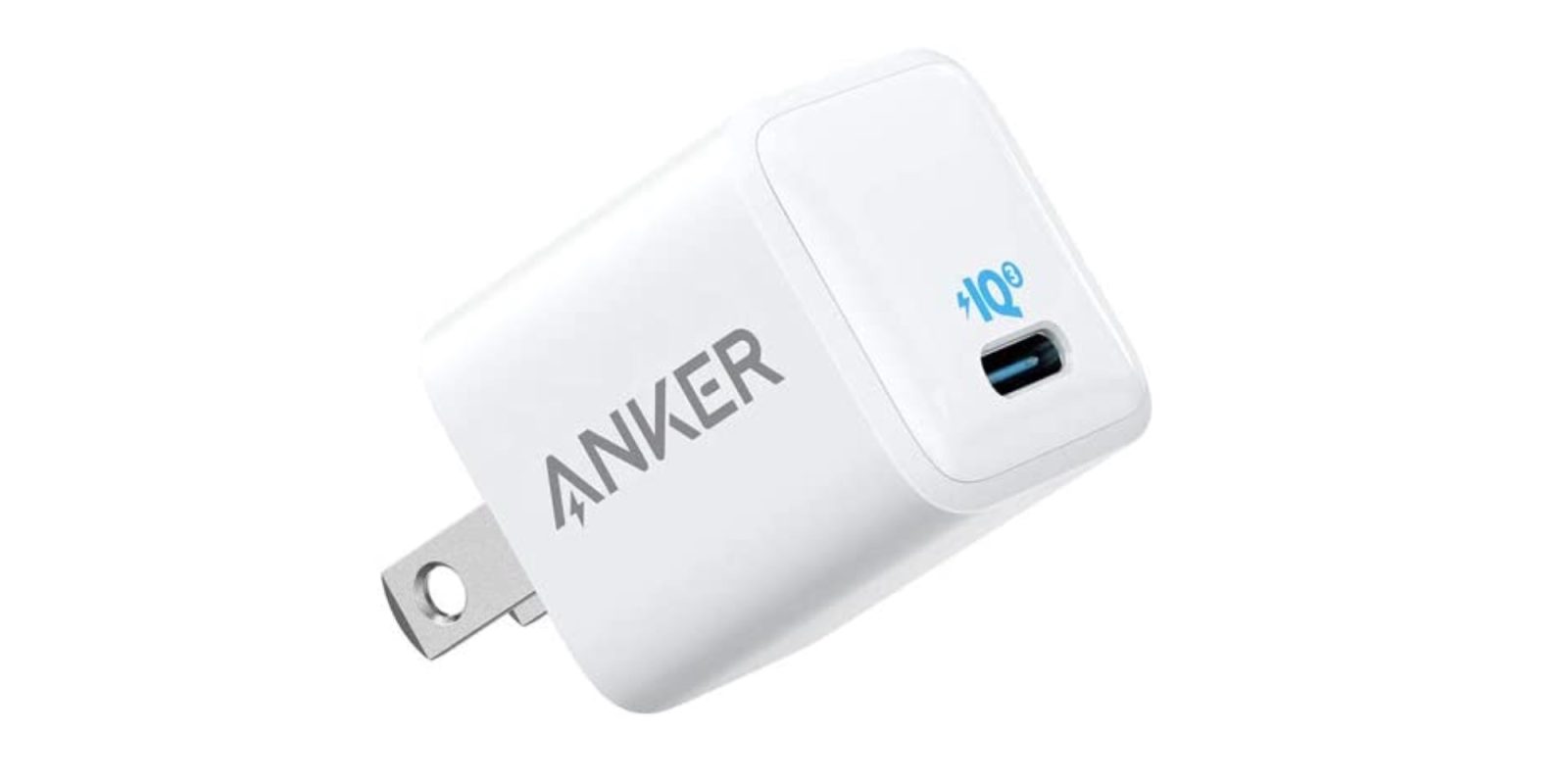
A new week has arrived, and we’ve rounded up all of the day’s best deals headlined by a new Anker iPhone accessory sale from $13. That’s alongside $349 off Apple’s latest 1TB 16-inch MacBook Pro and Beats Studio3 ANC Headphones at $200. Hit the jump for all that and more in the latest 9to5Toys Lunch Break.
The post Monday’s best deals: Anker iPhone accessories from $13, 16-inch MacBook Pro $349 off, more appeared first on 9to5Mac.
Original six-color Apple Computer sign hits auction block starting at $12k

An original Apple Computer sign from ~1978 is up for grabs in a new auction. The famous six-color rainbow logo artwork comes in the original frame with the auctioneer calling the condition “very good.”
The post Original six-color Apple Computer sign hits auction block starting at $12k appeared first on 9to5Mac.
The Future of Content Strategy
Content marketing has seen a lot of changes during the past few years.
Many of these changes can be attributed to the rapidly evolving search landscape as well as a huge shift in the way people are actually discovering content.
New, more sophisticated search algorithms, changes in how people use search engines, and new ways that marketers go about actually developing their content are just a few of the contributing factors and outcomes.
All that said, many marketers still experience the same pain points that were commonplace more than five years ago:
- “I struggle to measure the ROI of the content I create.”
- We create great content, but we still don’t seem to rank high in Google for our target keywords.”
- “So, I’ve done my keyword research. Now what?”
As a response to these problems — specifically the second one — a lot of marketers will create more and more content. Unfortunately, creating larger volumes of the same underperforming content will often result in the same underwhelming results — just at a greater expense.
In fact, adding more content to a poor existing site architecture can make it even harder for Google to find and rank your content. That’s not a situation any marketer wants to find themselves in.
The answer to these problems spans way beyond the number of blog posts being pushed out each week; the real problem lies in the way that most content strategies are being developed and organized.
SEO is evolving, and marketers need to change with it.
Fortunately, there are ways to overcome these obstacles and drive high-performing results for your marketing team.
Here, we’ll discuss the changing state of search and how marketers can keep up. Continue reading this page or use the links below to jump to a specific section.

Search Engines are Changing
Before we jump into solutions for finding success in the changing world of content marketing, let’s dive a bit deeper into the driving forces behind that change.
First, we need to chat about search engines. Updates to how search engines process and evaluate content have created drastic changes in recent years for SEO. As a result, the old metrics of success aren’t as reliable as they once were.
For example, one of the ways in which content producers evaluate the performance of content is by looking at keyword rankings within the search engines. However, there’s been a lot of debate around the actual credibility of keyword rankings as a metric, and the reason for this largely stems from the fact that rank changes depending on context.
To put it simply, depending on how and where you’re searching from, you’ll see different search results, which makes it difficult to evaluate success based on keyword rankings alone.
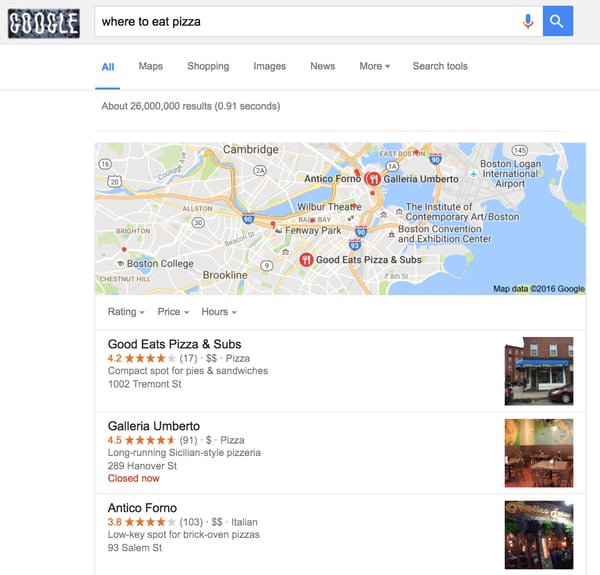
A simple search for the term “where to eat pizza” illustrates this perfectly. If you’re searching for this query from Boston, you’ll receive a completely different set of results compared to someone searching in San Francisco. In fact, the results page for this query probably has thousands of different variations at any one moment in time.
With this in mind, how do you accurately determine your ranking for this keyword?
Outside of keyword ranking problems, the search engines have also been dictating how content should be structured, most notably with the increased appearance of featured snippets.
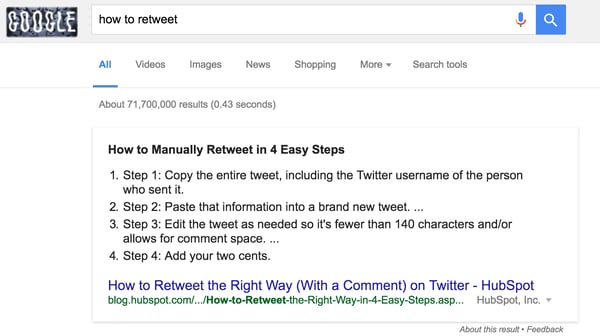
Google has been rolling out more and more featured snippets within the search results — one 2017 study found that of 1.4 million queries, 30% showed a featured snippet. These numbers have likely increased since then.
These boxes try to answer the question that the searcher has without them needing to navigate through to the content.
The reality is that content ranking within the featured snippet section often gets a much greater share of the traffic for the given query when compared to non-featured snippet SERPs.
Publishers now have to restructure their content to try and appear within these featured snippets, of which Wikipedia reigns supreme — owning an estimated 11.2% of all featured snippets.
On a more general level, Google in particular has been making big investments in machine learning and has introduced RankBrain into the core algorithm it uses to index and rank content. Ultimately, RankBrain enables Google to better understand the intent behind specific queries without the search query explicitly stating them — all with the goal of providing more relevant results to the searcher.
This brings us to the next big change in search: the searcher.
How People Search
More significant than the way in which search engines themselves are evolving is the way that searchers are communicating with search engines.
Amplified by the rise of mobile and voice search, queries have become more and more conversational. A few years ago many people entered fragmented terms into search engines. Now, it’s more common for people to ask complex questions using full sentences. Google’s updates over the past two to three years have focused on understanding these types of queries better through natural language processing, most notably with the rollout of Hummingbird in 2013.
The introduction of this new search algorithm, which began analyzing phrases instead of solely relying on keywords, marked a major switch for the search giant from keyword to topic-focused SEO. In 2016, Google CEO Sundar Pichai announced that one out of five queries on its mobile app and on Android devices were voice searches. Based on these new developments, the increasing importance of search topics shows no signs of slowing.
The takeaway here for content marketers? The traditional view of “keywords” in search has changed. Where a few years ago there were maybe 10-20 “big keywords” that would be sought after for ranking within a topic, there are now hundreds or thousands of long-tail variations that are regularly searched within a topic and change based on location. Simply dominating a few words is no longer enough to produce successful results.
Content Strategy in 2021 and Beyond
Considering the advancements in the ways that both the search engines and searchers are evolving, there needs to be a shift in the way marketers determine their content strategy — especially when focused on driving organic search.
The way we approach this at HubSpot is to look at our visibility across a topic, as opposed to a specific keyword. By organizing content within topic clusters instead of individual disjointed posts, we’re able to capture a large amount of search traffic across an ever-increasing pool of relevant keywords. This also allows us to align our brand with several recognizable core topics. Embracing the topic cluster model has allowed us to completely transform how we create and organize our content.
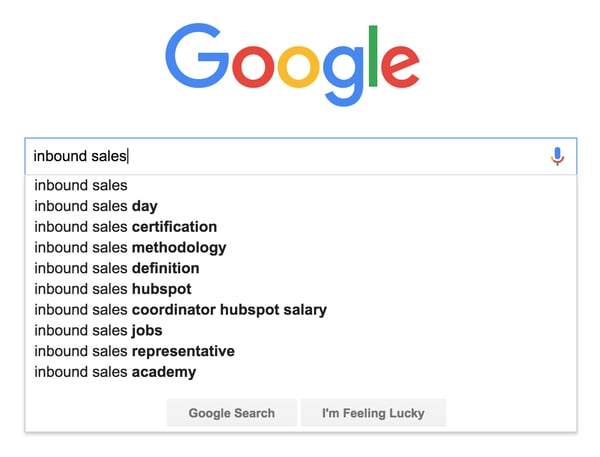
A great example of this is around “inbound sales,” an area that we’ve been covering a lot. You can see from Google’s autocomplete section that there are a number of big links to HubSpot — with our Inbound Sales Day, Certification, and Methodology being the top three, as well as a direct mention of the HubSpot brand.
We’ve managed to align our brand with topics that directly relate to our buyer personas, and as a result of this topic cluster model, we generate millions of relevant visits to our web properties.
What’s a topic cluster?
The basic premise behind building a topic cluster content program is to enable a deeper coverage across a range of core topic areas, while creating an efficient information architecture in the process.
You’re probably thinking, “This sounds difficult to implement? How can I start using this strategy for my own content marketing?” Don’t worry, it sounds more complicated than it really is.
In simpler terms, a pillar page is a broad overview of a specific topic. You can think of it like a summary or road map. We built pillar pages for each of our major focus areas. Linking into the pillar content is a range of content that covers individual, more specific subtopics, otherwise known as cluster content. Each cluster topic page for the pillar focuses on providing more detail for a specific long-tail keyword related to the main topic. The pillar links to each cluster page and each cluster page links back to the pillar with the same hyperlinked keyword.
The benefit of this model, in addition to organizing your site architecture, is that one high performing cluster page can elevate search rankings for all the other pages linked to the same pillar.

By aligning sets of web pages this way into topic clusters, you can manage the internal linking between each page more efficiently, boost your search ranking, and also provide a better user experience for visitors.
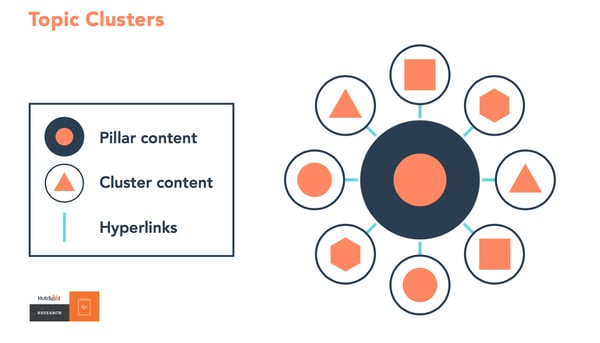
Building a solid information architecture is incredibly important for ranking well in organic search across a broad topic area. Creating hyper-focused clusters of content geared around a specific topic will not only help solve for that, but also enable you to keep focused on creating content that your target audience actually cares about. That means higher efficiency for your search marketing and less time wasted on producing repetitive content that doesn’t help advance your search goals.
The typical way to structure a topic cluster of content, which we outlined earlier, is with one larger piece of content that broadly covers the core topic, otherwise known as pillar content. Here’s an example to illustrate this:

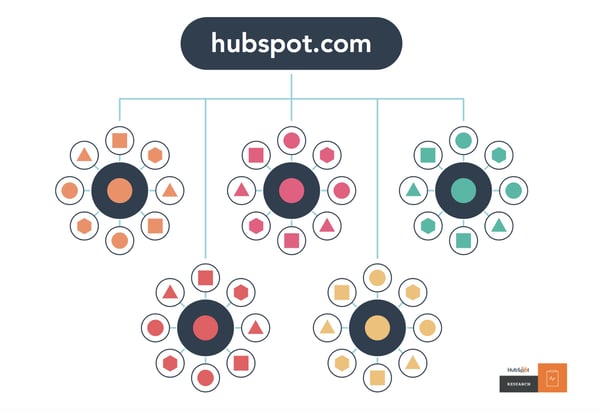
In the above example, the core topic is “workout routines.” Each of the surrounding subtopics focuses on a more specific branch of the core topic, for example, “workout routines to build lean muscle.”
The role of the pillar content is to cover the core topic broadly while also converting visitors into leads (or whatever your conversion goal is). The cluster organization also signals to search engines that the content has more in depth information on the topic, in turn giving your pillar page a higher level of authority on the topic while gaining higher search placement from orderly linking.
The beauty of this model is that you can spend a lot more time optimizing your pillar content for conversions and your cluster content for traffic. This saves a lot of time compared to the traditional model of optimizing each individual post. It also makes it easier for you to give a better user experience while sending a positive signals to the search engines with this site architecture.
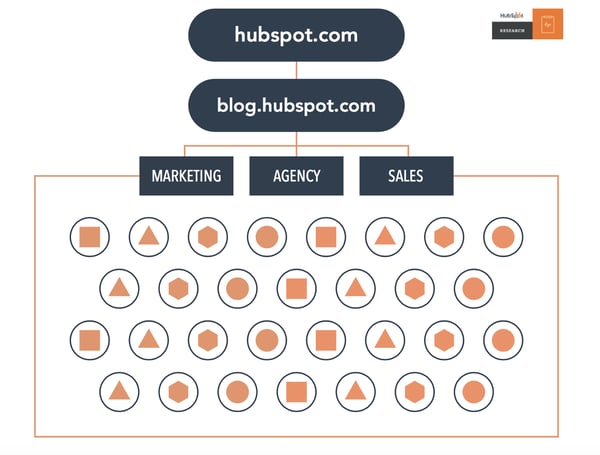
For example, the typical organization of a blog may look like the below, with lots of overlapping and repetitive posts on a few focus topics:
A blog using topic clusters would look like this, with multiple posts all linking back to their respective pillar pages for each core topic:
 An example of pillar content that we’ve produced at HubSpot would be our Blog Topic Generator tool.
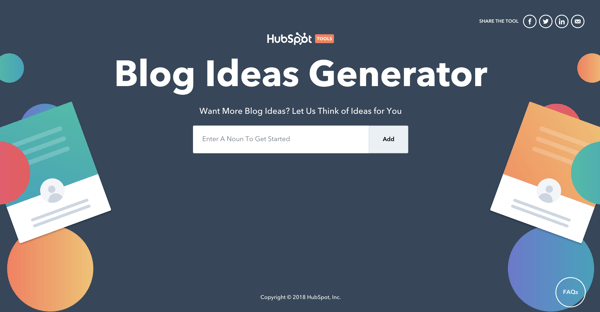
This pillar content brings in a substantial amount of new leads every month and gets a considerable amount of traffic. Tools work particularly well for pillar content because they’re often evergreen content and get shared a lot.
We’ve built out a wide range of cluster content that ties into specific subtopics. An example of this would be our blog post titled, “How to Think Up a Year’s Worth of Blog Post Topics in an Hour,” which has an internal link pointing to the Blog Topic Generator tool. For more inspiration, check out these great pillar page examples.
This content will drive traffic to the pillar content and push positive link signals to the search engines in the process, increasing both the organic search visibility and leads generated from the overall topic cluster.
How to Create a Topic Cluster Plan
Before you get started creating new topic clusters of your own it’s important to determine if this is the right approach for your site. You can figure this out by asking yourself three simple questions outlined in the chart below.
- Does the topic you want to rank for have enough search volume to be worth the time and effort?
- Do you already have content covering the topic? If so, you may be better off using what you have and adding internal links.
- Is the topic something you want to cover in detail? If you’ve made it this far and the answer is “yes”, you can start creating your own topic cluster.
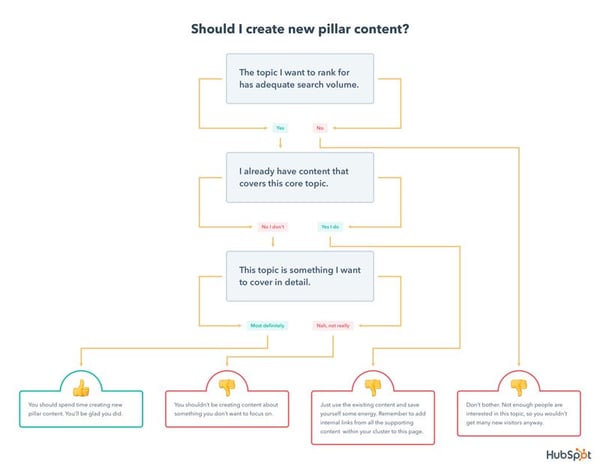
When it comes to actually mapping out topic clusters, there’s a general process that works particularly well. Follow these steps to create your own pillar page:
- Map out 5-10 of the core problems that your buyer persona has (use surveys, run interviews, and do some secondary research within online communities).
- Group each of the problems into broad topic areas.
- Build out each of the core topic with subtopics using keyword research.
- Map out content ideas that align with each of the core topics and corresponding subtopics.
- Validate each idea with industry and competitive research.
- Create, measure, and refine.
This is a simple overview but should help you to begin to prioritize content ideation and production. Following this process will help you to structure your editorial calendar for the topic cluster content model.
But how do you figure out what content to focus on? This is where keyword research comes into play. Keyword research is a helpful way to determine what content your target audience already is looking for so you can reach them in a way that is relevant and impactful to them.
To get started, create a list of broad topics that are important to your business. Then fill in each topic with potential keywords you think your audience will search for. It’s better to not self-edit during this stage and write out as many keywords as you can think of. For example, if your main topic is Instagram marketing, your subtopics might include Instagram business accounts, Instagram captions, Instagram hashtags, and Instagram analytics.
Once you have your list, search for these terms or use a tool such as Ubersuggest to find related keywords and terms you may not have initially included in your list. Make sure you have a mix of long-tail and short-tail keywords.
Now that you’ve finalized your keyword list, see how your competitors rank for each of them using a service like SEMRush. This will allow you to find gaps in their search strategy as well as single out important words and phrases to aim for in the pillar content you create. After all of those steps are complete, use Google’s Keyword Planner or HubSpot’s keywords tool to narrow down the keyword list.
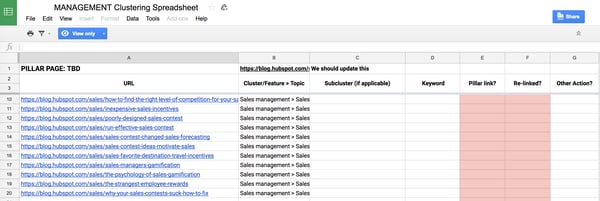
Once you’ve developed your core topic and cluster content, create a tracking document to keep track of your existing content and cluster strategy. Tracking documents can help organize your clustering process to make sure all of your content has been linked correctly. For HubSpot customers, you can automate clustering using HubSpot’s content strategy tool.
How to Measure the Success of Your Topic Cluster
You’re probably wondering, “how do I measure the success of a piece of content?”
The answer to this question is complicated because, for the most part, it’s not a great idea to evaluate the success of your campaign on a content-by-content basis. Just looking at the success of one blog post is difficult at the best of times, but more often than not, the definition of success is too narrow to account for indirect benefits that it has.
A good example of this would be with more brand-driven content. The focus here isn’t around generating sales or even capturing email addresses, but instead it can be around elevating the brand, attracting new talent, or even earning backlinks or press coverage.

If we based the success of our “Our Story” page on the number of leads it generated, it would appear to be performing terribly. However, this page has over 5,000 backlinks from external websites and gets a huge amount of traffic from potential hires looking to join our company.
Luckily, this problem can be solved by evaluating success on a topic cluster level instead.
Measuring the entire topic cluster against all of your core business metrics will enable you to include residual benefits coming from content that doesn’t align with direct conversion goals. Let’s say one of your blog posts is a study with a bunch of original data that gets thousands of backlinks — this page will pass on authority across all the pages in the topic cluster and grow the search visibility across the cluster. That’s difficult to measure in isolation, but can be done on a topic level.
Using this framework for measurement, you’ll be able to understand the following:
- Which topics perform better at driving traffic to your web properties?
- Which topics earn you the most leads?
- Which topics drive the most revenue to the business?
- Which topics earn the most backlinks/coverage?
Search Engines Aren’t Searching for Your Content, People Are
What this all works towards is ensuring that you’re actually creating content that people want to see, as opposed to content that’s designed specifically for the search engines. Don’t forget, search engines are pretty smart. In most cases, they don’t require you to ever mention a specific keyword in the copy of your content to understand that it’s relevant.
Shifting your focus to building content on a keyword-by-keyword basis and moving to owning topics is going to help you create better content, increase your visibility in the search engines, and provide a more positive experience for visitors.
Editor’s note: This post was originally published in October 2018 and has been updated for comprehensiveness.


UK judge rules against Epic in bid to sue Apple despite mixed Google decision

Epic’s legal battle with Apple has hit a roadblock in the UK. Despite a mixed ruling on Epic’s right to sue Google, Justice Roth has ruled that a lawsuit against Apple doesn’t reach the UK court’s jurisdiction.
The post UK judge rules against Epic in bid to sue Apple despite mixed Google decision appeared first on 9to5Mac.
Concept: The natural next step for the iOS emoji keyboard after search is favorites

As Apple adds more emoji with each subsequent iOS update, it’s getting harder and harder to sift through all them just to find the emoji you want to use. The “frequently used” emoji panel helps with this to some extent, but it is dynamic and only “remembers” so many. Typing descriptors to search for emoji can be tedious, and what if you don’t know the proper search terms to bring up the emoji you want? Or, if you are like me, you tend to frequently use just a select few emoji? The solution is the implementation of “favorite emoji.”
The post Concept: The natural next step for the iOS emoji keyboard after search is favorites appeared first on 9to5Mac.