
Welcome to My Blog
What is YouTube Shorts & How to Make One [+7 Brand Examples]
Did you know that the first video published on YouTube was only 18-seconds long?
While short-form content on YouTube isn’t new, it does have a new name: Shorts. Launched in 2021, Shorts is YouTube’s answer to TikTok, Instagram Reels, and other viral video platforms. But is it worth your time?
![→ Free Templates: How to Use YouTube for Business [Download Now]](https://no-cache.hubspot.com/cta/default/53/b33cfd44-133a-49e3-a943-086c5679d485.png)
Let’s talk about what YouTube Shorts is, how it works, and how brands like yours can leverage it.
Table of Contents
What Makes YouTube Shorts Different from Its Competitors
How 7 Brands Use YouTube Shorts
How to Prepare for YouTube Shorts
The launch of YouTube Shorts comes at a time when many social media platforms are making a drastic pivot towards video content — specifically short-form content.
Even in its most basic beta form, the Shorts feature saw solid performance in India. In March 2021, less than a year later, the Shorts beta was fully released in the U.S., quickly surpassing 6.5 billion daily views. By July 2021, Shorts officially launched globally in over 100 countries.
Today, a few things have changed. Most notably, the time limit on Shorts has expanded to 60 seconds, and many creators take advantage of every second. In fact, more than 70% of Shorts are longer than 15 seconds.
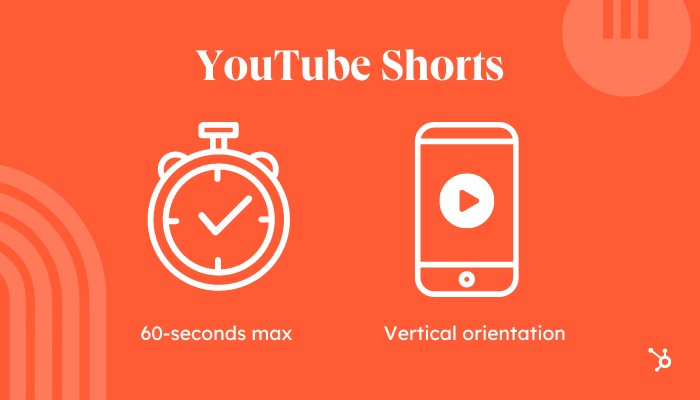 Although Shorts is still in its infancy — and only time will tell how viable it is as a marketing tool – this feature still deserves your attention, especially if you already have a video strategy on YouTube.
Below, I’ll walk through the basics of YouTube Shorts and what opportunities it presents for marketers pivoting to short-form content.
How to Make YouTube Shorts
When you have the YouTube app, creating a Short is one tap away.
When you land on the home screen, you’ll see the “+” icon on the lower center navigation. Once you click it, you’ll see “Create a Short” from the menu.
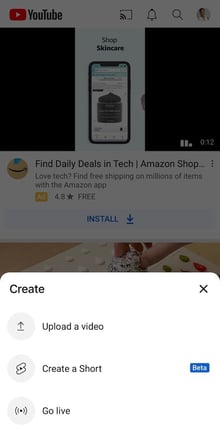
When you tap Create, it opens to a camera screen that allows you to:
- Record segments of a 60-second clip or a full minute-long video.
- Upload pre-created content from a camera roll.
- Film a “short” with back or front-facing cameras.
- Adjust video speed.
- Set a recording timer.
- Pick sounds for musical overlays.
- Add filters and text.
Here’s a quick screenshot of some of the platform’s features.

Watching YouTube Shorts
YouTube has a dedicated tab for Shorts which can find to the left of the “+” icon.
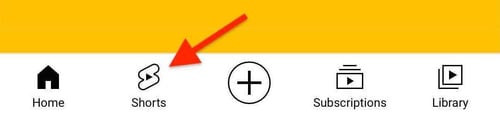
Additionally, in an effort to promote YouTube Shorts, you can find a scrolling menu of recommended Shorts on the home page (see below).
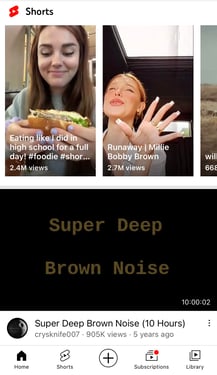
When watching a Short, you can tap icons on the right bottom of the screen to “Like,” “Dislike,” or comment on the video. If you enjoy what you see, you can also tap “SUBSCRIBE” to follow the channel.

Once a viewer finishes a Short, they can swipe up — like on Reels or TikTok – to see a more Shorts from other creators.
What Makes YouTube Shorts Different from Its Competitors
As a marketer, seeing every social media platform pivot to short-form video may feel overwhelming. So much so, you may be asking yourself, “Is YouTube Shorts worth my time?” or, “Will it provide more opportunities than Instagram Reels or TikTok?“
Because YouTube Shorts is still in its infancy, it’s too early to measure its impact. That said, there are a few noteworthy factors that differentiate it from the pack:
1. Shorts provide a funnel to your long-form content.
To state the obvious, people like to engage with different videos throughout the day. For instance, someone may scroll through TikTok during their lunch break but then play a 2-hour long podcast on YouTube when they get home.
Unlike TikTok and Snapchat, which are entirely dedicated to short-form content, YouTube is positioning itself as the go-to destination for both short- and long-form content.
In this way, Shorts could be a way for creators to reach a new audience who may become regular viewers of their longer content — giving you the best of both worlds.
2. Shorts do not expire.
While Instagram Stories and Snapchats expire after 24 hours, Shorts are permanent — which can help your grow awareness long-term on YouTube.
For example, if someone’s in a rush and searching for a quick how-to video related to something you’ve filmed, they might find and watch your short videos on that topic — even if you published them months ago.
3. Short-form creators could see a bigger reach.
While Gen Z users flooded TikTok, causing its astounding early growth, YouTube, the second largest website globally, launched Shorts to more than 2 billion monthly active users.
Rather than wondering, “Will YouTube Shorts get awareness?”, ask yourself instead, “How do I tap into YouTube’s huge audience with Shorts?”
According to Nelson Chacon, HubSpot’s principal YouTube content strategist, you’ll want to know which segment of YouTube’s huge audience you want to market to before producing Shorts — or any other YouTube video for that matter.
Additionally, if you have a solid subscriber list, continue to create content that’s still relevant to them — even if it’s shorter-form.
“Your subscribers know your channel for its content and Youtube, as a platform, works best with consistency,” Chacon says.
For example, say you regularly create long-form content related to your product or industry and find that it engages your audiences. Chacon notes that you can use Shorts to create quick tutorials or step-by-step videos around those content topics.
4. Brands in most industries could leverage Shorts.
Because TikTok has a somewhat niche user-base filled with younger consumers, some types of brands, such as B2B companies, might have a harder time growing awareness there.
While YouTube shares similar popularity with young adults, the content on its platform is so vast that it brings in people from all sorts of age groups, countries, industries, and niches.
Ultimately, there’s a video for everyone on YouTube. With Shorts, more brands will be able to engage with audiences from a much wider range of audience targets.
For example, while a B2B brand might have difficulty connecting with Gen Z consumers on TikTok, they might be able to connect with professionals looking for industry-related content on Shorts.
Similarly, if you target older generations, such as Gen X, your short-form content might get more engagement on YouTube than TikTok.
5. YouTube Shorts could be less vulnerable than other viral platforms.
Throughout most of 2020, TikTok was facing threats of a ban and censorship regulations.
If you’re a marketer who spends time mastering content strategies on a social media app, a ban or regulation of that app could mean that the content you’ve worked so hard on might never be seen.
However, because YouTube is one of the oldest and most successful online platforms, and it’s owned by the publicly traded Alphabet, it might be seen as more trustworthy than viral apps that provide less public data security information – like TikTok.
How 5 Brands Use YouTube Shorts
1. ESPN
Looking for bite-sized news about your favorite pro athletes? ESPN has you covered by providing Shorts that showcase trending videos, highlights, and fiery commentary.
ESPN’s YouTube channel has a loyal audience with over 8.5 million followers. By utilizing Shorts, the network is leveraging another format to connect with its audience online.
2. MrBeast Shorts
For Youtube megastar Mr. Beasts, Shorts are a great way to repurpose content from longer videos.
If you’ve been in the YouTube game for a while, consider clipping segments from your existing long-form content to make minute-long Shorts. While it may take some finessing, creating Shorts can breathe new life into your past content.
Plus, YouTube’s new “Edit into a Short” feature makes it easier than ever to cut videos into bite-sized snippets.
3. The Voice
To promote its new season, NBC’s The Voice created a Short featuring this year’s hosts.
What works well here:
- It serves as an ad for the brand.
- It utilizes text to emphasize certain phrases and keep the audience engaged.
- It includes a banner at the end with clear directions for viewers on when and where to watch the show.
4. LYFE Marketing
Who said informative content had to be long? LYFE Marketing shows that you can create fun, engaging, and informative content in under 30 seconds.
In this Short, the brand breaks down color psychology. The talent in front of the camera simply points to the text which appears on different parts of the screen during the video.
If you don’t have a big media budget, this is an effective, low-effort method of creating content your audience will be interested in.
5. WebFX
Shorts are a great way to repurpose content. You can take content from a blog post, live stream, or downloadable report to create a short-and-sweet video.
Digital marketing agency, WebFX, created a short to explain the costs behind social media marketing.
With the use of graphics, WebFX delivers great information in a succinct way. It’s likely the brand has an article or other form of content that dives deeper into this topic.
But for social media, snippets are the way to go. When done right, they pique your audience’s interest and lead them to your website.
6. Danessa Myricks Beauty
Have exciting news you want to share with your audience? Take a page out of this brand’s playbook.
In this countdown-style video, Danessa Myricks Beauty used a short to promote its launch in Sephora and build some anticipation.
In the first half of the video, multiple people can be heard saying “One more day.” Then, we see the CEO sending off a package to be sent to Sephora stores.
Here’s why this works: There’s no time wasted in this Short. It’s engaging from the very start and every frame serves a purpose. Secondly, there’s a clear message – the audience leaves knowing the 5Ws (who, what, when, where, why).
Lastly, this Short creates excitement for the brand’s growth and invites the audience to join in the countdown.
7. Satori Graphics
Here’s another great example of how graphics and illustrations can take your Shorts to another level.
Satori Graphics is a popular YouTube channel to learn graphic design. The channel features hundreds of long-form videos on the topic and this Short serves as an extension of what’s already on the channel.
This tactic can work well for attracting new viewers to the channel, as a one-minute video is less intimidating than a 20-minute video. It’s similar to how you present a content offer at the end of a blog article.
A reader may be more likely to read a blog post first than read a 20-page report, as it’s an easier point of entry. The same concept can apply to Shorts.
How to Prepare for YouTube Shorts
While we aren’t sure how Shorts will evolve, it’s not too early to consider how you could implement it into your social media or video marketing strategy. Here are a few quick tips to keep in mind.
- Optimize short YouTube videos: Chacon says global creators should begin to add, “#shorts” to descriptions of videos that are 60 seconds or less.
- Identify short-form topics: Are there any topics your team creates content around that could be distilled into a few quick tips, steps, or data points? If so, you might be able to repurpose this information by creating a Short.
- Audit your short-form videos: Have you created Instagram Reels, TikToks, or other social media videos that would only need a few light tweaks to engage your YouTube audience? If so, you could test them on Shorts when the platform launches.
To learn more about YouTube Marketing, check out our Ultimate Guide – or download the free resource below.
Editor’s Note: This post was originally published in March of 2021 and has been updated for comprehensiveness.

What Is the 80/20 Rule? How the Pareto Principle Will Supercharge Your Productivity
If you’re sitting at your desk staring at your to-do list and you have no idea where you should start, you need to apply the Pareto Principle, otherwise known as the 80/20 Rule.
The Pareto Principle, or the 80/20 Rule, is a common principle used across various industries and businesses to help determine the highest priority tasks that yield the most impact. When you’ve identified the high-impact tasks, you’re guaranteed to increase your productivity and your profits.

In the early 1900s, Vilfredo Pareto recognized this occurrence when studying Italy’s wealth distribution. Pareto observed that 80% of Italy’s land was owned by only 20% of the population. Pareto also noticed this same 80/20 occurrence in other things, like the productivity of the pea plants in his garden.
It is important to understand the 80/20 Rule is not a mathematical formula. Instead, it is an observation explaining the correlation between effort and outcome. If only 20% of your task list is deemed a high priority and those high priority tasks yield the highest return, why not spend your time and effort there?
Examples of the Pareto Principle
In business, for instance, this means 80% of your profits come from 20% of your sales. So, it would help if you focus your energy on those clients who make up the 20% of your highest sales.
If you’re a marketer, you may have noticed that 20% of your marketing messages account for 80% of your campaign results. Or, if you’re working on a major marketing project, you might see that 20% of your initial efforts are responsible for 80% of the final outcome.
If you’re a financial advisor, you might have noticed that 80% of your business profits derive from 20% of your clients. It might be best to work on maintaining the relationship with those particular clients.
The Pareto Principle doesn’t just apply to overall outcome observations, though.
Instead, the 80/20 Rule can be applied to nearly every part of your workday to help maximize efforts and productivity.
How to Use the 80/20 Rule to Your Advantage
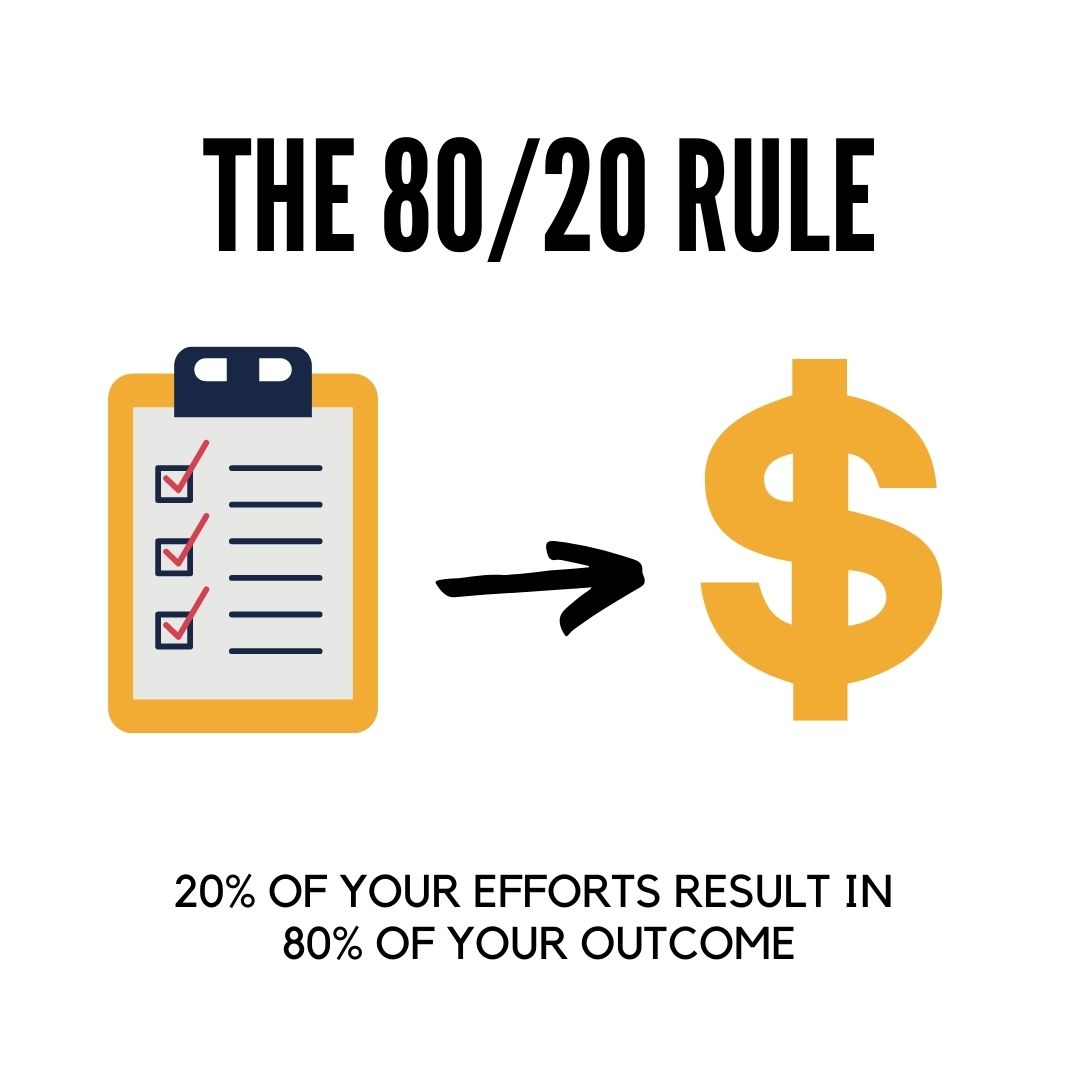
According to the 80/20 Rule, 20% of your efforts produce 80% of your results.
If you think about the Pareto Principle in terms of productivity, it doesn’t necessarily mean you should only work 20% of the time or go into the office one day of the week.
It is essential to note the Pareto Principle does not suggest you work less.
Instead, when applying the 80/20 Rule to your workday, the Pareto Principle can help you identify the tasks you need to focus on to maximize your time and results.
In other words: work harder on the tasks that matter the most and don’t sweat the small stuff.
How to Apply the 80/20 Rule to Maximize Productivity
If you are in charge of a team or overseeing a project, using the Pareto Principle can help you identify your team’s high-priority tasks. The 80/20 Rule assumes that even if your team spends an equal amount of time on each task on the to-do list, only two of those tasks will carry the bulk of the results for the project.
So, to apply the Pareto Principle, you’ll need to make a list of all tasks that need to be done to complete the project. Make sure you include everything on this task list. After making a list, consider which tasks will have the most significant impact on the project to give the highest results. Some tasks may seem small, but sometimes the smaller tasks have the most significant effect.
Delegate these high-impact tasks to your team and worry about the other tasks later.
You can apply the same concept to your own to-do list. Identify which tasks will yield maximum results and focus your efforts there.
How to Apply the Pareto Principle to Make Business Decisions
The 80/20 Rule can help you make tough business decisions, too. Maybe you have a list of projects for several different clients, but you’re running short on time. If the 80/20 Rule is true, you’ll want to focus your time and efforts on pleasing and developing solid relationships with the 20% of your clients who yield the most results for you (read: profits).
This isn’t to say you should be unprofessional and disrespect your other clients. But, if you’re feeling overwhelmed or tight on time, it might be helpful to recognize where you’re receiving the most of your results and dedicate your time and effort to those clients.
The Pareto Principle can also help you think about business problems and potential solutions. To apply the Pareto Principle to help you solve your problem, think of all the possible solutions, and work backward. You’ll want to work on the two best solutions that solve your problem.
Avoiding the Pitfalls of the Pareto Principle
Like all principles, the Pareto Principle has a few drawbacks.
It’s important to remember that the 80/20 Rule is not about reducing your workload. Instead, the Pareto Principle helps you identify the most critical, high-impact tasks on your to-do list. Don’t neglect the small tasks, unimportant tasks, though. Eventually, those small tasks will become important if you let them sit too long.
The 80/20 Rule might help you identify which of your employees are producing the most work if you’re managing a team. Looking at the 20% of employees that complete 80% of the work doesn’t necessarily mean you should fire everyone else. Instead, use the findings of the Pareto Rule to delegate tasks to your team fairly.
Encourage your team to collaborate on high-priority tasks. Or assign different jobs to different people and check in with everyone to ensure they feel responsible for their part of the equation. Your employees will be encouraged to work harder if they know they’re contributing to the biggest piece of the rewards—not just the minor details.
Understanding the Pareto Principle
Remember, the numbers 20% and 80% are not exact statistics, just estimations and observations. The point of the 80/20 Rule isn’t the numbers. The point is everything in business is not created equal. There are a few things that are weighted with a far greater reward compared to other things.
Spend your time working on tasks or working with clients that will yield the highest results. Applying the Pareto Principle to your business makes you more likely to increase your profits while cutting back on wasted time and efforts.
Editor’s note: This post was originally published in [Month Year] and has been updated for comprehensiveness.

12 Essential YouTube Advertising Statistics for 2022
YouTube is the internet’s second largest search engine, meaning that advertisers have significant potential when it comes to reaching audiences and driving conversions.
In this post, discover essential YouTube advertising statistics you need to know in 2022.
YouTube Advertising Reach Statistics
- YouTube advertising revenues reached 7.34 Billion USD in Q2 of 2022, a 5% YoY increase. (Statista, 2022)
-
YouTube ads have the potential reach of 2.56 billion users, or roughly 1 in 3 people on Earth. (Hootsuite, 2022)
- YouTube ads reach more than three quarters of adults aged 18+, and more than 90% of adults in a total of 14 countries. (Hootsuite, 2022)
- YouTube’s biggest advertising audience is males between 25 and 34. (Hootsuite, 2022)
- The cost of YouTube ads can vary and can cost between $0.10 and $0.30. (HubSpot, 2022)
YouTube Advertising Statistics
- Apple Inc. and Disney were the top spending advertisers on YouTube in 2021. (Statista, 2021)
- 63% of people say they bought from a brand after viewing an ad on YouTube. (Think With Google, 2022)
- YouTube ads with strong CTAs have shown to increase the likelihood of short-term sales by 30%. (Think With Google, 2022)
- Audio is the No. 1 lift multiplier for effective YouTube ads. (Think With Google, 2022)
- The attention, branding, connection, direction (ABCD) YouTube ad strategy delivers a 30% lift in short-term sales and a 17% lift in customer lifetime value. (Think With Google, 2022)
- Testing different YouTube ads can lead to greater success, as advertisers who tested different YouTube ads and used the most effective result saw a 60% higher ad recall. (Think With Google, 2021)
- Using YouTube’s native product feed tool to showcase your products alongside your ads can drive on average over 60% more conversions. (Google, 2021)
Ready to start filming?
As shown above, advertising on YouTube has the potential to reach large audiences and drive high ROI. To reap these benefits, create a marketing strategy for the platform and, as they say, lights, camera, action!

5 Myths Marketers Got Wrong About Gen Z, According to Data & Our Gen Z Intern
To be honest, Gen Z can feel like foreign territory to all. Even myself, born in 2001. Although I’m smack in the middle of the TikTok, middle-part wearing generation, I don’t always fully understand the trends we start, stop, or totally cancel.
Even though I’m no genius when it comes to how to market to our generation, I can tell you it’s pretty obvious when marketers try too hard to sell to us. It often feels too forced and fake.
That’s why I’m here to help! Let me debunk a few myths and predictions marketers might have made about our wild generation so that you can find the right ways to grab our attention and keep us engaged. Let’s dive right into some of those incorrect thoughts, debunk them with data from our State of Consumer Trends Survey, and discuss tips for what you can do instead.

5 Gen Z Myths, Debunked
1. “Gen Z is obsessed with fast fashion.”
It’s easy to see SHEIN or Princess Polly hauls on TikTok or Instagram and think these represent our generation. Of course, these online retailers do have a grasp on our generation to some extent, but what grabs our attention are retail resale sites. For example, 90% of Depop’s users are younger than 26.
Today, Gen Zers are purchasing this apparel, but in a much less harmful way, being that resale clothing is second-hand.
Instead of getting caught up in cheap prices and deals, Gen Z, more than any other generation, considers the brand’s ethics and its stance on social issues. You don’t just need to take my word for it. we surveyed over 100 Gen Zers and found that how a brand approaches social responsibility has a real impact on Gen Z purchase decisions.
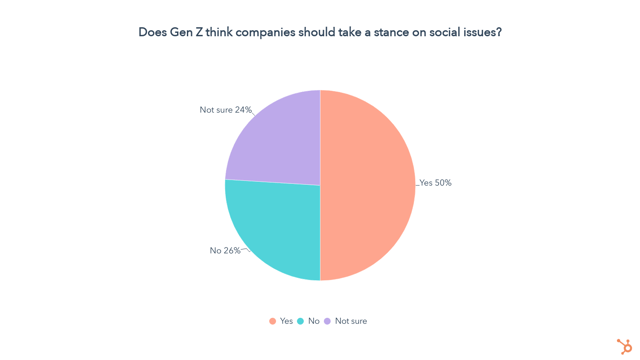
And, when we asked whether companies should take a stance on social issues, 50% of Gen Z said they should. As a marketer, this means that, if you haven’t already, you need to prioritize this for Gen Z and even younger millennial audiences.
I also urge you not to think of social issues as a broad term that is often thrown around without any substance to back it up. Instead, break it down into specific issues that you can actually fight with tangible results. And, just to help you out even more, here is where to start:
When we asked Gen Zers who want companies to take a stance on which issues are most important to them, racial justice was by far the top issue (69%), followed by LGBTQ+ rights (50%), gender inequality (46%), and climate change (42%).
2. “Data privacy and security are irrelevant for Gen Z.”
I get why many people believe this one. Gen Z is known for being glued to their phones, which obviously comes with the risk of unsecured and unrestricted data.
Furthermore, we are the TikTok generation, and – as many of us know — TikTok has had its share of privacy concerns. And yes, we may come across as irresponsible at times, especially when it comes to social media (the milk crate challenge was not the best idea); but don’t underestimate us.
As the first generation born into a technology-based world, we’ve seen the realities of a digital space more than any other generation, so data security and safety are naturally top of mind.
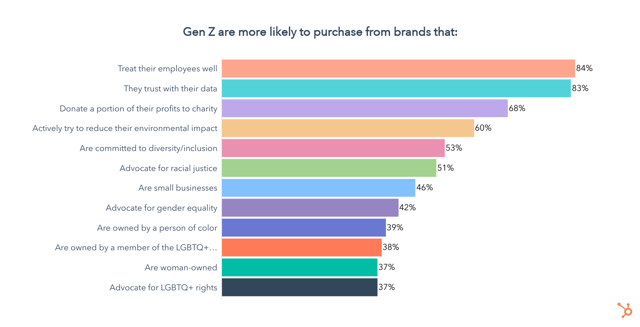
As you can see in the graph above, Gen Z purchase decisions are strongly influenced by whether or not they can trust a company with their data (as it is the second highest ranked consideration before purchase, at 83%).
The data above means that, as a marketer, you need to convey data privacy to our generation and can’t just assume we don’t care about these criteria. Assure us that we aren’t being scammed or exploited. We may not always prioritize it over experience and entertainment (as seen with our usage of TikTok), but don’t believe that you can do anything with our data, and we won’t mind.
3. “TikTok is The Best Way to Reach Gen Z”
TikTok is a great space for Gen Z; it offers a genuine feel to the content that no other app provides. This style is quite attractive for some of our shorter attention spans and busy schedules. In fact, TikTok is the app Gen Z uses most often. Despite this, surprisingly (or not), it’s not our favorite social media platform.
When we asked Gen Z their favorite social media app, Instagram and YouTube easily took the cake, with TikTok placing third, as seen in the graph below.
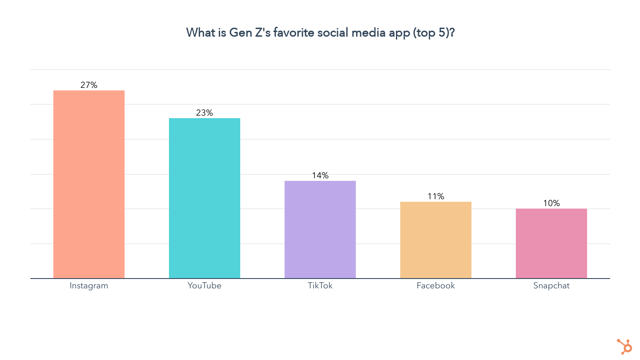
From your perspective as a marketer, this means that even though a significant effort should still definitely be made to generate TikTok content, don’t forget about our trusty old friend Instagram – even for Gen Z.
There are many reasons why Gen Z shies away from directly buying on TikTok. These include the concern for data privacy previously mentioned and just wanting to use that space for the sake of connection and entertainment rather than advertisements and purchasing.
So, If you plan to sell directly through social media, Instagram definitely should be your go-to (as 28% of Gen Z saying they bought something directly in a social media app in the past three months).
HubSpot’s recent Instagram Marketing Report goes into more detail on why the app presents such an opportunity for social marketing and selling, so don’t lose sight of it!
4. “Put a product in front of Gen Z, and they’ll buy it.”
Even though we do gravitate towards TikTok-style content, that doesn’t mean we’re receptive to just any type of short-form videos, including those that market products.
Before making a purchase via social media, we need to be made to feel like we found the product on our own. We don’t want to feel forced into any decision, especially when it comes from a clear advertisement that we can’t relate to.
To persuade Gen Z, brands must prioritize making entertaining content that feels authentic to grab our attention. Then, once they have our genuine interest, they can more easily slip in their product rather, than getting yet another eye roll from us.
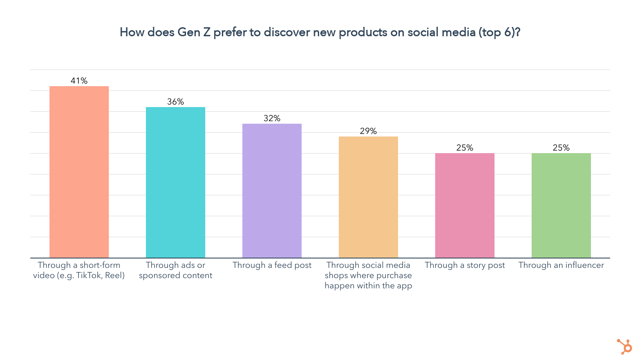
As this graph above shows, the top way we prefer to discover a new product is through TikTok, Reel, or other short-form video formats, where the product is shown but not imposed on us. In a world where we are often made to feel powerless, we strongly value a sense of autonomy and agency– help us feel empowered through your actions.
5. “Word of mouth is a great way to reach Gen Z.”
Yeah, I know this may seem contradictory as we really like to talk but hear me out. As just outlined, Gen Z is stressed: we feel out of control, doomed, and like the weight of the world lies on our shoulders.
With that comes a unique sense of camaraderie and connection among us. As a result, Gen Zs trust other Gen Zs as they are also going through the same shared emotions. And, what better way to unify than via social media?
We have turned social media and online communities into our modern-day version of word of mouth. Therefore, we even trust influencers’ recommendations more than those from our friends and family.
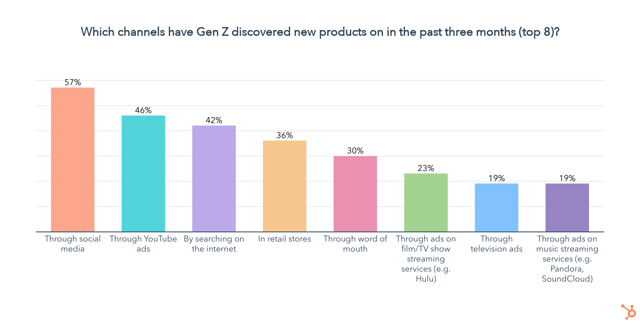
This graph above helps emphasize that your marketing focus should be on connecting with Gen Z in the spaces we feel comfortable: social media. Sorry, Mom and Dad, but you don’t have much influence over us anymore.
More Resources for Marketing to Your Target Audience
Now that we’ve explored and debunk some of the biggest Gen Z myths and predictions, you might be wanting to learn even more about the generation and how they shop. Here’s a quick list of more data-driven resources that we hope you enjoy:
- The State of Consumer Trends [Data from 1000+ Consumers]
- How Each Generation Shops Differently
- 5 Things Gen Z Will Spend Money On
And for a detailed deep dive into all of our consumer trends data survey (including insights not on the blog), download the free report below.

What’s TikTok’s Attribution Manager & How Can Advertisers Use It?
TikTok just announced a new feature in its Ads Manager platform, which allows advertisers to customize their attribution window for better tracking and performance.
Let’s break down how the attribution manager works, how to access it, and the benefits of using it.
Breaking Down Key Attribution Terms
Before we get into this new TikTok feature, let’s first get a refresher on some key terms:
Attribution – A reporting strategy that allows advertisers to know the path users are taking after clicking or viewing an ad.
Attribution window – The time between when a user clicks or views an ad and when they convert.
Conversion – The desired action taken by a targeted user, such as visiting a website or making a purchase.
Now that we have the basics down, let’s dive into TikTok’s new attribution manager.
Understanding TikTok’s Attribution Manager
When it comes to ad campaigns, no two are the same. The goal for one may be to increase purchases for a particular product while for another, it may be to raise brand awareness.
Brands may also have contrasting conversion journeys based on their industries.
With that in mind, TikTok introduced customized attribution windows to enable advertisers – those using the TikTok Pixel or Web Events API – to more accurately track performance and assess campaign results.
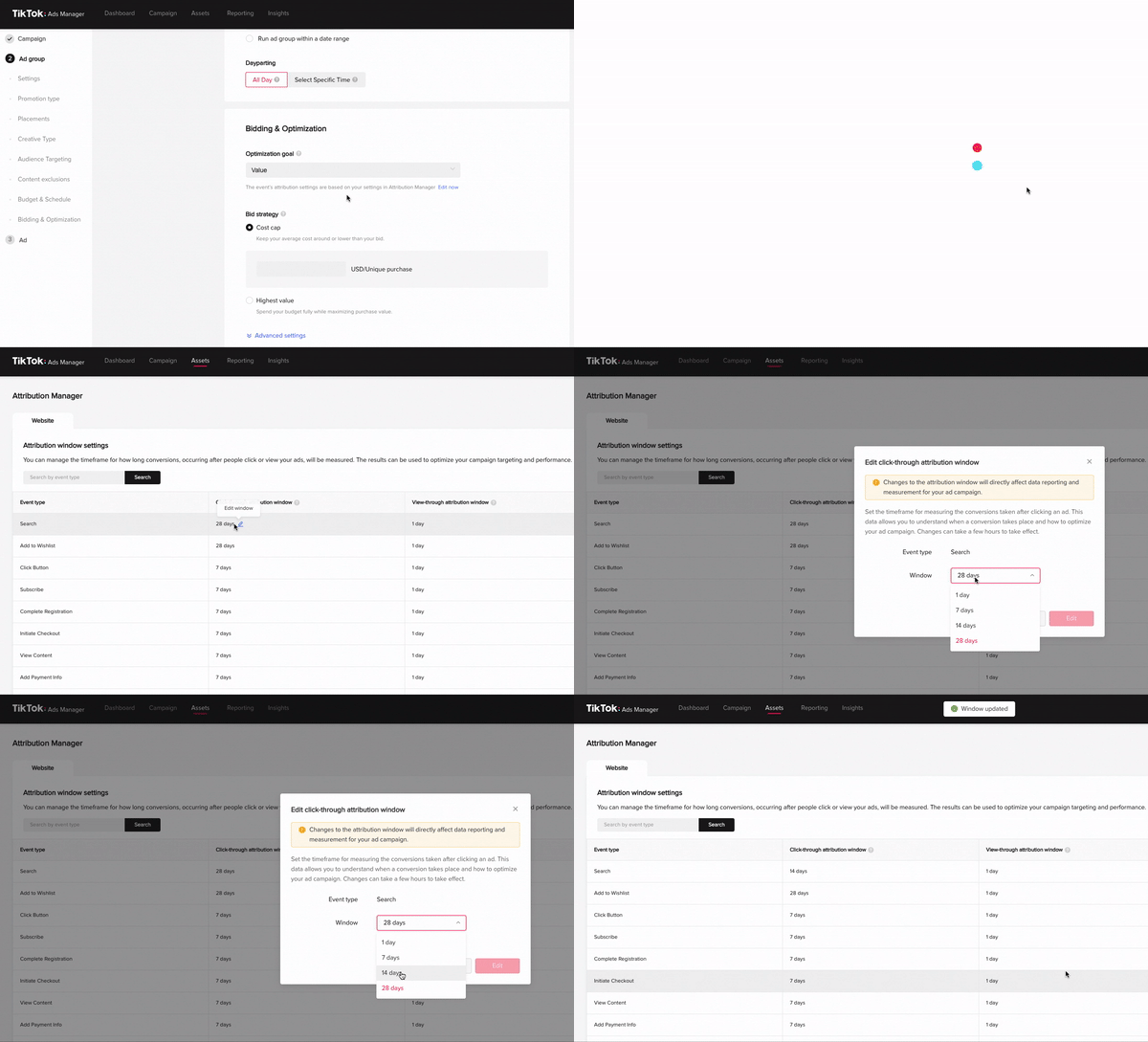
The default setting is a seven-day click and one-day view window. This means that a user must convert within seven days of clicking an ad or 24 hours of viewing an ad for the conversion to register within TikTok’s ad manager.
Advertisers can now set different windows:
- 1, 7, 14, 28 days for clickthrough attribution
- Off, 1, 7 days for viewthrough attribution
When is it valuable to pick a one-day versus 28-day attribution window? It all depends on the goals of your campaign, the industry you’re in, and expected user consideration periods.
Say you’re a B2B software company with an ad campaign to convert free users into premium users. One-day conversions are probably unlikely given the product. However, a 28-day one seems more realistic given that their particular industry deals with longer consideration periods.
A jewelry brand, on the other hand, may opt for a 24-hour attribution window when running a sale.
Pro-tip: Want to sync your ads manager with your CRM? Try Leadsbridge.
How to Access TikTok’s Attribution Manager
Now that you understand how it works, here’s how to access this feature within TikTok’s Ads Manager.
-
Login to TikTok for Business.
-
Navigate to “Assets.”
-
Click on “Events.”
-
Narrow down to “Web Events.”
-
Select “Attribution Manager.”
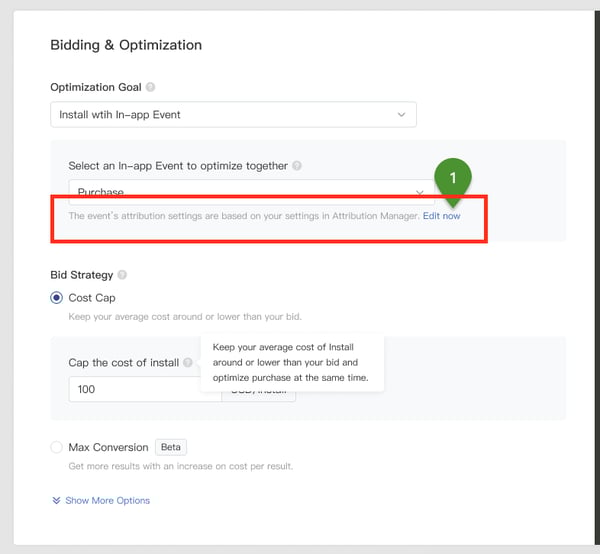
You will also see the option to customize your attribution window when creating a campaign. It should show up under the “Bidding and Optimization” section.
This great addition to TikTok’s Ads Manager will arm advertisers with more reliable data to understand their audience and leverage these insights into action.

How to Promote Your YouTube Channel [+ Tips from HubSpot’s YouTube Team]
In the early days of YouTube, there weren’t a whole lot of YouTubers or brands creating content on the platform, so it was much easier for content creators to stand out. Fast forward to 2022, and there are now roughly 15 million active content creators on YouTube pumping out 500 hundred hours of content every minute.
With that in mind, you’re probably wondering how to promote your YouTube channel so that it stands out above the rest. And how much will promotion cost? Fortunately, there are many tools, tips, and tricks you can use to promote your YouTube channel without having to spend a lot of money — or any money at all.
In this blog, we’ll explore some of my favorite, no-cost methods to promote a YouTube channel.
- Create compelling content.
- Use keywords in your headlines, descriptions, and tags.
- Use hashtags.
- Customize your thumbnails.
- Post regularly.
- Promote your channel on social media.
- Promote your channel on forums.
- Build a community.
- Run a contest.
- Cross-promote your videos on YouTube.
- Collaborate with other creators.
- Create playlists for your YouTube videos.
- Embed your YouTube videos.
- Livestream.
- Add a YouTube widget to your website.
How to Promote Your YouTube Channel for Free
I have my own YouTube channel where I talk about anime, and when I first got started I definitely did not have money to spend on expensive ads or pricey tools to grow my channel. So, I did a lot of the following to find my audience, and I saw growth pretty quickly:
1. Create compelling content.
There are many tactics you can use to attract viewers to your channel, but none of these tactics can make up for lackluster content. The fact is no one wants to get invested in content that isn’t good.
A major key to attracting an audience and encouraging them to subscribe is to create compelling content that will keep them coming back for more.
Pro-Tip: Look at other established content creators in your niche for inspiration. What do you enjoy most about their videos, and what would you do differently? Use your answers to help you figure out the kind of content you want to make.
2. Use keywords in your headlines, descriptions, and tags.
Hundreds of thousands of videos are uploaded to YouTube every day. To ensure your videos reach your target audience, you need to incorporate keywords into your headlines, descriptions, and tags.
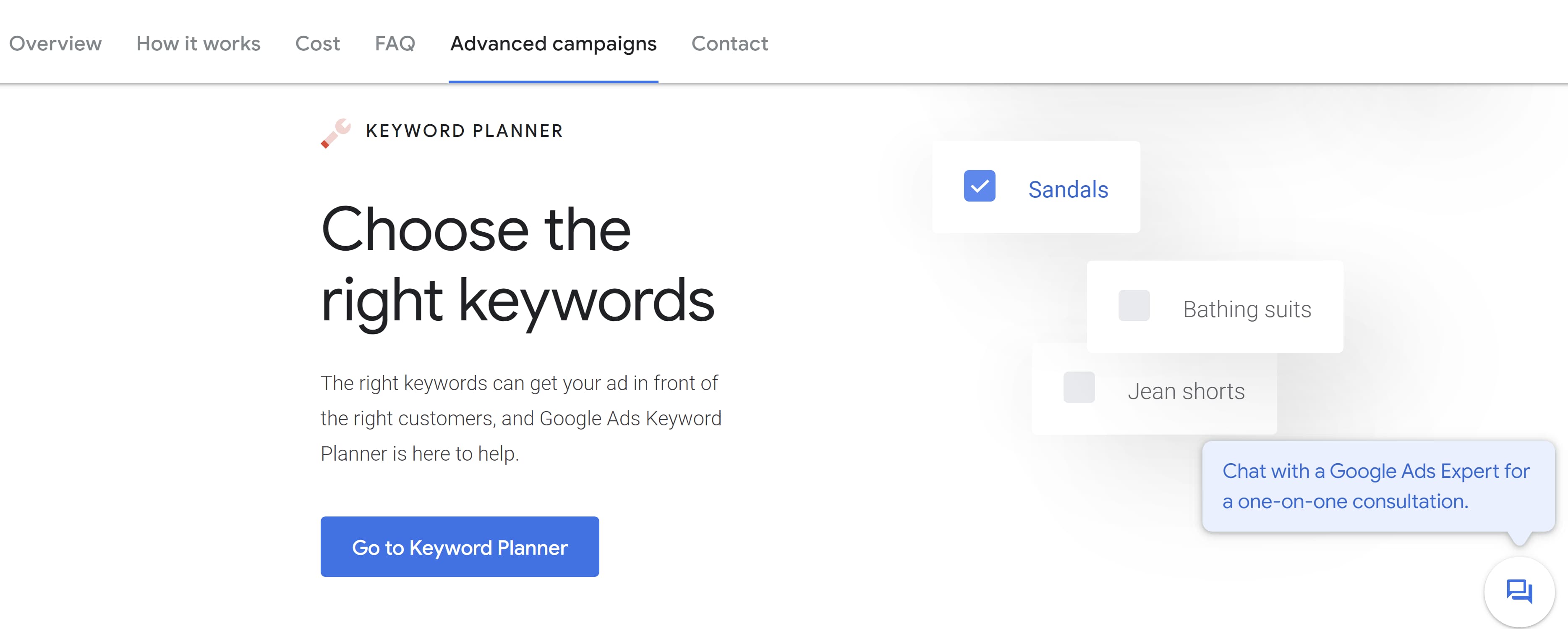
There are free tools like Google Keyword Planner, which can be accessed from your Google Ads dashboard. Don’t worry — you don’t have to run ads to use it. All you need is a Google account.
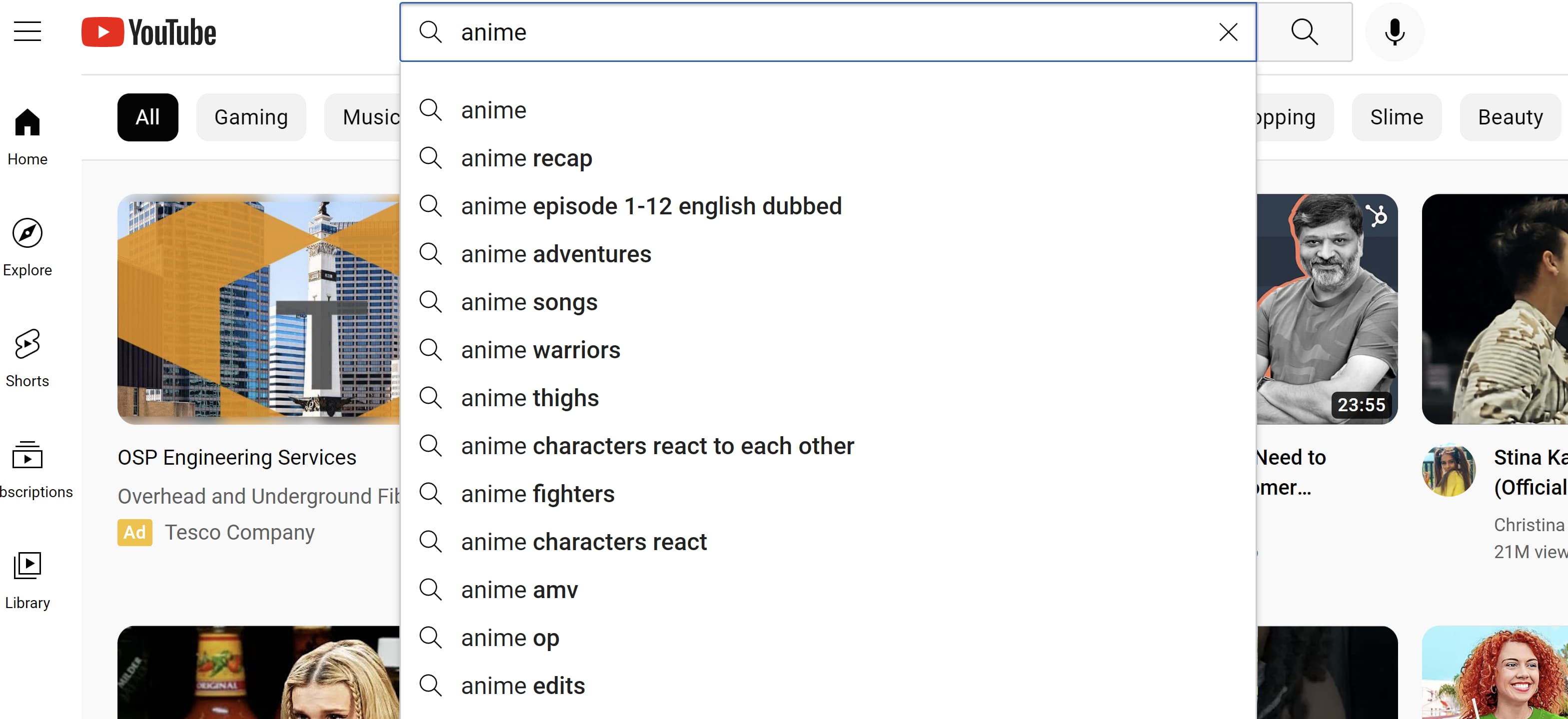
Pro-Tip: One of the simplest ways to find the right keywords without using any tools is to enter your video’s topic in the YouTube search bar, and use the autosuggest to find words and phrases you should incorporate into your content.
3. Use hashtags.
You can also use the keywords you found to create hashtags for your videos’ titles and descriptions. Your video’s content may also inspire ideas for a hashtag. For example, maybe you interviewed a popular guest on your channel — that guest’s name can be used as a hashtag to attract their fans to your content.
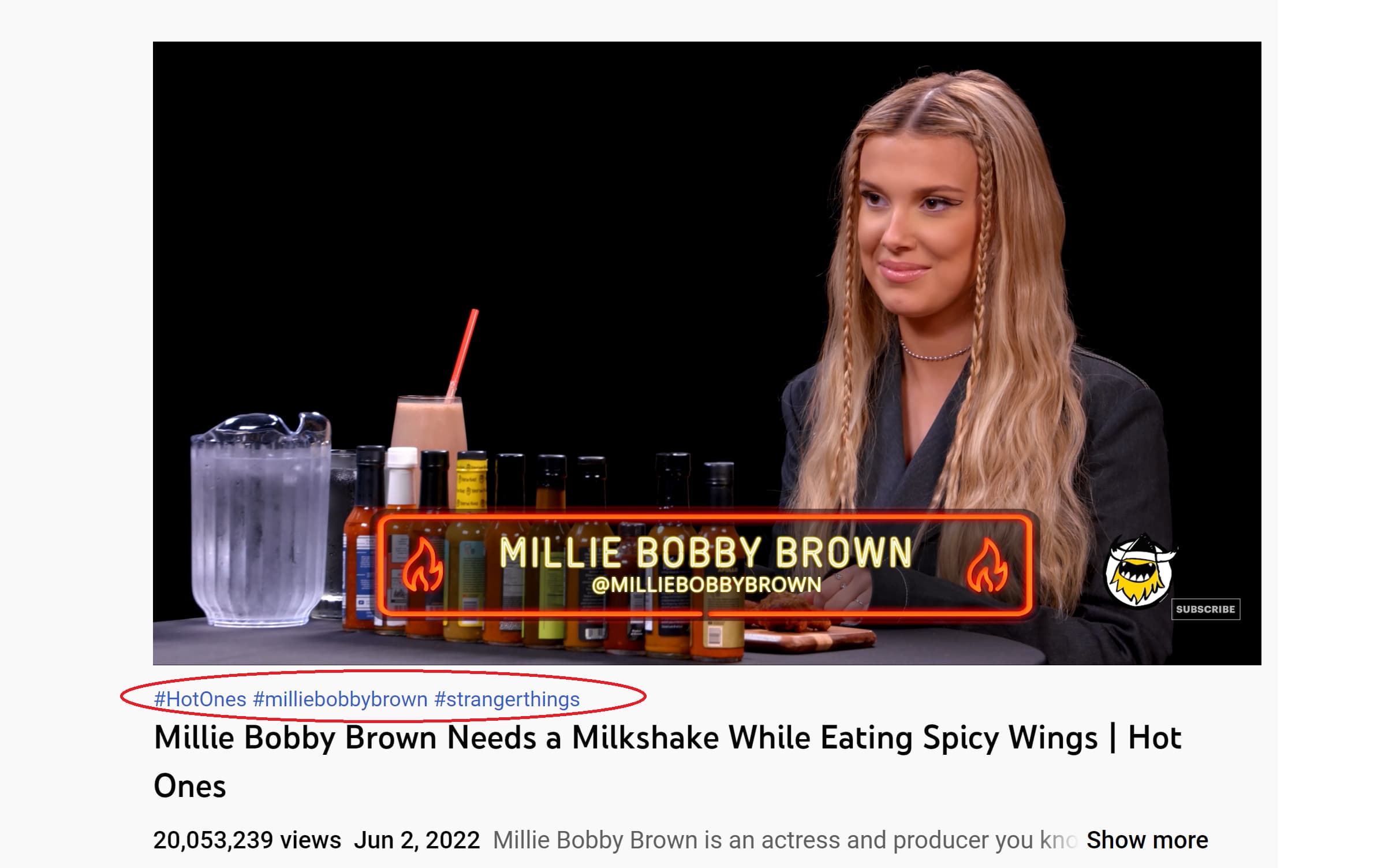
Pro-Tip: Look at other YouTubers in your niche to see what hashtags they are using so you can find the right ones for your content.
4. Customize your thumbnails.
The thumbnail of your video serves as your video’s first impression — and we all know you never get a second chance at a first impression. To grab viewers’ attention, create a unique, eye-catching thumbnail that will compel them to click on your content.
YouTube thumbnails that stand out typically include a combination of the following:
- High-quality images
- A face (humans naturally focus on faces when it comes to photos)
- Bright contrasting colors
- Action shots
- Bold text of no more than six words
Pro-Tip: For my own YouTube videos, I use Canva’s free YouTube thumbnail tool. With Canva, the thumbnail templates are already the proper dimensions and there are tons of fun stickers, bold fonts, colors, and background images to choose from. Plus, I can upload my own images from my phone or computer to the template.

5. Post regularly.
Consistency is important when attracting potential subscribers to your channel. When you post frequently and consistently you’ll gain credibility with your audience because they know you’ll always keep the good content coming. To start, try posting a new video every two weeks and eventually work your way to once or twice a week.
Pro-Tip: You can also use YouTube Analytics to track the days and times your audience interacts with your content the most. For example, if you notice your videos get the most views when posted on Saturdays at 12 p.m., you’re going to want to have videos posted around that time to get the most engagement.
6. Promote your channel on social media.
The news director of a TV station I worked for would always say this about promoting content: “If it’s not on social media, then it doesn’t exist.” Keep this in mind when promoting your YouTube channel.
You can put out amazing content, have the perfect thumbnail, and use all the right keywords — but if you don’t promote your content on social media, you’re losing out on a potentially huge audience.
To attract anime fans to my channel, I started a Twitter account and started using the #anitwt and #AnimeAfterDarkCH hashtags whenever I tweeted about my videos. “Anitwt” is short for “Anime Twitter,” and is used to help anime fans connect with other fans on the platform.
#AnimeAfterDarkCH is a hashtag used for a weekly Twitter space geared toward Black anime fans. Now when I check my YouTube analytics, I often notice about 80% of my views come from Twitter users.
HubSpot’s Senior Manager of Marketing Essie Acolatse also suggests creating videos to cross-promote on different platforms.
“Make shorter bite size versions as teasers for other platforms. These teasers should fit the best video format for that platform, and should be engaging enough to make the viewer want more,” she said. “It’s often times hard to get people to leave the platform they’re already on, but taking advantage of your other social platforms can help drive views to your channel.”
Pro-Tip: Use social media to follow and connect with content creators, figureheads, and other prominent people in your niche. This will help you find online communities that correspond with your niche and can help expose your channel to the right audience.
7. Promote your channel on forums.
Online forums like Reddit are great places to promote your channel. Just remember that many forums have “no promotions” policies — but you can get around them with a little bit of tact. Make sure that you’re contributing value to the conversation and that your posts don’t come off too much like advertisements.
For example, let’s say you’re a fashion YouTuber and you notice a Reddit forum discussing thrift store fashion — a topic you’ve covered on your channel. Instead of replying with “Hey, check out my YouTube channel about fashion.” You can say:
“That’s a really cool perspective! I love thrifting and actually made a YouTube video with some great tips on how to find the best items at thrift stores. You can check it out if you’re looking for advice.”
Then you would link to your specific video.
Pro-Tip: Be an active contributor to these forums even when you don’t have new content to promote. Doing this adds value to the conversation and shows that you’re trying to be helpful instead of just plugging your channel.
8. Build a community.
Use your YouTube to establish yourself as an authoritative voice in your niche and to create a space for people with shared interests. The most effective (and free) way to do this is to simply engage with your audience. Reply to comments by sharing more valuable information.
Some YouTubers will even shout out new subscribers in their videos. You can also ask commenters for suggestions on your next topic and give them some recognition for contributing.
Pro-Tip: If you have more than 500 subscribers, you can take advantage of YouTube’s “Community” feature. This feature allows creators to engage with their audience between uploads via status updates, polls, and GIFs.
9. Run a contest.
Running a contest is an effective way to attract new subscribers, but you’ll want to make sure the contest attracts people who are genuinely interested in your niche and not just the prize.
To do this, make sure the prize is something connected to your topic. For instance, if I were to run a contest to attract anime fans, a good prize would be free anime merchandise or a gift card to anime clothing retailer Atsuko.
Pro-Tip: Be sure to promote your contest on social media and in online forums whenever possible.
10. Cross-promote your videos on YouTube.
In every YouTube video I post, I always take advantage of the platform’s “cards” feature. This feature allows you to promote a video across different videos on your platform. This works by posting a small icon at the corner of your video that links to another video or playlist. You can set the duration for how long you want the card to appear. Below is an example of what a card looks like:
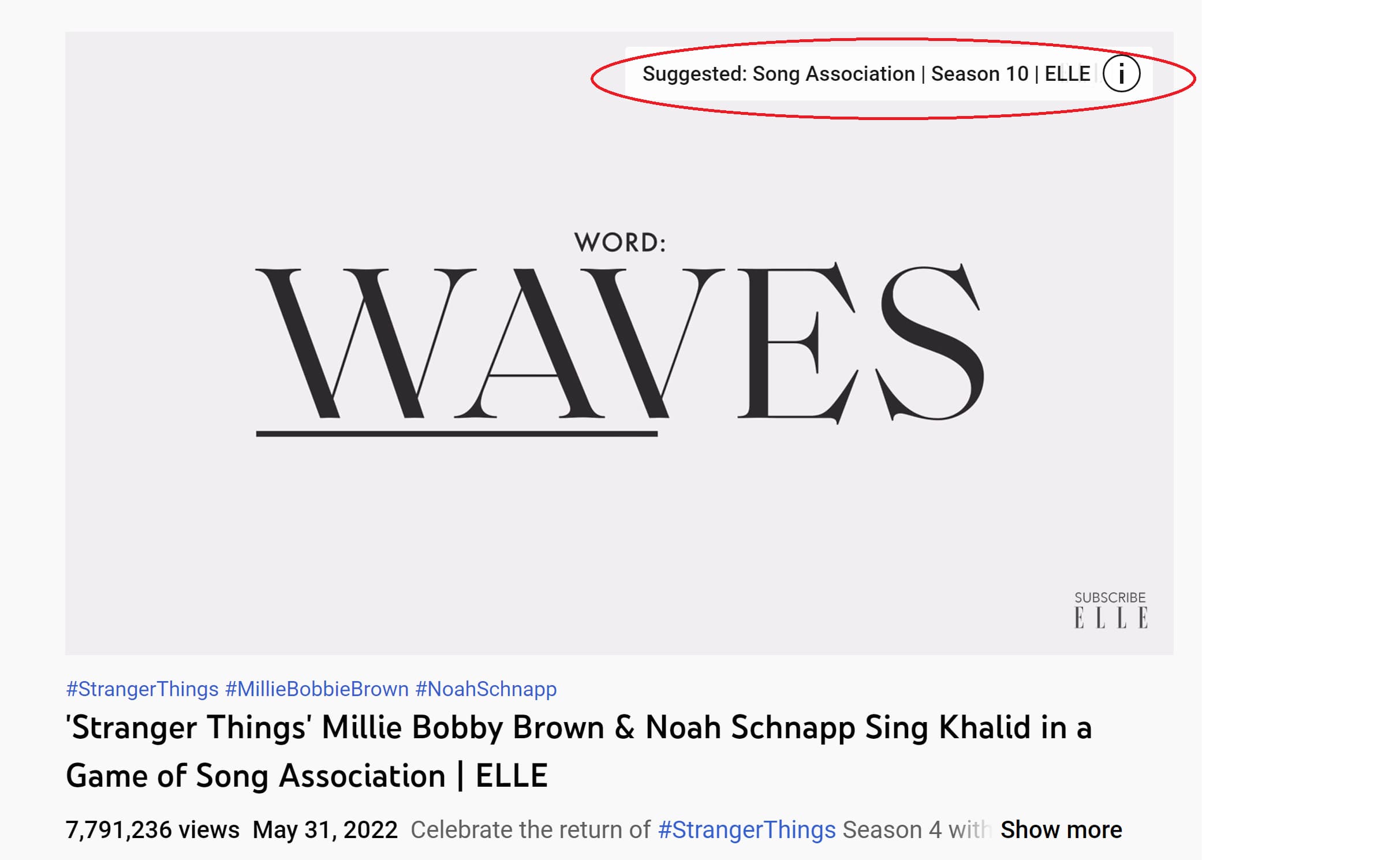
Another way to cross-promote your videos is to include an end screen. Have you ever watched a YouTube video and saw clickable ads for other videos appear in the final 10 seconds? That’s an end screen, and it encourages viewers to explore more of your content and subscribe.
Acolatse also suggests using YouTube Shorts.
“Those bite size video versions for other platforms can also be used as YT shorts,” she said. “YT is investing a lot of money into shorts and because that feed reaches a different audience, it’s a great way to boost engagement on your overall channel. Make sure these shorts hook viewers in within the first couple of seconds and make them very compelling.”
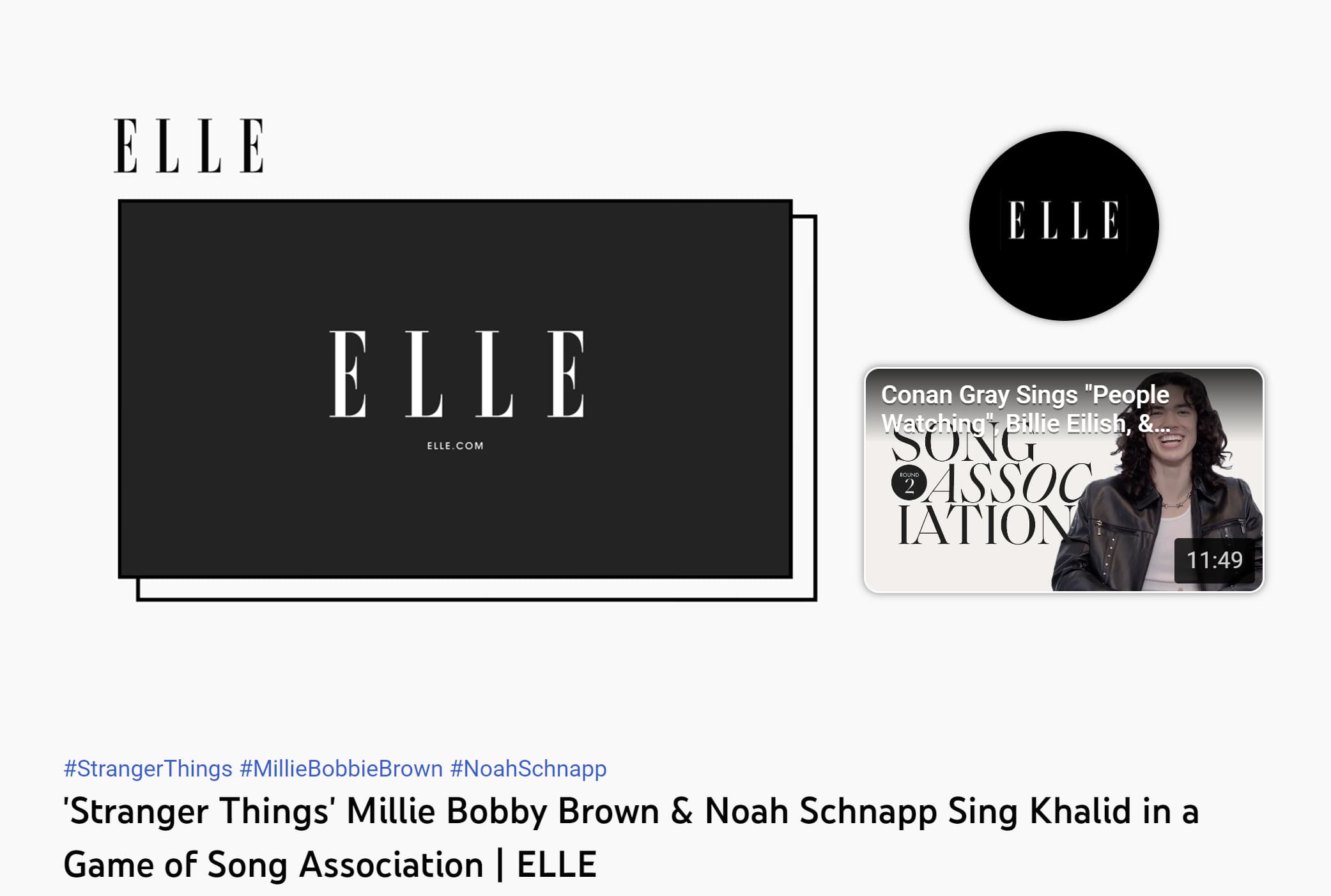
Pro-Tip: Whenever I upload a new video, I always use cards and the end screen to link back to my previous video. This can give your older content a second life and a chance to gain new views.
11. Collaborate with other creators.
This is another form of cross-promotion that is helpful to all parties involved and can help expand your reach. For a successful collaboration, find a YouTuber whose audience overlaps with yours.
For example, if you’re a fitness expert, you can collaborate with a content creator who also focuses on exercise or nutrition. Once you know who you want to work with, reach out to that person, and you two can plan on how you’re going to make a unique video for both of your channels.
“This is one of the best organic ways to grow. Their audience will get a chance to see you and your audience can see them,” Acolatse said. “Creating content with other creators that have a similar niche and following size as you can help you get additional views on your content.”
Pro-Tip: Now is the time to use the connections you’ve made on social media to scope out the best collaborator.
12. Create playlists for your YouTube videos.
The more videos you create, the harder it will be for viewers to navigate your channel. Creating playlists organizes your content into specific categories, and allows viewers to binge your work. Playlists will help viewers find the relevant content they are looking for on your channel, and they’ll be more likely to subscribe when they finish binge-watching your videos.
Pro-Tip: Keep in mind your playlists when creating content. Ask yourself how you’d categorize the video and what playlist it would fit into.
13. Embed your YouTube videos.
If you have a blog or website, embedding your YouTube videos in your blog content or product page is a great way to boost conversions and attract subscribers to your channel. Having an article or webpage connected to your video can also help it rank higher in search engine results.
Pro-Tip: Make sure to use keywords in your blog or webpage’s content as well to help people find your site and, in turn, your YouTube video.
14. Livestream.
With the rise in popularity of livestream platforms like Twitch, livestreaming content is a trend that doesn’t seem to be going anywhere. TikTok, Instagram, and Facebook have all incorporated live-streams into their platforms — and YouTube is no different. Some ways you can use YouTube Live include:
- Q&As
- Webinars
- Live tutorials
- Product demonstrations
Gamers will often livestream themselves playing the latest video games and artists will sometimes livestream themselves completing a project.
Pro-Tip: Don’t be too concerned about perfection when it comes to your livestream. One of the biggest draw-ins of livestreams is that no one knows what’s going to happen live. It all just adds to the fun and creates a more personal relationship with your followers.
15. Add a YouTube widget to your website.
By adding a YouTube widget to the footer or sidebar of your website, anyone who visits your site will be able to see and engage with your videos. This can turn site clicks into views for your content. It will also encourage interested visitors to subscribe to your channel.
Pro-Tip: Many website-hosting platforms have their own free YouTube widgets you can easily embed onto your website.
Promoting your YouTube channel doesn’t have to be a financial liability. As you can see, there are many ways to expand your audience reach, find your niche, and promote your content without spending a dime. Now that you have some free promotional ideas, you’re ready to craft the perfect marketing plan to grow your channel.

Twitter Topics: How to Use It & What Marketers Need to Know
Twitter Topics makes it easier for Twitter users to sift through the roughly half billion tweets published daily and find content related to their interests.
As a marketer, Twitter Topics can help you stay focused on audiences in your industry that fit your customer profile and join in on conversations that make the most sense for you to join.
![→ Free Download: Social Media Calendar Template [Access Now]](https://no-cache.hubspot.com/cta/default/53/3e56e15d-47bd-46c9-a256-99fde52abfe7.png)
In this post, we’ll discuss everything you need to know about the platform’s native feature, including:
With Twitter Topics, you can follow topics as well as people that often tweet about relevant topics.
When Twitter launched the feature in 2019, it said Topics was meant to shift the platform towards conversation and away from one-off comments by influencers and celebrities: “Previously, all of the work was on you to figure out the best way to keep up with what’s happening by following certain accounts, searching for it, or looking in the Explore tab for the latest. Now, you have the option of seeing the most relevant and interesting Tweets about what you care about with a single tap, and the conversation will come to you.”
Even though Topics was primarily meant to help individual users get the most out of their experience, it can also help brands build awareness and a following on the platform. For example, posting about topics relevant to your business can expose your tweets to people who follow those topics.
As a marketer, you can leverage the tool in a few specific ways. But, first, we’ll go over the basics of using the feature.
How to Use Twitter Topics
Twitter often suggests Topics based on your account activity, and you’ll natively come across them in your Home timeline. You can click Follow to see related tweets if it suggests a topic of interest.
The second way to access Twitter Topics is to navigate to your feed and click More, then Topics.
If you haven’t followed any topics before, you’ll see a welcome message explaining the feature. If you already follow Topics, they’ll appear here.
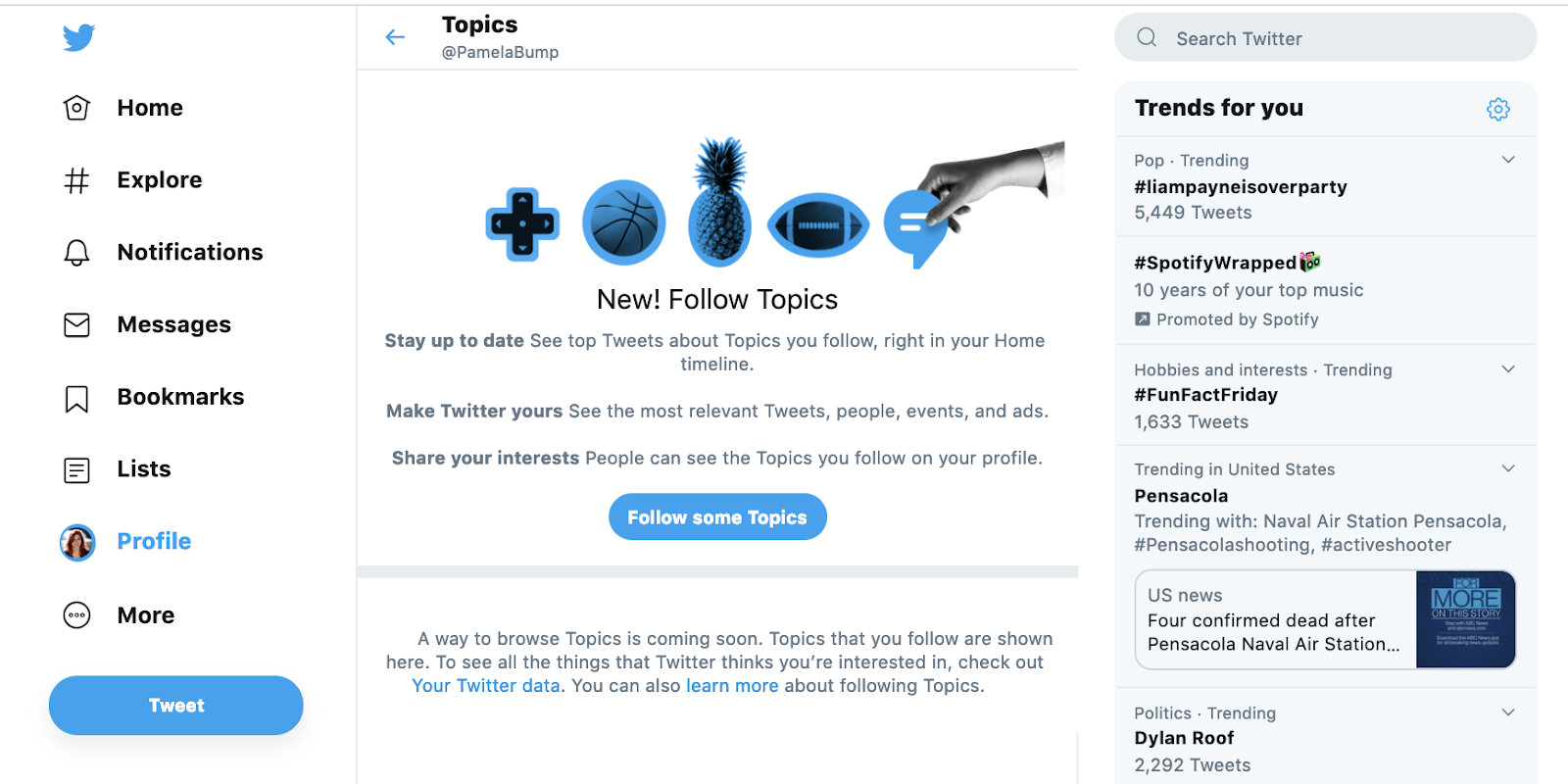
If you click Follow some Topics, you’ll see a list of the most popular Twitter Topics, like “Entertainment,” with plus signs next to them that you can click to follow.
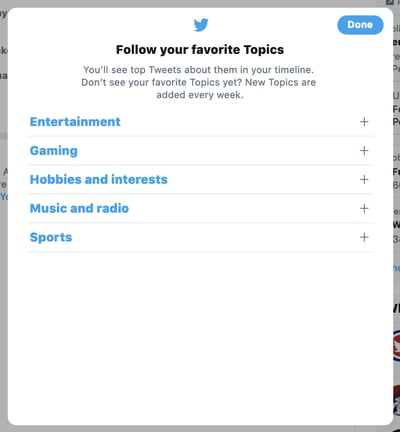
Clicking on the plus sign will also display a drop-down menu of more niche but related topics.
When you follow Topics, your Twitter feed will show posts algorithmically pulled in from your Topic preferences. To follow more Topics, you can simply return to the Topics page and click “Follow more topics.”
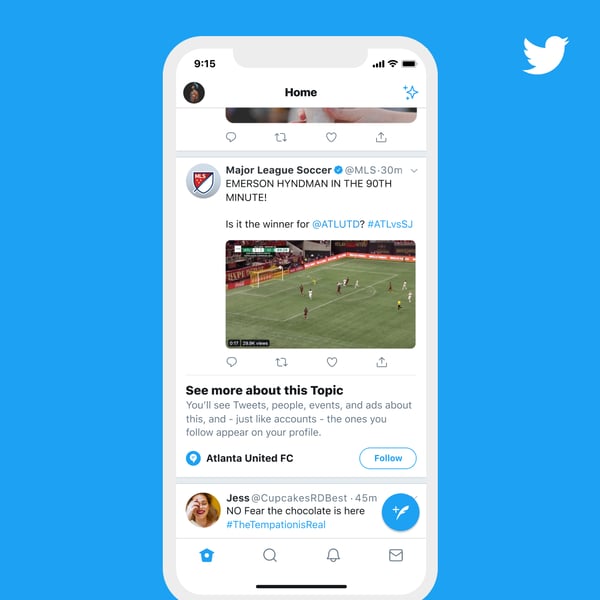
Some tweets in your feed will sometimes offer a “See more about this Topic” pop-up, which includes a call to action to follow a related topic.
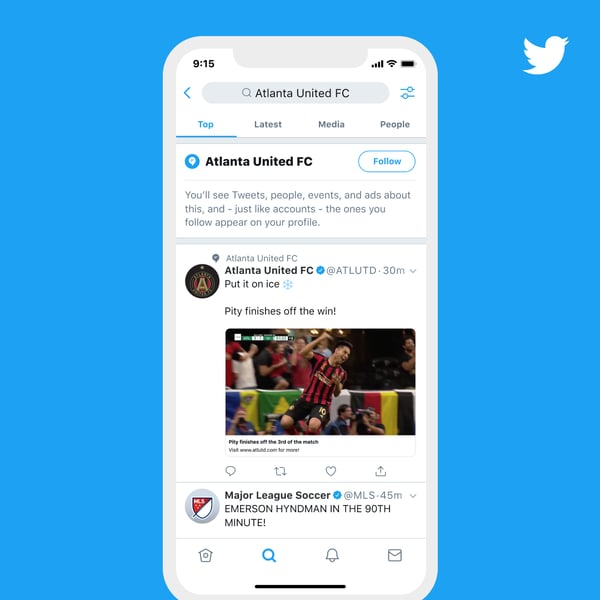
You can also search and follow a Topic using Twitter’s search bar, as seen in the photo below:
To unfollow Topics, return to the Topics page, click Follow more Topics, find the Topic you’ve followed, and click unfollow.

Four Ways Marketers Can Leverage Twitter Topics
As mentioned above, there are several ways for marketers to leverage Twitter Topics. We’ll discuss these below.
1. To follow topics related to your industry to stay informed.
Following Topics related to your industry helps you stay on top of trends that are important to your customers and might impact your business.
The more up-to-date you are on current events and conversations, the more you’ll know about your audience’s delights, habits, work-life, and pain points. And, having this information helps you keep your buyer personas up to date.
In addition, when you know what your market competitors are talking about, you’ll get a glimpse into possible future innovations, trends, or challenges that you should look out for, helping you stay on top of industry trends instead of falling behind.
2. To discover and follow accounts or thought leaders in your industry.
Topics helps you discover thought leaders and brands that often discuss insights and ideas about your field.
If you monitor the Topics you follow and notice similar accounts or people having conversations, it can well serve you to check out their profile to get a sense of the content they share. By doing this, you’ll also discover trends and insights in your industry, and their content may also teach you how to optimize your Tweets so you can get in on the conversation.
3. To create content or tweets related to trendy Topics in your industry.
If there’s a Topic that’s currently buzzy that strongly relates to your business, jump in on the conversation.
If users of one of the Topics you follow are talking about a common pain point that your product or service solves, posting about that pain point can help you draw your audience’s attention and educate them about how you can solve their needs.
4. To discover trending hashtags and optimize your own tweets with them.
Hashtags are one of the best ways to optimize your tweets and use popular keywords to gain visibility on the platform.
You can leverage Twitter Topics to discover trending hashtags related to your brands’ offerings and use them in your own tweets to generate brand awareness and position yourself as a source of authority.
Embracing Trendy Topics on Twitter
Twitter is a solid platform for topical and trend-based discussions. Topics will help you zone in on what people are talking about on the platform so you can join in on the conversation with relevant insight and conversation.


18 Best B2B Website Examples & How to Design a Great B2B Website
The right B2B website makes all the difference when it comes to converting visitors into buyers. In this post, we’ll share the best B2B website examples we’ve ever seen, then dive into three tips for building your site.
By the end, you’ll be able to create a site that drives conversions and keeps buyers coming back. Let’s get started.

With a host of great B2B website examples out there, we’ve curated a list of sites that stand out.
1. Blake Envelopes
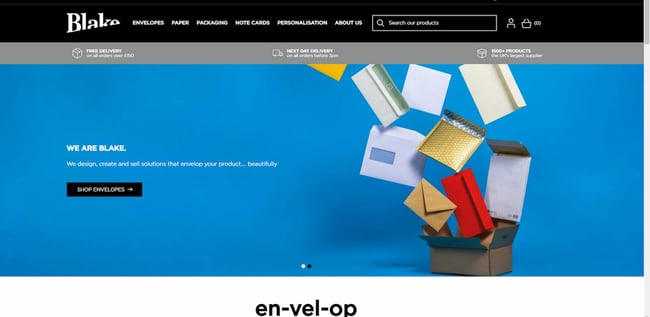
Are envelopes exciting? Not really, but you wouldn’t know it from the Blake Envelope website. The colors are vibrant, the envelopes are everywhere, and the site manages to convey a sense of movement that makes you want to click through and see exactly what they have to offer. That’s exactly what you want from a B2B website.
2. Pixelgrade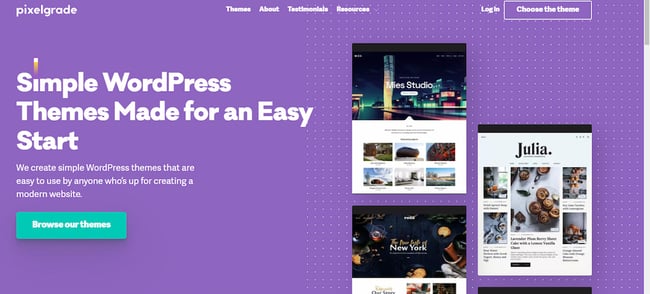
Pixelgrade makes it clear up front what they’re about: Offering simple WordPress themes to help anyone get their website up and running quickly. There’s no extraneous information here — they state their value proposition and offer a direct link to browse the themes they offer.
3. Reputation Squad

Reputation management is key to online success for organizations. If companies can’t see what customers are saying about them, they could miss critical opportunities to improve.
Reputation Squad helps companies track their reputation online with a responsive monitoring system. Scrolling through their website gives the feeling they’re operating in the future; backgrounds move and shift as you head down the page and the content is set up in a way that’s easy to view, read, and contextualize.
4. Evernote
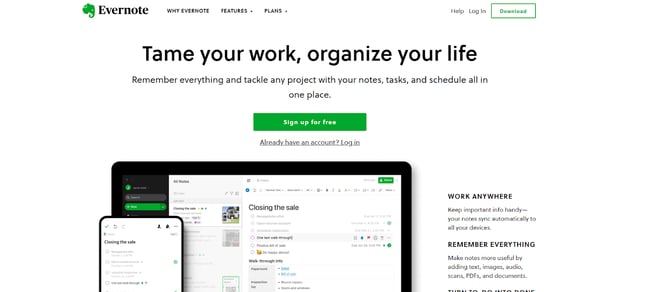
Evernote isn’t new to the B2B space, but their site continues to make it abundantly clear what they’re good at: Taming your work and organizing your life by making it easy for you to take notes and keep schedules. Even more telling is their aim to help you “remember everything”, which suggests this isn’t just a single-function solution but a multipronged performance tool.
5. Dropbox
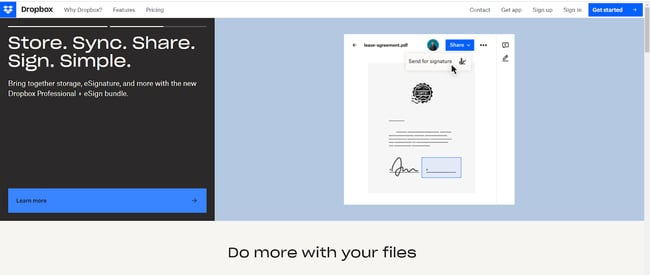
The five “S’s” here quickly communicate what Dropbox is all about. Not only can you store and sync files but easily share them and even add eSignatures. That’s it. That’s the value proposition. No fancy graphics, no beating around the bush — just getting straight to the point about how they can help.
6. Shepper
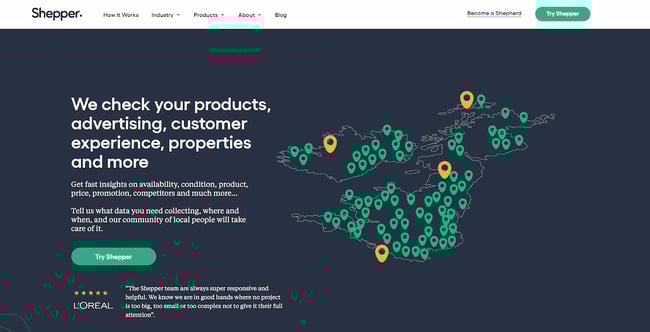
Shepper is all about collecting data. And not just any data — the data you tell them you need to collect and analyze. This could be product or advertising information, or data about the overall customer experience. No matter what data you need or where it’s stored worldwide, Shepper can help.
7. HubSpot
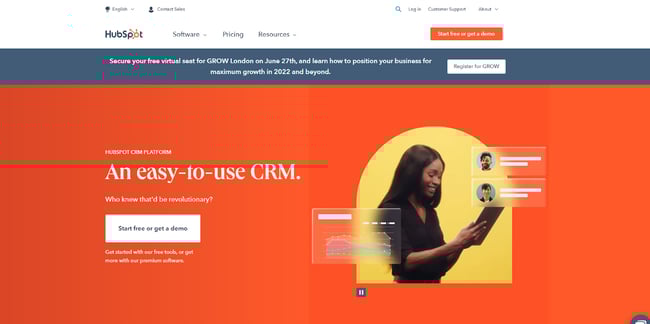
We’ll admit it. We’re also pretty great at this B2B stuff. We’re also modest — you’ll notice HubSpot isn’t first on the list — but our site makes it clear what we offer: An easy-to-use CRM than can streamline your current processes and revolutionize the way you work. With both free and premium options, you’re in good hands with HubSpot.
8. Orbital Sidekick
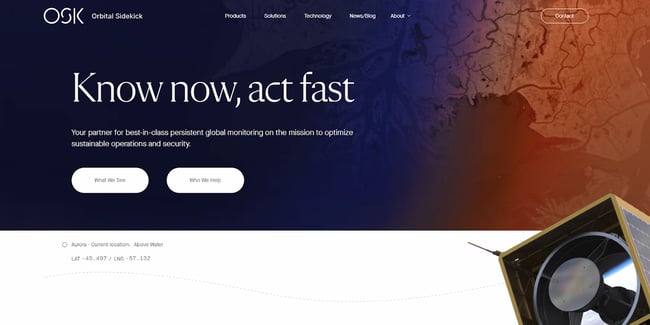
Orbital Sidekick delivers information from space to help government and commercial organizations meet their goals around environmental, social, and governance objectives. Using what’s known as “hyperspectral analysis” from a fleet of satellites, Orbital Sidekick gives companies the data they need to make decisions on-demand.
9. Trello
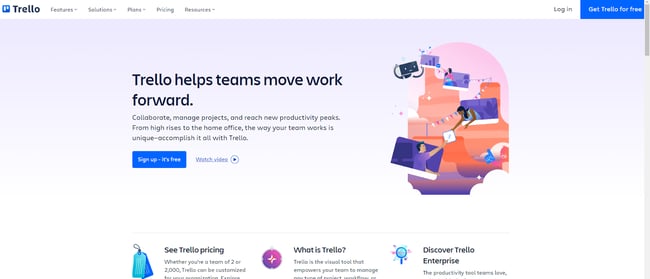
Trello is a collaboration tool designed to streamline operations. Given the increasing number of these tools on the market — and the fact that some hinder more than help — Trello makes it clear that no matter where or how teams prefer to work, the solution can help teams move forward.
10. Hootsuite
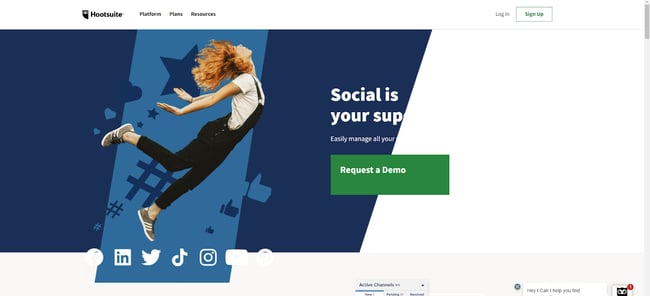
Hootsuite’s tagline is simple: “Social is your superpower”. Combined with an image of a woman seemingly taking off into the air and backed by familiar social images and icons, it’s clear right away that Hootsuite is all about helping you get the most of your social media channels.
11. Yapstone
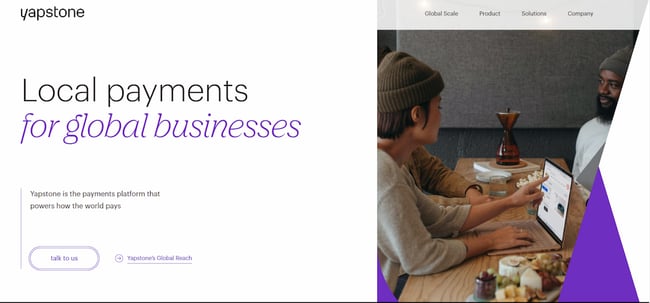
It’s a funny name with a great B2B angle: Local payment for global businesses. Not only does this tagline provide a sense of confidence and familiarity, but also manages to simultaneously suggest that Yapstone can help businesses anywhere power their payment platform.
12. Grammarly
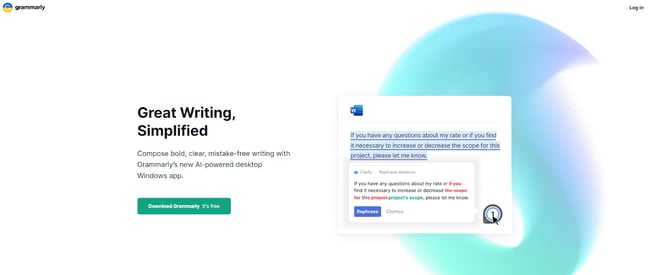
Grammarly cuts right to the chase to showcase what it does best: Detecting and correcting grammar and spelling mistakes. An animated image takes users through a quick demonstration of what Grammarly has to offer, making it clear what users will get when they download and install the app.
13. Acme

Acme automates industrial warehouse operations. The sepia tones of its website combined with warehouse images and a clear message about what Acme does leave no room for misinterpretation. If you’re their target audience, you’ll click through. If not, you’ll leave.
14. Mailchimp
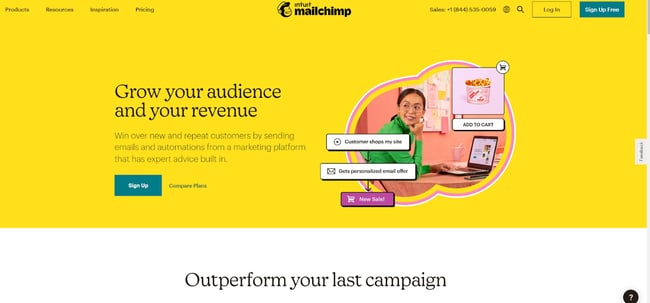
Email platform Mailchimp is well-known for its work in marketing emails, and its website makes it clear that the goal of the platform is to grow both business audience and revenues with the help of automated tools and expert advice. With the goal of outperforming your last campaign, it’s a solid pitch for B2B sales.
15. Packlane
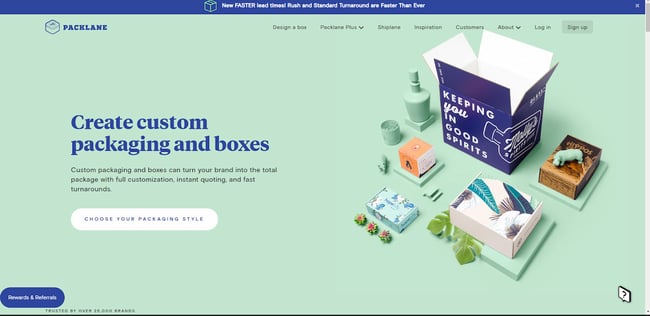
Consumers don’t just want great products. They want great packaging that is interesting to look at, fun to open, and (ideally) environmentally sustainable. Packlane lets companies create custom packaging and boxes that best suit their products, and provides instant quoting to help companies quickly make a decision.
16. HireLevel
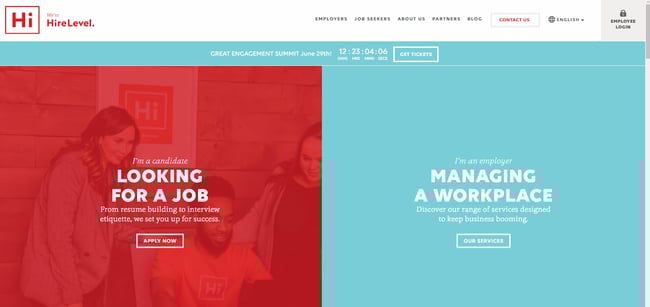
Aside from making a great pun (higher level — get it?), HireLevel also does a great job of clearly defining what they do. Need a job? They can help. Looking to improve workplace management? They’ve got services to bridge the gap.
17. Netbase Quid
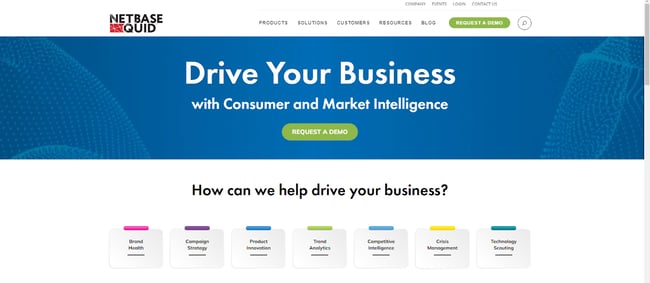
Netbase Quid is all about consumer and market intelligence. The seven colored tabs on the homepage make it clear exactly how they can help, from tracking brand health to delivering trend analytics to improving crisis management.
18. Square
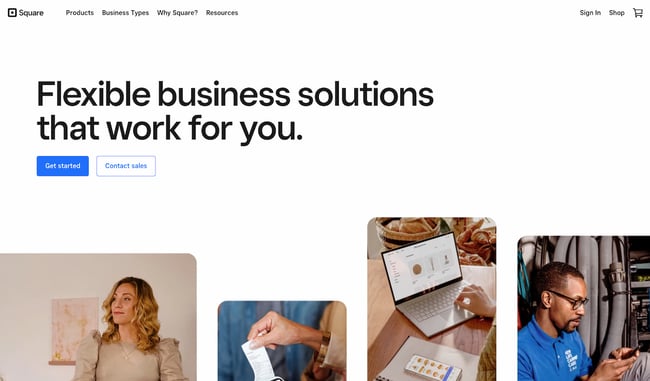
Square is a payment platform that immediately prompt customers to get started as a first step to entering the site. It’s the first — and nearly only — thing a visitor encounters upon landing on the home page. That information allows Square to offer customers what feels like a much more customized web experience.
1. Make your website about the customer — not about you.
After reviewing hundreds of B2B websites across every major industry, we found only a handful that purposefully invite customers into a conversation. To do that, suppliers need to stop talking so much about themselves.
Rather, they should provide customers with an opportunity to share something about who they are and what they’re looking to do.
Really, it’s no different than common courtesy at a cocktail party. No one wants to be stuck talking to the person droning on about who they are and what they do. Yet that’s precisely what the vast majority of B2B websites do.
Not only is that kind of self-centered approach disengaging, but it also leaves the buyer wondering, “Do they even know who I am? Or what I actually do?” Or worse, “Do they even care?” It’s impersonal at best, and off-putting at worst — fostering questions rather than connections, and distance rather than assistance.
That said, we found a handful of websites that do, in fact, actively invite customers to engage on their terms. One example is vAuto.com. A division of Cox Automotive, vAuto sells enterprise software to auto dealers around world. Among those dealers are both used and new car sellers, along with wholesalers — some franchise-based, and some independent.
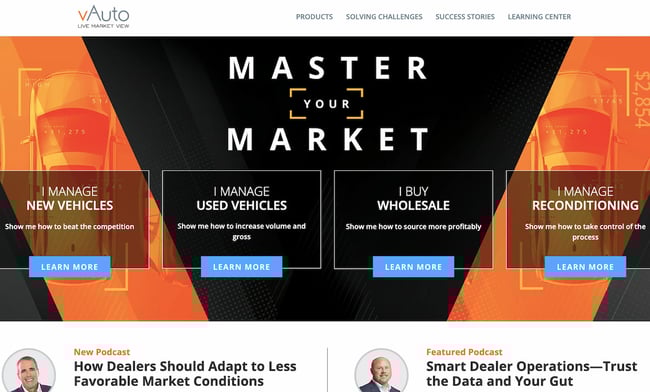
Those distinctions matter — not only for finding the appropriate vAuto solution, but they help to identify how that customer thinks about themselves.
vAuto has designed the front page of its website to allow buyers to self-identify along the dimensions most important to them, prior to going any deeper. The customer’s first choice upon landing at vauto.com is declaring, “I manage new vehicles,” “I manage used vehicles,” “I buy wholesale,” or “I manage reconditioning.”
Notice that even the pronouns are specifically chosen to position the website as a learning and buying tool for customers, rather than a broadcasting tool for the supplier.
Questions to ask yourself:
- How do our customers define themselves?
- In their minds, which aspects of their identity most affect the way they look at suppliers like us?
2. Emphasize your customers’ outcomes.
Just as the best websites invite customers into a conversation, they also guide buyers to supplier solutions using the language of customer outcomes — rather than supplier capabilities.
The best companies take the time to understand the specific business objectives customers are seeking to achieve, then organize their sites using language immediately recognizable to customers along those particular outcomes. That way, customers don’t have to translate.
Here’s another place where vAuto excels. The company employs actual customer-articulated business problems as the organizing framework for diving deeper into their broad solution set. It organizes this information around headings like, “Show me how to beat the competition,” and, “Show me to source more profitably.”
At every step, the goal is to make online learning and buying as easy and as resonant as possible — all through an easy-to-follow path of breadcrumbs leading directly to vAuto’s unique solutions.
Questions to ask yourself:
- What help are customers seeking from a supplier in your category?
- What specific language would best resonate with your customers to describe that help?
3. Help customers do what they are on your site to do.
Finally, the best websites identify and then facilitate the specific tasks that customers come to your website to complete.
Take something like a cost calculator embedded directly into a website. A tool like that enables customers to independently calculate the costs of (in)action, rather than relying on sales reps to make the case for change. It’s a simple, practical idea, but it’s deployed with single-minded purpose: to allow the buyer to easily progress along the journey, while remaining in her preferred channel of choice.
Questions to ask yourself:
- What specific buying tasks are your customers coming to your website to complete?
- How easy is it to find support for those tasks on your site right now?
Building a Better B2B Website
There’s a great deal to be learned from the handful of world-class websites we found. When it comes to building a better B2B site, it’s all about giving buyers an easy entry point, communicating your solutions in language they understand, and making it simple for them to do what they want to do.
Not sure where to get started? Check out the examples above for inspiration and then grab HubSpot’s free ultimate workbook for redesigning your B2B site.
Editor’s note: This post was originally published in January 2018 and has been updated for comprehensiveness.
![Blog - Website Redesign Workbook Guide [List-Based]](https://no-cache.hubspot.com/cta/default/53/4b5bb572-5d0e-45b8-8115-f79e2adc966b.png)

The 15 Best Free Portfolio Websites for Creating an Impressive Digital Portfolio
Whether you’re a UX designer, freelance writer, or photographer, an impressive online portfolio is critical for impressing potential clients and landing future jobs.
But crafting a good digital portfolio can feel like a daunting task, especially when you aren’t even sure which website you should use to create one. Here, we’ve created a list of the best portfolio websites for designers, freelancers, and photographers to ensure you can showcase your best work in any industry.
![→ Download Now: 12 Resume Templates [Free Download]](https://no-cache.hubspot.com/cta/default/53/4ec95757-585e-40cf-9189-6b3885074e98.png)
Examples of your work one could display in an online portfolio include:
- Photographs
- Writing samples
- Case studies
- Spreadsheets
- Lesson plans
What you include in your online portfolio varies depending on your field and expertise. So to better help you choose a portfolio builder for your needs, let’s dive into some of our favorite portfolio websites to help you make your own, according to your needs.
Best Free Portfolio Websites for Freelance Writers
1. Journo Portfolio
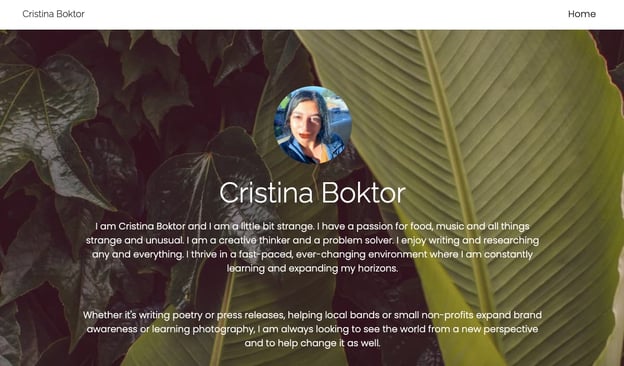
You can easily create a sleek, modern digital portfolio on Journo Portfolio. The site offers nine distinct themes, and adding an article is as easy as pasting a URL and clicking add — the site takes care of incorporating the title, publication, date, content, and image. Features include integrating with Google Analytics or using Journo’s built-in analytics tools to measure visitors. Additionally, your site is automatically mobile-ready.
You can also blog straight from the platform, which could be helpful if you want to showcase freelance work and your current blog in one place. Journo lets you create multiple pages with a Contact Me or About Me page and your freelance portfolio.
Pros
- Live preview editor
- Built-in analytics plus Google Analytics integration
- Pre-built themes
- Subscribe and contact forms
- Mobile-friendly
Cons
- Free plan limits you to 10 articles max
- For unlimited articles, you’ll need to pay $5-$10 per month
2. Muck Rack
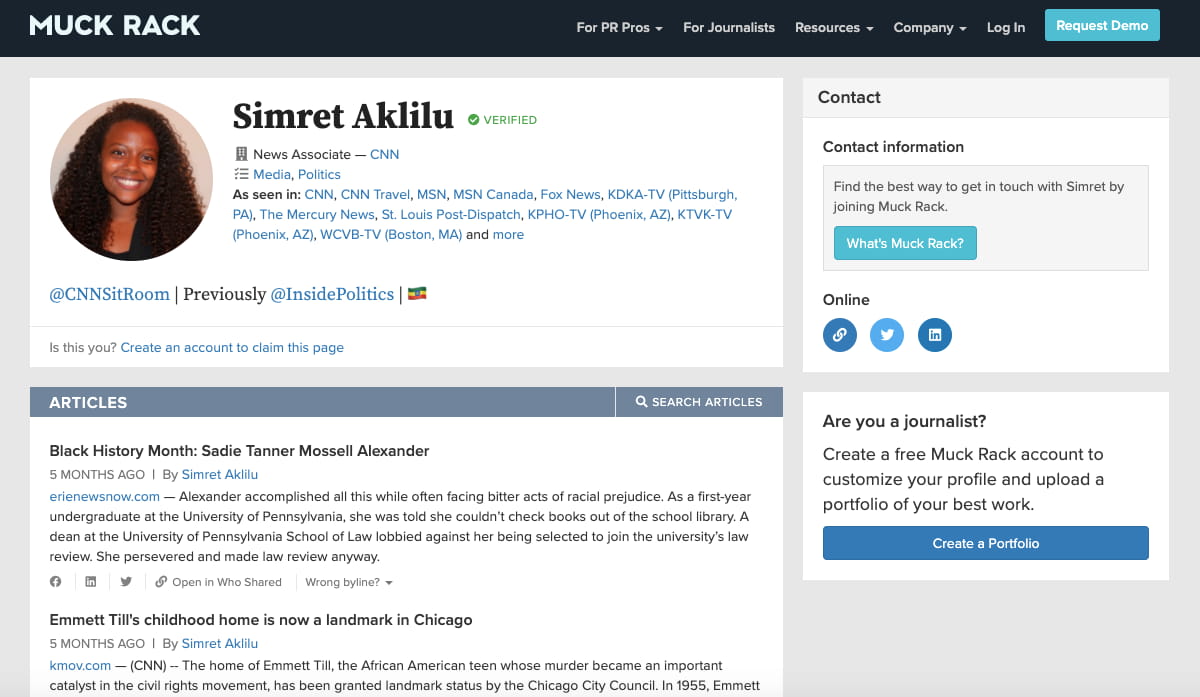
Muck Rack is a free media database that helps connect journalists with PR professionals, so if you use the site, you’ll have good opportunities to network and receive PR pitches. You can even include topics you don’t want to cover, filtering out unfit pitches.
Additionally, for true ease of use, Muck Rack creates and maintains your portfolio for you by automatically compiling articles and social media profiles. Once it’s finished, you have the option to customize your bio or choose to spotlight certain pieces.
Muck Rack also offers a news alerts system, which enables you to track stories or tweets about a company, brand, or specific story angle. With their news alerts system, you can see when other journalists share information or publish stories related to your work, which will help you stay on top of trends.
Pros
- Ideal for journalists
- Auto-updates profile
- News alerts system for tracking stories and trends
- Allows you to build media lists easily
Cons
- Some formatting issues when uploading content from Excel
- Doesn’t integrate with other reporting and monitoring tools
3. WordPress
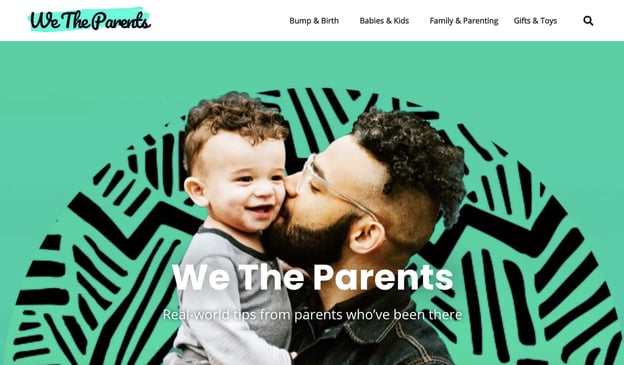
WordPress, a major content management platform, lets you create a free blog with a separate portfolio page. While not explicitly geared towards freelance writers, WordPress offers over 100 free themes to craft a unique blog and showcase your work. This is a good option for you if you want complete creative control over your portfolio.
You might also choose to use WordPress if you want to showcase your writing and other skills. Suppose you want a page for writing or photography, for instance. In that case, WordPress offers a variety of themes and is flexible enough to enable you to demonstrate various pieces of creative work.
Pros
- Ideal for bloggers
- Can create portfolio page separate from blog
- 100+ free themes available
- Comes with SSL certificate and JetPack features for improving website performance
Cons
- Free plan shows ads
- Limited storage at 3 GB
4. Clippings.me
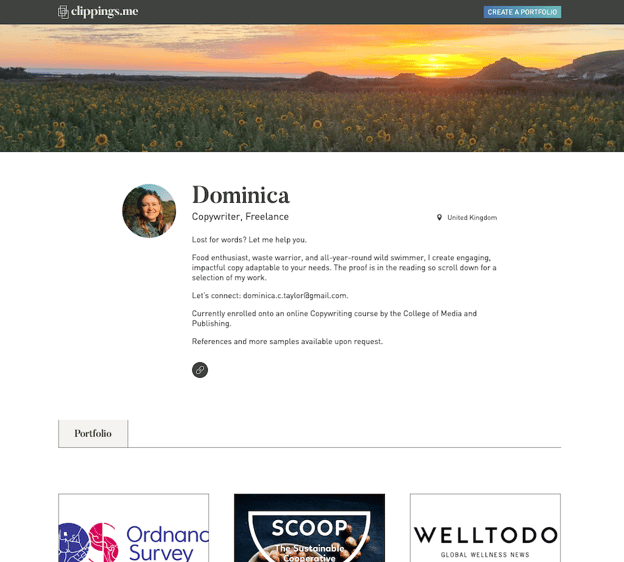
Clippings.me is a site with a simplified approach to sharing your best articles, collateral, or other types of marketing materials.
You can upload your PDFs, links, and related multimedia to Clippings.me to create a sharp-looking portfolio that specific categories of your choosing can categorize. You can even use social links on your page for other professionals to reach you more easily.
In addition to uploading and maintaining your own portfolio, you can browse through other freelancers’ pages to network and potentially gain prospective clients or collaborators.
Pros
- Designed intuitively for writers — by writers
- Ideal for beginner or experienced writers looking to expand their careers
- Offers a journalism directory
Cons
- Can only feature up to 10 articles under the free plan
Best Free Portfolio Websites for Designers
5. Behance
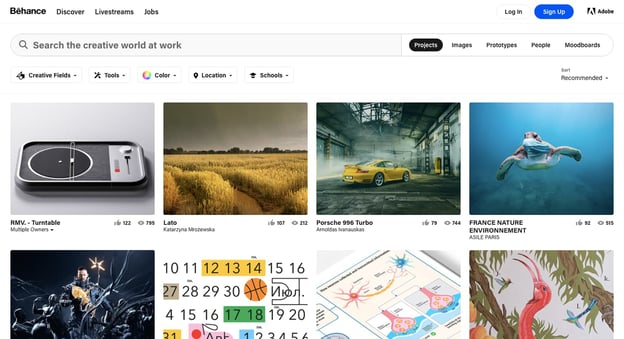
With millions of UX/UI designers, artists, and photographers on the site, Behance is one of the most widely-used online portfolio websites. It’s also straightforward to use — you can organize your work based on the project, list projects under construction, and ask followers for feedback. Additionally, the site allows you to link your portfolio to your social media accounts.
Behance’s massive digital community makes it an excellent option to get your name out there, particularly since recruiters and interviewers peruse the site to find talent. However, Behance displays the number of people who have viewed and liked your work, which can be more advantageous — but riskier — than a more straightforward website portfolio.
Pros
- Ideal for creatives who don’t have time to create their own standalone portfolio site
- Can get feedback from followers
- Includes social proof in terms of views and likes on portfolio site
Cons
- Limited design and feature options on free plan
- The display of views and likes can be risky if not enough people see or appreciate a project
6. Adobe Portfolio
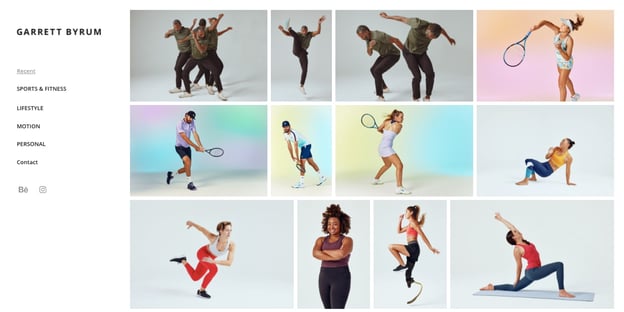
If you already have a Creative Cloud membership, then Adobe Portfolio is an excellent option to create a single-page website or a full gallery of your work. With Adobe Portfolio, you can set up a sleek and customized portfolio in minutes, and each of the platform’s themes are automatically optimized for any device.
Additionally, Adobe Portfolio offers the ability to integrate with Behance and Adobe Lightroom to import your projects for greater visibility.
Pros
- Option to create multi- or single-page website
- Offers 18 responsive themes
- Integrations with Behance and Adobe Lightroom
Cons
- Only free if you have Creative Cloud membership
7. Fabrik
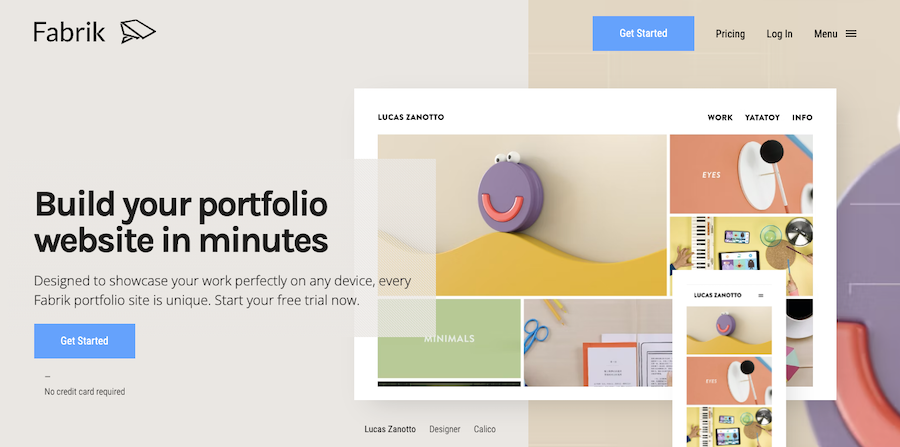
Fabrik is the portfolio platform for creatives. Designers can organize their projects without touching any code with unique website styling and technology. This enables users to upload their portfolios easily and even supports blogging capabilities.
Fabrik’s themes are intuitive and made adaptable to your project content needs. This flexibility lets users experiment with multiple layouts designed to compliment media formats needed, whether it’s graphic design, fashion, or more. With straightforward configurations, the Fabrik portfolio is an easy choice to build and maintain your portfolio across all devices.
Pros
- Ideal for creative designers of various specialties
- Allows an unlimited number of blog posts
- Responsive customer support
Cons
- Have to integrate other functionalities like ecommerce or other third-party extensions externally
8. Crevado
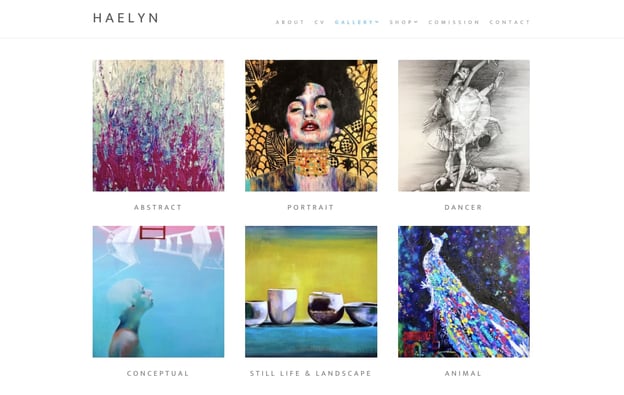
One of the most straightforward free portfolio websites, Crevado lets you use a simple drag-and-drop tool to upload your projects and rearrange them on the screen for true ease of use. The site is also automatically optimized for any device, so your portfolio can be viewed on a smartphone, tablet, or desktop.
Crevado also has secure hosting and SSL certification, so your portfolio site remains secure. You can customize your design to suit your preferences without writing any code. Best of all, you can sell your work online thanks to the platform’s integrations with PayPal and Fotomoto.
The only downside is that free users can’t remove the link to Crevado in their website footer. You’ll have to upgrade to a pro account to do so.
Pros
- Drag-and-drop interface
- Responsive designs
- Secure hosting and SSL certification
- PayPal and Fotomoto integrations allow you to sell work
Cons
- Free plan shows Crevado link in website footer
9. Pixpa
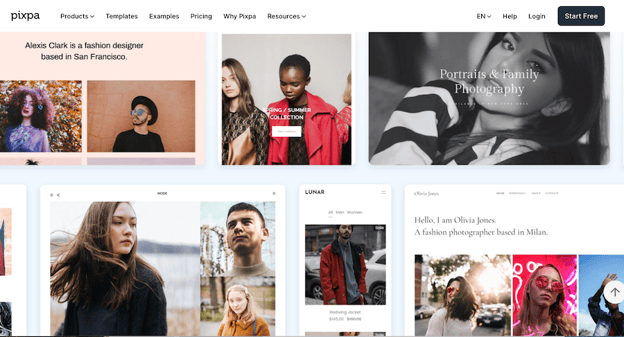
Pixpa is an all-in-one, DIY website building platform designed to empower creative professionals, freelance writers, and business owners by helping them build feature-rich, professional websites without touching a single line of code.
Pixpa offers a range of modern, mobile-friendly, and responsive templates which can be fully customized using the easy-to-use visual editor and drag-and-drop page builder. Rich features, including blogging tools, built-in SEO and marketing tools, social media integrations, multiple gallery options, ecommerce functionality, make Pixpa the perfect portfolio-building platform for writers and creative professionals. The full-fledged blogging platform powered by an intuitive and versatile WYSIWYG editor, allows you to create, edit, schedule, and publish blog posts, all in one place.
Pros
- Beginner-friendly, no-code website building platform
- Extensive SEO tools allow you to add custom tags and metadata
- SSL security on all websites
- 24×7 customer support through email and live chat
Cons
- No built-in options for purchasing custom domain names
10. Dunked
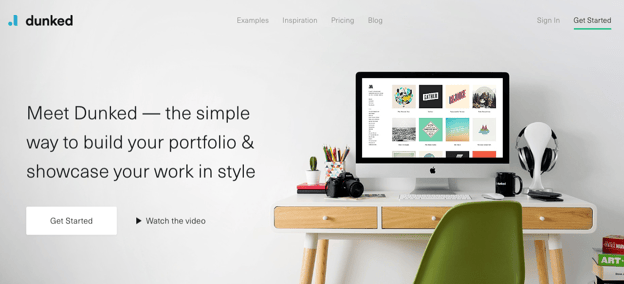
Dunked is a platform built with designers and creatives in mind. With over 100,000 users, this online portfolio builder lets you share your talents on a stylish and simplistic website.
Dunked’s gallery of professionally designed templates are crafted to complement your creativity and focus on your work. Choose the best meant for your aesthetic and switch between themes when they suit you.
Upload images or multimedia from sites like YouTube, Vimeo, Flickr, SoundCloud, then drag and drop until the website looks exactly how you want.
Pros
- Ideal for designers and other creative professionals
- All templates full responsive and retina-display ready
- Click-and-drag simply website editing tool to customize your portfolio
Cons
- HTML and CSS knowledge necessary for more extensive customization
- Can’t support case studies or blog posts
Best Free Portfolio Websites for Photographers
11. Flickr
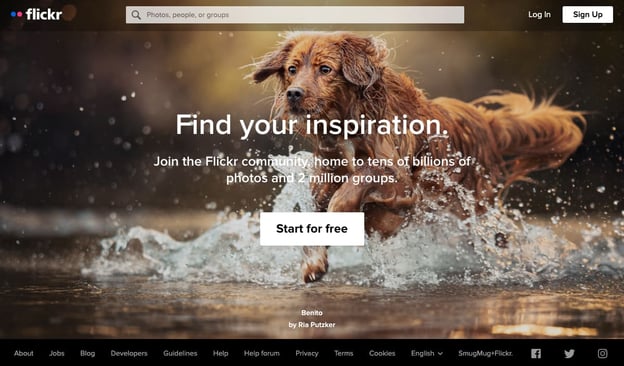
Undoubtedly one of the most well-known portfolio sites with billions of photos and millions of members, Flickr is a good site to share your own work, connect with other photographers, and find inspiration for future projects.
However, Flickr’s community-oriented platform can make it difficult to showcase your best work and appear professional — particularly since the site is used to share images with friends and family. For this reason, many designers also suggest creating a more polished portfolio website and then linking to that website from Flickr.
Pros
- Ideal for photographers just starting out
- Great to connect with others and find inspiration
Cons
- Limited to GIF, PNG, and JPEG photo formats
- Limited to 1,000 photos on free plan
12. Portfoliobox
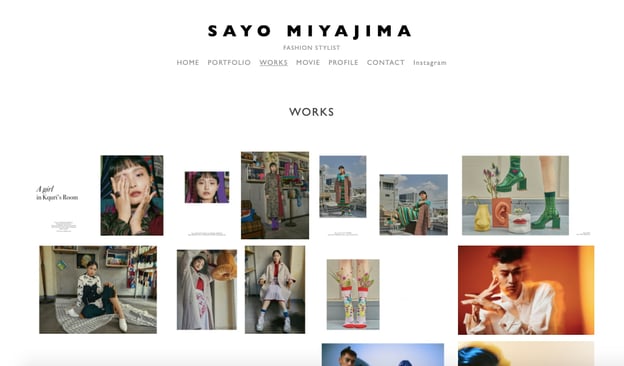
Portfoliobox is a website builder specifically designed for photographers, and it’s a good option for crafting a professional-looking responsive gallery of your best work.
Portfoliobox offers an ecommerce link that allows you to sell your prints or other artwork directly from the site (without paying any commission). With the free plan, you can create a blog further to attract visitors and potential customers to your site.
Best of all, Portfoliobox doesn’t make you use a standard theme — instead, you can integrate any style for any page to cultivate a unique, one-of-a-kind website. With more than one million users, it’s a good option for professional and novice photographers.
Pros
- Ideal for photographers at any skill level
- Can sell prints on this site commission-free
- Can use different styles for every page
Cons
- No drag-and-drop functionality
- Limited customization options for ecommerce
13. Krop
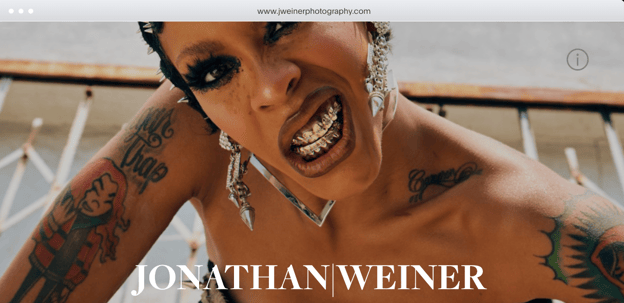
Krop is a creative industry portfolio hosting website used by the most talented candidates at all experience levels and the globe’s most respected creative brands.
With Krop’s software, creatives can spend less time editing and formatting and more on their own projects. Curating portfolio albums is done quickly, and the software offers powerful customizations for personal brandings like logos, color palettes, and more.
This site also serves as a job board, helping professionals network with one another across the globe. Users can strategically place themselves in front of respected creative brands and find work at all experience levels, too.
Pros
- Ideal for creative professionals such as photographers, illustrators, or animators
- Password protection for individual albums to share with clients privately
- Unlimited storage for multimedia
- No HTML or CSS knowledge is necessary
Cons
- The majority of job postings are limited to the United States
14. YouPic
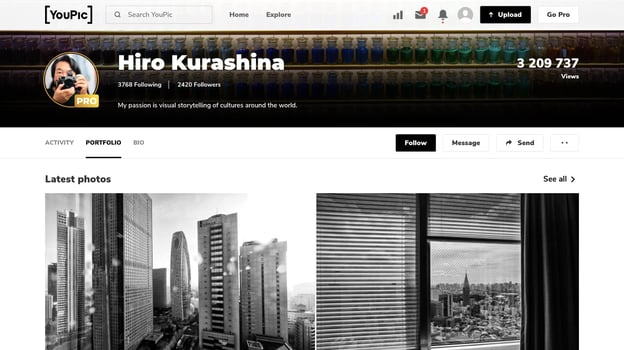
YouPic’s users include famous photographers like Joel Meyerowitz and Julia Fullerton-Batten. Another site specifically designed for photographers, YouPic, enables you to craft a free stunning portfolio to showcase your work. It also allows you to buy prints from other photographers or sell your own to earn additional income.
Additionally, the site offers interactive courses to improve your photography skills and a Pinterest-style “Explore” page that lets you check out famous photographs, new artwork, and stories to inspire your gallery. And most interesting to note, YouPic allows users to copyright their photos on the blockchain, and it’s the first decentralized photography platform. That means YouPic is one of the few platforms that won’t take any rights or ownership of your work.
Pros
- Can sell prints on this site commission-free
- Can copyright photos on blockchain
- Doesn’t take any rights or ownership of your work
Cons
- Premium membership is required for YouPic to promote your work
15. Format

Format is a portfolio website for photographers looking to create and curate their own digital gallery or store. Built with tools to help you build a professional website, it offers solutions for supporting a photography business, plus cloud storage to protect your work.
Format has a suite of templates made to fit any aesthetic. It’s designed to serve particular professional situations best, such as for wedding photography or to showcase your artworks. It can also change how viewers navigate your work, from gallery formats to more interactive scrolling or slideshow options.
Pros
- Ideal for professional photographers
- Can support high-quality photos
- Can integrate online stores with no fees for sales
Cons
- The interface comes with a learning curve, but users don’t have to worry about code
Creating Your Online Portfolio
An online portfolio provides evidence of your work and skills, which can set you apart from other candidates or professionals in your field. Using any of the tools above, you can create a free portfolio in no time. What are you waiting for?
Editor’s note: This post was originally published in April 2019 and has been updated for comprehensiveness.

21 Examples of Successful Co-Branding Partnerships (And Why They’re So Effective)
Everyone has loyalties to their favorite brands, but there’s a good chance your favorite products result from two separate brands working together.
One of my own beloved childhood memories was a product of co-branding: Betty Crocker partnered with Hershey’s to include chocolate syrup in its signature brownie recipe.

There’s something brilliant about that co-branded product: It’s a fun way to marry two classic brands into one delicious experience for fans of baking and chocolate alike. In fact, these brands still create new co-branded products to this day.
Co-branding can be an effective way to build business, boost awareness, and break into new markets, and for a partnership to truly work, it has to be a win-win for all players in the game. Both audiences need to find value — like chocolate-loving fans of Betty Crocker and Hershey’s.
There are a ton of great examples of co-branding partnerships out there. To show you what makes them so successful, we’ve curated a list of examples of great co-branding partnerships to inspire you.
Featured Resource: Free Co-Marketing Templates
-2.png?width=624&name=21%20Examples%20of%20Successful%20Co-Branding%20Partnerships%20(And%20Why%20Theyre%20So%20Effective)-2.png)
Looking to ramp up your co-branding program? Download HubSpot’s Co-Marketing Kit + Templates to learn more about co-branding best practices and build out your process with universal, customizable templates.
1. GoPro & Red Bull
Co-Branding Campaign: Stratos
GoPro doesn’t just sell portable cameras, and Red Bull doesn’t just sell energy drinks. Instead, both have established themselves as lifestyle brands — in particular, a lifestyle that’s action-packed, adventurous, fearless, and usually pretty extreme. These shared values make them a perfect pairing for co-branding campaigns, especially those surrounding action sports.
To make the partnership work, GoPro equips athletes and adventurers from around the world with the tools and funding to capture things like races, stunts, and action sport events on video — from the athlete’s perspective. At the same time, Red Bull uses its experience and reputation to run and sponsor these events.
“GoPro camera technology is allowing us to complement the programming by delivering new athlete perspectives that have never been seen before,” said Sean Eggert, Red Bull’s director of sports marketing. The collaboration allows exclusive GoPro content to enhance both companies’ growth.
Why the Stratos Co-Branding Campaign Works
While GoPro and Red Bull have collaborated on many events and projects together, perhaps the biggest collaboration stunt they’ve done was “Stratos,” in which Felix Baumgartner jumped from a space pod more than 24 miles above Earth’s surface with a GoPro strapped to his person. Not only did Baumgartner set three world records that day, but he also embodied the value of reimagining human potential that define both GoPro and Red Bull.
2. Rachel Comey, Victor Glemaud, Sandy Liang, Nili Lotan & Target
Co-branding Campaign: High-End Fashion
Anyone who’s designer-conscious knows high fashion and Target aren’t exactly the same caliber regarding quality. Dresses by designers like Sandy Liang go for around $600, whereas dresses sold by Target go for more like $35 a pair. See what I mean?
But that discrepancy in pricing is exactly why these designers and Target brand decided to partner with one another. To support its brand positioning as trendy and fashionable, Target has paired with high-end fashion designers Rachel Comey, Victor Glemaud, Sandy Liang, and Nili Lotan to offer exclusive branded items for a limited time.
-Aug-05-2022-03-56-17-89-PM.png?width=624&name=21%20Examples%20of%20Successful%20Co-Branding%20Partnerships%20(And%20Why%20Theyre%20So%20Effective)-Aug-05-2022-03-56-17-89-PM.png)
Why Target Co-Branding Campaign Works
In this exchange, the high-end designers can expose their name to a new generation of potential consumers, who will increasingly aspire to own more pieces from those high-end collections while furthering the idea that Target can be a store to find fashion-forward clothing.
3. Joybird & Sherwin-Williams
Co-branding Campaign: Being Boldly Original
The Joybird home lifestyle brand and paint company Sherwin-Williams did a co-branding campaign when they partnered together to curate an eclectic collection of home furnishings and color palettes.
Together, the two brands created an exclusive product line of paints and room design inspiration that helped customers easily select paint colors to complement their furniture choices.

Why the Sherwin-Williams Co-branding Campaign Works
These two businesses saw the opportunity to run a campaign that exposed their product and copywriting to brand new audiences. This intersection of target demographics could have brought in new business for each other and could have paved the way for future co-branding collaborations if proven mutually beneficial.
4. Casper & West Elm
Co-branding Campaign: Test a Casper Mattress
You may have already heard of Casper — an online mattress and bedding brand selling mattresses in a box.
Enter West Elm, a high-end furniture company. Casper and West Elm partnered so shoppers could try out the comfy mattress before purchasing — and so West Elm could advertise its chic bedroom furniture.

Why the West Elm Co-branding Campaign Works
This is another example of a mutually beneficial co-branding partnership. It helps both brands appeal to a broader group of shoppers — after all, Casper doesn’t sell furniture, and West Elm doesn’t sell mattresses. It also provides shoppers with options — to try a mattress before buying or to feel what it would be like sleeping in a bed frame.
5. Kanye & Adidas
Co-branding Campaign: Yeezy
Kanye West, best known for his Grammy-winning rap albums, partnered with Adidas to develop a high-end footwear line called Yeezy. The combination of Kanye’s personal brand and Adidas’ growing streetwear segment has made for robust company earnings and brand growth since it was introduced.
-4.jpeg?width=598&height=366&name=21%20Examples%20of%20Successful%20Co-Branding%20Partnerships%20(And%20Why%20Theyre%20So%20Effective)-4.jpeg)
Why the West Elm Co-branding Campaign Works
Kanye’s celebrity appeal benefits Adidas by creating buzz around its apparel, and the athletic-wear brand gives Kanye a well-established platform to build his high-end clothing line. One of the strongest draws of Yeezy — and most notably its shoes — is its exclusivity: Kanye’s celebrity status, extremely scarce roll-outs, and the high price tag make the lucky few to own Yeezy sneakers feel a little famous by association.
Adidas’ co-branding relationship with Kanye and the resulting cult-like Yeezy following led to a stellar year for the company: in 2019, Adidas’ net income climbed 19.5% to $1.9 billion.
6. BMW & Louis Vuitton
Co-branding Campaign: The Art of Travel
Car manufacturer BMW and designer Louis Vuitton may not be the most obvious pairings. But if you think about it, they have a few important things in common. If you focus on Louis Vuitton’s signature luggage lines, they’re both in the business of travel. They both value luxury. And finally, they’re both well-known, traditional brands that are known for high-quality craftsmanship.

These shared values are exactly why this co-branding campaign makes so much sense. In their partnership, BMW created a sports car model called the BMW i8, while Louis Vuitton designed an exclusive, four-piece set of suitcases and bags that fit perfectly into the car’s rear parcel shelf.
Although the four-piece luggage set goes for a whopping $20,000, the price is right for the target customer, as the BMW i8 starts at $135,700. A price like that kind of makes that luggage set seem like a drop in the bucket.
Not only does the luggage fit perfectly size-wise, but its design and appearance fit perfectly with BMW’s image: sleek, masculine, and high-quality. Turns out both the luggage and some parts of the car’s interior use carbon fiber, strong-yet-light composite material.
Why the Louis Vuitton Co-branding Campaign Works
Both brands knew their target market desired luxury and meticulous craftsmanship. By selling complimentary high-quality products, the brands successfully garnered attention from respective loyal customers.
7. Starbucks & Spotify
Co-branding Campaign: First-of-Its-Kind Music Ecosystem
Starbucks scaled up a premium coffee shop experience into a massive global brand, using music to create an ambiance around its coffee. Spotify, a music streaming platform, has powered almost 25 billion hours of listening worldwide. Starbucks and Spotify forged an innovative co-branding partnership to build a “music ecosystem”, offering artists greater access to Starbucks consumers and giving Starbuck access to Spotify’s expansive discography.
-Aug-05-2022-03-56-18-55-PM.jpeg?width=598&height=264&name=21%20Examples%20of%20Successful%20Co-Branding%20Partnerships%20(And%20Why%20Theyre%20So%20Effective)-Aug-05-2022-03-56-18-55-PM.jpeg)
Why the Spotify Co-branding Campaign Works
Through the initiative, Starbucks employees get a Spotify premium subscription, with which they can curate playlists (that patrons can access through the Starbucks Mobile App) to play throughout the day in the shop. This music ecosystem is designed to expand the coffeehouse environment that Starbucks is known for while giving artists greater exposure to Starbucks customers.
The “musical-ecosystem” partnership is mutually beneficial, allowing the companies to reach the other’s audience without sacrificing their brand.
8. Apple & MasterCard
Co-branding Campaign: Apple Pay
Sometimes, co-branding partnerships aren’t just cool projects between two companies — they actually have practical value when the companies work together.
.png?width=624&name=21%20Examples%20of%20Successful%20Co-Branding%20Partnerships%20(And%20Why%20Theyre%20So%20Effective).png)
When Apple released the Apple Pay app, the brand effectively changed how people perform transactions. This app allows people to store their credit or debit card data on their phone, so they can use them without physically having the card with them. But for this app to succeed, it needs credit card companies to integrate with this technology. By the same token, credit card companies also face more competition themselves if they aren’t compatible with the latest consumer purchasing tool.
Why the Mastercard Co-branding Campaign Works
To get out ahead of its competition, MasterCard became the first credit card company to allow its users to store their credit and debit cards on Apple Pay. MasterCard not only showed support of a major consumer tech developer in this partnership — it evolved along with its own customers in how they choose to make purchases at the counter.
9. Airbnb & Flipboard
Co-branding Campaign: Experiences
You’ve probably heard of Airbnb, the room-sharing application that allows you to find convenient lodging hosted by real people. But its newest partner, Flipboard, might not have been on your radar until now.
Flipboard is a news aggregator that collects news and topical content that users are sharing on social media, and allows you to “flip” through the material much like a social media feed. Well, Airbnb recently teamed up with Flipboard to create Experiences, which serve Airbnb users with lifestyle content tailored to their interests and shared by people with similar interests as the reader.
-Aug-05-2022-03-56-17-17-PM.jpeg?width=548&height=337&name=21%20Examples%20of%20Successful%20Co-Branding%20Partnerships%20(And%20Why%20Theyre%20So%20Effective)-Aug-05-2022-03-56-17-17-PM.jpeg)
Why the Flipboard Co-branding Campaign Works
The ongoing campaign recently led to another co-created product called Trips, which allows Airbnb users to connect with hosts with common interests and actually book these experiences when traveling. This partnership is an impressive example of how businesses can connect their customers with information that caters to their individual interests and drive product usage as a result.
10. Uber & Spotify
Co-branding Campaign: Soundtrack for Your Ride
Music-streaming app Spotify partnered with ride-hailing app Uber to create “a soundtrack for your ride.” This is a great example of a co-branding partnership between two very different products with similar goals— to earn more users.
-3.png?width=319&height=278&name=21%20Examples%20of%20Successful%20Co-Branding%20Partnerships%20(And%20Why%20Theyre%20So%20Effective)-3.png)
When riders are waiting for an Uber ride, they’re prompted to connect with Spotify and become the DJ of their trip. Users can choose from their own playlists to determine what they’ll listen to.
Why the Spotify Co-branding Campaign Works
This smart co-branding partnership helps fans of Uber and Spotify alike enjoy better experiences thanks to the app. And they might be more interested in picking Uber and Spotify over competitors knowing they can enjoy their next ride listening to their favorite tunes.
11. Levi’s & Pinterest
Co-branding Campaign: Styled by Levi’s
Levi Strauss & Co. — one of the world’s oldest and most recognized jean brands — recently joined forces with Pinterest, a social platform where users pin posts they like to their user profiles.
.jpeg?width=598&height=330&name=21%20Examples%20of%20Successful%20Co-Branding%20Partnerships%20(And%20Why%20Theyre%20So%20Effective).jpeg)
People often turn to Pinterest for fashion inspiration, making a co-branding partnership with Levi’s a natural partnership. Styled by Levi’s is a new initiative between Pinterest and Levi’s offers a “personalized styling experience,” or style insights tailored to each user’s tastes and preferences.
Why the Pinterest Co-branding Campaign Works
The partnership offers an authentic and individualized brand relationship, which is difficult to come by in an increasingly digital environment. Pinterest offers Levi’s a leading social platform with millions of users interested in visual offerings, and Levi’s meets these needs with digital personalization and visual-focused boards.
12. BuzzFeed & Best Friends Animal Society
Co-branding Campaign: Emma Watson + Kittens
Some co-branding campaigns are more complicated than others. This example from BuzzFeed and Best Friends Animal Society is one of the simplest ones—and it shows that a great co-branding effort doesn’t have to take months of planning or millions of dollars.
For this campaign, Best Friends Animal Society wanted to leverage BuzzFeed’s readership of over 200 million people.
To do this, they partnered with the folks at BuzzFeed to set up and publish an article called, “We Interviewed Emma Watson While She Played With Kittens And It Was Absolutely Adorable,” which you can read here.
The article is exactly what it sounds like: Harry Potter and Beauty and the Beast star Emma Watson answered fans’ questions while she played with cute kittens.
Why the Best Friends Animal Society Co-branding Campaign Works
The article ends with a CTA advertising that the kittens featured in the video are, in fact, adoptable — a win-win for both partners by using celebrity to garner attention for clicks while providing more exposure for animals in need of new homes and donations.
13. CoverGirl & Lucasfilm
Co-branding Campaign: Light Side and Dark Side Makeup
Whenever a new installment of the beloved “Star Wars” series is released in theaters, it causes global pandemonium. The release of “Star Wars: Episode VII The Force Awakens” in 2015 was no exception. The series’ parent company, Lucasfilm, partnered with CoverGirl to capture a broader audience to get new and old fans excited about the movie’s release.
-1.png?width=450&height=524&name=21%20Examples%20of%20Successful%20Co-Branding%20Partnerships%20(And%20Why%20Theyre%20So%20Effective)-1.png)
You might be wondering, “What do “Star Wars” and makeup have in common?” And the cleverness of this partnership is evident in the answer.
In the past, space-age action movies were almost exclusively advertised and targeted toward men and boys. But in this day and age, that’s nonsense — because people of all genders can be interested in space exploration and makeup contouring alike.
The line was designed by famed makeup artist Pat McGrath, and it features two styles: the Light Side and the Dark Side, which loyal “Star Wars” fans will recognize as the sides of good and evil in the movies.
Why the Lucasfilm Co-branding Campaign Works
This co-branding partnership was a win for both brands. Lucasfilm captured more attention and got CoverGirl shoppers (many of whom are young women) excited about the film’s release. And CoverGirl hopped on the “Star Wars” advertising bandwagon that took over the internet, stores, and TV leading up to the film’s release.
14. Amazon & American Express
Co-branding Campaign: Amazon Business American Express Card
Ecommerce giant Amazon is a global enterprise with millions of users and almost two million businesses that sell on their platform. Amazon is looking to improve the way small businesses sell on their platform, so they’ve partnered with American Express on a co-branded credit card.
-Aug-05-2022-03-56-16-64-PM.jpeg?width=598&height=239&name=21%20Examples%20of%20Successful%20Co-Branding%20Partnerships%20(And%20Why%20Theyre%20So%20Effective)-Aug-05-2022-03-56-16-64-PM.jpeg)
Why the American Express Co-branding Campaign Works
The card helped users buy goods and services and provide enhanced data insights on their purchasing activity. American Express and Amazon share a commitment to help small businesses grow in the U.S. and by combining their efforts, the two companies had the opportunity to enhance their performance while building brand trust.
15. UNICEF & Target
Co-branding Campaign: Kid Power
If you have the chance to partner for a not-for-profit cause, it can pay off in multiple ways.
Target partnered with UNICEF on a campaign called Kid Power, which committed Target to one of UNICEF’s sustainable development goals (SDGs). The retailer sold kid-friendly fitness trackers encouraging the wearer to complete various fitness activities, which ultimately helped deliver food packets to underprivileged children worldwide.
-4.png?width=624&name=21%20Examples%20of%20Successful%20Co-Branding%20Partnerships%20(And%20Why%20Theyre%20So%20Effective)-4.png)
Why the Target Co-branding Campaign Works
By selling this fun, inexpensive fitness product, Target encourages children to embrace a healthy lifestyle and uses kids’ successes to supply underserved communities with the necessary resources. It’s an ongoing partnership that generates awareness of global malnutrition, helps UNICEF meet its demanding SDGs, and opens up Target to a demographic of families they might otherwise have had access to.
16. Nike & Apple
Co-branding Campaign: Nike+
Athletic brand Nike and technology giant Apple have been working together since the early 2000s, when the first line of iPods was released.
The co-branding partnership started as a way to bring music from Apple to Nike customers’ workouts using the power of technology: Nike+iPod created fitness trackers, sneakers, and clothing that tracked activity while connecting people to their tunes.
-2.jpeg?width=541&height=355&name=21%20Examples%20of%20Successful%20Co-Branding%20Partnerships%20(And%20Why%20Theyre%20So%20Effective)-2.jpeg)
The partnership has since evolved to become Nike+ — which uses activity tracking technology built into athletic clothing and gear to sync with Apple iPhone apps to track and record workout data. Tracking transmitters can be built into shoes, armbands, and even basketballs to measure time, distance, heart rate, and calories burned.
Why the Apple Co-branding Campaign Works
It’s a genius co-branding move that helps both parties provide a better experience to customers — and with the popularity of fitness tracking technology, Nike+ is ahead of the curve by making it easy for athletes to track while they play.
17. Bonne Belle & Dr. Pepper
Co-branding Campaign: Flavored Lip Balm
Dr. Pepper-flavored lip balm. I mean, it’s genius.
-Aug-05-2022-03-56-16-43-PM.jpeg?width=320&height=445&name=21%20Examples%20of%20Successful%20Co-Branding%20Partnerships%20(And%20Why%20Theyre%20So%20Effective)-Aug-05-2022-03-56-16-43-PM.jpeg "bonne-belle-dr-pepper.jpg")
Bonne Belle first debuted Lip Smacker, the world’s first flavored lip balm, in 1973, starting with flavors like strawberry, lemon, and green apple. Just two years later in 1975, the brand forged its first flavor partnership with the timeless Dr. Pepper brand. The result? A lip balm flavor that’s been famous for decades among teenage girls.
If you think the connection between lip balm and Dr. Pepper is a little thin, consider the copy on one of their vintage ads: “It’s the super shiny lip gloss with lip-smacking flavor… just like the world’s most original soft drink.” And later, “From Bonne Belle of course: the cosmetics company that understands your taste.”
Why the Dr. Pepper Co-branding Campaign Works
While you don’t think of flavor and cosmetics, this campaign works because overlapping target demographic consumers can get excited to try an affordable and fun product like Dr. Pepper lip gloss with ease.
Most Surprising Brand Partnerships
Every so often, we hear about a brand partnership that we think doesn’t make any sense — but it leads to a few incredibly memorable, unexpected campaigns. If you want to broaden your horizons of who you should partner with, check out these surprising co-marketing successes.
18. Burger King & McDonald’s
Co-branding Campaign: A Day Without a Whopper
Yes. You read that right: Burger King and McDonald’s — two of the fiercest fast—food industry opponents— joined together for a co-marketing campaign in 2019. And, while we don’t encourage competing brands to do this — the campaign was for an amazing cause.
At the time, McDonald’s was donating $2 to childhood cancer charities for every Big Mac purchased. So, Burger King worked with the competing fast-food chain to host “A Day Without a Whopper.”
For one day, Burger Kings across Argentina and other countries took the Whopper off their menu in an effort to encourage people to buy a Big Mac from McDonald’s instead.
-1.jpeg?width=624&name=21%20Examples%20of%20Successful%20Co-Branding%20Partnerships%20(And%20Why%20Theyre%20So%20Effective)-1.jpeg)
Why the McDonald’s Co-branding Campaign Works
Although there were some criticisms of the campaign, because it confused Burger King customers, it was an amazing example of two competing brands that worked together to help a charity. Because of how they partnered up for a good cause, audiences loved the campaign and buzzed about it all over the web.
19. Warby Parker & Arby’s
Co-branding Campaign: The WArby Collection
Warby Parker is known for selling affordable glasses at stores across the U.S. and through nearly fully virtual fitting platforms. Arby’s is a restaurant chain known for its slogan, “We have the meat!”
Looking at the two companies, there’s not much that they have in common. But, this didn’t stop them from creating a co-branded April Fools Day campaign in 2018.
For the campaign, the two brands played up the one major thing they had in common — the fact that the word “Arby” was part of both their names.
On April Fool’s Day, Warby Parker visitors could buy Arby’s themed fashion items, which were part of the cleverly-named WArby Collection.
According to Nylon, items visitors could buy included a WArby’s T-shirt, baseball cap, and tote bag (which also said, “Nice To Meat You” on it). They could also buy a pack of sandwich-themed microfiber cloths and glasses with a raw beef pattern.
-3.jpeg?width=414&height=226&name=21%20Examples%20of%20Successful%20Co-Branding%20Partnerships%20(And%20Why%20Theyre%20So%20Effective)-3.jpeg)
Meanwhile, Arby’s offered food with boxes that had the WArby’s logo on it as well as onion rings with a box that read “Onion Ring Monocle.”

Why the Arby’s Co-branding Campaign Works
This campaign shows that you don’t necessarily need a matching audience demographic or a partner in a similar industry to create a campaign that catches a large audience’s attention. Sometimes all you need is a sense of humor and creativity.
20. Taco Bell & Doritos
Co-branding Campaign: Doritos Locos Tacos
When the Doritos Locos Taco was first introduced, it quickly became one of the fast food industry’s most popular and widely recognized items. Frito-Lay took Taco Bell’s crunchy taco recipe and gave the Locos Taco its special, signature twist: a Doritos shell. The two companies wanted to keep the shell as close to the original cheesy chips as possible, using the original corn masa recipe and coating it in that distinctive nacho cheese dust.
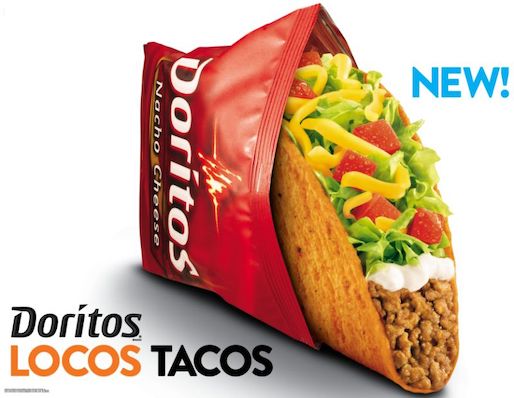
The taco was an immediate and explosive success: Taco Bell sold an estimated 1 billion units the first year it was introduced.
Why the Doritos Co-branding Campaign Works
Taco Bell and Frito Lay advertised the Doritos Locos Taco by wrapping the taco in a classic Doritos bag, reflecting the co-branding partnership and appealing to both brands’ audiences. The Doritos Locos Taco’s extraordinary success is yet another example of why co-branding can boost reach and sales for both brands.
21. Tim and Eric & Purple
Co-branding Campaign: Purple Boys
Tim and Eric (a.k.a. Tim Heidecker and Eric Wareheim) are the comedic duo behind Adult Swim shows like Tim and Eric Awesome Show, Great Job!, Check It Out! with Dr. Steve Brule, Tim & Eric’s Bedtime Stories, and Beef House.
Meanwhile, Purple, the company and HubSpot customer known for the popular Purple Mattress, often launches unique advertising campaigns which have caught the eye of millennial and Gen-Z demographics.
It makes sense for a company to team up with celebrities who can promote their product, Tim and Eric’s comedic style is incredibly random and unique. Although they’re pretty hilarious, as a marketer, you might wonder how this type of comedy style translates into a mattress marketing campaign that actually generates revenue.
While you might think Tim and Eric had dull down their iconic routine to sell Purple products, this is actually quite far from the truth. In a video series called The Purple Boys, they actually amped up their bizarre antics.
The storyline of Purple Boys episodes often relate to a sleep-related pain point, such as the “Sunday Scaries.” Although the script and special effects are incredibly random, the episodes almost always end with the Purple Boys supplying a sleep-deprived character with a Purple mattress.
To give you a visual of what this off-the-wall comedy series looks like, check out this episode that centers around a sleepy character named Joe Dunder:
Why the Purple Co-branding Campaign Works
Although hiring actors is technically more of a sponsorship than a partnership, this large-scale campaign benefits both parties. While Tim and Eric could spread awareness of their comedy to Purple audiences, Tim and Eric fans might watch these videos for entertainment and learn about Purple’s products along the way.
Creating a Great Co-Marketing Campaign
Although you might not have the budget of the brands noted above, you can take note of them regarding their creativity, level of storytelling, and how they pooled their resources to connect their separate brands in a mutually beneficial way.
As you search for the best co-marketing partner for your brand and build a winning campaign, we hope you find some inspiration for your next stellar launch.
Editor’s Note: This article was originally published in September 2020 and has been updated for comprehensiveness.


Brand Refresh vs Rebrand: Which is Best for You? [+Checklist]
Brands that aren’t constantly evolving run the risk of becoming outdated or irrelevant. Some of the most popular brands of today would not have made waves unless they had undergone rebrands or refreshes.
For example, Apple is an excellent example of successful rebranding. In the early 1990s, Apple was slowly dropping out of the computer market. Apple updated its iconic logo from the dated rainbow to a sleeker, monochrome look to signal the change in its brand image. Of course, that wasn’t the only change, but it did mark the beginning of a new era for Apple. Today, they’re one of the most widely recognized brands in the world.
So, what’s the right solution for your client? In this post, we’ll discuss what exactly it means to rebrand or refresh your business strategically and stand the test of time.
It’s more of a risk for a business to remain stagnant than to attempt to change in any developing market. With business trends coming and going, businesses looking to refresh their identity would change elements such as:
- Logo
- Font
- Color Palette
- Brand Slogan
- Writing Style
But sometimes, it takes much more than just updating a logo or font, some businesses may need to make core changes to avoid the risk of losing competitive edge — by conducting a rebrand.
Think of rebranding as a series of substantial changes made to breathe life back into a struggling company. This process is more in-depth and can change elements of business including:
- Brand Positioning
- Brand Values
- Brand Guidelines
- Mission and Vision Statements
These can be time-consuming, expensive, and need a lot of approval to conduct, so if you’re looking to make more immediate changes for businesses, let’s dive into brand refresh strategy.
Brand Refresh Strategy
Use the steps below to guide your client through a successful refresh — but encourage them to adjust each step to fit the needs and audience of their company.
1. Determine if you need a brand refresh or a rebrand.
Perhaps your client has verbalized her desire to rebrand, but you should figure out its purpose before you even jump straight into rebranding. You should consider other avenues if your client can’t present a concrete reason (and “I’m bored” doesn’t count).
Why do you need to do this first? Rebranding isn’t as simple as slapping on a new logo or changing your name. Companies have to be willing to change their entire company vision, including company goals, message, and culture.
It takes a lot of time, money, and effort to pull a rebrand off successfully, and those that aren’t fully committed will be stuck with a poorly defined brand that will not stand out in today’s competitive market.
So how do you know if you should encourage your client to take that giant leap to rebrand? Here are some great cues:
- The brand has plans to expand the company nationally or internationally.
- Its current brand is restricting its growth into other markets.
- Its customers have negative associations with the company.
- The company is merging or acquiring other companies.
If that’s the case, refer to our guide to a successful rebrand to better serve their needs. And if there’s not a pressing need that necessitates a rebrand, move forward with conducting a refresh.
2. Brainstorm with your team to envision what they want the company to become.
The responsibility of a brand’s refresh shouldn’t fall on the shoulders of the few but instead should include your team to come up with new ideas for the brand’s future. You’ll have to decide which elements can have the opportunity to attract more attention.
- Logo: Modernize your logo to be more unique and stand out against competitors.
- Font: Make your chosen font accessible, professional, and distinct.
- Color Palette: Let your color palette speak for your brand with color theory.
- Brand Slogan: Refreshed brand slogans should speak to relevant needs.
- Writing Style: Tailor your writing style to be more consistent and speak to the buyer personas looking for the company’s product or service.
And if you’re working on a business for a client, ask them and their team questions like:
- Do they plan on growing to a national or international level?
- What other markets do they want to expand into?
Incorporate their answers into their brand image so a future refresh won’t be necessary.
3. Use social media to communicate with your audience.
Soft launch your refresh with updated collateral or UI/UX. For today’s business owners, using sites like LinkedIn, Twitter and Facebook are among the most popular to reach target audiences.
Use social media marketing to inform your audience of the upcoming changes and informally poll them about their thoughts on the refresh. You can gather research this way by engaging in social listening and taking your audience’s feedback into consideration and including them in your new look.
4. Consider your audience’s emotions or desires in your strategy.
The most successful brands evoke some kind of emotion from their target audience. Go out and meet them; speak to them directly and get feedback; see how you can improve your image. People want to feel they’re making a difference, and doing that face-to-face, or incentivized through surveys, are great ways to increase customer loyalty.
5. Implement the changes slowly.
Start with something small, like changing the font used on documents, and work from there. Gauge reactions, and adjust when possible. If there is too much negative feedback, approach your audience to understand the issue and see if changing some things will affect your rebranding or not.
So if you’re ready to take the next step and conduct a brand refresh, you could benefit from a checklist to make sure you conduct your own brand refresh with intention.
Brand Refresh Checklist
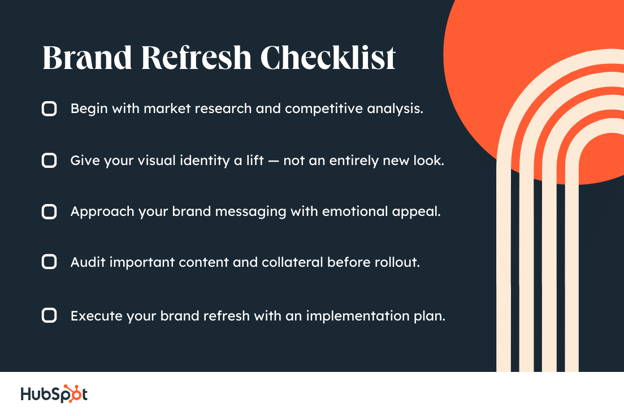
Begin with market research and competitive analysis.
Base your refresh on changes you’ve seen in the market. This can include discovery and research either conducted internally or through third parties and should consider shifts in customer needs and external factors like the economy and other trending news.
Competitive analysis will also allow you to gain inspiration from the successes and failures of your competitors as they try to maintain relevance, too.
Give your visual identity a lift — not an entirely new look.
Whether it’s your logo, slogan, or color palette, you want to remain recognizable in a refresh. If it’s currently outdated, muted, or busy, try making it more visually appealing with more exciting color, geometry, or a sleek font choice.
Approach your brand messaging with emotional appeal.
Your messaging should be made for your buyer personas and demonstrate value in terms of content quality and emotion. A successful refresh with sincere, trustworthy messaging will reflect the emotional intelligence of your company, and set it apart from competitors.
Audit important content and collateral before rollout.
When planning to conduct your refresh, a task you shouldn’t forget about is running a content audit. More often than not, getting rid of or editing your pre-existing posts, website, or other brand elements can already give your digital footprint a facelift.
Execute your brand refresh with an implementation plan.
After your team has decided what all is to be changed in the brand refresh, the implementation of these changes will have to be properly communicated and acted upon internally and externally with a proper implementation plan.
Keep Your Brand Identity Fresh
A successful company is an overall goal for your team. And with a well-executed rebrand or refresh, you can position your brand to stand the test of time. Change is good, and while it may take time to see the results, your brand’s adaptability will be rewarded.
Editor’s note: This article was originally published in September 2014 and has been updated for comprehensiveness.

16 Educational Podcasts for BIPOC Entrepreneurs
Welcome to Breaking the Blueprint — a blog series that dives into the unique business challenges and opportunities of underrepresented business owners and entrepreneurs. Learn how they’ve grown or scaled their businesses, explored entrepreneurial ventures within their companies, or created side hustles, and how their stories can inspire and inform your own success.
Podcasts are an excellent way for entrepreneurs to gain inspiration and actionable career advice.
However, entrepreneurs in minority communities searching for podcasts for and about people with similar experiences and identities to themselves may have a hard time doing so.
In this post, we’ve compiled a list of educational podcasts for entrepreneurs in minority groups that are worth listening to gain inspiration and insight from people with shared experiences.
![Download Now: Business Startup Kit [Free Templates]](https://no-cache.hubspot.com/cta/default/53/1a0a4e5a-b3ce-4c8b-bc42-4e24cde930ae.png)
1. Side Hustle Pro
Side Hustle Pro’s host Nicaila Matthews Okome interviews inspiring Black women entrepreneurs that have grown side hustles into profitable businesses. Listeners learn about their processes, failures, and successes and leave with strategies to leverage to help them build their side projects or interests into successful ventures.
2. The Diversity Gap
The Diversity Gap Podcast, hosted by Bethaney Wilkinson, discusses the gaps between good intentions for diversity and the actual impact of those intentions. Each episode features guests that discuss strategies and best practices for creating an organizational culture that allows people from all racial backgrounds to thrive at work. It’s a great listen for business owners and entrepreneurs looking to champion DEI at their workplace.
3. ¿Quién Tú Eres?
¿Quién Tú Eres?, hosted by Pabel Martinez of Plurawl, empowers Latinx communities to be their most authentic and full selves at work by redefining what professionalism means and looks like in the workplace. Each episode features a guest who defines professionalism and shows how they show up as their most authentic selves at work.
4. The Out Entrepreneur
The Out Entrepreneur, hosted by Rhodes Perry, is an interview-based show where Perry speaks with LGBTQ entrepreneurs, business owners, and founders who share insight into their career journeys, building businesses, and actionable advice and inspiration to those embarking on their own ventures.
5. A Slight Change of Plans
Dr. Maya Shankar is the host of A Slight Change of Plans, where she discusses human behavior and the things that contribute to us becoming who we are. Through conversations with popular guests like Riz Ahmed and scientists like Dr. Ayelet Fishbach, listeners learn more about themselves, others, and how to set goals and lead fulfilling lives.
6. Queer Money
Queer Money is a podcast about how personal and business finance affects the LGBTQ+ community. Hosts David Auten and John Schneider discuss how they’ve built the life they wanted and achieved financial security and educate listeners on how they can do the same for themselves and their businesses.
7. South Asian Trailblazers
Simi Shah, the host of South Asian Trailblazers, interviews South Asian entrepreneurs and leaders amid their career journeys and discusses the businesses they’ve built from the ground up. The conversations give actionable insight and advice to those currently forging the path ahead and looking for success.
8. The Enabled Disabled
Gustavo Serafini hosts The Enabled Disabled Podcast, where he hopes to shift the narrative about disability and entrepreneurship. He speaks about what it does and doesn’t mean to have a disability and interviews entrepreneurs and business owners about their career trajectories and achievements.
9. iDigress
iDigress, hosted by Troy Sandidge, guides listeners through the world of marketing and gives actionable insight into strategies that can help you grow your business and achieve sustainable, scalable success. Episodes are 30 minutes or less, meaning you can gain considerable insight and tips from an industry expert in a snackable form.
10. Pow Wow Pitch
Sunshine Quem Tenasco hosts the Pow Wow Pitch Podcast, an interview-based show featuring successful Indigenous entrepreneurs who share their stories and insight to empower other Indigenous entrepreneurs.
11. Latina to Latina
Latina to Latina’s host, Alicia Menendez, talks to Latinas about their career trajectories and getting to where they are. Menendez digs deep, and listeners hear unique origin stories about business growth and tips and strategies to overcome obstacles and failures. It’s a valuable resource for Latinx entrepreneurs looking to thrive in a system built to keep them out.
12. Content is Profit
Content is Profit, hosted by Luis D. Camejo and Luis A. Camejo, discusses top marketing leaders and the frameworks and strategies they use to create high-value marketing content that turns a profit. It’s a good listen for any business professional or entrepreneur looking to form a content strategy or update their existing process to draw in more leads and drive revenue.
13. Native Business Podcasts
Native Business Podcast, hosted by Gary and Carmen Davis of Native Business Magazine, features news, information, and thought leadership from successful native entrepreneurs and Tribal Leaders about their experiences and insights on business, entrepreneurship, and successes.
14. Choose Inclusion
Choose Inclusion’s podcast description begins with “What happens when a blind man, a woman of color, and a wannabe Latino get together to discuss how diversity, equity, and inclusion can impact business?” Mike Hess, Nina Baliga, and UB Ciminieri have conversations about the different ways that diversity, equity, and inclusion impact business, from developing your own DEI program to being an active participant in workplace events.
15. LatinX Can
Dr. Jeniree Flores Delgado hosts Latinx Can, where Latinx professionals from varied industries and career paths share advice, tips, and actionable tools for listeners to harness and incorporate into their career plans to achieve their goals.
16. Blissful Prospecting
JBay, host of Blissful Prospecting, interviews sales experts, leaders, and high-performers to understand how they’ve achieved success. Listeners will get actionable tips, strategies, and advice that will help you harness your full sales potential, capture leads, and land meetings that help you grow your business.
Ready to Listen?
Browse through the options on this list and get to listening; the show might just give you the final piece of advice or encouragement you’re looking for to get you where you want to be.

What Marketing Myopia Is & Why Every Brand Should Avoid It [+Examples]
Most businesses want to grow and be successful, but what they often don’t realize is that success doesn’t happen overnight. It takes hard work, dedication, and a clear vision of what you want your business to become.
One of the biggest dangers that can prevent a business from achieving its goals is marketing myopia.
![Download Now: Free State of Marketing Report [Updated for 2022]](https://no-cache.hubspot.com/cta/default/53/b0f73a5e-16e4-41fd-9511-8564efc560a7.png)
In this article, we will discuss what marketing myopia is, what causes it, how to avoid it, and some examples of businesses that have suffered from it.
It often leads to businesses making decisions that are not in the best interests of their customers or that fail to take into account changes in the marketplace.
Top Causes of Marketing Myopia
A Disconnect between The Business and Its Customers
The most common cause is a lack of understanding of what customers really want. This can happen when businesses focus too much on their own products and services and not enough on what customers are actually looking for.
Marketing myopia can also be caused by a lack of investment in marketing research. This can happen when businesses believe they already know everything they need to know about their customers and the marketplace.
An Unwillingness to Adapt
Another common cause is a failure to keep up with changes in the marketplace.
This can happen when businesses become too comfortable with their current products and services and fail to adapt to new trends or technologies.
A Focus on the Past, Instead of Future
Many businesses become myopic because they are too focused on the past.
They may be reluctant to change their products or services, even when it is clear that customer needs have changed.
How to Avoid Marketing Myopia
1. Prioritize customer needs.
A few years ago, my favorite color was red, I ate takeout on a regular basis, and the only plants I took care of were artificial ones. Today, I cook 90% of my meals, I’m a new (and successful) plant mom, and orange is more my vibe now.
As individuals, we know our wants and needs change as we grow. But it’s often difficult for brands to expect the same of their customers.
It would be easier if consumers stayed the same – you’d only have to do market research once, identify the strategies that worked and stick with them. Unfortunately, the truth is more complicated than that.
A couple of months can make a world of difference in consumer behavior.
Take 2020 for instance – when the pandemic started in March, brands were forced to pivot their marketing strategies, and in some cases, their entire business models
Those who failed to realize this shift was necessary and relied solely on prior success likely experienced great financial loss.
However, not every shift is this drastic. Some happen over time.
Take the topic of social responsibility. Ten years ago, this wasn’t a major concern for everyday consumers.
However, today, sustainability is a major selling point for consumers and impacts their purchasing decisions.
You can also look at the online landscape and how users are consuming content. Where blogging was 10 years ago podcasting is now.
This is all to say that keeping your finger on the pulse is key to avoiding a myopic business.
2. Foster innovation within your team.
Just because something has always been done a certain way doesn’t mean it’s the best way. That mentality is what leads to marketing myopia.
To break out of that, it’s important to create an environment in which your teams feel inspired to innovate.
What does this look like? It’s a combination of big and small actions like:
- Inviting new ideas.
- Experimenting with various strategies.
- Allowing failure and risk-taking.
- Hiring diverse perspectives.
By staying open-minded and flexible, you’ll be in a better position to avoid marketing myopia.
3. Invest in competitive intelligence.
One way to stay on top of your game is by keeping up with others in your industry.
Competitive intelligence is the practice of monitoring and gathering data on your competitors through legal and ethical means. This can look like social media monitoring, setting up Google alerts for specific brands, and downloading offers to review content strategy.
Sites like Crayon, SEMrush, and Kompyte are great tools to help you leverage this intelligence into actionable insights to propel your company forward.
4. Optimize your marketing strategy.
When you get too comfortable in your approach, that’s when you risk marketing myopia.
Even if your marketing strategy is working well, it doesn’t mean you shouldn’t work on optimization. After all, companies like BlockBuster saw immense success – until they didn’t.
The past doesn’t dictate the future. However, it can help inform it.
With this in mind, review your data, take the time to gain insights, and then come up with ways to improve your performance.
Marketing Myopia Examples
1. BlockBuster
In the early 2000s, Blockbuster was the undisputed king of the video rental industry.
But by 2009, the company had filed for bankruptcy. What went wrong?
Many experts believe that Blockbuster’s downfall was due to marketing myopia. The company was so focused on its existing business model that it failed to adapt to the changing marketplace.
As streaming services like Netflix and Hulu became more popular, Blockbuster refused to embrace them. Instead, they clung to their brick-and-mortar stores and DVD rentals, which eventually became obsolete.
2. Kodak
Kodak is another example of a company that fell victim to marketing myopia.
For years, Kodak was the leading name in photography. But as digital cameras became more popular, Kodak failed to adapt.
The company focused on film and prints, even as its customer base shifted to digital. As a result, they lost market share and eventually filed for bankruptcy in 2012.
3. Old Spice
Old Spice is a good example of a company that was able to avoid marketing myopia.
When the company was first founded, it marketed its products exclusively to men. But as the marketplace changed, Old Spice recognized that there was an opportunity to reach a wider audience.
They began to produce new products specifically for women and shift their marketing strategy. As a result, Old Spice was able to avoid the decline that many other companies have experienced.
By staying focused on its customers and being willing to adapt to change, Old Spice was able to avoid marketing myopia.


The Ultimate Guide to Talent Management [Strategy + Best Practices]
Ever wonder what sets successful businesses apart from those organizations that struggle year after year?
The product or service, pricing, industry, market share, and a thousand other factors can impact business success. However, there is one area that if they don’t get right, they’ll never flourish as an organization.
Hiring and retaining quality employees.
You may believe that your customers are the most important aspect of your business, but who is serving your customers? Without a top-notch staff, your product won’t make it to market, and you won’t have any customers to serve.

With high turnover rates across industries, employers are scrambling to understand what attracts top talent, cultivates loyalty and engagement among employees, and encourages them to stick around for the long haul. If your team is experiencing dissatisfaction, low engagement and productivity, and a revolving door in your HR department, you’re probably wondering this as well.
The good news is implementing a talent management program can help businesses of all sizes and employee engagement levels find a sense of balance.
What is talent management?
Put yourself in your employee’s shoes for a moment. What is your employee experience like? What attracted you to the company in the first place? Was there something they could’ve done that would’ve made you even more eager to work there?
Now think about the onboarding process. Were you provided with the training and support you needed to succeed in your role? Are you appreciated for your unique skills and compensated appropriately? Do you believe there are adequate growth opportunities? How about the workplace culture? Do you feel comfortable voicing opinions and new ideas?
All of these questions factor into your employee’s experience and whether or not they remain engaged in their roles, or become disconnected, disheartened, and dissatisfied with their job. When this happens, they aren’t exhibiting the productivity you’re looking for, and it won’t be long before they’re planning an exit strategy.
Talent management falls into three distinct categories:
- HR processes that work together to create the best possible employee experience. We’ll discuss this more in the next section.
- Attracting, Developing, Motivating, and Retaining top talent for your organization.
- Developing High-Performing Employees
“The purpose of your talent management strategy is to attract, motivate and retain your employees,” says Rameez Kaleem, Founder, and Director of 3R Strategy.
“No one factor, such as pay or perks, will enable you to do this. You need to consider your overall strategy to create an environment where employees can thrive and feel empowered to achieve excellence. This includes your approach to pay, benefits, creating a positive work environment, and providing people with personal and professional growth opportunities.”
As a business owner, manager, or HR professional, it’s your job to provide the best possible conditions for your employees so when outside opportunities knock, they can’t help but say “no thank you, I’m happy here.”

How does talent management fit under the HR umbrella?
While talent management can fall under the responsibilities of a manager or senior leader, depending on the structure of your organization, it may be carried out (at least in part) by your Human Resources department.
Why?
Human Resources is responsible for instituting workplace policies, handling interpersonal issues, and administering payroll. However, many businesses, also have a hand in the hiring process, training, mentoring, and creating the employee experience. Your HR department may shoulder the responsibility of employee engagement, performance, and company culture.
Because of this, it is essential that your HR department is considered a part of the talent management team.
Talent Management Strategy
Hopefully, you approach every aspect of your business, from marketing to sales to production to delivery and follow-up (and everything in between), with a strategy. Talent management is no different. In order to create the most positive experience for your employees, you’ll want to approach talent management with a strategic plan designed to efficiently reach your goals.
There are five steps you’ll want to work through in order to do this.
1. Identify the goals and the metrics you’ll use to measure your progress.
What do you hope to see from your Talent Management program? Are you looking to attract a higher caliber of employees? Are you experiencing extremely high turnover and looking to hang on to your top talent? Identify the talent management metrics that will allow you to track your progress and determine if you’ve reached your goal.
2. Select one or two areas to focus on (at first) before taking on a massive overhaul.
While it would be amazing to improve every aspect of your employee experience overnight, these things take time. Once you’ve determined your goals in Step 1, you’ll have a clearer picture of which area of Talent Management to tackle first. Once you’ve gotten that area optimized, you can move to the next.
3. Consider what sets you apart from the competition.
You’re used to competing for customers, but have you ever considered that you’re competing for talent as well? Just like your customers, your employees (or potential employees) have other options as well. They want to find the best fit and compensation for their skills, and you can bet they’ll be doing their homework.
Know what sets you apart from others and what makes you special. Do you offer special perks for employees? Does your culture make your employees proud to be there? Does your contribution to the community excite potential and existing team members?
Know what makes you different and don’t be afraid to communicate it to potential employees.
4. Identify the specific skills needed to grow and prosper.
Do you already have someone on your staff that can take on this responsibility? Perhaps you’ve got an HR business partner who can take the reins on a talent development program. Or perhaps, a talent manager is the first position you need to fill. Having a person dedicated to this program can help you get the most out of your existing employees, and guide the decision-making process on new hires.
5. Identify and analyze the key performance indicators.
If you can’t measure it, you can’t improve it. Get specific with the key performance indicators you’ll use to determine your success in this endeavor. Pay close attention to these numbers and if they aren’t heading in the right direction, it may be time to revisit your strategy and switch gears.
The better your strategy, the better your execution. Don’t be afraid to take some time to plan before you dive in.
Talent Management Process
Now that you understand the strategy behind talent management, how do you incorporate it into your own organization? The talent management process consists of six steps:
1. Identify your needs.
If your sink was leaking, you wouldn’t hire an electrician. Before you start posting job openings, determine what roles you need to fill and what skills are required to complete these responsibilities. Once you’ve done this, you’ll be better positioned to create the job description and post the opening.
2. Attract the right talent.
Remember you have a treasure trove of talent at your fingertips. If you have the opportunity to promote from within your company, you’ll do much more than save time on onboarding. You’ll also raise employee morale as your team now sees room for advancement within the company. If you don’t have anyone suitable, then you can look outside of the organization for a new hire.
3. Select the right talent.
This differs from company to company. You may begin with creating a shortlist of resumes, require a test to be taken, hold individual or team interviews, and ultimately leave it to the department manager or HR to make the decision. No matter how you go about it, make sure that you refer back to Step 1 and hire based on your needs.
4. Develop your employees.
This can include onboarding new employees as well as providing ongoing training for your existing employees. When you help an individual become the best employee possible.
5. Retain your employees.
You’ve worked hard to attract the best talent. Now, how do you ensure that they stay with you? Employee retention strategies can include increased pay, extra benefits or perks, rewards or gifts, promotions, etc.
6. Have an offboarding process in place.
No employee will last forever (we’ll discuss that in more detail below), but what do you do when an employee leaves? Get an understanding of what responsibilities they handle and look for a replacement based on your findings.
If the employee provided a great deal of value to the organization, ask them to train their successor so he or she is up and running before your existing employee leaves. You may also want to include an Exit Interview. You can discover a great deal of knowledge about the employee experience when you ask someone on his or her way out.
This talent management process will look a little different depending on your industry and your business model, however, this should give you a good understanding and a solid jumping-off point.
Talent Management Best Practices
There’s no need to reinvent the wheel when it comes to attracting and retaining top talent. There are a variety of talent management best practices that you can follow in order to be more successful. Some of these are:
- Have a strong employer brand. Candidates have choices when it comes to where they want to work. If you want to attract the best possible candidates, develop a strong brand as an employer.
- Have a good reputation. Of course, there are always things beyond our control, however, how the world views you is strongly based on how you show up as a company. Do what you say you’ll do and do it well.
- Encourage employee referrals. Good people know good people. Ask your existing employees to recommend job seekers they know and trust. Offer them incentives for their help and keep them apprised of how the process is going.
- Onboard and inboard properly. It’s a truly horrible feeling to join a company (or be promoted to a new role) and not be set up to succeed. Provide the training necessary for them to be their best selves in the new role.
- Provide ongoing training. Yes, they may know how to do their current job, but what are you doing to prepare them for their next role? Most employees want to progress up the career ladder and if you don’t give them the encouragement and opportunity to do this within your organization, they’ll surely go outside it.
- Create a talent pipeline. Eventually, every person will leave their role. This may be due to promotion, retirement, opportunities outside of the organization, etc. Prepare for this by identifying star performers and grooming them for promotion. When the time comes that a role is vacated, you’ll have someone waiting in the wings to step in.
- Provide performance feedback. No one likes to wonder if they’re hitting their marks and living up to their manager’s expectations. Provide regular feedback and opportunity for improvement so your employees are never in the dark about their present or future.
Your employees are truly the most important aspect of your business and without quality team members, you won’t be able to reach your goals. Implementing a talent management program in your business can help you position your organization as a sought-after employer and motivate employees to stay loyal to your organization.
Don’t be afraid to invest in your people. It will be the best investment you ever make.


TikTok Ads Guide: How They Work + Cost and Review Process [+ Examples]
In 2018, Musical.ly, music sharing app, was purchased by Chinese tech firm Bytedance and merged with the firm’s new app, TikTok.
It started out as a video-sharing social network where users shared short clips of themselves lip-synching and dancing to trending music. It has since expanded to house more diverse videos and become a creative outlet for brands.
![Free Ebook: The Marketer's Guide to TikTok for Business [Download Now]](https://no-cache.hubspot.com/cta/default/53/2c7242e4-ad54-4f63-8627-a15aa6a2ea50.png)
After the merger, TikTok’s active user base grew by almost 800%. Today, the platform has over 1 billion monthly users and brands use TikTok ads to reach them.
In this article, we’ll cover everything you need to know about TikTok’s advertising platform and discuss if it’s worth leveraging.
- Types of TikTok Ads
- How do TikTok ads work?
- How to Set Up Your TikTok Account
- TikTok Ad Review Process
- TikTok Ad Examples
- TikTok Advertising Cost
- Should you leverage TikTok for Business?
- TikTok For Business Pros and Cons
The platform’s e-learning service helps businesses unleash their creative side and learn how to make advertisements on the Ads Manager platform.
The sole marketing format for businesses to use on TikTok is video advertisements. The TikTok For Business Ads Manager platform helps marketers create these advertisements, and you can choose from five different formats.
TopView Ads
TopView ads appear once a day immediately after a user opens their app for the first time. Here’s an example of a TopView ad by M&M that advertises a virtual Halloween experience.

TopView ads can be up to 60 seconds long, making it perfect for businesses looking to advertise products or services that require longer periods of attention, like TV or movie trailers. The longer run-time works, as 71% of users say TopView ads grab their attention.
In-Feed Ads
In-Feed ads appear as the fourth video users see as they scroll through their “For You” feed, which is where they land when they open the app. A For You feed features videos that the algorithm believes are of interest to the user based on their app activity. A study by Neuro-Insight found that TikTok In-Feed ads achieve 23% higher detail memory than TV ads.
Here’s an example of an In-Feed ad created by food delivery service GrubHub.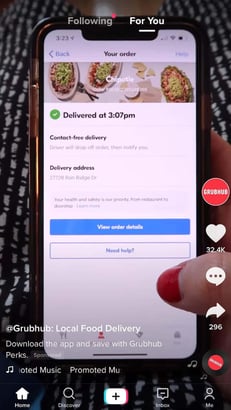
In-Feed ads can feature a CTA, making them especially useful for marketers looking to use the platform to drive sales and conversions. Acorns, a finance business, has used the In-Feed CTA feature to prompt viewers to download their app.

Some brands create their own version of In-Feed ads by partnering directly with influencers. For example, Raising Cane’s Restaurant partnered with famous TikTok influencer Chase Hudson to promote their business.
this my way eating @raising.canes what’s yours #CaniacAmbassador #raisingcanes
Users who follow Hudson would see this video in their For You feed.
Branded Hashtags
Branded Hashtags are advertisements that businesses use to inspire TikTokers to create content around a brand-related hashtag of their choice. Brands using this ad format have exclusive access to the hashtag, which is not the case on other social media sites. Its exclusivity, however, comes with a higher price tag and reported average costs are around $150,000 USD for six days.
The investment can be worthwhile, though, as the ad type has a median engagement rate of 17.5%. In addition, 77% of TikTok users like it when brands come up with new challenges, trends, or memes for them to join in with, so using this format speaks directly to audience desire.
The hashtag challenge #WorldSeries, sponsored by Major League Baseball, is featured on TikTok’s Discover feed, and the hashtag encourages users to post videos showing how they’ve celebrated baseball games. Clicking on the hashtag brings users to an internal landing page that features the sponsors’ logo, challenge description, and other videos using the hashtag.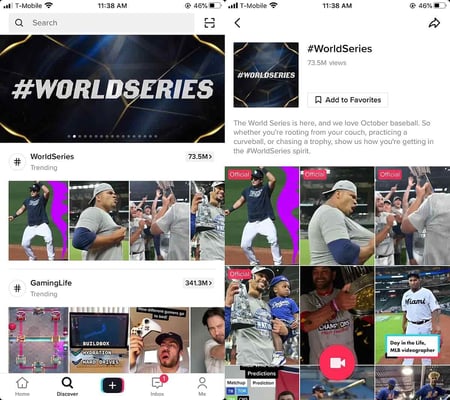
Brand Takeovers
Brand Takeovers are an ad format that can include TopView, In-Feed, and Branded Hashtags all at once, and the takeover aspect of this type is that the platform only features one business per day. The starting cost is reported to be around $50,000 USD per day.
Guess, a fashion company, ran a Brand Takeover on TikTok to advertise their denim jeans. Over six days, its TikTok account gained over 12 thousand new followers and generated a 14.3% total engagement rate. Its Brand Takeover included Top View, Branded Hashtag, and In-Feed ads.
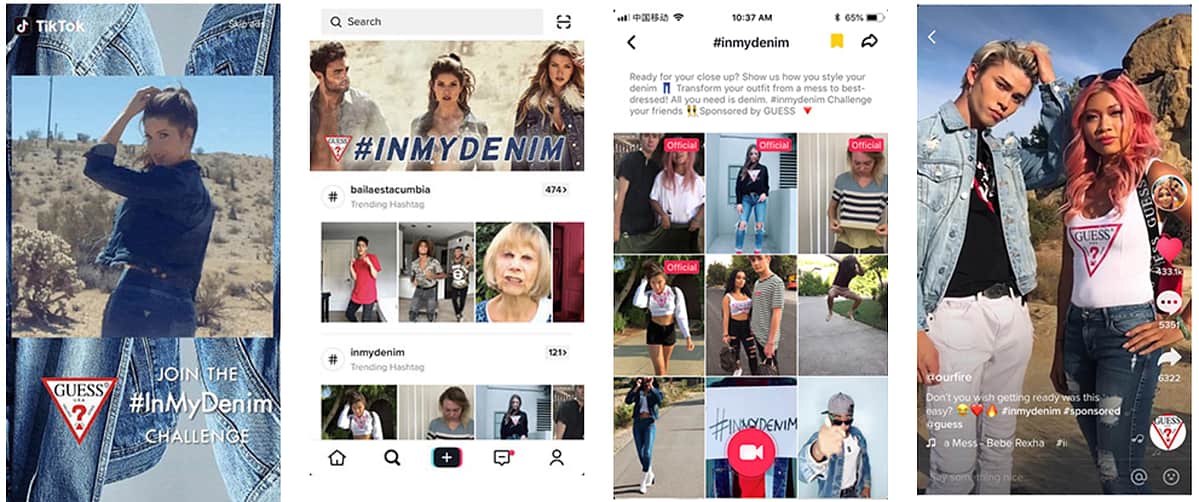
Branded Effects
Branded Effects ads use 2D, 3D, or AR to add images of your products into TikTok videos. Brands typically create stickers of their products or filters that TikTokers can use when creating their videos. These filters and stickers increase engagement and brand awareness, as using them typically involves playing brand-specific games.
Not Okay Movie used the Branded Effects feature to create a game where users can use the effect to find out which character from the movie they are. The effect has generated over 2,000 videos of UGC of people playing the game.
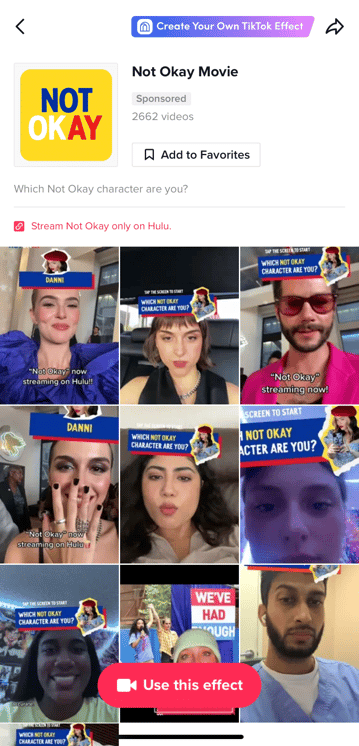
How do TikTok ads work?
Setting up a TikTok ad is relatively easy.
First, you have to create a business account from which you will build, manage, and track your ads. The next step is describing your business and setting up your payment type.
Now, here’s where the fun starts. You can choose between two ad manager modes: simplified and custom.
In both options, you build your ad in levels. You first outline your campaign, then define your ad group, and finally create your individual ads.
Here’s the difference between these two modes:
- Simplified mode takes a simple and straightforward approach to ad creation, letting Tiktok’s algorithm do the heavy lifting.
- Custom mode gives advertisers full control over their ads with advanced customization options, such as A/B testing, audience targeting based on video and creator interactions, and ad combinations.
Choosing a mode isn’t permanent, you can always switch to another mode.
Now that you know how TikTok ads work, here’s how to set up your account and build your ad.
-
Create a business account.
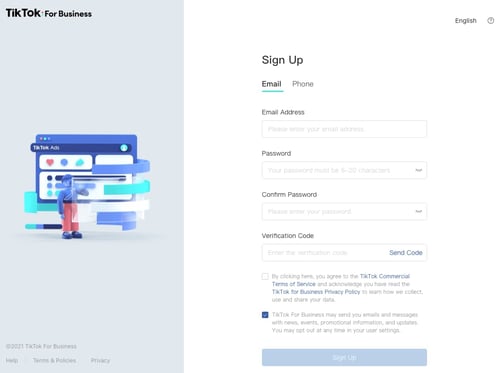
-
Describe your business.
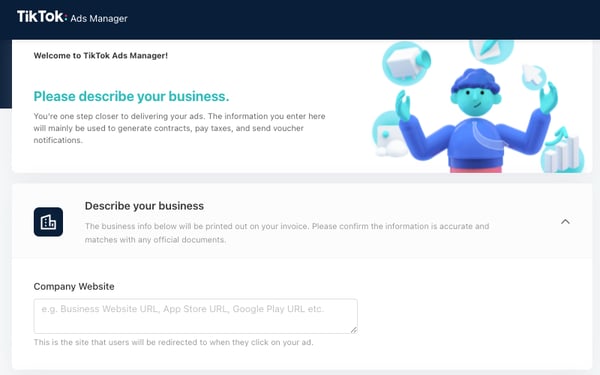
-
Enter your billing information.
![TikTok Ads Guide How They Work, Cost + The Review Process [+ Examples]](https://blog.hubspot.com/hs-fs/hubfs/Google%20Drive%20Integration/TikTok%20Ads%20Guide%20How%20They%20Work%2c%20Cost%20+%20The%20Review%20Process%20%5B+%20Examples%5D.png?width=500&name=TikTok%20Ads%20Guide%20How%20They%20Work%2c%20Cost%20+%20The%20Review%20Process%20%5B+%20Examples%5D.png)
-
Set up your payment type.
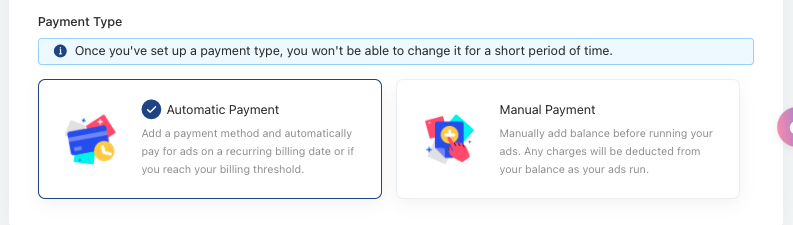
-
Select your ads manager mode.
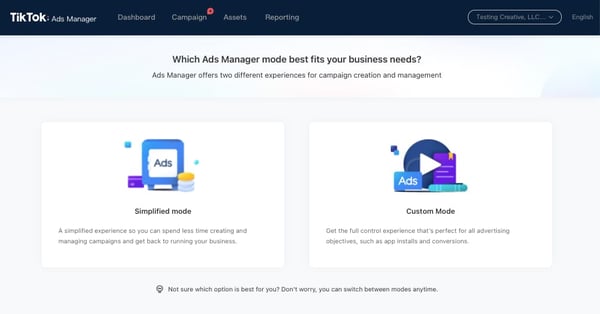
-
Build your ad.
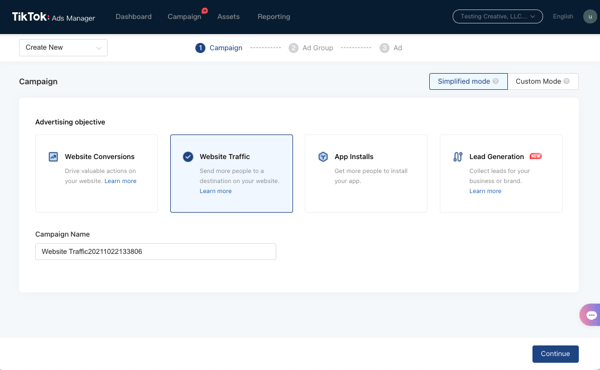
Pro-tip: When building your ad, consider Promo, the video marketing tool that allows you to find video templates and create high-quality promotional videos.
-
Review and submit.
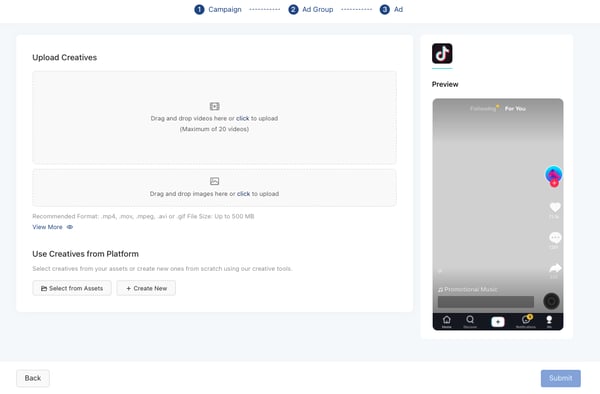
TikTok Ad Review Process
When you submit an ad for review, it usually takes 24 hours to review. To avoid any delays, you want to make sure your ad meets the platform’s ad requirements and follows its policies.
Here’s a checklist to use when reviewing your ad before submission:
- The landing page:
- Is functional and mobile-friendly.
- Delivers on what it outlines in the ad.
- Matches the product name in the ad.
- Is in the language of the region it’s targeting.
- Doesn’t automatically download files to a user’s device.
- The ad:
- Is free of spelling and grammatical errors.
- Contains audio.
- Is between five to 60 seconds.
- Doesn’t include excessive use of symbols, spacing, numbers, or capitalization.
- Matches the caption.
- Is in the language of the region it’s targeting (or includes subtitles.)
- Doesn’t include any prohibited products or services. Find a full list here.
- Is not blurry or pixelized.
- Follows standard video sizes: 9:16, 1:1, 16:9.
TikTok Ad Examples
1. Fly By Jing
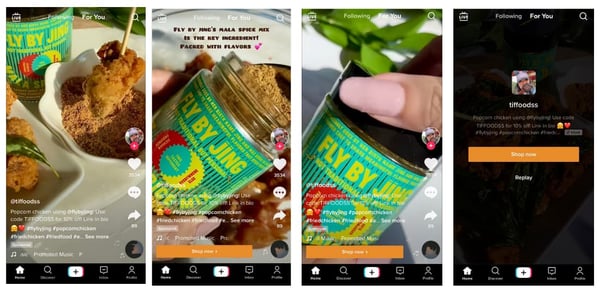
In this TikTok ad, food brand Fly By Jing partnered with food influencer TiffyCooks to demonstrate how easy (and tasty) it is to use the brand’s product.
Leveraging a known influencer is always a great way to raise awareness for your brand and build trust with your audience. Another great thing about this ad is that the offer is clear: Users can get 10% off by clicking on the CTA and using the code.
2. Tiffany & Co.
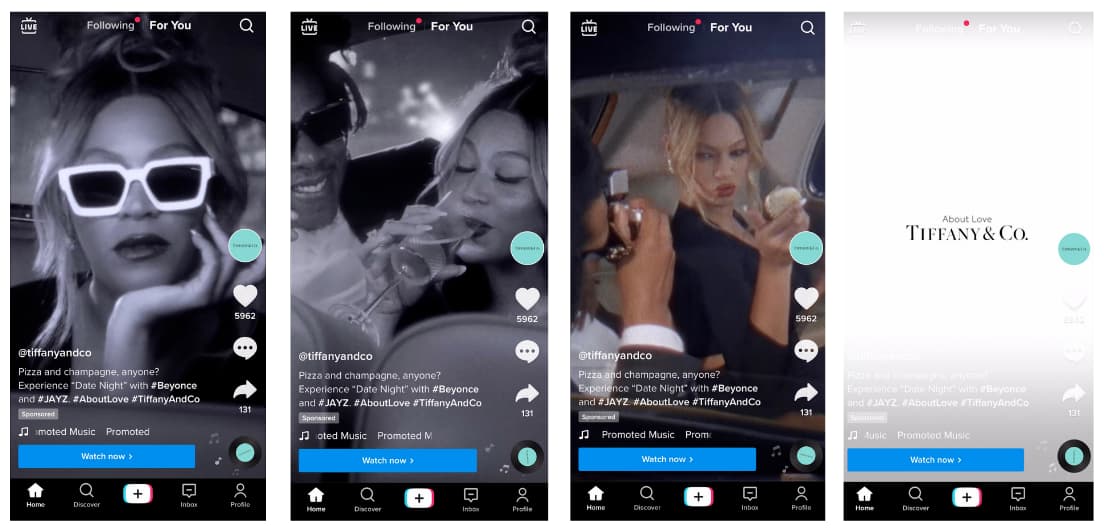
To promote its latest partnership with Beyoncé and Jay-Z, the brand has launched a series of ads including the artists. The ad is simple, but effective, and leads users to a landing page where they can learn more about the campaign.
3. Omsom
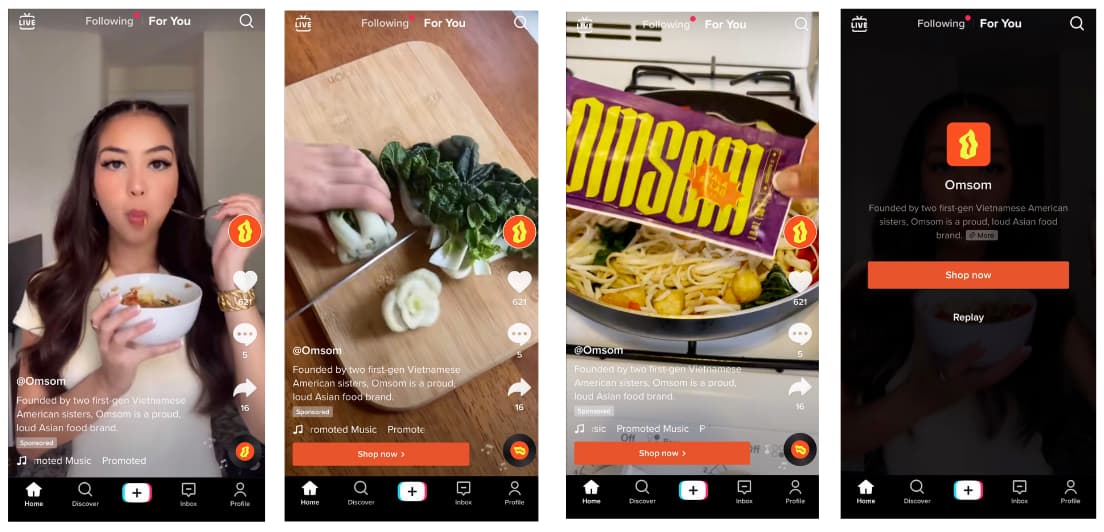
In 20 seconds, this food brand accomplishes a lot.
The video effectively showcases how its product is used. The caption also gives users some background on the brand and tells a story in just a few words. In addition, the CTA leads users right to a product page (instead of the homepage) where they convert.
Lastly, too often, ads seem jarring because they don’t fit the feel of the platform. That’s not the case here. The ad feels so natural in the feed that you wouldn’t know it was an ad if you removed the #sponsored tag and CTA.
TikTok Advertising Cost
When it comes to budgeting for Tiktok advertising, here’s the breakdown. You can select a daily or lifetime budget, which can be changed at any point during your campaign.
At the campaign level, you must have a minimum daily and total budget of $50 USD. For an ad group level, your budget must exceed $20 USD daily.
As for the advertising cost, TikTok hasn’t released its pricing policy. However, there is some information out there.
In 2020, Digiday reported that TikTok had a cost-per-mille as low as $1. After running their own experiment, JungleTopp reported that the cost-per-click was $0.19 – much lower than Facebook and Instagram.
With this platform, you can choose between several bidding strategies, each optimized for specific goals.
Should you leverage TikTok in your marketing strategy?
Since peaking in 2020, TikTok has become a go-to advertising platform for many brands. As the number of users increased, the number of ads they saw also followed from 19% in 2020 to 37% in 2021.
A 2021 Kantar report ranked the short-form video platform in the number one spot for ad equity, surpassing Amazon, Instagram, Google, and Twitter. This isn’t the first time either – they also held that spot the year prior.
Despite this impressive ranking, the data suggests marketers are still unsure about the platform. According to the report, many marketers view TikTok as highly innovative but not quite trustworthy.
From a consumer perspective, consumers go to TikTok for authenticity and community.
According to a 2020 Nielsen study surveying global TikTok users, 59% of respondents said they feel a sense of community when they hop on the app. It’s also a major source of discovery for consumers, with 55% of users saying that TikTok helps them discover new things.
So, the audience is there and ready to engage. However, the decision to use TikTok For Business in your marketing strategy ultimately comes down to your business goals and desired campaign outcomes.
To make the decision easier, we’ve compiled a list of pros and cons for marketers to use when making this decision.
TikTok For Business Pros and Cons
Pros |
Cons |
|
TikTok Ads Manager will help you expose your content to new audiences. TikTok has 1 billion global active users, is available in 155 countries, and has an ad reach of roughly 885 million people. Based on this alone, your TikTok videos have significant reach and potential. TikTok Ads’ Manager ‘similar audiences’ feature helps you select lookalike audiences that are similar to your target ones for exposure and building brand awareness in new groups. 78% of TikTokers also agree that you don’t need to have thousands of followers to go viral on the app, so there is potential for all businesses to generate brand awareness and engagement on the app. |
TikTok’s largest user base is not representative of all demographic groups. Users aged 18 to 24 make up almost 43% of the app’s total audience, meaning that the user base you market to the audience may be younger than your intended target audience. As a result, advertising on the app may require you to tap into a user base that may not understand the need for your product or service. |
|
TikTok thrives off of informal, ‘behind-the-scenes’ content. 65% of users agree that professional-looking videos from brands feel out of place or odd on TikTok. 75% of users also say that brands videos on TikTok should feel like a view into their and their employees, real everyday lives. This means that the production cost for the videos you make and share on TikTok will be significantly lower than the budgets you have for other platforms, helping you save money, and your audience will actually enjoy it more. |
TikTok requires niche content. The type of content that TikTok calls for may not be in line with your brand mission. If you’re a more serious, sales-focused business, learning to adapt to the fun and exciting content required for TikTok versus just driving sales conversions may be a difficult skill to learn. |
|
TikTok has higher engagement rates than other platforms, and users are more likely to make purchases. TikTok users more frequently and consistently engage with content on TikTok than users on other platforms, meaning that you’re almost guaranteed to have an engagement. 2 out of 3 users are also likely to buy something while on the platform, and users are twice as likely as users of other social platforms to recommend a product or service they’ve discovered on TikTok. This means that, combined with high engagement, your users are also more likely to actually take action on the engagement they have with your content, meaning that the potential to drive sales is high. |
TikTok For Business has limited integrations. All marketers know that data is crucial to understanding the success of marketing campaigns. At the moment, the platform has limited integrations with other insight tools. The same goes for TikTok Ecommerce partner platforms, but it does include some of the most popular tools like Shopify and WooCommerce. |
Should you choose to incorporate TikTok into your advertising strategy, it can be a valuable tool for growth. While the app does call for niche types of content, brands and businesses can diversify their strategy and advertise to a new audience.
Whatever your final decision is, TikTok For Business is available to those who want to harness the app’s advertising potential.

How to Add a Text Box in Google Docs [FAQ]
Google Docs offers many helpful features for marketers. One of those valuable features is adding a text box to your Google Doc.
If you’re sharing your document with colleagues, inserting a text box will help make your document look more professional while also drawing your reader’s attention to important information. If you’re a visual learner, adding a text box to your doc will help you visualize and organize your thoughts.
![Download Now: How to Use Google for Marketing [Free Guide]](https://no-cache.hubspot.com/cta/default/53/fe961d72-748d-41e6-ba2b-d88017efc594.png)
Inserting a text box into your Google Doc is simple. Here’s how.
How to Add a Text Box in Google Docs
To insert a text box in Google Docs, use the Drawing Tool. Click “Insert.” Then click “Drawing” and “New.” Within the Drawing tool, click the “text box” icon.
1. Go to “Insert” and then click “Drawing.” Select “New.”
Across the top of the Google Docs toolbar, locate and click “Insert.” A dropdown menu with several options will appear. To add a text box, choose “Drawing” and select “New.” This action will open a checkered screen. This is the screen you will use to draw a text box.
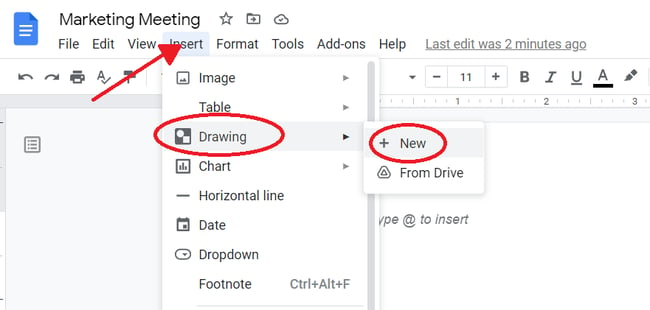
2. Within the Drawing tool, click the “text box” icon. It is the icon on the toolbar with a T in the box.
You will notice the Drawing tool screen has its own toolbar. To add a text box on the Drawing tool screen, locate the “text box” icon. This icon looks like a small box with a capitalized T. Choose this option.

3. Draw your desired text box shape. Then, type your text into the box.
Click anywhere on the checkered screen and drag your cursor to create a text box. When you release your cursor, a text box will appear. If your text box is too small or too big, drag the box’s corners to resize it. Then, type your text into the box.
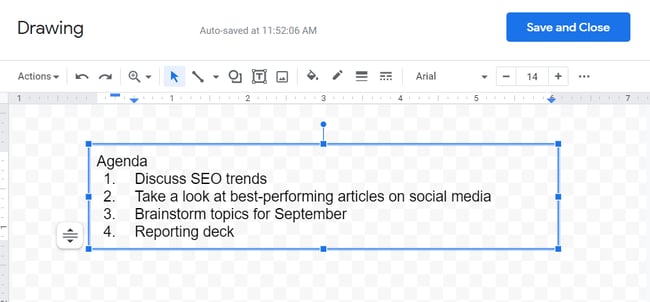
4. In the toolbar, you’ll see a paint bucket. Click the paint bucket to change the color in your text box or text box border if you want.
After creating your text box, you’ll notice the Drawing toolbar features more options. If you need to change the background color of your text box, click the paint bucket icon and choose your desired color. To change the border color, click the pencil icon and select your desired color.
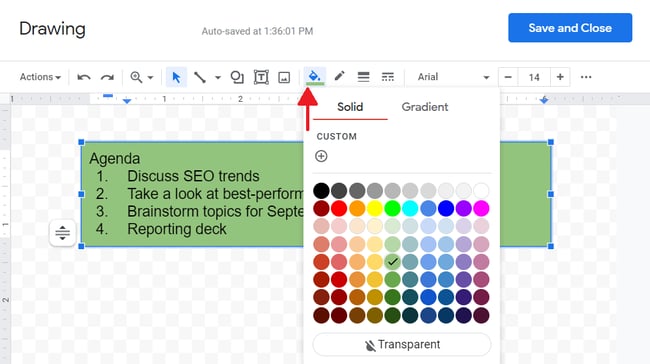
5. When you’re happy with your text box, click “Save & Close.”
Once you have typed your text, chosen a fill color, and picked a new border, click “Save & Close.” This action adds the text box to your document.
6. Your text box is now inserted in your Google Doc. If you want to move it around, simply move it to a new location in your document.
Voila! You now have a new text box in your Google Doc. If your text box is not in the correct location, click and drag the text box to the appropriate spot in your document. Or, if your text box is not the right size, pull the box’s corners to resize the text box.
Adding a Text Box to Google Docs Looks More Professional
A text box is an effective way to draw attention to important information on a page, or organize your thoughts visually. Adding a text box to a Google Doc can also make your document look more formal and professional — which is particularly important if you’re sharing the Doc with colleagues. Use text boxes to create better, more user-friendly documents that can be easily shared within your team.
Editor’s note: This post was originally published in August 2018 and has been updated for comprehensiveness.


Leadership Styles: The 11 Most Common & How to Find Your Style [Quiz]
Imagine the leaders that inspire you. Each leader is unique, with different leadership styles that they use to meet goals, motivate, and inspire.
To help you understand the impact each type of leader has on a company, this post will explain what a leadership style is. We’ll cover the most common types of leadership and how they can impact the business and the team.
![→ Click here to download leadership lessons from HubSpot founder, Dharmesh Shah [Free Guide].](https://no-cache.hubspot.com/cta/default/53/4e634041-e1ce-4a85-8e65-aea12fc10b84.png)
Then you’ll get some tools to help you figure out what styles are best for you. Start reading, or jump to the section you’re looking for:
- Types of Leadership Styles
- Deciding Between Different Leadership Styles
- How to Choose the Right Leadership Style for You
- Leadership Style Assessment
Why It’s Important to Know Your Leadership Style
Knowing your leadership style is critical because it can help you determine how you affect those who are under your direct influence. How do your direct reports see you? Do they feel you’re an effective leader?
It’s always important to ask for feedback to understand how you’re doing, but knowing your leadership style prior to asking for feedback can be a helpful starting point. That way, when you receive junior employees’ thoughts, you can automatically decide which leadership style would be best and adopt the style’s characteristics in your day-to-day management duties.
Knowing your leadership styles may help you improve with limited feedback. Each leadership style has its pitfalls, allowing you to proactively address areas of improvement. This is critical because some employees might hesitate to speak up, even in an anonymous survey.
Ready to find out your leadership styles? Check out the most common styles below.
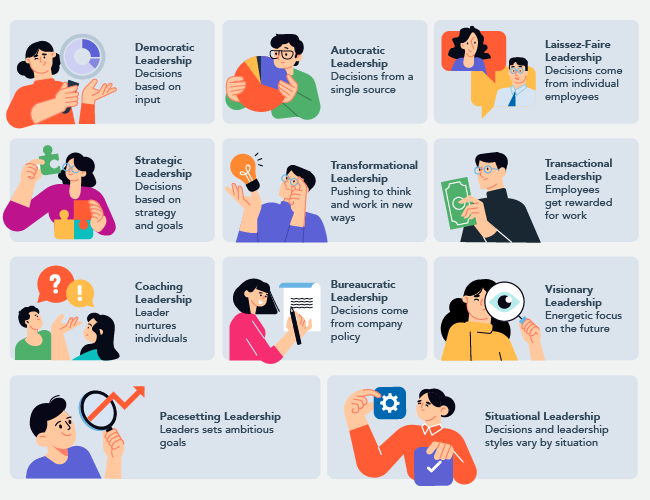
1. Democratic Leadership
Also called: Participative or Facilitative Leadership
Democratic leadership is exactly what it sounds like — the leader makes decisions based on the input of each team member. Although the leader makes the final call, each employee has an equal say in a project’s direction.
Why this leadership style works for businesses:
It resembles how leaders often make decisions in company board meetings.
For example, a democratic leader might give the team a few decision-related options in a company board meeting. They could then open a discussion about each option. After a discussion, this leader might take the board’s thoughts and feedback into consideration, or they might open this decision up to a vote.
Why this leadership style is good for the team:
Democratic leadership is one of the most effective leadership styles. This is because it allows lower-level employees to exercise the authority they’ll need to use wisely in future positions.
Potential challenges for leaders with a Democratic style:
The process of reaching a consensus takes considerable time, resources, and communication. It can also impact decision-making because some team members may not have the right expertise to make critical decisions.
Featured resources:
2. Autocratic Leadership
Also called: Authoritarian, Coercive, or Commanding Leadership
Autocratic leadership is the inverse of democratic leadership. In this leadership style, the leader makes decisions without taking input from anyone who reports to them.
This style is most useful when a business needs to control specific situations, not as a standalone leadership style.
Why this leadership style works for businesses:
Autocratic leaders carry out strategies and directives with absolute focus. This drive and clarity can lead to better performance.
It’s efficient because employees aren’t consulted before a change in direction. Instead, they’re expected to adhere to the decision at a time and pace stipulated by the leader.
Why this leadership style is good for the team:
This type of leadership is most effective when a company is making difficult decisions. This leadership style gives employees a clear sense of direction. It can also make up for a lack of experience on a team.
Potential challenges for leaders with an Autocratic style:
Most organizations today can’t sustain such a hegemonic culture without losing employees. It can lower morale and creative problem-solving.
An example of this could be when a manager changes the hours of work shifts for employees without consulting anyone.
Other challenges with autocratic leaders include:
- Intimidation
- Micromanagement
- Over-reliance on a single leader
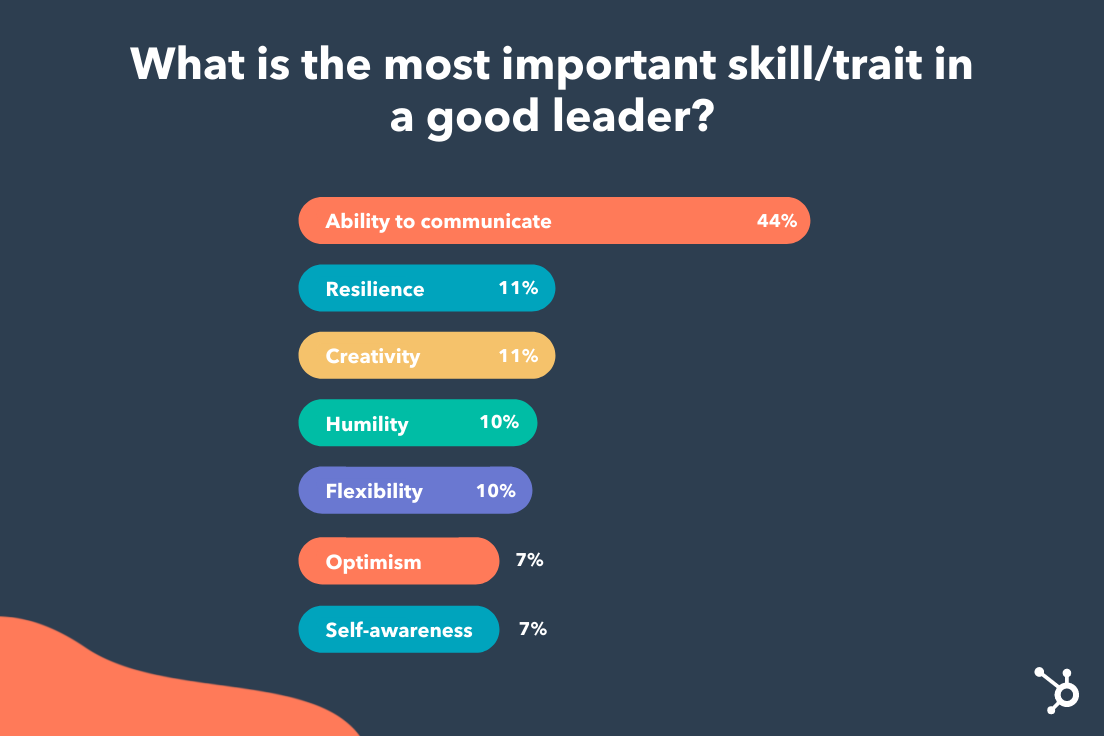
3. Laissez-Faire Leadership
Also called: Delegative or Hands-off Leadership
If you remember your high-school French, you’ll accurately assume that laissez-faire leadership is the least intrusive form of leadership. The French term “laissez-faire” literally translates to “let them do.” Leaders who embrace it give nearly all authority to their employees.
Why this leadership style works for businesses:
Laissez-faire leaders make employees accountable for their work. This gives many employees an incentive to do their best work.
This type of leader often creates a more relaxed company culture. This makes it a good model for creative businesses like ad agencies or product design. It’s also a good fit for a business with a highly-skilled team.
Why this leadership style is good for the team:
In a young startup, for example, you might see a laissez-faire company founder who makes no major office policies around work hours or deadlines. They might put full trust into their employees while they focus on the overall workings of running the company.
Because of this high level of trust, employees working for laissez-faire leaders feel valued. They get the information they need and use their resources and experience to meet business goals.
Potential challenges for leaders with a Laissez-Faire style:
Although laissez-faire leadership can empower employees by trusting them to work however they’d like, there are downsides. This style of leadership can limit team development. It can also be an issue if employees are new or inexperienced.
This can lead to overlooking critical company growth opportunities. So, it’s important to keep this leadership style in check.
Featured resources:
4. Strategic Leadership
Strategic leaders sit between a company’s main operations and its growth opportunities. This form of leadership requires vision, competitive awareness, and adaptability.
They accept the burden of executive interests. At the same time, they make sure that current working conditions are stable for everyone else.
Why this leadership style works for businesses:
Strategic leaders tie plans for growth and strategy to the way they manage a team. They ask questions, develop and execute strategies, and consider future growth. This approach supports popular business goals like:
- Accountability
- Productivity
- Collaboration
- Transparency
Why this leadership style is good for the team:
This is a desirable leadership style in many companies because strategic thinking supports many types of employees at once.
It encourages visualization, planning, and making the most of existing resources. This approach can be motivating for employees.
Potential challenges for leaders with a strategic leadership style:
Leaders who work strategically can sometimes take on too much. They also risk thinking too far into the future while missing critical present-day issues.
Learning how to delegate is essential, as well as sharing the weight of decision-making. Compromise, communication skills, and consistent outreach are also important.
Featured resources:
5. Transformational Leadership
Transformational leadership is always “transforming” and improving upon the company’s conventions. Employees might have a basic set of tasks and goals that they complete every week or month, but the leader is constantly pushing them outside of their comfort zone.
Why this leadership style works for businesses:
Transformational leaders can inspire their teams to think in new ways. This can help companies update business processes to improve productivity and profitability. It can also help with employee satisfaction, morale, and motivation.
Why this leadership style is good for the team:
When starting a job with this type of leader, all employees might get a list of goals to reach, as well as deadlines for reaching them.
The goals might seem simple at first. But this manager might pick up the pace of deadlines or give you more challenging goals as you grow with the company.
This is a highly encouraged form of leadership among growth-minded companies. It motivates employees to see what they’re capable of.
Potential challenges for leaders with a Transformational style:
Transformational leaders can risk losing sight of everyone’s individual learning curves. It’s important to make sure that direct reports get the right coaching to guide them through new responsibilities. Employee burnout can also be an issue, so it’s important to work with your team to update benchmarks.
Featured resources:
6. Transactional Leadership
Transactional leaders are fairly common today. These managers reward their employees for the work they do.
For example, a marketing team receives a scheduled bonus for helping generate a certain number of leads per quarter.
This leadership style also assumes that teams need structure and monitoring to meet business goals.
Why this leadership style works for businesses:
This style is popular in enterprise companies. It focuses on results, existing structures, and set systems of rewards or penalties. This leadership style also recognizes and rewards commitment.
Why this leadership style is good for the team:
Transactional leaders offer clarity and structure. Employees feel safe because they clearly understand their expectations. They also understand what they will get in return for meeting business goals.
Potential challenges for leaders with a transactional style:
This leadership style is less about relationships and more about using rewards to motivate. This makes it hard to keep a diverse team engaged. Using only this leadership style can lead to low creativity and fear of punishment.
7. Coaching Leadership
Also called: Conscious Leadership
Like a sports team’s coach, this leader focuses on identifying and nurturing the individual strengths of each member of the team. They also focus on strategies that will enable their team to work better together. This style offers strong similarities to strategic and democratic leadership. But it puts more emphasis on the growth and success of individual employees.
A manager with this leadership style might help employees improve on their strengths by:
- Giving them new tasks to try
- Offering guidance
- Meeting to discuss constructive feedback
They might also encourage one or more team members to expand on their strengths by learning new skills from other teammates.
Why this leadership style works for businesses:
Coaching leaders actively support skill development and independent problem-solving. They meet ambitious business goals by creating a strong company culture. They add to the long-term vision of a business as valuable mentors, often even after leaving a company.
Why this leadership style is good for the team:
This style recognizes that each employee is unique. They build diverse and exciting teams where each employee offers something different.
This leader focuses on high performance, with employees that can communicate well and embrace unique skill sets to get work done.
Potential challenges for leaders with a coaching style:
It can take a lot of time to develop employees with a coaching style, and mentoring isn’t effective for every kind of employee. This leadership style takes time and patience, and it doesn’t work with every company culture.
Featured resources:
8. Bureaucratic Leadership
Bureaucratic leaders follow the rules. This style of leadership might listen and consider the input of employees — unlike autocratic leadership. But the leader tends to reject an employee’s input if it conflicts with company policy or past practices.
Why this leadership style works for businesses:
You may run into a bureaucratic leader at a larger, older, or traditional company. They might reject ideas that seem new or non-traditional to maintain existing business models and processes.
Their resistance might be because the company is successful with current processes. It could also be because trying something new could waste time or resources if it doesn’t work.
Why this leadership style is good for the team:
This style of leadership can be challenging for some, but it also has many benefits. It lowers the risk of favoritism and replaces it with central duties, job security, and predictability.
This leadership style is clear and efficient, and can also lead to high levels of creativity for some employees.
Potential challenges for leaders with a bureaucratic leadership style:
Employees under this leadership style might not feel as controlled as they would under autocratic leadership. There is sometimes a lack of freedom in how much people are able to do in their roles.
This approach to leadership can quickly shut down innovation. It may not be a right fit for companies that are chasing ambitious goals and quick growth.
Featured resources:
9. Visionary Leadership
Also called: Affiliative Leadership
Visionary leadership focuses on the future. This type of leader encourages collaboration, emotional intelligence, and teamwork.
Why this leadership style works for businesses:
Visionary leaders create a clear plan for inspired employees to follow and execute. They are also powerful and persuasive communicators. This gives them the ability to energize teams toward impactful business growth.
Why this leadership style is good for the team:
Teams can do more and enjoy their work more if they have a vision to work toward. This type of leader offers vision statements and other tools to inspire and motivate teams to engage at work.
Potential challenges for leaders with a visionary style:
Inspiration can be difficult to structure, so this type of leader might miss crucial details. They can also skip over day-to-day issues to focus on long-term ideas. Another common challenge is hyper-focus on a single goal, when other goals may be just as valuable to the business.
Featured resources:
10. Pacesetting Leadership
Pacesetting leaders set ambitious standards. They are often perfectionists, and this leader may also expect employees to exceed goals with limited guidance.
Why this leadership style works for businesses:
This type of leader motivates by working alongside their team and pushing performance. They expect to exceed expectations and often achieve ambitious goals with clear and focused effort.
For example, pacesetting sales leaders set and exceed ambitious quarterly sales cadences.
Why this leadership style is good for the team:
Skilled and experienced teams often thrive under this kind of leader. They use the abilities of motivated and competent team members and make meeting goals feel urgent and exciting.
It can also be gratifying for team members to see their leader working hard alongside them.
Potential challenges for leaders with a pacesetting style:
Pacesetting leaders can sometimes create a high-stress workplace environment. If goals are not realistic it can overwhelm and demotivate the team. This combination can impact engagement and lead to burnout.
Featured resources:
11. Situational Leadership
Situational leaders change their management style to meet the needs of the situation or team. This leadership style is proactive and recognizes that change is the only constant.
Why this leadership style works for businesses:
This approach to leadership can motivate employees. It helps them to be more proactive — anticipating business issues before they happen.
It’s also useful in startups or other businesses that make frequent changes and need flexible talent and support.
Why this leadership style is good for the team:
This type of leader is a great communicator and uses constant team feedback to make decisions. They quickly evaluate and update processes to enable success. It also creates strong relationships and helps employees see and feel their value to the business.
Potential challenges for leaders with a situational style:
Leaders need a high level of expertise in all business processes and functions to make decisions. It can also be confusing and stressful for teams if a leader’s approach changes too often. It’s important to remember long-term goals as well as meet immediate needs, and not every leader can do this effectively.
Featured resources:
Deciding Between Different Leadership Styles
There’s no single “best” style of leadership. So, if you plan to lead, you’ll need to figure out what leadership styles are best for you and your environment.
How to Understand Your Instinctive Leadership Style
Leaders need good instincts, and many leaders focus on their own experiences and habits as they develop a leadership style. As you start your path toward leadership, you may want to start keeping notes. Write down how you would handle specific situations or problems.
This approach can help you be a confident and capable leader. But if you notice some interactions aren’t going the way you expect, you may want to reconsider your approach.
Your instincts and habits will always impact the way you lead. But if you find yourself in situations that you’re not sure how to respond to, you may want to look at other leadership styles.
For example, if you’re an extrovert with a shy member on your team, you may want to work on active listening. If you’re an introvert leading a team of outgoing people, you may need to learn new ways to nurture, support, and inspire your team.
Can you change your leadership style?
You can change or expand your leadership style. It may take some time and effort, but anyone can make changes that can improve their leadership.
The first step is seeing the need for change. Next, you need to prepare yourself for that change.
For example, your leadership style may be effective with your team, but you might have a harder time connecting with stakeholders.
In this situation, you wouldn’t want to throw out your current leadership style. Instead, you’ll want to give yourself time to identify what is and isn’t working. Think about how this change might affect your ability to grow in your organization and other parts of your life. Then, get curious, and begin the work of adjusting the way you lead.
How to Choose the Right Leadership Style for You
There are many different ways that you can find the right leadership style for you. Because of this, it can be tough to know where to begin. If you’re not sure what leadership styles will work for you, these steps can help.
1. Get to know yourself.
Different personalities need unique paths to self-discovery. For some, it’s a process of taking risks and trying new things. For others, quiet time, writing exercises, and listing strengths and weaknesses.
Another path to learning about yourself is through physical activity and spending time with other people. However you go about it, getting to know yourself is an important first step toward being a leader.
2. Outline your values and challenges.
As you get to know yourself, the process may help you better understand what’s important to you and where you struggle. Being a leader often means working at a fast pace and making decisions quickly. In these situations, it’s helpful to have your values mapped out.
As you write out your values, look at pivotal moments in your life to date. Then, look for trends, people you’re drawn to, and common themes.
You might have a long list, so you’ll want to group similar ideas. This outline can help you see how you react, your strengths and weaknesses, and a base for your core values.
3. Watch leaders you respect.
Observing leaders you respect can also help you with leadership styles. As you watch these leaders in meetings, client conversations, and presentations, you may want to take notes.
Another approach is to view their actions with a specific leadership style in mind. This makes it easier to figure out their leadership style and whether it would work for you.
4. Try different leadership styles.
Another way to decide if a leadership style is right for you is to try it out. You might want to create an outline of each leadership style that interests you. Then, review your notes before your next meeting and see how you might incorporate this style into your interactions.
5. Find a business coach or mentor.
You can also hone your leadership style by working with a business coach. There are a few places to start your business coach search.
First, look around your workplace and see if there is someone at your company who’d like to mentor you. If there’s not a right fit, your colleagues can be great resources for respected business mentors.
If that doesn’t bring you the coaching you need, check out this list of places to find a business coach.
6. Ask colleagues and leaders for feedback.
Another way that your team can help you find the best leadership styles is by asking them for feedback.
It’s smart to take some time with this strategy. Before you reach out, plan what you want to ask and why. Think about how your team member might respond and set clear guidelines and expectations.
When your colleagues are ready to share their insights with you, make a point to listen carefully. These sessions can be emotionally-charged, so you might want to take notes so that you can sit with the feedback before responding.
If you decide to share your action plan with your colleagues, be sure to commit and follow up. This process can build trust and engage your team, but it can also create issues if you don’t make good on your intentions.
7. Complete a leadership style assessment.
Leadership assessments are useful tools for leaders, both as individuals and to assess their teams.
A leadership quiz can make it easier to understand your strengths and skills. It can surface habits and qualities you might not be aware of and can give you a clear direction for growth.
If this is something you want to try, the leadership assessment below is a great place to start.
Leadership Style Assessment
Leaders can carry a mix of the above leadership styles depending on their industry and the obstacles they face. At the root of these styles, according to leadership experts Bill Torbert and David Rooke, are what are called “action logics.”
These action logics assess “how [leaders] interpret their surroundings and react when their power or safety is challenged.”
That’s the idea behind a popular management survey tool called the Leadership Development Profile. Created by professor Torbert and psychologist Susanne Cook-Greuter — and featured in the book, Personal and Organizational Transformations — the survey relies on a set of 36 open-ended sentence completion tasks to help researchers better understand how leaders develop and grow.
Below, we’ve outlined six action logics using open-ended sentences that help describe each one. See how much you agree with each sentence and, at the bottom, find out which leadership style you uphold based on the action logics you most align with.
1. Individualist
The individualist, according to Rooke and Tolbert, is self-aware, creative, and primarily focused on their own actions and development as opposed to overall organizational performance. This action logic is exceptionally driven by the desire to exceed personal goals and constantly improve their skills.
Here are some things an individualist might say:
Individualist 1: “A good leader should always trust their own intuition over established organizational processes.”
Individualist 2: “It’s important to be able to relate to others so I can easily communicate complex ideas to them.”
Individualist 3: “I’m more comfortable with progress than sustained success.”
2. Strategist
Strategists are acutely aware of the environments in which they operate. They have a deep understanding of the structures and processes that make their businesses tick, but they’re also able to consider these frameworks critically and evaluate what could be improved.
Here are some things a strategist might say:
Strategist 1: “A good leader should always be able to build a consensus in divided groups.”
Strategist 2: “It’s important to help develop the organization as a whole, as well as the growth and individual achievements of my direct reports.”
Strategist 3: “Conflict is inevitable, but I’m knowledgeable enough about my team’s personal and professional relationships to handle the friction.”
3. Alchemist
Rooke and Tolbert describe this charismatic action logic as the most highly evolved and effective at managing organizational change. What distinguishes alchemists from other action logics is their unique ability to see the big picture in everything, but also fully understand the need to take details seriously. Under an alchemist leader, no department or employee is overlooked.
Here are some things an alchemist might say:
Alchemist 1: “A good leader helps their employees reach their highest potential, and possesses the necessary empathy and moral awareness to get there.”
Alchemist 2: “It’s important to make a profound and positive impact on whatever I’m working on.”
Alchemist 3: “I have a unique ability to balance short-term needs and long-term goals.”
4. Opportunist
Opportunists are guided by a certain level of mistrust of others, relying on a facade of control to keep their employees in line. “Opportunists tend to regard their bad behavior as legitimate in the cut and thrust of an eye-for-an-eye world,” Rooke and Tolbert write.
Here are some things an opportunist might say:
Opportunist 1: “A good leader should always view others as potential competition to be bested, even if it’s at the expense of their professional development.”
Opportunist 2: “I reserve the right to reject the input of those who question or criticize my ideas.”
5. Diplomat
Unlike the opportunist, the diplomat isn’t concerned with competition or assuming control over situations. Instead, this action logic seeks to cause minimal impact on their organization by conforming to existing norms and completing their daily tasks with as little friction as possible.
Here are some things a diplomat might say:
Diplomat 1: “A good leader should always resist change since it risks causing instability among their direct reports.”
Diplomat 2: “It’s important to provide the ‘social glue’ in team situations, safely away from conflict.”
Diplomat 3: “I tend to thrive in more team-oriented or supporting leadership roles.”
6. Expert
The expert is a pro in their given field, constantly striving to perfect their knowledge of a subject and perform to meet their own high expectations. Rooke and Tolbert describe the expert as a talented individual contributor and a source of knowledge for the team. But this action logic does lack something central to many good leaders: emotional intelligence.
Here are some things a diplomat might say:
Expert 1: “A good leader should prioritize their own pursuit of knowledge over the needs of the organization and their direct reports.”
Expert 2: “When problem-solving with others in the company, my opinion tends to be the correct one.”
Which Leader Are You?
So, which action logics above felt like you? Think about each sentence for a moment.
Now, check out which of the seven leadership styles you embrace on the right based on the sentences you resonated with on the left.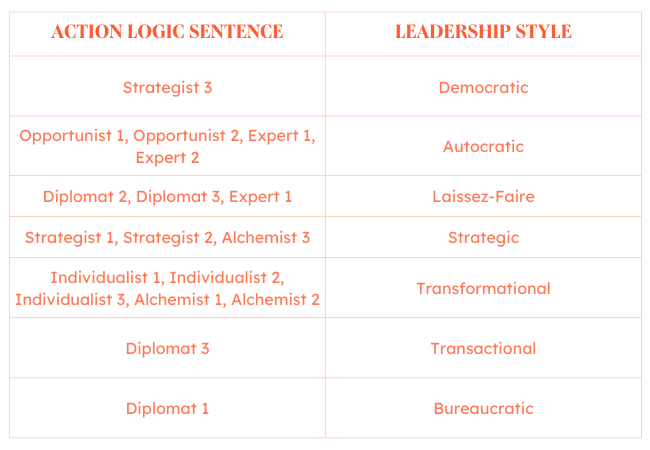
The more action logics you agree with, the more likely you are to practice a mix of leadership styles.
For example, if you agreed with everything the strategist said, this would make you a 66% strategic leader and 33% democratic leader. If you agreed with just the third statement, but also everything the alchemist said, this would make you a 50% transformational, 25% strategic, and 25% democratic leader.
Keep in mind that these action logics are considered developmental stages, not fixed attributes — most leaders will progress through multiple types of leadership throughout their careers.
Learn Your Leadership Style to Become a Better Leader
Choosing leadership styles that work for you can make you a more effective leader. Whether you manage a big or small team, your style heavily impacts how your direct reports see you. It decides how effectively your team works together to achieve your company’s goals.
If you want to be a leader that makes a difference, you’ll need to keep growing and embrace change. Are you ready to get started?
Editor’s note: This post was originally published in August 2016 and has been updated for comprehensiveness.

43 TikTok Stats to Know in 2022
Since launching in early 2018, TikTok’s been covered by seemingly every major news publication and racked up millions of downloads globally.
Despite its popularity, the app can still feel like a bit of a mystery to marketers, especially since TikTok doesn’t always disclose key app metrics.
As someone who’s gotten sucked into the app, blogged multiple times about it, hearted hundreds of posts, and even made a few videos of my own, I’m fairly certain that this platform will stick around for quite some time.
But, luckily, with mounting data and statistics about TikTok, you don’t just have to take my word for it. To help you make informed decisions about your strategy, we’ll cover key TikTok statistics and facts to know, whether you’re just starting out on the app or you’re looking to update your strategy.
Already know what stats you’re looking for? Jump there with this table of contents:
- Userbase, Downloads, and Growth
- Demographics
- User Behavior
- Viral Trends and Influencers on TikTok
- Business, Revenue, and Competition
- Where to Find TikTok Stats
43 TikTok Stats to Know in 2022
Userbase, Downloads, and Growth
Within TikTok’s first year, it reportedly reached 500 million monthly active users. Wondering if this was just a fluke or a viral trend that will simmer down? Think again. According to TikTok and its company heads, the audience might be larger and more promising than we think.
- In September 2021, TikTok celebrated reaching 1 billion monthly active users. (TikTok)
- Musical.ly, a lip-syncing app which ByteDance purchased and merged with TikTok, reportedly had 100 million monthly active users when it was purchased by TikTok in 2018. (The Verge)
- Douyin, TikTok’s original standalone app in China, had 300 million users at the time Musical.ly merged with TikTok. (The Verge)
- In 2020, TikTok was the most downloaded app globally (850 million downloads), followed by WhatsApp, Facebook, and Instagram. (Apptopia)
- TikTok is the Top Free App in the Entertainment section of the Apple App Store. (Apple App Store)
Demographics
While TikTok’s user base is dominated by Gen-Z in the United States, many millennials have adopted it around the world. And, although it might feel like TikTok is huge in the U.S., the app’s biggest audience actually comes from China, where the platform is called Douyin.
Here’s a breakdown of TikTok’s major demographic.
- 52.38% of TikTok users globally are between the ages of 18 and 24. (Statista)
- The United States, Indonesia, and Brazil have the largest audiences on TikTok as of April 2022. (Statista)
- As of April 2021, 48% of U.S. adults between 18-29 use TikTok, compared to 20% of adults between 30-49 and 14% among 50-64 year olds. (Pew Research Center)
- One-quarter of Americans between 12 and 34 have used TikTok compared to 3% of adults aged 35+. (MarketingCharts)
- TikTok is now available in more than 200 countries. (Oberlo)
- Over 22.2 million of TikTok’s monthly active users are in Indonesia. (Statista)
- The social media apps Gen Z uses most are TikTok, Instagram, and YouTube. (HubSpot Blog)
User Behavior
TikTok is a fast-paced app. The second you log in, you see a video at the top of a feed that’s algorithmically curated around your interests.
From my own experience, I’ve found that TikTok can easily cause you to spend more time than expected watching an endless stream of often comedic videos. Since these videos are usually between 15 seconds and one minute, it makes the app ideal for people who need quick entertainment on their morning commute or when they’re bored at home.
Because of TikTok’s quick pace and entertainment factor, the stats below aren’t that surprising:
- The average user spends 89 minutes per day on the app, according to a leaked deck from TikTok. (Music Business Worldwide)
- As of September 2021, there are 14.43 million daily active users using the TikTok Android App and the average user spends 12.3 hours per month using it. (Statista, HootSuite)
- TikTok is one of the most downloaded apps in the Google Play Store. (Statista)
- According to a leaked TikTok deck, the average user opens the app 19 times per day. (Music Business Worldwide)
- There are 29.7 million global DAU on the TikTok iOS app as of January 2021. (Statista)
- 88% of people on TikTok report that the sound on the platform is central to the overall app experience. (TikTok)
- 68% of TikTok users say videos using popular songs help them remember brands better. (TikTok)
- 36% of consumers want to learn about products through short-form videos like TikToks or Reels. (HubSpot)
- 55% of users say TikTok helps them discover new things. (Material)
- 55% of TikTok users use the platform to research brands or products. (TikTok)
The Impact of TikTok
- The TikTok community is more frequently and consistently engaging with content on the platform than they are on other social media platforms. (Neuro-Insight).
- When users see brands organic TikTok content before their paid ads, there is a 27% increase in brand recall. (Neurons Inc.)
- 71% of TikTok users say the app has a bigger impact on their lives than other apps they use, and 79% say it inspires them to do new things in real life. (TikTok)
- TikTok users are 1.3x more likely to agree that the platform helps them hear different perspectives than they normally hear vs. other entertainment and social brands. (TikTok & Material)
- TikTok users are 1.3x more likely to know about products and trends before their peers. (Material & TikTok)
Shopping on TikTok
- 2 out of 3 users are likely to buy something while on the platform. (TikTok)
- 50% of TikTok users have bought something after watching a TikTok LIVE. (TikTok)
- TikTok users are twice as likely as users of traditional social platforms to recommend a product or service they’ve discovered on the app and 1.5x more successful at convincing others to try the product or service. (Material & TikTok)
Viral Trends and Influencers on TikTok
TikTok has opened doors for influencers, comedians, meme creators, and even some brands. Here are a few interesting tidbits about viral trends and influencers on the app:
- The most followed creator on TikTok is Khaby Lame with 147.7 million followers. Following close behind is Charlie D’Amelio with 144.6 million. (Wikipedia)
- One of the earliest branded hashtag challenges was Guess’ #InMyDenim challenge. According to TikTok, videos marked with this hashtag have received a grand total of 38.8 million views. (TikTok)
- 77% of TikTok users like when brands come up with new challenges, trends, or memes for others to join in on. (TikTok)
- TikTok users say that you don’t need to have thousands of followers to go viral on TikTok. (TikTok)
- 80% of top TikTok videos had music and upbeat songs. (Invideo)
- Remixing a TikTok trend leads to a 14% increase in watch time. (TikTok)
- Rapper Lil Nas X credits the success of his song “Old Town Road” to TikTok. The song was propelled to #1 on the Billboard Top 100 in 2019 after the artist uploaded it to TikTok. (BuzzFeed News)
Here’s a compilation of TikTok’s #CowboyChallenge where people wearing normal clothing cut to themselves in cowboy costumes to the song “Old Town Road.”
Business, Revenue, and Competition
The launch of TikTok not only put its parent company, ByteDance, on the map, but it also resulted in competition from apps like Facebook, which launched a very similar app called Lasso shortly after TikTok went viral. While TikTok and ByteDance are less transparent about revenue and other major details, here’s what we know:
- TikTokoffers five advertising tiers aimed at big brands. One of which, a branded hashtag challenge, reportedly costs $150,000 per day. (TikTok Pitch Deck Notes First Reported by Digiday)
- TikTok generated an estimated 4 billion in revenue in 2021. (Bloomberg
- Consumer spending on TikTok has surpassed $2.5 billion globally. (Sensor Tower)
- TikTok has a 4.8-star rating in the Apple App Store and 4.5 in the Google Play Store. (Apple App Store, Google Play Store)
- Bytedance, TikTok’s parent company is valued at $140 billion, making it the world’s most valuable startup. (CBInsights)
- TikTok has an ad reach of roughly 885 million people. (DataReportal)
The Mysteries of TikTok
Although TikTok is a top social platform and is ramping up its options for advertisers, it’s still rather new. When a company or startup is new, it’s not uncommon for leadership to hide early numbers, even when a brand is successful. In fact, we’ve seen this with other major companies like Snapchat and Netflix.
Despite the launch of TikTok For Business in mid 2020, there’s still a lot more to learn as TikTok’s global teams and ByteDance continue to remain hush-hush about major metrics. In the coming years, as TikTok continues to draw in more advertisers, it wouldn’t be surprising if we started to see more transparent information about the app and its user base.
Where to Find TikTok Stats
In the meantime, If you want to learn more about TikTok, you can read up on its short history and early success in this post, or click here to find a how-to guide for using the app. In addition, you can discover important TikTok facts app on various websites:
Want to see what other businesses are doing on TikTok? Check out this roundup of brands on TikTok.
