
Welcome to My Blog
How to hide information in notification previews on iPhone

Notifications on iPhone can become overwhelming with the myriad of apps that kick out alerts. Follow along for how to make system-wide notifications changes on iPhone as well as customizing them for individual apps.
HomeKit Weekly: Turning your old garage door into a Siri-controlled entrance

HomeKit Weekly is a new series focused on smart home accessories, automation tips and tricks, and everything to do with Apple’s smart home framework.
Getting into HomeKit can be a very costly endeavor when you start replacing locks, lights, and other accessories with connected versions. Fortunately, turning your old garage door opener into a Siri-connected entrance doesn’t require replacing your existing garage door opener. Instead you can upgrade your existing garage door opener from $70-$170 depending on your needs. Here’s how to get started:
Here’s why Apple is primed to dominate mobile gaming, and big titles like Fortnite will come to iOS first

Apple looks all set to dominate the mobile gaming market as more and more users are picking up their smartphones to play popular titles from developers that previously may have been reserved for consoles. Here’s why iOS has a big advantage over Android when it comes to gaming.
Here’s Mark Zuckerberg’s Statement on the Cambridge Analytica Situation
After several days of silence, Facebook CEO has finally issued an official statement on the misuse of user data by analytics firm Cambridge Analytica.
The statement comes among many wondering why the two Facebook executives with the greatest name recognition — Zuckerberg and COO Sheryl Sandberg — were remaining silent on the situation since the news first broke last Friday evening.
On Tuesday, a representative for Facebook issued a statement to the Daily Beast that “Mark, Sheryl and their teams are working around the clock to get all the facts and take the appropriate action moving forward.”
Finally, this afternoon, Zuckerberg posted an official written statement on his Facebook Page, where he opened with:
“We have a responsibility to protect your data, and if we can’t then we don’t deserve to serve you.”
Zuckerberg’s Timeline of Events
In the statement, he provided an outline of events leading up the recent revelations about Cambridge Analytica’s possession of the user data, which we covered in-depth here. Here’s a quick timeline of his account:
2007: Facebook is founded.
2013: A Cambridge University professor named Aleksandr Kogan develops a personality quiz app that was installed by roughly 300,000 Facebook users, allowing the app developers to access their data and their friends’ data. At the time, Facebook allowed this activity.
2014: Facebook institutes new rules changing the way apps can capture and use member data.
2015: The Guardian reports that Kogan shared data with Cambridge Analytica, which violated Facebook’s rules about the transfer of user data to third parties. In the months following, Facebook “demanded” the deletion of any user data in Kogan’s or Cambridge Analytica’s possession, as well as certification that it had been destroyed.
2018: The Guardian, New York Times, and British television Channel 4 all produce reports indicating that Cambridge Analytica may not have destroyed the user data, even though it provided Facebook with certification that it had done so.
How Zuckerberg Says Facebook Will Fix This
While Zuckerberg’s statement does claim that Facebook “already took the most important steps” to prevent the misuse of personal user data in 2014, he also admitted that “there’s more we need to do.” The solution, he says, exists in three key steps.
1. “Investigate all apps that had access to large amounts of information.”
This applies to the apps that were able to access personal user data before Facebook changed its rules in 2014. It will also include an investigation of “any app with suspicious activity,” and app developers that do not consent to an investigation or audit will be banned, as will those who are discovered to have abused user data.
2. “Restrict developers’ data access even further to prevent other kinds of abuse.”
For this step, Zuckerberg says that if a user hasn’t engaged with an app in three months, the developers’ access to it will be revoked. Plus, Facebook will limit the data these apps can access to the user’s name, profile photo, and email address. Developers requesting access to this data will have to be approved and sign a contract — more changes here are expected to be announced as the story continues to unfold.
3. “We want to make sure you understand which apps you’ve allowed to access your data.”
Within the next month, Zuckerberg says Facebook will roll out an app dashboard of sorts appearing at the top of the News Feed, which will display all of the apps someone has used, along with a simplified method of revoking their access to personal data. According to the statement, that feature is already available in user privacy settings, but now, Facebook will make it more visible and easier to access.
The full text of Zuckerberg’s statement is below.
This is a developing story that I’ll be monitoring as it unfolds. Questions? Feel free to weigh in on Twitter.

For the first time ever, YouTube has become the top grossing app on the App Store

On Tuesday, YouTube became the top grossing app on the App Store for the first time in the app’s history. The app had previously hit number 3 in the charts, but has never become the top grossing app on iOS.
more…
Sculptures of Apple Park, Sunnyvale campus on display at new exhibition of technology architecture

Apple’s new campus in Cupertino is being spotlighted at a new art exhibition opening in England today. Internet Giants : Masters of the Universe features iconic architecture of major technology companies around the world, including Apple Park and the nearby Central & Wolfe campus in Sunnyvale.
Instagram update brings hashtags and profile links to bios, may copy Snapchat QR codes

Instagram has today released an update that brings two new features to the social media platform: the ability to add hashtags and profile links to a user’s bio.
Pokémon GO launching new Extravaganza event, giving users a higher chance of hatching eggs

Pokémon GO has been pushing more events to its users as its user base has begun to decline. The company today announced a new event in hopes that users return to the AR-based game.
more…
9to5Toys Lunch Break: $300 off iMacs, Infinity Blade for iOS $1/ea., SanDisk 128GB Metal Flash Drive $22, more

Keep up with the best gear and deals on the web by signing up for the 9to5Toys Newsletter. Also, be sure to check us out on: Twitter, RSS Feed, Facebook, Google+ and Safari push notifications. more…
Affinity Photo for iPad: 25+ getting started tips [Video]

Outside of perhaps LumaFusion, Affinity Photo ($19.99 on App Store) is the most impressive app that I’ve ever used on the iPad. It continues to awe me with its sheer amount of depth, and the way that it’s able to closely mirror a full desktop experience on a tablet.
The problem with Affinity Photo is that it can be downright daunting for new users. As I’ll show you in this hands-on video, the app isn’t all that difficult to use once you understand a few basic features and mechanics. Join me as I walk through 25+ must-know tips for Affinity Photo beginners. more…
Siri privacy bug lets it read out most hidden message content on a locked iPhone

A privacy bug reported by Brazilian site Mac Magazine allows someone to access hidden message notifications on a locked iPhone by asking Siri to read them …
Data from 546M LinkedIn users suggests Apple the 6th most desirable US employer

iPhone gives misleading impression of US trade deficit with China, says WTO

The World Trade Organisation (WTO) has suggested that the iPhone plays a significant role in skewing the apparent US trade deficit with China.
On the surface, the deficit appears to be $375B, with the iPhone 7 series alone accounting for around 4.4% of that, but the true figure is said to be far lower …
Apple announces new Watch bands with ‘vibrant colors for spring’

On the first day of spring, Apple has announced a new collection of Apple Watch bands with ‘vibrant colors and unique designs.’
The new bands include Sport, Nylon and classic buckle designs as well as special Nike and Hermès models …
After Jimmy Iovine denied departure rumor, fresh report says he will be less involved with Apple Music

It was reported back in January that Jimmy Iovine would be leaving Apple in August after the last of his stock vested. Iovine later denied this, describing it as fake news.
A fresh report today suggests that while he may not be actually departing from Apple, Iovine will ‘step back from daily involvement’ …
Facebook data-mining fallout continues with lawsuit and privacy petition

Unriddled: A Ban on Self-Driving Cars, Drama at Facebook, and More Tech News You Need
Welcome one, welcome all to Wednesday: the day that marks not just the week’s halfway point, but another edition of “Unriddled”: the HubSpot Marketing Blog’s mid-week digest of the tech news you need to know.
This week, we’re slowly emerging from our taco-induced food comas to help you figure out just what the heck is happening in the tech world. That Facebook-Cambridge-Analytica drama, for instance? Yeah, we’ve got you covered.
It’s our Wednesday tech news roundup, and we’re breaking it down.
Unriddled: The Tech News You Need
1. Cambridge Analytica May Have Taken Advantage of Personal Facebook User Data It Said It Deleted
Last Friday night, Facebook published an official statement saying it had banned Cambridge Analytica: a data analytics firm that creates psychographic models to help clients shape messaging to influence the decisions of consumers and, potentially, voters.
It first came to light in 2015 that the firm had misused personal data that it acquired in accordance with Facebook’s policies at the time, by having users download an app that allowed analysts to scrape such behavioral data as Page, comment, and post likes, as well as similar information on each user’s friends.
Suspending Cambridge Analytica and SCL Group from Facebook https://t.co/z7wCCqlbcA
— Facebook Newsroom (@fbnewsroom)
March 17, 2018
And while that activity didn’t violate Facebook’s then-policies, the fact that the developer transferred the data to Cambridge Analytica did. While Facebook claims it received certification at the time that Cambridge Analytica destroyed the data, allegations are now circulating that the firm actually used the data to help develop messaging on behalf of the Trump campaign during the 2016 U.S. presidential election.
It’s a story that continues to unfold and develop at an impressive rate — read our full coverage here.
2. Among the Chaos, Facebook Is Also Rolling out a Video Monetization System
It’s true: Using Facebook to monetize videos is probably the last thing on most people’s minds right now, even the content creators who could stand to benefit from it.
But despite all of the other news circulating around the network, it was announced this week that Facebook will be rolling out a new feature next month that allows followers to send content creators a certain amount of money each month for benefits like exclusive content or special profile badges that indicate they support a given creator.
It’s a model that works similarly to Patreon, in which users can sign up to donate a certain amount to an account each month and, in many cases, get exclusive access to special photos and videos in return.
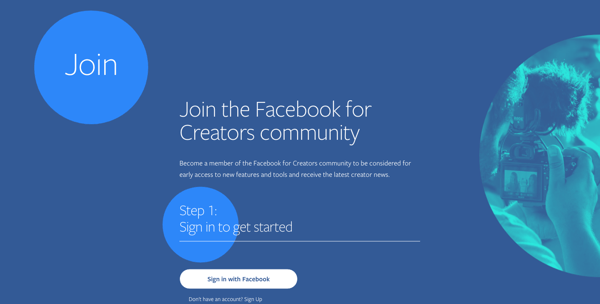
However, instead of allowing users to choose an amount to donate each month, it will work as a subscription that costs $4.99 each month. Facebook says it won’t take any portion of the monthly subscription cost.
The rollout seems to align with the purpose behind many content-related decisions Facebook has made in recent years: to keep users and creators on Facebook by sharing native content, rather than external sites. It also comes at a time when, overall, Facebook use is down — an aggregate drop of about 50 million hours each day.
By encouraging creators to continue using the platform by way of monetization, Facebook appears to be working toward a solution that could draw in new audiences — for example, users who follow a certain creator or personality on YouTube would, ideally, now also follow and support that same creator on Facebook.
It also comes on the heels of changes from YouTube that make it more difficult for creators to monetize videos: a shift on which Facebook may be attempting to capitalize with this new feature.
3. Wikipedia Wasn’t Told of YouTube’s Plans to Use Its Information for Conspiracy Videos
During last week’s SXSW events, YouTube CEO Susan Wojcicki said the video-sharing platform will be adding topical information to videos about conspiracies, in order to provide additional information around controversial topics.
The source of this information: Wikipedia.
While already facing the issue that Wikipedia is thought by many to be a less-than-reliable source of information (to the point where many academic institutions don’t allow students to cite it as a resource), there was another problem: Wojcicki’s announcement at SXSW was the first Wikipedia heard of it.
The problem with that, explained Wikimedia Foundation Executive Director Katherine Maher, “the community’s work is already monetized without the commensurate or in-kind support that is critical to our sustainability.”
For example, major search engines index our results. That’s wonderful, but we require people to edit us to stay up-to-date. Scraping our content means people can’t contribute.
— Katherine Maher (@krmaher)
March 14, 2018
The organization also issued a formal statement on the issue, pointing out that it was “not given advance notice of this announcement,” while also noting that volunteer contributors compose and edit Wikipedia entries without oversight, often leaving them subject to misinformation. The use of such information to clarify content around conspiracies, for that reason, is particularly risky.
There’s been little additional information or comment on the development since then, but we’ll be keeping an eye on how it progresses.
4. Twitter Might Ban Cryptocurrency Ads Soon
Over the past few weeks, Facebook and Google have both announced that they will be banning any ads pertaining to cryptocurrency on their respective sites. Facebook was the first to do so, by changing its advertising policies to disallow promoted content around “binary options, initial coin offerings and cryptocurrency” — largely in an effort to help curb scams.
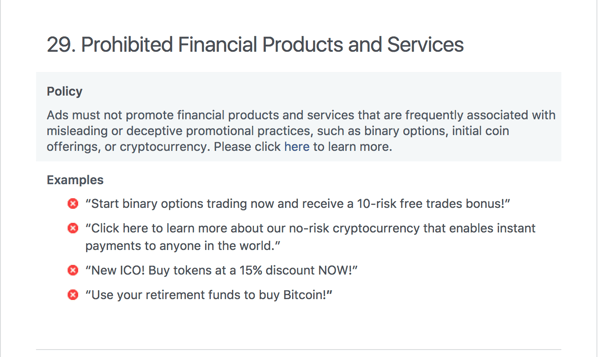
A number of social networks still have not enforced similar bans, including Snapchat and Twitter, though some expect the latter to follow suit soon.
According to Sky News, the new rules will roll out within the next two weeks, and will likely ban “advertisements for initial coin offerings (ICOs), token sales, and cryptocurrency wallets globally.”
In January, Twitter announced that it would be working to curb finance-related ads that were designed to mislead or deceive users about certain promotions.
5. After Fatal Events, Uber Has Indefinitely Paused the Testing of Autonomous Vehicles
Earlier this week, a woman in Tempe, Arizona was struck and killed by one of Uber’s self-driving cars. At the time of the incident, the vehicle was in its “autonomous mode,” though there was also a human safety operator behind the wheel.
The incident raises concerns about the safety of what’s still a relatively emerging technology. Autonomous vehicles are equipped with human operators to override the system when the car doesn’t function as it’s supposed to. In this case, it wasn’t enough to prevent a fatal event.
There are still no details about how this happened, and the investigation is ongoing.
Our hearts go out to the victim’s family. We’re fully cooperating with @TempePolice and local authorities as they investigate this incident.
— Uber Comms (@Uber_Comms)
March 19, 2018
It was one of, if not the first incident of a self-driving car hitting a pedestrian — though it’s not the first accident to take place with an autonomous vehicle, nor is it the first for Uber. Last March, also in Tempe, one of Uber’s self-driving cars flipped onto its side when another vehicle, driven by a human, failed to yield to it.
What Else Is Going Down in Tech Town?
This Is How You Tell a Story
While “brand activation” may sound like a buzzword that means nothing, once in a while, it works. Here’s what we learned from three brands at SXSW — about experiential marketing and storytelling alike. Read full story >>
Is Google Home Psychic?
Probably not — but it does have a weird, yet fun app that can guess which fictional character you’re thinking of. Here’s what happened when we tried it. Read full story >>
A Brief Guide to #Winning at Social Media
In a world rife with the fake news effect and distrust, it’s hard to stand out on social media, especially in a way that stands out or truly helps your audience. In these troubled times, here’s what three experts at SXSW say you should do. Read full story >>
That’s all for today. Until next week, feel free to weigh in on Twitter to ask us your tech news questions, or to let us know what kind of events and topics you’d like us to cover.

5.8-inch iPhone X successor to be ~10% cheaper to manufacture, according to report

The iPhone lineup for 2018 is looking to be composed of three new models, a 6.1-inch LCD iPhone, a successor to the existing 5.8-inch iPhone X and a new high-end 6.5-inch OLED ‘iPhone X Plus’.
Digitimes today reports that the new 5.8-inch iPhone will be significantly cheaper to manufacture, which could imply a drop from the $999 price point Apple established with iPhone X.