The 7 Most Common Leadership Styles & How to Find Your Own
“A good leader should always … “
How you finish that sentence could reveal a lot about your leadership style.
Leadership is a fluid practice. We’re always changing and improving the way in which we help our direct reports and the company grow. And the longer we lead, the more likely we’ll change the way we choose to complete the sentence above.

But in order to become better leaders tomorrow, we need to know where we stand today. To help you understand the impact each type of leader has on a company, I’ll explain seven of the most common types of leadership styles in play today and how effective they are.
Then, I’ll show you a leadership style assessment based on this post’s opening sentence to help you figure out which leader you are.
7 Types of Leadership Styles
1. Democratic Leadership
Commonly Effective
Democratic leadership is exactly what it sounds like — the leader makes decisions based on the input of each team member. Although he or she makes the final call, each employee has an equal say on a project’s direction.
Democratic leadership is one of the most effective leadership styles because it allows lower-level employees to exercise authority they’ll need to use wisely in future positions they might hold. It also resembles how decisions can be made in company board meetings.
2. Autocratic Leadership
Rarely Effective
Autocratic leadership is the inverse of democratic leadership. In this leadership style, the leader makes decisions without taking input from anyone who reports to them. Employees are neither considered nor consulted prior to a direction, and are expected to adhere to the decision at a time and pace stipulated by the leader.
Frankly, this leadership style stinks. Most organizations today can’t sustain such a hegemonic culture without losing employees. It’s best to keep leadership more open to the intellect and perspective of the rest of the team.
3. Laissez-Faire Leadership
Sometimes Effective
If you remember your high-school French, you’ll accurately assume that laissez-faire leadership is the least intrusive form of leadership. The French term “laissez faire” literally translates to “let them do,” and leaders who embrace it afford nearly all authority to their employees.
Although laissez-faire leadership can empower employees by trusting them to work however they’d like, it can limit their development and overlook critical company growth opportunities. Therefore, it’s important that this leadership style is kept in check.
4. Strategic Leadership
Commonly Effective
Strategic leaders sit at the intersection between a company’s main operations and its growth opportunities. He or she accepts the burden of executive interests while ensuring that current working conditions remain stable for everyone else.
This is a desirable leadership style in many companies because strategic thinking supports multiple types of employees at once. However, leaders who operate this way can set a dangerous precedent with respect to how many people they can support at once, and what the best direction for the company really is if everyone is getting their way at all times.
5. Transformational Leadership
Sometimes Effective
Transformational leadership is always “transforming” and improving upon the company’s conventions. Employees might have a basic set of tasks and goals that they complete every week or month, but the leader is constantly pushing them outside of their comfort zone.
This is a highly encouraged form of leadership among growth-minded companies because it motivates employees to see what they’re capable of. But transformational leaders can risk losing sight of everyone’s individual learning curves if direct reports don’t receive the right coaching to guide them through new responsibilities.
6. Transactional Leadership
Sometimes Effective
Transactional leaders are fairly common today. These managers reward their employees for precisely the work they do. A marketing team that receives a scheduled bonus for helping generate a certain number of leads by the end of the quarter is a common example of transactional leadership.
Transactional leadership helps establish roles and responsibilities for each employee, but it can also encourage bare-minimum work if employees know how much their effort is worth all the time. This leadership style can use incentive programs to motivate employees, but they should be consistent with the company’s goals and used in addition to unscheduled gestures of appreciation.
7. Bureaucratic Leadership
Rarely Effective
Bureaucratic leaders go by the books. This style of leadership might listen and consider the input of employees — unlike autocratic leadership — but the leader tends to reject an employee’s input if it conflicts with company policy or past practices.
Employees under this leadership style might not feel as controlled as they would under autocratic leadership, but there is still a lack of freedom in how much people are able to do in their roles. This can quickly shut down innovation, and is definitely not encouraged for companies who are chasing ambitious goals and quick growth.
Leadership Style Assessment
Leaders can carry a mix of the above leadership styles depending on their industry and the obstacles they face. At the root of these styles, according to leadership experts Bill Torbert and David Rooke, are what are called “action logics.”
These action logics assess “how [leaders] interpret their surroundings and react when their power or safety is challenged.”
That’s the idea behind a popular management survey tool called the Leadership Development Profile. Created by professor Torbert and psychologist Susanne Cook-Greuter — and featured in the book, Personal and Organizational Transformations — the survey relies on a set of 36 open-ended sentence completion tasks to help researchers better understand how leaders develop and grow.
Below, we’ve outlined six action logics using open-ended sentences that help describe each one. See how much you agree with each sentence and, at the bottom, find out which leadership style you uphold based on the action logics you most agreed with.
1. Individualist
The individualist, according to Rooke and Tolbert, is self-aware, creative, and primarily focused on their own actions and development as opposed to overall organizational performance. This action logic is exceptionally driven by the desire to exceed personal goals and constantly improve their skills.
Here are some things an individualist might say:
I1. “A good leader should always trust their own intuition over established organizational processes.”
I2. “It’s important to be able to relate to others so I can easily communicate complex ideas to them.”
I3. “I’m more comfortable with progress than sustained success.”
2. Strategist
Strategists are acutely aware of the environments in which they operate. They have a deep understanding of the structures and processes that make their businesses tick, but they’re also able to consider these frameworks critically and evaluate what could be improved.
Here are some things a strategist might say:
S1. “A good leader should always be able to build a consensus in divided groups.”
S2. “It’s important to help develop the organization as a whole, as well as the growth and individual achievements of my direct reports.”
S3. “Conflict is inevitable, but I’m knowledgeable enough about my team’s personal and professional relationships to handle the friction.”
3. Alchemist
Rooke and Tolbert describe this charismatic action logic as the most highly evolved and effective at managing organizational change. What distinguishes alchemists from other action logics is their unique ability to see the big picture in everything, but also fully understand the need to take details seriously. Under an alchemist leader, no department or employee is overlooked.
Here are some things an alchemist might say:
A1. “A good leader helps their employees reach their highest potential, and possesses the necessary empathy and moral awareness to get there.”
A2. “It’s important to make a profound and positive impact on whatever I’m working on.”
A3. “I have a unique ability to balance short-term needs and long-term goals.”
4. Opportunist
Opportunist are guided by a certain level of mistrust of others, relying on a facade of control to keep their employees in line. “Opportunists tend to regard their bad behavior as legitimate in the cut and thrust of an eye-for-an-eye world,” Rooke and Tolbert write.
Here are some things an opportunist might say:
O1. “A good leader should always view others as potential competition to be bested, even if it’s at the expense of their professional development.”
O2. “I reserve the right to reject the input of those who question or criticize my ideas.”
5. Diplomat
Unlike the opportunist, the diplomat isn’t concerned with competition or assuming control over situations. Instead, this action logic seeks to cause minimal impact on their organization by conforming to existing norms and completing their daily tasks with as little friction as possible.
Here are some things a diplomat might say:
D1. “A good leader should always resist change since it risks causing instability among their direct reports.”
D2. “It’s important to provide the ‘social glue’ in team situations, safely away from conflict.”
D3. “I tend to thrive in more team-oriented or supporting leadership roles.”
6. Expert
The expert is a pro in their given field, constantly striving to perfect their knowledge of a subject and perform to meet their own high expectations. Rooke and Tolbert describe the expert as a talented individual contributor and a source of knowledge for the team. But this action logic does lack something central to many good leaders: emotional intelligence.
Here are some things a diplomat might say:
E1. “A good leader should prioritize their own pursuit of knowledge over the needs of the organization and their direct reports.”
E2. “When problem solving with others in the company, my opinion tends to be the correct one.”
Which Leader Are You?
So, which action logics above felt like you? Think about each sentence for a moment … now, check out which of the seven leadership styles you embrace on the right based on the sentences you resonated with on the left.
| Action Logic Sentence | Leadership Style |
| S3 | Democratic |
| O1, O2, E1, E2 | Autocratic |
| D2, D3, E1 | Laissez-Faire |
| S1, S2, A3 | Strategic |
| I1, I2, I3, A1, A2 | Transformative |
| D3 | Transactional |
| D1 | Bureaucratic |
The more action logics you agreed with, the more likely you practice a mix of leadership styles.
For example, if you agreed with everything the strategist said — denoted S1, S2, and S3 — this would make you a 66% strategic leader and 33% democratic leader. If you agreed with just S3, but also everything the alchemist said, this would make you a 50% transformative, 25% strategic, and 25% democratic leader.
Keep in mind that these action logics are considered developmental stages, not fixed attributes — most leaders will progress through multiple types of leadership throughout their careers.

Tougher Questions and Even Fewer Answers at Mark Zuckerberg’s European Parliament Appearance
When Facebook CEO Mark Zuckerberg testified before Congress last month, one of the biggest criticisms to follow it was the lack of preparedness among the lawmakers asking questions.
So when European Parliament president Antonio Tajani confirmed that Zuckerberg would be appearing before its Conference of Presidents, many took it as a sign that he would finally be forced to answer the challenging questions U.S. lawmakers failed to ask but the public was eager to hear.
After all, today’s session took place three days before the General Data Privacy Regulation (GDPR) comes into force this Friday — a set of laws that reflect the European Union’s (EU) overall stricter nature toward consumer data privacy.
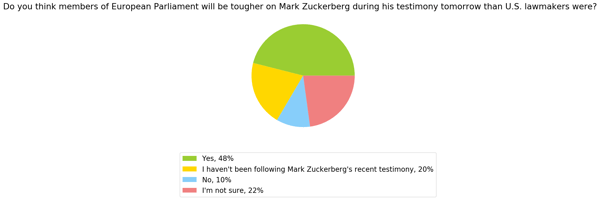
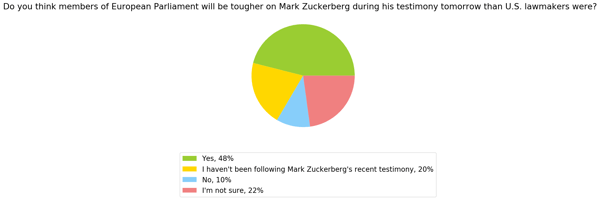
Many expected this sense of urgency to appear in today’s questions. When we asked 302 consumers in the UK — which will only remain a member of the EU until Brexit takes effect in March 2019 — if they thought members of European Parliament (MEPs) will be tougher on Mark Zuckerberg during his testimony than U.S. lawmakers were, 48% of respondents said “yes.”
As expected, MEPs did ask more difficult questions, ranging from GDPR compliance (Zuckerberg says it will be fully compliant by May 25) to Facebook’s perceived monopoly over the social media space. And the challenging remarks weren’t limited to questions.
One MEP, Guy Verhofstadt, implied that Zuckerberg will be remembered as “a failed genius who created a digital monster destroying our democracies” if Facebook doesn’t seriously address the recent scandals that have rocked it.
But there was a problem: The format of the session didn’t allow any time for Zuckerberg to even come close to effectively answer these questions.
Here’s why — and what some of those questions were.
Tough Questions, No Answers in Mark Zuckerberg’s European Parliament Appearance
The Session Format
Approximately 75 minutes were allotted for today’s meeting with Zuckerberg — a considerably shorter time frame than the back-to-back, five-hour hearings that were held with the U.S. Senate and House of Representatives, respectively.
And while fewer MEPs were present at today’s session than there were lawmakers at last month’s congressional hearings, there was no pre-determined limit on how long each could spend on remarks and questions for Zuckerberg.
But here’s where the problems truly began: Each MEP asked his or her questions consecutively — which ended up accounting for roughly 68 minutes of the session’s time, leaving only seven minutes for Zuckerberg to answer them, and no requirements for how to do so.
The format was poorly received from most, ranging from politicians across the globe to other members of the press. “This format sucks,” tweeted Buzzfeed‘s Ryan Mac, alluding to the lack of time for Zuckerberg to answer some of the toughest questions posed to him.
House of Commons Culture Committee chairman Damian Collins, meanwhile, called the format a “missed opportunity,” and pointed to that as one reason for Zuckerberg’s staunch resistance to appearing before members of UK Parliament (MPs).
For context, Collins issued a formal summons for Zuckerberg to appear MPs when next he travels to the UK, to which Facebook Head of Public Policy Rebecca Stimson responded with, “Mr. Zuckerberg has no plans to meet with the committee or travel to the UK at the present time.”
Today’s session in the EP was a missed opportunity. An hour of questions, followed by a lengthy statement from Zuckerberg, with all difficult questions dodged. The format, which was agreed by Facebook, led to no real scrutiny. It is time that he appeared in front of @CommonsCMS
— Damian Collins (@DamianCollins)
May 22, 2018
The Format’s Origins
But upon the session’s conclusion, some debate arose over the origin of this meeting’s format. Was it typical? Was it created by MEPs? Or, did Zuckerberg request it?
That last speculation was made by one MEP’s exclamation at the end of the testimony — “you asked for this format” — when Zuckerberg tried to leave. (President Tajani, meanwhile, also urged MEPs to end the session to end at that time, apparently, to prevent Zuckerberg from missing his flight.)
The origins of the format remained unclear, however, even after many inquired about it. During a press briefing that followed the testimony, two reporters asked Tajani whose idea it was.
A reporter is asking Tajani who came up with the format of today’s session — was it him, or Zuckerberg? “Who insisted on this format?” Tajani said the Conference of Presidents were the ones who decided — “he’s [Zuckerberg] not obliged to come”
— Amanda Zantal-Wiener (@Amanda_ZW)
May 22, 2018
Even so, Tajani remained ambiguous, suggesting that the Conference of Presidents decided on the format and pointing to the voluntary nature of Zuckerberg’s appearance. Subsequent claims from MEPs countered that, including one from Verhofstadt.
Today’s pre-cooked format was inappropriate & ensured #Zuckerberg could avoid our questions. I trust that written answers from Facebook will be forthcoming. If these are not accurately answered in detail, the EU competition authorities must be activated & legislation sharpened.
— Guy Verhofstadt (@guyverhofstadt)
May 22, 2018
According to The Verge‘s Casey Newton, a Facebook spokesperson denied any involvement from the company or Zuckerberg in the format decision, remarking, “No, the format was President Tajani’s design.”
Tajani defended the format during the press briefing, again emphasizing that Zuckerberg was under no obligation to make today’s appearance, and suggesting that it was the most efficient way to handle questioning in a condensed time period.
“It could have been longer,” he said at one point, but didn’t elaborate on why it wasn’t.
The Questions and (Non) Answers
One of the leading (and most crucial) questions posed to Zuckerberg today concerned the fallout from revelations that consulting and vote profiling firm Cambridge Analytica improperly obtained and compromised the personal data of 87 million Facebook users.
Although Facebook claims it has removed 200 apps that might be guilty of the same mishandling — European People’s Party chair and MEP Manfred Weber asked, “Can you guarantee to Europeans that another scandal will not take place in six … months time?”
One of the first pivotal questions to Zuckerberg: “Can you guarantee to Europeans that another scandal will not take place in six … months time?” (My guess is no, he cannot.)
— Amanda Zantal-Wiener (@Amanda_ZW)
May 22, 2018
Weber also pressed Zuckerberg on Facebook’s monopolistic nature, asking if its portfolio of companies — including WhatsApp, Instagram, and Messenger — should be broken up into separate entities. In the U.S., a six-figure digital ad campaign called “Freedom from Facebook” launched on Monday in efforts to convince the Federal Trade Commission to do just that.
In response to the question regarding the potential for future data misuse, Zuckerberg — in his seven-minute window to answer — largely alluded to the actions Facebook has taken to audit any apps on its platform that had access to personal user data.
It was something of a repetition of what Facebook has said in official statements and announcements over the past two months, such as results from its inaugural Community Standards Enforcement Report and many of the new requirements it’s making of advertisers.
On the topic of a possible monopoly, Zuckerberg has repeatedly said that Facebook does, in fact, have competition, citing a statistic that the average online user has eight core apps to communicate with personal networks. He floated that number to Congress last month and repeated it today, but as Bloomberg‘s Sarah Frier notes, the origin of that statistic is unknown.
He also gave the same stat he gave Congress, that the average person has 8 apps they use to communicate with friends and family. Neglects to mention how many of them are owned by Facebook. (Also not sure where that stat is from)
— Sarah Frier (@sarahfrier)
May 22, 2018
Verhofstadt challenged those claims today, likening them to a (hypothetical) car company that says it doesn’t have a monopoly since airplanes and bikes also exist as modes of transportation.
Verhofstadt remains one of Zuckerberg’s most vocal opponents and was one of the first to voice his dissent of the original decision to make today’s testimony a closed-door one. (It wasn’t until Monday that Tajani announced the session would be live-streamed.)
“I will not attend the meeting with Mr. Zuckerberg if it’s held behind closed doors,” he tweeted last week. “It must be a public hearing.”
He was also one of the most visibly frustrated MEPs with the outcome of today’s session — particularly the vague nature of Zuckerberg’s answers and the abbreviated amount of time he spent answering them. At one point, Zuckerberg seemed to escape from having to verbally respond to the questions any longer, saying that he wanted to be cognizant of the allotted time — which Tajani eventually acquiesced.
But he wasn’t alone in his outrage, with MEP Philippe Lamberts telling Zuckerberg at the session’s conclusion, “I asked you six yes-and-no questions. I got not a single answer.”
“And of course, well, you asked for this format,” he continued, “for a reason.”
What Happens Next
The combination of the difficult nature of these questions and the format used by Congress could create a force to be reckoned with: a situation where Mark Zuckerberg cannot selectively choose which questions to answer, and the officials asking them are prepared and well-versed in the crucial issues concerning Facebook.
And as Collins suggested, that’s exactly what would happen were Zuckerberg to appear before UK Parliament, and is likely the reason for the resistance to doing so. But the public demand is there, too, despite the refusal — for instance, here’s what 302 UK consumers said when we asked them to weigh in.
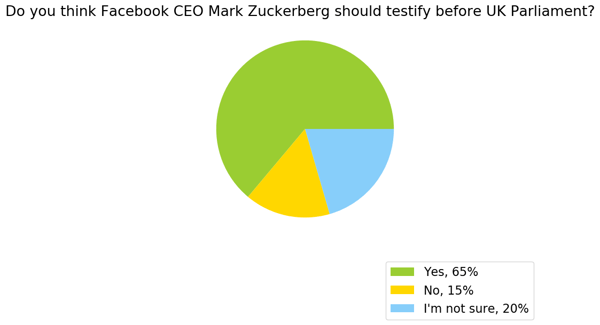
Zuckerberg verbally committed to following up on questions — those from Lamberts, in particular, after his closing remarks. He also noted that “someone” would appear again to more technically answer questions, though that is likely not to be Zuckerberg himself.
Tajani confirmed this yet-to-be-scheduled secondary session with another Facebook representative during the press briefing.
While many found the outcome disappointing, some were unsurprised by it, pointing to the pattern of Facebook’s appearances and public communication since the scandals around its role in election interference and personal data misuse began.
“Zuckerberg is doing these apology tours to absolutely minimize any regulation specifically focused on Facebook,” says Henry Franco, HubSpot’s Social Media Editor. “He knows that he might not be able to get a good word in, but as long as he can keep Facebook specifically from being regulated, it’s a good outcome for him and the company.”
And really, says Franco — at this point, that might be all lawmakers can or should expect.
“What outcome can MEPs, Senators, and Representatives really want here?” he asks. “They want their opinions on the subject to be heard.”
Featured image credit: “Mark Zuckerberg F8 2018 Keynote” by Anthony Quintano, used under CC BY / Cropped from original

A Comprehensive Guide to Kerning in Typography
I’m willing to bet you already know what kerning is — you just don’t realize it.
While you might not recognize when kerning is done well, you certainly see it when it’s done poorly.
Here’s an example of bad kerning: M a rk e t i ng .
Kerning is adjusting the space between letters, and either increasing or decreasing the distance to ensure better readability or appearance.
Interestingly, it’s not always best to have equal spacing between each letter. Each letter has different shapes and curves, so sometimes kerning actually helps the letters look less conspicuous. For instance, a “cl” can sometimes appear to be a “d”, so you might use kerning to space them further apart.
What is kerning?
Kerning refers to the space between letters to ensure better readability. Since not all letters are created with equal curves and shapes, you might need to increase or decrease the distance between one letter and another, to create more legible text. Kerning improves the appearance and design of your text, which might otherwise look awkward.
No matter what your job title, it’s important to understand the power of kerning. Kerning can help you create better designs, produce more visually appealing copy, or construct better presentations. Kerning is one of those actions that can push your deliverables from ordinary to exceptional.
If you don’t know how kerning works, don’t worry. Here, we’ll show you how to use kerning in Photoshop, Word, and Illustrator. Plus, we’ll provide examples of bad kerning, so you know what to avoid when using kerning for your own text.
Kerning vs. Tracking
Kerning is the adjustment of distance between two letters. You’d use kerning if you felt a word looked funky because the letters A and B were too close together. Tracking, on the other hand, is adjusting the spacing equally between each letter, to either spread apart or bring together an entire word.
Kerning in Photoshop
Kerning in Photoshop is incredibly easy, once you figure out where the “Kerning” tool is. If you’re designing a presentation or email template in Photoshop, and your words look a little sloppy, this is an easy way to clean up your text to improve the appearance.
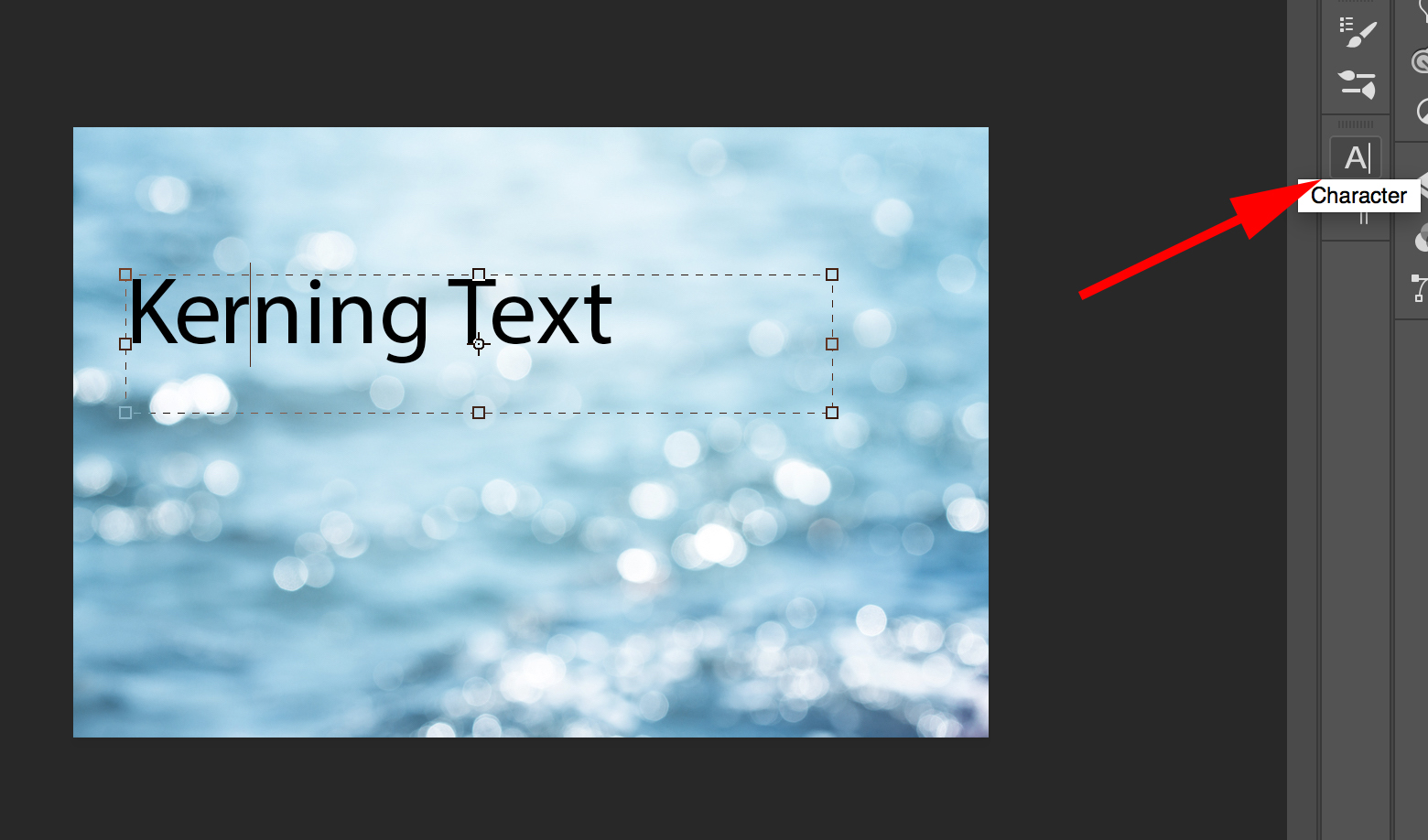
1. First, ensure your cursor is in between two letters. Next, select the “Character” panel, as highlighted by the red arrow below (If you can’t find it, try searching “Character” within the Photoshop search tool).
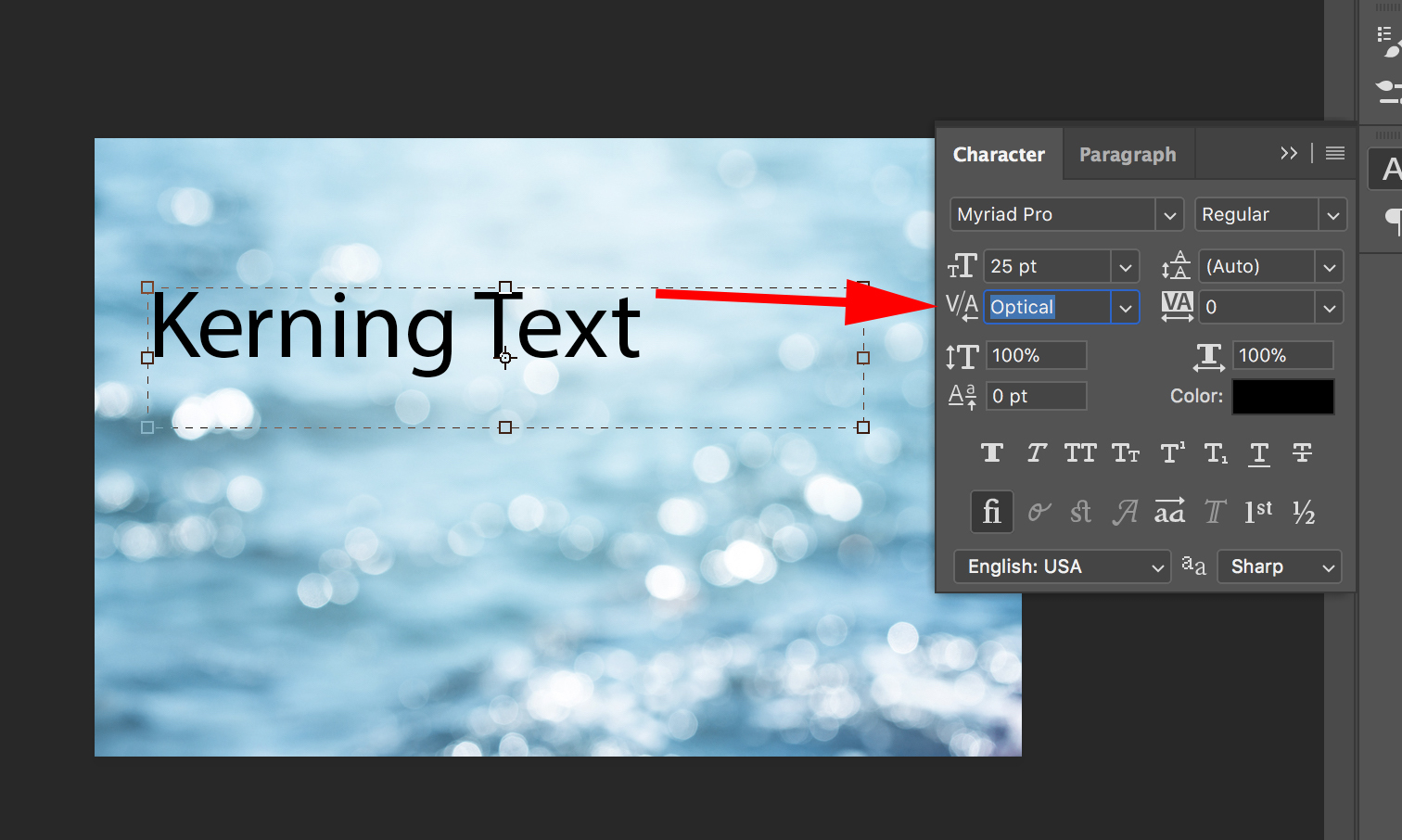
3. Within the “Character” panel, you’ll see a V/A (with a little arrow below the A). That’s the “Kerning” tool. It’s automatically set to “Optical”. Click the down arrow to see your options for kerning.
4. For instance, I chose the number “75”. If you’re unsure how much space you want between your letters, test out a few different options. The negative numbers make your letters closer together, and the positive numbers create more space between the letters.
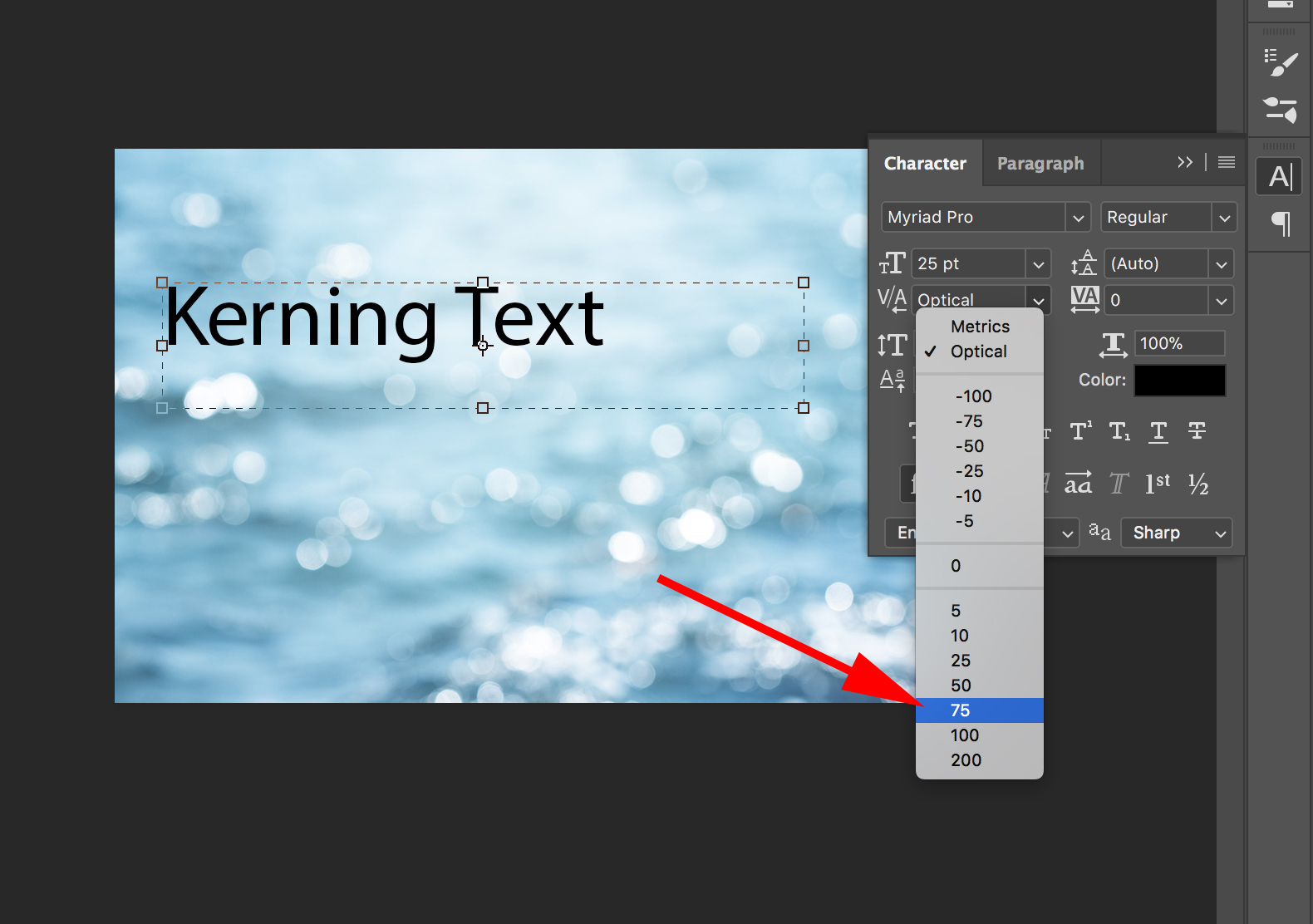
5. Now, there’s a nice “75” point space between my “K” and “E” (of course, this is probably an example of bad kerning … ).
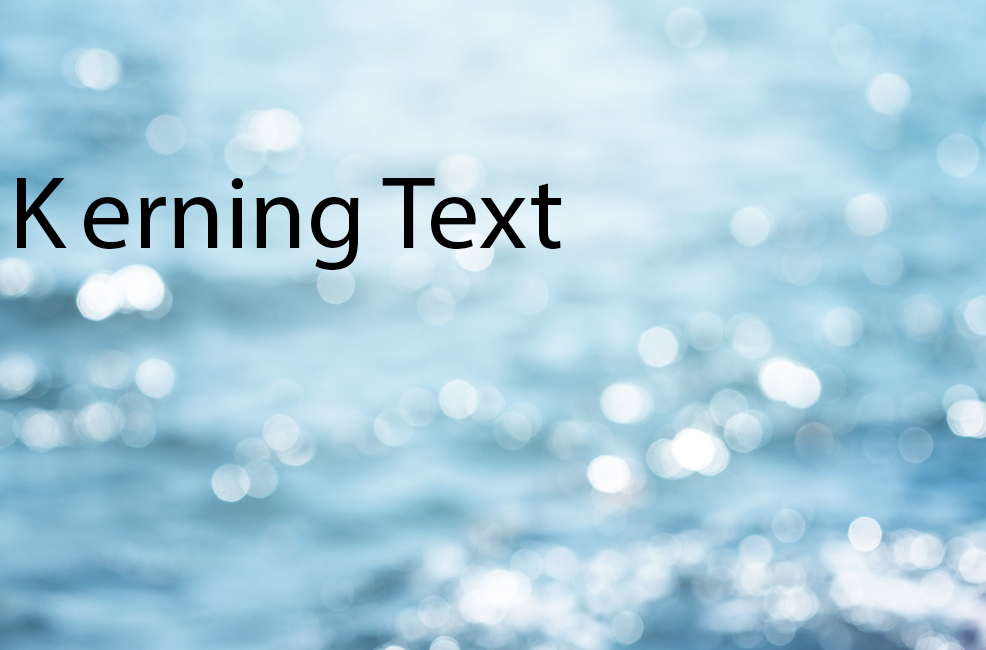
Important note: There’s a quicker option to use the “Kerning” tool in Photoshop. If you click in between two letters, you can hit “Option” and then hit the “Right” arrow. This will create more distance between letters.
Kerning in Word
If your writing copy in Microsoft Word, or using Word to design a poster, you might want to use kerning, especially if your font is bigger and the letters look awkward.
Fortunately, it’s easy to do.
- Within a Word document, go to “Format” and then click “Font”. FYI, I left my cursor in between the “K” and the “e” in the document, because that’s the space to which I wanted to apply kerning.
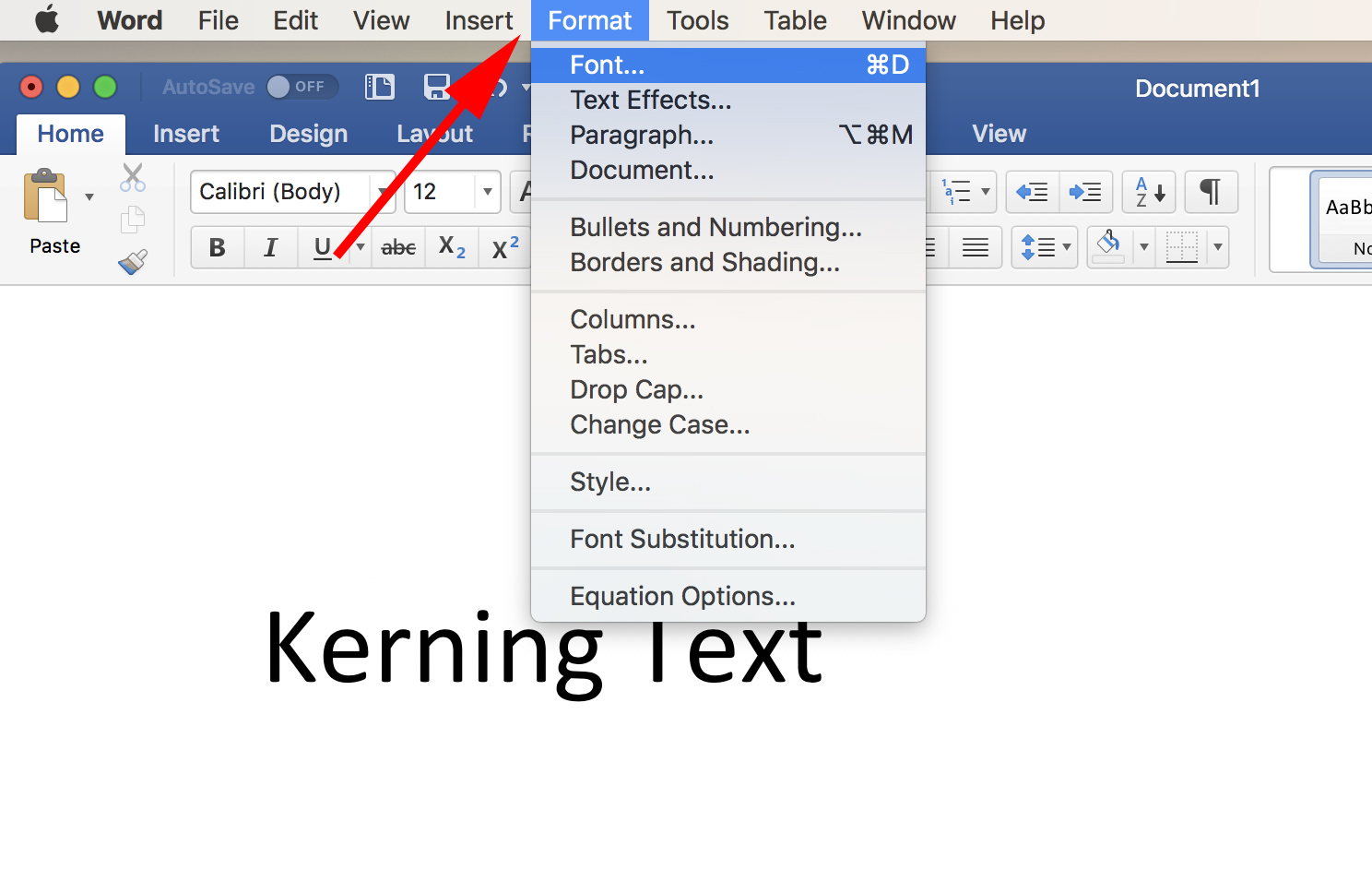
2. Next, click “Advanced” within the Font panel.
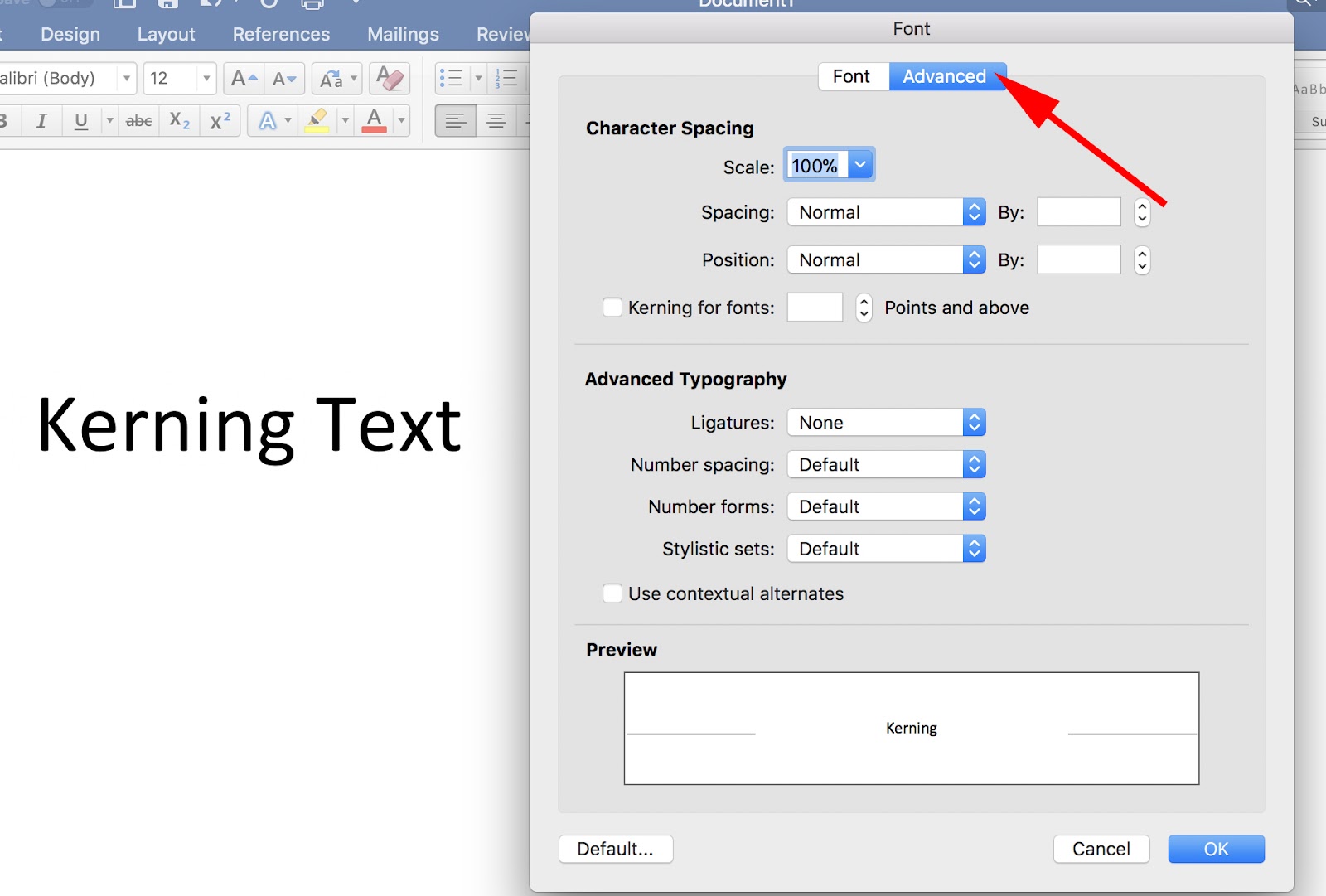
3. Under the “Advanced” section, you’ll see “Kerning for fonts” with an empty box to the left of it. Check that box. Then, input a number (I put “20”, which you’ll see circled). The number you choose will depend on how much space you want between the letters.

4. There’s now “20” points of kerning in between the “K” and the “e”.
Kerning in Illustrator
Finally, let’s take a look at kerning in Illustrator. Since many designers and marketers use Illustrator for clients or for personal projects, it’s important to know how to apply kerning to your letters.
Kerning in Illustrator is an almost identical process to how you’d do it in Photoshop (which makes sense, since they’re both Adobe products). Nonetheless, here’s how you do it.
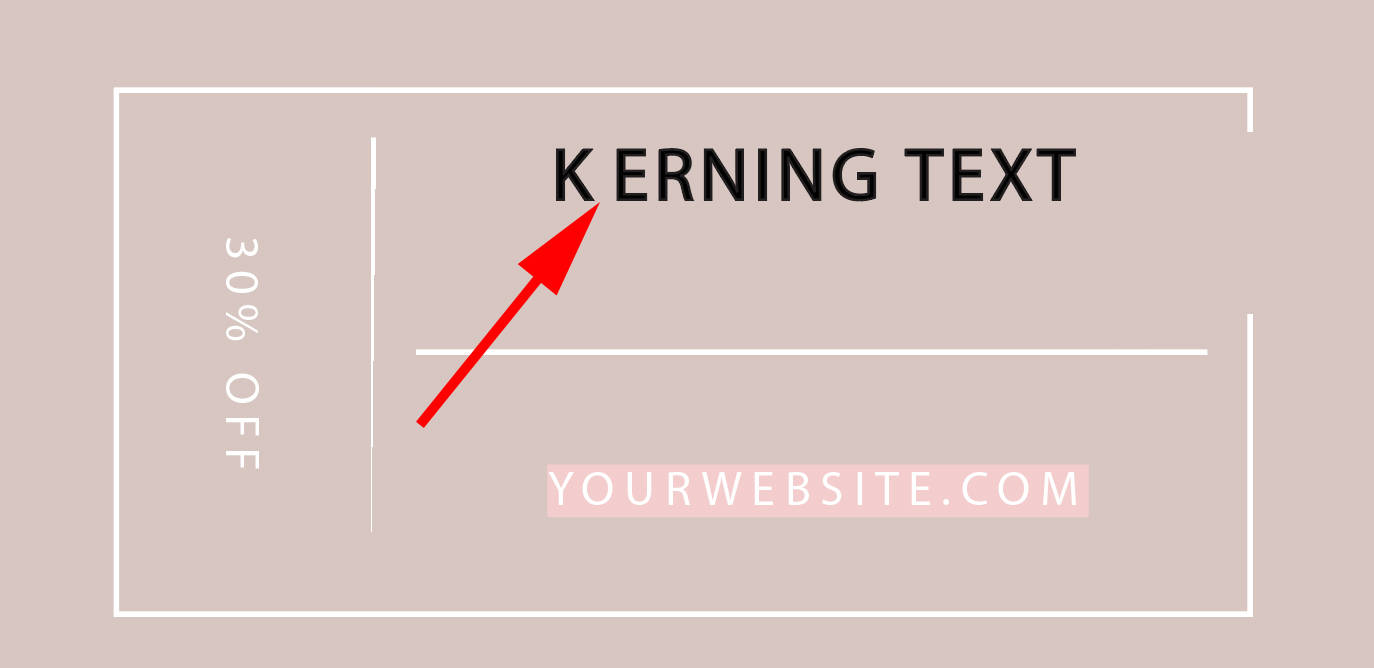
- First, click the “Text” tool and put your cursor in between two letters — I put mine in between the “K” and the “E”. Then, find your “Characters” panel.
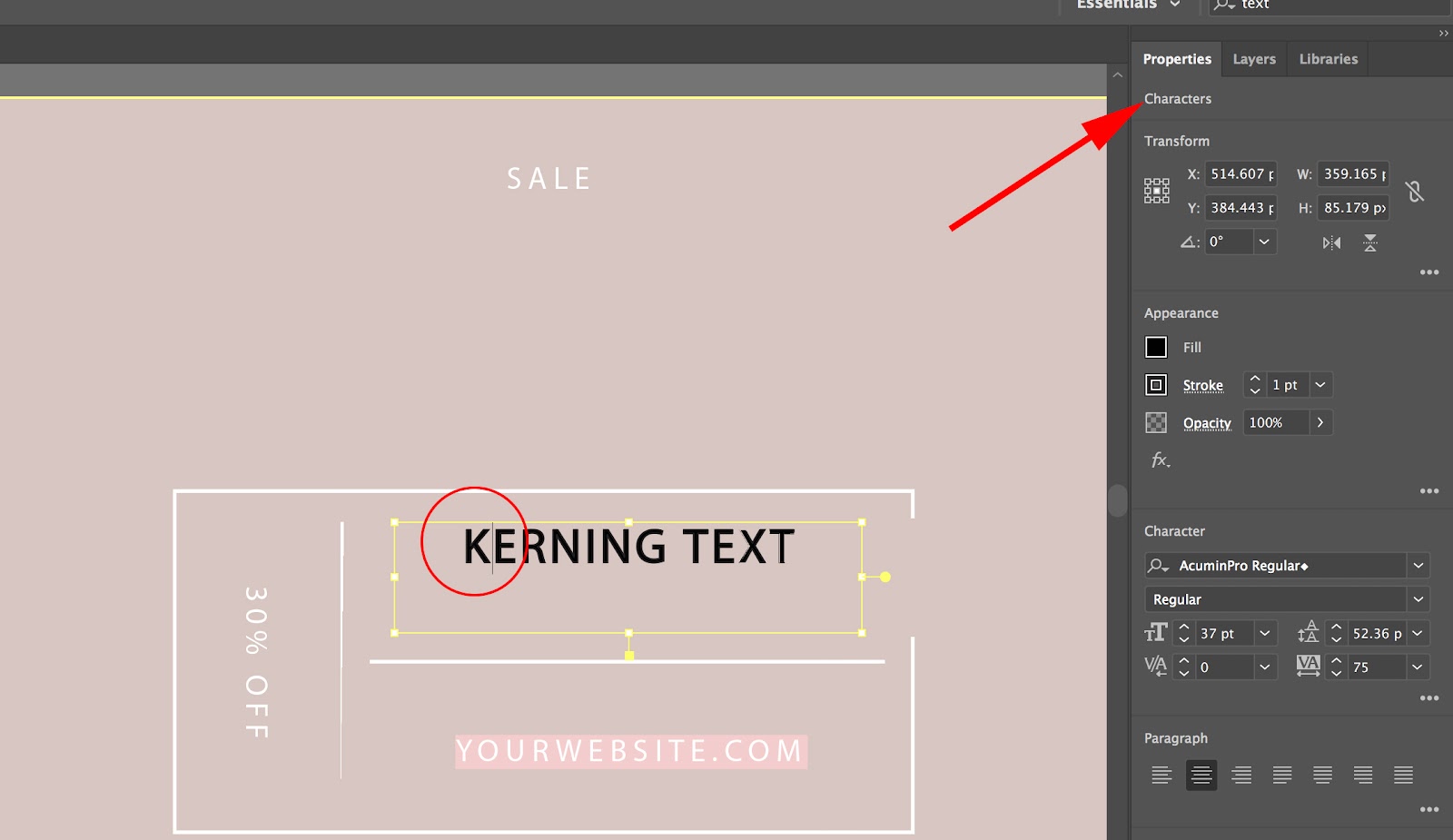
2. Similar to Photoshop, there will be a “V/A” tool, with a little arrow underneath the “A”. That’s the kerning tool. With your cursor placed between two letters, increase or decrease the number beside the kerning tool — as you can see, I set mine to “200”.
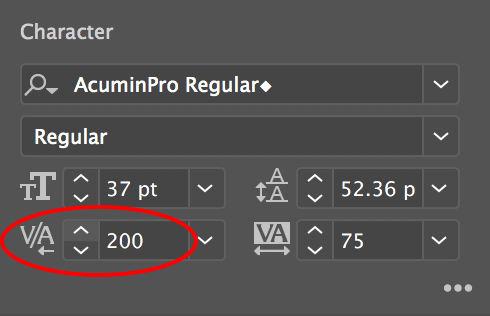
3. Now, I have a (admittedly, very ugly) space between my “K” and my “E”.
Examples of bad kerning
I’ve probably already shown you plenty of bad kerning examples throughout this piece, with my own attempts at kerning on various software.
But if you’d like to see more, don’t worry — we’ve got some hilarious real world examples, to show you just how important (good) kerning is.
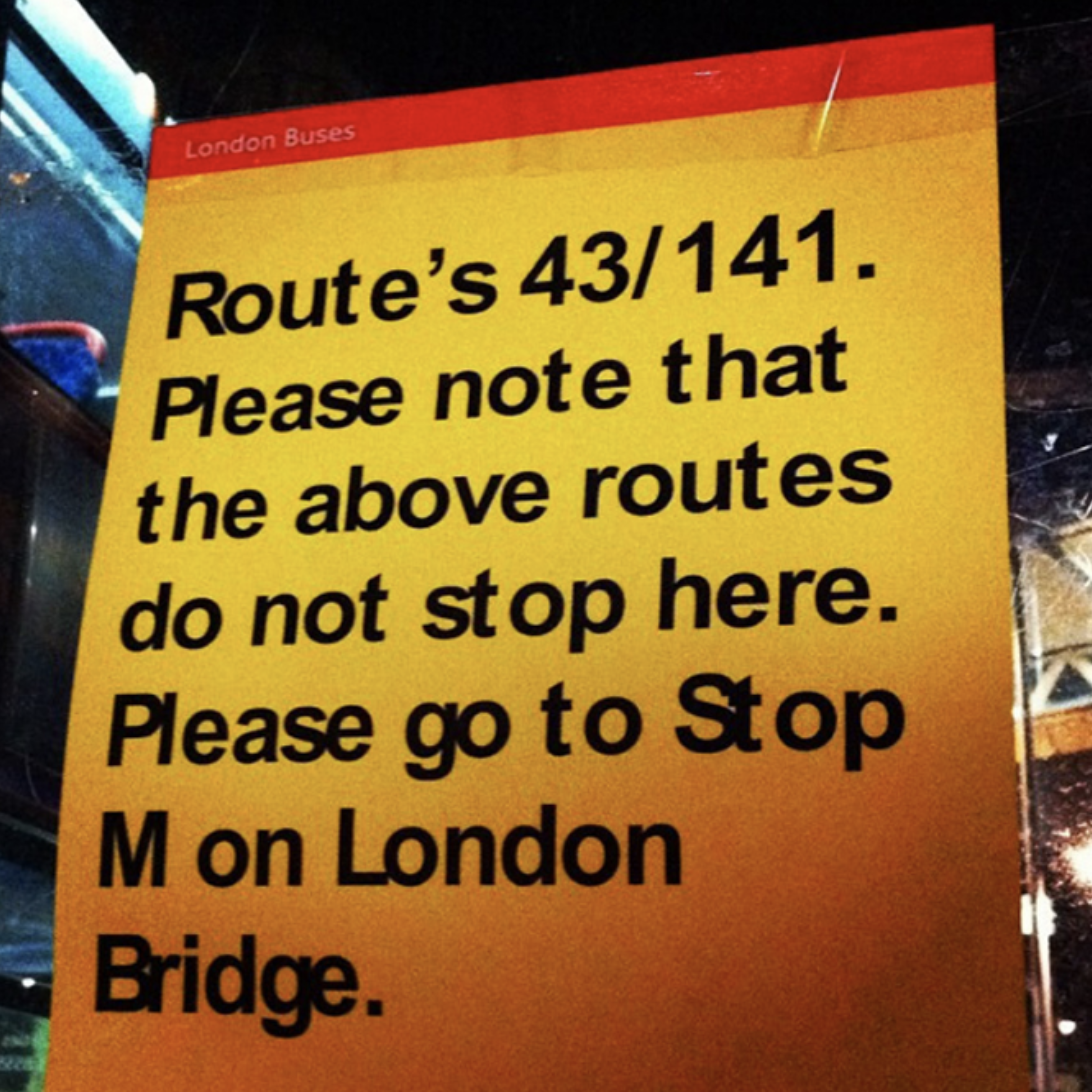
Here are a couple examples of bad kerning:
1. Bus sign gone wrong.
2. What’s up with this spacing?
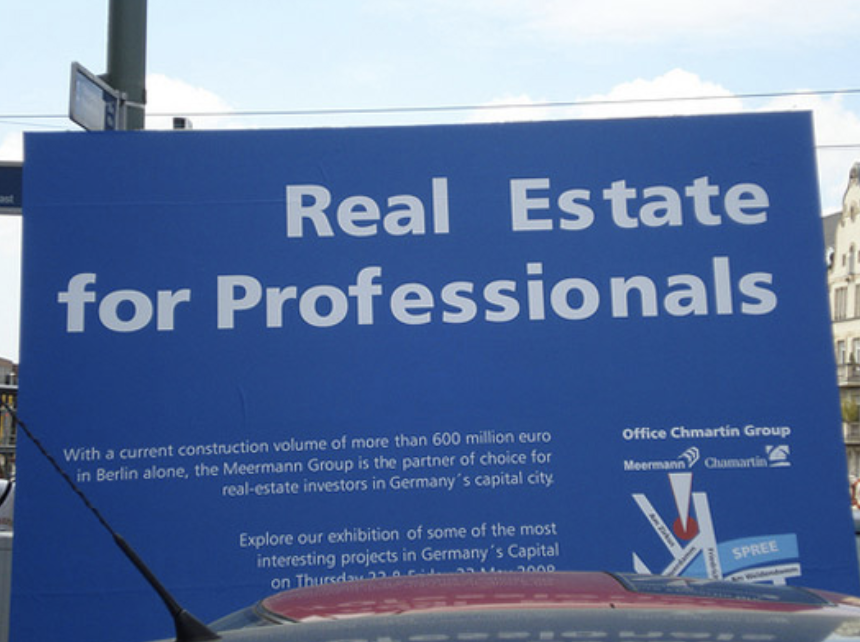
3. I think fixing this sign would be worth the investment.
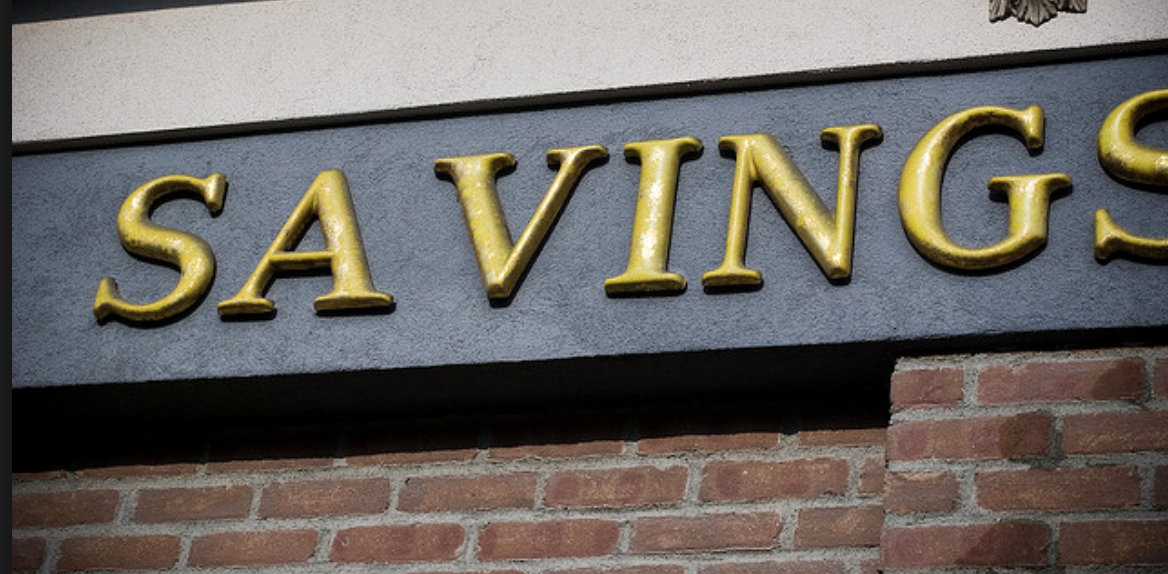
4. Watch out for bad kerning, too.
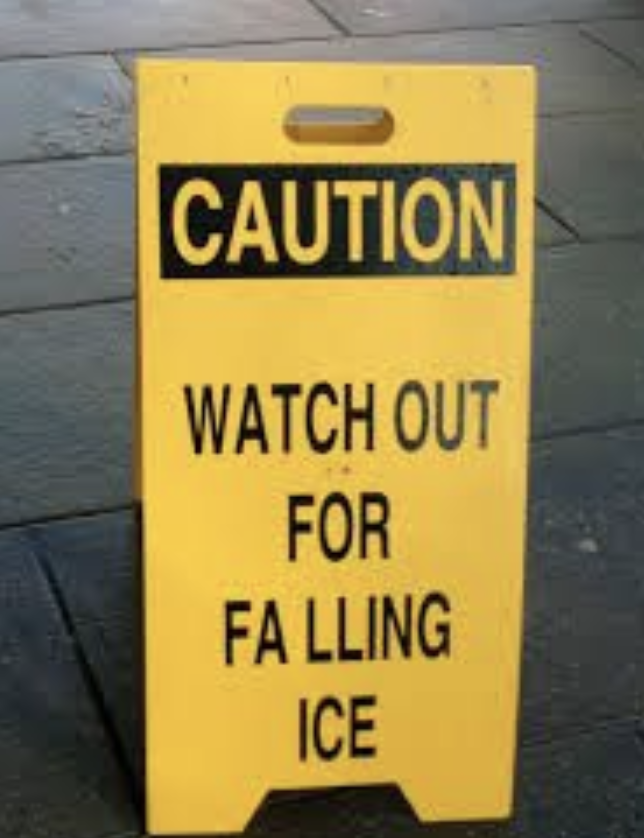
5. This gives me a headache.


Where’s Video Going? 10 Trends to Watch [Infographic]
Once upon a time, a focal point in the family room was a sizable, heavy box that delivered picture shows into our lives. Families arranged the furniture so you could see its magical screen while listening to its simple little speaker.
When you turned it on entertainment and information came a-flickering into your life.
You controlled this thing called the television by twisting its dial. If you didn’t like the program, you had the option to watch what was playing on another channel. You might have had up to three or four choices.
Of course, if you fast-forward to 2018, you can control the signals with remote controls, smart phones and your voice. But far more importantly, you now control:
- When you want to watch
- Where your want to watch
- On what device you want to watch
- And above all, what you want to watch
Speaking to the last point above, consumers can now find and enjoy content about any subject — free, or paid, or both.
The definition of “television” you’ll find in the dictionary isn’t inaccurate today, however, what we consume now is more often described as “video.”
A new form of freedom has kicked in. We care mostly about the content and enjoy insane new levels of choice for controlling how and when we consume it.
“Where’s video going” is a far more interesting question than “Where’s TV going.” And so I explored the topic by collaborating with my friends at Uscreen.tv where a new generation of video content creators go to sell lessons and programs about everything from learning magic, to mixing music, to training dogs and everything else you might image.
This development, OTT, or “over the top,” where content providers sell media directly to the consumer over the Internet (think Netflix), is just one of ten trends marking the rapid evolution of video. All of the trends have interesting implications for marketers, sellers, trainers, content creators, and consumers.
Let’s have a look at 10 trends streaming across the online video landscape.


10 of the Best About Us Pages and How to Make Your Own
Best About Us Page Examples
- Yellow Leaf Hammocks
- Eight Hour Day
- Apptopia
- Moz
- Cultivated Wit
- Nike
- Refinery29
- Marie Catribs
- Bulldog Skincare
- Doomtree
Building a website is, in many ways, an exercise of willpower. It’s tempting to get distracted by the bells and whistles of the design process, and forget all about creating compelling content.
It’s that compelling content that’s crucial to making inbound marketing work for your business.
So how do you balance your remarkable content creation with your web design needs? It all starts with the “About Us” page.
For a remarkable about page, all you need to do is figure out your company’s unique identity, and then share it with the world. Easy, right? Of course not. Your “About Us” page is one of the most important pages on your website, and it needs to be well crafted. This profile also happens to be one of the most commonly overlooked pages, which is why you should make it stand out.

The good news? It can be done. In fact, there are some companies out there with remarkable “About Us” pages, the elements of which you can emulate on your own website.
By the end of this post, you’ll know what makes some of today’s best “About Us” pages so great, and how to make your own “About Us” or “About Me” page that shares your company’s greatness.

10 of the Best About Us Page Examples
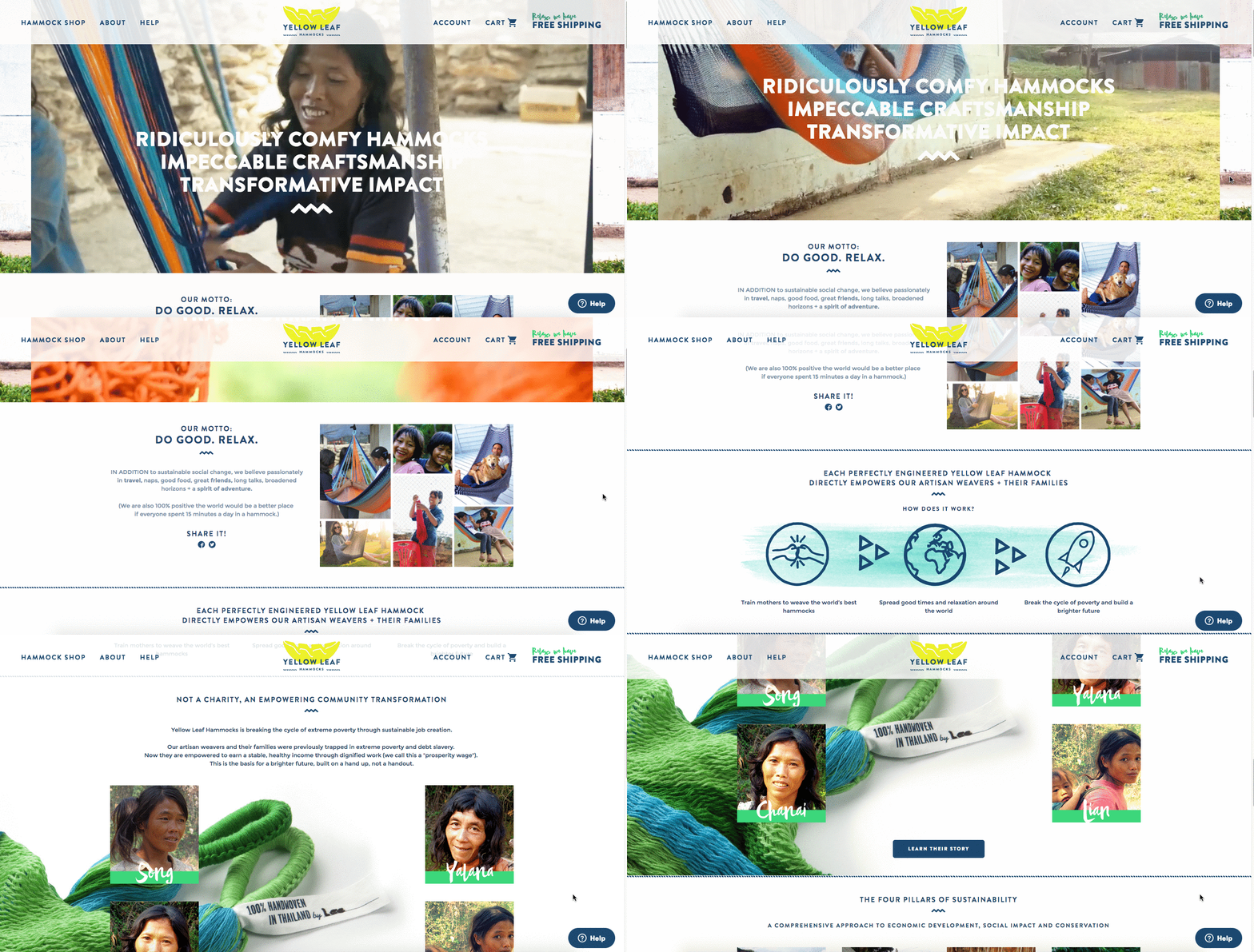
1. Yellow Leaf Hammocks
Why the “About Us” Page Rocks: It tells us a story.
When you have a great story about how your product or service was built to change lives, share it. The “About Us” page is a great place for it to live, too. Good stories humanize your brand, providing context and meaning for your product. What’s more, good stories are sticky — which means people are more likely to connect with them and pass them on.
Yellow Leaf Hammocks tells users about its product by describing how the hammocks empower artisan weavers and their families. The company breaks down different pieces of the story into sections that combine words and easily digestible graphics, painting a picture instead of big chunks of text. They’re clear about why they’re different: “Not a Charity,” the page reads. And then: “This is the basis for a brighter future, built on a hand up, not a handout.”
Every company has a story to tell, so break out your storytelling skills from that random English class you took years ago and put them to work on your “About Us” page. Using descriptive and emotive copy and gorgeous graphics, an “About Us” page with a story works harder for your business than a generic one.
2. Eight Hour Day
Why the “About Us” Page Rocks: It’s human.
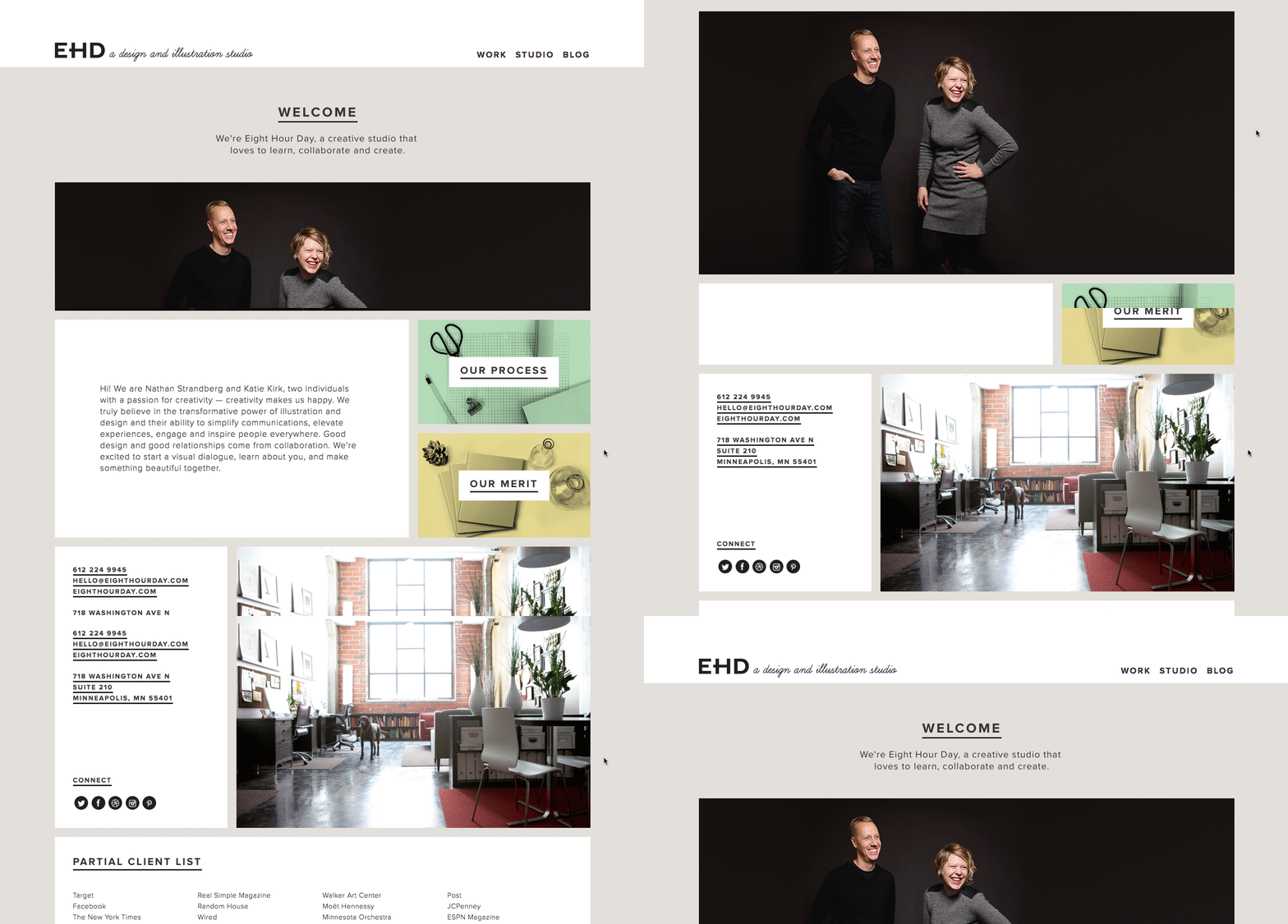
People tend to think that “About Us” pages have to sound formal to gain credibility and trust. But most people find it easier to trust real human beings, rather than a description that sounds like it came from an automaton. Trying to sound too professional on your “About Us” page results in stiff, “safe” copy and design — the perfect way to make sure your company blends in with the masses.
Instead, Eight Hour Day showcases the people behind the company and humanizes its brand. Introducing the founders by name and featuring the photos of them on the “About Us” page drives home the point that Nathan and Katie are — as they so astutely put it — “two individuals with a passion for creativity — creativity makes us happy.”
When you’re designing your “About Us” page, avoid industry jargon and replace it with an authentic voice — yours — to describe your product or service. Sure, it needs to be polished and free of errors, but it should always sound friendly and real.
3. Apptopia
Why the “About Us” Page Rocks: It skips the business babble.
We know — no industry jargon. If you think it makes you sound super smart on your “About Us” page, think again. People want and appreciate straight talk about what your business does. After all, if people can’t figure out what you do, how will they know they need your product or service?
So, skip the industry lingo — that’s what Apptopia does on its “About Us” page. The startup’s simple but polished language effectively communicates the company’s offering while still allowing the Average Joe to understand it.
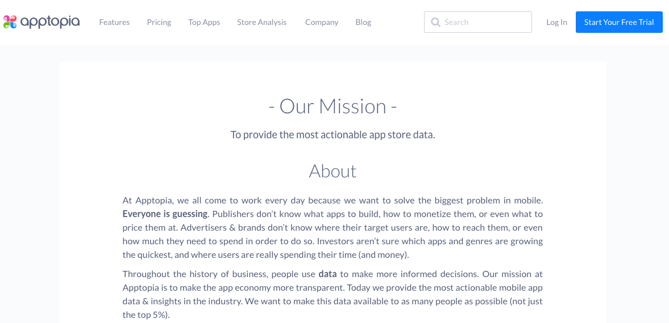
The moral of the story: Try to get rid of jargon on your “About Us” page whenever possible. Use short and punchy sentences to explain complex products and ideas in a way that isn’t patronizing, but rather, is empathetic.
4. Moz
Why the “About Us” Page Rocks: It’s humble.
Instead of following the classic “About Us” script and writing a few paragraphs about the company’s mission and origins, try something different — there are plenty of ways to make your brand more compelling to someone who doesn’t know about you.
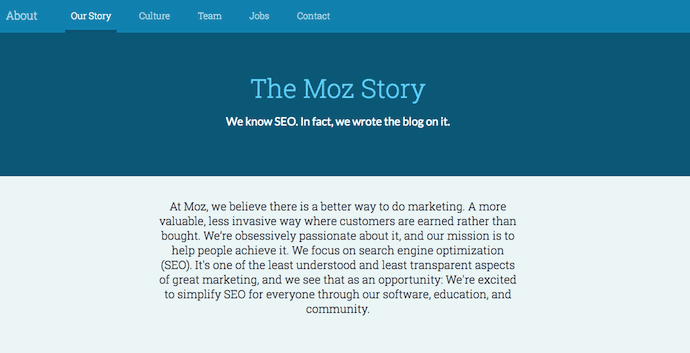
Take Moz, for example. A lot has happened since it was founded in 2004, so the company chose to share those milestones using a fun and clean design that incorporates clear headers, concise blurbs, and little graphics to break up the text.
We especially love the humble references to how Moz received funding, how it switched its brand positioning — and most importantly, how it switched back to its original model. This speaks volumes to the value honesty and humbleness can play to your customers. Don’t be afraid to talk about your ups and downs; your customers will trust what you say that much more.
5. Cultivated Wit
Why the “About Us” Page Rocks: It breaks the mold.
Yes, this post is about, well, “About Us” pages. But sometimes, you don’t always need to wait for users to get there in order to make a statement. That’s part of breaking the mold to showcase your company’s personality.
That’s exactly what Cultivated Wit — a creative agency and media company — does, with both an edgy name and an incredibly fun story told through video and parallax scrolling … right on its homepage.

Below is the actual “About Us” page, which is a gem once you get there. But it’s great to see a company embrace its own brand of quirk throughout the site.
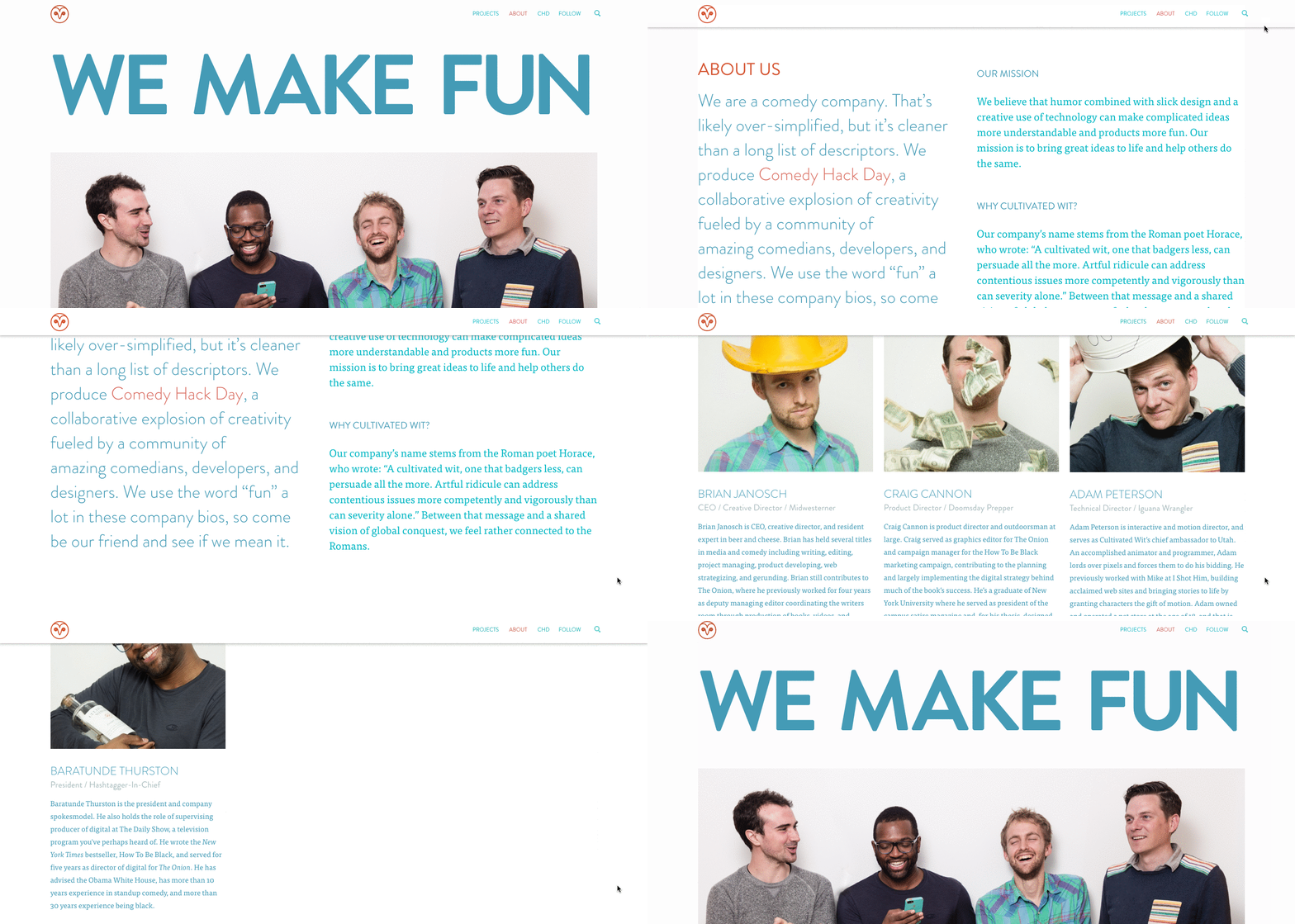
Even if you have a dedicated “About Us” page, there are plenty of ways to creatively showcase your company’s personality throughout your entire website. And yeah, that’s harder than filling a stock “About Us” template — but it can have a significant payoff for your brand.
6. Nike
Why the About Us Page Rocks: It knows its audience.
Nike might seem like a company that’s too big to inspire smaller businesses. You might even wonder if Nike even still has an “About Us” page. As a matter of fact, it does, and it hasn’t forgotten the company’s roots.
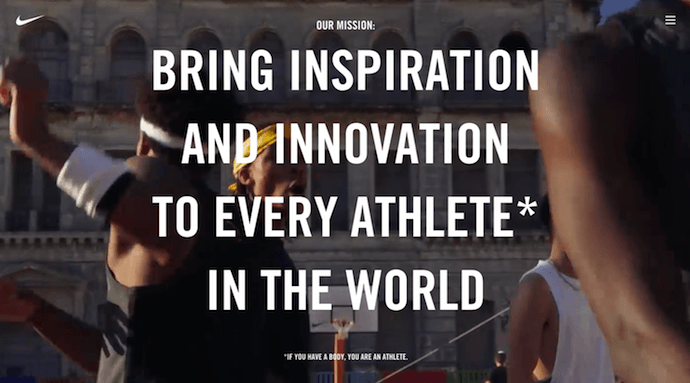
Nike began on the campus of the University of Oregon by the hand of the college’s track coach, Bill Bowerman. And even though he no longer works at the company, one of his beloved quotes still brands the bottom of Nike’s “About Us” page below: “If you have a body, you are an athlete.”
This bold sentence, referenced by the asterisked “Athlete” in the words right above it, sheds important light on Nike’s audience. The brand may be big today, but Nike is all about the rising stars — who Nike depends on to, according to the rest of its “About Us” page, “expand human potential.”
The takeaway for marketers? Know your audience, and make it obvious to that audience the instant they read about you on your website.
7. Refinery29
Why the “About Us” Page Rocks: It tells you what’s most important.
Here’s another instance where any area of your website — not just the “About Us” page — is an opportunity to break the mold.
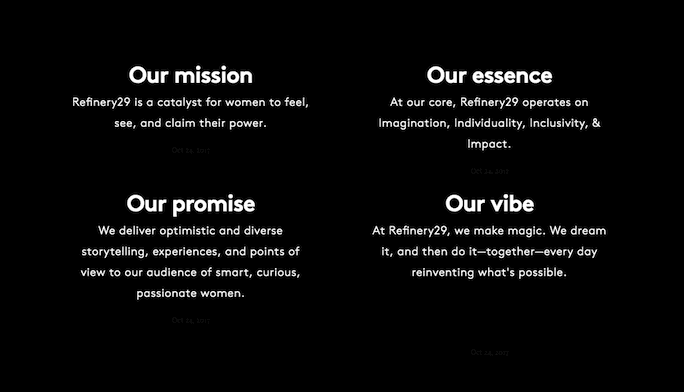
Many companies add just a simple mission statement or company profile, but people often don’t want to ready a wall of text explaining what you do. So, Refinery29 broke it down to convey the intangible qualities that are tough to include in a basic “About Us” page.
Although Refinery29 does introduce its page with a description of its business, its goes out on a bang — four bangs, to be exact. The organization is on a “mission,” sure, but there’s also an “essence” of Refinery29, a “promise” it keeps, and a “vibe” it gives off.
These aren’t company traits you’d think to include when starting out, but they’re what your customers often make gut decisions on when buying.
8. Marie Catribs
Why the “About Us” Page Rocks: It’s unexpected.
There’s a reason why these examples are exceptional — “About Us” pages aren’t always the most riveting parts of a company’s website. In fact, they often look like an afterthought. But even if you don’t have budget for juicy graphics, video, or parallax scrolling, there are other ways to make your “About Us” page unexpected with the copy alone.
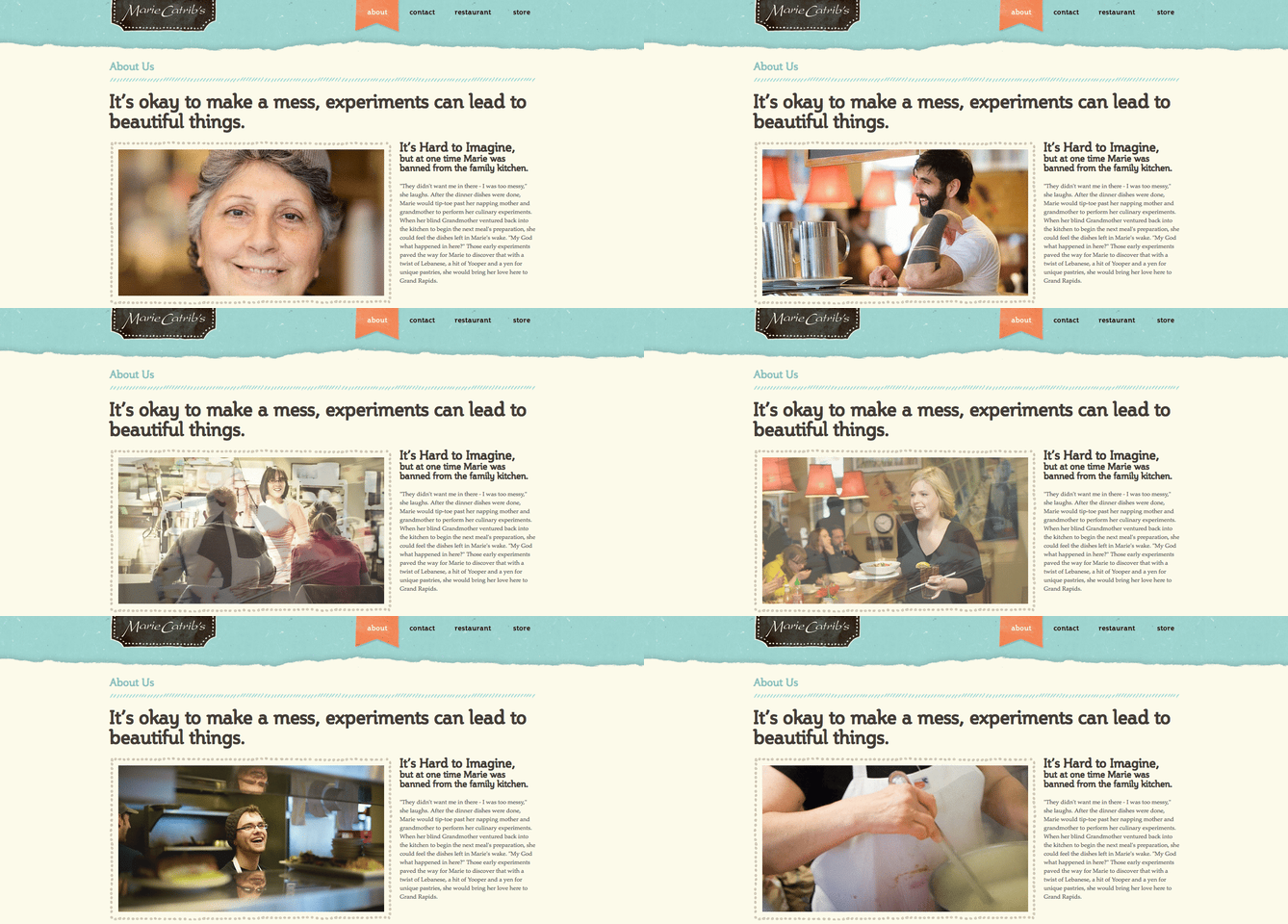
Marie Catrib’s is a restaurant, so you might think their “About Us” page would be your typical “here’s how we started, here’s what we believe in, and here’s our food” story. Marie Catrib’s “About Us” page does tells us that — but it does so in an unconventional way. Immediately, the user’s eyes are drawn to a header that says, “It’s okay to make a mess, experiments can lead to beautiful things.” Quite philosophical, for a place to have dinner.
But next comes the story about the owner, which starts in an unexpected way — “It’s hard to imagine, but at one time Marie was banned from the family kitchen.” A line like that draws in the audience, because we know it’s not going to be typical.
So, how will you use copy to really draw readers in? It’s amazing what impression you can make on site visitors just by creatively telling your story with words alone.
9. Bulldog Skincare
Why the “About Us” Page Rocks: It’s lovable and memorable.
What’s the difference between “average” marketing and lovable marketing? It’s the difference between creating generic webpages that provide great information, but in a straightforward, black-and-white kind of way — versus creating webpages that provide great information and are infused with color, personality, and stay true to a company’s unique brand voice. When you create lovable marketing, you can start a movement of brand evangelists and advocates who will help you grow.
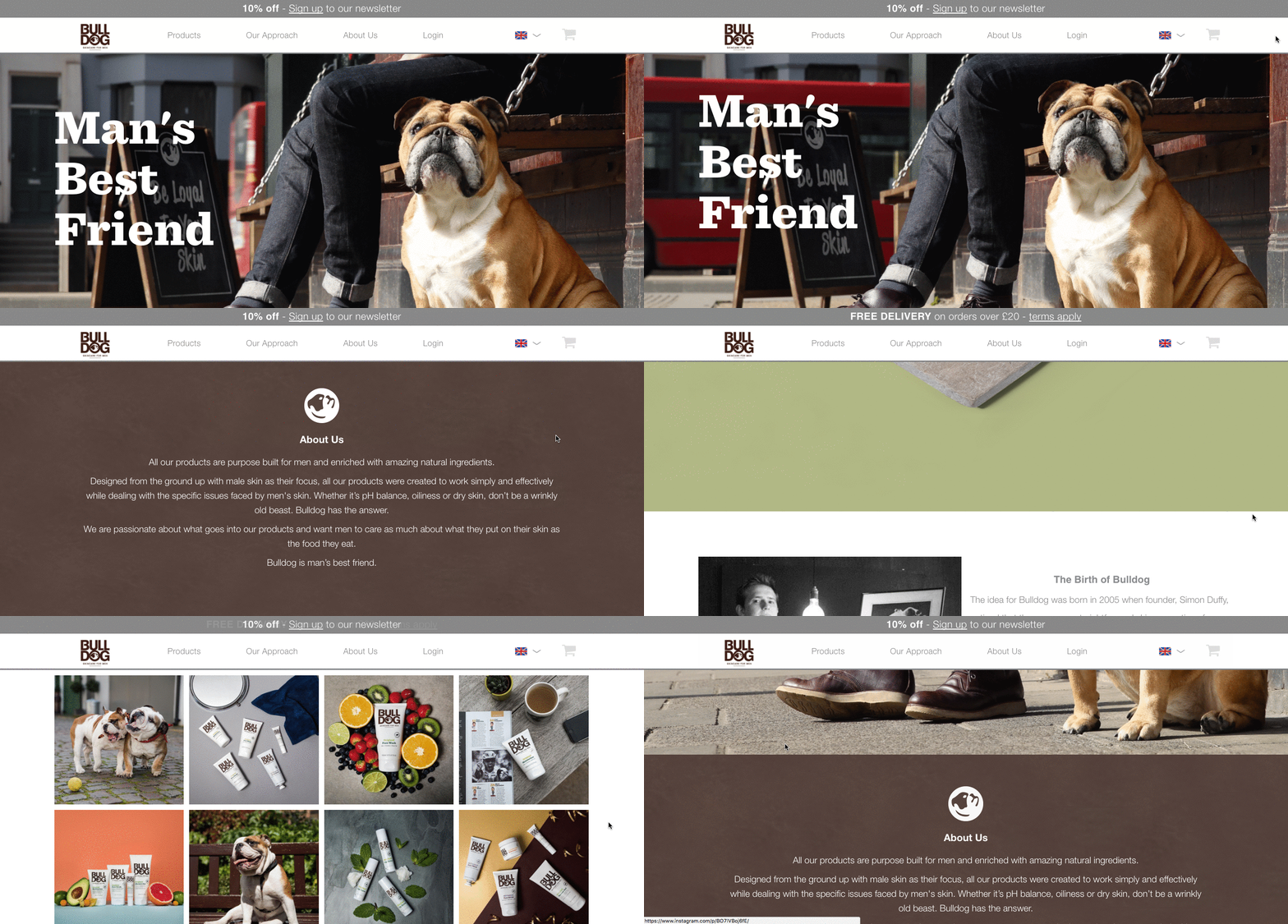
Where does this fit into a company’s “About Us” page? The folks at Bulldog, a men’s skincare company that was named for the colloquial “man’s best friend” — a dog — could have typed up a few paragraphs about where the brand came from and how they were one of the first in the space to redefine and eliminate stereotypes around men’s grooming. But that text alone would have been a bit, well, average.
Instead, the “About Us” page is pithy, colorful, and leads with the lovable mug of an adorable bulldog — fitting the name and the brand. And it states the purpose of the products — to help customers from waking up with the (admittedly adorable) wrinkly face you see when you visit Bulldog’s website.
Play on your own words — it’s okay to have fun and pun with your brand, as it helps to inject personality and humor into your “About Us” page. It primes visitors for a story in a way that makes them immediately feel something. That’s how you create memorable, lovable marketing.
10. Doomtree
Why the “About Us” Page Rocks: Its shows, tells, and has a soundtrack.
One minute of video is worth 1.8 million words, according to Forrester Research’s Dr. James McQuivey. But what about audio and visual, too, all combined with a really cool story? Well, that’s one way to tell your story in an engaging way — through multimedia.
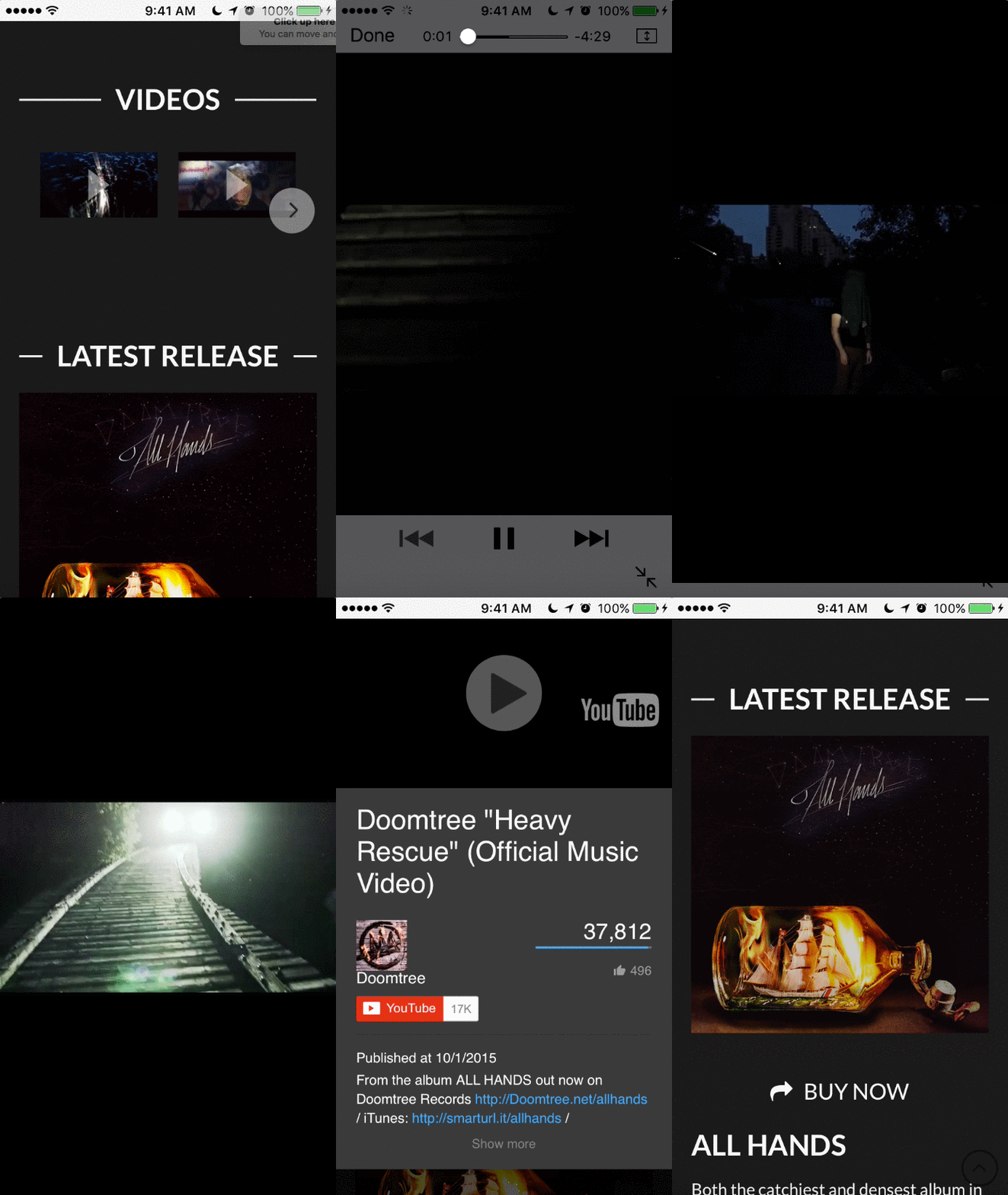
Doomtree is built on a bit of an innovative concept: That a group of talented artists can each have thriving solo careers, but can still come together on a regular basis to create great music. It’s not a band — it’s a crew. It’s an unconventional concept with an equally interesting backstory that “started as a mess of friends in Minneapolis, fooling around after school, trying to make music without reading the manual.” And as soon as you arrive on Doomtree’s ‘About Us’ page, you’re greeted with big, bold photos of those friends.
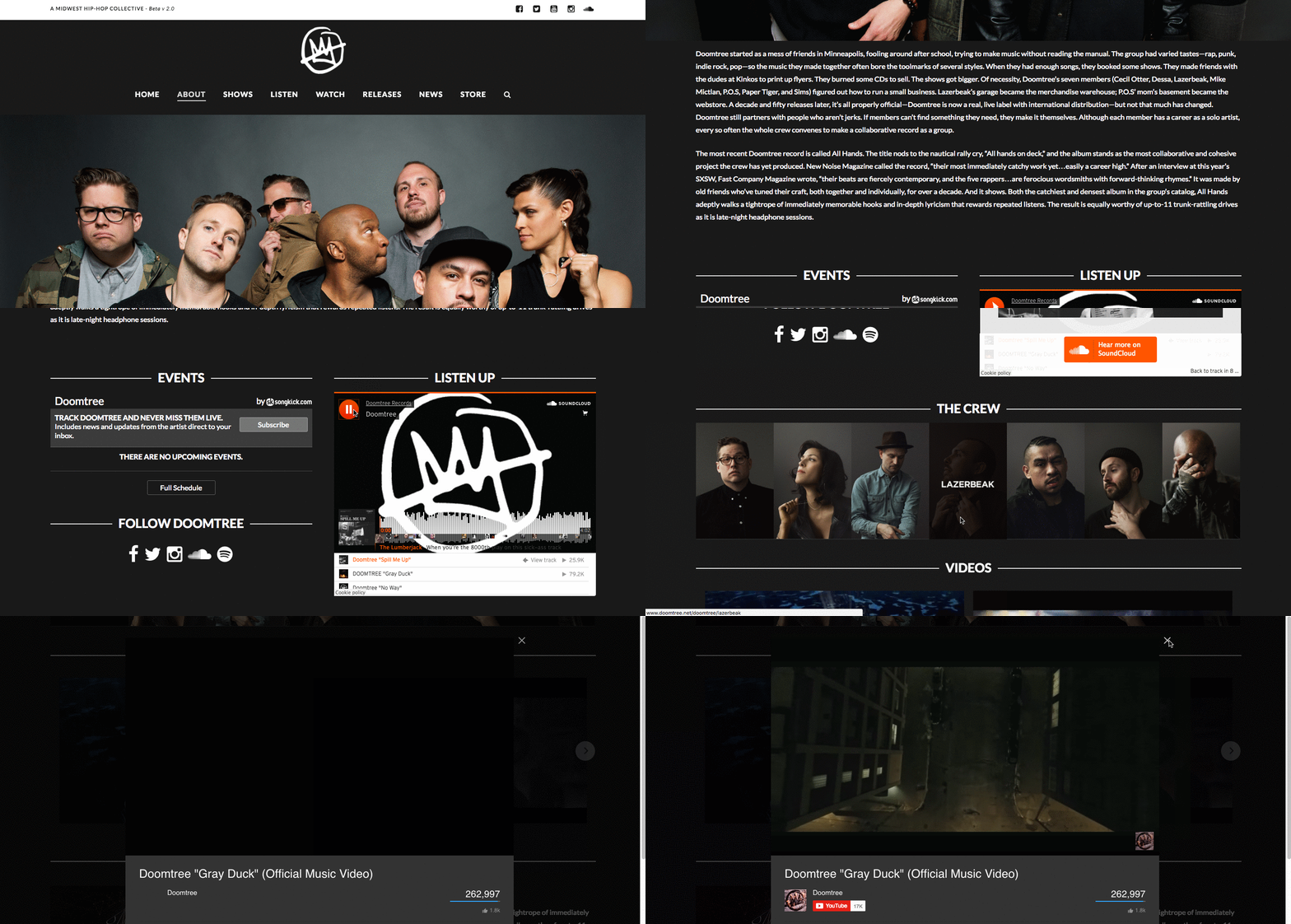
As you scroll down, users are treated to even more interaction with the crew’s tracks and music videos. That makes sense, because it gives visitors an instant sample of Doomtree’s product. What’s more, the entire “About Us” page is responsive, including the video. That’s important — not only because it offers site visitors a great mobile experience, but also for Google search ranking — especially now that such mobile usage has surpassed desktop.
How to Write an About Page
It’s tough to establish one all-encompassing template for your “About Us” page — there are just so many ways you can go about telling your company story. But, per the real “About Us” pages we’ve just highlighted, there are some steps you should keep in mind when getting started.
Here are five steps to writing an “About Us” page based on some of the things that impressed us about the examples above.
1. Establish a Mission Statement
Your “About Us” page can and will be much longer than a single mission statement, but in order to draw people in, you need to succinctly state your goal in the industry up front. What are you here to do? Why should your website visitors care?
2. Outline Your Company Story
You might not have a long history of changes and growth your company has endured (yet), but it’s a nice touch to talk about where you came from in your “About Us” page. So, isolate the milestones prior your company’s founding, and use them to give readers some backstory on your current venture.
3. State Your ‘Aha!’ Moment
Every good company was founded on an idea — something the current marketplace might not yet offer. What was your idea? Use this “Aha!” moment as a pivot point when telling your company story. What was a challenge you faced while developing your company? How did this challenge or discovery shape what you are today?
4. Explain Who You Serve
As much as you want as many eyeballs on your “About Us” page as possible, you won’t do business with every single one of them. That’s why it’s crucial that you identify and mention your core customer. Who should care you exist? Which eyeballs are you here to serve?
5. Describe Your Values
Customers want to be treated like human beings. For that to happen, they need to feel that they’re being treated by human beings. When finishing your “About Us” page, describe who you are as a person or a team, and what your personal values are. What’s your company culture like? What bigger picture in life drives your business?
An LED lightbulb maker might sell 10 different lamp styles, for example, but that might not be the most important characteristic to its primary audience. Maybe this lightbulb developer was founded on a commitment to environmental protection, and every bulb the company makes was built by people who are dedicated to making the world more energy-efficient.
Keep in mind a secondary audience of your company’s “About Us” page consists of your future employees. This is another reason describing your personal values is a good idea — the key to your job candidates’ hearts is to show them you have one too.
At this point, we hope that creating an “About Us” page doesn’t seem like a daunting task — rather, we hope you’re ready to have some fun with it. With a good story to tell, creative copy, humility, and digestible visuals, you’re on your way to an eye-catching user experience.
Even better? You’re becoming part of the exception — and standing out from a sea of “About Us” pages. What makes you different? We’re eager to learn more … about you.
Want more inspiration? Check out 16 inspiring examples of beautiful blog design.

5 Things to Know Before Mark Zuckerberg’s European Parliament Testimony
Facebook CEO Mark Zuckerberg is due to testify before members of European Parliament (MEPs) tomorrow, in an appearance that was confirmed by President Antonio Tajani on Twitter last week.
Mark Zuckerberg, Facebook CEO and founder, has accepted our invitation. He will come to the European Parliament. My full statement ⤵️ pic.twitter.com/FdmuDPl8Wb
— Antonio Tajani (@EP_President)
May 16, 2018
Zuckerberg is due to appear before the Committee for Civil Liberties, Justice and Home Affairs (LIBE), where he’ll likely be asked questions about protecting the personal data of EU consumers, as well as Facebook’s role in election processes and integrity.
The session — which is scheduled to begin at roughly 6:15 PM local time in Brussels (12:15 PM EST) — was speculated and predicted by many in the weeks leading up to Tajani’s confirmation.
In addition to some outlets reporting that such a meeting was in the works, several events took place soon before and after the announcement that indicated another appearance from Zuckerberg before legal officials, ranging from official statements on Facebook’s new initiatives, to changes within its organizational chart.
Before Zuckerberg makes his next official appearance, here are some key things to know.
5 Things to Know Before Mark Zuckerberg’s European Parliament Testimony
1. The testimony was originally scheduled as a closed-door session.
Shortly after Tajani’s announcement, Bloomberg reported that Zuckerberg’s initial appearance before EU lawmakers would take place behind closed doors, and that European Parliament would schedule a separate, public hearing with representatives from Facebook that may not necessarily include Zuckerberg himself.
I have personally discussed with Facebook CEO Mr Zuckerberg the possibilty of webstreaming meeting with him. I am glad to announce that he has accepted this new request. Great news for EU citizens. I thank him for the respect shown towards EP. Meeting tomorrow from 18:15 to 19:30
— Antonio Tajani (@EP_President)
May 21, 2018
While a secondary hearing has yet to be scheduled as of publishing this piece, Tajani announced this morning that Zuckerberg agreed to permit the session to be live-streamed — likely due to pressure from several parties, including MEPs.
I will not attend the meeting with Mr Zuckerberg if it’s held behind closed doors. It must be a public hearing – why not a Facebook Live? I strongly regret that the @EPPGroup has colluded with extreme right to keep everything behind closed doors. https://t.co/uYqEDlRtyo
— Guy Verhofstadt (@guyverhofstadt)
May 16, 2018
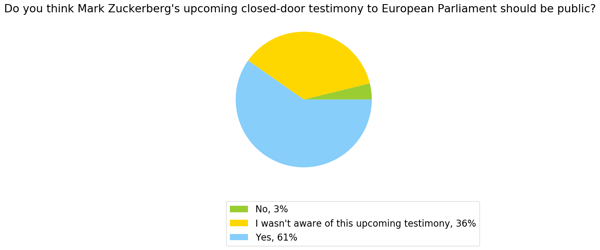
In our own survey of 313 consumers in the UK — which was conducted prior to the announcement that the session would be live-streamed — 61% of respondents said that they believed the testimony should be public.
Verhofstadt has since reversed his statement on the matter, after the decision to cast the session. However, the degree to which the event will be “public” is arguable, as it’s not clear if members of the press or other concerned public parties will be permitted to attend.
2. Not long before the testimony was originally announced, Facebook’s executive org chart had a major shakeup.
On May 8 — just over a week before Tajani’s confirmation that Zuckerberg would be testifying before MEPs — Recode reported a major shuffle to its executive organizational chart, with changes made among the leadership at WhatsApp, Messenger, Instagram, and the core Facebook app.
Here’s a visual peek at the overall changes:
Same faces, new jobs. Many dudes. pic.twitter.com/PXaZAwK4Z0
— Sarah Frier (@sarahfrier)
May 8, 2018
In addition to the general re-org of leadership within existing Facebook teams and umbrella brands, a new team has been created to focus solely on privacy products, such as the Clear History feature announced at F8.
When word of the executive shuffle first arrived, we anticipated that an official appearance from Zuckerberg could be imminent — especially with the creation of an entire division dedicated to one of the issues (privacy) for which Facebook has received the most scrutiny, and continues to answer the most questions.
Why do I sense that where there’s a Facebook executive re-org, there are overseas hearings to follow?
— Amanda Zantal-Wiener (@Amanda_ZW)
May 9, 2018
But privacy isn’t the only topic for which Facebook has faced particularly heightened scrutiny — which brings up another important item to keep in mind going into tomorrow’s session.
3. The day after the testimony was announced, Facebook announced a partnership with the Atlantic Council for its election integrity efforts.
Facebook has also continued to receive criticism and questions about the weaponization of its platform by foreign actors to influence the 2016 U.S. presidential elections. Since then, consumer and authorities alike have been especially vigilant of the spread of misinformation and hate speech on the site, especially where divisive issues that often cause contention during election seasons are concerned.
That prompted Facebook to release its first-ever Community Standards Enforcement Report, which includes a preliminary inventory of rule-violating content and the action Facebook took on it between October 2017 to March 2018.
But it also led Facebook — whether strictly for appearances or out of genuine concern over the weaponization of its platform — to partner with outside experts to boost its election integrity efforts, which Zuckerberg is likely to be questioned on by MEPs.
To help combat “fake accounts – the source of many bad ads and a lot of misinformation,” Facebook has partnered with nonprofit Atlantic Council, whose mission includes “stimulating dialogue and discussion about critical international issues in the Administration, the Congress, corporate and nonprofit sectors, and the media among leaders in the U.S., Europe, Asia, and the Americas.”
The Atlantic Council’s Digital Forensic Research Lab — the primary team partnering with Facebook — released a statement about the collaboration, in which it elaborated on that mission. Specifically, it pointed to the importance of closing the “information gap between governments, tech companies, and media in order to solve for challenges like disinformation.”
It was an interesting statement to make the day after it was first revealed that Zuckerberg’s session with MEPs would be a closed-door one, limiting the very transparency between governments and tech companies to which the statement alluded.
It also came after a recent and repeated refusal from Facebook of requests from UK Parliament for Zuckerberg to appear — which is another key item to note before tomorrow’s session.
4. UK Parliament has requested an appearance from Zuckerberg repeatedly — and Facebook has continued to decline.
On May 1 — just over two weeks prior to Tajani’s announcement — House of Commons Culture Committee chairman Damian Collins issued an open letter to Facebook UK Head of Public Policy Rebecca Stimson, stating that “the committee will resolve to issue a formal summons for [Zuckerberg] to appear when he is next in the UK.”
In response to that letter, Stimson wrote a response on May 14th indicating that “Mr. Zuckerberg has no plans to meet with the committee or travel to the UK at the present time.”
Zuckerberg’s resolve to not appear before UK Parliament raises several questions. While other Facebook executives have undergone questioning from the committee, like CTO Mike Schroepfer, Zuckerberg himself has steadfastly refused to appear, despite committing to back-to-back U.S. congressional hearings, as well as tomorrow’s testimony before MEPs.
The @facebook data breach was executed @Cambridge_Uni and the data went to UK company @CamAnalytica The data breach affected over 1 million UK Facebook users. I think @CommonsCMS should be able to question Mark Zuckerberg about this and the lessons to be learned from it
— Damian Collins (@DamianCollins)
May 20, 2018
So, why the resistance to testifying before UK MPs?
One possible reason is that Zuckerberg’s appearances before U.S. lawmakers were voluntary — as will be his testimony before MEPs — whereas UK Parliament has reached the point of issuing a formal summons.
“It’s not entirely clear why Zuckerberg is resisting appearing before UK members of parliament,” says Henry Franco, HubSpot’s social media editor. “We know that the tone from the UK has been a fairly vindictive one, and we also know Zuckerberg (and Facebook) doesn’t want to open the door to negotiation and questioning from every governing body. They want a free and independent Facebook, which means answering the bare minimum number of questions necessary to keep it that way.”
5. The testimony is taking place three days before the General Data Privacy Regulation (GDPR) comes into force in the EU.
This Friday — three days after Zuckerberg’s scheduled testimony before MEPs — the GDPR comes into force in the EU, marking a major shift in European data privacy laws and consumer rights.
Whether the timing was deliberate is somewhat speculative, but it appears to be slightly more than coincidental — at least on the part of European Parliament. Facebook has received criticism for its approach to the GDPR, and Zuckerberg has frequently evaded questions about how he would apply similar protections to non-EU consumers, or backpedaled on previous answers to them.
Rep. Green is the first to bring up the GDPR and it coming into force next month. Asks about Zuckerberg’s intention to make the same settings and protections available to Americans. “Yes Congressman, all the same protections will be available … around the world.”
— Amanda Zantal-Wiener (@Amanda_ZW)
April 11, 2018
Many wonder how these imminent regulations — which are much stricter than those, if any, in the U.S. — will influence MEPs’ lines of questioning tomorrow, and if those questions will reflect the tougher nature of European laws than those in the U.S.
The general consensus seems to be that, yes — they will. When we asked 302 consumers in the UK if they believe MEPs will be harder on Zuckerberg during tomorrow’s hearing than U.S. lawmakers were in April, 48% responded with “yes.”
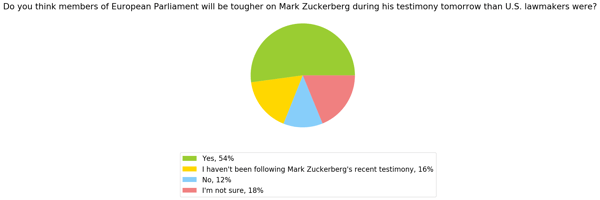
In a survey of 303 U.S. consumers, meanwhile, 53% of respondents had the same answer.
“My sense is that the big difference between the EU and the U.S., is that consumers in the U.S. kind of don’t care,” says HubSpot VP of Marketing Jon Dick. “We just assume we’re being taken advantage of, and are okay with it.”
The heightened level of concern among European consumers, meanwhile, could be reflected in a tougher line of questioning from MEPs tomorrow.
“Consumers in the EU care. They want proper notice and controls, and they want companies to be held to account if they violate their data privacy,” Dick continues. “So my expectation is that EU Parliment will be far tougher on [him] than the U.S. Congress was.”
We’ll be following tomorrow’s testimony. According to a tweet from Carlo Corazza, a spokesperson for Tajani, the event will be live-streamed on European Parliament’s website.

Video or Images: Which Performs Better in Facebook Ads?
“Video marketing” is one of today’s hottest industry buzzwords — and, of course, we at Animoto agree that video is a priceless tool when it comes to engaging your audience, sharing stories and information, promoting products and services, piquing interest, and more.
But we also know that video in and of itself isn’t a magic bullet. You should never go into any marketing initiative assuming what’s going to work. You need to test to find out what works for your company, your audience, and your objectives.
To that end, we set out to take Animoto’s HubSpot-inspired video templates for a spin. We ran thousands of dollars worth of tests with Facebook Ads Manager to see how video stood up to other types of content — when it worked, when it didn’t, and how to optimize its performance.
We were interested in answering these questions:
- Do videos really perform better than images or links?
- When it comes to videos, which types perform best?
Here’s what we found out.
Videos or images? Which perform better?
The first question we set out to answer was: do videos really perform better than images in Facebook ads?
The answer: it really depends on the video or image!
Test 1: Video vs. Blog Post Meta-Image
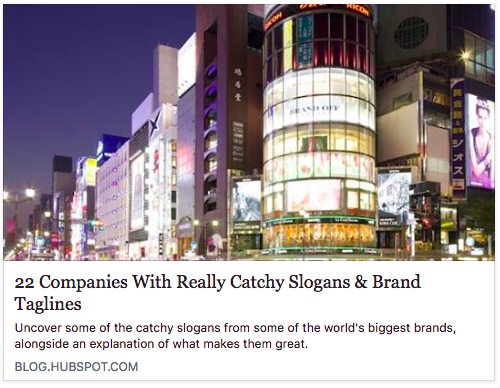
We started with a test driving traffic to a post on the HubSpot blog, 22 Companies With Really Catchy Slogans & Brand Taglines. We tested a video teaser, with a taste of what the blog post had to offer, against a simple shared-link posting that auto-pulled the meta-image from the blog post.
Vs.
The Results
What did we find? The video outperformed the image … by a lot. The video got 20 percent more clicks than the image.
But wait, we asked ourselves. Was that really the best image to promote this blog post? What did a cityscape really say about catchy slogans and brand taglines? We went back to the drawing board on our next test to see if video would still perform better than image if the image was optimized.
Test 2: Video vs. Optimized Image
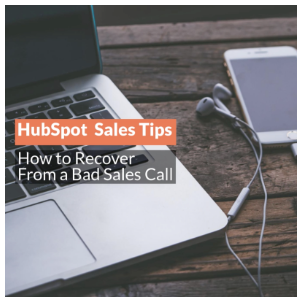
For our next test, we decided to promote a different HubSpot blog post, How to Recover From a Bad Sales Call. This time we tested two different video variations — one listicle, featuring three of the tips from the post, and one with more or a narrative appeal that speaks to the viewers. Check out both in the following video:
The two videos were run alongside an image test, but this time we pulled a relevant screenshot from the video that made it clear what people would get if they clicked through.
The Results
With an optimized image, things turned out a little differently. This time, the image actually beat one of the videos — the listicle. The image got more clicks at a lower cost than this video.
However, the narrative video won out in the end with the most clicks and a 3 percent lower cost per click. The narrative video had a 34 percent lower cost per click than the listicle.
Takeaway: It’s all about testing.
In the end, it turned out that videos don’t always perform best, and images don’t always perform best either. It really depends on the content. We saw image perform better than some videos, and videos perform better than some images. But testing different types of marketing collateral allowed us to figure out what type of ad and content would maximize ROI for the particular use case.
Optimizing Ad Creative
So if you’re embarking on a Facebook ad campaign, or really any type of social ad campaign, how do you ensure you’re getting started with optimized creative? We’ll break down some general rules to help you get started, based on the findings of our tests.
Optimizing Videos
First things first, we did learn a few things from our tests about what you can do to optimize the videos you’re creating for advertising:
- Go square. Square videos take up 78 percent more space in the News Feed and have consistently outperformed landscape videos. In one of our tests, we created a video to promote a HubSpot blog post, 22 Handy Slack Hacks Everyone Should Know. We created square and landscape versions, and the square video performed better across the board, with a 50 percent lower cost per click and 45 percent more engagement.
- Think about your objective. This is important. Your video needs to address this objective. If you want to tease a blog post, for instance, you’ll want to make sure it’s clear what the blog post is about and you’ll need to include a clear CTA letting them know where they can read more.
Optimizing Images
We also learned that an optimized image can do wonders for the success of your ad. Here are a few tips to help ensure your image is optimized:
- Watch the text. Facebook ads may run with reduced impressions, or not at all, if too large a percentage of your image is covered by text. Use Facebook’s Image Text Check to make sure your image doesn’t exceed the limit. This is what we used to create the optimized image for our second test above.
- Be clear. Make sure that the image makes clear what people will get when they click through to learn or read more. This’ll help ensure that the folks that are coming to your page are actually interested in the content and will help reduce bounce.
- Be eye-catching. Choose something bright, clear, or unique to stand out in the News Feed.
But as we discovered, there’s no one-size-fits-all approach, so it’s important to test –try a few different things, see what works, what doesn’t, and iterate.
Optimizing ROI with A/B testing
Whether or not you’ve used A/B testing in the past, thinking about testing in the context of video can be a lot to wrap your head around. There are all sorts of things to test, from CTA copy to colors, fonts, what photos and video clips you use, what story you tell, and everything in between. Test videos against images; test videos against other videos; test everything and improve your results over time.
What Variations to Test
Not sure which variations to test? Here are some suggestions:
- Media variations: Try using different photos or video clips in a video to see which performs for you. Or, if you’re testing an image, try to optimize the image to suit your needs, as we did in the second test above. In this example, WV Skydivers tested two video variations—one starting with a photo and one starting with a video clip. The video clip variation reached 10K people, while the photo variation reached only 1.2K.
- Text variations: Try a couple different CTAs or change up the text to present your video differently, as we did in the test of a narrative vs. a listicle.
- Length: See if a short, medium, or long video gets the best results. We tested 0:15, 0:30, and 0:45 versions of the same video in one of our tests and the 0:30 video had a stronger click through rate. But we’ve seen instances where a long video has performed best and those where a super short looping clip has won, which is why testing is important!
How to Set up A/B Tests
You can set up A/B tests in Facebook. To get started you’ll need a Facebook page, a Facebook Ads Manager account, and some ad variations — two or more videos, two or more images, or a combination of images and videos. Simply run two versions of your ad and be sure to keep everything the same except for the variation you are testing. This includes the ad objective, budget, target audience, and any copy that runs alongside your ad (unless the copy is the variation).
As you test, you’ll begin to understand what resonates with your audience and can hone your strategy going forward. By not assuming that one type of content will work best for your advertising you can start creating ads that perform.
Animoto and HubSpot recently joined forces to create a collection of video templates for business owners looking to create professional marketing videos to promote blog posts, boost event registration, or collect leads for a product.

15 of the Best Calligraphy Fonts You Can Download for Free
The right font can instantly improve the look of your marketing presentation, impress your client, or escalate your design from average to exceptional.
But it’s often tough to find a font that falls somewhere in-between classy and dramatic — particularly when you’re not willing to pay for an experienced calligrapher.
We’ve compiled 15 of the best calligraphy fonts we found online. These fonts are subtle, professional, and eye-catching. Best of all, they’re free, so you can download and try them all before picking your favorite.
Check out our list, if for no other reason than to see me try to describe fonts.
Most of these fonts are for personal use only, but some of them are available for commercial projects. Below each font, we’ll specify whether it’s free for personal or commercial use — however, if you’re considering using the font for commercial purposes, please read the font’s individual licensing agreement.
1. Alex Brush

This font is classic and understated. It’s also legible and clear, with decent space in between each letter, so you can use the font even for dense paragraphs of text.
Download at: 1001 Free Fonts
Free for personal and commercial use.
2. Adreno Script Demo Regular
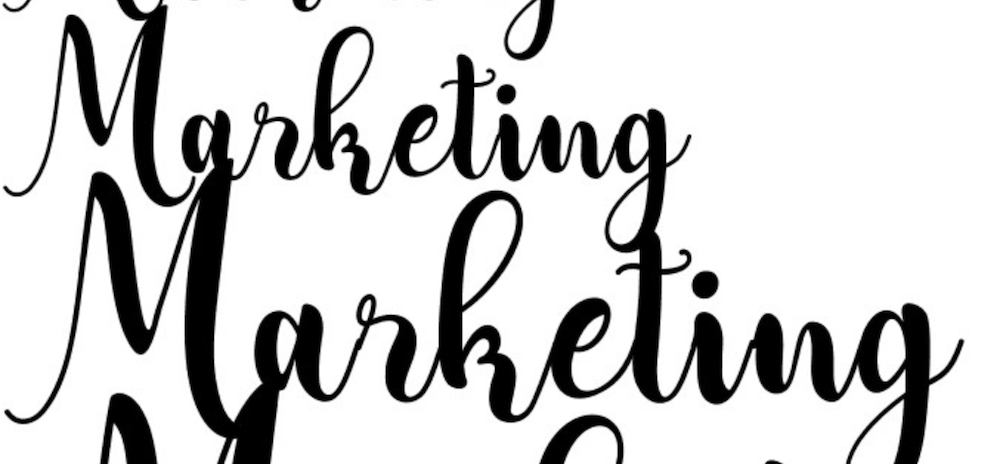
Adreno Script is more playful and fun than most of the other calligraphy fonts in the bunch, making it a good option when your design intent is more lighthearted.
Download at Urban Fonts
Free for personal use.
3. Balqis

If you’re designing an artsier project, like a book cover or presentation swag, this font is folksy and down-to-earth, and doesn’t appear too formal.
Download at: Free Design Resources
Free for personal and commercial use.
4. Bukhari Script
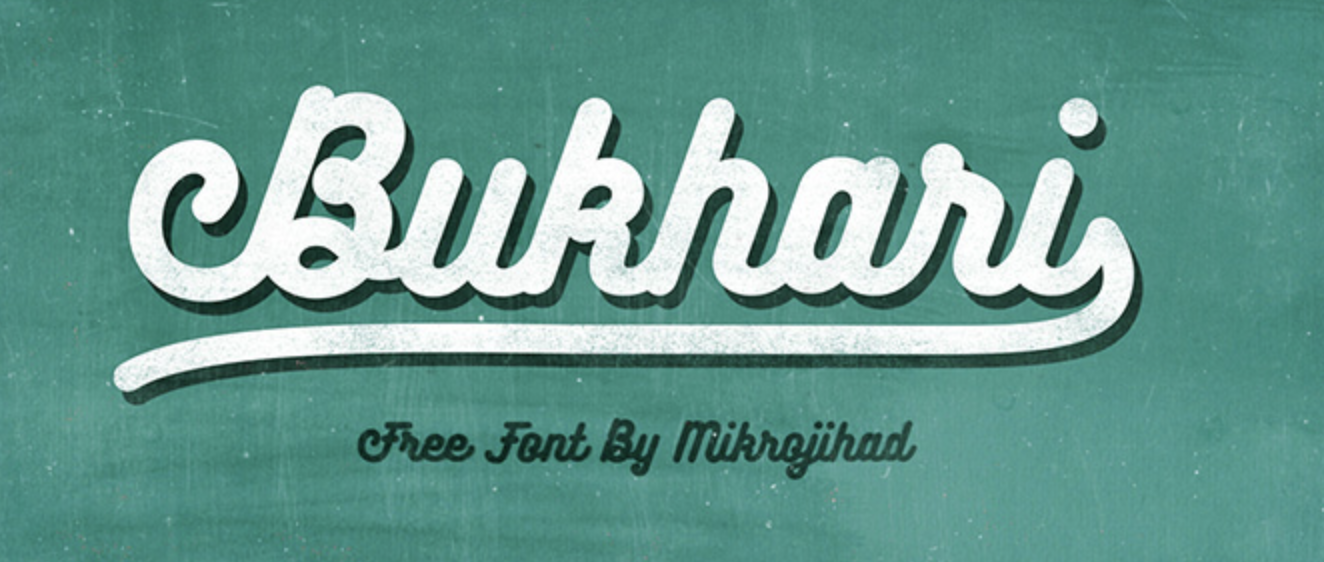
Bukhari Script is bold and fluctuates in shading, making it appear vintage and old-school. It’s a good font to use if you’re trying to invoke some nostalgia in your marketing.
Download at: Font Fabric
Free for personal and commercial use.
5. Champignon
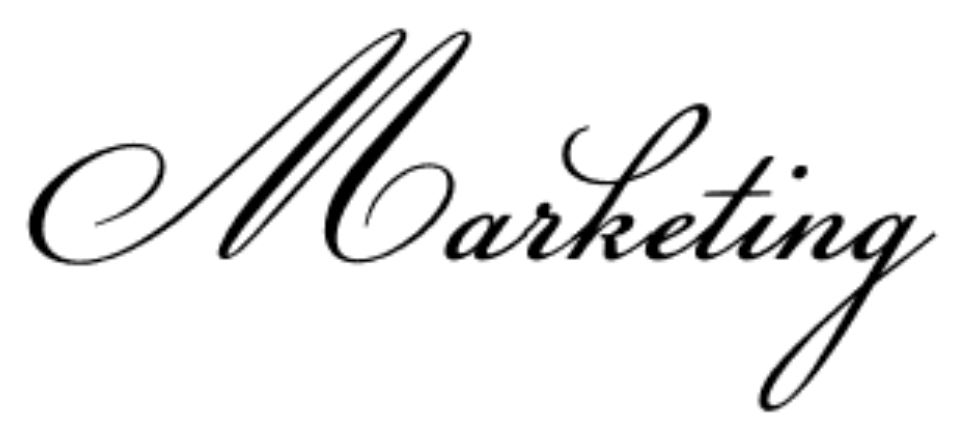
This font is decorative and classically formal — you’d probably use this font for invitations, placeholders, or titles, rather than long paragraphs of text or a presentation.
Download at: Dafont
Free for personal and commercial use.
6. Easy November

The swoopy, exaggerated nature of Easy November makes it a great font for titles or branded items like calendars or stickers. Its eye-catching nature makes it appropriate for many different platforms.
Download at Font Space
Free for personal use.
7. Great Day
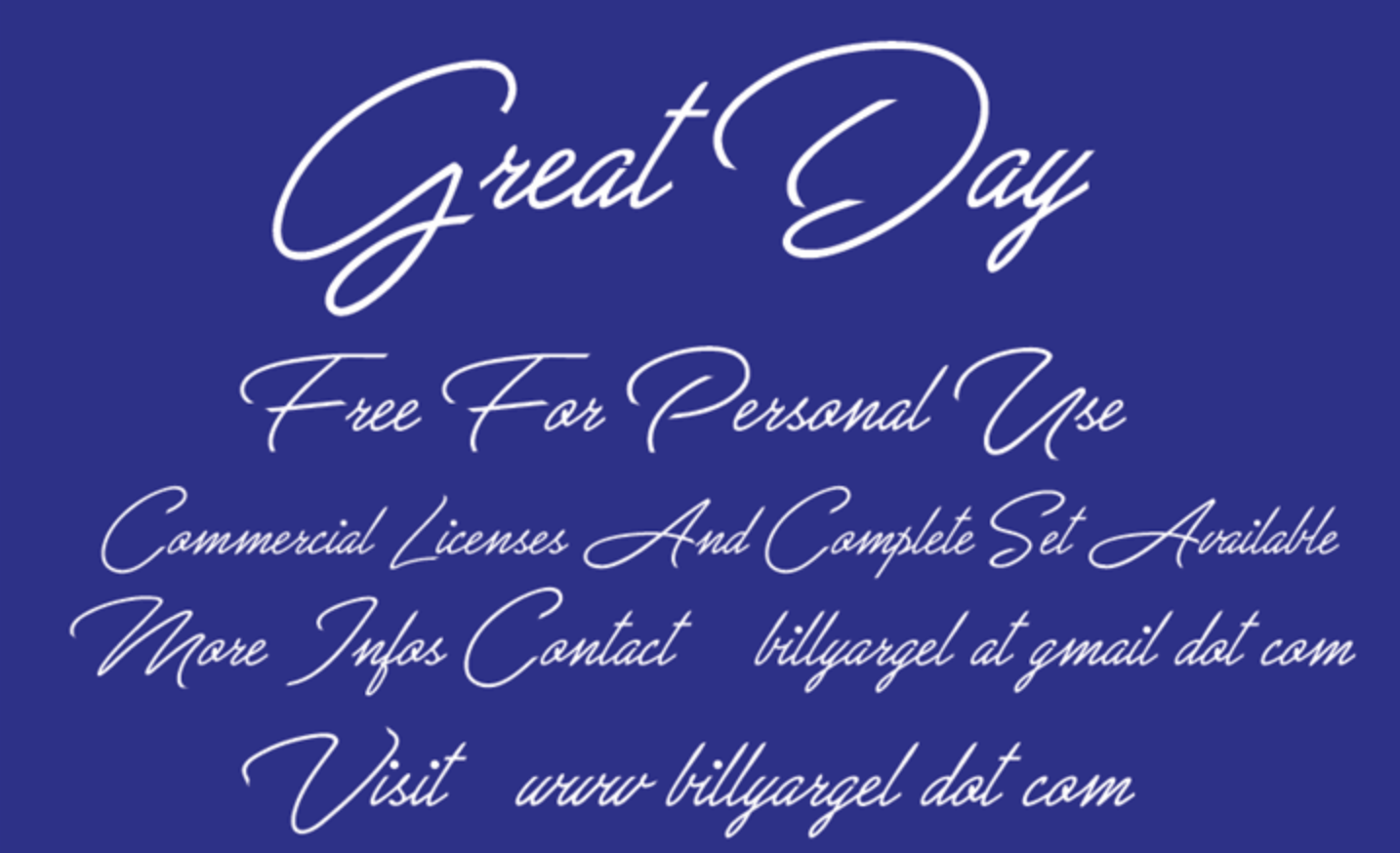
This font falls somewhere between retro and conservative, making it fitting for both professional presentations, or playful signs or titles. The spacing between each letter also makes it easier to read than some of the other calligraphy fonts.
Download at Font Space
Free for personal use.
8. Kristi
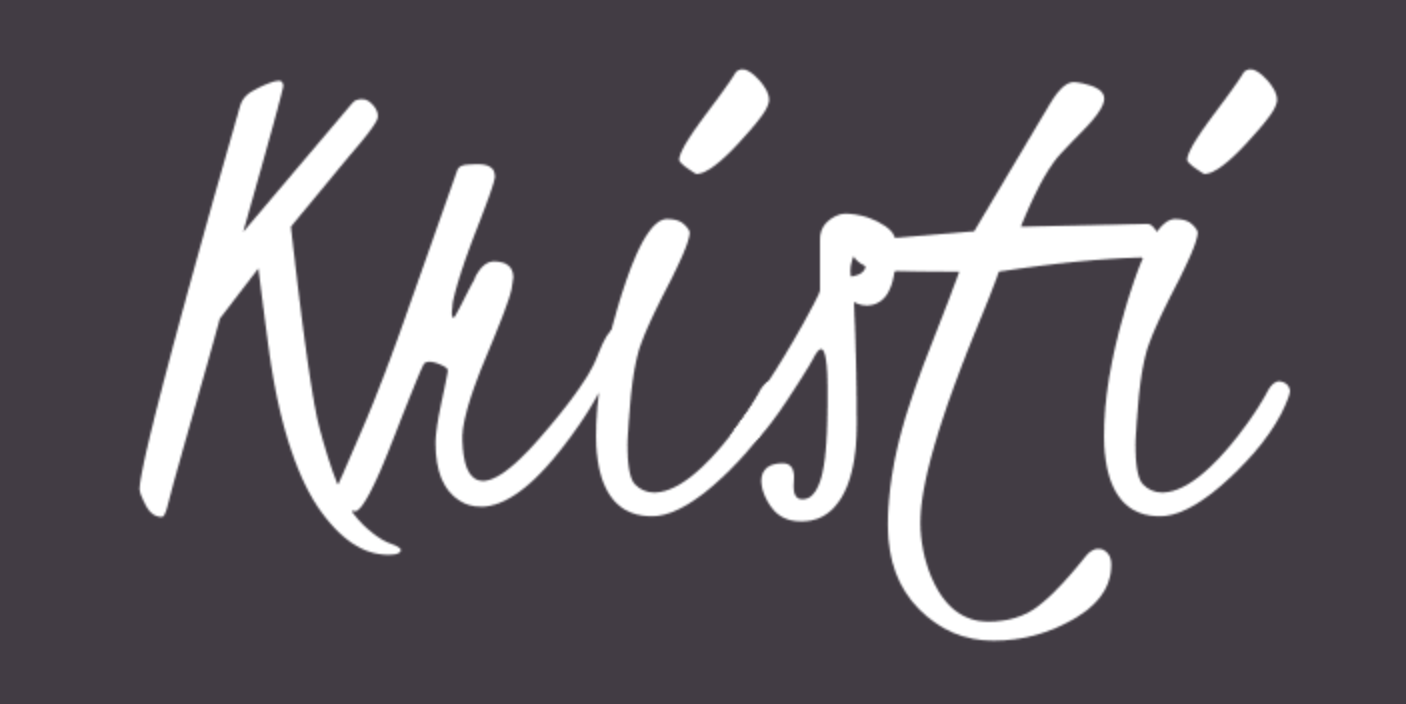
This is one of the more casual and spirited fonts in the mix, evoking memories of girls names in high school yearbooks, which could be ideal if you’re looking to add a personal or hand-written feel to your design.
Download at: Font Squirrel
Free for personal and commercial use.
9. Learning Curve Pro
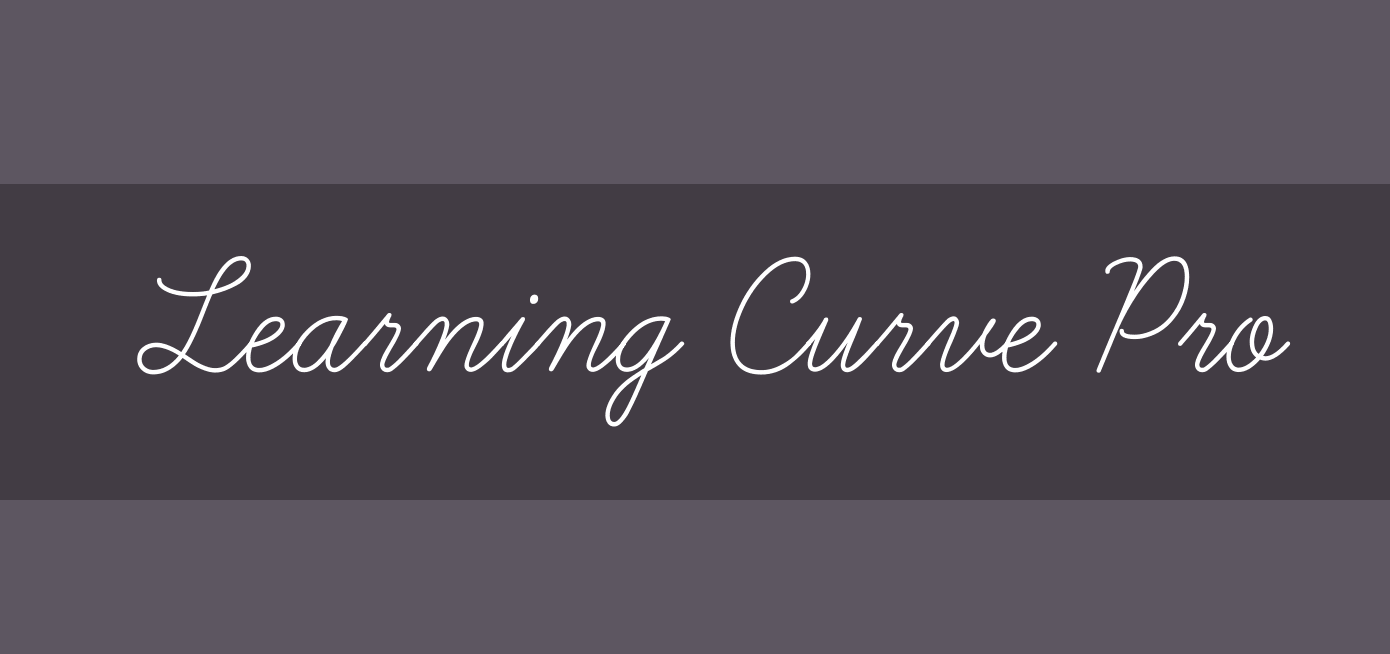
If there was ever a font that mimicked a “Learn Cursive” activity book, this would be it. The simple, precise lines make it a good bet for any longform content you’re trying to spruce up, while remaining traditional.
Download at: Font Squirrel
Free for personal and commercial use.
10. Pinyon Script

This formal design echoes nineteenth century letter-writing styles, making it a tasteful option for formal posters, invitations, or namecards. This is a good font to use if your theme is more conservative.
Download at: 1001 Fonts
Free for personal and commercial use.
11. Ralph Lanok Future
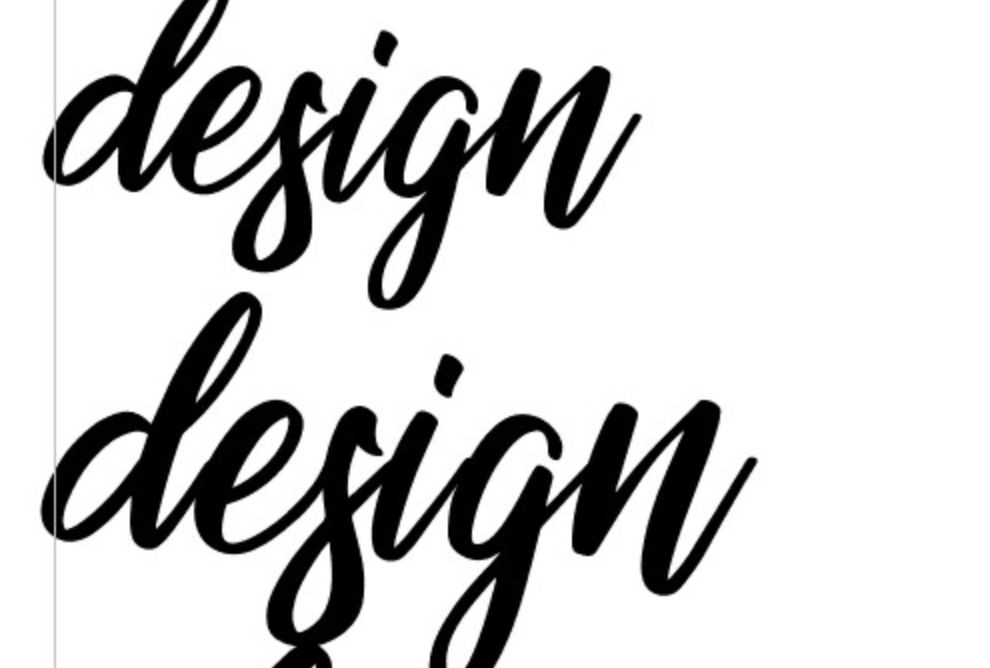
Ralph Lanok Future is dramatic, and sleek. While it seems too theatrical for dense text, it’s a great option when you’re aiming to draw a viewer’s attention to a few words or phrases.
Download at Urban Fonts
Free for personal use.
12. Sacramento
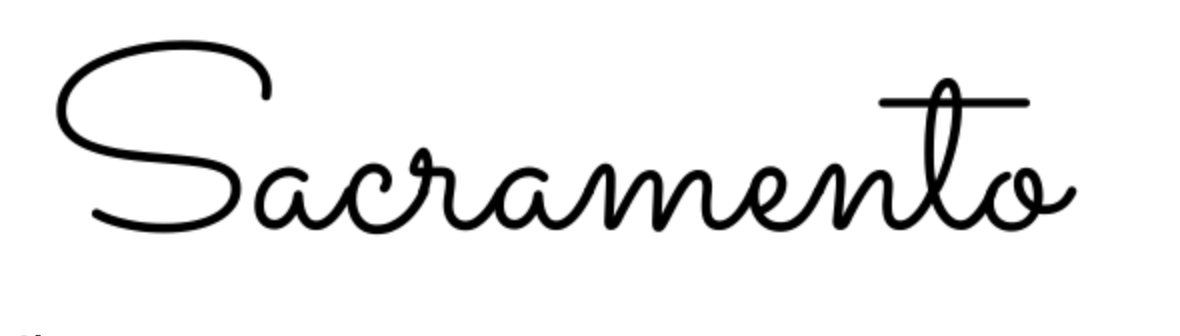
This casual, funky font is a throwback to styles of the 1960s — perfect for large signs or advertisements aiming to create a vintage feel.
Download at: 1001 Fonts
Free for personal and commercial use.
13. Sophia
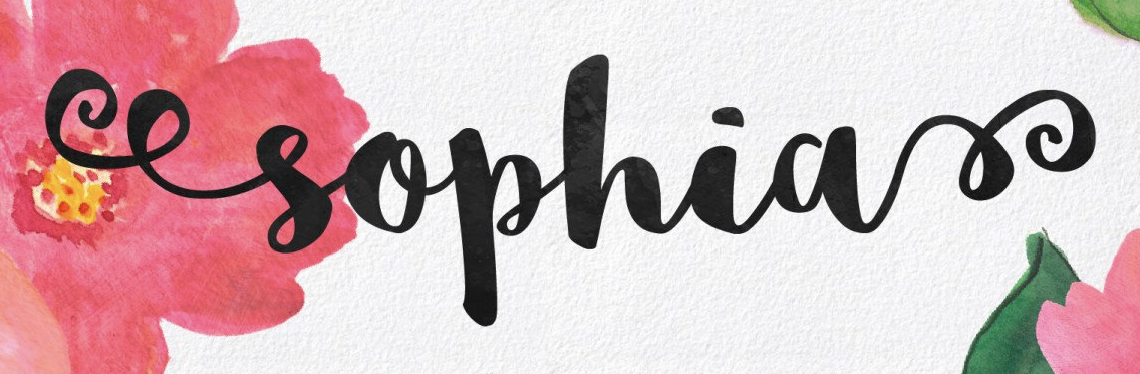
Undoubtedly one of the more feminine, charming fonts in the list, Sophia uses wide and thin strokes to appear beautifully hand-drawn. This font would work perfectly for any design calling for a soft, graceful feel.
Download at: Creative Booster
Free for personal and commercial use.
14. Special Valentine
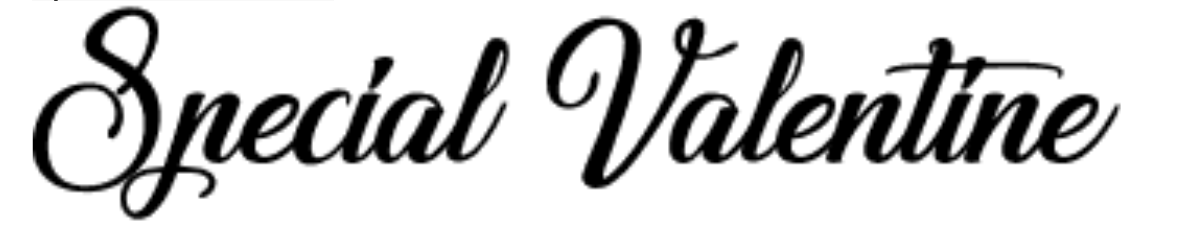
Special Valentine is one of the few classic fonts where the uppercase and lowercase letters are similar sizing and aligned. This makes it useful for full paragraphs by ensuring easy readability, but it’s still elegant enough to also use for invitations or titles.
Download at Urban Fonts
Free for personal use.
15. Qaskin Black Personal Use
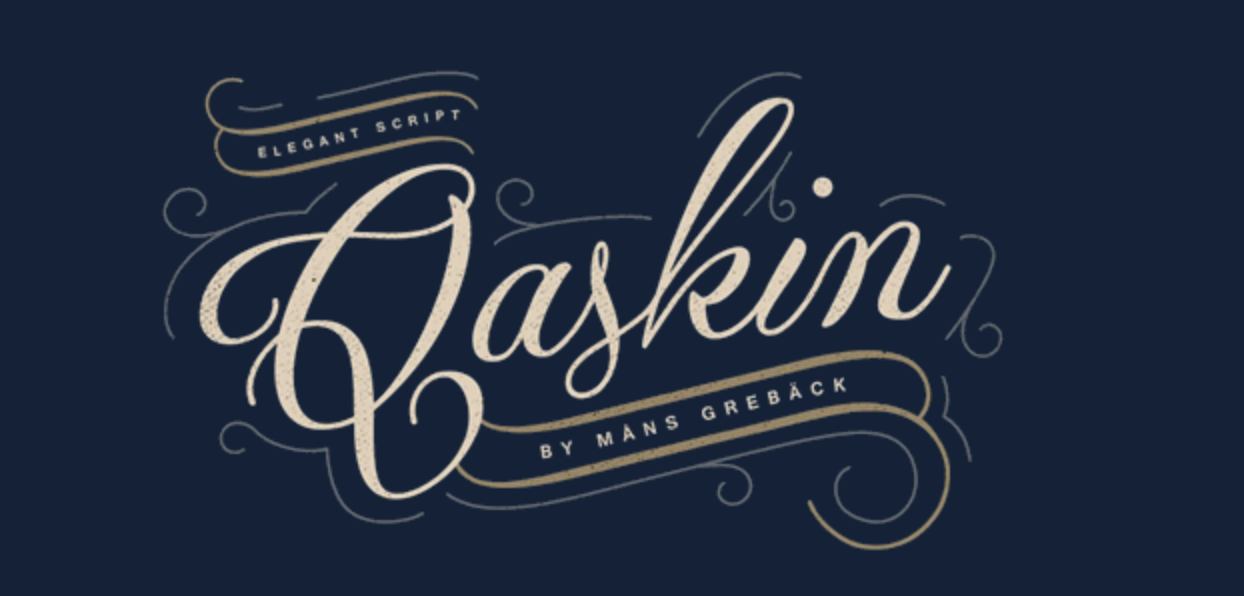
There’s something about this font that screams “outdoors-y” to me. I don’t know if it does the same for you, but regardless, Qaskin Black is an unusual calligraphy font, seeming more tough and rustic than the others.
Download at Font Space
Free for personal use.

The 23 Best Motivational Speeches of All Time
It was halftime during one of my 7th-grade football games. And we were losing 14 – 0. With our knees planted in the grass, my team was quietly huddled, drenched in sweat and defeat. We all knew the game was over.
That’s when our assistant coach bursted through our circle and shattered our pity party, delivering one of the best motivational speeches I’ve heard to this day.
I can’t directly quote him because he said some things that are inappropriate for a blog post (and, in hindsight, probably for a bunch of 13-year-olds too). But the point is, he harnessed the power of words to rejuvenate a physically and emotionally drained team. And we came back clawing to win the game.
Just like in sports, being motivated at work is crucial for your performance. This rings especially true when you have a looming deadline, an important meeting, or colleagues or customers depending on your performance.
To help you stay motivated, no matter what your job throws at you, we decided to compile 23 of the best motivational speeches from business, sports, entertainment, and more. If you want to get fired up for a project, watch these videos.
Trust me, I was wiping my eyes after I saw them. And while the messages vary from speech to speech, they will put you in the optimal frame of mind for tackling and crushing your next big challenge.
(Disclaimer: Some speeches — *cough* Al Pacino *cough* — may contain NSFW language.)
Best Motivational Speeches
- J.K. Rowling: “The Fringe Benefits of Failure, and the Importance of Imagination” (2008)
- David Foster Wallace: “This Is Water” (2005)
- Fearless Motivation: “It’s Not Easy, But It’s Worth It” (2018)
- Jim Carrey: Commencement Speech at Maharishi University of Management (2014)
- Brené Brown: “The Power of Vulnerability” (2013)
- Steve Jobs: “How to Live Before You Die” (2005)
- Ellen DeGeneres: Tulane University Commencement Speech (2009)
- Sheryl Sandberg: Harvard Business School Class Day Speech (2012)
- Dan Pink: “The Puzzle of Motivation” (2009)
- Denzel Washington: “Fall Forward” (2011)
- Elizabeth Gilbert: “Your Elusive Creative Genius” (2009)
- Charlie Day: Merrimack College Commencement Speech (2014)
- Orlando Scampington: “The Pillars of C.L.A.M.” (2015)
- Vera Jones: “But the Blind Can Lead the Blind…” (2016)
- Jim Valvano: ESPY Speech (1993)
- Kal Penn: DePauw University Commencement Speech (2014)
- Charles Dutton: Speech from Rudy (1993)
- William Wallace: Speech From the Battle of Stirling Bridge (1297)
- Al Pacino: “Inch by Inch” (1999)
- Sylvester Stallone: Speech from Rocky Balboa (2006)
- Frank Oz/Yoda: Speech from The Empire Strikes Back (1980)
- Will Smith: Speech from The Pursuit of Happyness (2006)
- Kurt Russell: “This is Your Time” (2004)

The Best Motivational Speeches of All Time
1. J.K. Rowling: “The Fringe Benefits of Failure, and the Importance of Imagination” (2008)
Theme of Speech: Failure
In J.K. Rowling’s 2008 Harvard commencement speech, the Harry Potter author explored how two phenomena — failure and imagination — can be crucial to success. While failure can help you understand where your true passion lies, and where you should focus your energy moving forward, imagination is what will allow you to empathize with other people so you can use your influence to do good.
We do not need magic to change the world, we carry all the power we need inside ourselves already: we have the power to imagine better.”
2. David Foster Wallace: “This Is Water” (2005)
Theme of Speech: Life and Career
From the opening minutes of David Foster Wallace’s 2005 Kenyon College commencement speech, in which he questions commencement speech conventions, it’s clear that Wallace has some serious wisdom to share. The crux of his speech: Many of us are oblivious to our own close-mindedness. We picture ourselves as the centers of our own, individual universes, instead of seeing the bigger, more interconnected picture.
If you’re automatically sure that you know what reality is and who and what is really important, if you want to operate on your default setting, then you, like me, probably won’t consider possibilities that aren’t annoying and miserable. But if you’ve really learned how to think, how to pay attention, then you’ll know you have other options. It will actually be within your power to experience a crowded, hot, slow, consumer hell-type situation as not only meaningful, but sacred — on fire with the same force that lit the stars: love, fellowship, the mystical oneness of all things deep down.”
3. Fearless Motivation: “It’s Not Easy, But It’s Worth It” (2018)
Theme of Speech: Perseverance
Fearless Motivation is primarily a musical artist, but its library of inspirational messages is hard to ignore lately. The group’s most popular speech is the video above, and it preaches a powerful lesson about staying positive when things all seem to be negative. The final line is as powerful as the quote from the speech below — “Keep going. Your future self is begging you.”
It’s easy to be positive when everything is working out. It’s much harder, much much harder when nothing is working out. But that’s when we need it the most … Everything is worth the prize.”
4. Jim Carrey: Commencement Speech at Maharishi University of Management (2014)
Theme of Speech: Taking Risks
Jim Carrey might make a living as the goofiest comedian around, but in 2014, he combined classic Carrey humor with unforgettable insight at Maharishi University of Management’s graduation ceremony. Jim Carrey opened his speech dishing punchlines, but he eventually opened up about his upbringing and the role fear plays in our lives. You can actually hear the amazement in the students’ reactions in the video above.
“I learned many great lessons from my father — not the least of which is that you can fail at what you don’t want, so you might as well take a chance on doing what you love.”
5. Brené Brown: “The Power of Vulnerability” (2013)
Theme of Speech: Failure
The video above is an animated excerpt from researcher Brené Brown’s speech, “The Power of Vulnerability.” In the speech, Brown explores how our fear of not being good enough (among other fears) drives us to shield ourselves from our own vulnerabilities. The alternative to wearing this emotional suit of armor: Embrace vulnerability through empathizing with others.
Empathy is a choice, and it’s a vulnerable choice. Because in order to connect with you, I have to connect with something in myself that knows that feeling. “
6. Steve Jobs: “How to Live Before You Die” (2005)
Theme of Speech: Life and Career
Considering the YouTube video of Steve Jobs’ 2005 Stanford commencement speech has 24 million views (not counting the 10 million+ additional views from duplicate uploads), it’s likely that you’ve seen this one already. In the speech, Jobs plays on two themes: connecting the dots (anecdote: how taking a calligraphy class helped inspire the design of the Mac) and love & loss (anecdote: how getting fired from Apple helped inspire his greatest innovations). Perhaps the most memorable part his speech comes at the end, when he quotes the (now-famous) lines from the final issue of his favorite publication, The Whole Earth Catalog:
Stay hungry. Stay foolish.”
7. Ellen DeGeneres: Tulane University Commencement Speech (2009)
Theme of Speech: Life and Career
Ellen’s speech, as you might expect, has its humorous moments. But it also explores some of the very personal and tragic episodes in her life that helped push her into comedy in the first place. Two key themes of DeGeneres’speech: overcoming adversity and being true to yourself. ForDeGeneres, that meant pushing onward with her career after her sitcom was canceled in response to her publicly coming out as gay.
Really, when I look back on it, I wouldn’t change a thing. I mean, it was so important for me to lose everything because I found out what the most important thing is … to be true to yourself. Ultimately, that’s what’s gotten me to this place. I don’t live in fear. I’m free. I have no secrets and I know I’ll always be OK, because no matter what, I know who I am.”
8. Sheryl Sandberg: Harvard Business School Class Day Speech (2012)
Theme of Speech: Life and Career
In her speech to the HBS class of 2012, Lean In author and tech executive Sheryl Sandberg deconstructed the idea of the “career as a ladder.” For Sandberg, a career is about finding opportunities where you can make an impact, not about chasing titles and planning out a meticulous path. “If I had mapped out my career when I was sitting where you are, I would have missed my career,” she commented. What’s more, Sandberg eschews the traditional wisdom of keeping emotions out of the workplace. For Sandberg, you need to care not only about what you’re working on, but also who you’re working with.
“If you want to win hearts and minds, you have to lead with your heart as well as your mind. I don’t believe we have a professional self from Mondays through Fridays and a real self for the rest of the time … It is all professional and it is all personal, all at the very same time.”
9. Dan Pink: “The Puzzle of Motivation” (2009)
Theme of Speech: Life and Career
Commissions, bonuses, other incentives … in the business world, these are the things that motivate people, right? According to Dan Pink in his 2009 TED Talk, such extrinsic motivators (a.k.a. “carrots and sticks”) could actually be doing more harm than good. The most recent sociological research suggests that the real key to producing better work is to find intrinsic motivation inside of yourself.
There is a mismatch between what science knows and what business does. And what worries me, as we stand here in the rubble of the economic collapse, is that too many organizations are making their decisions, their policies about talent and people, based on assumptions that are outdated, unexamined, and rooted more in folklore than in science.”
10. Denzel Washington: “Fall Forward” (2011)
Theme of Speech: Failure
In his 2011 UPenn commencement speech, Denzel Washington highlighted three reasons why we need to embrace failure in order to be successful. First, everybody will fail at something at some point, so you better get used to it. Second, if you never fail, take that as a sign that you’re not really trying. And third, at the end of the day, failure will help you figure out what path you want to be on.
Fall forward. Here’s what I mean: Reggie Jackson struck out twenty-six-hundred times in his career — the most in the history of baseball. But you don’t hear about the strikeouts. People remember the home runs. Fall forward. Thomas Edison conducted 1,000 failed experiments. Did you know that? I didn’t know that—because #1,001 was the light bulb. Fall forward. Every failed experiment is one step closer to success.”
11. Elizabeth Gilbert: “Your Elusive Creative Genius” (2009)
Theme of Speech: Life and Career
Following the extraordinary success of her book, Eat, Pray, Love, people began asking author Elizabeth Gilbert the same question over and over and over: How are you going to top that? In her 2009 TED Talk, Gilbert explores that question while also examining how our ideas of genius and creativity have shifted over the generations. While once seen as separate entities or states of being that anyone could tap into, genius and creativity have increasingly become associated with individuals. And according to Gilbert, that shift has been putting more and more pressure on artists, writers, and other creatives to produce great work.
I think that allowing somebody, one mere person to believe that he or she is like, the vessel, you know, like the font and the essence and the source of all divine, creative, unknowable, eternal mystery is just a smidge too much responsibility to put on one fragile, human psyche. It’s like asking somebody to swallow the sun. It just completely warps and distorts egos, and it creates all these unmanageable expectations about performance. And I think the pressure of that has been killing off our artists for the last 500 years.”
12. Charlie Day: Merrimack College Commencement Speech (2014)
Theme of Speech: Taking Risks
Best known for his role in the sitcom It’s Always Sunny in Philadelphia, actor Charlie Day had lots of wisdom to share during the 2014 commencement speech at his alma mater, Merrimack College. Day explained to the audience how college degrees are inherently valueless, since you can’t trade them in for cash. Instead, it’s you, your hard work, and the risks you take that provide real value in life.
You cannot let a fear of failure or a fear of comparison or a fear of judgment stop you from doing the things that will make you great. You cannot succeed without the risk of failure. You cannot have a voice without the risk of criticism. You cannot love without the risk of loss. You must take these risks.”
13. Orlando Scampington: “The Pillars of C.L.A.M.” (2015)
Theme of Speech: Life and Career
Sometimes humor is the best motivator. So here’s an INBOUND Bold Talk from self-proclaimed author, thought leader, dreamer, cat owner, visionary, and “believer in unlimited human potential,” Orlando Scampington. As you’ll soon realize upon reading the quote below, it’s hard to explain what his speech is actually about — so I think it’s better that you just dive in and enjoy.
“Culture is the bitter drunken coachmen lashing motivation into the ungrateful workhorses, so they drag the wagon of growth down the road of success. I think that’s a very apt analogy.”
14. Vera Jones: “But the Blind Can Lead the Blind…” (2016)
Theme of Speech: Perseverance
Last year at INBOUND, Vera Jones told a moving story about the life lessons she’s learned from raising her blind son. She explains how having faith in your future and letting it lead you toward your true purpose will help you overcome blinding obstacles. She also discusses how following your passion and trusting your vision develops empathy, which is a critical leadership skill.
“Passionately play your position no matter how bad things get. You are significant. Why we are here is not for our own glory. Ultimately, we’re here to lead and serve everybody else. By doing that, we encourage others to do the same.”
15. Jim Valvano: ESPY Speech (1993)
Theme of Speech: Life and Career
Less than two months before he lost his battle to cancer, Jim Valvano delivered one of the most impactful and timeless speeches about living life to the fullest. My words can’t do it justice, so be prepared for some laughter, tears, and thought.
“I just got one last thing; I urge all of you, all of you, to enjoy your life, the precious moments you have. To spend each day with some laughter and some thought, to get your emotions going. To be enthusiastic every day, and Ralph Waldo Emerson said, “Nothing great could be accomplished without enthusiasm,” to keep your dreams alive in spite of problems whatever you have. The ability to be able to work hard for your dreams to come true, to become a reality.”
16. Kal Penn: DePauw University Commencement Speech (2014)
Theme of Speech: Life and Career
In 2014, Kal Penn delivered an uplifting speech that DePauw University will never forget. He advised graduates to strive for success but to not let it loosen their grip on the things that actually matter, like staying connected with loved ones, being adventurous, and acting selflessly. He also comforted millennials everywhere, convincing them that their futures are full of potential and promise because their generation’s identity is rooted in innovation.
“Opportunity is all around us. You’re graduating at a time where youth unemployment is high. And yet your peers are refusing to sit idly by. You’re the most active, service-driven generation, the most imaginative, the most tech-savvy. You’re creating opportunities, inventing gadgets, placing an emphasis on social responsibility over greed. So stop worrying so much. Why are you worried?”
Famous Short Speeches With Inspirational Takeaways
17. Charles Dutton: Speech from Rudy (1993)
In the film Rudy, Sean Astin’s character, Rudy Ruettiger, quits the Notre Dame football team because he has to watch one of his last games from the stands. After two years of grueling practices and never once being apart of the team on the sidelines, he’s done dealing with the humiliation. But his friend Fortune — played by Charles Dutton — flips the script on him. He shows Rudy that he shouldn’t be humiliated. He should be proud because he’s proven to everyone that his perseverance and heart can carry him through any challenge. He just needs to realize that himself. And the only way he can do that is if he stays on the team for the rest of the season.
“You’re 5 feet nothin’, a 100 and nothin’, and you got hardly a speck of athletic ability. And you hung in with the best college football team in the land for two years. And you’re also gonna walk outta here with a degree from the University of Notre Dame. In this lifetime, you don’t have to prove nothin’ to nobody – except yourself. And after what you’ve gone through, if you haven’t done that by now, it ain’t gonna never happen. Now go on back.”
18. William Wallace: Speech From the Battle of Stirling Bridge (1297)
OK, I’ll admit it: I couldn’t find a recording of the actual speech Scottish freedom fighter William Wallace gave at the Battle of Stirling Bridge in 1297 (the historian I spoke with said something about “nonexistent technology” and me “being an idiot,” but I digress). Historical accuracy aside, there’s no denying that Mel Gibson’s version of the speech from the 1995 film Braveheart can help get you pumped up.
“Aye, fight and you may die. Run and you’ll live — at least a while. And dying in your beds many years from now, would you be willing to trade all the days from this day to that for one chance, just one chance to come back here and tell our enemies that they may take our lives, but they’ll never take our freedom!!!”
19. Al Pacino: “Inch by Inch” (1999)
Yes, this speech is from a football movie (Any Given Sunday), but trust me: This isn’t your stereotypical rah-rah-go-get-’em sports speech. It’s deeper than that. It’s about life, and loss, and … gosh darn it just listen to Al Pacino, he’s pouring his soul out!
Either we heal as a team or we’re gonna crumble, inch by inch, play by play, till we’re finished. We’re in hell right now, gentlemen, believe me. And we can stay here and get the $&#@ kicked out of us, or we can fight our way back into the light. We can climb out of hell, one inch at a time.”
20. Sylvester Stallone: Speech from Rocky Balboa (2006)
I had to put this one next since it plays along the same themes as Denzel Washington’s UPenn speech. In the scene above, from the 2006 film Rocky Balboa, the title character (played by Sylvester Stallone) is having a heart-to-heart with his son. The advice he gives him: Don’t let your failures or the adversity you face slow you down. Keep. Moving. Forward.
Let me tell you something you already know. The world ain’t all sunshine and rainbows. It’s a very mean and nasty place, and I don’t care how tough you are, it will beat you to your knees and keep you there permanently if you let it. You, me, or nobody is gonna hit as hard as life. But it ain’t about how hard you hit. It’s about how hard you can get hit and keep moving forward. How much you can take and keep moving forward. That’s how winning is done!”
21. Frank Oz/Yoda: Speech from The Empire Strikes Back (1980)
This speech fromThe Empire Strikes Back felt like a natural follow-up to Charlie Day’s speech. In the scene above, Yoda — voiced by Frank Oz — is teaching Luke the ways of the force. One of his key teachings: Whether or not something can or can’t be done (e.g., lifting an X-Wing out of a swamp) is all in your head. So instead of doubting yourself, believe in yourself.
“Do, or do not. There is no try.”
22. Will Smith: Speech from The Pursuit of Happyness (2006)
Here’s another speech from the big screen, this time from the 2006 film The Pursuit of Happyness. In the scene above, Will Smith’s character explains to his son why he shouldn’t pursue basketball (because he’ll end up being “below average”) before having a major change of heart.
Don’t ever let somebody tell you … you can’t do something. Not even me. All right? You got a dream. You gotta protect it. People can’t do something themselves, they want to tell you can’t do it. If you want something, go get it. Period.”
23. Kurt Russell: “This is Your Time” (2004)
The Miracle on Ice is still considered the biggest upset in Olympic hockey history. And for good reason. The Soviet Union won six of the last seven Olympic gold medals, and the U.S. team consisted only of amateur players. It was obvious the Soviets were better. But, in the movie Miracle, which told the incredible story of the 1980 U.S. Olympic Hockey Team, Kurt Russell’s character — Coach Herb Brooks — knew that this game was different. The U.S. was better than the Soviets that day. And his speech conveyed such a strong belief in his team that they pulled off one of the greatest sports moments of the 20th century.
“If we played ’em ten times, they might win nine. But not this game… Not tonight. Tonight, we skate with them. Tonight, we stay with them. And we shut them down because we can! Tonight, WE are the greatest hockey team in the world. You were born to be hockey players, every one of you. And you were meant to be here tonight. This is your time.”
Want more? Read How to Motivate Yourself When You’re Absolutely Exhausted.

33 Free Online Marketing Classes to Take This Year
I don’t know about you, but I miss taking classes. I miss taking notes, studying, and most of all, learning a ton of new skills.
That’s not to say I don’t learn a lot on the job here at HubSpot — because I absolutely do. But sometimes, there’s nothing quite like listening to a lecture, taking notes, and doing homework.
Given the frequency at which new technologies and software are developed, it can be overwhelming to try to keep up your knowledge by only reading blog posts and ebooks. That’s where self-paced online learning comes in.
I’ve taken a few awesome courses and certifications through HubSpot Academy, including an inbound marketing certification and a content marketing certification. These classes helped me be better at my job, so I started making a list of other classes I could take to learn more skills. When I finished the list, I realized that you, dear readers, might have similar skill gaps, so I wanted to share it in a blog post.

Below are 33 free online courses you can take to beef up your skill set. These offerings vary in time commitment, but many are self-paced so you can work on your own schedule. Below are the topics these courses cover:
- Content Marketing
- Social Media Marketing
- SEO Marketing
- Other Digital Marketing Courses
A brief explanation of each course creator accompanies their first mention on the list.
Free Online Marketing Courses
- Inbound Marketing Certification — HubSpot Academy
- Content Marketing Certification — HubSpot Academy
- SEO Training Course — HubSpot Academy
- Internet Marketing for Smart People — Copyblogger
- Viral Marketing and How to Craft Contagious Content — Coursera
- The Strategy of Content Marketing — Coursera
- Copywriting Blunders: Do You Make these 10 Common Mistakes? — Udemy
- Blogging: Generate 100s of Blog Topics and Headlines — Udemy
- Content Marketing for B2B Enterprises — Udemy
- Content Marketing — QuickSprout
- Email Marketing Certification — HubSpot Academy
- Email Marketing — QuickSprout
- Social Media — QuickSprout
- Paid Advertising — QuickSprout
- PPC University — WordStream
- Social Media Marketing — edX
- Diploma in Social Media Marketing — ALISON
- Social Marketing Training — Hootsuite
- Blueprint — Facebook
- Social Media Analytics — quintly
- Social Media Week of Webinars — Buffer
- Digital Marketing Course — Google
- SEO Training Course by Moz — Udemy
- Advanced SEO: Tactics and Strategy — Udemy
- SEO by QuickSprout
- Growth-Driven Design Certification — HubSpot Academy
- Make a Website — Codeacademy
- Learn Javascript — Codeacademy
- Learn Ruby — Codeacademy
- Learn Python — Codeacademy
- Learn HTML & CSS — Codeacademy
- Learn to Code Awesome Websites — General Assembly
- Creativity — Canva
Content Marketing Courses
HubSpot Academy
HubSpot Academy offers certification and training courses to teach people how inbound marketing and HubSpot software work. Classes are often taught by marketers at HubSpot and are made up of video lessons, quizzes, and tests. Most HubSpot Academy classes are available free of charge, and if you pass the certifications, such as the two below, you get a nifty certificate and badge to share on your social media profiles. Check out mine on LinkedIn:
1. HubSpot Inbound Marketing Certification
2. HubSpot Content Marketing Certification
3. SEO Training Course
Copyblogger
Copyblogger is a content marketing company that creates content about content (so meta). Its blog provides a ton of great resources about digital marketing, and this class, “Internet Marketing for Smart People,” is made up of ebooks and emailed lessons and other course materials. Copyblogger espouses four pillars of content marketing success, which it delves into over the course of this class.
4. Internet Marketing for Smart People
Coursera
Coursera offers MOOCs (massive online open courses) created and taught online by universities such as Northwestern University, the University of Pennsylvania, and the University of California system. These courses start at various times throughout the year, so browse the catalog to see when one lines up with your schedule. Below are a couple courses that are perfect for content marketers — here’s what a module for #4 looks like:
5. Viral Marketing and How to Craft Contagious Content
6. The Strategy of Content Marketing
Udemy
Udemy is another online learning platform that focuses specifically on courses related to skill building for working professionals. One thing to note about Udemy: The classes we’ve highlighted are free, but it offers a myriad of other paid options for as little as $10, in some cases. If you have a good experience with a free course, it could be worth a small investment to deepen your skills, too.
Here are a few all content marketers will find useful:
7. Copywriting Blunders: Do You Make these 10 Common Mistakes?
8. Blogging: Generate 100s of Blog Topics and Headlines
9. Content Marketing for B2B Enterprises
QuickSprout
QuickSprout is Neil Patel’s content and business marketing blog, and QuickSprout University features a ton of helpful videos breaking down and explaining a myriad of concepts and best practices. Each video also includes a transcript in case reading is more your learning style than watching a video. Here’s what one course video looks like:
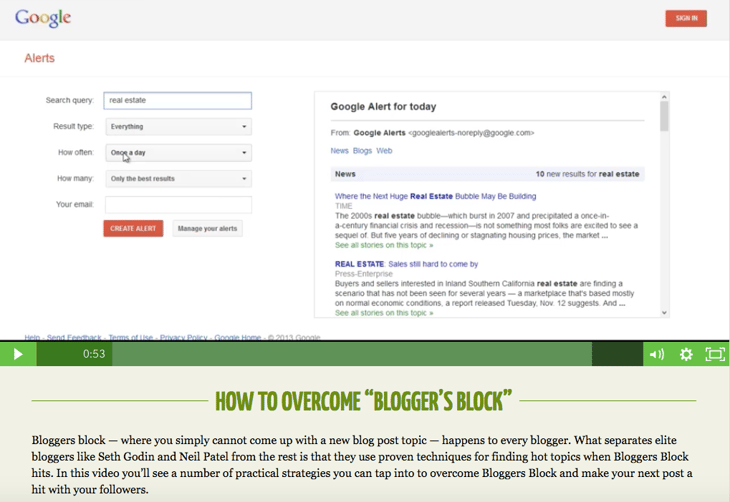
10. Content Marketing
Social Media Marketing Courses
QuickSprout
13. Social Media
14. Paid Advertising
Wordstream
Wordstream is a search engine and social media marketing software company that helps marketers drive the greatest ROI from their paid search and social media campaigns. These free guides and ebooks distill learnings and best practices for users with varying levels of expertise running pay-per-click (PPC) campaigns. Here are some of its topics and offerings:
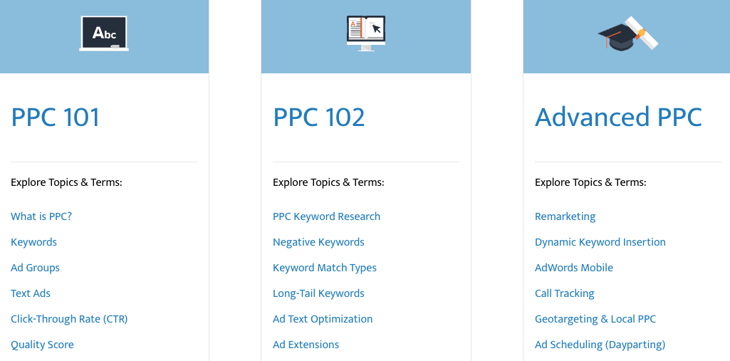
15. Wordstream PPC University
edX
edX is another MOOC provider that features courses offered by top-tier universities, including Harvard University, Massachusetts Institute of Technology, and Boston University. Like Coursera, classes are taught online and start at specific times throughout the year. Here’s a class we think you’ll find valuable:
16. Social Media Marketing
ALISON
ALISON offers free online classes in various professional skills users can take at their own pace. In the Diploma in Social Media Marketing course below, students can get into the nitty-gritty and big picture views of different skills of different topics — just check out one of the many modules:
17. Diploma in Social Media Marketing
Hootsuite
Hootsuite is a social media management platform that offers free trainings (plus a paid certification course) to help marketers beef up their social media skill set. Hootsuite Academy offers courses at varying skill levels and features video lessons and step-by-step breakdowns of how to use different software.
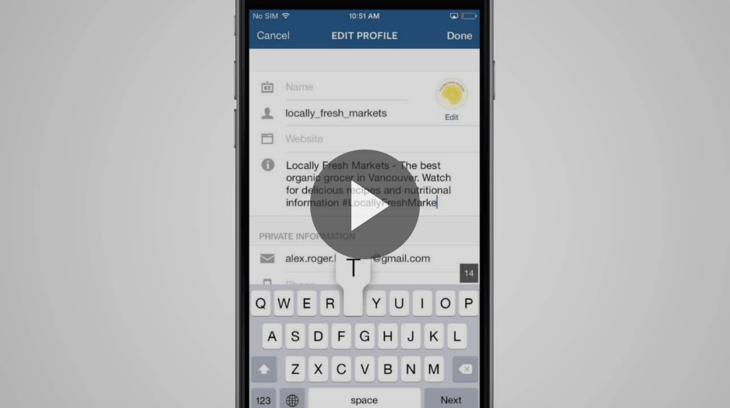
18. Social Marketing Training
At this point, you probably already know what Facebook is and what it does. What you might not know? It has a training and certification program. Facebook Blueprint offers self-paced and live e-learning courses for marketers seeking to grow their organizations using Facebook. Blueprint offers classes in different languages on how to use Facebook and Instagram — here’s a peek at the course catalog.
19. Facebook Blueprint
quintly
quintly is a social media analytics tool that offers courses through quintly Academy. The self-paced course provides an overview of social media analytics, benchmarking, and goaling using downloadable written materials and video lessons.
20. Social Media Analytics
Buffer
Buffer’s Social Media Week of Webinars isn’t exactly a course — it’s a series of live webinar recordings on YouTube — but the videos are chock-full of current and valuable information for social media marketers from the experts. Topics include Instagram and Facebook marketing and how to do public relations on social media.
21. Social Media Week of Webinars
SEO Marketing Courses
Google is another company you’ve probably heard of before, and its digital marketing course offers a ton of valuable information if you plan to advertise and rank on the search engine. You can even take a Google AdWords certification at the end of the process that helps you beef up your resume (and your Google+ profile).
22. Google Digital Marketing Course
Udemy
23. SEO Training Course by Moz
24. Advanced SEO: Tactics and Strategy
QuickSprout
25. SEO
Other Online Digital Marketing Courses
HubSpot Academy
11. HubSpot Email Marketing Certification
26. HubSpot Growth-Driven Design Certification
QuickSprout
12. Email Marketing
Codeacademy
Codeacademy offers free, interactive coding classes that take you from lesson one to building a fully-functioning website. The courses we’ve highlighted below are just a few of the courses; Codeacademy offers many more, depending on your organization’s needs. Codeacademy classes feature lectures and a workspace in the same browser window so you can see the effect of your work live, as it’s created.
Check it out:
Source: The Next Web
27. Make a Website
28. Learn Javascript
29. Learn Ruby
30. Learn Python
31. Learn HTML & CSS
General Assembly
General Assembly offers live and online paid and free courses for a variety of technical skills and disciplines. General Assembly’s Dash offers a free online coding class that teaches the fundamentals of HTML5, CSS3, and Javascript — watch the course overview below:
32. Learn to Code Awesome Websites
Canva
Canva helps people easily make beautiful images for web design, and Canva Learn offers design courses that are valuable for any kind of storyteller. The Creativity course explores the challenges of constant creation and innovation and how to do it well — with visuals, of course.
33. Creativity