
Welcome to My Blog
Text Case is a simple utility app for text conversion on iOS

I find myself (especially with writing on the web) needing to convert text to match style cases frequently. I often need to change title case to just capitalized or vice versa. Without a little automation, it can be tedious.
Making the Grade: Could HomePod and Siri have a place in the classroom?

Making The Grade is a weekly series from Bradley Chambers covering Apple in education. Bradley has been managing Apple devices in an education environment since 2009. Through his experience deploying and managing 100s of Macs and 100s of iPads, Bradley will highlight ways in which Apple’s products work at scale, stories from the trenches of IT management, and ways Apple could improve its products for students.
When I was at the annual ISTE conference in Chicago a few weeks ago, I saw a few booths built around selling Alexa skills for your school. It got me thinking about what Siri in the classroom might look like (specifically with HomePod). Having pondering it for a bit, I came up with a handful of scenarios.
[Tipos de Animaciones] Cómo Optimizar tu Usabilidad Web
Mucho habrás leído sobre los tips de Usabilidad que puedes utilizar en tus diseños web y landings.
Puedes hacer muchas cosas para optimizar tus páginas. Y no es que un tipo de optimización sea más importante que otro, sino que los pequeños detalles pueden aumentar las CONVERSIONES de tus páginas.
Según un estudio de la Universidad de Stanford, el 46,1% de los usuarios reconoce que se deja llevar por el diseño de una web para confiar o no en la empresa que está consultando. De hecho, entre estas 10 Directrices de Credibilidad en la Red que propone el Laboratorio de Tecnología Persuasiva de Stanford, se encuentra la siguiente:
Hemos detectado que la gente evalúa un sitio web rápidamente solo a partir del diseño visual. Cuando diseñes tu sitio, presta atención a la disposición, la tipografía, las imágenes, los errores de coherencia y más cosas. Por supuesto no todos los sitios adquieren credibilidad por parecerse a IBM. El diseño visual debe ajustarse al propósito del sitio.

Porque aunque las mejoras de experiencia de usuario pueden ser diversas dentro del diseño (colores, estructura, tiempo de carga, tipografías, imágenes…), en este post quiero centrarme en el recurso de las animaciones web.
Las animaciones web y la interacción son dos de las Principales Tendencias Web de 2018.
¿Qué son las Animaciones Web?
Son textos o imágenes que tienen efectos de movimiento. Se emplean, principalmente, como toques de atención visual para que los usuarios se fijen en aquellos contenidos que son importantes:
- Ayudan a centrar la atención del usuario cuando ve destacado lo fundamental
- Sirven para dar relevancia a una frase o apartado del copy que no se pueden perder (botón de compra)
- Contribuyen a otorgar un aspecto profesional a la página (por ejemplo, la iluminación sutil de un botón cuando se pasa el cursor por encima otorga elegancia y confianza)

8 Razones para Utilizar Animaciones en Tus Páginas
#1. Tiempo de carga
Cuando un usuario llega a tu página, dispones de 5 segundos para captar su atención y que no se vaya. El tiempo de carga de las webs -debido muchas veces a la gran cantidad de plugins que utilizamos, a los servidores contratados o a la conexión a Internet del usuario- suele ser uno de los factores determinantes para que los usuarios decidan quedarse en una página o abandonarla.
Con lo que ello supone en la inversión que has hecho para atraerlos…
Pues bien, ¿por qué en vez de dejar la típica página en blanco con el círculo que muestra que se está cargando no muestras de inmediato el contenido que ya se ha cargado?
Y ¿por qué no haces que parte de ese contenido sea dinámico? De esta forma llamarás la atención del usuario mientras “espera” a que terminen de cargarse todos los elementos.
#2. Da dinamismo al Scrolling
Cuando el usuario ve que hay ciertos elementos de la web que se mueven, eso lo incita a hacer scrolling.
Los beneficios del scrolling son 2:
- Aumenta el tiempo de permanencia en la página
- Permite que el usuario descubra nuevo contenido que puede ser de su interés
Si lo utilizas en una página de ventas, sin duda las imágenes y textos en movimiento acercarán al usuario mucho más fácilmente hacia tu oferta.
#3. Destaca contenido: no distraer sino orientar
Puedes utilizar las animaciones para destacar contenido importante que sabes que lo ayudará a tomar una decisión.
Seguro que has visto más de una página web en la que te lanzan lo que se conoce como bump offer en inglés, es decir, una oferta destacada que solo se hace una vez. Normalmente esas ofertas llevan algún tipo de movimiento continuo porque llaman la atención del usuario y hacen que multiplique el valor de la compra en tu landing de ventas o en tu eCommerce.
También se puede utilizar este tip para avanzar cuál es el orden lógico al que te derivará la web.
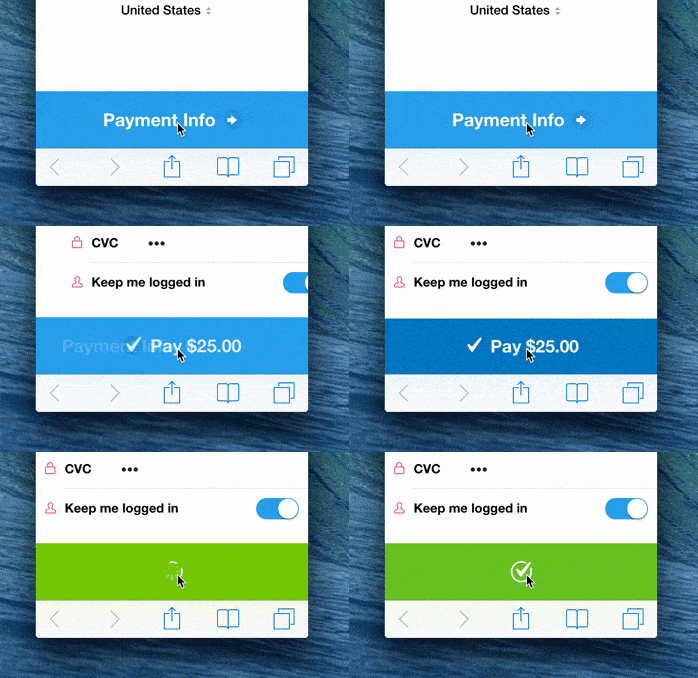
#4. Muestra que la página no se ha quedado congelada
Esto es especialmente importante en el momento del pago, en el carrito de la compra. Pero también para páginas que apuntan hacia una oferta o que quieren destacar
#5. Aumenta Conversiones
Es la consecuencia lógica de todo lo que te he comentado más arriba. Y en realidad funciona porque lo que buscas, una vez has captado la atención del usuario para que permanezca en tu página, es que compre el producto o servicio que propones, o que realice la acción que esperas.
Poner animaciones en las llamadas a la acción hará que sepa dónde tiene que pulsar
O si pones movimiento por ejemplo en un contador de urgencia le harás dar cuenta al usuario de la necesidad de actuar deprisa.
#6. Muestra Confianza y Profesionalidad
Te lo comentaba al principio: los usuarios evalúan una web por su diseño visual.
Un buen diseño, con animaciones sutiles, aumenta la confianza y demuestra profesionalidad.
Fíjate en las webs de Apple: no solo tienen un diseño limpio sino que también introducen dinamismo de forma sutil en determinados elementos.
La buena noticia es que hasta ahora este tipo de optimizaciones te las tenía que hacer un desarrollador porque tenía que tocar código, pero con la siguiente herramienta tú podrás introducirlas muy fácilmente.
¿Qué herramienta puedo utilizar para crear estas animaciones web?
En Socialancer te recomendamos ClickAnimate porque es la herramienta que en cuestión de segundos te permitirá crear animaciones sobre cualquier página web que ya tengas creada.
Además, en su Versión Básica podrás conseguir todo esto por un precio muy bajo:
- Más de 50 animaciones dinámicas de entrada, arrastre y looping que funcionan con cualquier elemento de tu página
- Plugin de ClickAnimate que funciona tanto en Mac como en Windows
- Controles de tiempo, retrasos y engagement
- Píxel de activación en cualquier página que administres
- Funciona con cualquier creador de páginas web o landings – no es necesario que cambies de herramienta (LeadPages, Wix, Clickfunnel, OptimizePress, Shopify…)
- 100% Responsive para móviles
- No es necesario saber de desarrollo ni tocar código
- En la Versión Básica UNLIMITED podrás utilizarlo para tantas páginas web propias como quieras
- Tutoriales en español para instalarlo y utilizarlo
- Con posibilidad de añadir 80 animaciones adicionales y licencia de Agencia con la Versión PRO
Mira este ejemplo y demo en español para que veas cómo funciona:
Como verás, antes estas animaciones eran un tip creativo y original, pero ahora ya se han convertido en algo que los usuarios esperan y que marcan una diferencia entre los sitios web más profesionales y acordes con las tendencias en diseño web y en conversión de aquellos que siguen mostrando elementos estáticos.
¿Utilizas alguna herramienta para animar tus sitios web?
from Socialancer.com https://ift.tt/2NwwdwI
via
iPhone & iPad: How to enable On/Off Labels

A small detail Apple changed in the transition from iOS 6 to iOS 7 and beyond is On/Off Labels. In the old days, Apple enabled On/Off labels by default and now that’s no longer the case with iOS’ modern, more flat approach.
Follow along to learn how to turn them back on…
Hands-on: Shortcuts brings powerful automation tools, with support for Siri to iOS

One of the more exciting things that users are looking forward to in iOS 12 is the new Shortcuts app. While it’s an invite-only beta via TestFlight, we’ve managed to get our hands on it, and this is what we think thus far…
9to5Mac Daily: July 6, 2018

Listen to a recap of the top stories of the day from 9to5Mac. 9to5Mac Daily is available on iTunes and Apple’s Podcasts app, Stitcher, TuneIn, Google Play, or through our dedicated RSS feed for Overcast and other podcast players.
The Ultimate List: 57 Online Local Business Directories
What is a business directory?
A business directory is an online list of businesses within a particular niche, location, or category. One way local businesses can get found by online searchers is through inclusion in business directories.
Today, Google is inserting itself between consumer and local business websites much more often.
You need look no further than Google My Business conversion points, AMP, and featured snippets for proof.
So it makes sense to get your local business information into the places people are already going to find businesses like yours, rather than simply hoping they’ll find you in search results.

Getting your local business’ NAP (Name, Address, Phone number) information listed on directories, online business listing sites, and citation sites helps to improve visibility, but backlinks from these sites can also have a benefit to SEO. Here are a few things to make sure your company listing has in it once you add it to a directory:
- Consistent NAP. If you add or update your business on multiple business listing sites, make sure you’re providing the same company information across each directory.
- A link to your website. Backlinks — also known as inbound links — are crucial to your company website’s domain authority. Consider adding a tracking link at the end of this URL as well, so you can see how much traffic your website specifically gets from the business directories that are linking to it.
- A company description. Make sure you have a detailed description of your business that reflects your organization’s mission, culture, and values.
- Multimedia. Give company searchers a visual taste of your business with a picture or video of your office, your employees, or your daily business operations.
There are plenty of location-specific directories and industry-specific business listing sites to which you can submit your data, but local businesses should start with the big guns and work their way toward the more niche directories.
With that in mind, we’ve put together a list of the biggest and most important business listings sites today (based on Domain Authority gathered from Moz Link Explorer in May 2018). Many of these directories are completely free.
57 Online Local Business Directories & Listings for Local Marketing
- Facebook (Domain Authority = 100)
- Apple Maps (Domain Authority = 100)
- Google My Business (Domain Authority = 100)
- LinkedIn Company Directory (Domain Authority = 98)
- Bing (Domain Authority = 94)
- Yelp (Domain Authority = 94)
- Better Business Bureau (Domain Authority = 93)
- Foursquare (Domain Authority = 92)
- MapQuest (Domain Authority = 92)
- HubSpot (Domain Authority = 91)
- Yellow Pages (Domain Authority = 91)
- Angies List (Domain Authority = 91)
- Yahoo! Local (Domain Authority = 91)
- Manta (Domain Authority = 87)
- Merchant Circle (Domain Authority = 86)
- Super Pages (Domain Authority = 84)
- Yellow Book (Domain Authority = 83)
- Thumbtack (Domain Authority = 82)
- Local.com (Domain Authority = 77)
- Kudzu.com (Domain Authority = 76)
- Hot Frog (Domain Authority = 76)
- Communitywalk.com (Domain Authority = 75)
- Brownbook.net (Domain Authority = 73)
- Tupalo.com (Domain Authority = 72)
- La Cartes (Domain Authority = 68)
- 2findlocal.com (Domain Authority = 67)
- ezlocal.com (Domain Authority = 67)
- ebusinesspages.com (Domain Authority = 67)
- Spoke (Domain Authority = 66)
- Chamberofcommerce.com (Domain Authority = 66)
- City Squares (Domain Authority = 66)
- Cylex USA (Domain Authority = 66)
- yelloyello.com (Domain Authority = 66)
- BOTW (Domain Authority = 65)
- worldweb.com (Domain Authority = 65)
- ibegin.com (Domain Authority = 63)
- Get Fave (Domain Authority = 63)
- Fyple.com (Domain Authority = 63)
- Company.com (Domain Authority = 60)
- Call Up Contact (Domain Authority = 60)
- Finduslocal.com (Domain Authority = 60)
- My Huckleberry (Domain Authority = 59)
- Hub.biz (Domain Authority = 59)
- where2go.com (Domain Authority = 58)
- City Insider (Domain Authority = 58)
- n49.com (Domain Authority = 58)
- My Sheriff (Domain Authority = 57)
- opendi.us (Domain Authority = 56)
- Bizhwy.com (Domain Authority = 55)
- Smartguy.com (Domain Authority = 55)
- Wherezit.com (Domain Authority = 55)
- DiscoverOurTown.com (Domain Authority = 54)
- Nexport.com (Domain Authority = 52)
- USdirectory.com (Domain Authority = 50)
- Wowcity.com (Domain Authority = 49)
- Bizadee (Domain Authority = 48)
- Wand.com (Domain Authority = 47)
Making sure that you have a presence everywhere your potential customers might find you is critical to any local marketing plan. Don’t wait — add your local business to some of these business listings and directories as soon as you can.



iPhone & iPad: How to use guided access to limit use to one app

iOS 12 is bringing new software called Screen Time to help users better understand and manage device use. But what about if you need to restrict an iPad or iPhone to just one app? Whether for your business, organization, or just your kids, follow along for how to use guided access.
9to5Toys Lunch Break: 10.5-inch iPad Pro $150 off, MacBook Pro w/ Touch Bar $1,430, Twelve South HiRise Dock $25, more

Keep up with the best gear and deals on the web by signing up for the 9to5Toys Newsletter. Also, be sure to check us out on: Twitter, RSS Feed, Facebook, Google+ and Safari push notifications.
Listen to the new 9to5Toys Daily Podcast:
9to5Mac Happy Hour 180: Colorful iPhone rumors, A12 chip leaks, Apple Watch Raise to Speak Siri

This week Benjamin and Zac talk about the five iPhone colors leak, new iPad and Mac rumors, new Geekbench results for unreleased chips, using Apple Watch Raise To Speak Siri on watchOS 5, Apple’s plan to rebuild its mapping data in Apple Maps, and Shortcuts making a sneak peek for iOS 12 beta.
9to5Mac Happy Hour is available on iTunes and Apple’s Podcasts app, Stitcher, TuneIn, Google Play Music, or through our dedicated RSS feed for Overcast and other podcast players.
Sonos files for $100M IPO as it seeks to stem losses in face of growing competition

Poll: Which of the rumored new iPhone colors appeals to you most?

It was reported yesterday that this year’s iPhones will come in a range of new colors, with the ‘iPhone X Plus’ model expected to be available in gold in addition to the silver/white and space gray of the existing iPhone X.
More interestingly, though, Ming-Chi Kuo suggests that the cheaper LCD model will be offered in a range of five colors …
Newton launches recap feature to remind you of email you missed

Net neutrality returning to California; new bills ‘strong and enforceable’

Net neutrality protection looks set to return to California after nationwide rules were repealed by the Trump administration in December of last year …
Microsoft planning iOS app for its Movies & TV service; joining Movies Anywhere

Playground mode in Fortnite being switched off on July 12; new version later

If you haven’t yet tried the best-selling iOS game Fortnite, you have until July 12 to take advantage of a special practice mode, known as Playground …
Scooter-Sharing Is a Big Deal. There’s Just One Problem: No One’s Heard of It
Everything old is new again.
That’s so often the case with fashion, movies, and other key elements of pop culture. And now, it’s true of the modes of transportation we use to get around — in some cities, anyway.
When I was in San Francisco in April, it seemed that — in nearly an instant — everyone was talking about electric scooters and the new system of sharing them: scooter-sharing.
My fellow tech reporters were tweeting jokes about their popularity. Abandoned, unreturned scooters were strewn about sidewalks throughout the city, many residents still trying to figure out how they ended up there, or what purpose they even served.
Nevertheless, this mode of transportation — which many of us haven’t considered since before we had driver’s licenses — has been on the minds of Silicon Valley professionals. Among them are investors, who are leading to the valuation of some of the companies behind electric scooters to reach the billions.
But if you haven’t heard about this new transportation trend — despite its popularity — surely, you’re not alone. (That’s what our research shows, anyway.) Allow us to enlighten you, and figure out if (or how) scooter-sharing will go mainstream.
Will Scooter-Sharing Be the Next Uber? Maybe, Once People Hear of It
What Is Scooter-Sharing?
The concept of scooter-sharing is comparable to the models of Uber, Zipcar, or city bike rental programs. With scooter-sharing, electric scooters are available to rent for short-term periods, and some of the companies behind them — like Lime — offer similar systems for traditional bicycle rentals.
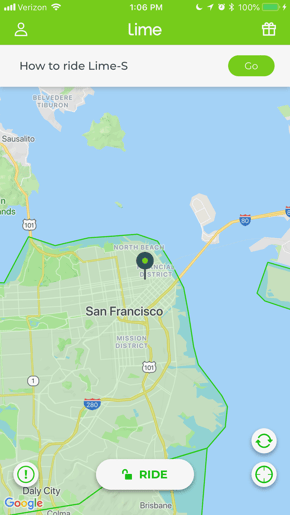
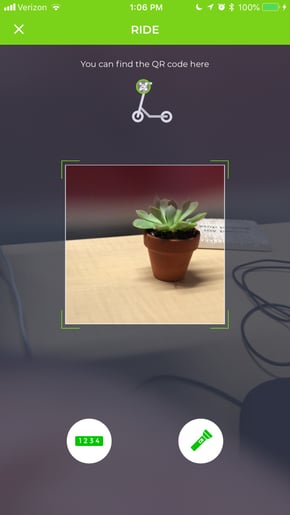
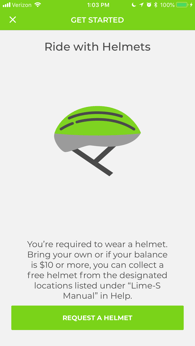
Equally similar to ride-sharing systems like Uber and Lyft, most scooter-sharing also requires an app through which users can unlock a scooter for a ride by scanning a QR code on the handles. Here’s what it looks like on Lime (since Lime-S, its scooter-sharing service, isn’t available in Boston yet, I was obligated to pretend-scan a plant on my desk.)
Scooter-sharing companies, at least in San Francisco, are currently stuck in what Megan Rose Dickey of TechCrunch calls “a bit of a legal gray area” — they aren’t fully regulated, though they’ve faced issues in cities like Indianapolis and Honolulu, and the San Francisco Municipal Transportation Agency is looking to create some sort of legislation that would formalize how these companies operate within the city.
Some companies appear to have rules, however, such as requiring a helmet or a valid driver’s license to operate the scooter, the latter of which is a traffic law. (When I downloaded both Lime and Bird, I wasn’t asked to provide proof of a valid driver’s license, though I also didn’t get to the point of fully unlocking a scooter.)
Bird asks users to bring their own helmets, while Lime provides the option to purchase one from the company — though, again, it’s unclear how either verifies that the rider is following that guideline.


The (Un)Awareness of Scooter-Sharing
Several arguments have been made in favor of scooter-sharing permeating the market. It’s been advertised as an alternative to automobile use, as Lime’s own data indicates that 60% of users said their Lime-S ride replaced a trip that would have otherwise been by car — personal, rideshare, or taxi.
And while scooter-sharing’s relationship with public transportation is up for debate, it appears as though this newer mode of transportation might complement bus or subway systems. That same data from Lime also indicates 40% of users got to or from public transit stations on one of its scooters.
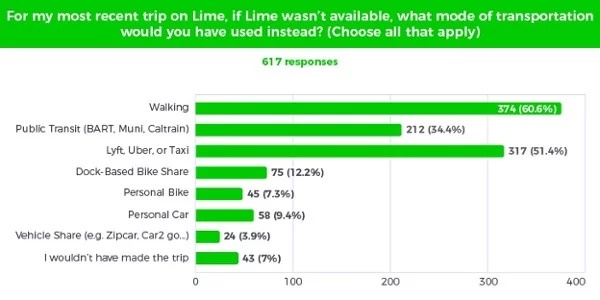
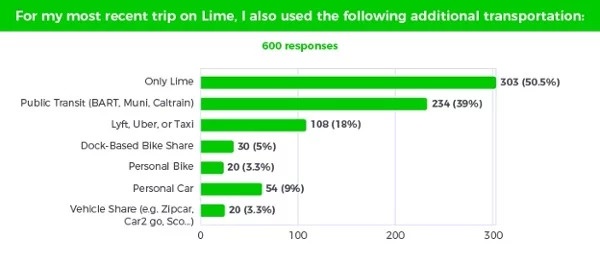
Source: Lime
It’s worth mentioning that Lime’s survey sample was 7,000 scooter riders in San Francisco — for context, that’s about .08% of the city’s population, which has placed a market cap of 1,250 Lime-S scooters (which 93.8% of the company’s survey respondents said was too few).
But outside of this tech-centric metropolis, what do people think of scooter-sharing? According to our data, most haven’t really heard of it.
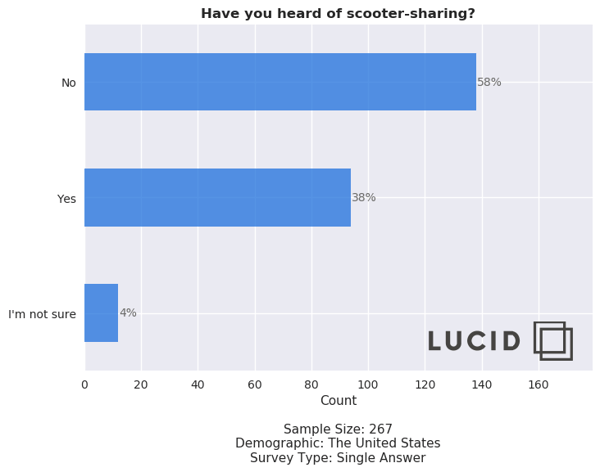
This data raises the question: Can scooter-sharing go mainstream, and if it can, how will it get there?
The Sustainability of Scooter-Sharing
Here’s the thing about ride-sharing systems that use traditional automobiles: They’re complicated.
Lyft, for instance, has communicated an intention of reducing car ownership overall by making its services more widespread. That can have several implications for the environment, city planning, aging populations, and others who drive less for a number of reasons.
But Christina Bonnington of Slate points out a bit of a contraction there: Although “250,000 Lyft users abandoned vehicle ownership in favor of ride-sharing, and half of its users reported driving less frequently now … the company put 520,000 additional drivers on the streets” in 2017.
How good that is for the environment is up for debate.
That’s where the impact of bike- and scooter-sharing programs come in. The scooters run on battery power, eliminating any fossil fuel emissions. As for bicycles — well, they’ve been known as one of the eco-friendliest and healthiest modes of transportation for years.
The same could soon be said of traveling by scooter. Lime, for its part, reports that more than 250,000 trips have been taken on its scooters since its San Francisco launch, which translates to an “offset in airborne pollutants … equivalent to 280,389 lbs CO2 saved.”
And while it might not be a vigorous cardiovascular workout, it could be argued that it’s still healthier than a mode of transportation where the commuter is largely sitting — whether that’s in a car, bus, or subway train.
But just as many emerging transportation trends before it — ride-sharing and autonomous vehicles (the second of which is still in it earliest days) — there are safety concerns to consider alongside the benefits. Scooter riders still need to share the road with cars (riding on sidewalks is discouraged), and as I mentioned earlier, the enforcement of the helmet requirement is ambiguous.
If I had to predict scooter-sharing’s viability, I would specifically point out how, historically, transportation and related safety concerns have evolved. Automobiles, for example, didn’t always have seatbelts. Once upon a time, helmet laws for traditional bike riders didn’t exist. And as for ride-sharing, we’re watching it continue to iron out its kinks in real time.
But have a look at the progression of user numbers within the ride-sharing industry since 2016 — and where it’s expected to go by 2022.
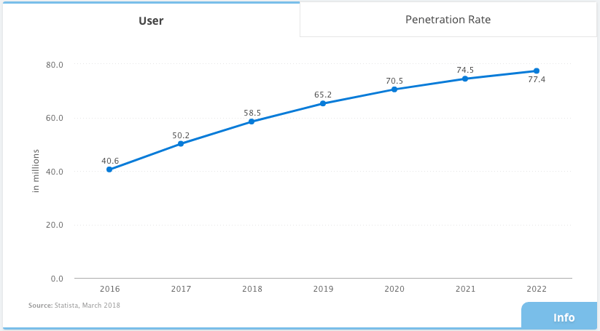
Source: Statisa
When Uber first emerged in 2009, it was nearly unheard of — especially on the east coast. There were few drivers. The idea seemed like a radical novelty. And getting a ride took, if I remember correctly, at least 20 minutes before the car arrived.
At present, scooter-sharing appears to be at a similar point. There appears to be some lack of awareness around it, as well as accessibility — the service is in its earliest stages and is only available in a limited number of cities.
Despite this lack of awareness, investors have taken note.
Take Lime, for instance, which recently received a direct investment from Alphabet (Google’s parent company) — which is part of a bigger $300 million funding round. That round also includes GV — Alphabet’s investment arm — which was also an earlier investor in Uber.
Are we seeing a pattern yet?
Whether good or bad, the concept of scooter-sharing raises eyebrows — and could be here to stay. Let’s watch, and see where this new, niche ride takes us.

Major music distributor says Apple Music now has more US paying subscribers than Spotify

Music industry sources predicted back in February that Apple Music would overtake Spotify in US subscribers this summer, and a major music distributor says that this has now happened.
Both services are said to have more than 20M US subscribers, with Apple Music said to be ‘a hair ahead’ …