
Welcome to My Blog
How to Get Your Boss to Actually Listen to You
Bosses don’t know everything. Even the most empathetic leaders need feedback to understand the specific challenges their employees face. Unfortunately, plenty of workers — especially those new to the workforce — don’t feel safe being vocal. When they have ideas to contribute, they hesitate to share them; after all, they don’t want to risk potential repercussions.
Ultimately, this environment leads to erosion of communication between team members and even entire companies. People assume their suggestions won’t be met by someone who appreciates their feedback, so concerns remain unspoken. At the same time, each unnoted issue can cost businesses $7,500 per incident, on average. Over time, a human disconnect and financial draining system develops, creating a gap that grows larger each year. The only way to bridge the chasm if you’re not a top dog? Speak up.
Not surprisingly, workers seldom take that route. A VitalSmarts study found that only 1 percent of respondents were willing to break the mold; roughly three out of 10 cited a negative organization as the reason for their silence. Anyone who’s seen a colleague punished for being honest knows how quickly open dialogue can shut down; thus, it can be tough to become the turtle willing to stick its neck out.
Ironically, this is exactly the reason you need to take control of the situation and be the one to buck the “silent treatment.” Despite surveys, open-door policies, one-on-one meetings, brainstorming sessions, and other planned events, leaders depend on the voices of proactive, loyal employees — even if they don’t realize it. No company succeeds if its people stop managing up and regularly sharing ideas; talented performers have jumped ship for far less important reasons.
For instance, take a lesson from our company’s business development manager: Like an assertive jet pilot, he consistently keeps himself on my radar. Together, we’ve discussed ways to make our conversations more effective so they focus on productivity. Without his willingness to tell me what I don’t know, our organization would suffer.
Learning to ‘Manage Up’
Whether you’re an extrovert, an introvert, or just someone who’s tired of (and stressed by) holding everything in, you owe it to yourself and your company to find your voice. By following a few guidelines, you can confidently bring up issues with your supervisor — and feel better about your job altogether — without losing sleep:
1. Ready to complain? Take a different tactic.
You might have a list of criticisms or grievances; that’s understandable. However, before you blow up in your meeting, plan to stay in control. Clarify each pain point ahead of time by writing it down. Often, employees lump natural job stressors with programmatic or organizational issues. Divvy them up, and only speak of the latter.
2. Articulate your concerns in a solution-oriented way.
Forget the idea of merely bringing issues to the table. Go a step further and offer solutions, too. Don’t assume your role is to dump concerns onto your corporate leaders and walk away. Instead, have the poise to lean on your expertise and provide solutions. Not only will this show your self-assurance, but it will also help your employer. When researchers studied a restaurant chain in which leadership actively listened to managers and implemented their suggestions, they discovered a 32 percent decrease in turnover and savings of no less than $1.6 million.
3. Commiserate sparingly with peers.
Everyone knows the Negative Neds or Nellies in the office. Their pessimism spreads like cancer, killing productivity and morale. And their professional reputation? Forget it. If you’re going to become a voice to upper management, temper your desire to vent all the time. Although griping makes sense from time to time — and can even be productive under the right circumstances — it doesn’t solve anything. Rather than whine incessantly, allow yourself a bit of kvetching and then move on to developing a viable result.
4. Leverage anonymous feedback.
If you’re hesitant to reveal your identity by marching into your supervisor’s domain, you have a less direct way to make yourself heard. Most companies offer a suggestion box, allowing you to provide the same information you would face to face in written form. You can also write a review on Glassdoor to give your feedback anonymously. Although it’s not as productive as having a direct conversation, you’ll still have a say. Be sure to avoid anger with your words; write concisely and stick to facts for optimum results.
Yes, it’s tough to stand out when others hold their tongues; still, saying nothing will only dampen your business’s effectiveness and keep you from achieving your own objectives. Take charge of your career by moving out of your comfort zone. Your co-workers — and boss — might thank you for your candor.
This post originally appeared on Glassdoor, and has been republished with permission.

PSA: Don’t buy a new Wi-Fi router without checking for WPA3 security

If you’re in the market for a new wireless router, you’d be well advised to look out for models which support a new security standard. After relying on WPA2 for security for more than a decade, the Wi-Fi Alliance has just begun certifying products that use its replacement: WPA3 …
26 Tools and Apps for Social Media Marketers
Wondering how to improve the visual and written content you share on social media? Want a list of tools to help? In this article, you’ll find 26 helpful tools and apps from the Social Media Marketing Podcast’s Discovery of the Week. #1: intoLive intoLive is a cool iOS app for creating interactive social media videos. […]
The post 26 Tools and Apps for Social Media Marketers appeared first on .
from https://ift.tt/2KkQcQt
via socialmediaexaminer
Flexible Schedules: The Good, Bad, & the Surprising
There’s plenty of science to suggest flexible work schedules are critical for happier, more productive employees, and a more successful company overall.
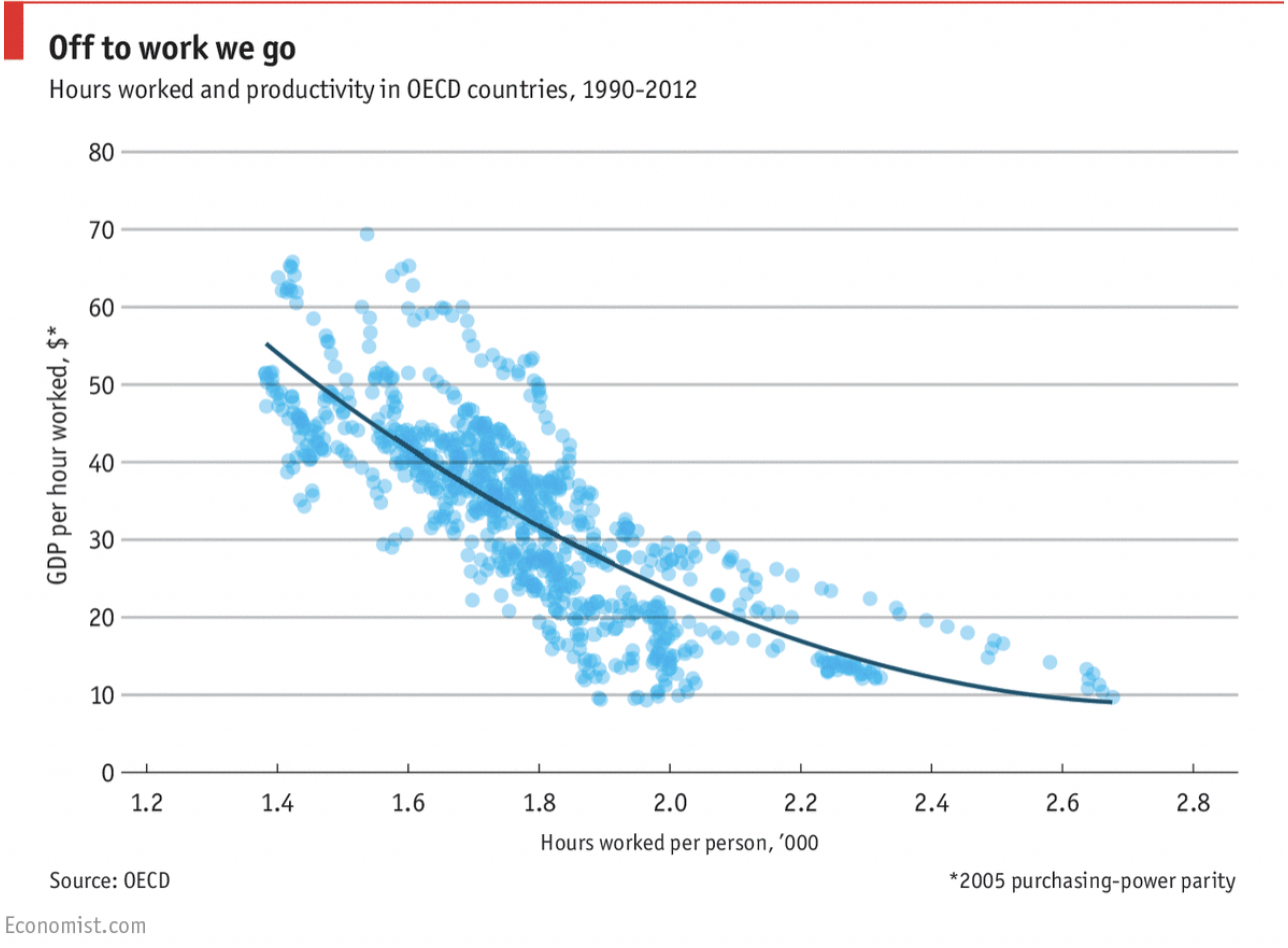
For instance, take a look at this graph from The Economist, which shows that working fewer hours correlates with higher levels of productivity in the form of increased GDP (gross domestic product). I guess there’s something to be said for the old “work hard, play hard” motto.
Additionally, Jabra, a Denmark-based electronics company, found that, in 2018, four times more employees believe working from home to be the most productive option, compared to people’s perceptions in 2015. In recent years, more people prefer to work from home and believe it to be more productive than working in an office.
But let’s put the data aside for a second. I’m willing to bet we’ve all had those afternoons when we’ve felt entirely unproductive, but still sat at our desks until five p.m. anyway just to clock in the hours.
Or, we’ve wished we could have the mornings free to run errands and spend time with family, but a traditional work schedule doesn’t leave us the option to meet those demands.
Ultimately, we’ve all been in situations where our rigid work schedule has been a hinderance to our productivity in the office, and our priorities outside of it. A flexible work schedule could allow you to work when you’re most productive, and give you the autonomy you need to create an ideal work-life balance, however that looks to you.
There are pros and cons to flexible schedules, just like there are pros and cons to a rigid nine-to-five job. But, as the Jabra study indicates, flexible schedules are becoming more typical nowadays, so we’ve compiled a list of everything good, bad, and surprising about implementing flexible work hours at your office.
What is a flexible work schedule?
A flexible work schedule allows employees a level of autonomy to create their own schedules and find a work-life balance that works for them. Rather than a traditional, 40 hour nine-to-five work week, a flexible schedule allows employees to vary the times they begin and end their work day. There is still structure to a flexible work schedule: employees must work a certain number of hours, or come up with an alternative agreement with their employer regarding office hours verus remote time.
Flexible Schedules: The Good
1. You can adapt your schedule to fit family needs.
If you make your own hours, you can ensure those hours adapt to your family and social life demands. For instance, we have parents at HubSpot who make their hours fit around their children’s daycare schedules: they work early in the morning, take a break in the afternoon to pick up their kids, and then resume work later in the evening. Or perhaps your flex schedule is less rigid than that — maybe you just want time to see your son’s soccer games, or your sister’s graduation, and you need flexibility to manipulate your work schedule without taking time off.
Emily MacIntyre, HubSpot’s Marketing Team Development Manager, agrees that there are pros and cons to flexible schedules in regards to parenting: “There are often in-office events after work that I have to miss out on, because I need to be home. But I get to see my daughter, and spend time with her each night, so it’s a trade-off.”
Ultimately, a flexible schedule can go a long way towards maintaining a healthy work-life balance and protecting important relationships in your life.
2. You can indulge in self-care.
It might sound strange, but having the option to occasionally put your personal needs before work can help you find more joy throughout your day. Plus, in a University of Warwick study, happiness made people approximately 12% more productive. Self-care can be anything from a noon cycling class to finding time to meditate in the park — anything that makes you feel better able to tackle your responsibilities with a clear mind.
3. Your employees can pursue passions outside of work.
Unfortunately, your employee’s passions can’t always fit outside a nine-to-five work schedule. Sometimes that poetry class starts at four, and other times your hiking group leaves at noon on a Friday.
There are a few reasons it’s important to give employees the freedom to pursue other passions. First, passion can encourage innovative ideas. The more well-rounded your employees are, the more likely they are to apply unconventional solutions to your company’s problems. Also, as previously mentioned, happier employees are more productive. And, third, if your employees can find outlets outside of work to pursue their passions, they’re less likely to feel unsatisfied in their current role.
4. Your employees can work whenever they’re most productive.
For me personally, this is the single most important benefit to flexible schedules: I work insanely well in the mornings. On some mornings, it feels like I can finish two-weeks worth of work before noon. But then, around three or four p.m., it becomes a struggle to even write a grocery list. My brain just doesn’t seem to function past that time. On the other hand, one of my coworkers does best when he can come into the office around 10 a.m., and then work, head-down, later into the night.
Tony Schwartz, author of The Way We’re Working Isn’t Working, writes about the importance of working like a sprinter. He says it’s important to work intensely and distraction-free for a period of time, but equally critical to take regular renewal breaks to recover from that intense work period.
Ultimately, your employees aren’t all going to be productive at the exact same time. Flexibility allows them to become better workers — they will get everything accomplished during the hours they want, and they won’t feel burnt out from sitting at their desks during times they are unproductive.
5. Your employees can avoid rush hour.
This might seem trivial, but it’s not — in 2017 in Boston alone, a rush hour commuter wasted approximately two and a half full days out of a year sitting in a car. That’s almost a full 60 wasted hours where they could have been spending time mentally preparing for their day. A truly painful commute could even eventually drive employees to search for companies closer to home or with different hours. An easy way to improve employee satisfaction is to allow commuters the option to avoid traffic by leaving even just thirty minutes later.
One study by McGill University’s Charis Loong and colleagues found that “satisfaction with travel mode is associated with higher odds of feeling energized and being punctual,” and “the strain of the daily commute can negatively impact performance at work.” Unfortunately, a terrible commute can interfere with your employee’s levels of energy and productivity, so it’s important to consider alternative options.
6. You give employees a sense of autonomy.
People like control over their schedules — it enables them to feel fully in charge of their work and personal lives, and makes them feel like their company trusts them. HubSpot’s Culture Code recognizes the importance of autonomy, saying, “Results matter more than the number of hours we work. Results matter more than where we produce them.” And, referring to the Economist graph we mentioned earlier, we can see it’s true — people are more productive even when they work fewer hours, so why not let people choose whichever time they need to commit to deliver the best results?
Siobhán McGinty, a Campaign Marketing Manager in HubSpot’s Dublin office, says her flexible schedule gives her the opportunity to “live my best life. I enjoy getting up at 7 a.m., clearing my emails, enjoying my coffee and getting some work out of the way early on in the day. I also enjoy taking two hours off in the middle of the day to go to the gym, or do yoga, or — if it’s pay day — get a massage.”
7. You can recruit and retain better talent.
Flexible schedules have been shown to increase employee productivity and overall morale. Ultimately, you can use the benefits of a flexible schedule as a selling point for hiring better talent.
The Creative Group surveyed marketing and advertising executives, and found 33% are offered flexible schedules and remote options. Offering flexible schedules is a good way for your company to attract talent and stand out from competitors in the industry, particularly as flex hours and remote work rise in popularity and employees begin to expect it from their next job.
Flexible Schedules: The Bad
We’ve covered seven different ways flexible schedules can benefit both employers and employees. But like any work arrangement, there are also some downsides to consider before committing to becoming a flexible workplace. Here are a few risks associated with flexible schedules.
1. It’s more difficult for you to arrange meetings with your team.
If everyone has different schedules, figuring out everyone’s availability can get tricky — for instance, perhaps you can’t have any nine a.m. meetings because three people on your team don’t arrive until 10 a.m. This gets even harder if your team works around the globe, or if you need to schedule meetings with clients who work the traditional nine-to-five.
2. Lines between work and life blur more drastically.
Maybe you’re working from home and your roommate asks you to go to a cycling class at noon, and suddenly it’s three p.m. and you’ve still got a ton of work to do. Or maybe your kids interrupt meetings and calls with pleas for trips to the pool. Whatever the case, life intervenes more drastically when you’re working flexible hours, particularly if you’re working remote. Plus, if all the people in your life work nine-to-five, they might try to pressure you into plans that are inconvenient for your schedule, since you “make your own schedule anyway.” Drawing boundaries between personal life and work can get difficult.
Besides having a tough time getting into work mode when you’re tempted by your personal life, it’s also often challenging to shut off “work mode” when you can technically work whenever you want. Maybe it’s eight p.m. and you simply can’t relax when your desk, and all those piles of work, is within view. During those instances, it’s important you separate work from the rest of your life as much as possible, even creating a separate office space and closing the door when you leave.
3. You won’t find much structure at home.
If you’re working remote, there’s very little structure. With that freedom to take breaks, you might suddenly find you’re getting very little done. Working remotely often requires more focus and discipline than working in an office. You’ll need to set your own rigid structure and stick to it, or you might risk your performance sliding as you take more TV breaks or spend precious productivity hours folding laundry.
4. It can be difficult to create a bonded team.
If you’ve got a team that works from wherever, whenever, it can be hard to pencil in time to develop organic, authentic relationships between your team members. It just doesn’t happen as naturally as it would if everyone sat beside one another 9 to 5 and digressed into talks about the latest Bachelorette episode. One way to counteract this is to plan fun corporate team-building activities, but you might still need to work with everyone’s flex hours or remote time.
Siobhán McGinty admits remote work in particular can get lonely, so, “to overcome that, I set up virtual “water cooler chats” with people on the team if I have 15-30 mins between meetings. It also helps to maintain rapport.” She also says she “practiced” going remote by initially working from home a few days a week, and eventually working her way up to full-time remote, and admits while rewarding, it’s also difficult.
Flexible Schedules: The Surprising
We’ve explored some pros and cons of a flexible schedule for employees and employers, but there are some additional surprising facts you should know when deciding if flexible schedules is right for you and your company.
1. The more flexible your employees’ schedules are, the longer they’ll work.
If you’re worried about employees taking advantage of flexible hours and working an hour a day before hitting the beach, don’t be — Heejung Chung, a senior lecturer at University of Kent in the UK, conducted research with her colleague Yvonne Lott, and found there’s a tendency for people with more autonomy over their schedules to work longer hours, regardless of level of influence or job type. In fact, “this increase in working hours was greatest when workers had full atonomy over their working hours.”
One explanation for this is known as the gift exchange theory, which is the idea that you’re grateful when your employer gives you a flexible schedule and you see it as a gift, which you feel obligated to repay by working harder and longer. You want to prove you deserve the flexible schedule, so you push yourself to work over eight hours a day.
2. Flex hours make your employees happier — and their children.
A study conducted by the American Sociological Review found workers with flex hours slept better, felt healthier, and were less stressed than their nine-to-five counterparts. Overall, the group with flex hours felt happier than the group with a rigid schedule. But, most surprisingly, as noted by the New York Times, is “the effects even cascaded down to employees’ children, who reported less volatility around their own daily stresses; adolescents saw the quality of their sleep improve.” Happiness is contagious, and so is stress, so it makes sense parents with lower levels of stress and higher levels of happiness were able to spread those emotions to their children.
7. It might be harder to get flexible hours if you’re a woman.
A 2014 experiment by Furman University sociologist Christin Munsch showed 600 participants a transcript of a conversation between an employee asking for flexible hours and an HR representative. Shockingly, when participants assumed it was a man asking for flexible time, almost 70% said they’d be likely or very likely to approve the request, compared to 56% when they believed it was a woman making the request. There are other studies supporting the same hypothesis — that it’s harder for a woman to receive flex time than a man — here.
Munsch speculated the study’s results come from inherent gender biases when it comes to childcare: the participants might’ve felt impressed by a man’s desire to spend more time at home with children, while they might’ve felt a woman should find a better way to balance her home and work obligations. Of course, this varies immensely company to company and even country to country, but it’s important for employers to keep it in mind if they’re in charge of approving flexible work schedules for employees.
So what now?
Ultimately, providing flexible schedules for employees won’t work for every company or every department. For instance, if your employees work in the services industry and often speak both on the phone and in-person with clients, perhaps you need them to maintain a nine-to-five schedule. Hopefully, weighing these pros and cons will help you make the best decision for your team, or even brainstorm alternative ways to combat some of the negative consequences of a traditional work schedule.

Impressive new Apple store in Seattle’s University Village set to open on June 30th

Apple has announced a new retail location in Seattle, Washington’s University Village, an upscale shopping center just north of the University of Washington. The new structure will replace a smaller Apple store located next door in the same plaza. According to Apple, a grand opening is set for 9:30 A.M. on June 30th.
What Is Digital Marketing?
What Is Digital Marketing?
Digital marketing encompasses all marketing efforts that use an electronic device or the internet. Businesses leverage digital channels such as search engines, social media, email, and their websites to connect with current and prospective customers.
With how accessible the internet is today, would you believe me if I told you the number of people who go online every day is still increasing?
It is. In fact, “constant” internet usage among adults increased by 5% in just the last three years, according to Pew Research. And although we say it a lot, the way people shop and buy really has changed along with it — meaning offline marketing isn’t as effective as it used to be.
Marketing has always been about connecting with your audience in the right place and at the right time. Today, that means you need to meet them where they are already spending time: on the internet.
Enter digital marketing — in other words, any form of marketing that exists online.
At HubSpot, we talk a lot about inbound marketing as a really effective way to attract, engage, and delight customers online. But we still get a lot of questions from people all around the world about digital marketing.
A seasoned inbound marketer might say inbound marketing and digital marketing are virtually the same thing, but there are some minor differences. And conversations with marketers and business owners in the U.S., U.K., Asia, Australia, and New Zealand, I’ve learned a lot about how those small differences are being observed across the world.
How Do You Define Digital Marketing?
Digital marketing is defined by the use of numerous digital tactics and channels to connect with customers where they spend much of their time: online. From the website itself to a business’s online branding assets — digital advertising, email marketing, online brochures, and beyond — there’s a spectrum of tactics that fall under the umbrella of “digital marketing.”
Digital Marketing Tactics and Examples
The best digital marketers have a clear picture of how each digital marketing campaign supports their overarching goals. And depending on the goals of their marketing strategy, marketers can support a larger campaign through the free and paid channels at their disposal.
A content marketer, for example, can create a series of blog posts that serve to generate leads from a new ebook the business recently created. The company’s social media marketer might then help promote these blog posts through paid and organic posts on the business’s social media accounts. Perhaps the email marketer creates an email campaign to send those who download the ebook more information on the company. We’ll talk more about these specific digital marketers in a minute.
Here’s a quick rundown of some of the most common digital marketing tactics and the channels involved in each one.
Search Engine Optimization (SEO)
This is the process of optimizing your website to “rank” higher in search engine results pages, thereby increasing the amount of organic (or free) traffic your website receives. The channels that benefit from SEO include:
- Websites.
- Blogs.
- Infographics.
Content Marketing
This term denotes the creation and promotion of content assets for the purpose of generating brand awareness, traffic growth, lead generation, and customers. The channels that can play a part in your content marketing strategy include:
- Blog posts.
- Ebooks and whitepapers.
- Infographics.
- Online brochures and lookbooks.
Want to learn and apply content marketing to your business? Check out HubSpot Academy’s free content marketing training resource page.
Social Media Marketing
This practice promotes your brand and your content on social media channels to increase brand awareness, drive traffic, and generate leads for your business. The channels you can use in social media marketing include:
- Facebook.
- Twitter.
- LinkedIn.
- Instagram.
- Snapchat.
- Pinterest.
- Google+.
Pay-Per-Click (PPC)
PPC is a method of driving traffic to your website by paying a publisher every time your ad is clicked. One of the most common types of PPC is Google AdWords, which allows you to pay for top slots on Google’s search engine results pages at a price “per click” of the links you place. Other channels where you can use PPC include:
- Paid ads on Facebook.
- Promoted Tweets on Twitter.
- Sponsored Messages on LinkedIn.
Affiliate Marketing
This is a type of performance-based advertising where you receive commission for promoting someone else’s products or services on your website. Affiliate marketing channels include:
- Hosting video ads through the YouTube Partner Program.
- Posting affiliate links from your social media accounts.
Native Advertising
Native advertising refers to advertisements that are primarily content-led and featured on a platform alongside other, non-paid content. BuzzFeed-sponsored posts are a good example, but many people also consider social media advertising to be “native” — Facebook advertising and Instagram advertising, for example.
Marketing Automation
Marketing automation refers to the software that serves to automate your basic marketing operations. Many marketing departments can automate repetitive tasks they would otherwise do manually, such as:
- Email newsletters.
- Social media post scheduling.
- Contact list updating.
- Lead-nurturing workflows.
- Campaign tracking and reporting.
Email Marketing
Companies use email marketing as a way of communicating with their audiences. Email is often used to promote content, discounts and events, as well as to direct people toward the business’s website. The types of emails you might send in an email marketing campaign include:
- Blog subscription newsletters.
- Follow-up emails to website visitors who downloaded something.
- Customer welcome emails.
- Holiday promotions to loyalty program members.
- Tips or similar series emails for customer nurturing.
Online PR
Online PR is the practice of securing earned online coverage with digital publications, blogs, and other content-based websites. It’s much like traditional PR, but in the online space. The channels you can use to maximize your PR efforts include:
- Reporter outreach via social media.
- Engaging online reviews of your company.
- Engaging comments on your personal website or blog.
Inbound Marketing
Inbound marketing refers to the “full-funnel” approach to attracting, engaging, and delighting customers using online content. You can use every digital marketing tactic listed above throughout an inbound marketing strategy.
What Does a Digital Marketer Do?
Digital marketers are in charge of driving brand awareness and lead generation through all the digital channels — both free and paid — that are at a company’s disposal. These channels include social media, the company’s own website, search engine rankings, email, display advertising, and the company’s blog.
The digital marketer usually focuses on a different key performance indicator (KPI) for each channel so they can properly measure the company’s performance across each one. A digital marketer who’s in charge of SEO, for example, measures their website’s “organic traffic” — of that traffic coming from website visitors who found a page of the business’s website via a Google search.
Digital marketing is carried out across many marketing roles today. In small companies, one generalist might own many of the digital marketing tactics described above at the same time. In larger companies, these tactics have multiple specialists that each focus on just one or two of the brand’s digital channels.
Here are some examples of these specialists:
SEO Manager
Main KPIs: Organic traffic
In short, SEO managers get the business to rank on Google. Using a variety of approaches to search engine optimization, this person might work directly with content creators to ensure the content they produce performs well on Google — even if the company also posts this content on social media.
Content Marketing Specialist
Main KPIs: Time on page, overall blog traffic, YouTube channel subscribers
Content marketing specialists are the digital content creators. They frequently keep track of the company’s blogging calendar, and come up with a content strategy that includes video as well. These professionals often work with people in other departments to ensure the products and campaigns the business launches are supported with promotional content on each digital channel.
Social Media Manager
Main KPIs: Follows, Impressions, Shares
The role of a social media manager is easy to infer from the title, but which social networks they manage for the company depends on the industry. Above all, social media managers establish a posting schedule for the company’s written and visual content. This employee might also work with the content marketing specialist to develop a strategy for which content to post on which social network.
(Note: Per the KPIs above, “impressions” refers to the number of times a business’s posts appear on the newsfeed of a user.)
Marketing Automation Coordinator
Main KPIs: Email open rate, campaign click-through rate, lead-generation (conversion) rate
The marketing automation coordinator helps choose and manage the software that allows the whole marketing team to understand their customers’ behavior and measure the growth of their business. Because many of the marketing operations described above might be executed separately from one another, it’s important for there to be someone who can group these digital activities into individual campaigns and track each campaign’s performance.
Inbound Marketing vs. Digital Marketing: Which Is It?
On the surface, the two seem similar: Both occur primarily online, and both focus on creating digital content for people to consume. So what’s the difference?
The term “digital marketing” doesn’t differentiate between push and pull marketing tactics (or what we might now refer to as ‘inbound’ and ‘outbound’ methods). Both can still fall under the umbrella of digital marketing.
Digital outbound tactics aim to put a marketing message directly in front of as many people as possible in the online space — regardless of whether it’s relevant or welcomed. For example, the garish banner ads you see at the top of many websites try to push a product or promotion onto people who aren’t necessarily ready to receive it.
On the other hand, marketers who employ digital inbound tactics use online content to attract their target customers onto their websites by providing assets that are helpful to them. One of the simplest yet most powerful inbound digital marketing assets is a blog, which allows your website to capitalize on the terms which your ideal customers are searching for.
Ultimately, inbound marketing is a methodology that uses digital marketing assets to attract, engage, and delight customers online. Digital marketing, on the other hand, is simply an umbrella term to describe online marketing tactics of any kind, regardless of whether they’re considered inbound or outbound.
Does Digital Marketing Work for All Businesses?
Digital marketing can work for any business in any industry. Regardless of what your company sells, digital marketing still involves building out buyer personas to identify your audience’s needs, and creating valuable online content. However, that’s not to say all businesses should implement a digital marketing strategy in the same way.
B2B Digital Marketing
If your company is business-to-business (B2B), your digital marketing efforts are likely to be centered around online lead generation, with the end goal being for someone to speak to a salesperson. For that reason, the role of your marketing strategy is to attract and convert the highest quality leads for your salespeople via your website and supporting digital channels.
Beyond your website, you’ll probably choose to focus your efforts on business-focused channels like LinkedIn where your demographic is spending their time online.
B2C Digital Marketing
If your company is business-to-consumer (B2C), depending on the price point of your products, it’s likely that the goal of your digital marketing efforts is to attract people to your website and have them become customers without ever needing to speak to a salesperson.
For that reason, you’re probably less likely to focus on ‘leads’ in their traditional sense, and more likely to focus on building an accelerated buyer’s journey, from the moment someone lands on your website, to the moment that they make a purchase. This will often mean your product features in your content higher up in the marketing funnel than it might for a B2B business, and you might need to use stronger calls-to-action (CTAs).
For B2C companies, channels like Instagram and Pinterest can often be more valuable than business-focused platforms LinkedIn.
What Are the Benefits of Digital Marketing?
Unlike most offline marketing efforts, digital marketing allows marketers to see accurate results in real time. If you’ve ever put an advert in a newspaper, you’ll know how difficult it is to estimate how many people actually flipped to that page and paid attention to your ad. There’s no surefire way to know if that ad was responsible for any sales at all.
On the other hand, with digital marketing, you can measure the ROI of pretty much any aspect of your marketing efforts.
Here are some examples:
Website Traffic
With digital marketing, you can see the exact number of people who have viewed your website’s homepage in real time by using digital analytics software, available in marketing platforms like HubSpot.
You can also see how many pages they visited, what device they were using, and where they came from, amongst other digital analytics data.
This intelligence helps you to prioritize which marketing channels to spend more or less time on, based on the number of people those channels are driving to your website. For example, if only 10% of your traffic is coming from organic search, you know that you probably need to spend some time on SEO to increase that percentage.
With offline marketing, it’s very difficult to tell how people are interacting with your brand before they have an interaction with a salesperson or make a purchase. With digital marketing, you can identify trends and patterns in people’s behavior before they’ve reached the final stage in their buyer’s journey, meaning you can make more informed decisions about how to attract them to your website right at the top of the marketing funnel.
Content Performance and Lead Generation
Imagine you’ve created a product brochure and posted it through people’s letterboxes — that brochure is a form of content, albeit offline. The problem is that you have no idea how many people opened your brochure or how many people threw it straight into the trash.
Now imagine you had that brochure on your website instead. You can measure exactly how many people viewed the page where it’s hosted, and you can collect the contact details of those who download it by using forms. Not only can you measure how many people are engaging with your content, but you’re also generating qualified leads when people download it.
Attribution Modeling
An effective digital marketing strategy combined with the right tools and technologies allows you to trace all of your sales back to a customer’s first digital touchpoint with your business.
We call this attribution modeling, and it allows you to identify trends in the way people research and buy your product, helping you to make more informed decisions about what parts of your marketing strategy deserve more attention, and what parts of your sales cycle need refining.
Connecting the dots between marketing and sales is hugely important — according to Aberdeen Group, companies with strong sales and marketing alignment achieve a 20% annual growth rate, compared to a 4% decline in revenue for companies with poor alignment. If you can improve your customer’s’ journey through the buying cycle by using digital technologies, then it’s likely to reflect positively on your business’s bottom line.
What Types of Digital Content Should I Create?
The kind of content you create depends on your audience’s needs at different stages in the buyer’s journey. You should start by creating buyer personas (use these free templates, or try makemypersona.com) to identify what your audience’s goals and challenges are in relation to your business. On a basic level, your online content should aim to help them meet these goals, and overcome their challenges.
Then, you’ll need to think about when they’re most likely to be ready to consume this content in relation to what stage they’re at in their buyer’s journey. We call this content mapping.
With content mapping, the goal is to target content according to:
- The characteristics of the person who will be consuming it (that’s where buyer personas come in).
- How close that person is to making a purchase (i.e., their lifecycle stage).
In terms of the format of your content, there are a lot of different things to try. Here are some options we’d recommend using at each stage of the buyer’s journey:
Awareness Stage
- Blog posts. Great for increasing your organic traffic when paired with a strong SEO and keyword strategy.
- Infographics. Very shareable, meaning they increase your chances of being found via social media when others share your content. (Check out these free infographic templates to get you started.)
- Short videos. Again, these are very shareable and can help your brand get found by new audiences by hosting them on platforms like YouTube.
Consideration Stage
- Ebooks. Great for lead generation as they’re generally more comprehensive than a blog post or infographic, meaning someone is more likely to exchange their contact information to receive it.
- Research reports. Again, this is a high value content piece which is great for lead generation. Research reports and new data for your industry can also work for the awareness stage though, as they’re often picked-up by the media or industry press.
- Webinars. As they’re a more detailed, interactive form of video content, webinars are an effective consideration stage content format as they offer more comprehensive content than a blog post or short video.
Decision Stage
- Case studies. Having detailed case studies on your website can be an effective form of content for those who are ready to make a purchasing decision, as it helps you positively influence their decision.
- Testimonials. If case studies aren’t a good fit for your business, having short testimonials around your website is a good alternative. For B2C brands, think of testimonials a little more loosely. If you’re a clothing brand, these might take the form of photos of how other people styled a shirt or dress, pulled from a branded hashtag where people can contribute.
How Long Will It Take to See Results From My Content?
With digital marketing, it can often feel like you’re able to see results much faster than you might with offline marketing due to the fact it’s easier to measure ROI. However, it ultimately depends on the scale and effectiveness of your digital marketing strategy.
If you spend time building comprehensive buyer personas to identify the needs of your audience, and you focus on creating quality online content to attract and convert them, then you’re likely to see strong results within the first six months.
If paid advertising is part of your digital strategy, then the results come even quicker — but it’s recommended to focus on building your organic (or ‘free’) reach using content, SEO, and social media for long-term, sustainable success.
online advertising and purchasing email lists, there is undoubtedly some expense. What it costs comes down to what kind of visibility you want to receive as a result of the advertising.
For example, to implement PPC using Google AdWords, you’ll bid against other companies in your industry to appear at the top of Google’s search results for keywords associated with your business. Depending on the competitiveness of the keyword, this can be reasonably affordable, or extremely expensive, which is why it’s a good idea to focus building your organic reach, too.
How Does Mobile Marketing Fit Into My Digital Marketing Strategy?
Another key component of digital marketing is mobile marketing. In fact, smartphone usage as a whole accounts for 69% of time spent consuming digital media in the U.S., while desktop-based digital media consumption makes up less than half — and the U.S. still isn’t mobile’s biggest fan compared to other countries.
This means it’s essential to optimize your digital ads, web pages, social media images, and other digital assets for mobile devices. If your company has a mobile app that enables users to engage with your brand or shop your products, your app falls under the digital marketing umbrella, too.
Those engaging with your company online via mobile devices need to have the same positive experience as they would on desktop. This means implementing a mobile-friendly or responsive website design to make browsing user-friendly for those on mobile devices. It might also mean reducing the length of your lead generation forms to create a hassle-free experience for people downloading your content on-the-go. As for your social media images, it’s important to always have a mobile user in mind when creating them as image dimensions are smaller on mobile devices, meaning text can be cut-off.
There are lots of ways you can optimize your digital marketing assets for mobile users, and when implementing any digital marketing strategy, it’s hugely important to consider how the experience will translate on mobile devices. By ensuring this is always front-of-mind, you’ll be creating digital experiences that work for your audience, and consequently achieve the results you’re hoping for.
I’m Ready to Try Digital Marketing. Now What?
If you’re already doing digital marketing, it’s likely that you’re at least reaching some segments of your audience online. No doubt you can think of some areas of your strategy that could use a little improvement, though.
That’s why we created Why Digital Marketing? The Essential Guide to Marketing Your Brand Online — a step-by-step guide to help you build a digital marketing strategy that’s truly effective, whether you’re a complete beginner or have a little more experience. You can download it for free here.

Instagram begins rolling out redesigned Explore tab with topic channels

Instagram is starting to push a redesigned Explore tab to users. This change was originally announced at Facebook’s F8 event last month, but is now making its way to users.
Tim Cook defends controversial focus on social issues, says Apple sticks to ‘policy not politics’

As announced earlier today, Tim Cook sat down at Fortune’s CEO Initiative event to talk with Fortune executive editor Adam Lashinsky. Cook addressed Apple’s controversial involvement in social issues, the company’s focus on privacy, and much more.
What do you think of the new features in iOS 12 so far? [Poll]

This evening, Apple officially released the first public beta of iOS 12 after three weeks of developer testing. This means anyone can download and install the latest iOS version on their iPhone and iPad for free, though it’s still in beta form and does come with some bugs and annoyances.
Are you running the iOS 12 beta (developer or public version) on your iPhone or iPad? If so, what do you think so far?
macOS Mojave: How to create Desktop Stacks

Mac users have been clamoring for Apple to get serious about its OS over the last several years and in macOS Mojave, the company has added a boatload of new features that will for sure make most users happy.
One of those features is Stacks for the Desktop, where macOS will automatically sort all of your items into neat stacks, being sorted by file type.
How to install the iOS 12 public beta on your eligible iPhone, iPad, or iPod touch

As we recently noted, the iOS 12 public beta has been released for those interested in trying iOS 12 before it officially launches later this fall. In other words, you don’t have to be a registered Apple developer in order to install iOS 12 prior to its public debut.
The public beta process is for anyone wishing to take the software for an early test drive. In this hands-on walkthrough, we’ll guide you through the iOS 12 public beta install process step-by-step for your eligible iPhone, iPad, or iPod touch. more…
Tim Cook to talk leadership & ‘tackling social problems’ at Fortune Initiative event this evening

First tvOS 12 public beta for Apple TV now available

Apple has released the first tvOS 12 public beta for non-developers to test on Apple TV. The first tvOS 12 public beta includes support for Dolby Atmos spatial sound and swiping between Aerial screensavers.
Apple releases first iOS 12 public beta for iPhone and iPad

Apple has released the first iOS 12 public beta for iPhone and iPad — which means more Memoji for the iPhone X users! This allows users who are not registered developers to test pre-release versions of iOS with new features for free (and a few bugs).
Mac: How to delete apps

Whether you’re new to Mac or just haven’t deleted apps on macOS before, the process is a little different than on iPhone and iPad. Follow along for how to easily delete apps on a Mac.
9to5Mac Daily 099: June 25, 2018

Listen to a recap of the top stories of the day from 9to5Mac. 9to5Mac Daily is available on iTunes and Apple’s Podcasts app, Stitcher, TuneIn, Google Play, or through our dedicated RSS feed for Overcast and other podcast players.
Sonnet discounts its Apple-approved eGPU chassis, now priced from $199

Sonnet has lowered the prices of its flagship eGFX Breakaway Box eGPU enclosures, including its high-end model with 650W PSU. The price change comes not long after Apple enabled official eGPU support in macOS, and as more companies point their attention towards the Mac. We’re already seeing this price drop in effect at Amazon, where the official Sonnet store has it marked at the new $199 price tag. That’s down $70 from the original price and the best we’ve tracked there. Rated 4/5 stars. More details below. more…
5 favorite MacBook Pro accessories for power users

Despite its ongoing keyboard issues, the MacBook Pro is still one of the best laptops available, and with the right accessories, it can be especially handy for power users. Here’s a look at my top 5 power user-oriented accessories that I often pair with my MacBook Pro. more…