
Welcome to My Blog
CMV: Techies will love Siri Shortcuts, but most normal people will never use

Apple was the first company to bring a voice-driven intelligent assistant to the masses. Since then, however, it’s been overtaken in capabilities by both Google and Amazon.
As I’ve written before, that’s not coincidence. Google collects and analyzes huge volumes of personal data to help make its intelligent assistant as powerful as possible. Amazon lets anyone create a ‘recipe’ which any Echo owner can use. Apple, in contrast, chooses to limit the amount of personal data it collects and uses, and tightly controls access to Siri by third-part companies.
That approach has arguably become a strong selling-point at a time when the privacy of user data has become headline news in the mainstream press. All the same, many Siri users do find it frustrating that Apple’s AI – the one that once led the market – is now the dumbest kid on the block …
iOS 12 speed test: Here’s how fast iOS 12 runs on older devices

One of the key features for iOS 12 is performance. Apple said it has paid particular attention to its older devices, which is good news as iOS 12 runs on every iPhone and iPad that could run iOS 11. iOS 11 gained a reputation for being buggy and sluggish, and the scuttlebutt over Apple ‘slowing down’ people’s iPhones from #BatteryGate didn’t help that public perception.
Apple is looking to tackle that head on in iOS 12 with performance gains system-wide, with quicker app launches, snappier scrolling and more. We are already seeing iOS speed test videos flood the web, with promising results …
Poll: What were your favorite iOS 12 announcements?

As expected, yesterday’s WWDC keynote was all about software. The much-predicted focus on software stability and reliability appeared to be broadly correct – Apple kicking off things by talking about both performance increases, including those on older devices – there were also a number of new features.
Below we’ve summarised the main new iOS 12 features announced, and are asking you to pick your top three …
The Top 58 Most Popular Hashtags to Get Likes and Retweets on Twitter
Recently, we analyzed millions of tweets and found that some Twitter hashtags correlate with a 1,065% increase in engagement — clearly, hashtags still matter in 2018.
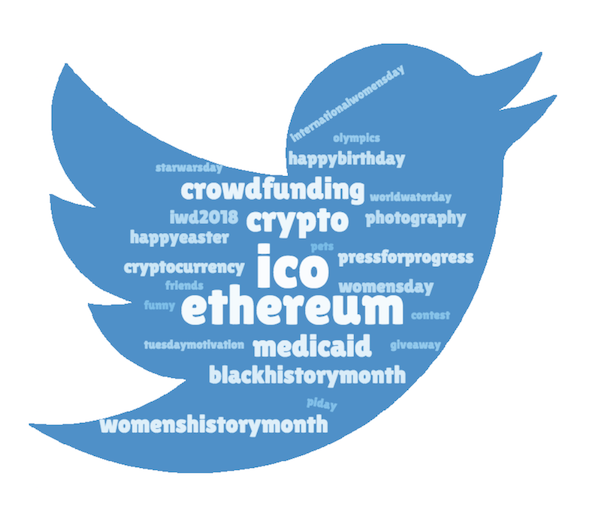
More specifically, we found tweets with no hashtags averaged 1.7 interactions per tweet. Tweets that included #ico, the most popular hashtag, had an average of 19.8 interactions per tweet. That’s almost 12x higher engagement with the right hashtag.
We saw similar increases with other popular hashtags, like #medicaid, #ethereum, and #crowdfunding.
There are two possible explanations for this:
- Hashtags for popular searches like #tuesdaymotivation increase impressions per tweet. More impressions lead to more likes, replies, and retweets.
- Hashtags provide insight into content that naturally performs well. This might be true for #photography, #funny, or #pets.
To help increase engagement with potential customers on Twitter, we’ve compiled a list of the best hashtags to increase likes, retweets, and replies. Our list is by no means all-encompassing — we only covered a specific time period, and as trends change, so will popular hashtags. But the list should still provide longterm insights into general popular topics on Twitter, helping you create a more relevant content strategy.
Our Methodology
We used a dataset of tweets ranging from January 2017 to May 2018. Hashtags were only included if they occurred in a minimum of 300 tweets, by at least 100 unique accounts.
Best Hashtags to Get Likes on Twitter
First, let’s take a look at the 25 best hashtags to get likes on a tweet:
- ico
- ethereum
- crypto
- crowdfunding
- medicaid
- blackhistorymonth
- womenshistorymonth
- photography
- iwd2018
- cryptocurrency
- happyeaster
- womensday
- pressforprogress
- happybirthday
- internationalwomensday
- olympics
- pets
- friends
- piday
- worldwaterday
- funny
- contest
- starwarsday
- giveaway
- tuesdaymotivation
Some of these hashtags might surprise you — #worldwaterday, for example, doesn’t have much in common with #tuesdaymotivation, and yet both made the list.
The most popular hashtags fit into a few categories:
- Cryptocurrency: The recent rise of cryptocurrency wasn’t lost on social media — #ico, #ethereum, and #crypto occupied the top three spots. In addition, #cryptocurrency and #bitcoin were near the top of the list. It’s uncertain whether this trend will continue beyond 2018.
- History Months: #blackhistorymonth and #womenshistorymonth ranked 5th and 6th, respectively.
- Holidays/Other Days: The rest of the top 25 included #happyeaster, #happybirthday, #internationalwomensday, #piday, #worldwaterday, and #starwarsday. Also, #fathersday, #maythe4thbewithyou, and #memorialday just missed the cut.
- Contests: Social media contests, a popular way to increase engagement, are represented with #contest and #giveaway.
- Evergreen Content: Less topical but strong-performing content like #photography, #funny, and #pets also ranked.
Hopefully, the list is broad enough to help you easily incorporate one or two topics into your social media strategy — when it’s a holiday, for example, your business might do well posting Tweets relevant to that day, or if your engagement is low, you might consider creating a social media contest.
Best Hashtags to get Retweets
Some of the following hashtags overlap with our most-liked hashtags on Twitter, but others stand alone as popular for getting retweets but not necessarily for getting likes. Here’s a list of the 25 we found to be most retweeted:
- medicaid
- ico
- ethereum
- aca
- crypto
- crowdfunding
- giveaway
- contest
- blackhistorymonth
- womenshistorymonth
- cryptocurrency
- womensday
- happybirthday
- authentication
- win
- medicare
- internationalwomensday
- influencermarketing
- opioid
- healthinsurance
- qa
- funny
- womeninstem
- iwd2018
- photography
The most-retweeted list was similar to the most-liked list, but there are a few differences:
- Healthcare issues like #medicaid, #aca, #medicare, #healthinsurance, and #opioid all ranked higher.
- Contest hashtags like #giveaway, #contest, and #win also ranked higher.
There are a few possible explanations for these most retweeted hashtags. For instance, contest hashtags might rank high on the list as a result of contest creators asking for retweets instead of likes. This is probably a good strategy for smaller Twitter accounts looking to reach a new audience. However, a Twitter account with a lot of followers might see better results asking for likes, which could re-engage their existing audience.
Best Hashtags to Get Replies on Twitter
If you’re interested in engaging more meaningfully with your Twitter audience, you might benefit from the hashtags in this list. These 25 hashtags are most likely to result in a direct reply on Twitter, ideally sparking a conversation between your business and potential customers.
- merrychristmas
- giveaway
- contest
- win
- competition
- medicaid
- aca
- ethereum
- blackhistorymonth
- photography
- ff
- ico
- happybirthday
- metoo
- crypto
- womensday
- alcohol
- bitcoin
- gold
- movies
- running
- thankful
- birthday
- cryptocurrencies
- opioid
The most-replied-to hashtags are similar to our previous lists, but there are a few differences:
- #ff or Follow Friday, a popular way to get more followers on Twitter, made its first appearance.
- Similarly themed but new hashtags that ranked were #merrychristmas, #competition, #metoo, #gold, #thankful, and #birthday.
- Also making its first appearance was #alcohol. Maybe this is the Twitter equivalent of drunk-dialing?
Perhaps you might consider asking a question using one of these hashtags (“Favorite #movies?”) to increase replies from your audience. Twitter is meant to be a social platform — with these hashtags, you can hopefully elevate the conversations you’re having with your followers.
Best Twitter Hashtags for 2018
We also ran additional statistics on which hashtags performed the best from January 2018 to May 2018. Here’s the list of the 25 highest-performing hashtags for that period of time:
- crypto
- influencermarketing
- womenshistorymonth
- blackhistorymonth
- cryptocurrency
- bitcoin
- internationalwomensday
- cryptocurrencies
- java
- blockchain
- iwd2018
- competition
- pressforprogress
- influencer
- olympics
- influencers
- datascience
- fintech
- womenintech
- metoo
- deeplearning
- science
- sxsw
- fridayfeeling
- cloudsecurity
Currently, the topic cryptocurrency remains popular with #crypto, #cryptocurrency, #bitcoin, and #cryptocurrencies. However, there were a few new additions:
- #blockchain, which is the underlying technology behind bitcoin, has seen an increase in engagement. This makes sense, since Facebook, Amazon, and many others have recently made forays into using it. Blockchain also has a wide variety of possible uses, from financial applications to file sharing.
- #influencermarketing and #influencers also appear to be trending. Influencer marketing is an emerging type of marketing that focuses on using social influencers to amplify your message.
- Other rising, tech-related hashtags included #fintech, #deeplearning, #science, #cloudsecurity, and #java.
Finally, a few other top hashtags for 2018 that just missed the list include #smartcity, #python, #stem, #bots, #predictiveanalytics, #databreach, #robotics, #machinelearning, and #augmentedreality.
We don’t expect you to create quality content by stuffing your tweets with #java #womenintech and #funny — instead, we hope you can incorporate some of these hashtags into thoughtful messages you believe makes sense for your business, to encourage increased engagement with your audience.
Chris Sabanty codes stuff at HubSpot.

How to Build Valuable Tailored Audiences for Your Twitter Ads
Do you want to reach more receptive audiences with Twitter ads? Looking for tools to help turn Twitter lists into tailored audiences? In this article, you’ll discover two ways to find and target specialized groups of Twitter users with your ads. #1: Reveal, Refine, and Target a List of Followers of a Specific Account With […]
The post How to Build Valuable Tailored Audiences for Your Twitter Ads appeared first on .
from https://ift.tt/2LnqzeF
via socialmediaexaminer
How to Make Competitive Intelligence Your Competitive Advantage
I stared at the sea of snow around me. White as far as the eye could reach. A blank, empty landscape.
It was exhilarating at first. No one ahead, no one tailing or overtaking me.
Unencumbered, I was completely alone.
Then I realized I was lost. What direction was I going in? Was I going in circles? Was I even on a path?
It was my first snowboarding trip in Japan and I had taken a wrong turn. And now, the beautiful landscape around me was devoid of anyone, or anything, that might give me a sense of direction.
Years later, it’s this experience that comes to mind when my friends in the startup industry complain about their competitors.
They long for a blank expanse of a market, free of competitors hurling their way forward alongside (or ahead, or behind) them. It’s an entrepreneur’s daydream: no one to stop you from speeding ahead, eyes firmly on the prize.
Of course, markets devoid of competitors are rare: if a product is worth making, the market around it won’t stay empty for long. If it does, the product probably wasn’t worth making.
Even so, the appeal remains. And that’s why we’re often told to ignore our competitors completely.
Shut them out, focus single-mindedly on your product and users: everything else will fall into place.
And it’s certainly true that an obsession with ‘the competition’ is a bad idea. When companies get tangled up in rivalries, they often miss out on more important things (while Coke and Pepsi were battling it out, they failed to cash in on the arrival of energy drinks — Red Bull is now the most popular soft drink in the world).
But do we have to choose between a blinkered focus or competitor obsession?
I don’t think so. If we can adjust our lens, the landscape around us will begin to look different. Blinkered focus can turn into a peripheral vision that is both inclusive and alive with information.
A single company — especially a startup — will naturally be limited in terms of the information it relies on. The combined knowledge of a number of companies operating in the same arena (or neighboring landscapes) is inevitably much more extensive.
And so, we can begin to view competitors as invaluable resources rather than pesky rivals.
Here’s how.
The Perks of a Busy Market
Many startups enter an already-crowded market. That’s often seen as daunting, or even deal-breakingly negative.
It’s not.
In fact, entering an unexplored arena with no context is much more daunting.
The support that comes with having competitors may not be obvious at first, but it’s real.
By their mere presence, a competitor is already helping you carve out your category, make noise, and educate your users. They are legitimizing your idea, and proving there’s a market for it.
As Joel Gascoigne, CEO of Buffer puts it:
The real problem startups have is that most people don’t know about them.
Competition can help to shine light on the market, which is often actually more useful than if you were alone.
There are cautionary tales of businesses that became ‘victims of active inertia’ — lazy on their initial strong competitor-free success — and ultimately failed. And there are other businesses that, spurred on by new competitors, kicked their complacency habit to the curb.

That’s because strong competition is the ultimate accelerator. Each individual step forward counts as a step for everyone.
Would Nike still be the king of sportswear without Adidas snapping at their trainered-heels? What would Steve Jobs’ legacy be without Bill Gates? Would Salesforce’s boom be as resounding without Oracle pushing it along?
Competition strengthens, rather than weakens, a market. Companies striving for leadership and out-servicing each other to win customers generates tons of value.
Plus, saturated markets are the most profitable. And if your business can thrive in a startup-crowded jungle, it can survive (almost) anything.
Peripheral Vision

The benefits of a competitive market aren’t reaped automatically. What you need is an all-encompassing awareness of the industry you’re in — its peaks and troughs, new players and old-timers, innovations and disasters.
This will keep you nimble and agile, particularly if, like me, you’re in a market that’s constantly shape-shifting and whizzing forward.
With peripheral vision of the big picture, you can steer fast and respond faster.
And when you adopt this frame of mind, the competitive landscape turns into a goldmine of information to guide you forward.
But how do we tap into this competitive intelligence?
It boils down to three basic steps:
- Gather data from a bunch of different websites
- Analyze the data
- Interpret the results
Of course, we do this kind of stuff all the time. The problem is, it tends to be a tedious, time-consuming process woven with endless opportunities for distraction — particularly as half of the relevant information will be buried under the noise of the internet.
And really, there are a ton of better ways we could be spending our work day.
Humans aren’t great at dealing with large datasets. Machines are.
Enter bots — clever automated systems. By linking to, and communicating with, multiple APIs (Application Programming Interfaces), machines like our new digital assistant, GrowthBot, can help us map the landscape we’re operating in.
But the potential of automation goes further than this. Our capabilities as humans are finite, and often biased. As important as it is to stay on top of our industry’s trends and transformations, we’ll never be able to know it all ourselves.
That’s because we rely on the limited amount of information we’ve come across rather than a complete knowledge of our field (which would be impossible). Plus, we can’t plug in a new server when we reach our information-processing limits.
A smart machine, however, will be able to learn literally everything there is to know about an industry and its players.
It can then summarize and present the core content back to us, bringing us as close to being all-knowing, all-seeing experts as it’s possible to be.
Reducing Trial and Error

Here’s the thing: all businesses are testing the waters for someone else.
It’s up to those who follow in their footsteps to capitalize on this.
By paying close attention, a trailing company can cleverly reap the benefits of someone else’s successes and failures.
That’s not as evil as it sounds. It’s basically common sense, or the ‘second-mover advantage’.
While the pioneer pays a steep price in creating the product category, the later entrant can learn from the experience of the pioneer, enjoying lower costs and making fewer mistakes as a result.
Imagine if Google hadn’t paid attention to the mistakes in Yahoo’s UI, or if Uber hadn’t exploited the public enthusiasm for Lyft?
Indeed, many of the world’s most successful businesses aren’t built on originality. Instead, they’re launched by entrepreneurs who simply saw a gap in an existing concept. Perhaps that gap was better branding, smarter customer service or elevated UX.
One example is the way Apple redefined and dominated the market for mobiles — a category which Motorola pioneered.
The point is, this success is built on the swift, agile following — and then improving — of an idea; not on being the first to execute it.
Similarly, you can come to a conclusion in seconds (for free) that it might have taken another business hundreds of hours and thousands of dollars to get to.
There are shortcuts everywhere when you start looking. Opportunities to reduce trial and error on the basis of someone else’s experience.
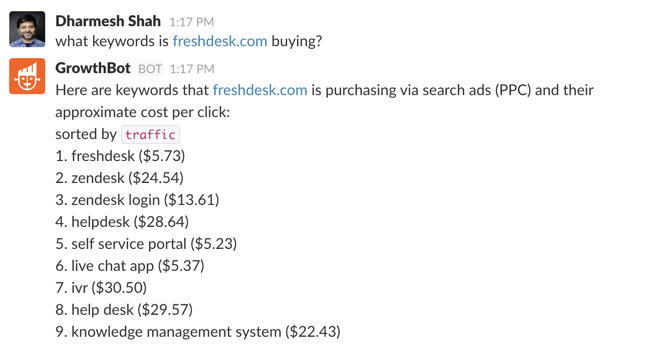
Maybe similar strategies will work for you, maybe they won’t. Either way, the more you know, the better-informed your future decisions will be.
Put simply: insights aren’t necessarily less useful when they’re second-hand.
Collective (Competitive) Intelligence
Collective intelligence within an industry is something we can all contribute to and benefit from, by pooling resources and building on what’s already been achieved.
Turning a potential battleground into a network, like in case of open-source software.
And along the road somewhere, your competitor could even become your collaborator: enter ‘coopetition’ (cooperative competition).
The big players have set the trend: Spot.IM has started using Facebook’s API, despite the fact that their goal is to keep users engaged on websites that aren’t Facebook. Apple and Microsoft joined forces on the licensing of mobile operating system features and patents. Google funded Mozilla’s Firefox. Arch-rivals Amazon and Apple teamed up to distribute Amazon’s e-books through the iPad’s Kindle app.

All these companies have the same target market, but they found that combining forces — rather than constantly trying to one-up each other — is a powerful tool.
And this mindset can be put into practice on a smaller scale, too.
As long as we’re keen to grow, improve and adapt, there will always be value in questioning the tactics of businesses besides ourselves. Maybe the answers will surprise us, maybe they will inspire change.
Businesses like ours, yes; but also unrelated businesses we simply find interesting.
So no, it’s not about an unhealthy obsession with our competitors. But it’s not about shutting out those around us to create the mirage of an empty landscape, either.
It’s about curiosity, open-mindedness, a willingness to learn from others. And with the help of today’s AI, competitive intelligence can become a competitive advantage.

Here’s everything Apple announced during its WWDC keynote today [Poll]

The opening day of WWDC 2018 has officially come to a close. It was a day chock full of announcements for Apple’s various operating systems, and we’re still learning more as we continue to dig through each of them.
It’s easy to get overwhelmed on an Apple event day, so read on as we roundup all of today’s news…
How iOS 12 paves the way for an iPad with Face ID & a notch

Apple is expected to introduce a refreshed iPad Pro lineup this year with several notable enhancements, including Face ID and smaller bezels. While that new line isn’t expected until the fall, iOS 12 includes several changes that further hint at the new iPads…
iOS 12 makes closing applications on the iPhone X much easier

For iPhone X users, iOS 12 makes closing applications significantly easier with one minor change. Notably, the iPhone X departed from the classic iPhone app closing process at launch, but now things are back to being consistent…
Apple introduces new App Store Connect app on iOS for developers

Buried in today’s WWDC announcements is a new app from Apple. Seemingly a replacement for iTunes Connect, Apple has introduced a new App Store Connect app for developers, and it’s available on the App Store today…
Tim Cook says Apple never requested or received user data through its deals with Facebook

Earlier today, a report emerged claiming that Apple and other tech companies are given “deep access” to Facebook user data. In an interview with NPR this afternoon, however, Tim Cook said Apple gets “zero” personal data through its deals with Facebook…
Apple announces winners of the 2018 Apple Design Awards

Image via TechCrunch
At WWDC today, Apple officially announced the winners of the Apple Design Award for 2018. The company gives the award to applications that it feels best represent the capabilities and goals of its various platforms.
Apple updates App Store Review Guidelines w/ free trial details, remote mirroring changes, more

Apple today has updated its App Store Review Guidelines with a handful of changes. The new guidelines include revisions related to data security, cryptocurrency mining, free app trials, advertising, and more.
iOS 12 beta suggests support for automatic system updates

Hidden in the iOS 12 Settings app is an indication that Apple might be planning to support automatic software updates. While the company didn’t address the feature on stage, nor is it mentioned on the iOS 12 preview page on Apple’s website, there’s a new toggle in the Settings app…
Smart wearables market seeing substantial growth while basic wearables continue decline

While it’s no surprise here, smartwatch sales are growing at a rapid pace, while traditional “dumb” watches are seeing a decline.
iOS 12: How to create Memoji on iPhone X

One of the new features that’s coming to iPhone X along with iOS 12 is Memoji. A blend of iOS 11’s popular Animoji and Apple’s take on Bitmoji, Memoji allow you to create custom, detailed avatars to have even more fun with the TrueDepth face tracking camera. Follow along for how to create Memoji in iOS 12.
9to5Mac Daily 087: June 4, 2018

Listen to a recap of the top stories of the day from 9to5Mac. 9to5Mac Daily is available on iTunes and Apple’s Podcasts app, Stitcher, TuneIn, Google Play, or through our dedicated RSS feed for Overcast and other podcast players.
iOS 12 doubles down on passcode brute forcing, USB Restricted Mode now set to one hour

We previously reported that Apple was looking to prevent services such as GrayShift by implementing a USB Restricted Mode that restricts the Lightning port to only charging after 7 days. Now, the company is taking things farther…