
Welcome to My Blog
Netgear ships first HomeKit baby monitor with app-updated Arlo Baby Camera

Lots of companies promise HomeKit support for existing products then fail to follow through for one reason or another, but Netgear’s Arlo has proven to be an exception to that trend. After promising HomeKit support for its Arlo Baby Camera line, Netgear has released an app update that makes the baby monitor cameras work with Apple HomeKit.
Facebook Messenger now lets you easily turn one-on-one video calls into group calls

Facebook has released an update today to its Messenger platform that makes it easy and seamless to go from a one-on-one audio or video call to a group session.
Smart Home Diary: Adding HomePod, smart(ish) heating and Nanoleaf Rhythm

I explained in my first HomePod Diary piece that there was one smart home issue we needed to address: while I’m happy to use Siri to control everything from my Apple Watch or iPhone, my partner would often find that she wanted to switch lights on or off while her phone was in another room. We’d partially addressed this with Hue dimmer switches, but wanted more flexibility.
Some kind of smart speaker was the obvious solution to this, and the HomePod would have the advantage of being able to act as a HomeKit hub too.
In my HomePod Diary, I’ve been focusing mostly on music, but I’m also happy to report that the smart speaker has also passed the Steph Test …
Final Cut Pro X: Revisiting the Synology NAS, this time with 10GbE

I’ve used a Synology NAS to store Final Cut Pro X libraries in the past, but the process wasn’t very straightforward at the time, and performance was never good enough to convince me to use it over the long-term. This was especially true as I started to dabble more in 4K workflows.
As we all know, the iMac Pro features built in 10GbE connectivity, which opens up the possibilities when it comes to using a NAS as a Final Cut Pro X storage solution. Final Cut Pro X also received updates in the last year in order to better facilitate working from network attached storage.
Is a 10GbE NAS a viable storage solution for Final Cut Pro X users?
New ‘Angry Birds Champions’ spin-off for iOS lets players battle for real cash

A new Angry Birds title is out for iOS and it’s bringing a new take on the franchise. This time around, players will slingshot the well-known birds and compete for real money.
Tim Cook FastCo interview: Apple not a follower; working on products well into 2020s; not in it for the money

FastCo yesterday named Apple the most innovative company of the year, and it has today followed up with an interview with the company’s CEO, Tim Cook.
When you talk about your company as often as Cook does, it must be incredibly hard to come up with new things to say, and many of his comments are well-rehearsed. But there are a few interesting snippets …
Things 3.4 adds expansive new URL schemes for linking, automation, and handover from other apps

Cultured Code’s Things task manager is a popular option on the Mac, iPhone, and iPad, but it hasn’t talked to other apps very well in the past like other solutions. That changes today with Things 3.4 which adds expansive new features enabled by special URL schemes.
Dish separates out Sling TV subscribers for first time, reports 47% growth

AT&T names first three cities for multi-gig 5G service, nine more to follow

AT&T promised it would start rolling out what it claims will be the first true mobile 5G service before the end of the year, and it has just announced the first three cities in line to receive it.
We plan to offer mobile 5G to customers in a dozen cities, including parts of Dallas, Atlanta and Waco, Texas, by the end of this year. We’ll announce additional cities in the coming months.
The company says that the commercial rollout follows multi-city trials …
15 Marketing Job Titles For the Skill Sets You Want at Your Company
There are some weird job titles cropping up across the globe, and I bet you’ll never guess what the most popular one was in the U.S. last year for that category.
It was “rockstar” — followed closely by “guru” and “ninja.” You read that right. Ninja.
Contrary to the images they conjure, these titles weren’t written to attract musicians and covert assassins. They were intended to appeal to experts in their respective industries. A “customer experience ninja,” for example, finds ways to improve how clients engage with the brand. S/he’s just so good at it, you don’t even know s/he’s there, “killing” it at every point in the buyer’s journey.
An “SEO guru” might own all tasks related to search engine optimization, and, as a callback to the teacher origins of “guru,” educate the marketing department on the latest Google best practices.
This doesn’t mean you need to (or should) fill your careers page with flashy marketing job titles to reach the talent you want. It does, however, show how quickly the naming conventions are changing along with the practices that help a business grow. You need to compete for talented marketers’ attention, and they’re looking for job titles in marketing that denote their specific value to the market, and help their careers grow, too.
“Marketing coordinator,” “digital specialist,” and similarly generic terms often don’t encompass the responsibilities of today’s marketer — even those who might be coming to your company right from college.
And many marketing leaders are feeling the effects of this shift — 95% of them say their organizations are struggling in some way because they aren’t reaching the right candidates, according to a TEKsystems survey.
It’s hard to know exactly what title your ideal employee expects when researching new opportunities, especially if you’re hiring a certain role for the first time. But don’t worry — we’ve got you covered. The list below contains some of the most important job titles with which to populate your marketing team this year.
The marketing job titles to consider this year:
- Content Creator
- Content Strategist
- Content Marketing Manager
- Creative Assistant
- Digital Brand Manager
- Creative Director
- Marketing Data Analyst
- Marketing Technologist
- Digital Marketing Manager
- Social Media Coordinator
- Social Media Strategist
- Community Manager
- SEO Specialist
- SEO Strategist
- SEO/Marketing Manager
But how do you know which title to use for a given role? We can help there, too.
These titles mean nothing if you don’t know how they support the initiatives your company wants to tackle. With that in mind, here are five types of people whose skillsets are critical to marketing today, and how their talents map to the titles above.
5 Critical Skills and the Marketing Job Titles They’re Perfect For
1. The Blogger
Opening a job requisition under the title “blogger” seems logical — this person’s primary duty will be to write for the company blog, after all. Keep in mind that anyone can launch a blog, though, and not just for business reasons. It’s important that your title conveys the more technical, brand-oriented skills you require.
Instead of blogger, try one of these on for size, in order of experience level:
- Content Creator (entry-level)
-
Content Strategist (mid-level)
-
Content Marketing Manager (management)
What They Do
“Content” is the operative word here. “Content creation/management” is the #3 digital marketing skill of 2018, according to a survey of 250 marketing leaders by IT solutions provider TEKsystems.

Image via TEKsystems
Content marketing encompasses all the consumable media you publish to drive the conversation in your industry — often including but not limited to blog posts. Your content team enforces your blog and offers’ tone, topic selection, editorial calendar, email campaigns, and search engine optimization (SEO) strategy — all of which ensure you’re connecting with the right type of readers whom you can convert into customers.
Does this seem like a lot of varied skills that might be hard to find in one person? It’s up to you how you’d like to spread out these duties across the team’s hierarchy. While the content creator might be your chief writer, for example, you might put the content strategist in charge of determining core editorial themes and devising how to approach SEO in each post (we’ll talk more about SEO jobs in a couple of minutes).
The content marketing manager can then oversee the editorial calendar and package content into newsletters to subscribers, helping you grow your contact list and generate leads from all your content creator’s hard work.
2. The Multimedia Person
This role can be tougher to define, but it’s just as important to your content strategy. Although “videographer” and “graphic designer” can suffice for freelancers and those who specialize in a certain medium, these titles don’t hold much weight for full-time candidates who are increasingly “doing it all.”
Here are some suggestions:
-
Creative Assistant (entry-level)
-
Digital Brand Manager (mid-level)
-
Creative Director (management)
What They Do
You’ve likely noticed a pattern forming: Just as writers associate with “content,” your visual content and multimedia folks are fond of marketing job titles rooted in “creative” and “brand.” These keywords help bundle the many types of marketing collateral your creatives may tackle under one umbrella.
Breaking down the specific tasks associated with each role, creative assistants and digital brand managers produce photos, videos, logos, infographics, and similar visual content that give your brand style and storytelling power. Creative directors, on the other hand, “work with designers, artists, copywriters, sales teams and marketers to create a vision for products sold,” according to Snagajob. Further, “they invent new ideas for branding, advertising campaigns, and marketing messages.”
After you determine what level of expertise you need, be sure to research the design and editing software that best fits your company’s needs and include it in the job description. This ensures you’re reaching candidates who depend on the same equipment you do to be successful.
3. The Audience-Reacher
How do you know if your marketing efforts are producing a return on investment (ROI), or even being seen by the right people? Information related to page views, how users found your content, how long they stayed, and other consumption metrics can help you determine value and discover opportunities for optimization, but the roles that manage this data are a bit more complicated than the above two.
Here are three great titles for your more analytical marketers:
-
Marketing Data Analyst (entry-level)
-
Marketing Technologist (mid-level)
-
Digital Marketing Manager (management)
What They Do
Although each of these people should be well-versed in content analytics, they actually specialize in different things. While marketing data analysts study industry conditions to refine product positioning, marketing technologists develop an operational strategy for executing on these conditions — and pursue the necessary technology to support it. Digital marketing managers oversee the analytics related to your content so you can optimize your existing assets and create smarter campaigns in the future.
This personnel is very helpful to companies that outsource their writing needs to freelancers and need to analyze the ROI on their content spend. Or maybe they have a less-technical content team in-house, and prefer to hire a designated analytics team to work alongside them.
If you don’t have the budget or inclination to hire two separate teams, however, it’s common to build analytics into the daily duties of the content strategist or content marketing manager.
Keep in mind not every data-focused job title relates to marketing, so be careful when recruiting an analytics buff. A broad title like “data analyst,” for example, may attract operations generalists who design systems to help the business itself become more efficient, instead of your marketing campaigns specifically.
4. The Handler of Facebook and Twitter
For starters, “Facebook Manager” is not your best bet here. Similar to how “blogger” is often too narrow for your content folks, this type of employee merits a title that reflects how they’re using this medium — not just what specific channel they’re using. Here’s a hint: TEKsystems ranked “social media management” the #10 digital marketing skill of 2018.
And without further ado:
-
Social Media Coordinator (entry-level)
-
Social Media Strategist (mid-level)
-
Community Manager (management)
What They Do
Social media coordinators often handle the day-to-day posting responsibilities on various social networks, including management of a posting schedule similar to the content creator’s editorial calendar. Social media strategists help you decide which social networks to keep accounts on, which content to post, and where, for maximum reach and ROI.
Strategies for each network can vary wildly depending on where your audience hangs out and what content they consume — insights your marketing data analyst may help you uncover.
So, what the heck is a community manager? While you may hire for a social media manager in addition, the community manager has a special focus on the public that’s worth investing in as your social media presence grows. This employee usually performs one or both of two overarching responsibilities:
First is helping your social media team manage its relationship with current and future followers of the brand, especially if these followers are highly responsive to your posts. It’s the community manager’s job to engage these people and ensure the brand is responding to its most vocal listeners.
Other community managers, however, are moderators,governing social platforms where your followers speak up regularly. This could be Facebook, but it could also be your blog’s comment section or community forum websites run by your company. These community managers answer queries, promote compliments and other valuable audience contributions, and mitigate negative commentary.
5. The One Who Gets You on Google
This is where SEO gets its purpose. Search engines like Google, Bing, and Yahoo! don’t publish a formula for what gets content to rank highly in their results (if only!), and any marketer can tell you how important it is to show up on the first page. Their ranking algorithms also change regularly, making your Google guru (don’t make that your job listing) an incredibly valuable individual.
Here are three marketing job titles that’ll resonate with the search crowd:
-
SEO Specialist (entry-level)
-
SEO Strategist (mid-level)
-
SEO/Marketing Manager (management)
What They Do
As you can see, there’s a pretty obvious pattern here. And just like your social media team, the difference between each role is in strategy versus execution.
SEO specialists coordinate with content creators to ensure the SEO tactics you’ve agreed to are being practiced in your content. Strategists work with your analytics buffs to refine your approach to SEO as Google’s algorithm, or your own content strategy, changes.
SEO/marketing managers are the most common SEO job title out there, according to content optimization service Conductor, and are particularly helpful if you’re tracking the SEO performance — also known as “organic” performance — of more than one blog or website page.
Keep in mind not every marketing position you see here is critical to an effective growth strategy. Some titles may be most useful to incorporate in the job description of another role you’re hiring for, rather than its own position (for example, putting “coordinates social media” in the description for a “content marketing manager” title).
Use these as opportunities to define the titles and marketing job descriptions of the positions that are critical to your growth, and you may well find the content strategist who also fancies him or herself an SEO ninja (hey, maybe post it and see what you get).

Uber launches first new service in three years, and it requires you to walk …

How to Create the Perfect Instagram Images to Sell Your Brand
Photographs are emotional time machines: they transport us to places of which we’ve only dreamed, remind us of past experiences we long to recreate, and spark inspiration for future adventures.
It is not the photographs themselves that stir up these emotions, but rather the memories and aspirations we associate with them.
Instagram is a visual platform, so the best brands on Instagram understand the images they share are essential components to building their brands.
But beautiful images of their products aren’t enough.
Instead, great brands use Instagram to share images that create genuine connections between their products, and the hopes and ambitions of their followers.
Tell a Captivating Story
Instagram is the perfect tool to create an emotional connection to your brand.
Instead of posting images that merely showcase your products, share images to evoke the feelings, dreams, and ideals you want associated with your brand.
Today, it’s fairly easy to compose and post beautiful images, but unfortunately, aesthetic beauty is not enough to be successfully marketable on Instagram.
The key to establishing a loyal and enthusiastic following is to use your Instagram images to tell a story that captivates and engages your followers and allows them to be part of the adventure.
Achieving both of these goals — composing beautiful images and sharing them in an engaging and emotional way —takes some work. But with preparation and attention, you have the potential to curate a dazzling feed that will keep your followers scrolling.
Preparing Your Images for Instagram
There are four main ways your images can help or engage your followers. They can:
- Educate your followers
- Entertain your followers
- Assist your followers in solving a problem
- Motivate or inspire your followers
To attract attention, make sure your images tick at least one of the five categories below:
- Timely or topical: post about an upcoming event or festival that connects to your following
- Trending: post the type of content that is currently hot and trending on Instagram
- Original: post unique and imaginative content to set yourself apart
- Snackable: post content that is easily digestable while your followers scroll their feeds
- Actionable: include a call-to-action in your post, directing your followers to like, share, or comment on your image
Instagram Themes
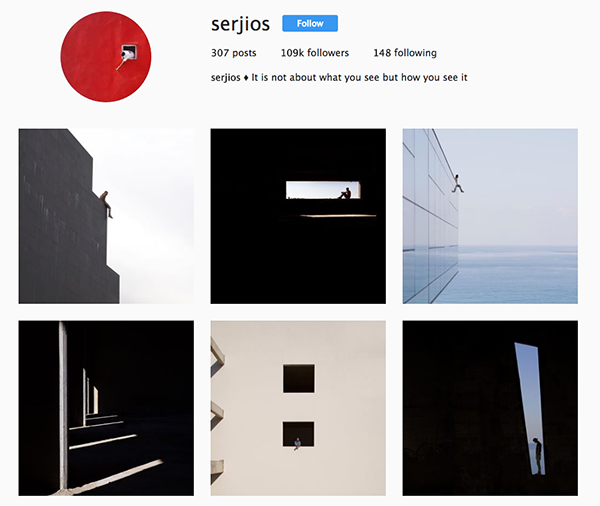
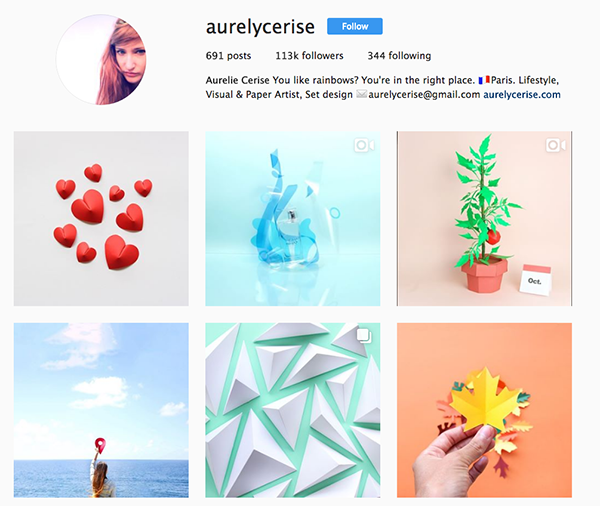
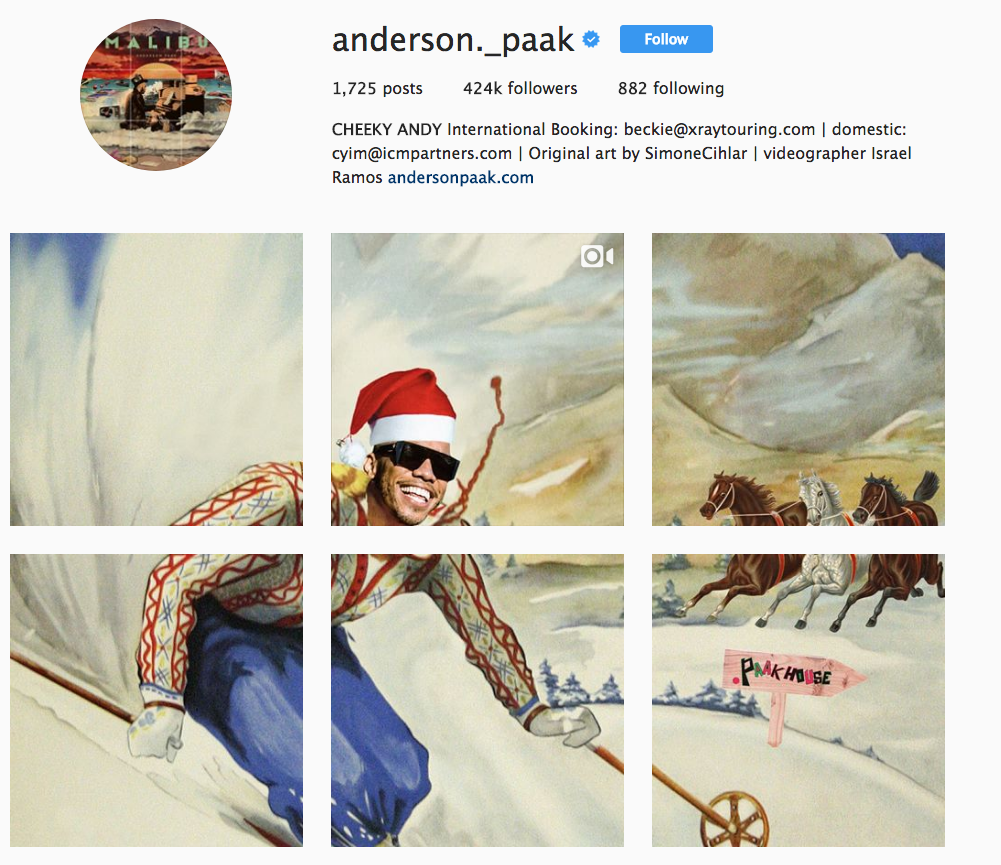
To curate an appealing, cohesive feed, it’s important to select a consistent style for your posts. From crisp minimalism to bold and colorful, there are thousands of accounts you can draw inspiration from.
Here are some examples:
Minimalism
Black and white

Colorful
Collage
Staging and Composing Your Images
Now that you’ve decided on the style and emotion of your images, it’s time to introduce some basic photography tips to help you compose visually-appealing images that fit the tone of your account.
Size
Instagram images are 1080 x 1080 pixels. Instagram then resizes the images to 612 x 612 pixels, which display in users’ feeds as 510 x 510 pixels. On Instagram, quality beats quantity, so you should post photos that are at least 1080 x 1080 pixels. If you’re tempted to share smaller pictures, it’s better to do so on other social media platforms.
Color Scheme
When choosing a color palette, keep it simple. Share photos that use only a few main colors. These colors should remain consistent throughout your feed.

Design seeds is a great place to find inspiration for your color palette. In addition to this, you can also use Coolors.
Lighting
The best photos are taken in bright and natural light. If you’re outside, avoid shooting in direct sunlight. The best lighting conditions exist in early morning, early evening, and overcast days.

Image by Felix Russell Saw

Image by Chirobocea Nicu
Subject
The rule of simplicity also applies when choosing a subject. Some of the best shots feature a single, appealing subject. Because your photo will feature just one subject, it’s worth spending extra time to stage and restage the shot to ensure that you capture your subject from the most interesting perspective.

Image by Kelly Sikkema

Image by Ronald Cuyan
Negative Space
Many skilled photographers follow the rule-of-thirds when shooting their subjects, meaning they dedicate one-third of the frame to the subject and two-thirds of the frame to negative space. This helps draw attention to your subject.
Utilize the grid feature on your phone or camera to better understand the space within your frame and balance the space between your subject and background.

Image by Trey Ratcliff
As you can see from the photo above, the photographer used the grid lines to divide the photo into nine equal parts, placing the subject of the photo on an intersection of four grid lines. These intersections are naturally the most appealing focal points within a photo.
Your use of negative space can transform a good photo into an excellent one. Consider restaging the same photo a few times, to play with negative space, as well as different angles and different depths.

Images by: Lance Asper, Daniel Von Appen, Zia Syed, Simone Hutsch
Optical Illusions and Shapes
Take advantage of natural illusions like reflections to attract your viewer and create a sense of marvel and curiosity.

Image by David Marcu

Image by Ng
You can use leading lines to focus your viewer’s attention on a specific part of an image. These lines can be straight, wavy, or circular. Great examples of this principle in action are railroad tracks, spiral staircases, or forest trails.

Image by Sam Poullain

Image by Tobias Van Schneider
Creating symmetry in your photos is another way to draw attention to your images. Symmetrical images are people-pleasers, and very simple to compose.

Image by Steve Harley

Image by Vincent van Zalinge
Repetitive patterns, geometrical shapes, and abstract textures are visually appealing effects you should use in your images. Consider mosaic tabletops, building facades, or fraying fabrics. Naturally-occurring patterns and symmetry are also very photogenic: think about the veins on leaves or a spider web.

Image by Andrew Ridley

Image by thr3 eyes
Begin paying attention to the photogenic details of your everyday life. With the appropriate use of lighting and negative space, you have the capacity to transform an intricate detail into a very powerful image.

Image by Pawel Blazewicz

Image by Darren Nunis
Post-Production
Filters
Now that you’ve staged and shot your image, it’s time to discuss the best way to apply Instagram’s filters. To create consistency within your feed, you should stick to using the same few filters for all of your posts.
Check out this video for a helpful tutorial on editing photos directly from your phone:
Using filters will help distinguish and draw attention to your Instagram photos. Take a look at these examples of types of filters:

Desaturated

Saturated
Image by Kyler Nixon
Bright and Minimalistic
Before

After

Image by Bench Accounting
Balancing Your Feed
Once you’ve chosen your filters and edited your photos, you’ll want to look at your feed in its entirety to be sure that, as a whole, it looks uniform and balanced.
Instagram is less about creating individual images, and more about curating a complete, coordinated, and consistent feed that captures the emotions you hope to communicate.

One of the easiest ways to ensure that your feed has a uniform feel and flow is to consider each new image you post in the context of the images surrounding it within your feed.
By focusing your attention on your previous photos, you will relieve yourself of the burden of considering whether each new photo you post matches the style of your entire feed.
Another way to create a good balance within your feed is to look at the level of detail in your previous images when you post a new image. If the previous photos are less detailed, consider posting a “busier” photo next.
Graphics
You can draw more attention to your images by adding graphic elements that overlay your photo:
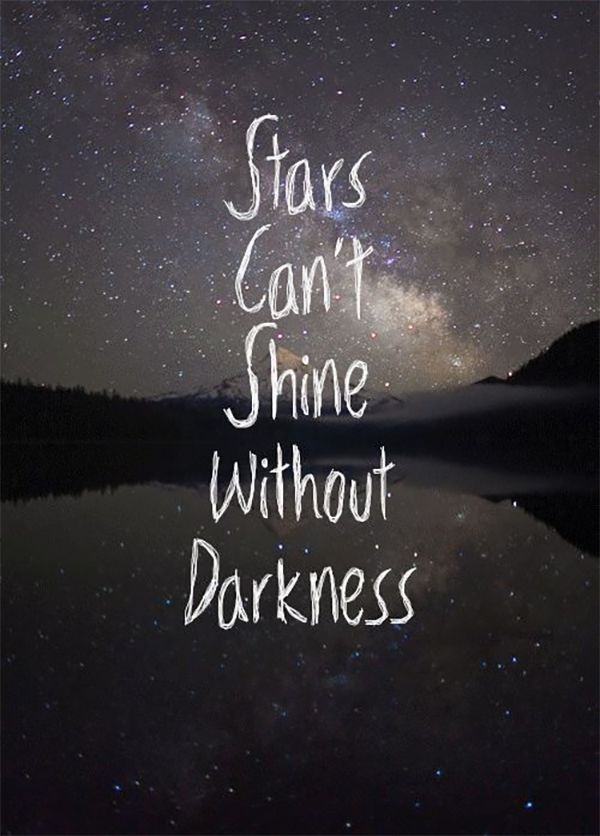
Canva and Easil are two web apps that will help you create fast and simple graphics to enhance your images.
If you choose to overlay your image with text graphics, limit yourself to one or two fonts, and make sure the font styles complement the feel and tone of your account.
Fontpair and Typ help explain which font styles work well together.
Take-away
In today’s world of high-quality smartphone cameras and dozens of photo-editing apps, it is becoming easier to create visually-pleasing images to share on Instagram.
But to sell your product and attract new followers, it is imperative that you compose and share photos that create emotional associations with your brand.
This requires both preparation and creative execution, but by following the simple tips above, you’ll have new followers scrolling and day-dreaming in no time.

Eurasian filings hint at two new iPad models coming soon

Apple has registered a handful of new devices in the Eurasian commission database earlier this week, as discovered by Consomac. Legal obligations require devices that use encryption to be registered ahead of release. In the past, similar filings have tipped the hat on new MacBook models, the iPhone 7 and AirPods.
The latest entries represent two new devices, with model identifiers A1954 and A1893, which are described as Apple tablets running iOS 11. This suggests that new iPads are coming sooner rather than later.
Apple may buy cobalt direct from mining companies, protecting both parties

Apple is reportedly in talks about buying cobalt direct from miners in a long-term deal set to span five years or more. The report is given weight by the CEO of one mining company confirming Apple has held discussions about cobalt, which is used in the lithium-ion batteries which power Apple devices.
There would be two benefits to Apple in striking such a deal …
4 Ways to Use Instagram Insights to Improve Your Marketing

Do you have an Instagram business account? Wondering how to analyze your Instagram activities? In this article, you’ll discover how to use Instagram Insights to evaluate your followers, posts, stories, and promotions. What Is Instagram Insights? Instagram Insights is a native analytics tool that provides data on follower demographics and actions, as well as your […]
This post 4 Ways to Use Instagram Insights to Improve Your Marketing first appeared on .
– Your Guide to the Social Media Jungle
from http://ift.tt/2HAcXeQ
via socialmediaexaminer
How to Talk to Your Boss About a Side Hustle
In the fifth season of Mad Men, Ken Cosgrove, an account-executive at Sterling Cooper Draper Price, is called into Roger Sterling’s office, a founding partner of the agency.
Roger tells Ken that he knows his secret: Ken’s an accomplished fiction author who writes under a pen name, so no one at the office will find out about his side job. Roger then tells Ken he has to stop writing immediately. He shouldn’t focus any attention away from his high-paying, full-time job.
Ken is initially devastated, but he relents and adopts a new pen name to continue his pursuit of of fiction writing, risking his employment and financial stability for the fulfilment his passion gives him. He could never abandon his stories.
Fortunately, the Mad Men work culture doesn’t really fly in today’s world, but the story of Ken Cosgrove’s secret side gig still resonates with people today. It’s incredibly nerve-racking to talk to your boss about your side hustle. What if she thinks you care about your side projects more than your regular job? And what if she thinks it will hinder your performance at work?
Side hustles are not only beneficial to you, but they can also bring perks to your boss, team, and company. And we recommend spotlighting these benefits to get your boss on board with your own side hustle.
But before we dive in …
Eddie Shleyner, who runs a successful side hustle called VeryGoodCopy.com, knows how exciting it is to build something successful by yourself. But he warns against letting it become your first priority. “If you’re employed full-time, your side hustle must be your second priority. As soon as you start giving more time and brain power to your side hustle, you’re in the wrong with your full-time manager.”
So make sure you hit all your deadlines and your work keeps improving. Once you’ve put in the required time and effort to excel at your regular job, you can then focus on your side hustle.
With this in order, let’s get back on track and go over the seven speaking points you can highlight when bringing up your side hustle to your boss.
How to Explain Your Side Hustle to Your Boss
1. Your side hustle will make you more adaptable.
If you only work one job, you usually use the same thought processes and skills to do the same tasks over and over again. But when you start a side hustle, you’re essentially running an entire business. You’ll have to expose yourself to loads of novel strategies, concepts, and responsibilities to be successful, and you’ll build new skill sets and improve your adaptability along the way.
When you’re more adaptable and well-rounded, you’ll be able to tackle problems from different angles at your regular job, enhancing your team’s overall creativity and effectiveness. You’ll also be more willing to take on new challenges because you already know how to study completely foreign concepts. Learning won’t intimidate you. And this mentality will drive innovation within your team.
2. Your side hustle will boost your confidence.
If you can build something from scratch, then you can definitely help a resource-heavy company grow bigger and better. Starting a successful side hustle will boost your confidence, improving your performance and ability to handle setbacks and disappointments at work.
3. Your side hustle will teach you how to handle big decisions.
When you start a side hustle, you risk losing your money, time, and reputation. That’s a high-stakes decision. Similarly, when you’re growing your side hustle, you have to make quick yet critical decisions that will either build or dismantle your business. Making these pivotal decisions for your side hustle and learning from both the good and bad outcomes will refine your decisiveness and help you make the right decisions at your regular job.
4. Your side hustle will improve your communication skills.
Expanding your network is essential for growing your side hustle. And as you network at industry events, meet connections for coffee, or pitch a guest blog post through email, your communications skills will skyrocket compared to only slacking or chatting with your colleagues. Growing your network and meeting all types of personalities will make you a better communicator at your regular job, helping you give engaging presentations, make articulate points at meetings, and collaborate well with colleagues.
5. Your side hustle will make you feel more fulfilled and happy, leading to higher productivity at your regular job.
You may really enjoy work, but if it’s not your true passion, it can be a grind sometimes. And although dropping a stable job to pursue your passion could be a solution for this, it isn’t ideal for your wallet. Side hustles are unique because they offer the best of both of these worlds. Pursuing your passion, without having to sacrifice the financial stability your regular job provides, makes you feel more fulfilled, happy, and productive.
6. Your side hustle will teach you how to manage your time and take on big responsibilities.
When you work a full-time job and run a side-hustle, time is your most precious asset. You can’t afford to waste it. To take advantage of the limited amount of time you have after work, you need to learn how to prioritize your most important tasks, exercise discipline to actually do them over the many little, unimportant tasks that are time sucks, and take on the responsibility of not only building a top-notch product, but also crafting a compelling brand experience.
These are the requirements for starting a successful side hustle, and if you can follow them, you’ll hone your time-management skills and be able to leverage them at your regular job.
7. If your side hustle is successful, you can help your colleagues get better at their jobs.
Whether you become a star at marketing your personal brand, developing partnerships, or selling your product or service, your can make your colleagues better by teaching them your new skills. For example, if you have a newfound talent of selling, but you work in marketing, you can still teach your colleagues some sales skills to improve their blog post pitches at team brainstorms.

Alto’s Odyssey now available on iPhone, iPad and Apple TV

Sequel to the hit title Alto’s Adventure, Alto’s Odyssey is now available in the App Store ($4.99) for iPhone, iPad and Apple TV … a day earlier than planned. The game went up for preorder earlier this month with a Feb 22nd date, but it’s definitely downloadable right now.
I’ve been testing the game for the last few weeks and it really is a beautiful sequel to the original game. Endless runners tend to be generic, dull and almost algorithmic. Alto’s Odyssey is the opposite with rich music and visuals and an incredibly engaging progression of missions and tasks, as well as the endless quest of getting an ever-higher score for the run. The game shines on the iPhone X’s wide-aspect ratio display.
Telstra acknowledges widespread iMessage & FaceTime outage, says it’s working on a fix

Telstra, one of the largest mobile carriers in Australia, is experiencing a widespread outage of iMessage and FaceTime services. Oddly enough, this outage only seems to affect Apple’s services, as everything else functions normally. The carrier has confirmed the outage on Twitter and says it is working on a fix…