
Welcome to My Blog
What Does A/B Testing Have to do with Machine Learning?
To some marketers, A/B tests are a no-brainer.
After all, there’s nothing like knowing which marketing content is preferred with your target audience, before sending it out to the masses.
Even though the test is a timeless marketing technique, it can be a little frustrating because of the uncertainty of it all. Thankfully, there’s an unlikely superhero to point to when we’re talking about the upgrades to a regular A/B test — machine learning.
If you’re finding inconclusive or unnecessary results after A/B testing, you might want to try machine learning to see if that can optimize your A/B tests.
If you wish that A/B testing could be more simplified and automated, machine learning is the missing element you need. In the next section, we’re going to refresh the definitions of A/B tests and machine learning, then learn how they work together to make your life as a marketer a whole lot easier.
What is an A/B Test and Machine Learning?
In this section, we’re going to dive into the basics. This includes what an A/B test is, what machine learning is, and how they’re both beneficial to marketers.
A/B testing
A/B testing is a common and powerful marketing technique. Before sending out a marketing message, a marketer would send “test” versions to a portion of audience members to see which performs better.
Using an A/B test gives you an idea of what delights your customers the most. For example, if you’re using a promoted tweet campaign to support a new product launch, you might test different versions of that tweet using automated software, so you can tell how to market to your audience.
After seeing which tweet had the most clicks, you can then use that version in marketing messages, as well as a template for the duration of the campaign. That way, engagement is more of a guarantee.
Running an A/B test is pretty simple. However, you might run into a few snags with A/B testing.
For instance, you might have to make the final choice before you receive any conclusive results, particularly if you’re on a tight deadline.
Another possible bump in the road? Well, more people might like option A, but there’s still a portion of an audience that will choose B, and marketers that aim to appeal to both might find themselves frustrated.
Thankfully, though, you can use machine learning to make A/B testing less stressful. Let’s look into how in the next sections — starting with machine learning is in the first place.
Machine learning
Machine learning is a technique used to analyze large data sets. Gone are the days of pouring over expansive contact lists and target audiences — machine learning does that heavy lifting on a quicker, more accurate, and larger scale.
To explain further, let’s consider an example — do you use social media reporting tools, like Instagram Insights? If so, you’re already using machine learning to make your job more streamlined. Social media reporting tools help those use machine learning to discover how customers engage with social media marketing efforts.
Here’s what marketers need to know about machine learning:
If you want your marketing campaign to be more personalized and potentially more helpful for individual customers, machine learning can help you create tighter customer segments, analyze performance accurately, and execute stunning campaigns.
In short, machine learning shreds hours of data analysis that’s an essential part of marketing and enables marketers to be more productive. In fact, Google found that 66% of marketing leaders agree that automation and machine learning helps their team focus more on strategic marketing initiatives.
Machine learning helps marketers with audience discovery, optimization, measurement, and creativity. Machine learning also helps A/B testing. Let’s dive into how the two can work hand-in-hand, next.
Machine Learning and A/B Testing
We’ve gone over why A/B testing can hit some snags — data might not be conclusive when you need it, and you might find your audience is relatively evenly split, with a large group preferring the less-favored option.
Machine learning’s powerful makeup can help with these issues by automating A/B testing. The algorithms of machine learning also enable marketers to analyze results more accurately.
For example, HubSpot’s Lead Flow tool, a tool that organizes all things regarding leads, has an effective system that enables users to run a test continuously. In other words, marketers set up the test, and HubSpot does the rest.
Alternatively, you might try software like Optimizely, a platform that specializes in delivery and experimentation. A marketer using Optimizely would be able to use the machine learning tools the platform offers and test marketing messages and increase conversion and lifetime value.
By using machine learning, marketers can get a better picture of what audiences want in many key steps of the A/B testing process.
To make sure the test is going to the right customers, machine learning sorts and analyzes channels —such as social media channels — to help the user discover valuable customers. That means, if a marketer wants to discover leads on Twitter, machine learning could do it quickly and thoroughly.
Advancements in technology have helped the accessibility of machine learning data and its uses for marketing. For instance, ten years ago, it would be more difficult to discover software that did A/B testing for you, but content management systems (CMS’s) often have this component built into their software.
Today’s world of marketing is busier and moves quicker than ever before. Your marketing methodology should be more efficient to keep up. By automating some techniques, such as A/B testing, your next testing round can be a breeze.

How One Marketing Agency Earns Radio, Local, and National Television Coverage
Most of us grow up with dreams of making it on TV or the local radio with headlines like “Local Man Does Good” or “Neighborhood Woman Breaks World Record”.
Unfortunately, many of us won’t see those dreams become reality — however, as marketers, we can create content that is worthy of making it big.
My team at Fractl creates content with one goal in mind: to produce the most engaging and impactful human experiences on the web. Sometimes, those experiences are shared on traditional media outlets such as radio and television, as well.
To help your brand increase exposure across a variety of traditional media outlets, let’s explore some techniques you can incorporate to take your content to the next level.
How to Get Radio Coverage
Probably one of the most beneficial forms of publicity is traditional radio and the accompanying blog coverage. Radio networks work together and bounce content from site to site. If your work is featured with one local station, the likelihood of natural syndication increases.
Local and radio outreach is a strategy best employed with light-hearted, evergreen content. For instance, a campaign uncovering popular baby names through generations saw coverage on the iHeart Radio network and was a top performer for our client when it came to natural syndication.
The major draw? Babies who are named after the first family, including Ivanka, Melania, and Baron.
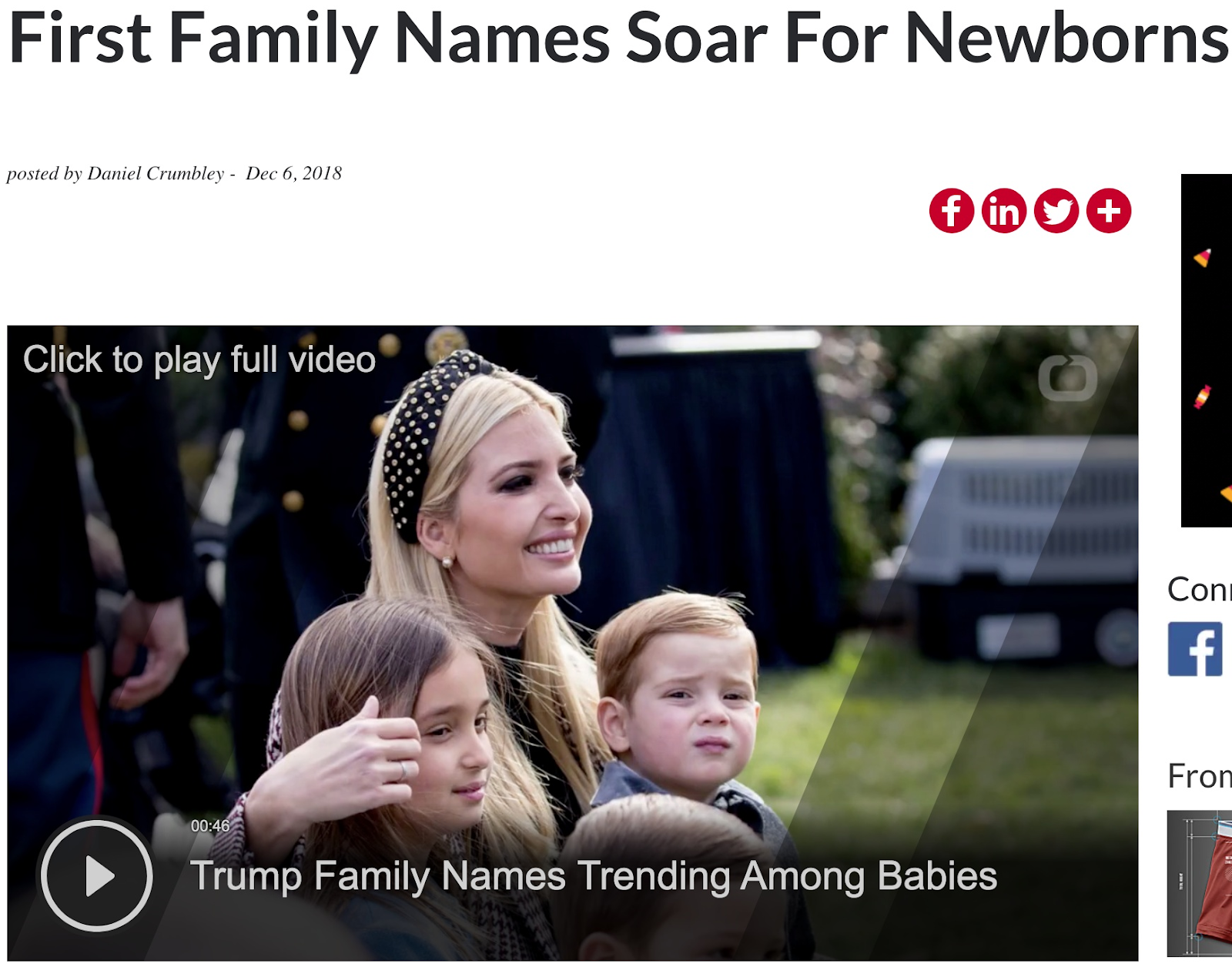
Lists of baby names may seem like an exhausted topic, but still, we see new articles every year exposing the top 50 names so new moms can garner inspiration (and know which names to avoid).
Our approach was a bit different. We pored over years of Social Security Administration data to compare name changes over the past 70 years and how pop culture and trends have impacted how we name our children. Throughout our promotions process, this content proved interesting for readers at both the local and national levels.
The main takeaway here is to avoid limiting your content by addressing hot news topics and pressing social issues. Instead, focus on providing interesting, evergreen projects that engage an audience in a lighthearted way.
How to Get Local TV Coverage
Some mornings are slow news mornings, especially at the local level. Additionally, most stations enjoy sprinkling a few positive, uplifting, and relatable stories in between all the negative and heartbreaking segments. This is where content marketing strategies prove valuable.
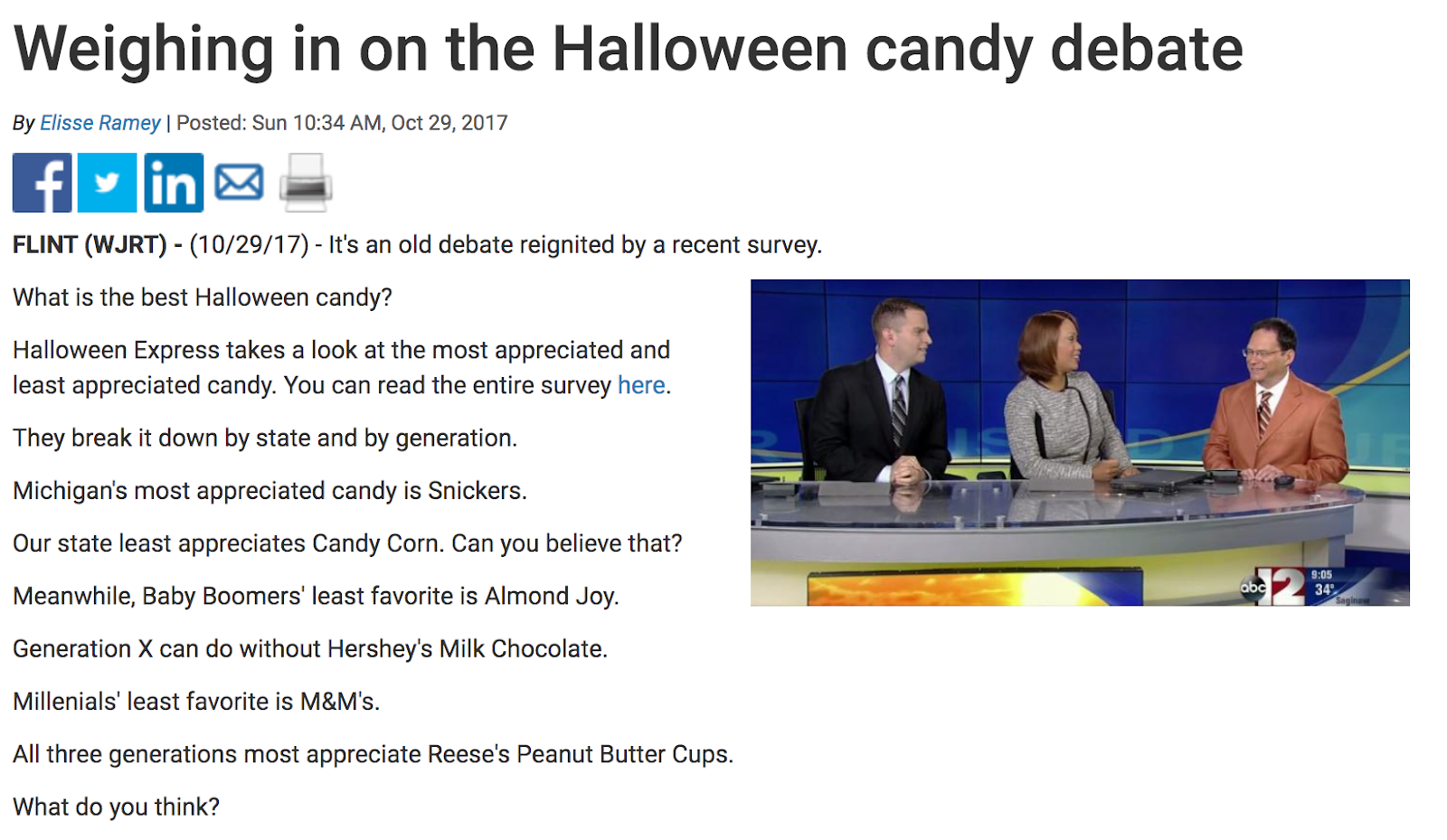
Producing relatable content can be as simple as surveying Americans about their preferences and sorting those results by state and region. That’s exactly what we did for a client looking to build brand exposure and traffic. We surveyed over 2,000 Americans to get their opinions on the best and worst Halloween candies. This study hit a sweet spot; it was a newsworthy topic paired with regional relevance.
It was popular and controversial enough to spark a conversation on a number of regional television news outlets. Supporting Idaho for their love of Almond Joys or disagreeing with Marylanders for their affinity for Nerds proved to be a festive way to ring in the new season.
A similar study by AT&T citing the most popular Halloween costumes in every state gained traction with many local news stations. NBC New York reported their residents would likely go the pop culture route for their costumes, and CI Proud predicted a ton of Mickey Mouse costumes.
Ultimately, collecting regional statistics allows for the opportunity to narrow your outreach efforts and appeal to an audience on a more personal level.
How to Get National TV Coverage
The Today Show’s segment “What’s Trending Today” has covered a number of content marketing studies, and they all have one thing in common: shocking statistics. Obviously, you can’t always predict a study will provide shocking takeaways, but leveraging the ones that do is key.
During the outreach stage, make sure to identify gold when it appears. When our survey of 2,000 drivers across the United States revealed that more than half of drivers pick their noses when they are driving, and 1% say they’ve changed a diaper while behind the wheel, we clearly had a winner. The Today Show discussed their driving confessions and named our client on the air.

When formulating new ideas for your projects, try to ask questions that relate to a common fascination.
For instance, we know the media loves to report on Millennials: habits, trends, disruptions, finances, etc. Creating a survey or study that uncovers some surprising statistics about Millennial cooking habits, let’s say, might be your ticket onto the Today Show. It comes down to finding the right topic, and asking the right questions.
The Secret to Traditional Media
Exposure on traditional media outlets is still one of the best ways to reach your audience. In fact, a majority of Americans claim to respond positively to TV, radio, and newspaper ads. Of course, like any content marketing campaign, the results can be hit-or-miss.
By following some of the trends we see with radio, local, and national television coverage, you can increase your chances for exposure and further engage your audience. Try to create evergreen content, with relatable, regionally-specific data. Also, be sure to identify a major hook.
You’ve likely already hit these marks in recent surveys and projects. Be sure to use what you have and expand your outreach strategy to include local and national stations. Once you see the results, you won’t regret it.

How to Use LinkedIn for Competitor Research
Do you want a competitive edge in your marketplace? Are you using LinkedIn to research your competitors? In this article, you’ll learn how to use LinkedIn to gather valuable insights about your competitors and use what you learn to grow your own business. Why You Should Research Your Competitors on LinkedIn There are many benefits […]
The post How to Use LinkedIn for Competitor Research appeared first on Social Media Marketing | Social Media Examiner.
from Social Media Marketing | Social Media Examiner https://ift.tt/2VqnGls
via socialmediaexaminer
What Is Local PR and How Does It Work? [Examples]
Let’s face it — building brand awareness isn’t the easiest task for a marketer. Trying to be a big voice in a field of so many is nothing short of difficult.
That is where public relations comes in.
Ultimately, the goal of public relations is to maintain positive communication with the world, and ensure your brand image represents your company’s core values and offerings.
Of course, PR is easier said than done, particularly when you’re trying to resonate with global audience. That’s where local PR comes into play.
Those who are struggling with fostering brand awareness should look into the opportunities local PR can give them. As a more cost-effective route to spreading the word, local PR gives businesses repeat consumers in an accessible area and a chance to broaden coverage to the national level.
It’s a good idea to look into leveraging some local PR if you find your business struggling to expand reach and generate leads. Instead of focusing on a broad campaign, however, local PR is a chance to tailor that campaign close to home, boosting its impact among your local community.
Here, let’s explore the benefits of local PR, as well as some examples of brands that have successfully implemented local PR, so you can consider whether it’s a good idea for your own marketing strategy.
Local PR
Local PR is about building brand awareness and creating positive and engaging customer relationships within a business’s community. Local PR takes all of the aspects of public relations, such as maintaining a good brand image, and focuses it at the community level.
For instance, global PR campaigns have an impressive amount of potential reach, but language, budget constraints, and other factors can limit how it will resonate with an audience.
With local PR, businesses can build brand loyalty within their own community. Additionally, creating lasting relationships with local media outlets can lead to positive future press.
Think of travel sites that host roundups of the top local spots to visit in big cities. Businesses with a close relationship with local media outlets that cover local spots would have a good chance of earning this exposure over a business that doesn’t connect with local media.
Local PR comes with its own set of unique benefits: it’s easier than a national campaign, less expensive, and targets physically-accessible customers.
A brand can really tailor its image through local PR and share a local story within a community to which its residents can connect. After all, part of public relations is how businesses communicate with people.
For a broad scope, this guide is an excellent resource for all things public relations. For inspiration with local PR campaigns, let’s explore how three brands used local PR to resonate with their local communities
Local PR examples.
Take a look at how some brands, large and small, are making impacts locally. Through local PR, they’ve earned positive press and strengthened community ties.
These are only a few examples of local PR — more incredible public relations examples are listed here.
1. General Mills
Global manufacturer General Mills (products include Cheerios, Lucky Charms, Cinnamon Toast Crunch, and a number of other household breakfast cereals) provides grants every year for educational programming in Minneapolis, Minnesota.
The Hometown Grants are how Minneapolis-founded General Mills gives back to its community. Every year, the company picks a program or non-profit delivering educational experiences about hunger and food insecurity to the area and sponsors it. The grant also focuses on providing resources to the public K-12 schools in the area.
A company that is globally revered, such as General Mills, could have a hard time keeping positive relationships with local programs and offerings. However, with their grant program, they can continue to build those partnerships and improve their community.
2. Veggie Galaxy
One of my favorite places to eat here in Boston is a diner called Veggie Galaxy. The restaurant has won rave local reviews and even lends its space for Bitcoin meetups every Monday night.
Having the space to host local events or meetups helps build positive relationships around the community.
3. True Crime Obsessed
The first live podcast on Broadway will be performed on June 1st, 2020, at Hayes Theater in New York. True Crime Obsessed is a podcast about all things related to true crime documentaries, based and recorded in New York.
In anticipation of the Broadway announcement, the hosts of the podcast did an interview with New York-based Broadway site Playbill to promote their show.
Being the first podcast to perform in a Broadway theater is a national story, but doing press with a local, Broadway-connected site turns the national story into one with local scope. So, not only is the podcast building a relationship with Broadway and its press, but it is also framing the event on a national level, building more press for the engagement.
Now, let’s talk about some quick strategies to get started with local PR.
Three strategies to get started with local PR
1. Find the Local Angle
Finding the local angle to your news that might only have national appeal is one way to connect your brand to local PR. Maybe you donate to a business in the community or only manufacture within your area. Having that local angle helps your brand appeal to the local press, as well.
2. Host Local Events
Alternatively, participating in local events held by other local businesses offers amazing networking opportunities. Even if the connections are with others outside of your industry, like Bitcoin is for Veggie Galaxy, there’s always the possibility for future collaboration. Who knows, your next event might be held at a vegetarian restaurant, too!
3. Use Local PR for More Exposure
Another great time to incorporate local PR is when partnerships are being looked into. Local PR helps brand image around its community first, opening the door to more expansive coverage.
Sometimes leveraging local PR is a great springboard for gaining broader attention and finding a national angle. Other times, local PR earns you great ground in the community that surrounds you.

The 10 Best Blogging Platforms & How to Pick One
As a baseball player turned blogger, my blogging platform is just as important to me as my bat was to me back in the day. If I went up to the plate with a quality bat that I personally preferred swinging, I would feel more confident, boosting my chances of getting a hit. If I didn’t, I would most likely tap a dribbler back to the pitcher.
Similarly, when blogging eventually replaced baseball in life, I discovered using a blogging platform I was comfortable with and liked, which enabled me to produce better work and results. If I didn’t, I wouldn’t execute as well.
But, just like baseball bats, there are countless blogging platforms you can use. Fortunately, if you’re looking for one that’s ideal for your specific situation, we’ve got you covered. Read on to learn how to choose a blogging platform and find the best-fit platform for your content creation team.
How to Choose a Blogging Platform
Before you can choose a blogging platform, it’s important to consider all your options. While you might’ve only heard of WordPress or Wix, these aren’t your only choices.
Below, let’s review the three steps to help you choose the best blogging platform:
1. List your needs.
Obviously, you’ll have different needs for your blogging platform if you’re a beginner or an advanced web developer. Before you can begin your research, write up a list of your must-haves.
Answer questions like, “Do you need an e-commerce store on your site?” or “Do you want total customization options or are you okay working from templates?”
These are the types of things you’ll want to know as you’re browsing different blogging platforms.
2. Do your research.
Depending on your needs, come up with a list of the best platforms. List out the pros and cons and find the options that fit your needs. Note: We’ve started this process for you by listing the top 10 blogging platforms below.
3. Build a spreadsheet.
Build a spreadsheet to compare your options. List out prices, features, support, ease of use, integrations, and design. Additionally, you’ll want to consider if the platform has room to grow as your blog grows.
Now, let’s review some of your options below.
1. HubSpot
G2 Rating: 4.3/5.0 (5,974 Reviews)
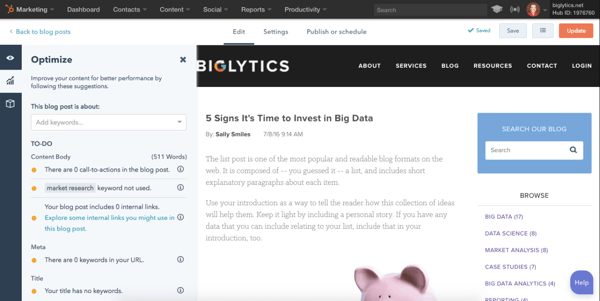
HubSpot offers one of the most robust blogging platforms around. When drafting your blog posts, you can use its composer to craft content from scratch or with one of the pre-made blog post blueprints. You can also integrate your G-Suite Account with HubSpot’s blogging platform to import your Google Docs right into its composer.
Additionally, you can edit your blog posts directly in the composer by adding comments, offering feedback, and collaborating with other writers or editors on your team.
After you finish drafting your blog post, HubSpot’s blogging platform features SEO recommendations and a topic cluster tool that helps you optimize your blog posts for search engines.
You can then schedule your blog posts with HubSpot’s calendar tool, connect to and promote them through your social media accounts and email, and analyze their performance with HubSpot’s analytics tools.
To test it out, try the CMS Hub free trial.
2. Squarespace
G2 Rating: 4.4/5.0 (845 Reviews)
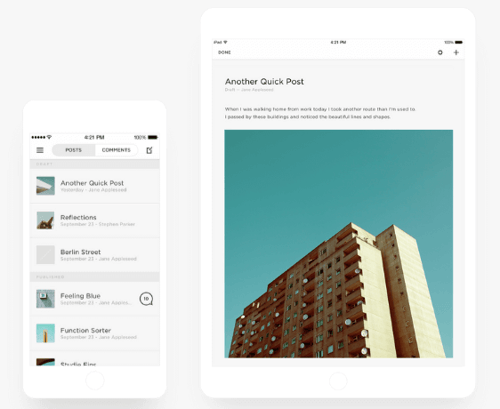
If you want to build a truly beautiful blog, Squarespace is the blogging platform for you. With their award-winning, fully customizable designer templates and integrations with Getty Images, Unsplash, Google AMP, and more, you can improve your content’s design and boost its ability to grab and hold your audience’s attention.
You can also collaborate with multiple writers and editors on your content, integrate and promote your blog with your social media accounts, and manage your blog posts’ comments.
Additionally, Squarespace offers some other robust marketing tools that can help you increase your reach and refine your content strategy, like email campaigns, SEO features, analytics, and lead capture features.
3. WordPress
G2 Rating: 4.3/5.0 (7,613 Reviews)
 Powering over 30% of the websites on the internet, WordPress is one of the most popular blogging platforms out there. If you’re creating a new blog, you can register a domain for your site right on the platform. If you already have a website, you can transfer your current domain to your new WordPress site.
When creating blog content, WordPress offers hundreds of themes that you can customize with your own branding and content. You can also leverage their SEO tools, social media integrations, and sharing tools to amplify your blog posts’ reach.
When it’s time to analyze your blog posts’ performance, WordPress offers metrics and data visualization, like charts and graphs, that’ll help you grasp your readers’ topic preferences and referral source.
4. Wix
G2 Rating: 4.2/5.0 (1,172 Reviews)
 Wix is one of the most versatile blogging platforms on the market. Whether you own a business or a food review website, Wix has a wide range of templates any blogger can use.
After you’ve picked your blog’s template, Wix lets you write and edit posts on desktop and mobile, organize your posts into topics, display Wix’s stock photos and videos or your own media on your blog posts, and create a community of audience members who can make profiles on your blog and interact with each other.
To promote your blog posts, you can leverage Wix’s SEO tools to boost your organic reach, push your content to your subscribers with their email tool, and connect and share them through your social media accounts. If you want to measure your content’s performance, Wix also offers an advanced analytics tool.
5. Weebly
G2 Rating: 4.2/5.0 (401 Reviews)
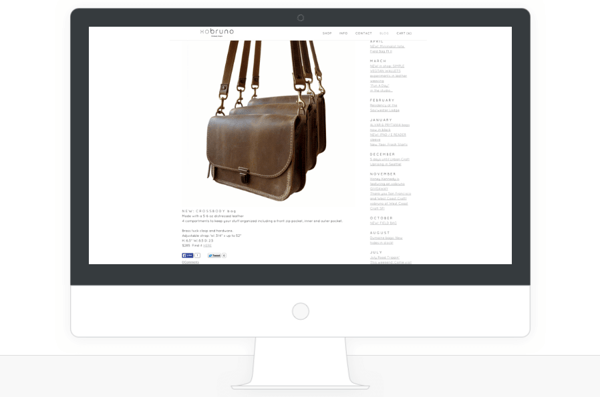 Trusted by over 30 million people across the globe, Weebly is one of the most popular blogging platforms because it’s incredibly intuitive. With their drag and drop editor, free blog templates, completely customizable design, and a wide range of media options and integrations, you can easily create a blog that’s easy on the eyes.
To amplify your blog’s reach, you can leverage Wix’s SEO tools to improve your organic rankings, their RSS feed to update your subscribers with every new blog post you publish, and their social sharing tools to schedule your content on your social media profiles.
6. Craft CMS
G2 Rating: 4.1/5.0 (28 Reviews)
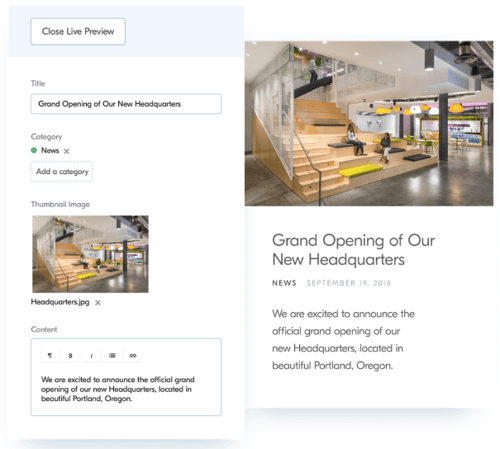 Craft CMS is a blogging platform that lets you completely customize your blog, manage your content, and analyze its performance. With its personalized content modeling, custom control over your blog’s code, and powerful templating, you can build your very own dream blog.
Craft CMS also offers an image editor, collaboration tools, and a localization feature that can translate your content to specific languages. To analyze your content’s performance, you can integrate Craft CMS’ dashboard with Google Analytics.
7. Contently
G2 Rating: 4.0/5.0 (20 Reviews)
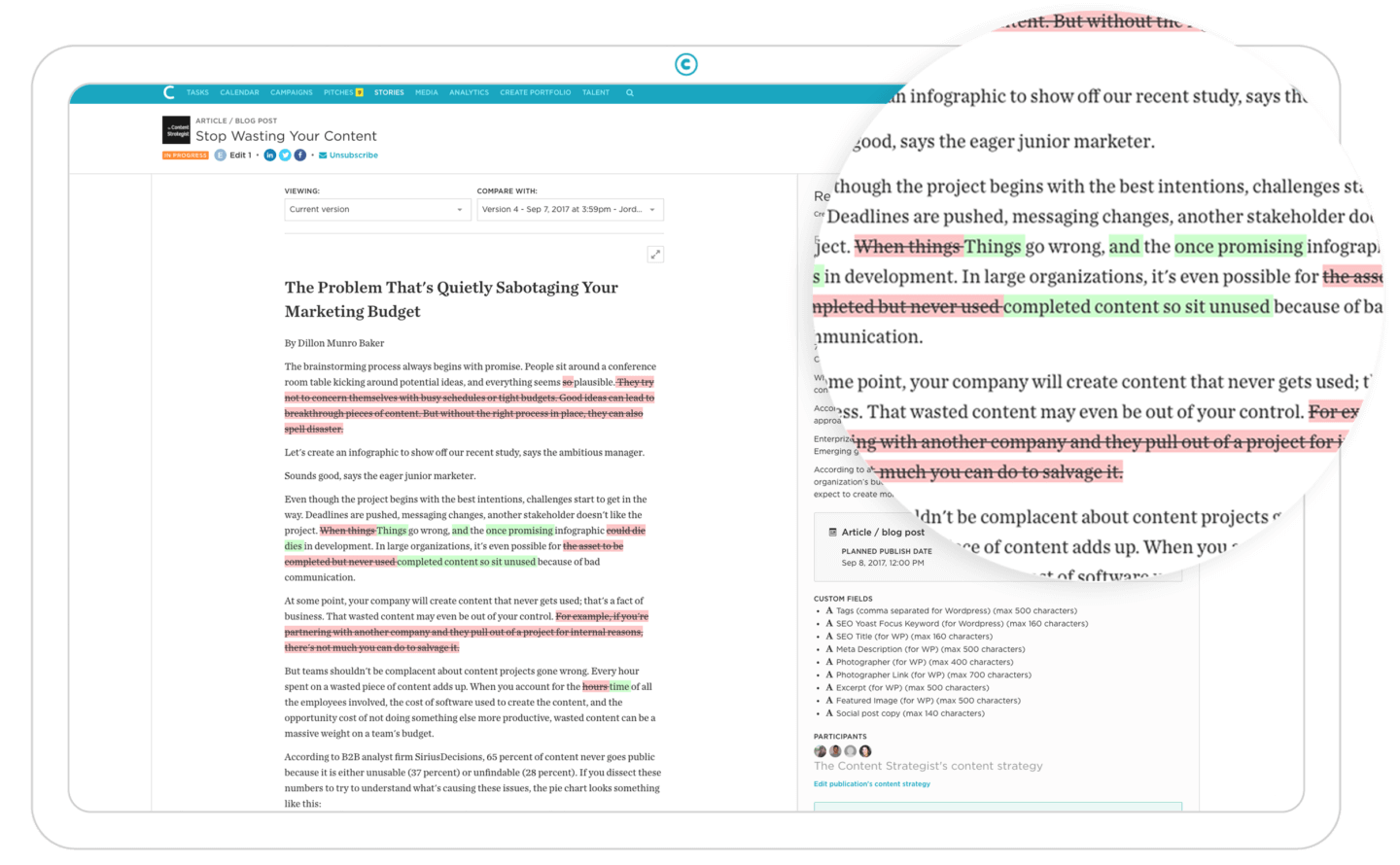 Tailored for enterprise companies, Contently is a robust blogging platform that allows you to run your entire content creation process in one place. To develop your content strategy on Contently, you can organize your blog posts with their tagging tool and flesh out your editorial strategy with their customizable production calendar to.
After that, you can effectively collaborate with your team on projects by commenting on and tagging colleagues in your drafts and leveraging Contently’s advanced workflow tools.
When it’s time to ship your content, you can use their smart content review tools to ensure your content is aligned with your brand, optimized for search, and legally compliant.
If you want to gauge your content’s performance and use that data to refine your content strategy, you can compare your content’s performance against industry benchmarks and measure its performance by topic, format, and sources in the platform.
8. Drupal
G2 Rating: 3.8/5.0 (326 Reviews)
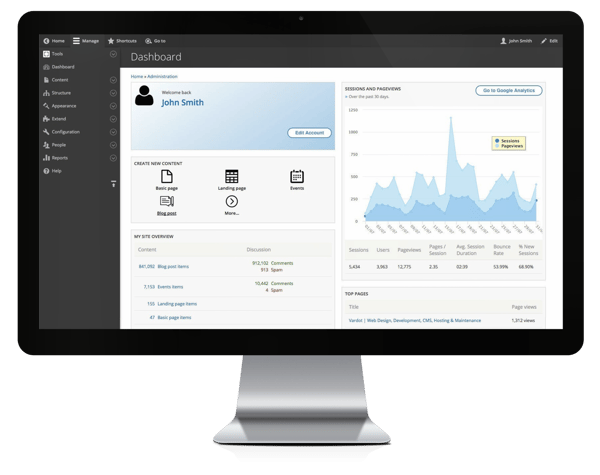 Drupal is another CMS option that’s popular with enterprise companies because of the extensive features.
It offers excellent built-in content creation and editing features for enterprise blogs. However, if you don’t have an advanced developer on your team, it might be more difficult to use. Additionally, you won’t need all of the bells and whistles for a simple blog.
On the one hand, Drupal offers great security, thousands of free plugins, customizable options, and it can grow with you. However, there’s a steep learning curve, so this isn’t the best option for beginners.
9. Joomla
G2 Rating: 3.9/5.0 (290 Reviews)
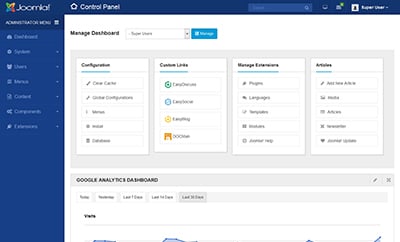
Joomla is an excellent blogging platform for beginners. It’s easy to maintain because of the site’s seamless update process. Additionally, it offers more built-in settings than WordPress and has a thorough Help Center if you need it.
Joomla is similar to WordPress in that it’s open source and is easy for beginners. You don’t have to be a developer to build a blog on this site. Many businesses like this blogging platform because it offers flexibility and is suitable for several types of websites.
On the other hand, it doesn’t offer as many themes or extensions as its competitors.
10. Blogger.com
G2 Rating: 4.1/5.0 (56 Reviews)
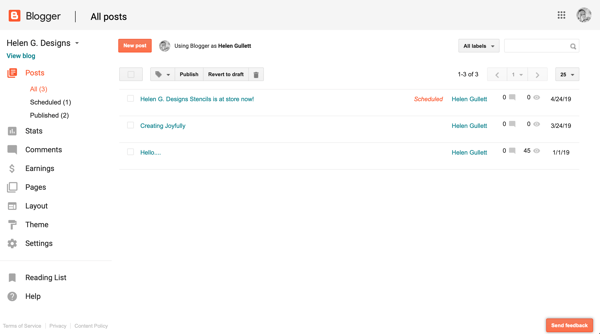
Blogger is probably one of the best free blogging platforms for beginners. It’s simple to use and doesn’t have a steep learning curve. All you have to do is write a blog, add photos, and publish. This platform lets you edit HTML and add widgets.
Additionally, Blogger is a Google service, so Google-related add-ons are helpful. You’ll connect your Google account and can easily monetize with AdWords.
However, many bloggers grow out of this platform since there aren’t any upgrade options. You can’t add an ecommerce store and customization is limited.
While this is a great option for personal blogs or hobby blogs, you might want to look at the other options if you’re a business blog.
Choosing a blogging platform is an important decision for the success of your blog. Once you know what you’re looking for, it’s time to compare and contrast.
Editor’s note: This post was originally published in April 2019 and has been updated for comprehensiveness.

What’s an Organic Search & How Do You Report on It?
Last week, I was searching Google for athletic wear because I was in the market for some new yoga pants.
As I was scrolling through the results, I saw Fabletics. After browsing its site, I ended up becoming a VIP member and purchased $50 worth of athletic clothing.
In the same vein, when I worked at a marketing agency last year, I was responsible for social media for our clients.
I was curious about how to best use Instagram in the education industry. So, I went to Google and searched for “how to run social media for schools.”
I came across a blog on Sprout Social that was helpful when I created a strategy. When it came time to switch our social media automation tool, I even decided to go with Sprout Social.
In fact, 47% of consumers view 3-5 pieces of content before talking to a salesperson.
That’s why organic search is so important as a marketer. It helps build your brand, generate sales, and provide value to your audience.
Below, let’s learn more about organic search and where to measure your results.
What is an organic search?
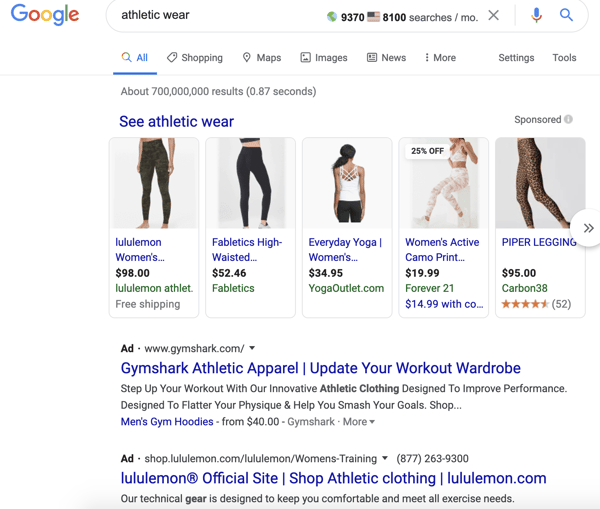
Organic search results are the unpaid results that appear on a search engine results page after a query. In the example below, when I typed “athletic wear” in Google, the unpaid results are all a part of that organic search.
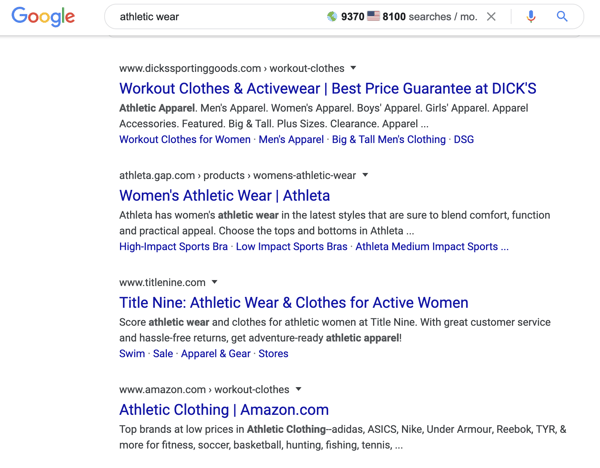 These results are typically generated based on search engine optimization (SEO) factors including backlinks, domain authority, and relevance.
On the other hand, search engines might also show paid search results, which are known as display ads or pay-per-click ads. These are denoted with the word “Ad” before the hyperlink, as shown in the example below.
Organic traffic is one of the main traffic sources inbound marketers focus on because once you succeed, it’s a long-term source of traffic.
While an organic search strategy can take time, it’s more likely to generate leads and revenue because it’s a non-disruptive form of delivering content. Also, organic searches produce relevant traffic because you’re answering user’s questions when they’re asking them.
This helps people become aware of your brand who aren’t already, like in my Sprout Social example above.
To rank highly on search engines, you have to pay attention to search intent when you target keywords, so users are more likely to click on your page.
You can also create a blog, be active on social media, and optimize your pages for SEO to improve your organic search rankings.
Usually, organic search is an important traffic source to consider because other traffic sources generally lead to one-page site visitors since they aren’t trying to drive overall site traffic or customer loyalty.
Although we’re focusing on organic traffic today, it’s important to remember the other several traffic sources, including:
- Direct: Traffic where the source is unknown.
- Email: Traffic from email marketing.
- Organic: Traffic from search engines that’s unpaid.
- Paid search: Traffic from search engines as a result of paid ads.
- Social: Traffic from a social media network.
By navigating to this section, you’ll find the different traffic sources, including organic traffic. It will show you the amount of sessions, plus the percentage of your traffic to each source.
If you’re a HubSpot user, you can also find organic traffic numbers in the product as well.
Using the HubSpot Marketing Software, you’ll go to the Reports → Analytics tool. Then, you’ll click Traffic Analysis and you can see your traffic sources. This will show you the number of sessions in a given time period.
Ultimately, organic search is one of the best SEO strategies to increase long-term traffic to your site. While you work on SEO methods to improve your organic rankings, you can measure these results in software such as Google Analytics or HubSpot.

5 Examples of Brands Newsjacking in 2019
Shortly after the announcement that Prince Harry and Meghan Markle were “stepping away” as senior members of the Royal Family, Madame Tussauds Wax Museum also made news by removing Harry and Megan from a wax display of the Royal family.
But, the famous wax museum’s publicity stunt isn’t the only example of a brand that’s leveraged a news event to gain awareness or viral attention. In fact, this tactic has been used by marketers throughout the 2000s. It’s often called “newsjacking.”
Newsjacking is when a brand or firm mentions or creates a campaign centered around a major, well-discussed news item. It’s slightly different from a publicity stunt in that the news item is leveraged in marketing while a stunt might acknowledge news within a public venue or place of business.
Why do brands choose to newsjack rather than creating a totally original storyline for their campaigns? It’s simply because this strategy helps them get discovered by adding or piggybacking off of larger conversations happening online.
In the early 2010s, we frequently saw newsjacking attempts during big, televised events like the Super Bowl or the Academy Awards. But, as marketers more frequently use social media and online channels, we’re seeing brands identify newsy topics faster and newsjack through a variety of content.
If you’re looking to leverage news, trends, or current events to amp up your marketing strategy, you might be wondering, “How do I get started?” or “How can I do this tastefully?”
If so, one great way to learn how to newsjack is to watch how other brands have done it.
To help you get inspired, here are five examples of brands that successfully took on newsjacking in 2019, and some takeaways that you can keep in mind in 2020.
7 Examples of Newsjacking in 2019
Aviation Gin: The Gift That Gives Back
News Item
In December 2019, the workout bike company Peloton released a critically panned commercial that begins with a husband giving his wife a Peloton for Christmas. As the commercial continues to the optimistic sounds of the song, “There She Goes,” the wife, coined as “Peloton Wife” on social media, films herself working out every day for a year. At the end of the ad, she shares the video with her husband — seemingly the following Christmas.
Here’s the commercial, which is titled “The Gift That Gives Back”:
The commercial was heavily criticized and mocked throughout social media because it enforced dated gender norms and goes against body positivity because many people believe that a husband buying a wife a workout device insinuates that she’s out of shape.
The Newsjacking
After the Peloton ad — and it’s instant criticisms — circulated the internet, actor and Aviation American Gin owner Ryan Reynolds immediately cast Monica Ruiz, a.k.a. “Peloton Wife,” in a commercial written to feel like a sequel to the Peloton ad. In the commercial, humorously titled “The Gift That Doesn’t Give Back,” Ruiz sits at a bar, staring blankly into the camera. She emotionlessly sips on and complements the smooth taste of Aviation Gin as her supportive friends offer her more gin and make comments like, “You look great, by the way.”
While the ad doesn’t directly mention the workout bike company, Reynolds says Aviation Gin’s commercial was a direct response to Peloton. In fact, Reynolds initially tweeted the ad with the caption, “Exercise bike not included,” and later explained that he hired the Ruiz just a “few hours” after the original ad launched.
“I’ve been there as an actor, where you do something that doesn’t quite work . We got ahold of her and within 36 hours, we shot, chopped, and put out this commercial,” Reynolds explained on The Tonight Show.
Shortly after its launch, Aviation Gin’s commercial went viral, receiving over 6.2 million YouTube views and 42 thousand retweets on Twitter. It’s also been noted by a number of publications including MarketingLand and AdWeek.
This newsjacking was successful for a number of reasons. First, the brand quickly responded to a news item with a creative idea. Additionally, the campaign was subtle, professional, and didn’t directly acknowledge Peloton. With just a few words and visuals, it told a deeper story which was almost more hilarious than if it had directly acknowledged the workout bike company.
Burger King’s “Big Mac-ish” Menu
News Item
After a legal battle with an Irish fast-food chain called Supermac’s, McDonalds lost its exclusive Big Mac trademark. While the fast-food giant could still keep using the Big Mac title for its sandwich in Europe, the ruling noted that any other company could also use the term “Big Mac” on its menus or marketing assets.
The Newsjacking
Burger King took full advantage of its competitor’s legal slip by launching a handful of marketing content discussing its own Big Mac-like products.
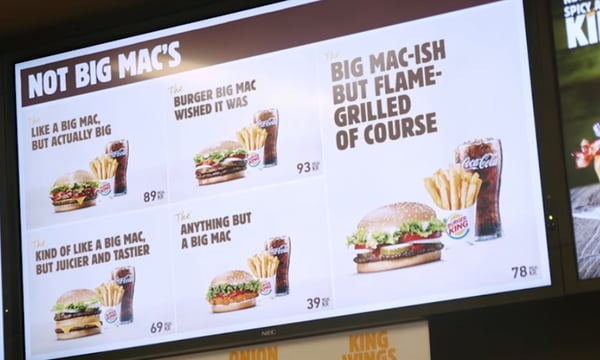
For example, Burger King released European menus that promoted its own “Big Mac-ish” sandwiches, as seen below. It also offered a limited-time flame-grilled Big Mac that it claimed was bigger and tastier than the McDonald’s menu item.
Below is the Burger King menu which highlights its Big Mac-ish items and the Big Mac copy.
Source: Marketing-Interactive.com
This is a great example of how one company can take advantage of news relating to its competitor in a funny, but professional way.
AeroMexico: “A World Without Borders”
News Item
Throughout President Donald Trump’s time in office, the administration has tightened border policies while continuing to construct a metal wall at the U.S. Mexico border. This has continued to fuel debates about whether the United States, a country that was historically founded by immigrants, should have such tight border policies and a wall.
This debate reached a major pique when the Trump administration’s request for wall funding resulted in the longest government shutdown ever, running from December 22, 2018, to January 25, 2019.
The Newsjacking
AeroMexico, an airline that offers routes specifically to Mexico, paid close attention to these debates and took note of the fact that millions of Americans “did not want to travel to Mexico.”
Rather than pivoting their strategy or adding routes to other locations, AeroMexico went to a rural United States town, DNA-tested residents who were in favor of the border wall, and offered them flight discounts based on the percentage of Mexican descent that was revealed on their DNA tests.
AeroMexico then followed up with a commercial showing each person giving their views on immigration laws, Mexico, and the wall.
During the commercial, which showed AeroMexico interviewing the residents, a cameraman asks each of them, “Would you consider going to Mexico?” Their discomfort with the idea of traveling south becomes apparent when they answer with statements like, “No way!” and “Let those folks stay on their side of the border.”
It then showed their surpised facial expressions when they all found out about their Mexican heritage. Lastly, the commercial notes how most of them were interested in taking the discounted flight to Mexico once they were offered it.
“Many Americans don’t like Mexico. But … according to the U.S. Department of Homeland Security, Mexican immigration goes as far as the 1800s, settling in on the south — meaning that a big percentage of descendants in the U.S.A. don’t even know it yet,” noted AeroMexico’s Clio award submission.
“Without a significant budget, our strategy was to take advantage of the media coverage that President Trump’s government shutdown had. Therefore, we focused all of our PR resources on spreading our video on social media,” the submission added.
According to the Clio submission, the campaign went viral, receiving more than 1.6 billion impressions. It also resulted in a 33.7% increase in ticket sales between the U.S. and Mexico.
This campaign and commercial is a great example of how a company entered a political debate and made a point in a clever way. It also shows that they are proud of their business and those of the Mexican heritage because they’re willing to offer giant discounts, even to immigration critics, with Mexican descent.
The commercial and campaign were so fascinating and thought-provoking that it even won a 2019 Clio Award.
Gillette: “The Best Men Can Be”
News Item
In 2018 and 2019, the #MeToo movement led to a number of high-powered, and sometimes well-trusted, men getting accused or charged for sexual assault and harassment. High-level men who incurred allegations included film executive Harvey Weinstein and ex-Good Morning America co-host Matt Lauer.
This movement was marked by the #MeToo social media trend, started by activist and Weinstein accuser Alyssa Milano. The trend encouraged women to spread awareness of how common sexual harassment, misconduct, and assault was by sharing stories along with the #MeToo hashtag.
The Newsjacking
Gillette, which has always positioned its shaving products as, “The Best a Man Can Get,” wanted to reposition its take on masculinity in light of the #MeToo movement. To do this, they aired an intense Super Bowl commercial that digs into toxic masculinity and the negative stereotypes related to manhood.
The commercial begins with visuals of men looking in the mirror, with soundbites of news reports related to bullying, toxic masculinity, and the #MeToo movement. When the ad cuts to an old Gillette commercial showing a strong man, a narrator asks, “Is this really the best a man can get?” as a young boy breaks through a screen showing the old Gillette commercial while running from bigger male bullies.
The commercial goes on to show different aspects of toxic masculinity, such as texts from male bullies saying phrases like “FREAK!”, a male executive touching a woman’s shoulder in a meeting and stating, “What I think she’s trying to say is…”, and young children fighting as their father’s say, “Boys will be boys.”
Suddenly, the narration says, “Something finally changed — and there will be no going back,” as the ad cuts to clips of news coverage following the #MeToo movement.
The ad culminates by showing clips of men being good influences by stopping boys from fighting, standing up to bullies, and actual footage of a father telling his infant daughter that she is strong.
“We believe in the best in men. To say the right thing, to act the right way. Some already are in ways big and small. But ‘some’ is not enough. Because the boys watching today will be the men of tomorrow,” the ad concludes.
While the commercial highlighted a controversial item and allowed the company to take a progressive stance on it, it still came with some mixed reviews due to its sensitive nature. Although it has both positive and negative reviews, it’s important to include on this list so that marketers can learn both the positive and impacts of newsjacking strategies.
Many who saw the ad felt that Gillette was desperately leaning into a sensitive movement to benefit its own brand.
“Part of the Gillette’s motive for running the ad may be that there is recent research suggesting that millennials give more credit to brands using corporate social responsibility appeals,” noted a Forbes post. “In this case, it appears Gillette will learn a lesson about what not to do as pertains to corporate responsibility efforts.”
Meanwhile, some still identified how it was a solid step forward in marketing.
For example, a Wired post noted that the ad was an “undeniable sign of progress” despite its backlash.
“Once again, the country seems divided. This time, it’s not a border wall or a health care proposal driving the animus, but an online ad for a men’s razor, because, of course,” the Wired article states. “But underneath the controversy lies something much more important: signs of real change.”
All in all, it’s important to look at both the pros and cons of this example. Although Gillette’s commercial was high quality, made valid points, and stirred emotions from viewers, it’s important to keep in mind that this is a large company still aiming to succeed in a society that is much different than when its company began decades ago.
Oreo’s Area 51 Tweet
News Item
In the fall of 2019, social media users were buzzing about a bizarre plan to raid Area 51, a highly classified government base which conspiracy theorists say is the home of testing extraterrestrials.
The Newsjacking
Oreo went to Twitter and simply joked, “What flavors do you think they’re hiding in #Area51?” Thousands of users, and even other brands, replied and shared the tweet.
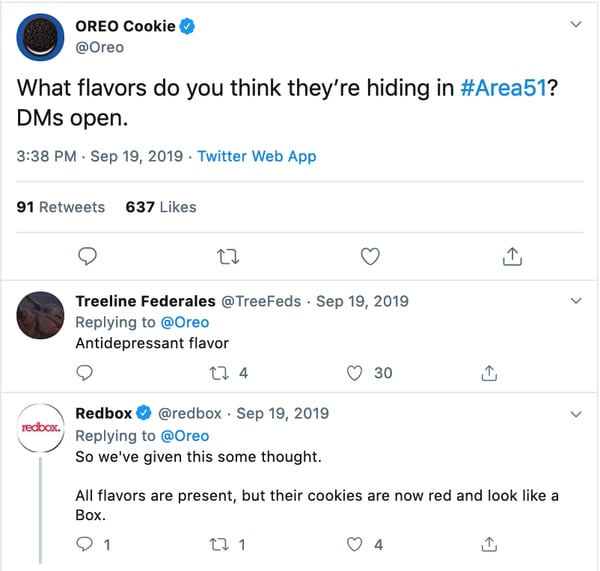
This is a great example of a brand that affordably, and quickly, referenced newsy or trendy topics to gain engagement, likeability, and brand awareness on a social network. Not to mention, Oreo instantly got people to discuss great Oreo flavors on Twitter.
While other brands on this list have embraced newsjacking with high-budget campaigns or commercials, Oreo shows that the strategy doesn’t have to get too complex, time-consuming, or costly for marketers.
Newsjacking Takeaways for 2020
With fast-paced social media and online news published every second, there are more and more opportunities where marketers can embrace newsjacking.
But, before you attempt to newsjack, take time to consider the news item and make sure that your strategy will be tasteful or informative, rather than offensive. For example, if you make a funny reference about a bizarre trend like the Area 51 raids, you might be seen as funny or memorable. However, if you post an insensitive campaign or comment about a controversial topic — such as immigration, you might be seen as out of touch.
As you craft a creative newsjacking strategy, be sure to run it by other members of your marketing team and get your feedback to ensure that your content doesn’t flop.
To learn more about how to cleverly embrace newsjacking, check out this blog post.

How to Use TikTok Challenges for Business
Wondering how to get more exposure for your brand on TikTok? Have you considered a TikTok challenge? In this article, you’ll learn how to use TikTok challenges for your business. What Is a TikTok Challenge? TikTok is quickly becoming the social media platform of the moment, with recent statistics showing the app has now been downloaded […]
The post How to Use TikTok Challenges for Business appeared first on Social Media Marketing | Social Media Examiner.
from Social Media Marketing | Social Media Examiner https://ift.tt/2T0GIgV
via socialmediaexaminer
12 Benefits of Email Marketing Your Marketing Team Must Know
As a marketer, you might’ve heard coworkers talking around the watercooler about how email marketing is dead. It’s been a common concern for many marketing departments.
Well, I’m here to let you know that you don’t have to worry because email marketing is still going strong.
In fact, 40 percent of B2B marketers say email newsletters are most critical to their content marketing success, and 73% of millennials prefer communications from businesses to come via email.
Furthermore, 99% of consumers check their email every day and it is by far the preferred way to receive updates from brands.
As marketers, we can’t ignore these statistics. That’s why it’s important to develop a strong email marketing strategy.
Below, let’s review the top benefits of email marketing, which show why it’s one of the most effective marketing tactics.
1. Creating personalized content.
With email marketing, you can customize your campaigns and create targeted content.
Personalization can be as small as including a contact’s name in the email. In fact, emails that include the first name of the recipient in their subject line have a higher clickthrough rate than those that don’t.
On the other hand, you can also create individualized content based on segmenting your audience so you send the right emails to the right customers. For instance, perhaps you want to send an email marketing campaign to returning customers and a different one to one-time customers.
One of the main benefits of email marketing is that your content can be highly personalized to your audience’s needs. Your emails might have variations including different images or subject lines to increase your engagement. You can even create segmented lists based on geography or engagement levels.
To have a successful email marketing strategy, you need to send the right email to the right people at the right time. That’s where segmentation and personalization can help.
2. Collecting feedback and surveys.
Keeping a pulse on the customer experience is very valuable if you want customers to continue to interact, engage, and purchase from your brand.
Email marketing can help you do this. For instance, you can send customer satisfaction surveys to obtain customer feedback through email campaigns.
In fact, this is one of the best ways to calculate your Net Promoter Score (NPS). This score helps you find out the percentage of customers who are brand ambassadors and the ones who are detractors. With this information, you can come up with strategies to improve your customer experience.
3. Improving sales.
While email marketing is clearly an excellent marketing tool, it can actually improve your sales as well.
Email marketing campaigns can feature products or services, encourage customers to purchase after abandoning their cart, or deliver special offers to your customers.
Furthermore, 59% of respondents in this survey say marketing emails influence their purchase decisions.
Your email marketing campaigns can easily incorporate messages to encourage a purchase to an audience that’s more likely to buy from you because they’ve opted-in to your messages and updates.
Additionally, you can use email marketing to automate part of your sales process, which can help increase sales as well.
For instance, with HubSpot’s free email marketing tool, you can automate sales drip campaigns and send automated messages to prospects your salespeople want to follow up with.
4. Communicating with your audience.
As a marketer, it’s always important to improve communication with your audience. When your audience feels like they can talk to you, they’re more likely to become loyal to your brand.
Just think — people appreciate good emails. Think back to the last time you received a marketing email from a brand you love — was it disruptive or did you enjoy looking at the latest news? If it’s a brand you like, you probably enjoyed the experience and it kept you in touch with one of your favorite brands.
With email marketing, you can reach more of your audience and easily communicate with brand ambassadors. Plus, these emails keep your audience engaged during every time of the year, whether it’s a slow or busy season.
5. Generating traffic to your site.
When you produce great content, how do you disseminate it to your audience? Most likely, you send them an email.
With email marketing campaigns, you’ll send traffic to your site and improve your SEO. Plus, you’ll keep your audience engaged with your brand and your site.
For example, many of you might have reached this page from a marketing email from HubSpot. That’s because email is a great way to provide value to our audience, and we do that by sending our content in our emails and generating traffic.
When you’re creating an email that links to your content, keep in mind that each email should contain a call to action (CTA) so readers can click through to your site.
6. Sending timely campaigns.
Although traditional marketing campaigns have a time and place, they can take months to plan and organize. Even then, you probably aren’t sure if people are going to see your campaign assets at the right time.
However, with email marketing, you can create an entire campaign on shorter notice because they don’t take as long to plan. Additionally, you can ensure your audience sees the email at the right time.
For example, you can make sure you send content at the right time by segmenting your audience.
7. Increasing leads.
In the same vein as improving sales, you can also increase your leads with email marketing. In fact, with the inbound method, email marketing is used to nurture leads and improve conversions.
For example, let’s say you downloaded a lead magnet from a site. Then, you start receiving drip emails, and in the end, you decide to book a demo and learn more. You just went from an MQL to an SQL, which improves the marketing teams number of qualified leads to the sales team.
Email marketing campaigns can further qualify leads so your sales team isn’t wasting time on bad leads. Plus, if your company does lead scoring you can keep track of whether those leads open your emails or engage by clicking the links in your email.
8. Reaching the right people at the right time.
To have a successful marketing campaign, you have to reach the right customers at the right time. Yes, I’m reiterating this point because it’s that important.
With email marketing, it’s that much easier to reach people because they always check their email. They can check it at any time, on multiple devices, which can improve the success of any marketing campaign.
This means you’re getting in front of your audience on a regular basis, so you’re always top-of-mind.
9. Producing cost-effective campaigns.
While traditional campaigns like direct or print can be costly, email marketing campaigns tend to be more cost-effective.
For example, you won’t have to pay for any photoshoots, location fees, printers, mailing, or placement. All you need is a copywriter and graphic artist (if you aren’t using stock images). This can even be one person on your team.
Additionally, email campaigns don’t take long to produce. If needed, you can produce an email in one day, which is much more cost-effective than the time it takes to produce a direct or print campaign.
Since time and budget constraints always impact marketers, email marketing campaigns can be more efficient, while also generating revenue and leads.
10. Providing more value to your audience.
One of the main goals of any business is to provide value for your audience so they keep coming back.
Email marketing is a great place to cultivate loyal customers because you can add value even when customers aren’t making a purchase.
Additionally, since customers or prospects opted-in, you can use email marketing to provide more resources to contacts who are interested in what you have to say.
If you continuously provide value for your audience, more people will pay attention and you’ll produce a higher ROI.
11. Having a forum for self-promotion.
Sometimes it can be awkward to self-promote in places where prospects haven’t necessarily opted-in to receive updates about your business. However, self-promotion is one of the best ways to attain customers. If you can’t promote yourself and sell your company, no one will buy from you.
With email marketing campaigns, you’ll always have an avenue to promote yourself, especially since customers opted-in. You can send emails about new products, features and benefits, or new content. Since customers want to hear from you, this self-promotion isn’t unwanted or disruptive.
12. Owning your media and contact lists.
With platforms like social media, you don’t own your contact list or even the information you post. Typically, the content and your follower list is owned by the social media platform.
Just think — if social media went away tomorrow, how many followers and customers would you lose?
That’s why building an email list is important for marketers. This is a contact list you own and you can interact with them regardless of the email provider. Plus, you’ll also own the content that you produce and send as well.
Email marketing is one of the top ways to reach your audience. Plus, it can also improve sales and leads. Since this is still the place where people want to receive information, let’s just say that email marketing isn’t dead.

6 Advertising Tips to Draw Customers In
Today, I was scrolling the Bon Appetit website, and by the end of my visit, I’d signed up for their newsletter.
When I saw their newsletter advertisement, it was so effective that I just couldn’t help myself.
Good ads get consumers to stop and stare. Effective ads inspire engagement. And when I saw this, I stopped scrolling, laughed, and typed in my email:
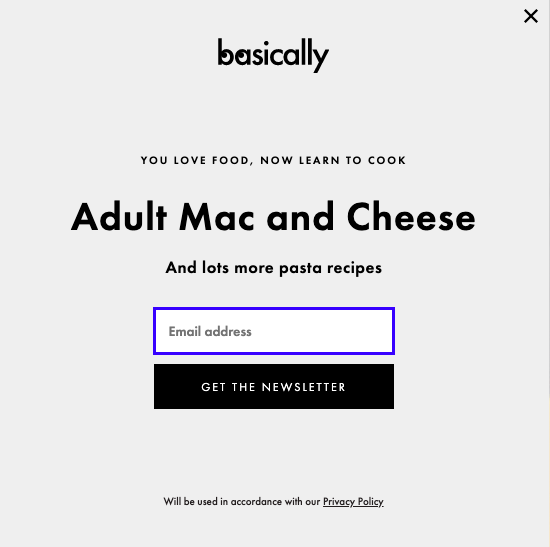
This ad successfully combines humor and relatable language to compel me to subscribe — additionally, it solved a “problem” (learning how to cook pasta) I didn’t know I had. Those are three elements of what can make an amazing ad.
Oftentimes, marketers assume a good ad can only be made with a big budget. Additionally, marketers sometimes believe ads are most effective if they’re busy or loud.
While having all the factors above do make for an enjoyable ad experience, they shouldn’t be the only things marketers focus on when designing an ad. In fact, some of the most effective ads I’ve come across have none of them.
The ad above, for example, isn’t busy, moving, or flashy at all, but it’s still an example of a good ad. In this post, let’s explore six components for creating a good, engaging ad.
Not every ad needs to have every single component to be successful. In fact, picking one to three of these components can still make a dazzling ad experience for consumers. Basics every ad should have, like engaging graphics, are covered in this excellent post about ad creation.
Additionally, the tips we’ve outlined below help elevate an ad, and can enable you to refine your ad to ensure it delights your viewers.
Use these tips as a reference when creating an ad or refining for finishing touches. They can be that last step before an A/B test, or a starting step when brainstorming content ideas.
1. Use keywords to rank on search.
Remember, keywords help rank highly on search engine results pages (SERPs). If a marketer wants to place an ad using Google, but doesn’t use any keywords in their ad, it can be ineffective.
For instance, let’s say I was Googling a laptop for professional use, so I type “business laptop” into Google. This is the first ad that comes up:
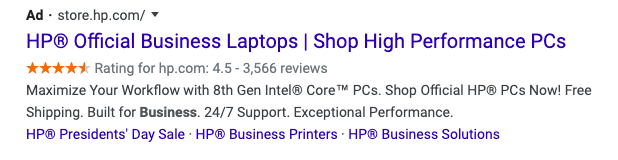
From this ad, I can tell that business laptops are being sold at Dell, which is what I want. Using ambiguous language in an ad doesn’t bring much traffic. It also doesn’t help consumers know what’s being sold.
A small business would benefit using their industry or their product when advertising, especially if the product is in a niche market.
2. Solve a problem for your audience.
Your product or service solves a problem, and you probably know that advertising should tell the audience about how your product or service is a solution. If you’re thinking this method is outdated, it doesn’t have to be.
For instance, rather than taking out an ad in a newspaper or spending huge money on a billboard, you can use Twitter for Advertisers, a tool that lets users shop from the app by clicking on a link.
Take a look at Kohl’s ad, which was created on Twitter’s platform:
Shop comfy outfits for the whole family: https://t.co/S5Dv2UVMuC pic.twitter.com/XxKXcLesCf
— Kohl’s (@Kohls)
February 11, 2020
Copy such as “For the whole family” solves the problem of a busy parent having to go to different stores for clothes shopping. This ad is effective, showing siblings of different ages modeling clothing in a comfortable home setting.
By clicking on the ad, consumers will be able to see every piece the models are wearing, the price, and even purchase items without leaving the app.
3. Ask your audience important questions.
Asking questions engages idle consumers. A question gets browsers thinking, much like the copy from this ad from BuzzFeed on Facebook:
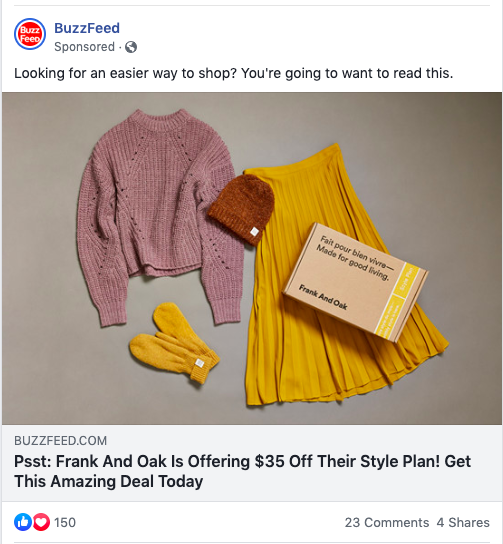
Language in this ad is great — it’s fresh, young, and personable. If I were idly scrolling Facebook, I’d pause on this ad because I’m always looking for an easier way to shop. Here, BuzzFeed recognizes a pain point of its readers and pulls readers into the article by identifying it with a question.
The way the relatable question is posed would make me look at the ad, while the no-frills design of the ad (a simple photo), coupled with the call-to-action, (“Get This Amazing Deal Today”) would make me open the ad.
That initial pull to the ad is possible due to the question. Ultimately, by beginning your ad by posing a question that peaks interest, you’re inviting viewers to click.
4. Include a customer or user’s testimonial.
The reason consumers love websites like Yelp so much is that it’s an entire platform of customer reviews about a product or service that help consumers make more informed decisions.
For instance, check out this ad for TriNet:
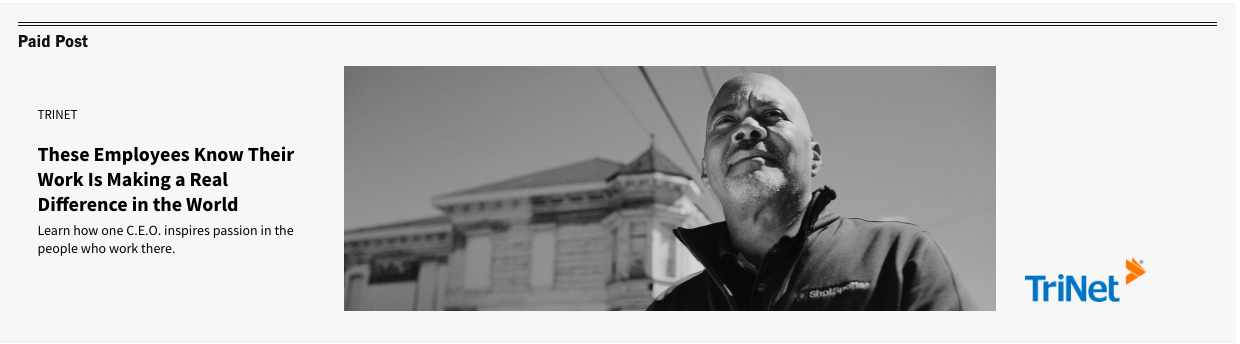
“Learn how one C.E.O. imagines passion in the people who work there” — this copy effectively notates a powerful key player of business and caters to thought leadership.
The headline, “These Employees Know Their Work in Making a Real Difference in the World,” is a powerful sentence that plays to emotions — it makes readers think, “Am I making a difference in the world? How are they? I should click on the ad and find out.”
By letting satisfied customers speak for you, you can deliver an ad message that’s personalized and relatable. Additionally, having that boost of a real-world interpretation of your product or service makes you more reputable.
5. Evoke a sense of urgency in your copy.
Using a tone that’s urgent makes consumers feel like they need a product in their life. Take this ad, for example:
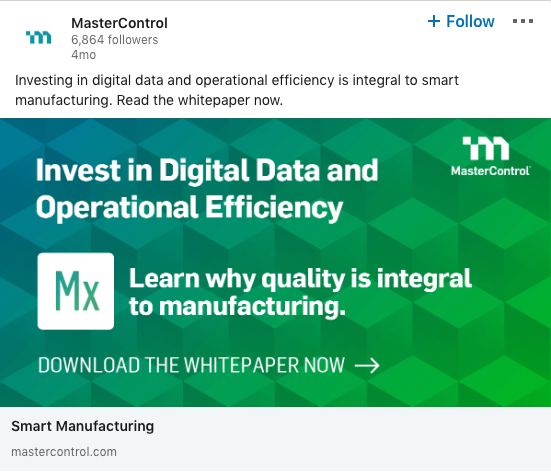
This copy carries a sense of urgency to download the whitepaper. The caption introduces the ad and says what the ad doesn’t, saving space for more copy, and making sure all the important things are included.
Notice how the ad copy mirrors a CTA. To create urgency in your advertisement, you might consider using call-to-action language, such as “Learn,” or “Discover,” which engages browsers in a way that’s professional and knowledgeable.
6. Use data points.
Numbers are informative. Statistics and data visualizations get the mind moving and bring numbers to life. And the best part is, numbers aren’t just for ads about sales or data points.
these are a few of my favorite things 👀
— 22 Words (@22Words)
September 19, 2019
For instance, this promoted tweet has nothing to do with statistics or data collection. It’s a blog post for an Amazon round-up of bags, plants, and more knick-knacks.
As a consumer trying to waste time on social media, a blog post about 30 A-plus purchases from Amazon sounds like music to my ears. The relatable language of “100x Again” is a clever way of including numbers that are convincing without confusing or boring the audience.
Ultimately, numbers make an ad seem impressive, show research, and also connect with a younger crowd, making an ad more clickable.
When planning out ads, consider whether or not you would be engaged if you saw it, and use tools that help achieve that vision.

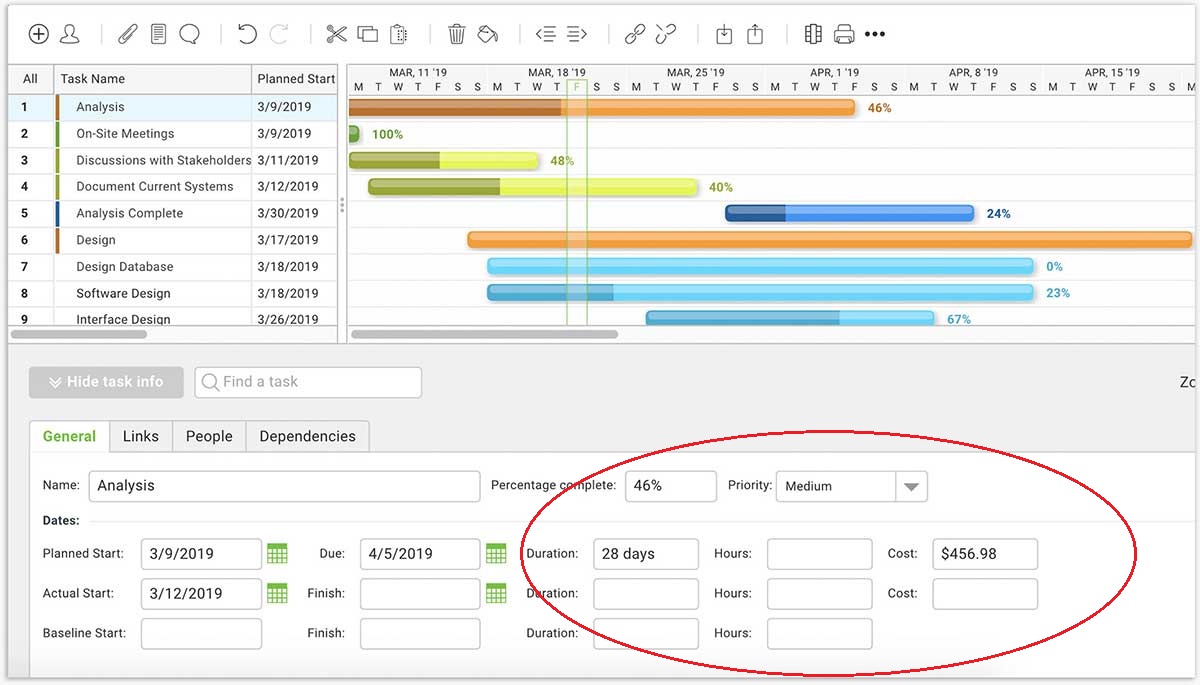
How to Make a Cost Management Plan
The Death of the Third-Party Cookie: What Marketers Need to Know
What do marketers and Sesame Street monsters have in common? They LOVE cookies.
For years, we’ve been using them to track our website visitors, improve the user experience, and collect data that helps us target ads to the right audiences. We also use them to learn about what our visitors are checking out online when they aren’t on our websites.
But the way we use cookies could change dramatically with Google’s announcement that it will phase out the third-party cookie on Chrome browsers by 2022.
A Google blog post announcing the phaseout explains, “Users are demanding greater privacy–including transparency, choice, and control over how their data is used–and it’s clear the web ecosystem needs to evolve to meet these increasing demands.”
Although Firefox and Safari have already phased out the third-party cookie, Google’s post says that its changes will happen over the course of two years as the tech company works with advertisers to ensure that this pivot doesn’t destroy the online advertising business.
“Some browsers have reacted to these concerns by blocking third-party cookies, but we believe this has unintended consequences that can negatively impact both users and the web ecosystem,” the blog post notes. “By undermining the business model of many ad-supported websites, blunt approaches to cookies encourage the use of opaque techniques such as fingerprinting (an invasive workaround to replace cookies), which can actually reduce user privacy and control. We believe that we as a community can, and must, do better.”
Although Chrome isn’t the first browser to phase out the third-party cookie, it’s the biggest. In late 2019, Google Chrome made up more than 56% of the web browser market. Chrome also accounts for more than half of all global web traffic.
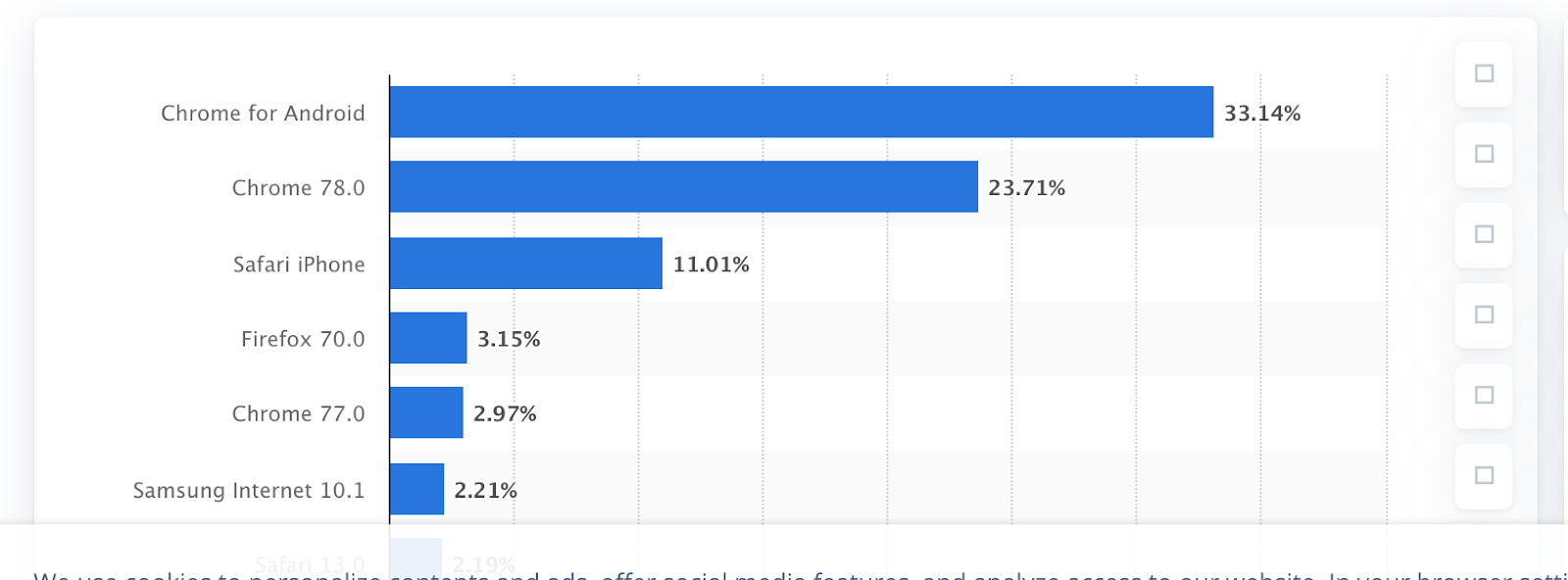
Source: Statista
Meanwhile, Safari and Firefox, which have blocked third-party cookies since 2013, come in a distant second and third place, respectively.
Because Chrome, Safari, and Firefox will all no longer support this type of data tracking by 2022, publications like Digiday are calling Google’s phase-out the “death of the third-party cookie.”
As with any major shift involving privacy, data, and advertising, business experts and publications have been frantically buzzing about how this will change the way we do business online.
But, do we really need to panic?
The truth is, Google Chrome’s third-party cookie phase-out could heavily impact some areas of the marketing and advertising space, while other tactics will still stay pretty much the same.
If you’re an advertiser or a marketer who’s thrived on third-party data for pinpointed online audience targeting strategies, you might be worried about how you’ll navigate this pivot.
Although some big changes might be underway, new data-driven alternatives could also emerge following this news.
To help you prepare for a world without third-party cookies, here are four things you should keep in mind about the latest cookie phase-out.
4 Things to Know About Google’s Cookie Phase-Out
1. Google isn’t banning all cookies.
If you’re thinking that all your cookie-fueled marketing strategies will soon be rendered obsolete, take a breath.
So far, Google says its only planning to phase out the third-party cookie on its browsers. However, first-party cookies that track basic data about your own website’s visitors are still safe — for now. This means that any first-party data you gain from your website’s visitors on all browsers will still remain in-tact.
Still not sure about the difference between first-party and third-party cookies? Here’s a quick breakdown.
First-Party Cookies
A first-party cookie is a code that gets generated and stored on your website visitor’s computer by default when they visit your site. This cookie is often used for user experience as it is responsible for remembering passwords, basic data about the visitor, and other preferences.
With a first-party cookie, you can learn about what a user did while visiting your website, see how often they visit it, and gain other basic analytics that can help you develop or automate an effective marketing strategy around them. However, you can’t see data related to your visitor’s behavior on other websites that aren’t affiliated with your domain.
Ever wonder how Amazon always remembers your login information, the language you speak, the items in your cart, and other key things that make your user experience so smooth? This is because Amazon uses first-party cookies to remember these basic details.
On the other hand, if you’re a marketer running a website on a CMS, you’ll have access to analytics dashboards that track first-party cookie data. For example, you’ll usually be able to see basic analytics, such as the number of web sessions on a page, the number of pages people click on during a visit, basic browser types, geographical demographics, or even referring websites where visitors clicked a link to your site’s URL. However, this data doesn’t inform you of everything your visitors do online.
Third-Party Cookies
Third-party cookies are tracking codes that are placed on a web visitor’s computer after being generated by another website other than your own. When a web visitor visits your site and others, the third-party cookie tracks this information and sends it to the third-party who created the cookie — which might be an advertiser.
If you’re an advertiser, third-party cookie data allows you to learn about your web visitor’s overall online behaviors, such as websites they frequently visit, purchases, and interests that they’ve shown on various websites. With this detailed data, you can build robust visitor profiles. With all of this data, you can then create a retargeting list that can be used to send ads to your past visitors or people with similar web profiles.
Want to visualize how third-party cookie data might work? Say you research a particular smart TV on Amazon. Then, you go to another site later in the day and see an ad Amazon advertisement for the same exact product. If you aren’t on an Amazon-owned site, it’s very possible that this advertisement was triggered by third-party cookie data.
While first-party cookies are accepted automatically, visitors must be informed that they are accepting a third-party cookie due to the amount of data that companies can retain from them.
The bottom line? If you’re just aiming to track your website’s visitors’ behaviors, preferences, and basic demographics only while they’re on your website, you probably won’t be deeply impacted by this change.
However, if you’re a marketer that relies on robust data for online advertising, pop-up ads, or a pinpointed audience-targeting strategy, you’ll need to continue to follow the news around this phase-out, and consider alternative first-party strategies, as the phase-out nears.
2. Many marketers expected this phase-out.
While the “death of the third-party cookie” might seem shocking, it certainly wasn’t a surprise.
Recently, governments around the world have been investigating and cracking down on data privacy issues. For example, in an October 2019 shakeup, Europe’s highest court ruled that users in the EU must actively consent to all cookies when they log on to a website. If not, the website can’t receive, use, or track any of the user’s cookie data.
The GDPR ruling means that instead of websites notifying new visitors that they were accepting cookies, visitors now have to press an accept button, like the one below, to accept a third-party cookie:

If your website only catered to local or domestic users outside of the affected countries, you might not have been impacted. However, international websites took a major reporting hit as numbers from Google Analytics — which relies on cookies — started to appear inaccurately low.
For international brands that relied on Google Analytics, this was a scary reminder that data-driven brands are vulnerable to software-related issues. It also showed us how governance and privacy regulations could dramatically impact our strategies.
Earlier, in August, Google announced it was developing a “Privacy Sandbox.” Although Google didn’t have a product created when they announced the move, a blog post explained that the tool that could allow marketers to continue to publish and circulate ads to the right audiences without having the same amount of user data.
“We’ve started sharing our preliminary ideas for a Privacy Sandbox — a secure environment for personalization that also protects user privacy,” wrote Justin Schuh, Director of Chrome Engineering, in the Google blog post. “Some ideas include new approaches to ensure that ads continue to be relevant for users, but user data shared with websites and advertisers would be minimized by anonymously aggregating user information, and keeping much more user information on-device only. Our goal is to create a set of standards that is more consistent with users’ expectations of privacy.”
In a January 2020 interview with Digiday, Amit Kotecha, a marketing director at data management platform provider Permutive, explained the key features of the proposed Sandbox:
“The most significant item in the Privacy Sandbox is Google’s proposal to move all user data into the [Chrome] browser where it will be stored and processed,” said Kotecha. “This means that data stays on the user’s device and is privacy compliant. This is now table stakes and the gold standard for privacy.”
Between the Privacy Sandbox and GDPR rulings that impacted data tracking, it’s become apparent to marketers that the third-party cookie was at risk of governance or other tech company changeups that could render it obsolete. This was so apparent that advertising software firms and publishers were already contemplating alternative solutions before the official news of Google’s cookie phase-out broke.
At this point, data management firms, like Permutive, are looking at creating alternative tools for advertisers that more heavily leverage first-party cookies and lump visitor profiles into more anonymous “segments” similar to what Google’s Privacy Sandbox is predicted to do.
3. Marketers aren’t just concerned about data.
While the elimination of third-party cookies on Chrome will be inconvenient to some, marketers are also concerned about Google’s reasoning behind the phase-out.
Without Chrome-based third-party cookie data, you’ll still be able to leverage and target Google Ads, which will be powered by Google Chrome’s first-party cookies and the Privacy Sandbox tools. However, some ad software and platforms that require third-party data will take a huge hit without support from Chrome.
“This move, while good for consumer privacy (in theory) is likely going to hurt most of the third-party ad platforms that utilize these cookies to generate revenue,” says Matthew Barby, HubSpot’s Director of Acquisition.
“The big question behind all of this for me is what’s motivating Google to phase third-party cookies out? Is it to improve privacy for the end-user or is it to gain a further grip on the ad market by forcing the adoption of Chrome’s own first-party cookie, which would likely result in many of those dollars being previously spent on third-party platforms to move in Google’s bottom line.”
Barby isn’t the only marketer to voice these concerns. In fact, in a joint statement, the Association of National Advertising and the American Association of Advertising Agencies called the tech giant out for disrupting healthy competition in the advertising space.
“Google’s decision to block third-party cookies in Chrome could have major competitive impacts for digital businesses, consumer services, and technological innovation,” the statement said. “It would threaten to substantially disrupt much of the infrastructure of today’s Internet without providing any viable alternative, and it may choke off the economic oxygen from advertising that startups and emerging companies need to survive.”
Later in the statement, the two advertising groups urged Google to push back the third-party cookie “moratorium” until effective and meaningful opportunities were made available to advertisers.
4. This move still opens the door for innovation in advertising
While things look grim for one type of cookie, this might not be a bad thing for skilled and adaptable brands.
Although this move does cause concern, Google and other browsers have still taken a stand for user privacy. As privacy laws continue to arise, this might be a great opportunity to look at other less-vulnerable advertising alternatives just incase another governance renders one of your marketing tactics or processes as obsolete.
Why? As a marketer with an innovative mindset, you should always be asking yourself questions like, “Are we too reliant on this technology?” or “What happens if and when our strategy gets regulated?” Innovative marketers will be able to come up with more clever alternatives and ads that identify with the masses — aside from just hyper-targeted content or annoying pop-ups.
Another area that could be innovated is the way we leverage and use data. As noted above, data management platforms are now looking to create alternative tools that help advertisers track data in a way that makes the most out of the third-party cookie. While these options might be different from your third-party cookie solutions or require some new strategizing, they would still allow you to target and learn about relevant audiences without getting intrusive.
What to Do Next
Don’t panic. At this point, marketers, advertisers, and data engineers alike are actively looking for solutions to determine what will happen next. And, because the third-party cookie was already weakened by Safari and Firefox ad blocking, it likely wasn’t the strongest advertising tool anymore anyway.
Right now, the best thing to do as a marketer is to continue to stay up-to-date with news related to third-party cookies and other data privacy moves that could impact your business.
If your advertising strategies rely on third-party data, start considering alternatives now. As you continue to follow the news related to the phase-out, you should also vet any software or solutions that can help you better transition away from this type of cookie.
For example, although marketers are wary of Google’s move, the tech giant’s Privacy Sandbox could still serve as a valuable alternative for ad targeting. You could also consider strategies or software that can better help you leverage first-party data.
Additionally, you could also revitalize older strategies, like contextual advertising. While third-party data allowed you to place ads directly in front of people who matched certain user profiles, contextual advertising allows you to circulate PPC ads on websites that rank for similar keywords as your ad. This way, if you’re selling sports apparel, your PPC ad could show up on sports-oriented websites.
Lastly, to make your brand as safe as possible from future governance or monopoly-related policies, brainstorm even more basic strategies that you can still use to reach your audiences even without cookies, hyper-targeted ads, or mass amounts of data. This will allow you to be less vulnerable to technology, even when you can benefit from the latest tracking software.
Disclaimer: This blog post is not legal advice for your company to use in complying with EU data privacy laws like the GDPR. Instead, it provides background information to help you better understand the GDPR. This legal information is not the same as legal advice, where an attorney applies the law to your specific circumstances, so we insist that you consult an attorney if you’d like advice on your interpretation of this information or its accuracy.
In a nutshell, you may not rely on this as legal advice, or as a recommendation of any particular legal understanding.

5 Things I Learned About Product (and People) Management This Year
This last year has been a blur. At the start of 2016 I was working in Product Management at Twitter, and then I moved to the other side of the world to work at Atlassian in Sydney, Australia. Despite the massive geographic and timezone change, I’ve learned a lot from both places about being a better product manager.
These lessons are based on my own experiences and feedback from managers, peers, and direct reports. I can’t thank these individuals enough for taking the time to share this feedback with me, as it’s the most valuable information I, (and anyone for that matter) can use to grow as a product manager.
1. If you’ve never left the office feeling like you’re terrible at your job, you probably are.
I have often left the office feeling pretty shitty. Common thoughts I’ve had include: “Am I the worst PM?” or “Maybe this isn’t a career for me”. I’ve come to accept this as a fairly normal feeling to have if I’m pushing myself and my team to build something valuable, question existing norms, and connect deeply with customers.
These are all things that we product managers applaud, without often appreciating the laborious process to get there. Anything worth doing is hard.

Tip: I try to embrace the uncertainty and painful process of building something entirely new with a team. And if I don’t feel the burn, if I start getting too comfortable, I ask myself if I am really doing enough to improve my customer’s lives. I find that running customer interviews or collecting in-person customer feedback makes sure I stay connected to customers.
2. It’s far worse to solve the wrong problem than to build the wrong solution to the right problem.
Spend the extra time upfront to really, really understand the problem you are solving. The new hotness is to use the JTBD framework to achieve this, but no matter which tool you use, be sure to gain an intimate understanding of your customer’s pains and motivations.
Build incrementally and get as much feedback as humanly possible early in the process. Test things as cheaply as you can. Focus all efforts on identifying that you are truly solving a key problem for a customer, then make some bets on the best solution.
My team and I have actually tracked how many expletives we’ve heard during demos of a prototype as an indicator if we were truly solving the right problem. We’re looking for a “HECK YEAH!”, not, “That’s pretty cool.” If you’re wrong about the solution you can always tweak things, but if you’re not solving a core problem you are setting yourself up for failure. Figure out the problem, remind yourself of it every morning, and you’ll be just fine.
Tip: Strive to elicit an emotional reaction from customers during the alpha/beta phase of development. Whether it’s effusively positive (ideally) or painfully negative (still valuable) you know you’re on to something. Use problem framing to define the problem you’re trying to tackle, and determine the “ooh aah” impact for customers.
3. Every feature has a hidden cost, so choose wisely.
There is a hidden cost to shipping features. Teams usually understand the direct costs (man-hours, server costs, etc) as well as indirect ones (ongoing maintenance, marketing spend, etc). The cost that we rarely account for is that a portion of customers will inevitably be confused or annoyed by the new feature.
It’s easy to assume that all new features provide net positive value to customers, but a quick glance through product reviews on tech blogs will reveal this to be untrue. If you ship a feature that 80% of customers love, the other 20% will have a negative reaction. Ship five features like that and chances are you’ve added some level of confusion to the majority of your customers. These things add up, so choose new features wisely.
Tip: You can’t solve for everything. Develop a specific target customer, obsess over their needs, get lots of feedback and only ship things that they will almost certainly love. Using an experience canvas can help with that. If anything is a “maybe”, save yourself the time and don’t ship it. You will thank yourself in the future.
4. Be wary of becoming an accidental diminisher.
Of all lessons I’ve learned, this one was the most mind-blowing. An accidental diminisher is someone who, despite being a perfectly capable, well-intentioned leader, drains the team’s productivity.
Here are signs that you might be an accidental diminisher:
- Are you the most talkative person in every meeting?
- Do you consider yourself a “visionary”, painting a future that is often too far removed from today’s reality?
- Do you feel compelled to jump in and take over the situation every time something goes wrong?
- Do you think it’s in the best interest of your company to have more people report to you?
There is an entire book written on this topic, but the idea is that we should inspire to be a multiplier — someone who helps amplify everyone around them. Multipliers are people who:
- Ask questions rather than give answers.
- Share knowledge in small increments rather than giving long lectures. Let others fill in the gaps.
- Expect team members to be fully autonomous and accountable, not hanging on their every word.
This has been the one that’s hardest for me in practice, but I’ve been fortunate enough to work with managers who’ve helped coach me through it.
Tip: Read up on this topic and review the warning signs and tips to address this tendency regularly. Your team will appreciate it. You can also take yourself (and your team) through a roles and responsibilities session to make sure no toes are stepped on.
5. Be a servant leader rather than a traditional leader.

Related to the last one, but a slightly different take. To quote the author of this concept, Robert K Greenleaf,
“A servant leader focuses on the growth and well-being of people and the communities to which they belong. While traditional leadership generally involves the accumulation and exercise of power by one at the ‘top of the pyramid’, servant leadership is different. The servant-leader shares power, puts the needs of others first and helps people develop and perform as highly as possible.”
To put this in my own words, the most meaningful thing a leader can do is invest time in helping their team members grow in their craft and achieve whatever personal goals they have set out to attain. This obviously has the implication that you know your team members goals, so that’s a great place to start!
Tip: Understand what your team members are trying to achieve, both on your project and personally for their career growth. Come up with at least one thing you are personally doing to help them achieve these goals. Review with them every quarter.

How to Analyze Your Facebook Ad Results: 7 Metrics to Track
Do you know if your Facebook ads are working? Wondering which key metrics you should be tracking? In this article, you’ll discover seven important Facebook ad metrics you need to know, where to find them in Ads Manager, and what to do when you’re not getting the results you want. #1: Return on Ad Spend […]
The post How to Analyze Your Facebook Ad Results: 7 Metrics to Track appeared first on Social Media Marketing | Social Media Examiner.
from Social Media Marketing | Social Media Examiner https://ift.tt/2PiN3lu
via socialmediaexaminer
New Facebook Group Tools: What Group Admins Need to Know
Welcome to this week’s edition of the Social Media Marketing Talk Show, a news show for marketers who want to stay on the leading edge of social media. On this week’s Social Media Marketing Talk Show, we explore new management tools for Facebook Groups admins and moderators and how they can leverage the growth of […]
The post New Facebook Group Tools: What Group Admins Need to Know appeared first on Social Media Marketing | Social Media Examiner.
from Social Media Marketing | Social Media Examiner https://ift.tt/2SNsHmo
via socialmediaexaminer
Videoflow – Crea Videos para Redes Sociales en minutos
Demo en español de Videoflow
Qué es Videoflow
Videoflow es un software editor de video basado en la nube que te permite importar cualquier tipo de video o imagen y crear con ellos un video viral (hasta 4K) para redes sociales. Una de las ventajas de Videoflow es que puedes elegir los videos que grabes en tu dispositivo móvil o cámara e importarlos a tu ordenador para después editarlos instantáneamente. Tiene una interfaz muy intuitiva y fácil de navegar.
Videoflow se definiría en 2 palabras como: rápido y de fácil edición, y los videos resultantes cautivarán al público por sus efectos, colores, transiciones y textos con los que crearás videos de alta calidad.
Si quieres crear un video con una oferta, puedes añadir subtítulos informativos, textos animados o posicionar y reorganizar los elementos una y otra vez. El software incluye una amplia gama de características mejoradas adicionales que son (consulta más abajo las distintas versiones):
– Crear videos ilimitados
– Grabar subtítulos en videos
– Agregar Marcos para videos (para publicar en redes sociales)
– Grabar pantalla y webcam
– Logotipos animados, intros y más
– Sistema de gestión de proyectos del cliente
– Sub Usuarios
– Proyecto de colaboración y sistema de revisión
– Texto animado sobre tus videos
– Transiciones de escena
– Emojis animados
– Renderización hasta 4K
– Y mucho más…
Con Videoflow también te llevas ahora los derechos comerciales para que tus clientes puedan obtener ganancias vendiendo videos que diseñen a empresas. Un excelente paquete con características increíbles que lo convierten en una herramienta indispensable.
Videoflow en Imágenes



Precios de Videoflow
Una vez compres la Versión Básica, podrás ampliar las funcionalidades del software con cualquiera de estas versiones:
BONUS EXCLUSIVOS SOCIALANCER
BONUS #1 – VideoTutoriales Detallados en español. Te explicaremos el proceso paso a paso para crear tus diseños y sacarle todo el rendimiento a Videoflow desde su adquisición.
BONUS #2 – Soporte en español. Contáctanos para lo que necesites y te ayudaremos.
BONUS #3 – Social Mobi Videos Pro con Licencia de Desarrolladores. Nuevo software de video revolucionario que te permite crear videos interactivos y sorprendentes con Formularios de optin y botones para tu web, Facebook y móviles. No necesitas descargar o instalar nada.
BONUS #4 – Videohub Pro con Licencia de Desarrolladores. Genera más ingresos y leads con ingeniosas y creativas plantillas que puedes personalizar a tu gusto y obtén automáticamente tus videos de YouTube, Amazon S3 y Vimeo. Publícalo en Facebook, WordPress, tu sitio, e incluso alojaremos tu galería en nuestros servidores.
BONUS #5 – Script/Funnel Writer. Genera scripts de ventas de alta calidad, escritos profesionalmente y personalizados para tu negocio en cuestión de minutos.
BONUS #6 – 50 Fondos de Video con Marca Blanca. Usa estos videos con fondo en movimiento en alta definición para crear más videos atractivos sobre pantalla verde.
BONUS #7 – 8 Pasos para crear cartas de ventas que convierten (en inglés). En esta guía te revelamos los procesos de ventas y como crear videos de ventas que conviertan. Todos los conocimientos de 10 años en marketing online de los mejores profesores en ventas.
BONUS #8 – Cómo crear videos de entrenamiento profesionales y de alta calidad (en inglés). Esta información te ayudará a poder educar mejor y ayudar a tus clientes, así como a cobrar mucho más de forma regular.
BONUS #9 – Iconos planos. Los iconos son un componente esencial para muchos proyectos de diseño. Llévate este paquete de iconos para utilizarlo ya sea en proyectos personales o comerciales.
BONUS #10 -100 Call To Action Marketing Strategy. Si quieres tener éxito, debes conseguir conversiones. Utiliza esta colección corta de textos “llamadas a la acción” (CTA) si no tienes tiempo, conocimiento o inspiración para crearlos.
BONUS #11 (Si compras la OTO 1) – Social Media Toolkit. En este paquete de documentos (en inglés) obtendrás todo lo que necesitas para adquirir y convertir leads en clientes potenciales en tu agencia de medios sociales.
BONUS #12 (Si compras la OTO 2) – Derechos comerciales para “Consulting in Minutes”. Paquete de herramientas y recursos para consultores locales.
from Socialancer https://ift.tt/2SPGedf
via
45 Tech Terms Translated Into Plain English
Ever seen the movie The Social Network about Mark Zuckerberg and the founding of Facebook?
In the movie, people kept saying “he’s wired in” or “they’re wired in” over and over again in reference to people coding intensely with their headphones on.
Not knowing anything about programming, I always imagined that being “wired in” meant the programmers were somehow listening to the computers, or that they were connected to the code somehow … or something weird that us non-programmers would never understand.
Turns out it just meant they were concentrating really hard with headphones on. Well, good thing I never hypothesized out loud.
We all misinterpret some of the techy terms floating around web and product design nowadays — but now more than ever, marketers need to be familiar with this vocabulary so we can communicate better with our IT, web design, or product development departments.
To help bridge the gap, here are 45 techy terms every marketer (and human) should understand.
(For a few of these, we drew on these 60 marketing acronyms every industry pro should know.)
301 Redirect
A permanent redirect from one URL to another — usually from a company’s old website to their new website. They’re also used to redirect web traffic from those old web pages to the new ones that have replaced them.
404
Web visitors see 404 error pages when they try to reach a web page that doesn’t exist. This usually happens when the web page has been deleted or the visitor mistyped the URL. Check out HubSpot’s 404 page here.
Alt Text
“Alternative text,” or “alt text.” The text associated with an image. It’s usually the file name of that image, but alt text can be customized using most content management systems (like HubSpot’s). When an image isn’t able to load in an email, website, or blog post, the alt text is displayed instead.
It’s important for all the images on your website to have alt text because it’s the only way search engines like Google can understand what an image is about, which helps you optimize your website for search. It also makes images accessible to the blind because screen readers can read aloud the alt text.
API
“Application programming interface.” A computer programming term meaning a series of rules. APIs allow an application to extract information from a service and use that information in their own application, or sometimes for data analysis. It’s kind of like a phone for applications to have conversations — an API literally “calls” one application and gets information to bring to you to use in your software. APIs facilitate the data needed to provide solutions to customer problems.
HubSpot has APIs that developers use to get information from our software into theirs. It’s important for marketers to understand what APIs can do to factor them in to their marketing strategies. Learn more about how marketers can use APIs here.
AWS
Amazon Web Services is a service that helps web developers and ecommerce owners in developing certain shopping-related features of their websites.
Browser Cache
The appliance or instrument through which a browser saves the data needed to see a website, like images and HTML. When you revisit a web page, it’ll take less time to load than the first time you visited it because a cached version of the page was already saved the first time you were there. Because you have a cached version of the page, your browser doesn’t need to send a new request to see that page. Learn more about browser caches here.
“Cached out” can also be slang for really, really tired.
Blockchain
In simple terms, blockchain is a ledger system that uses an open, distributed record to keep track of transactions — transactions could mean cryptocurrencies, medical information, voting or home records, and more.
Cart Abandonment
When people add products to online shopping carts but don’t check out and actually purchase those products. According to Fireclick, 62.30% is the average online cart abandonment rate. It’s a common problem for many ecommerce stores. Learn 8 reasons for cart abandonment and how to combat it here.
CDN
“Content delivery network” or “content distribution network.” A system of servers on the internet that provides content rapidly to multiple users by duplicating the content on multiple servers and directing the content to users based on proximity. CDNs enable better performance and availability — plus, they offload traffic served directly from the content provider’s website. They’re especially good for streaming audio, video, and internet television programming.
To give you a better idea of how the system works, CDN operators get paid by content providers (like media companies and ecommerce vendors) to deliver their content to end users. In turn, CDNs pay ISPs (internet service providers), carriers, and network operators for hosting its servers in their data centers.
Cookies/Tracking Cookies
A small file that a web server automatically sends to your personal computer when you browse certain websites. The identifying information they contain includes login credentials (including usernames and passwords), shopping cart information, and preferences. They’re stored as text files on your hard drive so servers can access them when you return to websites you’ve visited before.
Ever made a return visit to a website like Amazon and seen content tailored to your user preferences? That’s because on your first visit, a cookie was installed. When you came back, the website server read your cookie and recognized you.
Learn more about how marketers can use cookies here.
CMS
A CMS, or content management system, is a platform that allows less-techy people to build websites and content from professionally designed templates. More tech-savvy users can often further customize these templates or website themes with HTML edits or plug-ins, which you’ll learn more about on this list. Notable examples of CMSs include WordPress and WIx.
CSS
“Cascading style sheets.” A language that manages the design and presentation of web pages: color, look, feel, and so on. It works together with HTML (see HTML), which handles the content of web pages. “HTML is the skeleton of your web pages, while CSS is the clothing,” as one of our colleagues says.
With CSS, you can create rules to tell your website how you want it to display information. And you can keep the commands for the style stuff — fonts, colors, and so on — separate from the commands for the content. They’re called “cascading” because you can have multiple style sheets, with one style sheet inheriting properties (or “cascading”) from others. Learn more here.
Disaster Recovery Plan
A plan that helps an organization prepare in the event that its website goes down or something happens to the webmaster. These disasters could be hard drive failure, hackers, and so on.
Disaster recovery plans include recording important website information, performing and saving regular backups of your website, determining an implementation plan for recovering your website should anything happen, and keeping an extra copy of your website data in a safe place.
DNS
“Domain name server.” Servers that translates web addresses into one or more IP addresses. This is why you can enter HubSpot.com instead of having to remember our IP address.
DoS/DDoS Attack
“Denial-of-service” or “distributed denial-of-service” attack. An attempt to make a machine or network resource unavailable to its intended users. DoS threats usually target websites or services hosted on high-profile web servers like banks and credit card payment gateways, but they’re also common in business in the form of website attacks.
For example, one common type of attack on businesses would be attempting a service overload — i.e. flooding a network with so much information that it either can’t respond to legitimate traffic, or responds so slowly that it’s basically useless.
Sadly, there isn’t much you can do to avoid being a victim of a DoS attack except securing passwords and installing anti-virus software and a firewall. Signs of an attack are unusually slow network performance, unavailability of a website, or the inability to access a website. Contact your IT team if you sense something’s off.
Hosting Servers
The web servers where website files are housed, served, and maintained.
HTML
“Hyper-text markup language.” The language used to direct the architecture of your website, landing pages, and emails. HTML lays out the structure of your website, from the title and first header, to a bulleted list, to your footer. Remember, “HTML is the skeleton of your web pages, while CSS is the clothing.” Learn more here.
Interface/GUI
GUI stands for “graphical user interface,” known also as simply “interface.” An interface is the part of a piece of software that the end user actually sees and interacts with.
IPaaS
IPaaS, which stands for Integrated Platform as a Service, is a cloud-based platform that connects various applications, systems, and technologies within the cloud or on-premise. It allows for the deployment and maintenance of integration flows without the need for hardware or middleware either within an organization or between an organization and third-party software.
IP Address
“Internet Protocol address.” A numerical label assigned to each device participating in a computer network that uses the Internet Protocol for communication.
ISP
“Internet service provider.” An organization (commercial, community-owned, nonprofit, or otherwise privately owned) that provides internet services.
Javascript
A computer programming language used to create interactive effects within web browsers. For example, it allows you to perform calculations, write interactive games, add special effects, check forms, create security passwords, customize graphics, and so on. It has become the standard equipment in virtually all web browsers and is well-suited to a large range of non-web-related applications.
Mimification
Mimification involves going into a web page or piece of content and pulling out all of the useless or excess code or spaces. This can help to increase page load speeds which can also boost your Google SEO.
Machine Learning
Machine Learning is an artificial intelligence technique where algorithms are trained to recognize patterns and respond to them by performing tasks. For example, a customer service bot for a travel site might be trained to send you deals related to Bermuda if it recognizes the words, “beach vacation” or “Bermuda.”
NLP
NLP, or natural language processing, is when machine-learning algorithms are trained to comprehend large amounts of human language and respond to those commands. You might hear about this machine learning technique most when you are reading about voice assistant products that can respond to multiple spoken commands at once, like Amazon’s Echo.
Parallax Design
You’ve probably seen those super-cool scrolling website designs like this one from Wildlife, this one from Bagigia, or this one from Honda? That’s parallax — a web design that takes a visual storytelling approach to guiding visitors through a website, and brings user experience to a new, interactive level.
Pixel
Pixels from external ad networks work similarly to the HubSpot tracking code. Once installed on your site, the pixel detects visits to your pages. This data is the basis for creating ad audiences. These ad audiences to target ads can be used to target your ads at specific visitors. Pixels also collect data that can help optimize ads and measure your ads’ results.
Plugin/Plug-In
A software extension that adds a specific feature to an existing software application. You’ve probably heard of plugins in the context of web browsers to add new features like virus scanners, for example. Ever enabled Adobe Flash Player or Microsoft Silverlight QuickTime Player on your internet browser? Yup — those are plugins.
Registrar
A company that registers domain names, like GoDaddy.
Responsive Design
The method of designing web pages that automatically appear in their optimized form on all devices. In other words, responsive design automatically reformats your website for all screen sizes so your website visitors can easily interact with your site no matter what device they’re using. Due to the rapid increase in mobile usage in recent years, responsive design has become somewhat of a necessity.
Here’s how responsive design gets you more from your website.
RSS Feed
“Rich site summary feed.” A web feed that publishes frequently updated information like blog posts and news stories. They let publishers syndicate data automatically, which is why they’re sometimes known as “really simple syndication.” When you subscribe to a website’s RSS, you no longer need to check their website for new content — instead, your browser will automatically monitor the site and give you timely updates.
SaaS
SaaS stands for “Service as a Software.” This acronym categorizes platforms that help professionals and B2B employees with daily tasks or other aspects of their own job. Examples of SaaS platforms are HubSpot, Slack, and DocuSign.
Sandbox
A place to run a program for testing and experimenting in software development. Basically, it’s a testing environment that isolates untested code changes and experimentation. This isolation protects live servers and their data from changes that could be damaging.
Scrum
A framework for managing product development used in agile software development. In Scrum, projects are divided into succinct work cadences known as “sprints,” which are usually one, two, or three weeks long. At the end of each sprint, the team meets to assess their progress and plan the next sprint. One key to Scrum’s popularity and success is that it has a simple set of roles, responsibilities, and meetings that never change. Learn more about Scrum here.
Session
In computer science, a session is a dialogue, conversation, or meeting between two or more communicating devices, or between a computer and a user (like a login session). It typically involves saving information about the session history in order to be able to communicate.
SEO
SEO or search engine optimization is a strategy that optimizes your site and content so it can easily be found and promoted on online search engines.
Showstopper
Slang for anything that could stop the launch of a new product, like a bug.
Site Map
Site maps show a hierarchical view of a website’s pages and content. It helps website designers figure out what content is needed on a website before they begin designing it. Site maps can also be web pages that offer links to all of the pages on a website.
UI
“User interface.” A type of interface that allows users to control a software application or hardware device. A good user interface provides a user-friendly experience by allowing the user to interact with the software or hardware in an intuitive way. It includes a menu bar, toolbar, windows, buttons, and so on. Learn how to create a user-friendly website registration process here.
UTM
A UTM is a code that shows up in a tracking URL that allows a website, such as HubSpot to track views from a specific source, such as a social post or promotional email. Learn how to create and track UTMs and tracking URLs here.
URL
“Uniform resource locator.” Also known as a web address, a URL is a specific character string that refers to a resource. It’s displayed on the top of a web browser inside an “address” bar. Learn how to optimize your URLs for search here.
UX
The overall “user experience” a customer has with a particular business, from their discovery and awareness of the brand all the way through their interaction, purchase, use, and even advocacy of that brand. To deliver an excellent customer experience, you have to think like a customer, or better, think about being the customer. Learn more here.
Vector Graphics
A computer graphics term to describe the use of “geometrical primitive objects” like points, lines, curves, and shapes to represent images. Here’s an example of a real phone that has been “vectorized.”



Waterfall Development
A sequential design process often used in software development processes, where progress is seen as “flowing” steadily downward through the phases of conception, initiation, analysis, design, construction, testing, production/implementation, and maintenance.
The point of waterfall development is to spend more time in the early stages of the software production cycle because catching bugs and other issues early on is cheaper and easier to fix than catching them later.
Web Accessibility
The ability for your website to be accessed by people with different physical and mental abilities, age, location, and so on. The UN Convention on the Rights of Persons with Disabilities recognizes access to the web as a basic human right.
Properly designed websites and web tools can be used by people with disabilities. Here are a few examples from W3C of things to include on your website to make them accessible to people with disabilities:
- Alt text for images — Alt text makes images accessible to blind people because their screen readers, which read aloud the information on a page, also read out the alt text for visual images. It also makes the image information available to people who turned off images on their mobile phones to lower bandwidth charges or people in rural areas who turn off images to speed download. (Alt text is also important for SEO purposes because it lets Google know what the subject matter of the image is.)
- Transcripts for videos and podcasts — Include transcripts to give access to people with hearing disabilities.
Wired In
Working with headphones on, indicating you don’t want to be disturbed. When programmers write code, sometimes they’ll plug in earphones to isolate themselves from the outside world so they can be totally focused on coding.
Editor’s Note: This blog post was originally published in July 2014, but was updated in November 2019 for comprehensiveness.

17 Offbeat, Extreme, and Downright Unusual Ways Brands Have Promoted Their Products
If you’re a marketer of any kind, this phrase is probably lurking somewhere in the back of your mind when you start a new project:
“How do we make this brand really stand out?”
The constant battle to differentiate a brand in a crowded playing field is challenging, and it’s pushing some marketers to the extreme.
We’ve rounded up 17 creative campaigns and promotions that rely on unconventional mediums to spread brand messaging to consumers. Check them out below for some unique inspiration for your next big campaign.
Unusual Brand Promotions
1. Purple
Instead of doing a normal ad for its mattress technology, Purple, a company that targets millennials and young adults, pulled in the comedic duo of Tim and Eric to host a bizarre and trippy web series called “Purple Boys.”
In each episode of the Facebook-based series, Tim and Eric interview goofy fictional characters who are struggling to sleep. While each episode centers around entertainment, each character weaves Purple Mattress information into each scene. Each episode then culminates with someone getting a sound sleep on a Purple Mattress.
Want to see it for yourself? Check out the second episode of Purple Boys which follows a character named Joe Dunder in his quest to get to sleep and fight off the “Sunday Scaries.”
2. Skittles
Instead of putting millions of dollars into one short Super Bowl advertisement, Skittles made a full-fledged musical titled “Broadway the Rainbow” — which made fun of advertising.
The Skittles musica was formatted as one large and obvious ad that told the story of how manipulative the marketing industry was. Throughout the musical, all of the characters regularly spoke and sang about how advertisements ruined their lives and how they were living in one giant Skittles commercial.
Even though Skittles charged $200 for each ticket, the musical sold out and went viral within days of its premiere. When the show was announced, USA Today called it, “the most inventive end run in the history of ambush advertising” because it capitalized on Super Bowl ads by immersing paying viewers into an obvious Skittles ad.
To make the show more exclusive for paying customers, Skittles never aired it on television or online. To give you a quick idea of what it was like, here’s a highlight video:
Yes, creating a musical to advertise your company might seem like an outlandish way to spend your advertising dollars. But at a higher level, this campaign does show how marketers can get creative with ambush marketing to cause a buzz that gains attention from a wide range of audiences.
3.. GoPuff
GoPuff, a company that allows you to order convenience store items through its app, has a number of odd commercials and ads. But one of the weirdest ways it promotes products on its app is by calling out the weird shopping list of items that people order late at night on its Twitter.
To the lady who just ordered three packs of Benadryl at 10:30 in the morning: WE FEEL YOU GIRL #screwyoupollen pic.twitter.com/y8kPvpV7gU
— goPuff (@gopuff)
May 2, 2017
Yep. It’s unusual to call out your customers for their weirdness, but while some prospects will learn more about the products you offer, other current customers might order odd things just to get a shoutout.
4. Nivea Kids Sunscreen
This marketing stunt from Nivea made for some interesting headlines when it debuted at Cannes in 2016: Seagull drone poops sunscreen…uh, thanks (CNET), Nivea’s Drone Bird Poops Sunscreen on Your Kids (Dronelife), How Bad Was This Nivea Bird Poop Sunscreen Project, Really? (AgencySpy). The list goes on.
The folks at German agency Jung von Matt/Elbe designed this seagull drone to squirt Nivea Kids Sunscreen onto unsuspecting children on the beach. In the case study video below, they explain how the drone can be used to make sure all kids are protected from the sun, even when they refuse to apply sunscreen themselves. It may seem like a parody at first, but make no mistake: This drone is 100% real.
Say what you will about the taste level of the pooping seagull concept — it definitely generated a lot of attention for Nivea and left an undeniably memorable impression. Cannes Lion jury president Sir John Hegarty told a group of journalists, “It’s the most stupid thing I think I’ve seen in my whole life. I actually thought the Monty Python team had gotten together and entered it into [Cannes], to see if we would vote for it.”
Spoiler alert: They didn’t vote for it. Nivea’s well-intentioned pooping seagull flapped away from Cannes without any awards.
5. Milka Chocolate
When Swiss chocolate company Milka launched in France, they turned to Paris-based agency Buzzman to devise a unique way to introduce their product to the French people. The chocolatiers ended up removing a small square from 13 million of their classic milk chocolate bars, and giving consumers a choice: Do you want the “last square” sent back to you, or do you want to send it to a loved one?
Consumers who received a Milka bar with a missing square were given a code they could enter online, where they could either send a small piece of chocolate — along with a personalized message — to a friend or family member, or enter their own address to have the missing piece returned to them.
6. Cub Cadet PRO Z Riding Lawnmower
Who says the physical press release is completely dead? To promote industrial brand Cub Cadet’s newest riding lawnmower, agency Colle+McVoy came up with a steel alternative to the classic 8.5-by-11 inch paper document.
The press release — which weighed in at a hefty 14 pounds, 13 ounces — was made entirely of Cub Cadet’s signature Triple 7-gauge steel, the same material used in their rugged lawnmowers. Outfitted with bolts and shipped to media outlets in a custom crate, the press release also came with a free crowbar (because why not?).
Image Credit: Adweek
7. The Art Institute of Chicago and Airbnb
Have you even dreamed of walking into one of your favorite paintings? How about staying the night? In this creative campaign to generate publicity for the Art Institute of Chicago’s Van Gogh exhibit in 2016, agency Leo Burnett partnered with Airbnb to create a unique, immersive experience for art lovers.
The agency worked with designers and museum curators to meticulously transform a simple studio apartment in Chicago into one of the Dutch artist’s most recognizable paintings, Bedroom in Arles.
As part of the campaign, posters advertising a room to rent and resembling vintage newspaper classified ads were plastered around Chicago, inviting passersby to text “Van Gogh” — aka, Leo Burnett’s clever social media team, who fielded all messages in character. A few lucky early respondents were able to rent the room via Airbnb for only $10 a night.
The campaign was a massive success for the Art Institute, leading to the museum’s largest daily exhibition attendance in 15 years, and earning them national media attention.

Image Credit: AdAge
8. Tiger Beer’s Air-Ink
Tiger Beer — an American-owned company that operates out of Singapore — wanted to find a way to turn air pollution into something useful and positive. Enter the talented team at Graviky Labs, who devised a scientific process to capture pollution and transform it into Air-Ink — a fluid black paint. The brand then worked with Australian agency Marcel Sydney to put the ink in the hands of influential street artists and film the results.
It turns out just 40-50 minutes of diesel car pollution can produce a rich shade of black ink, and artists were more than willing to incorporate the paint into their work for the project.
9. Adobe Stock Apparel
If you’re a marketer, you’ve experienced the pain of sorting through seemingly endless pages of bad stock photos in search of one that just isn’t too awful. To promote their new stock photo service Adobe Stock, Adobe partnered with Swedish agency Abby Priest to develop a tongue-in-cheek fashion line that features outdated, overused stock photos.
“Some stock images have earned their place in the history books,” said Abby Priest’s Creative Director, Oskar Hellqvist, in a Q&A on Adobe’s blog. “Classic motifs that have been overused and established as hilarious clichés, known, loved and/or hated by all … Turning them into a limited edition clothing line is our way to salute them and an attempt to create something disruptive and unconventional in the genre.“
You can see the full Adobe Stock Apparel lookbook here.

Image Credit: Adobe
10. UberPOOL
As part of a major advertising push in Latin America, Uber’s in-house marketing team launched a guerrilla campaign in Mexico City, sending out a small army of drones equipped with cheeky signs promoting UberPOOL. Drivers were confronted with the small aircrafts and their mini-billboards while waiting in stagnant rush hour traffic.
Although they don’t plan to replicate the stunt in other markets (since doing something similar in the U.S. or Europe would require some major bureaucratic hoop-jumping), the stunt gained significant earned media attention for the car service app.

Image Credit: MIT Technology Review
11. KMFA-FM Austin
How do you get millennials interested in a classical radio station? This Twitter-powered metronome is a good start. Developed by agency Archer Malmo for Austin’s classical music station KMFA-FM, this metronome ticks at a tempo determined by the number of Tweets sent in the Texan city.
“We want people to give KMFA a try — it’s not a stereotypical, stodgy classical music station,” Archer Malmo executive creative director Matt Rand told AdWeek. “That audience happens to be younger and use Twitter more, so basing our ‘heartbeat of the city’ off Twitter volume is a fitting way to connect with them.”

Image Credit: Adweek
12. Laphroaig
Most ads run for 30 seconds. This spot from Laphroaig Whiskey clocks in at three and a half hours — and it was all filmed in a single take.
U.K. agency Multiply was behind the video, which features comedian Andy Daly reading real reviews of Laphroaig in a filibuster-style speech. Ranging from glowing to downright disgusted, the strongly worded and ultimately mixed reviews are intended to highlight the polarizing nature of Laphroaig — you either love it, or you hate it. But the brand wants to hear about it.
13. Lipton Green Tea
To encourage consumers to make healthier choices while shopping for groceries, Lipton Green Tea partnered with agency Wunderman MENA to create a shopping cart that tracks your steps, calories burned, and time spent moving at the grocery store.
Aimed at people too busy for regular exercise, the cart is intended to show consumers how many calories they can burn just by walking around at the grocery store. The hope is that they’ll also think twice about what they put in their shopping cart if they can see the calories they’re burning in real time.
14. Burger King
Burger King and McDonald’s have always had a rivalry, and on Halloween 2016, the home of the Whopper played a prank on the Golden Arches.
A Burger King location in Queens, NY dressed up the entire restaurant as “The Ghost of McDonald’s”, sweeping a massive white ghost costume over the building and adding a saucy message to their sign: “”Booooooo! Just kidding, we still flame grill our burgers. Happy Halloween.”
Although only one location participated in the spooky prank, Adweek revealed that it was a stunt pulled off by ad agency David Miami.

Image Credit: Burger King
15. Paqui
To drum up some buzz for their gourmet tortilla chip brand, Paqui released a fiery chip spiced with Carolina Reaper peppers — the world’s hottest variety according to Guinness World Records. The Carolina Reaper Madness chips are so dangerously spicy, they’re packaged individually and sold for $4.99 each.
So why would you ever want to eat this thing? It’s part of a challenge, naturally. Following in the footsteps of other viral internet food-based challenges — like the cinnamon challenge, which never, ever ended badly for anyone — Paqui’s marketing team launched the #OneChipChallenge.
The premise is simple: eat the the Carolina Reaper Madness chip, post your reaction online. The brand offered prizes to select participants, including a year’s supply of their less-spicy chips.

Image Credit: Forbes
16. South Park Video Game
Add this one to the list of things no one ever asked for, but somebody made anyway: A virtual reality mask that lets you smell farts.
To promote the South Park video game, Ubisoft worked with agency Buzzman to concoct an odor that perfectly mimicked the smell of someone passing gas. It was actually a lot harder than you’d think. Buzzman consulted multiple chemists and perfumers to get the smell right, and worked with a team of software engineers and industrial designers to develop the VR nose mask. They named it — what else? — Nosulus Rift.
The mask (thankfully) isn’t for sale, but Ubisoft uses it at promotional events to build hype for the South Park game, which features a particularly flatulent character.

Image Credit: Buzzman via AdAge
17. Virgin America
Have you ever looked at your shoes and thought, “Man, I really wish they had a phone charger and WiFi capabilities?” Virgin America has heard your very first world cries, and developed these almost comically tricked-out shoes to promote their first class flying experience.
California-based agency Eleven, Inc. designed these extravagant kicks over the course of eight months to mimic the look and feel of Virgin America’s first class cabins. The final product includes mood lighting, WiFi, a USB phone charger, and a small video screen — you know, in case you feel compelled to watch some Netflix on your shoes.
The sneakers sold for $97,877.77 on eBay, and all proceeds were donated to Soles 4 Souls, a charity.

Image Credit: Adweek
Create a Winning Weird Promotion
Coming up with an ad that’s considered off-beat can be tricky. First, you’ll need to have a number of creative brainstorms. Then, you’ll need to make sure that your campaign is understandable and memorable to the audiences you show it to.
For example, while millennials and people with a sense of humor might find the Purple series above to be hilarious, others might not understand why Purple is marketing themselves in this way.
One way to determine if people will truly understand and engage with your bizarre campaign could be to present it for a focus group first. To learn more about this strategy, click here.
Editor’s Note: This blog post was originally published in November 2016, but was updated for comprehensiveness in November 2019.
