
Welcome to My Blog
Adapting to the New Era of Search, According to Moz’s SEO Scientist
The era of the high Google click-through rate is nearing its end and the age of the low-click landscape is dawning.
While Google is still the number one traffic source for most sites on the web, over half of all searches these days result in no click at all.
There are a multitude of reasons to explain this shift. More searchers are finding the information they need from featured snippets, which have increased in prevalence tremendously in recent years.
SERP features — including rich snippets, paid ads, and Knowledge Graph data — have overtaken the results pages, making at-a-glance answers the norm.
Additionally, increasingly robust Google My Business profiles provide more information than ever before, allowing people to find business hours, book appointments/rooms/flights, and read reviews in the SERPs themselves (in addition to much, much more) without ever needing to visit a website.
These developments are great for the searcher experience, but they spell trouble for your clients’ site traffic.
What’s a marketer to do? It’s frustrating when so much of your reporting and success metrics are tied up in the very details that are becoming rarer and rarer as Google redefines what it means to search. You’re invested in keeping both clients and stakeholders happy if you’d like to keep your job, and what keeps them happy are high revenue numbers and graphs that move up, and to the right.
But don’t get discouraged — the new low-click landscape of search may feel unfamiliar, but there’s more potential there than you might think. Let’s dive into three big ways fewer clicks from the SERP to your site can actually be a good thing.
How to Optimize for Higher On-SERP Conversions
A “conversion” isn’t the same for everyone — it’s all in how you define it. A conversion for a SaaS company might be the act of purchasing a software subscription, while a conversion for a local business might be as simple as a searcher calling their business.
The kinds of conversions you’ll see happening directly on the SERPs depends largely on the types of clients you serve.
Next, let’s explore how you can optimize for on-SERP conversions.
1. Local businesses and brands can meet the needs of specific locations.
Google has devoted a huge amount of effort into improving the local search experience for consumers.
Local search results are filled to the brim with special features beyond organic links to a website, with Google My Business (GMB) profiles and “local packs” being two of the most prominent things a local searcher encounters.
For instance, when searching for a “nearby massage studio”, you might come across a Google My Business profile like this one, which includes information on a company’s hours of operation, phone number, address, and even reviews from the web.
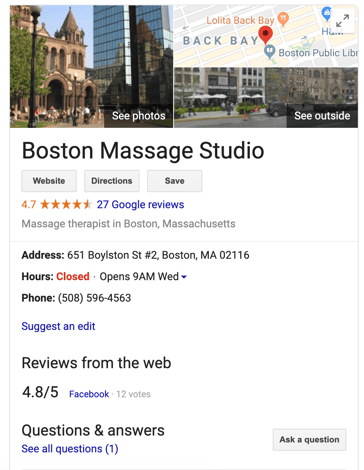
Again, depending on what a conversion means to you and your clients, both local packs and GMB profiles provide ample opportunity for them.
Local packs, shown in the example below, even offer a short list of options based on the business’ proximity to the searcher; upon clicking for more info, you’re given the option to head to the website, find map directions, click-to-call, and sometimes even place an order through a third-party service. That’s right — for local businesses, there’s an ad-free option to sell your products or services directly in the SERPs.
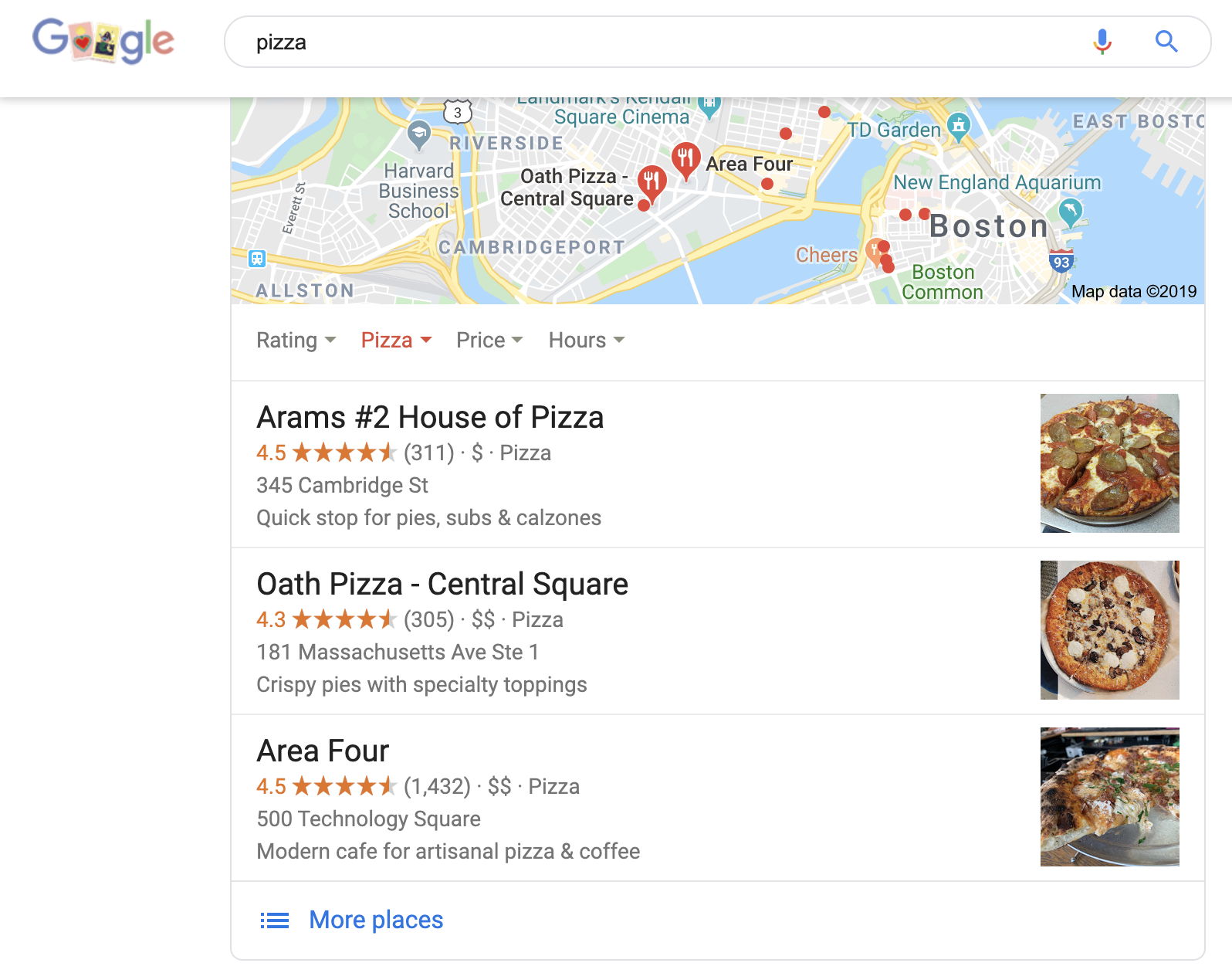
Nobody needs to visit your client’s website to find its hours of operation, contact information, or FAQ. Instead, it’s all laid out for them on Google as soon as they hit “enter.” In a very real sense, a local client’s Google My Business profile is their new homepage.
There are a multitude of ways marketers can optimize for in-SERP conversions for their local clients:
- Build out accurate listing information for each discrete location to ensure foot traffic driven from search gets to the right place (also a type of conversion!)
- Use Google Posts to promote sales, events, news, products, and special offers to entice both foot traffic and the now-elusive site click. Make sure you have an enticing image that includes a CTA button
- Reduce friction and create an in-SERP FAQ by answering Google Q&A in GMB profiles
- Seed common industry questions and answers in the Business Questions section
- Add UTM tracking to Google My Business profile CTAs to help you accurately report your successes to clients and stakeholders
Only about 22% of businesses are satisfied with their conversion rates. That means you’ve got a huge amount of opportunity to wow your local clients by boosting their numbers through creative, strategic use of the local SERPs.
2. National and digital brands can harness the power of the low-click landscape.
In-SERP conversions aren’t restricted to your local clients alone. There are several ways certain national and digital-only brands can harness the power of the low-click landscape to make money and generate leads.
- In-SERP bookings: The travel and hospitality industries have a huge amount of potential for conversions directly in the SERP results, with the ability to book a hotel room or a flight often appearing directly below the query.
- Media purchases: Movies, albums, and books often appear with options to buy directly via various platforms on the SERPs. These look quite a lot like Knowledge Panel results, but they absolutely drive conversions for your media clients.
For instance, take a look at the options for immediate, in-SERP purchasing when you search for the book Eat, Pray, Love:
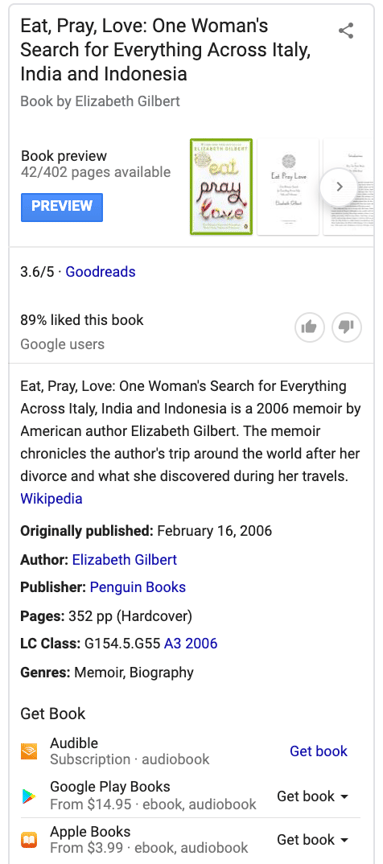
Searchers for the book can get the book as an ebook or audiobook straight from the SERP page.
Additionally, it’s important to note — in the past, looking up song lyrics would go to Google Play and drive purchases there, but the search engine has pulled back on that recently (possibly due to backlash from lyrics sites).
Suffice to say, it’s worth it to keep an eye out for any experiments or changes Google might make that would represent a conversion opportunity.
3. Businesses can build brand awareness with on-page SERP features.
This section is going to scare some of you, and I don’t blame you. But consider for just a moment: maybe traffic isn’t the end-all be-all to search.
Traffic is easy to measure and looks nice in reports, but it doesn’t tell the whole story of your client’s brand. Traffic is a
symptom, not a cause.
Your efforts to show up on page one shouldn’t eclipse the fact that, at the end of the day, Google likes to rank brands, and the low-click landscape is practically built to help your clients build their reputation via branding, messaging, and increased share of voice.
That isn’t to say it’s an easy task, but consider the following:
- It takes up to seven impressions for someone to remember your brand
- A person’s first impression is formed within ten seconds
- A whopping 90% of searchers are still undecided about a brand before beginning their search
Those statistics alone outline a wealth of opportunity for any client you represent, whether it be local, national, or digital.
Brand awareness often gets deprioritized, since it’s hard to measure success, it’s difficult to report on, and there always seems to be something more urgent to measure.
In a world where prioritization can make or break your marketing, brand awareness often gets pushed to the rear in favor of one-and-done initiatives that feel more tangible. But branding, messaging, and share of voice have a huge impact on whether or not someone decides to buy from a business, and should never be ignored.
In the low-click landscape of search, featured snippets are one of the best ways to achieve multiple goals with one concerted effort. They appear in the coveted “position zero” spot as the first thing a searcher sees, provide a link back to your site (and can entice a click, if you craft them right!), and will go a long way toward reinforcing your client’s authority and reputation.
For instance, if your client’s retail site shows up as the number one, Google-endorsed answer to five separate queries comparing different products, you’ve got a bulk of those all-important impressions down and the consumer is now well-acquainted with the brand.
Ultimately, where people used to go to a site to do research, they now go to Google. You might get fewer site visits overall, but if the visits you do get result in revenue and intent to purchase, it’s hard to believe you’re missing out simply because traffic is down.
How to Capture Featured Snippets for Improved Brand Awareness on the SERPs
You’ll have to put in the elbow grease to capture featured snippets, but it’s well worth the effort. Not only will you be able to satisfy that easy-to-measure, up-and-to-the-right feeling that clients crave, but you’ll also be doing a world of good for their brand and beating out competitors in both authority and share of the SERP real estate.
Here are a few key tips on how to start earning featured snippets for your clients’ brands:
- Identify keywords that trigger snippets that you already rank on page one for. Research shows it’s easier to capture a featured snippet if you’re already ranking highly, so optimize the low-hanging fruit for best results.
- Understand and play to the searcher’s intent. You’ll need to dig into keyword research and possibly refresh your understanding of your brand personas to make sure the queries you’re trying to rank match the intent you want to capture.
- Provide succinct answers. There’s only so much space in the box Google provides — you’re more likely to capture a snippet if your content is straightforward and helpful. Formatting matters, so see what’s currently winning and emulate: if it’s a numbered list, for example, edit your content similarly to make it competitive.
- Add summaries to popular content. Your existing content that’s ranking highly may not be triggering a featured snippet simply because it’s not concise. Adding a summary at the top can help.
- Identify commonly asked questions. You want your client’s brand to be the most helpful answer a searcher sees, and you want as many searchers to see that answer as possible. Identify the top questions asked that are relevant to your client’s business, product, or services and start from there.
There’s a lot that goes into winning, monitoring, and retaining featured snippets, but the very first step is being aware of how much they can do for your brand.
Ultimately, not every problem in marketing has a black-and-white answer. The trend of lowered CTR from the SERPs to your clients’ sites isn’t likely going away soon. It will prove beneficial in the long-run to adjust our expectations and strategies accordingly, rather than chasing the past.
Adapting to the new low-click landscape of search isn’t going to be as easy as pushing a button, but the fact remains that your SEO strategy is about more than simple website clicks — it’s about building your brand, attracting qualified customers, and driving the business initiatives that matter most.

How to Create a Social Media Style Guide for Your Business
Want to document how your business should market and communicate on social media? Wondering what you should cover? In this article, you’ll find seven critical elements to include when you create a social media marketing style guide. #1: Define Your Brand Identity Before diving into the details of creating a social media style guide, you […]
The post How to Create a Social Media Style Guide for Your Business appeared first on Social Media Marketing | Social Media Examiner.
from Social Media Marketing | Social Media Examiner https://ift.tt/2S2nZBg
via socialmediaexaminer
The Beginner’s Guide to Customer Targeting
Sometimes, in the marketing industry, you have to close your eyes and take a leap of faith.
Other times, you can calculate your moves to execute a strategy with a proven track record.
But what about a method of strategic planning that involves taking a leap of faith and calculation?
I’m talking about customer targeting, which is a way to divide your target audience further into groups and use fresh, new strategies to capture their attention during the buyer’s journey.
How does customer segmentation work and how do you use it? These are great questions that we’ll explore later in this post. But first, we’re going to cover the basics.
Let’s begin by exploring why customer segmentation and targeting are important.
Customer Segmentation and Targeting
In an age where 70% of a customer’s journey is based on how they feel they are being treated, it’s important to cater to their interests. Snagging the interest of a customer in the midst of the customer journey comes with a deep understanding of audience behavior.
Customer segmentation is an effective strategy if you are thinking of new ways to reach your target audience. It’s also a valuable method if you have a large audience, since segmentation divides them into smaller groups so you can figure out how to reach a market you’re unsure about.
Are you a B2B marketer? Here are some popular customer segmentation characteristics you can define your customers by:
- Location
- Number of employees
- Industry
- Buyer behavior
For instance, if your target audience is SMBs, you can define them further by these attributes. Let’s say you’re starting a winter holiday campaign that involves a sale on your most popular products — you might consider location and buyer behavior segments to see who to market to, and how.
Let’s consider an example: I live in Boston, and I use public transit nearly every day. Sometimes, I see ads in train stations for music streaming apps like Spotify, which aren’t a coincidence.
Spotify most likely chose their ad space based on results from customer segmentation. If they segmented customers by location, behavior, and needs, they probably found a large portion of customers in cities tend to listen to Spotify on their daily commute.
That’s how segmentation works in practice: it can lead to informed business decisions like how and where to target customers. This process of using segmentation to catch the audience of customers is called targeting.
Customer segmentation and targeting go hand-in-hand. Segmentation helps divide the audience, and targeting is how you capture their attention.
Let’s go back to the Spotify example. The streaming service wanted to target its customer base of commuters, and the avenue they went with to accomplish that was buying ad space in train stations.
Which avenue will you choose to target segmented customers? If you’ve noticed during segmentation that a majority of your customers are B2B startups with 1-50 employees, consider thinking of ways to catch their attention based on those attributes.
Now that you know more about customer segmentation and targeting, let’s look at some strategies to figure out how to segment customers and target them correctly.
Customer Targeting Strategies
These strategies will help you create customer segments and give you ideas about how to market to them, with an example of what that looks like.
1. Refine your buyer persona(s).
When you defined your target audience, did you flesh out a buyer persona? Recall that a buyer persona is a profile of an ideal customer that you make to align with your business goals.
When you begin to segment your audience, consider making separate buyer personas. These personas will help you think of fresh ideas for targeted marketing. When you create a buyer persona, you have to identify the challenges of your ideal customer that you can help solve.
If you see that a lot of your customers are in the ecommerce industry, create a buyer persona to reflect that segmentation to help you map out this ideal customer. If this segmented audience tends to be in a specific geographical location, think of how you can catch their attention from the customer point of view.
2. Research popular keywords.
Identifying keywords can help you look for trends related to your audience. If you want to keep track of audience behavior, this is a great way to do it. A keyword tracking tool can help you come up with a list of words or phrases that carry buzz among your segmented customers.
Keyword tracking tools can comb through search engines to see what words are common in your industry. Knowledge like this is helpful when you’re considering how to formulate content that will fit a need in the industry.
To illustrate, let’s say you find that “Free” and “eBooks” rank among high keywords for your segmented audience. Those are huge clues for how you can market to that group. If you create an eBook or something similar, try adding CTAs in marketing emails or blog posts aimed towards that customer.
3. Communicate effectively with your audience.
When you observe behaviors in your segmented audience, you’ll want to communicate in a way that connects with them. When you crawl social media, do specific words or hashtags stick out? How can you not only follow suit but individualize this language to suit your company?
Matching the communication style of your segment with your campaign voice shows your intimate knowledge about the needs of your segment. It lets your audience know that you want to connect with them on their level and truly understand how your company can fit into their lives.
For example, let’s take a look at Netflix’s Twitter account. Clearly, it is aimed towards a millennial audience. Netflix does a great job of using laid-back language — including in its bio and its tweets — to promote new releases to its segmented audience.
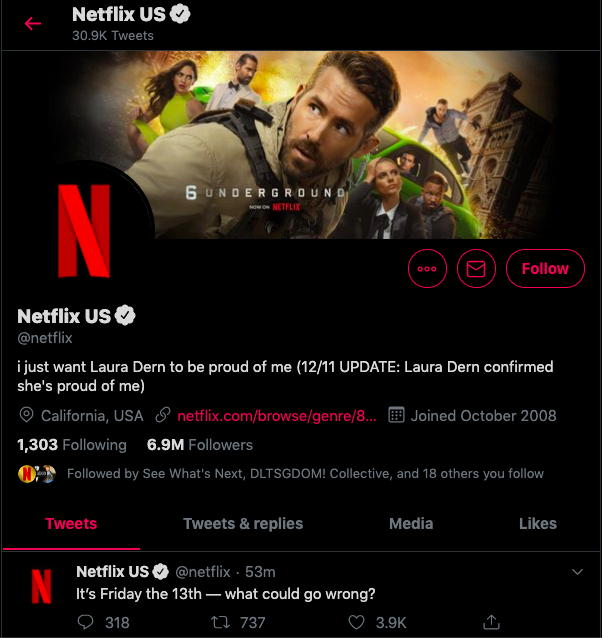
Sometimes, the tweets Netflix makes are controversial enough to make it in the news, and other branded accounts join in on the conversation. Accounts like Netflix have a really good understanding of what their audience will respond to — for instance, check out the tweet in the screenshot, above, which got over 300 replies in less than an hour.
4. Go beyond regular content to target specifics.
Similar to the last point, targeting can help you create content that resonates with a specific group of customers. Not only does communication matter, but what you use to help you communicate those messages matter, as well.
Consider this post by HubSpot on Instagram:
This example shows how HubSpot uses graphics and branding to connect with their audience. Using statistics to catch the attention of potential customers on Instagram is a good way to show the credibility of a business.
As a consumer, I’m very intrigued by content I connect with. When food magazine Bon Appetit announced merchandise drawing inspiration from their YouTube channel, I instantly went to check it out. I love watching videos from the BA test kitchen and have come to love a number of their series.
To me, it feels good to know I could wear a shirt with a map of the test kitchen on it or a cute tote bag with three of my favorite foods on it. How did Bon Appetit know exactly what kind of merch to release to pull me in?
They could’ve easily looked at the demographics of their viewers, such as age, location, and gender, and tracked their company mentions on social media. Those two methods help draw up a pretty solid segmentation of someone who would purchase your product.
5. Consider partnering with influencers.
If you’ve looked into using influencers before, you most likely know the stats. You also most likely know that they are a worthwhile investment if you have younger fans, who trust the opinion of influencers.
This is good news if you’ve segmented customers by age and have a pretty good idea of the type of influencers in your industry. If you’re unsure, we have a post of top influencers in several industries for reference.
When you partner with influencers, you are exposing your company to a large fanbase of potential customers. Even if you partner with smaller influencers (micro-influencers) you can still gain a percentage of exposure for your business.
The addition of using influencers in your planning comes from a deep understanding of the customers you’ve targeted. Influencers can help you connect with an audience with which you’ve previously struggled.
Using targeting to attract a more succinct fan base is a great way to build those relationships with customers you may be lacking. Whether you work at an SMB looking for a more solid way of connecting with customers or a large business, customer segmentation and targeting is an excellent way to delight your customers.

Operational Planning: How to Make an Operation Plan
The 18 Most-Followed TikTok Brands and Influencers
After reaching roughly 800 million active users within a year and a half of its 2018 launch, TikTok has become one of the fastest-growing social media apps of the last decade
Like any trendy social platform with a huge global audience, influencers and brands are flocking to TikTok.
As a marketer who’s considering TikTok opportunities, you might be wondering if you should start an account for your brand, or if you should leverage influencers who joined early on and already know how to create engaging content for its young audience.
Even if you know what TikTok is and the basics of how to use it, the social platform is still very new. Because of this, there aren’t many rules, norms, or solid best practices for using the app just yet. In fact, much of the content on it is still fairly experimental and creative. At this point, rather than asking, “What is TikTok?”, you might be wondering, “What makes an account successful there?”
When it comes to learning about what makes content on a new social media platform successful, the best thing to do is look at the tactics of its most popular accounts. Researching what the best of the best are doing on an app like TikTok can also inspire your own ideas for great content.
To help you learn about what makes the top TikTok users so successful, we’ve put together a rundown of the ten most-followed individuals on TikTok, as well as a list of brands with a million followers or more.
By reading up on TikTok’s most followed accounts below, you’ll learn about what it takes to create engaging content on the platform and possibly get inspired to create your own TikTok videos.
First, we’ll dive into the platform’s top branded accounts. However, if you’d prefer to learn about TikTok’s most followed users, who are mainly social media influencers, you can click here or scroll down to see that list.
Because brands are relatively new to TikTok, you’ll notice that they haven’t nearly reached the high follower numbers as influencers. Also, because business accounts are exactly the same as individual accounts, there’s no specific list to confirm the platform’s highest-ranking companies. However, here are some of the brands that have already surpassed 1 million followers on TikTok
1. TikTok Accounts (@TikTok, @TikTok_India, @LiveTV)
Combined Followers: 88 million+
TikTok’s main account, which has 35.5 million followers, is the most followed on the app. The next most-followed brand accounts are TikTok India, with 29 million followers, and LiveTV which has 23.7 million followers and presents videos from Musical.ly — the lip-syncing app that TikTok took over in 2017.
TikTok and TikTok India both follow a similar strategy of highlighting features on the app, company news, and the inner workings of the TikTok office. Meanwhile, LiveTV curates and reposts engaging lip-syncing videos from the discontinued app Musical.ly.
Since you’ve already seen a number of great lip-syncing videos in this post, I’ll zone in on TikTok’s flagship @TikTok account, which highlights the brand itself.
While it’s not surprising the TikTok has the top follower count on its own app, what is interesting is how the account is used. Rather than curating and reposting popular content made by users, as Instagram does on its Instagram account, TikTok makes its own content to educate viewers about the app and brand. This is a really great marketing strategy because it allows people to see the creative and unique inner workings of TikTok.
In this example, TikTok presents mini-interviews of its U.S. office’s diverse employees and leadership. The video also demonstrates that TikTok embraces female leaders:
TikTok also highlights some of its most interesting brand and influencer accounts. For example, in the video below, TikTok promotes the NFL’s new TikTok channel by showing employees talking about football:
In another video, TikTok has two of its popular influencers compete in a trivia game called #FinishTheTikTok where each player sees the beginning of their opponent’s TikTok posts and has to explain how it ends.
Regardless of which platform you market your brand on, one of the best strategies for developing an audience and awareness is to show off the things that make your company unique. TikTok nails this strategy by continuously coming up with ways to highlight its brand, employees, and prominent influencers to remind viewers why the app is so successful.
2, Flighthouse (@Flighthouse)
Followers: 20.4 million
Flighthouse is a media and entertainment company founded by a 20-year old CEO named Jacob Pace. The company produces music, videos, and other content for YouTube, Instagram, TikTok, Spotify and other platforms that are popular with Gen-Z and millennials.
On its TikTok channel, Flighthouse hosts mini-shows that feature social influencers and celebrities discussing online trends or playing trivia games.
Here’s an example where Baby Ariel, an influencer noted on the list above, is asked to identify celebrities by their baby picture:
Many of Flighthouse’s mini-shows are segmented into multiple TikTok posts with captions that signify whether a viewer is watching parts one, two, or three of the episode. This could be a great strategy. If viewers are algorithmically sent to any of these videos, they might go to the Flighthouse account if they want to watch the other parts of the show for more context.
Here’s a look at one of the multi-part Flighthouse shows where a band called AJR attempts to draw pictures that symbolize their song titles:
This channel has leveraged and thrived on influencer marketing. Even if viewers aren’t familiar with what Flighthouse does as a content creation company, they might still follow the account once they realize it regularly publishes videos that show their favorite TikTok celebrities or influencers.
Like some of the influencers on this list, Flighthouse also posts at a high frequency with regular content posted throughout the week and its mini-shows that span multiple TikTok posts.
Because of its content, frequency, and trendy-ness, Flighthouse has quickly become the most-followed media company on the platform, aside from TikTok itself. Flighthouse’s account is a good example of how a brand can learn about the interests of a social platform’s audience and make content that caters to them.
3. NBA (@NBA)
Followers: 5.7 million
While some brands are waiting and watching other companies on TikTok before launching a strategy, the NBA embraces it by dedicating seven full-time employees to creating content for the platform.
Unlike its Instagram channel, which focuses purely on basketball games and highlights, the NBA’s TikTok posts show a lighter side of the organization. For example, they’ll often post videos of players working out dramatically to music, dancing on the court, or adventures of team mascots.
Here’s one example that shows a highlight reel of a gorilla mascot doing tricks and slam dunks:
While you might expect the NBA to focus seriously on stats and games, it uses the app’s musical features to lighten up the branding and make its athletes look more relatable. While the videos still promote basketball, they also fit in well with other funny or musical posts on TikTok feeds.
When a brand or company shows off a more personal side, audiences might start to relate to it a bit more. Even if a viewer isn’t a basketball fan, they might still consider following NBA players or rooting for certain teams if they saw a funny or motivational video about them.
In other business settings, making a brand feel more personal can have the same effect. For example, if you post TikTok videos of employees dancing, viewers might think your company has a pleasant and happy staff. This might make viewers think their experience with your company will be fun, helpful, or positive in other ways.
4. Nickelodeon (@Nickelodeon)
Followers: 4.7 million
Nickelodeon, a children’s television channel that’s created award-winning shows for decades, uses its TikTok to stay in touch with its young audiences, while also posting nostalgic clips of older shows that might be well-known to its older or adult audiences.
On the account, you can find funny clips from its newest shows, as well as mini-music videos with visuals from old shows with new music of soundbite overlays.
Here’s an example where Nickelodeon posts a scene from Spongebob Squarepants with a musical overlay of the Billie Eilish song, “Bad Guy:”
In the example above, Nickelodeon reminds nostalgic or older fans of Spongebob while allowing mixing in a new, trendy Eilish song to make it enjoyable for all age groups.
Like TikTok, Nickelodeon also gives viewers a look behind the scenes by showing funny skits filmed within the channel’s offices. For example, in this skit, an employee recreates a sushi Halloween costume from the early 2000s show ICarly:
While you might think that younger people might get bored with office-based videos, this channel demonstrates how behind-the-scenes footage can still be engaging to all ages. With these videos, Nickelodeon shows that its content is fun because its made by fun, lighthearted employees.
5, Red Bull (@RedBull)
Followers: 3.1 million
The TikTok account of energy drink Red Bull leans into its slogan — “Gives you wings” — by showing extreme sports videos of notable athletes doing in-air stunts. For example, Red Bull might show snowboarders, BMX bikers, or other athletes going over jumps or doing tricks in the air. The idea is to show how people who drink Red Bull are flying because the beverage “gives them wings.”
Here’s an example where Red Bull shows BMX athlete, Carson Storch, doing tricks on a racecourse.
While Red Bull isn’t marketing its product outright, it’s come up with a way to link it’s metaphorical “Gives you wings” slogan to entertaining videos that TikTok viewers will watch or engage with. Red Bull’s TikTok demonstrates how a company can get creative on a new social network while still having a deeper strategy that relates to its brand.
6. Radio Disney (@RadioDisney)
Followers: 1.6 million
Radio Disney’s TikTok highlights musicians that are commonly played on the Radio Disney app and in Disney content. Like Flighthouse, this channel also heavily embraces influencer marketing by posting videos of popular musicians singing or performing in the Radio Disney Studios.
If you’re wondering which social network your brand should be on next, take a note from Radio Disney and build a presence on platforms that are already a great fit for your brand or target audience. Because Radio Disney’s audience ranges from children around five years old to people in their late tweens, the brand is a natural fit for TikTok, which is both highly musical and has a heavy tween and Gen-Z audiences.
7. NFL (@NFL)
Followers: 1.2 million
Since launching its account in September 2019, the NFL has quickly surpassed one million TikTok followers. The account posts a mix of serious and funny game highlight videos with musical overlays.
In one of the NFL’s more traditional videos, it highlights a ball that was passed an excessive amount of times during a complicated play:
Occasionally, the account will also post funny or lighthearted behind the scenes videos that intertwine TikTok’s musical overlays. For example, one recent post featured a football team doing the Cha Cha Slide during practice.
Like the NBA, the NFL uses its TikTok to promote its league while also making football players more relatable with lighthearted behind-the-scenes videos that show another side of the competitive sporting industry.
Takeaways from Brands on TikTok
Although these companies are all experimenting with a new platform and trying to leverage TikTok’s features and trends, they still seem to stay true to their brand. While Red Bull’s account is a visual metaphor for its slogan, Radio Disney highlights some of its best musicians. Although social media platforms have evolved, overall brand strategies have stayed quite consistent. These brands are all ultimately showing off characteristics of their companies that make them stand out from the competitors.
Another brand strategy commonly used on the platform is showing off behind-the-scenes or lighthearted content about the brand itself. For example, while TikTok highlights what’s happening in its U.S. office, the NBA shows funny videos of its players practicing. This adds a sense of depth to the brand that makes viewers identify with and trust it more.
Aside from the brands listed above, a number of others with under a million followers are still testing out unique strategies on the platform. To learn more about some of the most creative brands we’ve seen on TikTok, check out this post.
As mentioned in the NBA example, you can earn trust, a sense of relatability, and potentially new fans by showing off your brand’s most human qualities in funny or behind-the-scenes videos. This social media strategy could be beneficial to any company that might struggle to relate to its audience or possible new followers.
1. Loren Gray (@LorenGray)
Followers; 34.6 million
Loren Gray is a 17-year old singer and influencer who’s also gained millions of followers on YouTube and Instagram. While the content she produces on those platforms often shows her performing, reviewing products, or vlogging, her TikTok is mainly used for lip-syncing purposes.
She’s grown her following by regularly posting videos with the hottest soundbites on TikTok, while also participating in various hashtag challenges. She also occasionally includes other TikTok influencers in her videos or responds to popular duets.
In the post below, she celebrates National Avocado Day with a #GuacDance Challenge video. The #GuacDance Challenge, launched by Chipotle, encourages TikTok users to dance to “The Guacamole Song“ while eating guacamole on camera:
While Gray uses her other platforms to share news about her career, she embraces TikTok’s overall platform by paying attention to and participating in the hottest trends on the app. Her account is a great example of how you can gain a following simply by experimenting with and leveraging all the unique features of the social media platform you’re on.
Aside from using the TikTok app’s features and trends to their fullest, Gray also posts at a high frequency by adding TikTok videos often more than once a day. On a fast-paced app like TikTok, more videos gives you more chances of getting seen in the feeds of new audiences and followers.
2. Baby Ariel (@BabyAriel)
Followers: 29.8 million
Baby Ariel, whose real name is Ariel Martin, is a 19-year old singer and actress who’s known primarily for her TikTok videos. Like Loren Gray, Baby Ariel is also a social media personality with large followings on Instagram and YouTube.
Baby Ariel publishes a few different types of videos on her TikTok account multiple times per week. Some are comedic, while others are like mini-vlogs where she talks about her life. Here’s an example of a funny post where she struggles to do her makeup as well as TikTok and YouTube’s beauty influencers:
While many influencers use TikTok just stick to promoting video-based content or creating funny skits, Baby Ariel uniquely tries to do is make her overall account more interactive. For example, she’ll occasionally post a vlog-styled video and ask her audience to respond to a question she’s asked in the comments.
In this video, she invites her audience to pick songs or soundbites that she’ll make her next TikTok videos to:
Baby Ariel’s strategy feels very personal. By posting vlogs and funny content regularly, she gives fans a look into her daily life. Additionally, by talking to her audiences directly and allowing viewers to sway certain aspects of her videos, like the music, she makes her overall content feel more interactive and fan-driven. When viewers see an influencer or entertainer interacting with fans, the influencer might seem more trustworthy or like someone who cares about their followers.
3. Zach King (@zachking)
Followers: 25.3 million
While many of the influencers you’ll see on this list are singers or actors, Zach King — a 29-year old YouTuber and a former Vine personality — specializes in optical illusions, puzzles, and magic tricks. Most of his TikTok videos show viewers puzzles or ask them to stare at “magical” images.
In the video below, King stacks a bunch of Rubik’s Cubes and asks viewers to count how many cubes are in the pile. He then magically pulls out an extra cube that wasn’t visible in the pile:
Zach King’s success on TikTok is a great example of how someone can leverage the platform to show off unique talents rather than their ability to dance or lip-sync to music. King’s TikTok also demonstrates how you can still engage with your audience in unique ways even when you don’t communicate directly with them on the platform.
4. Kristen Hancher (@kristenhancher)
Followers: 23 million
Kristen Hancher is a social media personality and YouTuber who made news when she re-enacted famous photos of Kylie Jenner on her Instagram. Since then, she’s become a TikTok personality who mostly uses the app to post videos of her lip-syncing to all sorts of songs. Here’s one example:
The only time Hancher broke away from lip-syncing was when she aired an abridged vlog post about why she re-enacted Kylie Jenner’s photos on Instagram. Because the TikTok video is horizontal and shows up vertically when embedded, here’s the YouTube version:
Like Loren Gray, Hancher’s learned the art of catering social content to the channel she’s on, rather than trying to post the same content on each channel. On TikTok, she’s embraced the apps musical features, but on other social platforms, like YouTube, she’s taken on more personal strategies like vlogging.
5. Riyaz Alfreen (@Riyaz.14)
Followers: 22.8 million
Riyaz Alfreen is a model and social media personality from India who’s built a major fan base on TikTok. Like most of the influencers on this list, much of his content can be split into the categories of lip-syncing or mini-music videos. Here’s one example:
What’s unique about Alfreen is that all of his videos are in the Indian language. This goes to show how big TikTok’s Indian and Asian audiences really are. While many of the influencers on this list are from the US, only 26 million members of TikTok’s user base are actually American. So it actually isn’t surprising that many prominent TikTok influencers are international.
6. Gil Croes (@gilmhercroes)
Followers: 21.8 million
While many influencers on this list tend to film basic lip-syncing videos, Gil Croes’ videos seem more theatrical and leverage many of TikTok’s editing features. Croes also edits and adds his own music or sound effects to his videos. This makes his content feel more unique than other videos on the platform which strive to conform to trendy songs or soundbites.
Here’s an example of a well-edited post where Croes and his brother Jay, featured lower on this list, wear multiple goofy Halloween costumes. The music was also uploaded and edited by Croes himself:
Like other influencers on this list, Croes also participates in challenges and responds to TikTok trends in his videos. For example, he recently posted another Halloween-themed video where he and his brother suddenly turned into ghouls while dancing to the song, “Absolutely Anything” by CGS.
To give background on the “Absolutely Anything” video seen above, the trend encourages dulled up people to dance to the lyrics, “I used to be so beautiful, now look at me.” Then, when the bass drops, the video cuts to a less attractive or odd-looking version of themselves. In Croes’s case, he and his brother go from wearing dapper suits to becoming spooky Halloween characters.
Croes is a great example of an influencer who puts a great deal of effort and thought into his video’s storylines, costumes, editing, and special effects. While he leverages all of the unique features that TikTok has to offer, he also embraces TikTok influencers like his own brother to cross-promote and gain followers from multiple fanbases.
7. Jacob Sartorius (@jacobsartorius)
Followers: 21.1 million
Jacob Sartorius is a YouTuber and Vine alum who regularly uses TikTok to post vlog-style videos, comedic skits, and the app’s usual lip-syncing or music videos.
When it comes to Sartorius’ vlog-style videos, he often posts content that’s reminiscent of his old Vine videos. These videos are usually short, sweet, and center around one or two key jokes. Here’s an example where he talks about healthy dieting:
In some of his videos, Sartorius talks directly to his audience when updating them about his life or career. In the example below, he tells his fans that he’s going to be posting more YouTube videos and promotes his channel by showing clips of what viewers might see there:
Sometimes, social media platforms can change drastically, get deactivated, or completely rebrand. In that scenario, successful influencers will be able tactical enough to pivot smoothly on to other platforms where their content strategies will still work. When Vine was discontinued and TikTok was unveiled shortly after, Sartorius adopted the new platform early and took his short-form content strategy there.
Because of his success on TikTok, Sartorius is a great example of an agile and adaptive influencer who can quickly identify his audience and where his content will do well naturally.
8. Jannat Zubair Rahmani (@jannat_zubair29)
Followers: 19.9 million
Jannat Zubair Rahmani, whose stage name is just Jannat Zubair, is an Indian actress who regularly posts mini-music videos on her TikTok. Similarly to Riyaz Alfreen, noted above, her channel is completely in the Indian language.
One thing Zubair does well on TikTok is including influencers in her videos. For example, in the TikTok below she lip-syncs in fancy clothing with Indian fashion influencer Faisal Shaikh.
Occasionally, Zubair also posts funny or behind-the-scenes style videos that breaks the music video mold on her channel. For example, here’s a video skit where one of her friends falls down the stairs behind her:
Zubair is a great example of a user who leverages influencers. By including and tagging others with high followings in her videos, she enables her followers and the influencer’s fans to watch her videos. This allows Zubair’s audience to learn more about the other influencer, while the other influencer’s audience learns more about her.
Furthermore, Zubair also does a great job of showing off behind-the-scenes content. This allows her to seem more relatable and human to followers who might just think of her professional work. This relatability might make her content even more engaging to people who want to learn more about her.
9. Jiff Pom (@JiffPom)
Followers: 19.4 million
Jiff is a Pomeranian whose owner runs his TikTok and Instagram channels. On his TikTok, you’ll regularly find lighthearted and adorable videos of him doing fun activities to music or funny soundbites.
Here’s one example where Jiff rides a mini-skateboard:
Even though he’s a dog, Jiff is regularly seen promoting products in his videos. In this cute TikTok, he’s dressed in a Halloween costume to promote a holiday-themed burrito deal from Chipotle.
This account shows that TikTok influencers don’t necessarily need to be famous or even human to get a massive amount of followers. What’s more important here is the dog’s entertainment factor and the owner’s strategy of using sponsorships and influencer marketing to make the dog more well-known to new audiences.
10. Awez Darbar (@AwezDarbar)
Followers: 18.6 million
Awez Darbar is an Indian dancer, choreographer and social media personality who regularly uses his TikTok to show off his dancing skills via mini-music videos.
When he posts mini-music videos, he often includes other TikTok influencers or famous Indian performers as dance partners. For example, in the video below, he dances with his sister, Anam Dabar, who has nearly 6 million TikTok followers.
Aside from choreography Darbar also goes slightly off brand and creatively embraces the oddities of TikTok’s platform by posting funny skits to silly soundbites. Here’s an example:
Although Darbar is a choreographer, he’s seamlessly used TikTok as a creative outlet for comedic skits and other content that might be slightly off-brand. Through this strategy, he’s also been able to embrace some of the apps key editing and soundbite features.
Darbar is a great example of an influencer who’s identified and created content that works on the TikTok platform. For example, he’s realized that funny skits and choreography videos are a natural fit for the platform and provide solid opportunities for pulling in other influencers.
11. Jay Croes (@JaydenCroes)
Followers: 18.3 million
Jay Croes is a social media personality and the brother of Gil Croes, noted above. Like his brother’s TikTok account, Croes posts well-edited videos with solid mini-storylines. Here’s an example of a skit he posted that highlights the odd things teachers say to students:
Jay and his brother, Gil, have a solid strategy of working together to produce videos that cross-promote both of their channels. Here’s an example of a mini-music video that features his brother and another TikTok influencer named Clap:
Croes also creates sponsored content. Here’s an example where he posts a skit about being sick and taking Mucinex so he won’t miss Halloween:
Jay Croes and Gil Croes have both taken a number of traditional social media influencer strategies and adapted them to TikTok. For example, Jay and his brother both put a great deal of effort into producing high-quality videos, leveraging influencers, and embracing sponsored content.
Takeaways from Influencers on TikTok
While brands might take longer to join and master TikTok, its top influencers aren’t afraid to dive in and embrace every weird trend that pops up on the platform. And, although influencers are moving towards networks like TikTok and Instagram, their core strategies haven’t changed.
Like YouTube and other more traditional platforms, you can still find influencers talking about their lives, creating skits or videos to entertain their audiences, and leveraging other influencers or sponsors to grow their following.
If you’re considering sponsoring a TikTok influencers content, you’ll want to look for someone who has a solid track record with “hearts,” the platform’s version of a “Like” as well as comments. These metrics show that their videos are engaging and gaining discussion.
Additionally, you can also look for influencers that try to make their content feel interactive. For example, if you see a TikTok influencer starting hashtag challenges or making attempts to interact with their fanbase, such as Baby Ariel, this might show that they’re experienced in creatively engaging with audiences specific to the platform.
Navigating TikTok Accounts
One thing is true on TikTok. The companies and individuals who express themselves while staying true to their professional or personal brand will succeed on the app. If you’re considering your own personal or business-oriented account, remember to have fun. Videos that show off your or your brand’s identity will be much more engaging than marketing content with obvious promotional language.
To learn more about the quick growth of TikTok, check out this post. If you’re struggling to figure out how to use the app, don’t worry. This detailed how-to guide will walk you through setting up an account and posting your first video.
Want to learn more about branded content? Or just want to see some more odd-ball videos? Check out this rundown of our favorite brands on TikTok.

How to Get Approved for Instagram Shopping and Product Tags
Has your application for Instagram Shopping and product tagging been denied? Wondering where to turn? In this article, you’ll find step-by-step instructions to reapply for Instagram Shopping so you can enable product tagging. Have You Been Denied for Instagram Shopping and Product Tagging? Instagram product tagging is an Instagram business account feature that allows you […]
The post How to Get Approved for Instagram Shopping and Product Tags appeared first on Social Media Marketing | Social Media Examiner.
from Social Media Marketing | Social Media Examiner https://ift.tt/2PPjcjX
via socialmediaexaminer
New YouTube Monetization, Promotion, and Policy Updates
Welcome to this week’s edition of the Social Media Marketing Talk Show, a news show for marketers who want to stay on the leading edge of social media. On this week’s Social Media Marketing Talk Show, we explore new ways to monetize, promote, and protect your brand’s YouTube channel with special guest, Luria Petrucci. Tune […]
The post New YouTube Monetization, Promotion, and Policy Updates appeared first on Social Media Marketing | Social Media Examiner.
from Social Media Marketing | Social Media Examiner https://ift.tt/38zJYW6
via socialmediaexaminer
How to Craft Brand Messaging Your Target Audience Will Love
As a consumer — and a marketer — one of my favorite brands to watch is Taco Bell. In the last five years or so, Taco Bell has begun making strides in its brand messaging.
The brand has reinvented itself on social media, introducing a new, bold personality. With its food, packaging, marketing campaigns, events, philanthropic efforts, and interior design, Taco Bell reinvented itself into a full on lifestyle brand.
Doing this — telling a compelling brand story through messaging — isn’t easy.
Marketers need to have an entire brand identity to communicate what their business does, what it’s about, and why it’s different. Oh, and it needs to resonate with people and strengthen your company’s values and reputation.
This is because, according to research from Bergische University, brands produce similar feelings as the ones we feel when we like someone. So, we actually feel similarly about brands as we do about people.
That’s why marketers need to craft brand messaging that their audience can relate to.
Below, let’s review brand messaging — what it is and a framework to get started.
So, how do you get started crafting brand messaging that your target audience will love?
You need to know two things like the back of your hand: your target audience and unique value proposition.
Then, you can begin to write out a brand identity that’ll help your company make all its marketing decisions. Would a brand that cares about “X” do this? Would a brand that’s motivated by “Y” sell this?
Your brand identity will inform your company’s behavior because it’ll tell you why your brand matters, what it stands for, and why it’s different from other brands.
A brand identity that your audience relates to and has a personality — or talks to your audience like a friend — is how you’ll continue to remain relevant to your consumers and create loyal customers.
Brand Message Framework
With a full understanding of brand messaging and creating a brand identity, you might be wondering, “Now what? How do I get started?”
And it’s a fair question. That’s why we’ve created a brand message framework that you can use to begin crafting a brand message or identity.
1. Figure out who you are.
To get started, your brand message needs to answer these questions:
- How do you differentiate from your competitors?
- What is your unique value proposition?
- What kind of messaging will resonate with your target audience?
- Who is your target audience? What do they care about?
- Does your brand message tell a story?
- What are your company’s goals? (No one is perfect and your target audience can’t relate to a seemingly perfect brand).
- What are your company’s values?
While you’re answering these questions and beginning to map out who your brand identity is and what your brand messaging will look like, remember that your brand message answers the question, why? Why does your audience care?
2. Know your audience.
Now that you have a better idea of what you offer and who you are, you need to understand who your audience is. If you haven’t already, create buyer personas that represent who your customers are and their goals. This will help you find alignment between your brand and your consumers.
3. Start a document that explains your brand message.
After you’ve answered the questions above and written out your personas, begin compiling this information in a document that explains what your brand message is, your unique value proposition, and key themes that are core to your brand identity.
Then, start to figure out how your brand identity relates to your buyer persona. What are the patterns and what do they have in common? This is how you’ll make decisions on brand messaging. You’ll see what your audience cares about that align with your values and can derive messaging opportunities.
4. Brainstorm messaging opportunities.
With a clear document that represents who you are and who your audience is, you can then begin to look for messaging opportunities. How can you relate your current campaigns to your brand message? How can you use content to convey your values?
Once you have an idea, you can create a tagline that communicates who you are and your unique value proposition.
At this point, you should have created a brand message and identity that’ll inform your messaging. Now, we wanted to review a few tips for creating messaging that stays true to your brand:
- Stay focused on the brand positioning: With all the content you write, ask yourself, “Is this true to our values?”
- Relate to your audience: When you create content, use your buyer personas and brand messaging document to ensure that you’re talking about something that’s relevant to your audience.
- Don’t be perfect: Similarly to the point above, people aren’t perfect and brands shouldn’t be either. Don’t over promise and communicate that you’re perfect, because you aren’t and it’ll come off disingenuous.
- Communicate your message everywhere: In everything you write and all your marketing decisions, think about your brand message. Whether you’re writing copy for your website, creating slogans for packaging, or marketing an event, your copy needs to communicate your brand message.
- Be simple: Keep it simple. If your brand’s personality or overall values are confusing or hard to discern, people won’t relate to you. The last thing you want to do is create a brand message that your audience is confused by.
Brand Message Examples
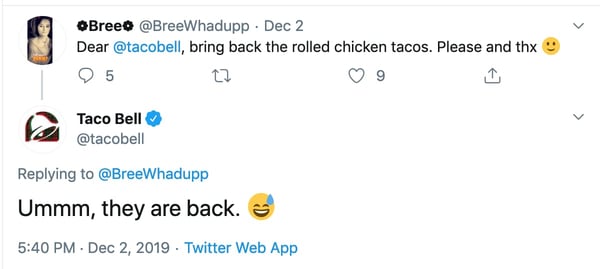
1. Taco Bell.
As mentioned above, Taco Bell has started to create a reputation for its strong, funny brand. If you tweet them, they will likely respond with a humorous comment.
The goal is to be so relatable that customers love to interact and talk about Taco Bell. When people are talking about you and with you, they’re more likely to be loyal customers.
Below is an example of a tweet that represents Taco Bell’s brand identity and messaging. They respond to tweets like a sarcastic, funny best friend would.
2. The Skimm.
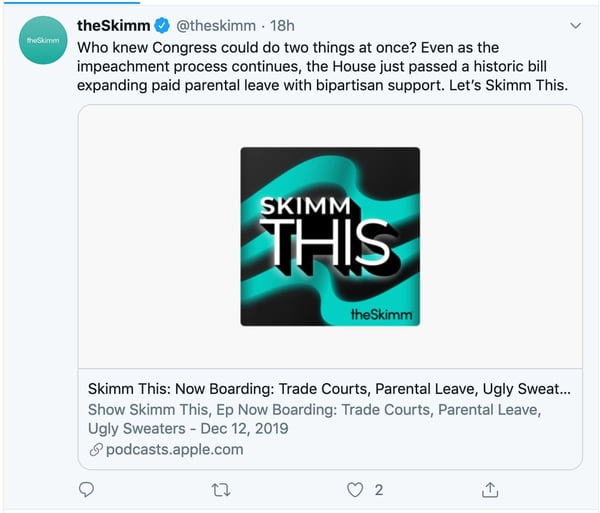
TheSkimm is a daily newsletter that aims to quickly inform young women of current events. The brand is known for having a bold, witty personality similar to that of its target audience — millennial women.
The goal? To mirror its target audience. Act like the fun, irreverent best friend to help readers get started with their day.
In the tweet below, theSkimm stays true to its brand messaging and identity by starting off with a sharp, witty comment on Congress.
3. FabFitFun.
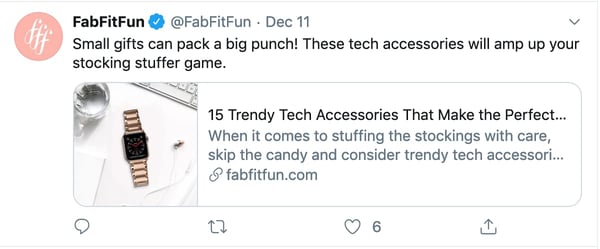
When I think of FabFitFun, I think of trendy products that are popular with self-care influencers. The brand has cultivated a following by partnering with influencers on Instagram who are trendy, fashionable, and take care of themselves.
And this image of self-care and trendy products is carried out through its content as well. Below, the company tweeted its blog about trendy tech accessories. This type of content is right in line with the brand messaging consumers hear about on Instagram.
4. Trader Joes.
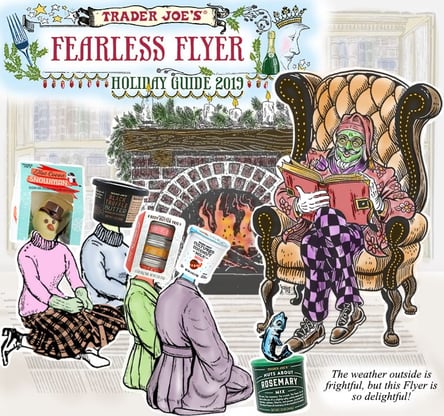
Trader Joes is a grocery store that has created an almost cult-like following through its brand messaging. They are a fun, cheap, organic food store with a small-town, neighborhood feel. For example, they even put out an old-fashioned newsletter called the “Fearless Flyer.” This includes product roundups and recipes.
The content Trader Joes puts out reinforces its brand image as a small, neighborhood grocery store. With brand messaging that is consistent with its unique value proposition and personality, customers relate to the brand as if it were a person.
5. Taylor Swift.
Besides the fact that Taylor Swift is one of my favorite singer/songwriters, I had to include her because her brand messaging is on point.
From the time she was 16, Taylor Swift has used social media and brand messaging to connect with her fans. This is another example of someone who has created a cult-like following through brand messaging.
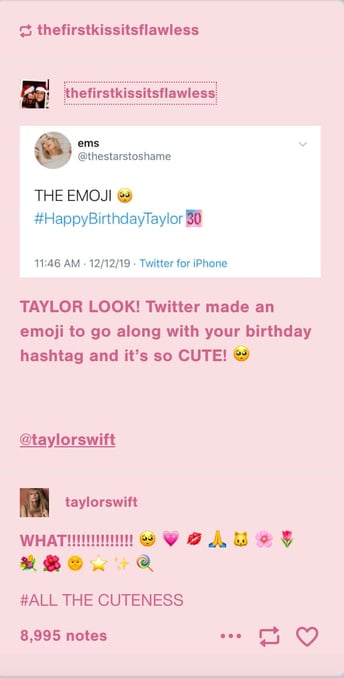
Taylor Swift’s brand is that she’s like the girl next door, something her audience relates with. In the example below, someone on Tumblr posted a tweet on Swift’s birthday, and Swift responded like … well, like the girl next door. A fun, outgoing best friend you can easily talk to on social media.
Your brand message is something that’s strategically created to help you stand out and relate to your customers. Your personality and values should be evident and align with that of your audience.

Writing Facebook Ad Copy That Converts
Want to write persuasive Facebook ad copy that sells? Wondering how to get your Facebook ads to work better? To explore what marketers need to know about writing Facebook ad copy that converts, I interview Molly Pittman on the Social Media Marketing Podcast. Molly is a Facebook ads strategist and co-host of the Perpetual Traffic […]
The post Writing Facebook Ad Copy That Converts appeared first on Social Media Marketing | Social Media Examiner.
from Social Media Marketing | Social Media Examiner https://ift.tt/2PiPPHV
via socialmediaexaminer
3 Types of Marketing Attribution Software to Try in 2020
Despite (and because of) the many technologies marketers use, determining what drives a sale remains one of the messiest areas of marketing.
Figuring out which channel or touchpoint convinces a customer to make a purchase is as much of an art as it is a science.
To get to the bottom of it, marketers use attribution modeling. But attribution modeling comes in many forms. read on to find out how attribution marketing can help your business.
What is Marketing Attribution?
Using attribution models, marketers learn where sales triggers lie on the customer’s path to purchase. If an outsized percent of shoppers decide to buy online after visiting a physical location, then it’s a safe bet to say the in-store experience is owed a lot of credit for those website sales.
Some attribution models look at the entire buying cycle, while others drill down into specific channels. If a company wants to evaluate the effectiveness of various email marketing messages, for instance, it might want to look at the last thing customers see before purchasing by using a last-touchpoint attribution.
Of course, it’s not necessarily the last touchpoint that secured the sale, a challenge other attribution models take into account. No attribution model or type is perfect, which is why it can be challenging at first to use. Only through experimentation can marketers determine the right model and tool for them.
The bottom line is — every communication plan template worth its salt should contain marketing attribution models to help measure and track ROI.
Types of Marketing Attribution Software
Marketing attribution software comes in three broad types:
Multi-touch Attribution (MTA)
Multi-touch attribution tools are exactly what they sound like: software that teases out which of many touchpoints is responsible for the sale. It’s important to realize that while most MTA programs include some channel data, they’re designed to test specific touchpoints.
For instance, HubSpot’s reporting dashboard can evaluate touchpoints in five ways:
- First-touch: A first-touch model assigns all of the credit to the first webpage or digital asset that led a customer to your site. This model is great for understanding what brings people to your door.
- Last-touch: Last-touch attribution is the inverse of first-touch. It gives 100% of the credit to the last thing a customer sees before making a purchase. This model is great for evaluating bottom-of-the-funnel content like CTAs and landing pages, but it’s not much help in the start or middle.
- Last-interaction: The last-interaction model overlaps often with the last-touch one, but it differs in an important way — last-interaction modeling gives all credit to the last touchpoint that produces a conversion. In the last-touch model, the final blog post a customer viewed would get the credit, whereas it would not in the last-interaction model.
- First-and-last: Unlike the three prior models, the first-and-last attribution framework splits the credit. Automation platform Ontraport, which I’ve worked with in the past, recommends this model because the first and last touchpoints tend to stick out in customers’ minds.
- Simple-decay: The most complex of the five, the simple-decay model gives the most credit to the last touchpoint and progressively less to prior ones. The question is whether those weights correspond accurately to the customer’s own experience.
Any attribution model is better than none. However, MTA models can contain gaps and undue assumptions. A customer might have seen a television ad or received a friend’s suggestions that digital tracking could not account for.
Multi-touch attribution is also getting more difficult thanks to platform restrictions. Google, Amazon, and Facebook — the three largest ad networks — have placed limitations on cross-platform tagging. Pixel-based solutions face similar limitations due to Mozilla and Apple’s recent browser updates, which eliminate tracking pixels for speed and security reasons.
Marketing Mix Modeling
Marketing (or media) mix modeling takes a very difficult approach than MTA. Rather than use a tag or pixel to follow the individual user around the web, MMM uses multivariate regressions to predict just how much of an impact certain sales and marketing tactics had on customer behavior.
A top-down model, MMM takes into account historical data from online and offline sources. It attempts to account for external influences, such as seasonality, pricing data, and broader economic conditions. MMM is most popular at enterprise companies, which typically conduct it between once a year and once a quarter.
Because MMM requires a boatload of data and complex algorithms, the space is somewhat dominated by enterprise vendors with roots outside of marketing.
Multi-channel Attribution (MCA)
Multi-channel (sometimes called cross-channel) attribution is a blend of the MTA and MMM camps. Multi-channel attribution uses individual level data, but it attempts to evaluate certain tactics, like marketing mix modeling.
MCA seeks to paint a full picture of how a consumer’s online and offline activities lead to the sale. In the simplest MCA model, any channel that the customer accessed en route to the sale gets credit.
If a customer searches for a product on desktop, reads a blog post on mobile, visits a physical store, and then finally purchases after a social media referral, each channel gets weighted credit depending on the time that user spent on it.
Tools like tracking pixels allow marketers to evaluate channels like search, social media, and ad retargeting. Additionally, people-based attribution techniques like those developed by Branch tie channel and touchpoint data to individual customers.
Today, the challenge is connecting customers’ on-and offline behavior. How do marketers do it? The techniques fall into four buckets:
- Foot traffic: Mobile marketing companies use beacon technology or, in Foursquare’s case, decision-making engines, to determine where smartphone users are. Mobile device IDs are then matched with customer profile data to give credit to certain campaigns.
- Point-of-sale data: When a user makes a credit card purchase at a physical location, the credit provider works with a data company to give credit for the purchase to prior channels.
- Customer panels: Some companies ask users to opt-in via an app that transmits data about their location or offline behaviors back to the marketing team.
- Multi-source matching: Neither purchase nor location nor declared data tell the whole story. Companies that invest deeply in MCA cross-check data for the most accurate picture of which offline channels a customer might have engaged with.
For example, companies can use point-of-sale data to begin tracking customer behavior and use those numbers to influence a future campaign.
If you’re looking for another avenue for marketing attribution software, HubSpot offers attribution reporting in the Marketing Hub. Alternatively, if you’re looking to learn more about attribution reporting, check out our course on it.
As channels and touchpoints proliferate, marketers need better tools to determine which campaigns actually made a dent. While no approach is perfect, they each have characteristics that fit your business goals. Next year, consider combining them for a full view of where your sales and marketing spend is bringing in the most money.

7 Request for Approval Emails to Make Client Communication Easier [Templates]
When you’ve got an important email to write, it can seemingly take hours. You write, revise, delete, and agonize over every word, link, and even your email signature.
And if you are selling your staff’s time in the form of the billable hour, this can be a huge waste of resources.
While we’re talking about one-on-one communication, it’s a worthwhile pursuit to create a library of canned email responses or templates that your team can use for specific activities or in response to clients. It ensures that the communication from your team is clear and consistent, makes it easier to respond to requests more quickly, and removes the uncertainty that junior staffers feel when dealing with a difficult situation.
Below you’ll find a starting point for building out your library of email templates that can be customized. Use these to make your client communication more efficient.
Request for Approval Examples
1. Reply to a prospect’s proposal.
Hi [First Name],
Thank you for your interest in [Agency]. We’ve worked with many companies that have struggled with [Key Challenge]. You can read up on the successes of our previous relationships here [Link] and here [Link].
We don’t create proposals at this point in the process as we’re a results-driven agency, meaning we need to better understand your business, challenges, and needs to be able to determine if and how we can help. Because of this focus, we only take on a certain number of new accounts per year — those clients who we are confident we can produce results for.
I’d love to schedule a call or in-person meeting to learn more about your marketing and sales goals for the year, your current marketing activities, and how our agency could work to improve results for [Company Name].
Here are a few dates and times that would work for us.
- [Date and Time]
- [Date and Time]
- [Date and Time]
Looking forward to chatting.
Best,

2. Respond to a client requesting out-of-scope work.
RE: Additional Content Projects
Hi [First Name],
Thanks for sending over the information on the additional content pieces you would like us to create prior to the launch of the new website. It’s a great idea, and I think they will add a lot of value to visitors who are unfamiliar with your brand and products.
I’ve gone ahead and updated the scope of work [Link or Attach] to include these two new content projects, which you will see reflected in the revised quote. The price for the additional content offers comes to [$X,000]. Take a look, and let me know if you have any questions. Once you approve, I’ll add those two projects to [Project Management Tool] where you’ll be able to review and track the timeline for completion and approvals.
Thanks,
3. Request project-related approvals from a client.
Website Redesign Comps
Hi [First Name],
I hope you’re ready!
The team just finished up the design comps for the redesign of the homepage, and I’m so excited to show them off to you. I think you’ll find that while the two versions are very different, they both solve the problem of your visitors failing to understand how easy to implement your solution is.
But first, we want to highlight a few things from the approved creative brief to set the stage:
- [Target audience]
- [The problem the design should solve]
- [The action viewers should take]
- [The emotion/feeling people should have when viewing]
Now, here are the design mockups with an accompanying description of why we made certain decisions.
- Version 1 [Link]
- Version 2 [Link]
After viewing these, please let us know if you have any opinions on the following for each design:
- What’s memorable?
- Which do you think will appeal more to your target audience?
- Is the messaging in line with the needs/challenges of your visitors?
- Is the call to action compelling and clear? Could we do anything to improve this?
- Which one do you think will perform better with your target visitors?
As we mentioned in our last meeting, we think it would be valuable to do a heat mapping test on these two version to determine which converts at a higher rate. Here’s a [Link] to the description of the project and price for that test.
If you’d like to have a call to discuss this, click here [Link to Online Booking Calendar] to schedule time on my calendar.
Thanks,
4. Follow up on a project with a client.
Following up on the design comps
Hi [First Name],
I wanted to follow up with you to see if you have any feedback on the design comps I sent over late last week. Please let me know if you have any suggestions/questions or inform me of your approval of one of the designs.
To meet the requested launch day of [Date], we will need at least [# of Days or Weeks] for development and testing. If I don’t receive your approval by [Date], we’ll have to push back beginning on Phase II of the project, which will impact the final delivery date.
I’ll follow up by phone if I don’t hear from you by tomorrow morning.
Thanks,
5. Politely push a deadline,
Hi [First Name],
I’m checking in with some news on the project. Everything looks really good right now, as you saw during our check-in last week, but we actually encountered a problem that will impact the original launch date. We’re not going to be able to meet the original due date because of [List Reasons]. While this is something we discussed was a risk factor that could impact the launch date during the project scoping, we were hoping it could be avoided. We’re doing everything we can to minimize the impact, including [State Actions Taken].
Based on the timeline of the vendor, I’ve adjusted the milestones, including your review and approval dates, in [Project Management Tool]. The new final delivery date is set for [Date].
I apologize for any negative consequences this may have on your schedule. I’d be happy to discuss how we can help to reduce the impact of any issues due to the change.
Please give me a call to discuss this further if you’d like, or you can schedule a time with me here [Link to Online Booking Calendar].
Best,
6. Request a testimonial from a client.
Hi [First Name],
I was very happy to see the results of the analysis of the website redesign’s impact on Q3 marketing and sales — as I’m sure you were.
On that note, I was wondering if you would give us permission to showcase the project on our website. And if so, would you be able to write 4-5 sentences that describes your experience working with us: What did you like about working with us? What results have you seen? Why will other clients like you enjoy working with our team? We’d love to feature the project, your testimonial, and your name/headshot in a call out on our site. If you’d like some inspiration, here are a few examples [Link] of kind words from previous clients.
Let me know if you have questions or need more information. We really enjoyed working with you on this project.
Thanks,
7. Request a positive online review or recommendation.
Hi [First Name],
I was very happy to see the results of the analysis of the website redesign’s impact on Q3 marketing and sales — as I’m sure you were.
On that note, I was wondering if you would be willing to spread the word about your work with us and your results on social media, Yelp, Google, Facebook, or other review sites so that we can continue to grow our audiences. If so, here’s a few things you can do to help us:
Post a Tweet, Facebook update, or LinkedIn post about your new redesign and tag us.
Write a review about our work together on Google or Yelp.
Post about your redesign on your other channels, while giving us a quick mention.
This is purely voluntary, but we’d greatly appreciate your word of mouth recommendation! Let me know if you have questions or need more information. It’s been a pleasure working with you!
Thanks,
Sending a Great Email
Whenever you send an email, be sure that you’re coming off as professional and polite, even if you have to get a certain job done quickly. Canned responses are great for accomplishing all of those things.
Now that you’ve learned how to draft one, here’s a guide to programming and using them in Gmail.
Editor’s Note: This post was originally published July 12, 206 but was updated on Dec. 12, 2019 for comprehensiveness.

Overcoming a Lack of Project Resources
Designing a Podcast for Audio SEO, According to HubSpot’s Podcast Expert
In 2019, Google began rolling out what is arguably one of the most significant changes to its search engine since the introduction of dedicated video carousels in June 2018, or the introduction of featured snippets in October 2017: Google has begun to ad podcasts to search results.
Every minor tweak to the search algorithm can have marketers scrambling to understand how they can take advantage of this shift — or, for the more pessimistic, how to avoid getting pushed to the dreaded page two of search results.
Adding the podcast to search results is going to affect content creators, SEO specialists, marketers, and perhaps most importantly, it will also likely have a major impact on podcasts.
In this post, I want to discuss how to take advantage of the advent of audio SEO. But before we dive into how marketers can create SEO-friendly audio content, let’s look at the primary problem Google is solving by indexing all podcast content.
The History of Podcasts Discoverability Problem
If you do any reading on the podcast industry, you will find endless articles lamenting “the discoverability problem” of podcasts.
When people talk about the discoverability problem they’re not referring to being able to find a podcast they’ve already heard of — instead, they’re talking about how difficult it is to discover new, unheard-of shows.
For the majority of podcasting, there has been one primary mechanism for discovering new shows: the iTunes Charts. The vast majority of podcast downloads occurs on iTunes.
Despite Android commanding ~75% of smartphone ownership, iTunes commands the vast majority of podcast downloads.
As Google’s PM for Podcast Zach Reneau-Wedeen notes: “It’s actually so egregious that on a device-by-device basis, the average iPhone listens to over ten times more podcasting than the average Android.”
Due to Apple’s outsized command of podcast downloads, their charts have played a critical role in helping new shows gain traction.
As a quick overview, the iTunes podcast section has Top 100 charts based on regions. There are charts for the top shows, charts for the top episodes, and then a whole collection of categories and sub-category charts such as Top 100 Business Shows. These charts are algorithmically generated.
iTunes also has a hand-curated list such as “New & Noteworthy” where they can promote interesting new shows that have yet to gain a massive following. Beyond these charts, many podcasts are discovered through word-of-mouth or social media.
The problem with Apple’s system for discovering new podcasts is the shows that tend to get traction on the charts are the ones that already have built-in audiences. This is why you tend to see New & Noteworthy being filled with shows from reputable publishers.
The one area that has never been particularly effective for finding a new podcast has been search. In 2018, Google set out to change that.
Google’s Quest to Fix Podcast Discoverability
With over 700,000 podcasts out there, millions of episodes and even more hours of content, podcast are a set of data that Google can help people sift through. However, Google is not only trying to make it easier to find podcasts — they’re also trying to rapidly grow the number of people listening to podcasts.
As Google Podcasts
Product Manager Zack Reneau-Wedeen notes, “Our team’s mission is to help double the amount of podcast listening in the world over the next couple years.”
Google’s approach to solving discoverability is two-fold: 1) make podcast discoverable via search, and 2) enable new content creators who have traditionally been excluded from the podcast world to develop new shows and attract new audiences.
Here’s what Google has done to help fix podcast discoverability:
- June 2018: Google rolls out new Google Podcast App
- October 2018: Google partners with PRX creator program to attract new creators and audiences to podcasts.
- March 2019: Google begins indexing podcasts. Google collects information including the name of the podcasts, episode titles and descriptions, and transcriptions of new episodes.
- May 2019: Podcast begins to surface in podcast results
Looking at Google’s new smartphone, the Pixel 4’s recorder app, you can see how incredibly good big G has gotten at transcribing voices. It makes sense, considering they have tons of data from YouTube videos, Google Home products, and all Android phones.
There is no company better positioned to digest massive amounts of audio data than Google.
So now that they have all of this data on podcasts, let’s explore how they’ve begun to integrate it into search results.
Google Adds Podcast to Search Results
As of writing this, the majority of search results that involve podcasts require the word ‘podcast’ to be in the search query. We are seeing podcast appear in two ways.
Broad Category Search aka Popular on the Web: When you search a broad topic like “business podcast”, shows will show up in a carousel at the top. Clicking on these results will simply open a new search for the name of the show.
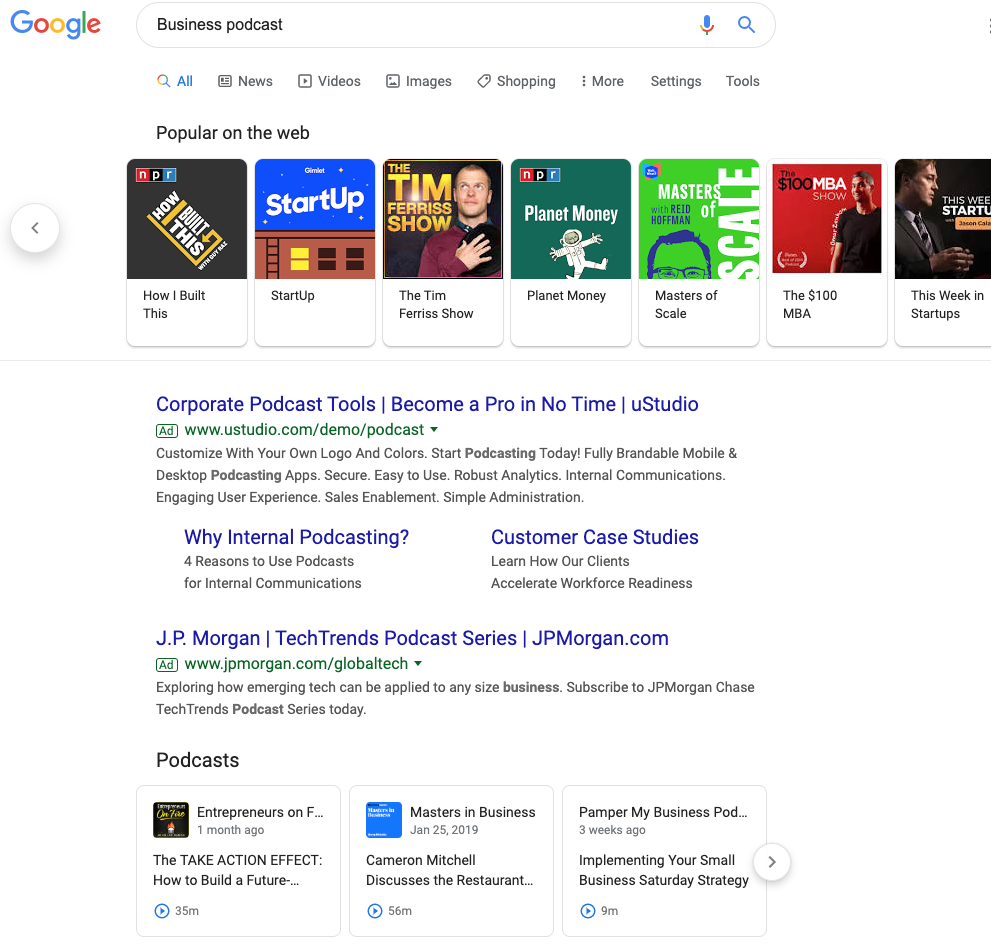
Searching for an Answer: When you’re looking for a more specific answer and include the word “podcast” you will find a Podcast Carousel. The carousel appears to give weight to the title of the show, then the episode title, show description, and finally the actual content of the episode. In the example below, you can see a mix of shows that either including something about home building in the show, or in the episode title.
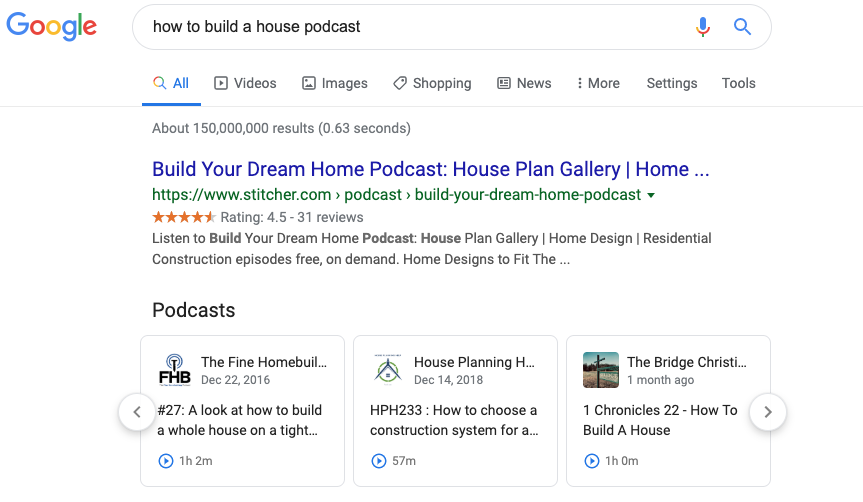
The “Popular from the Web” and podcast carousels are the two mechanisms for how Google is surfacing podcasts into search results. In terms of real estate, both these carousels occupy top positions in the SERPs.
HubSpot’s SEO strategist Aja Frost explains what the addition of podcasts will mean: “This will definitely have an impact on SEO.”
Frost says, “Search is a zero-sum game — there’s a set amount of space on the SERP, so every new search feature, like a podcast carousel, means there’s less space for the traditional blue links.”
Every marketer who cares about their position on Google should be interested in how to get their content into these coveted carousels.
What types of shows will do well?
In this new world of audio SEO who will be the winners? Here are some characteristics of shows we feel will do well:
- Lots of Episodes: The more episodes your show has, the more likely it will be to surface for a variety of search results.
- Short Episodes: Generally a show with shorter episodes is likely to have more of them, which increases ranking opportunities. Now that you can play an episode from the search results, it’s likely we will see shorter episodes become more popular when someone is looking to answer a question.
- Quality Audio: Your show will be less likely to be successfully transcribed if it does not have quality audio. This could impact your ability to appear in search queries.
- Titles Aligned to Queries: If the show title, episode title, or description aligns to a search term with a high search volume, those shows are likely to appear more often.
- Big-name guests: Elon Musk podcast is going to get a lot more searches than Sam Balter podcasts. Having celebrity guests will help you rank for more popular search terms.
Looking forward in time, we also expect shows with segments to do particularly well. We’re in the early stages of audio SEO, but we know that Google has already transcribed the content of the episode. Shows that take one topic and then have particular segments that align to the overarching search term will likely perform well.
For example, let’s say our episode is about digital advertising. We might have a segment for each show called “Overview”, where the host uses a search-friendly phrase like “Now we’re going to provide an overview of digital advertising on LinkedIn.”
Then, another episode might have the same “Overview” segment, and the host might say something like “Now, we’re going to provide an overview of digital advertising on Facebook.”
We believe show segments will help surface podcasts to page one of Google.
Optimizing HubSpot’s Podcast for SEO
We have officially relaunched our educational podcast Skill Up. The first season of Skill Up focused on SEO and had in-depth conversations with our SEO expert, Matt Barby. There were eight episodes averaging over 40 minutes long.
For the new run of Skill Up, we intend to take a different approach. We’re creating seasons based on specific topics which we identify as relevant to our core business and have high search volume. Episodes will be much shorter, averaging ~10 minutes per episode.
Additionally, individual episodes will include segments where the host mentions key phrases.
Finally, we are moving away from an interview format — instead, we want our Skill Up host to act as more of a narrator to the content.
By focusing the content of each season around a specific topic, we’re doing right by the listener by providing interesting bite-sized content that is easy to consume.
We’re also doing right by the search engines by making titles simple, descriptions keyword-rich, and integrating segments within the episode that makes it easier for search engines to identify parts of the episode.
A Word of Caution
Podcasts have evolved alongside but independent of search, social media, YouTube, and blogging. The success of podcasting today is built upon the backs of hard-working creators that have strived to make amazing shows that develop loyal followings.
Podcasts have not become successful through growth hacking, newsjacking, or search engine optimization. Keyword stuffing a low-quality show that does not inspire listeners to subscribe is a recipe for failure. No matter what changes Google makes to their algorithm, better content will ultimately rise to the top.
Above all else, remember you make shows for the listener, not Google’s web-crawler.
To learn more about successful podcast creation, check out The Anatomy of a Perfect Podcast Episode, According to HubSpot’s Podcast Expert.

Millennials vs. Gen Z: Why Marketers Need to Know the Difference
In recent years, there’s been a common misconception that Gen Z and millennials are essentially the same.
When companies discuss reaching younger audiences, many often lump Gen Z and millennials into the same group and create one campaign strategy that they believe fits both groups.
Sure, many millennials and Gen Zers are considered “young adults.” Not to mention, both generations are highly connected to technology and the internet. With these similarities in mind, it might seem effective and cost-efficient to run one campaign aimed at both generations, but is this really the right move?
To investigate, I decided to start by letting consumers weigh in on whether or not the same marketing strategies will engage both age groups.
In a Lucid poll, I asked 350 people to tell me if, “The same marketing tactics that persuade millennials also work on Gen Z,” was a true or false statement.
If you think consumers — the people who are being marketed to by brands — would sway one way or another, you’ll be slightly surprised by the results below:
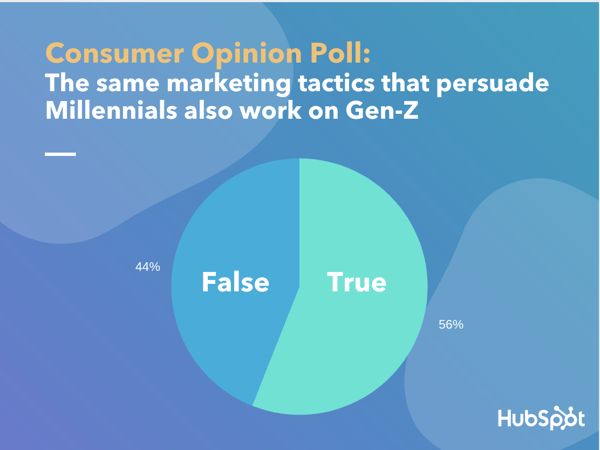
Data Source: Lucid Software
Although 56% of those polled thought the two generations could be marketed to the same way, nearly half disagreed.
As a marketer who specializes in audience growth, I sway with the 44% of people who think that the same tactics won’t work on both groups — at least not forever.
But is either group of consumers right about their perceptions? To find out, I dove deeper into the cold, hard facts that researchers have discovered about the generational similarities and differences.
Yes, in 2019, marketing to both generations as if they’re the same demographic might persuade those born on the cusp of each age group to buy your products. However, mounting research shows that Gen Z and millennials are more different than we think.
Aside from what I’ve learned as a marketer, I can also speak on this topic from a personal standpoint. As the millennial sibling of a Gen-Z sister, I’ve seen the differences between our two age groups first hand.
While my sister, born in 2001, is always posting on her Finsta and TikTok profiles, I’m still sharing early-2000s memes on Facebook. And, while she’s just starting college, I’m budgeting to pay off my student loans. The list of differences continues and will only grow as we reach different milestones in our lives.
I’m not the only marketer, or millennial, who’s noticed the two generations’ vast differences. In fact, a number of market research studies, including this recent report, have identified dozens of key differences between the two generations.
In this blog post, I’ll go over some of the biggest research-backed differences between millennials and Gen Z, while occasionally weighing the raw data agains the way every-day consumers perceive the two generations. I’ll then explain why each nuance is important to know as you create campaigns for each audience.
When you think about the generational differences on the largest possible scale, the oldest millennials are close to 40, might be settled down, and could be making larger purchases like cars or homes. The youngest members of Gen Z are in second grade, might love children’s shows, and won’t be directly making purchasing decisions any time soon.
Aside from the obvious age differences above, here are six more factors that make these two generations fundamentally different.
6 Factors That Differentiate Millennials and Gen Z
1. They have different attitudes about technology and money.
Understanding the era an age group grows up in can help you identify generational commonalities like motivations, spending or saving habits, or pain points that they all share.
Two things that differentiated each generation’s childhood era included technology and the economy:
Technology
The most obvious difference between the eras each generation was raised in is the presence of technology. Millennials grew up using DVD players, giant personal computers, cell phones with tiny screens, and dial-up internet. At that time, we thought these technologies were groundbreaking.
Now, most children and teens within Gen Z have access to iPads, smartphones, endless Wi-Fi, or streaming services that put our prized DVD players to shame. Many members of this generation might have also grown up in households with early smart home technology.
While millennials watched innovation begin, Gen Z was immersed in it from day one.
But although Gen Z never had to know a time where they didn’t have a cool gadget to solve basic problems, the impact of technology, the internet, and social media has still taken a toll on the group.
Research shows that Gen Z deals with far more body image, mental health, and cyberbullying issues than any other age group has in the past. Experts have also called Gen Z the loneliest generation despite all of their digital connectivity options.
Economy
Millennials and Gen Z also have different attitudes around money. While they both care about their finances and invest in things that can improve their careers — like higher education.
Both generations are known for improving on financial habits of past generations, however, millennials put their money into buying more products or services that will give them a positive experience, while Gen Z is more focused on savings and practical products.
Millennials in the U.S. built up their own finances shortly after the Recession, which ended in late 2007. In 2019, despite financial woes caused by the poor economy, rising home costs, and high unemployment levels, millennials still remain optimistic about their future and finances.
Meanwhile, Gen Z was born at the beginning of the economic downturn. As the oldest members of Gen Z have entered adulthood, research shows that their past experience of living in the Recession are leading them to make more practical spending decisions.
If you’re marketing to these generations, you’ll want to keep these attitudes about money in mind.
For example, if you want millennials to buy your product, you’ll want to focus on building a brand that offers a pleasant or entertaining customer experience, as well as marketing products or services that give instant gratification. If you’re marketing to Gen Z, you’ll want your campaigns to clearly demonstrate how or why your product will be valuable or practical to them in their daily lives.
2. Gen Z is more likely to make mobile purchases.
By now, you might know that both of these generations are heavily connected to the internet and social media, While millennials watched the internet develop, Gen Z has used it since a very young age.
Each day, millennials spend around 7.5 hours online while Gen Z surfs for nearly 10 hours.
Millennials and Gen Z also go online primarily with mobile devices.
According to Think With Google, Gen Z particularly spends a lot of time on the mobile Internet. Roughly 71% of Gen Z teens use mobile devices to watch videos, while 51% use mobile for social media surfing.
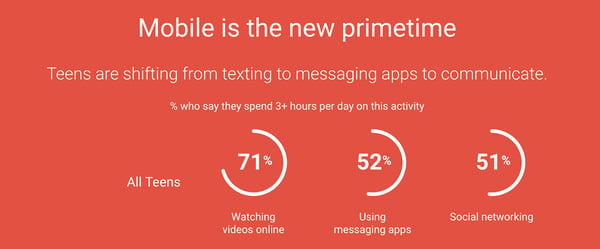
Source: Think With Google
Gen Z’s mobile-first mindset also impacts how they shop. Members of the generation are twice as likely to make a mobile online purchase than millennials. However, millennials still do shop a lot on mobile devices. In fact, 71% say they do most of their online shopping with a mobile device.
When it comes to online content consumption, both millennials and Gen Z spend most of their time watching videos and visiting social media sites.
According to a recent study, millennials watch online videos for 2.4 hours per day while Gen Z averages 3.4 hours. Meanwhile, both generations are thought to spend hours per day on social media.
While you might have already known that mobile optimization and video marketing are a key digital strategies in 2019, these stats serve as more evidence that it can help you zone in on young adult generations. If you really want to attract attention from both Gen Z or millennials, you’ll want to create mobile videos, mobile ecommerce sites, or other phone-based experiences that cater to them. You should also be sure to market yourself on platforms that are already mobile, such as major social media apps.
3. Both spend a lot of time on social media, but the platforms they use are quite different.
To get an idea of how people perceived each generation’s social media usage, I asked the same group of 350 people noted in the Lucid poll above to weigh in on which group they thought spent more time on social media. Here’s what they said:
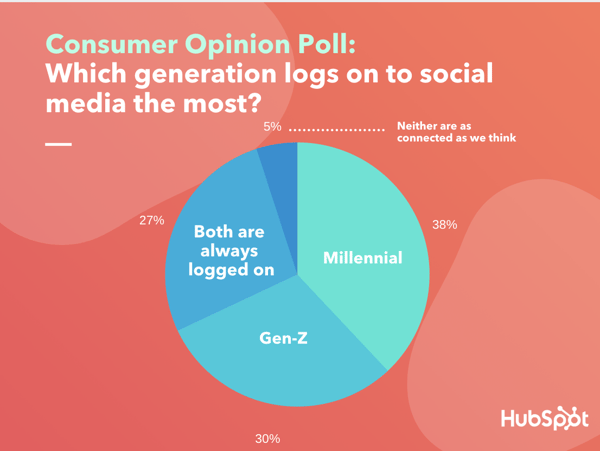
Data Source: Lucid Software
The results of the poll above were fairly split between millennials and Gen Z. However, 27% of participants say both generations are “always logged on.”
So, who’s actually the most tuned in to social media? Let’s see what studies on these groups reveal.
The World Economic Forum reports that millennials are logged on to social media for an average of two hours and 38 minutes daily while Gen Z logs on for two hours and 55 minutes.
Aside from the time spent on social media per day, the platforms each generation uses are also slightly different.
While my generation thrived on MySpace and Tumblr and now enjoys platforms like Facebook, Instagram, LinkedIn, and Twitter, Gen Z has zoned in on video-based platforms like Instagram, YouTube, Snapchat, and — more recently — TikTok.
A recent Business Insider survey that polled the oldest half of Gen Z found that participants used Instagram, YouTube, and Snapchat most often.
Although TikTok seemed less popular in the Business Insider survey, this one-year-old platform is worth noting as one of the fastest-growing social media apps due to booming global Gen Z users.
Gen Z and millennials do have a few social platform preferences in common. One, for example, is Instagram. While Instagram is older and more established than apps like TikTok or Snapchat, it’s also pulled in millennials and video-loving Gen Z members.
YouTube is also a social network that both generations are prominently using. While YouTube was launched when most millennials were children, Gen Z usage of the platform has increased by 59% since 2018. The video platform is also the second-most used search engine and a platform where many in Gen Z and millennial generations go for product research.
4. Millennials pay attention to ads for a longer amount of time.
When it comes to content consumption, each generation’s habits align well with its average attention span.
While millennials will pay attention to content for 12 seconds, Gen Z will only stay focused on it for eight seconds. Furthermore, Gen Z enjoys quick or short-form video content, like that of Snapchat or Instagram Stories, while millennials value long-form content, such as detailed videos or podcasts.
This means that those advertising or marketing to millennials can get away with slightly longer or more in-depth content while those marketing to Gen Z will want to get their value proposition out as quickly and seamlessly as possible in their campaigns.
As I’ve mentioned above, most of today’s social and online platforms are becoming more video-driven. This mirrors the fact that video usage is growing quickly amongst both generations.
Regardless of whether you’re creating long-form content for millennials or short-form clips for Gen Z, you’ll want to embrace mobile-optimized video when promoting your brand to either audience.
Branded Content
When it comes to learning about brands or products on social media, each generation also has its own unique preferences. For example, Gen Z prefers to learn about products through social media-based videos and influencer marketing, while millennials will respond to a variety of promotional strategies including more traditional online ads, social media marketing, and branded podcasts.
Additionally, a recent survey shows that 87% of Gen Z prefers ads or marketing content that shows actual people discussing products. When it comes to millennials, only 37% prefer to see people discussing products in ads or marketing content.
Aside from embracing video and mobile optimization, if you’re marketing to Gen Z, you’ll also want to focus on content that feels more informative and less like an ad. This generation has actively rejected traditional advertising tactics. For example, 84% of Gen Z will skip video ads as quickly as possible while 65% of them have downloaded some type of ad-blocker on their mobile devices or computers.
5. Both generations purchase less than past generations.
A common myth about millennials and Gen Z is that both generations are financially illiterate. Because this seems to be a hot topic online and throughout pop culture, I conducted one more Lucid poll, asking the same group noted above to choose which generation they thought spent more money on products.
The Lucid poll below demonstrates this myth and perception as many participants said that they believed both generation spend a lot of money:
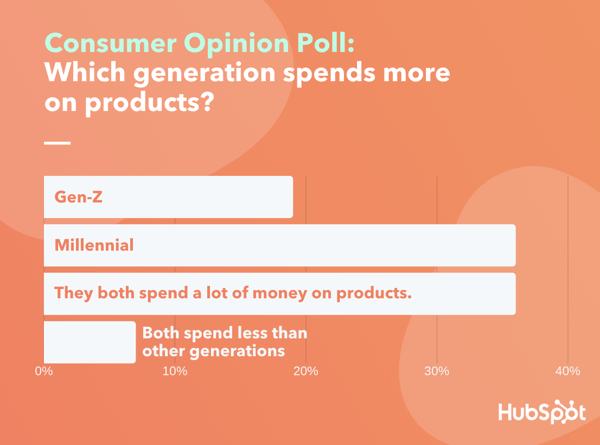
Data Source: Lucid Software
Additional in the poll, 36% of people said millennials spent the most on products, while the same percentage said both generations spend a lot of money. However, less than 20% pointed to Gen Z.
According to various studies, both generations actually spend less than past generations while the oldest Gen Z members are focused on responsible spending.
Most of Gen Z doesn’t even have buying power yet. But research from multiple sources, including Vice, Insider, and Adobe say that Gen Z aims to spend money pragmatically as compared to other generations. Some analysts suggest that Gen Z’s saving approach is routed in budgeting lessons that the generation learned from the U.S. Recession.
When it comes to the Gen Z members who are old enough to make purchases, research shows that they do less online shopping than millennials. A recent study from Ernst & Young noted that 74% of millennials and only 49% of Gen Z buy products online more than once a month.
But, while Gen Z buys less online, they expect more added service from a brand when they make purchases. The same E&Y study found that 80% of Gen Z valued free delivery. The study also found that 74% of Gen Z values brands that give out discounts or coupons over other businesses.
While millennials are slightly less frugal than Gen Z, the idea that the older generation is more frivolous is also a huge misconception. While many millennials buy their fair share of products, they also earn more annually than most older generations, are the most educated age group, and are notably optimistic about their futures.
6. They have different career motivations.
One thing that both generations have in common is that they have placed importance on investing in school or skills training.
While older generations could afford both homes and education, millennials find housing out of financial reach and have mainly focused on paying high costs of tuition.
Despite increasing educational costs, the trend of investing in education isn’t expected to change for either generation. While 10% of Gen Z teens are saving for college, millennial parents are putting more into their children’s college funds than past generations.
Looking at each generation’s work habits can give you a sneak peek into what their finances and daily motivations might be in the future.
While both Millennials and Gen Z are driven by higher education and career growth, they still have a few slight differences that you might want to know about, especially if you’re a marketer in academic or B2B fields.
In 2019, many millennials are working or are enrolled in higher education. By 2030, 75% of the workforce will be made up of millennials.
But, although most of Gen Z is still in school, they are also very career-minded.
When it comes to looking for jobs, Gen Z adults are more financially motivated than the millennial generation. In fact, 65% of Gen Z employees value salary over other job perks. Those in the age group also say they’ll invest in skill training if it means they make more money.
Gen Z also applies for jobs more aggressively than past generations. Only 10% of the generation starts their job search after college while most Gen Z students begin scouting out job options between freshman and sophomore year.
So, what does this mean for your marketing strategy? Both of these generations are hard workers, highly educated, and might earn more than past generations.
However, Gen Z is more driven to make and save money. This means that to persuade Gen Z, you might need to take extra time to brainstorm campaigns that show how your product will help them and why it is worth their money. Odds are, they will be more persuaded by the practicality of a product than the “trendiness” of it.
How to Market to Each Generation
Yes, both generations have a lot of things in common.
And while there are opportunities to market to both generations at once, it might be more beneficial to brainstorm creative campaigns that zone in on one generation or the other. To help you develop a strategy that gains attention from the appropriate audience, here are a few takeaways related to each generation:
Marketing Campaign for Millennials
By now, you might be most familiar with marketing to millennials. Luckily, they’re also a great generation to market to. They’re on the most prominent social media networks today and prefer to consume multiple different styles of multimedia content, from videos to podcasts. They’re also old enough to make purchasing decisions, more educated than previous generations, and spend considerable amounts of time in the research stage before buying a product.
Essentially, many different formats of marketing content will engage millennials because they are regularly looking to be enticed by a new product that will help them in their daily lives.
Because millennials have a slightly longer attention span than Gen Z, you can also get a bit more creative by testing out longer-form content like longer marketing videos or branded podcasts.
The best types of marketing campaigns will inform millennials about how your product can make their lives easier or how it can solve their day-to-day problems. Focusing your strategy on social media or online platforms like Facebook, YouTube or Instagram, where many adults go to research products can also be beneficial to your strategy,
Marketing Campaign for Gen Z
To successfully persuade Gen Z to buy your product, you’ll want to make content that quickly cuts to the chase and explains why your product will provide value to them.
As mentioned above, Gen Z loves to use video to learn about products and also spends most of their online time on their mobile phones. So be sure to leverage short-form video formatting and mobile-optimized content in your campaigns.
You’ll also want to zone in on the niche social media platforms that they commonly use, such as Instagram, YouTube, TikTok on Snapchat. If you’re not on one of these platforms, but still want to gain brand awareness there, consider sponsoring an influencer who knows the audience and create content that discusses your product.
Marketing Campaign for Gen Z and Millennials
If you absolutely can’t budget pinpointed campaigns for millennials and Gen Z, but know you want to market to young adults, focus on the cusp of both generations by creating a campaign for 18 to 34-year-olds. This will allow you to zone in on young and slightly older adults that can actually make purchasing decisions.
While a campaign with this age target might be slightly more favorable to millennials, who are between 23 and 38, there’s still a chance you could grab attention from older teenagers who will soon be able to make more purchases if they can’t already.
Despite the differences between these two generations, there are also two big similarities: both love social media and instant gratification. Be sure that your campaign clearly explains why your product will be valuable to the age group you’re pitching it too, and leverage the social media networks that the age group you’re targeting has in common.
For example, if you’re focused on promoting your product to people in the 18 to 34 range, you’ll want to be on Instagram, YouTube, and Facebook, because most members of this age group are using all three of them on a regular basis.
If you can create a campaign that leverages key social networks accordingly while highlighting why your product is so instantly gratifying and useful, you might attract interest from both groups fairly quickly.
Tips for Knowing Your Audience
As you create campaigns around a specific audience or age group, it’s important to do digging to learn what motivates this group of people, what their purchasing habits are, where they spend the most time, and what they’re looking for in a product. Here are a few tips that can help you in this research:
- Identify specific demographics: Try not to be too specific or too broad. Pick an audience you can learn a lot about quickly that well aligns with your product and start researching that demographic.
- Learn about their work and education backgrounds: This will give you insight on what motivates them and how much they’re able to spend on a product.
- Find out which social platforms they use: Once you do this, you can research each platform and leverage it appropriately during your campaign.
- Consider writing a buyer persona: A buyer persona is a fictional character that has a very similar lifestyle to your ideal buyer. Having a persona in mind can help you quickly think about campaigns and strategies that they’ll engage most with. It’s also a handy place to organize all of your detailed research findings into one simple place.
Want to learn more about Gen Z or millennials specifically? Check out this blog post on marketing to Gen Z or this piece on millennial marketing.

How 13 Brands Are Leveraging Snapchat Discover
Since Snapchat launched in 2011, brands have been experimenting with new ways to reach the platform’s Gen-Z and millennial audiences.
However, marketing on Snapchat hasn’t always been easy.
Between 2015 and 2017, brands like NASA, Warby Parker, and Sour Patch Kids started their Snapchat strategies by creating individual accounts. Based on the fact that none of these accounts are still posting, it seems that they quickly found that Snapchat’s platform did not do them any favors.
For example, since branded individual accounts are essentially the same as personal accounts, there’s essentially no difference between businesses and people on the platform. When following a business on Snapchat, it’s hard to tell if you’re following the actual company or just another account posing as such.
Aside from the account confusion, Snapchat’s platform also makes it difficult for users to search, find, or discover new brands. For example, users still need to search for a brand’s exact username or scan a Snapcode to find the company. This means that brands that market themselves on Snapchat accounts would need to do promotion on social media or other areas outside of the Snapchat platform to let people know that they’re actively posting there.
While many brands experimented with Snapchat Stories on their accounts, they still couldn’t link to their own websites or products. This might have also caused some friction as brands might’ve determined that they didn’t want to create content that wasn’t going to result in web traffic or an immediate ROI.
Because of these friction points, many brands have pivoted to other platforms, like Instagram Stories. Many marketers have also said that Instagram content receives much more engagement than Snapchat content.
Today, if you search brand names on Snapchat, you might find inactive old accounts. When you add one of these accounts as a friend, you’ll most likely see that they don’t publish anything there anymore. Many of them also don’t even have an emoji image or profile picture associated with their accounts anymore.
Here’s an example. A few years ago, I followed Warby Parker via a Snapcode they shared on social. Not only is the brand’s image gone, but it also hasn’t posted a story or any content from this account in a while:
With the failure of branded individual accounts, things improved for big brands with the 2015 launch of Snapchat Discover.
What Is Snapchat Discover?
If you’re less familiar with Snapchat, Discover is a page of the app that shows Story-styled content from publishers, brands, and major influencers who partner with the tech company. Below is a screenshot of what Discover looks like today. You can read more about this feature here.
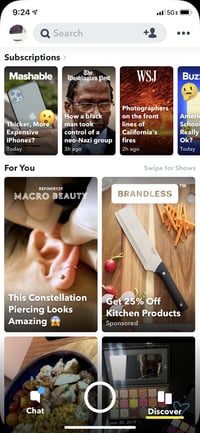
In the early years of Discover, the format looked very different from the screenshot above. In fact, there were only a few Snapchat publishing partners that could have Stories on this section of the app. These partners were often publications, lifestyle magazines, or news organizations.
Here’s an old video demo for Snapchat Discover which shows how simple the section was and how it only had 12 major publishing partners on its home screen:
By 2018, Discover changed its formatting drastically to become more brand-oriented. The company also got less picky about its partnerships. While it still partners with big brands and major influencers, the company reportedly has over 52 publishing partners.
Still, since Snapchat makes the final call on who gets to publish in Discover, this section of the app might still be inaccessible to you or other small-business marketers at the moment.
Because Snapchat also doesn’t allow links or certain promotional language in partner Stories, attempting to become a publishing partner probably wouldn’t benefit you if your company relies on ROI and conversion to grow.
If you aren’t a Snapchat partner, but have an advertising budget, landing a promoted Story on the Discover feed could become slightly more accessible in the future. Currently, Snapchat allows you to advertise by publishing promoted Stories in the Discover feed. You can also run in-stream ads that feature short videos within longer Stories created by Discover publishers.
Recently, the app company also announced that it would be offering more in-stream ad placement opportunities to businesses through its new Snapchat Select advertising tool.
Alternatives to Snapchat Discover
While Snapchat Discover is a great option for bigger or older brands that want to spread awareness to new or younger audiences, you still might want to look at alternative platforms if you decide that a social media Story strategy is right for you.
For example, many small, mid-sized, and even larger brands now turn to Instagram or Facebook Stories. While you can create Stories with music, videos, and special effects on these platforms, you can also link your Story content to your website and add interactive features like polls. Because both Facebook and Instagram are both hugely popular and free to use, it seems like these platforms might be the best place to start you’re looking for a scalable and affordable Story strategy.
How Small-Business Marketers Should Use Snapchat Discover
Before you run off to Instagram or Facebook, you shouldn’t completely disregard Snapchat just yet. In fact, Snapchat might be one of your most useful tools when brainstorming how you will manage your Story strategy, even on another platform.
You can easily surf Discover content to see what the big brands are doing, which types of Stories could be most scalable for you on another platform, and to get an idea for what’s engaging to younger audiences that enjoy watching Stories throughout social platforms.
To keep you in the know of current Snapchat strategies and give you inspiration for your own Story content, here’s a look at 13 brands that are leveraging Snapchat Discover for Story-based promotion and paid advertisements.
Examples of Snapchat Discover Stories Published by Brands
More often than not, Snapchat Discover partners are publishing companies or entertainment organizations, This is because these types of brands are already creating content that first with Snapchat’s visual-storytelling oriented platform. These companies are already known for telling great stories and have the resources to adapt their content into bite-sized mobile-friendly Stories.
Here are a few examples:
1. Wall Street Journal
Although the Wall Street Journal can’t link Discover Stories to its website, the publication still adapts its daily news content to the Snapchat platform. For example, WSJ will regularly post visuals and highlights from some of its long-form or investigative content that was also recently published online or in its newspaper.
While some publishers might try to post lighter Stories that are more targeted towards younger people on the Snapchat platform, WSJ stays very on-brand by publishing content related to finance, culture, and its own investigations. By posting daily Editions — or Stories that hold multiple smaller Stories — WSJ embraces a traditional magazine or newspaper format, even on the Discover platform.
Aside from breaking down a larger news report into short-form Story pages, called snaps, WSJ uses Snapchat’s swipe up feature to enable viewers to swipe their finger up to access a longer-form story that’s placed in Snapchat’s CMS rather than WSJ’s website. While WSJ features a few Stories in each daily edition that require a swipe up for more content, they usually post one to two news pieces that are just presented in snaps.
Here’s an example of a WSJ edition with multiple Stories related to news highlights.
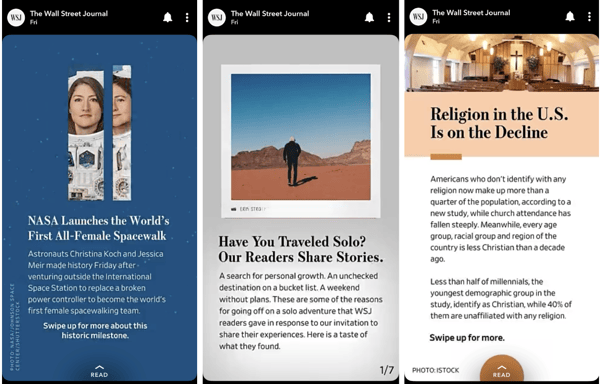
Although WSJ has been going against the grain by posting Stories on dryer topics, they have still intrigued audiences on the platform and had a good standing with Snapchat Discover for many years. This is a great example of how a company stayed true to its brand, even on a new platform, and was rewarded for it by getting new audiences and boosting brand awareness.
If you’re a marketer for a publication or even a brand that simply has a blog. You could explore the idea of adapting your company’s blog posts, articles, whitepapers, or research reports to an Instagram or Facebook Stories format. After adapting this content, you could also link it to your website via Facebook or Instagram’s swipe up feature, or provide a call to action at the end of your Story that tells prospects to visit your site.
Adapting your content or expert tips into Stories will allow you to demonstrate your brand’s expertise in its industry. Then, as people are looking for a product in your field, they might look at your Stories or remember your company as they’re researching products and brands online.
2. Harvard Business Review
When you hear the word “Harvard,” you might think of geniuses, scientists, and Ph.D.s that write and speak so complexly that you won’t understand them. However, when Harvard Business Review began publishing on Discover, the publication began to break this mold by telling easy to understand Stories about complex topics like technology, job seeking, academics, finances, and even global warming.
Like WSJ, Harvard Business Review also adapts its web content to the Discover platform. However, Harvard Business Review publishes a mix of harder content and advise oriented content, rather than just investigative news.
While WSJ sticks to posting snaps or long-form Stories, HBR editions usually include a mix of snap-based Stories, a few swipe-up Stories, and even interactive elements like poll or quiz content. They have also experimented with video and animation to make Stories more eye-catching.
Here’s an example of an HBR story that was adapted from a longer piece of thought leadership on hbr.org:
Because Harvard is seen as so credible, young people might be too intimidated to read its content online or in its magazines. However, a Discover Channel like this allows them to argue that misconception as they adapt and present their content to a younger audience which might find various HBR tips valuable, relatable, and understandable.
While younger generations may not have known about HBR, they might view its Stories on Snapchat and understand HBR’s mission and how a business publication can still be valuable to them.
Harvard Business Review also recognizes the benefits of Instagram Stories. On this platform, they publish some similar or identical Stories but include swipe ups to the actual web articles that each piece of content relates to. This goes to show that what brands do on Snapchat can also be scaled and adapted to fit the Instagram Story setting and audience.
You could use Stories similarly to give people in your industry understandable and valuable tips and guidance. As we’ve seen with both HBR and WSJ, Stories could also be a great tool to use if you want to tap into younger audiences. With Facebook and Instagram Stories, you can also add interactive elements, like HBR does in its Snapchat Stories. These elements will engage users and potentially make them think more deeply about the discussed topic.
3. National Geographic
National Geographic posts content that’s fairly similar to what you’d see in its magazines or on its television channel. However, the brand makes slight visual tweaks and often adds interactivity to Stories to make its content engaging on the Snapchat platform.
One common strategy National Geographic uses is telling viewers Stories filled with quick fun-facts about animals. For example, the Story below explains the history of the goldfish:
Because platforms like Snapchat are so fast-paced, Stories that read more like fun-facts or news bites — like the goldfish example above — might avoid dropoff and be more engaging to users who want to be entertained or informed quickly.
With this channel, National Geographic gives Snapchat users a look at its brand. Those who are interested in National Geographic’s Stories, information or beautiful imagery might begin to follow the brand’s other social channels, watch its television shows, or even subscribe to its publications.
While marine sciences might be interesting in a long National Geographic documentary, publishing that type of detailed content on Discover might get too complicated for the story platform, the brand decided to simplify its content, zone in on a well-recognized goldfish, and educate viewers about unique fun facts they might not have known.
If your brand works within a complex or broad industry that might intimidate people on social media. Consider posting Stories that simplify certain topics. To do this, incorporate history, word definitions, and other fun facts related to your product or service to make the content feel more educational rather than promotional.
4. Mashable
Like the publications listed above, Mashable also adapts its online content to Snapchat. In the example below, Mashable discusses the new Google Pixel alternative to AirPods.
Mashable, a tech publication, does a good job of recognizing that young, tech-savvy users might be prevalent on Snapchat Discover. The publication also understands that these users like to be engaged in different ways such as interactive quizzes, polls, or even a maze-like snap seen at the end of the above example.
Like Mashable and some of the other Story examples above, you might also want to take advantage of your chosen Story platform’s interactive options. In the above example, Mashable includes a poll related to the topic it’s discussing and then encourages users to screenshot and draw on the AirPod-themed maze on the last snap. This way, those who aren’t as interested in earbuds can weigh in with a poll, or try to solve a fun maze puzzle. This makes the Story engaging for multiple people who aren’t just tech buffs.
If you work in a field that sees a lot of news, unveilings, or product launches, it could be beneficial to create Stories that discuss the ins and outs of your industry and how some products might be better than others. This type of content might make your brand look like a credible expert in your field and could lead viewers to trust that you also sell quality products.
Furthermore, adding interactives like Mashable will make your Stories more engaging, memorable, and fun for a variety of audiences, even if they aren’t exactly within your field.
5. The Food Network
The Food Network’s Snapchat Discover strategy is very similar to its Instagram Story strategy. In both Story formats, Food Network gives recipes, food-related tips, or discusses food-related trends, such as celebrity diets.
The Food Network does a great job of leveraging the visual aspects of its brand by showing off recipes and other kitchen-related content. The brand also uses Snapchat for more odd-ball Stories that include fun-facts or light life hacks that someone can remember after quickly tapping through Discover content.
In the example below, the Food Network begins its Story by telling viewers how to grate and prepare cheese. The Story concludes with a shareable snap that says “You’re Grate.” This enables viewers who like the corny pun to send this snap of the Story to a friend that they think is great.
While the Stories don’t link to the Food Network’s website or television content, this type of content is still interesting or entertaining to watch, gives useful compact tips to viewers, and ends on a high note with a fun interactive image. This overall strategy allows users who were unaware of the Food Network to find the channel, get a sneak peek of what they might see on its actual TV channel, and then share a piece of the Story they saw with someone else.
6. UCLA Gymnastics
While a big majority of Snapchat Discover channels are run by publications or content creators, one great exception is the UCLA Gymnastics channel. UCLA Gymnastics’ Stories often give a behind-the-scenes look at the gymnastics teams, practices, or tournaments.
While many of the Stories on Discover often cater to news, beauty, tips, or lifestyle content, UCLA Gymnastics’ channel might be interesting to sports or gymnastics fans who want to learn more about a nationally ranked college team. Since members of the team are also college-aged, like many on the Snapchat platform, viewers might find these Stories easier to relate to than Stories of older athletes.
With the gymnastics team’s Discover channel, UCLA might have identified that young adult audiences were more prevalent on the Snapchat platform and decided to spread awareness about the team via Stories. This is a great example of identifying where your most interested fanbase might be and meeting them where they are.
If you’re looking to test out Story content on various platforms, consider taking a similar note from UCLA gymnastics by offering viewers an inside look at your business or organization. For example, you could show your team at events or in the office designing new products. Or, you could do interviews with your staff where they can give their expert opinion on topics related to your industry. This allows viewers to see the more human side of your company rather than just a business that might solely want customers to buy their products.
Examples of Shoutouts in Snapchat Discover Stories
Because Snapchat Discover is a more applicable platform to publications that are already creating content, some brands might choose to work with publishers to promote their product. With this strategy, the publisher creates Story content that highlights the brand they’re working with. Here are a few solid examples of this type of Discover Story:
7. Sperrys and Style Insider
Recently, Style Insider was invited to a Sperrys factory to cover the production process of the iconic shoe. Style Insider then filmed a vertical Story that showed every aspect of the design process, including the painting and lacing of the shoes.
While this is visually fascinating to look at and interesting to Style Insider’s fashion-savvy audience, the Story also allows Sperrys to demonstrate the intricate details and work that goes into every single shoe.
Viewers might watch this and believe the shoe is made with care and of good quality. Because Style Insider also begins the Story by highlighting the history of the shoe’s popularity, viewers might also be persuaded to buy the shoe so they can appear more fashionable or trendy.
8. Rivian and Car Insider
Car Insider regularly posts Stories about major car brands, such as BMW. However, in a recent profile-styled Story, they discussed Rivian, an autonomous electric vehicle startup that was attempting to compete with Tesla.
The Story highlights some of Rivian’s newest car models, how they are more affordable, and aspects of the company that make it different from Tesla. It also gives quotes and soundbites from Rivian employees.
While Discover might be too expensive or time-consuming for a startup, this is an example of how companies can still reach out to press or content creators for solid coverage.
Because Car Insider has gained clout in the automotive industry, Snapchatters interested in cars might follow its Discover channel and use it to get quick expert-created Stories about new launches or automotive technology. When these car fans hear about Rivian or other companies from an automotive expert or publication, they might be more likely to remember how highly regarded the company was when they’re shopping for a new car.
If you want to leverage Stories on some type of platform, but don’t have the resources or time to make your own, consider reaching out to publishers or content creators who publish Stories related to your industry. By doing this, you could get your product covered in their content or sponsor content that talks directly about your brand.
9. Color Coat Beauty Boutique on Macro Beauty
While some brands will work with Snapchat Discover publishers to get good coverage in their Stories, some brands can also volunteer their tips or experts to publishers. For example, in a recent Story from Macro Beauty, a fashion and lifestyle-related Discover channel, a rep from a Los Angeles Salon called Color Coat Beauty Boutique gave manicure tips and walked through the process of placing nail extensions.
Although this expert is telling viewers how they can get salon-quality nails from home, she’s also demonstrating her expertise in nail art. Viewers in the Los Angeles area who see this might trust that this rep is an expert at nail art. Then, if they need a nice manicure, they might be interested in investing in one from her salon.
If you’re unable to make your own Stories Snapchat, Facebook or Instagram, but have an expert affiliated with your company that doesn’t mind giving tips on camera, you could allow other brands to interview or show tips from this person in their Stories. When someone from another content creator’s audience sees there Story and learns about your brand’s expert, they might want to learn more about your company or buy products from you.
Snapchat Discover Ads
Snapchat Discover ads have evolved from short video ads that last for a single snap to mini-promoted Stories that actually show up on the Discover feed. Here are a few examples of how brands leveraged Story-styled ads on this platform.
10. Purple Mattress
Purple is currently running a simple promoted Snapchat Story on Discover. It only includes two snaps that explain what the Purple Mattress is made of. While this content is very short compared to other promoted Stories, Purple gets to the point quickly by explaining the unique aspects of its mattresses in a short amount of time.
This quick Story might be a smart move because mobile applications like Snapchat are much more fast-paced and might see high Story dropoff rates from viewers. With any mobile Story platform, it’s key to get the important information out or hook the viewer within your first few snaps so they don’t tune out before seeing the meat of your content.
Another thing Purple does well is identifying where its audience is and meeting them there. While some of Snapchat’s Gen-Z viewers might not be able to purchase a mattress yet, some of the platform’s older audiences might be looking to purchase an affordable bed from a trendy or disruptive company like Purple.
11. Bumble
In a promoted Story, Bumble presented photos taken on vacation by couples who first met on the dating app. While vacation photos and romantic Stories might be enticing to Snapchat’s young adult audiences, Bumble also argues that it has successfully matched a number of successful couples and that it can also match the viewer.
While this feels a bit like a native ad, Bumble still aims to tell the story of some of its most successful couples. This type of content might both entertain a viewer and pique their interest in the app if they are single.
If you’re a company that similarly has a lot of success stories, consider using a Story on one of the various platforms to show customer testimonials or photos or videos of people benefiting from your product. This could both entertain your audience and make them trust you as they see real-world examples of your product’s success.
12. Raymour & Flanigan
Raymour & Flanigan, a furniture company, also recently used a promoted Story to highlight its products. However, rather than trying to show off a narrative, the company’s snaps feel more like a multi-page ad. Rather than telling a story, each snap shows a room in someone’s home that’s filled with furniture from the brand. Then, text on each page lists “It’s time to make time for…” followed by a word related to the room shown on each page.
This ad isn’t meant to be an intriguing story, but it does provide interesting visuals and a message that might get a viewer to slow down and think about what they might need to make more time in their lives for.
If you haven’t really experimented with Story platforms before, but do have video or image-based advertising assets, you could try out a similar strategy of making an ad with a vertical Story format. As you do this, it could also be helpful to follow Raymour & Flanigan’s lead of showing your products in a real-world setting. This strategy can be more beneficial than a Story that just shows product shots because viewers will be able to visualize how your products will look in their own homes.
13. Ritual Vitamins
In its promoted Snapchat Discover Stories, Ritual Vitamins customers getting the brand’s sparkling vitamins and beginning to take them. The Stories then show the customers talking about how they’ve enjoyed the vitamins months after beginning the regimen. The customers also mention why they like taking Ritual Vitamins over other competing products.
For example, in the Story shown below, a customer says that Ritual Vitamins don’t give her a stomach ache as other vitamins do:
Unlike Purple and other promoted Snapchat Stories, this promotion walks prospects through a customer’s experience with using a product. While Ritual is showing viewers an interesting narrative about a customer’s journey, they’re also presenting a positive customer testimonial for the product. While the content itself might be interesting to viewers, the testimonial might make them trust Ritual more than other vitamin brands.
Ritual and some of the other list items above highlight how beneficial it can be to leverage happy customers in your Stories. When viewers can see and hear from a real person, they might trust their opinion and recommendation about a product and purchase it.
Takeaways From Snapchat Discover Marketers
For the most part, Discover’s publishers are aiming to expand brand awareness by adapting content to fit the Snapchat platform and audience. Meanwhile, advertising brands are using Discover to post narratives that directly relate to their products.
As a marketer for a smaller brand, you might find it easier to use Story tools on platforms like Facebook or Instagram. These platforms will allow you to post a variety of free content and experiment with different ways of discussing your product. And, if you’re verified and can link your Stories to the website, you could achieve conversions and brand awareness at the same time.
While Discover might not be accessible for smaller brands, we should still use it as a tool to learn about how the best of the best are embracing visual storytelling. By observing these brands, you can learn more about which Stories are doable and could be beneficial to your strategy. Then, you could brainstorm ways to scale them to a more affordable and accessible Story platform, like Facebook or Instagram Stories.
Still, if you want to experiment with Snapchat, or explore the app for yourself, here’s a quick guide that will show you how to navigate the platform, make your own account, and even create geo-filters for events.
If you’re ready to get started in creating Stories on platforms like Facebook or Instagram, check out this post where we reveal the most popular story platforms, and this detailed list of Instagram Story examples. You can also check out this long list of Instagram Story examples from actual brands.

How to Clear Facebook Cache, Twitter Cache, and LinkedIn Cache so Your Content Looks Right
Have you ever updated content but the old images or descriptions are still there when you share that content on social platforms? Wondering how to force Facebook, Twitter, and LinkedIn to clear their cached version of your content? In this article, you’ll find a step-by-step guide to clearing the cache of Facebook, Twitter, and LinkedIn […]
The post How to Clear Facebook Cache, Twitter Cache, and LinkedIn Cache so Your Content Looks Right appeared first on Social Media Marketing | Social Media Examiner.
from Social Media Marketing | Social Media Examiner https://ift.tt/34bezWL
via socialmediaexaminer
How to Conduct a Feasibility Study

How to Do a Project Management Audit