
Welcome to My Blog
Top Project Management Conferences of 2019

Personal Firewalls Explained and The 5 Best Ones for 2019
According to Microsoft’s 2018 Security Intelligence Report, computer viruses affected 40% of American households in 2017. No two computer viruses are the same, but the worst ones can enable cyber criminals to steal your most personal information, destroy your data, and even damage your computer’s hardware.
Macs and PCs both have built-in firewalls that help shield your computer from malicious cyber attacks, but if you want an extra layer of protection, you can purchase and download a personal firewall. Below, we’ll cover what exactly a personal firewall is and the ones that’ll shore up your computer’s security in 2019.
Personal Firewall Definition
A personal firewall is software application that shields internet users from potential hackers by permitting or denying network traffic to and from their computer and warning them about attempted intrusions. It’s like a filter between the Internet and your network.

Image Credit: Comodo
Check out the following personal firewalls to figure out which one is right for you.
5 of the Best Personal Firewalls for Mac and Windows
1. McAfee LiveSafe
Price: $104.99 Per Year For an Unlimited Amount of Devices
Available On: Mac and Windows
McAfee LiveSafe is an antivirus software that protects your computer from viruses and ransomware. It offers a safe web browsing tool that warns you about risky websites, links, and files, a multi-factor password manager app, a digital file shredder, and encrypted storage, which protects your most sensitive information on your computer with 128-bit encryption.
McAfee LiveSafe performed well enough in recent third-party tests to be considered one of the best antivirus software out there, and since you can use it on an unlimited amount of devices, it’s also one of the most affordable options on the market.
2. Norton Security Premium
Price: $54.99 Per Year For Up to Five Devices
Available On: Mac and Windows
Norton Security Deluxe leverages one of the largest civilian cyber intelligence networks to protect your computer from viruses, spyware, malware, ransomware, and other advanced online threats. Norton Security Deluxe also offers a Smart Firewall, which can shield your personal and financial information from hackers that gain unauthorized access to computers from seemingly “broken” sites that actually download viruses once people visit it.
Norton Security Deluxe scored high on Top Ten Reviews’ in-house testing, so if you’re looking for a powerful firewall solution, it’s the personal antivirus software for you.
3. Kaspersky Internet Security
Price: $47.99 Per Year For Up to Three Devices
Available On: Mac and Windows
In addition to shielding your computer from viruses, ransomware, and cyber attacks when you surf the web or download anything, Kaspersky Internet Security can also protect your bank and card details when you bank or shop online and safeguard your personal information from malicious links on social media.
The software constantly scores high on independent laboratory tests that assess its capability of detecting and stopping malware, and the cheapest plan can protect up to three computers in your household, so if you need an affordable antivirus solution for your family, consider choosing Kaspersky Internet Security.
4. Intego Mac Premium Bundle X9
Price: 69.99 Per Year For Up to Three Devices
Available On: Mac
After purchasing and downloading the latest version of Intego’s Mac Premium Bundle, you can leverage a real-time antivirus protection software that automatically scans your Mac, and an intelligent firewall and a hotspot network protection tool that blocks cyber criminals from accessing your computer through the internet. You also get access to a Cleaner Software that can remove unnecessary files from your computer, a parental control tool, and a data backup tool.
Ranked as the best personal firewall for Mac by Top Ten Reviews and earning perfect scores on their in-house testing for blocking spyware, ransomware, and phishing attempts specifically designed to infect Macs, the Intego Mac Premium Bundle is one of the best antivirus softwares for Mac users.
5. Bitdefender Internet Security
Price: $79.99 Per Year For Up to Three Devices
Available On: PC
By constantly testing different types of protection in malware detection tests run by independent labs, Bitdefender Internet Security has refined their solution enough to offer some of the best web attack prevention, ransomware protection, real-time data protection, anti-fraud, and anti-phishing tools out there. They also offer access to their own VPN, webcam protection, and vulnerability assessments.
Ranked as the best overall personal firewall in 2019 by Top Ten Reviews and the most expensive solution on this list, Bitdefender Internet Security is perfect for people who make shielding their computers from the most advanced cyber attacks a top priority in their lives.

The Comprehensive List of Employee Benefits
Providing employee benefits will help you attract top talent — a Glassdoor survey found around 60% of people report benefits and perks being among their top considerations before accepting a job.
Additionally, employee benefits can enable you to communicate your company’s values. For instance, Reebok’s benefits include an on-site gym as well as an employee CrossFit discount, demonstrating the company’s focus on health and wellness for all its employees.
Offering good employee benefits is also critical for long-term employee retention. People don’t just want their salary to increase over time — they also want to know they’ll have paid parental leave when the time comes, or tuition reimbursement if they decide to go back to school.
To ensure you’re offering employee benefits that will delight your employees and motivate them to grow with your company long-term, take a look at our comprehensive list of employee benefits.
Employee Benefits
Employee benefits entail any non-salary compensation included in an employee’s contract, including health insurance, a retirement plan, or paid vacation time. Typically, benefits are included to create a more competitive package for an employee. Benefits will attract and retain top talent, and can help communicate your company’s top priorities and values.
1. Health Insurance
According to a Glassdoor survey, employees report health insurance to be the most important benefit they receive from their employer. To make your employees happy, it’s critical you offer a good health insurance package. Plus, offering health insurance to your employees can save you money on taxes.
It’s important to note, if you work for a larger company with more than 50 employees, you are required to provide health insurance.
To figure out what type of health insurance coverage you should offer, you’ll want to benchmark your health coverage against competitors in the industry. Additionally, speak with a broker to ensure you’re remaining compliant with regulations.
2. Dental Insurance
Dental insurance is another common benefit, although not required by law. There are three different dental insurance plans you might offer — a fully-funded employer plan, a partially-funded employer plan, or a fully-funded employee plan (in which the employee pays the entire cost, but the employer covers administrative costs and payroll deductions).
3. Life Insurance
According to the Bureau of Labor Statistics (BLS), 59 percent of civilian companies and 55 percent of private firms offered life insurance in 2018. While not as common as health insurance, it’s still a good benefit you should consider providing. You might offer the employee’s salary, in full, as part of your life insurance policy, or offer to pay part of the full cost and ask the employee to pay the rest if the employee wants to participate.
4. Retirement Plans
The most traditional employer-offered retirement account is a 401(k). A national survey of small businesses found 94 percent of small business owners say offering a 401(k) drives their employee recruitment and retention. If you think you’re too small to participate, think again — anyone can offer a 401(k) benefit to employees, even if you have a company of five.
Additionally, you don’t have to match your employees’ 401(k) payments if you don’t believe your company has the financial means to do so (although your match is tax-deductible). There is a lot of flexibility when it comes to the type of 401(k) you set up. Alternatively, you can offer an annual profit share based on business performance, or offer a match for employees that vests over time.
5. Paid Time-Off for Vacation and Sick Days
These days, many employees seek out flexibility and good work-life balance when considering where they want to work. It’s important to offer your employees some form of paid time-off (PTO), which employees can use at their discretion. While some employees might use their PTO to take a trip with family or friends, other employees might simply use it to attend doctor’s appointments or take care of a sick child. Without offering PTO, you risk your employees more quickly reaching burnout in their roles — a well-rested and happy employee is a more productive one, so this is a worthwhile investment.
Typically, employees receive ten paid vacation days after one year at the company — their PTO increases the longer they work at the company, with an average 15 days PTO after five years at a company. However, the amount of PTO days is up to you. You might wrap your paid vacation and sick days into one, or you can separate these in your benefits’ package.
6. Flexible Schedules
Flexible schedules have become more common nowadays, and for good reason — flexible schedules can allow your employees to work whenever they’re most productive, and take breaks when they aren’t. Additionally, flexible schedules enable employees to find a good work-life balance, have time to prioritize family, or even simply avoid the morning commute.
You’ll have to decide if flexible schedules is conducive to your office environment, but it’s worth looking into and is becoming a major perk of many companies, including Raytheon and HubSpot.
Take a look at Flexible Schedules: The Good, Bad, & the Surprising, to decide if it’s a good option for your business.
7. Tuition Reimbursement
Offering tuition reimbursement isn’t just a benefit for your employees — it’s also an advantage for your business. Enabling employees to pursue learning opportunities and become proficient in new skills can help your company grow faster. Additionally, providing growth opportunities for your employees will likely translate to better retention rates.
Plus, your employee’s reimbursement program costs are tax-deductible. With smarter employees as a result, it’s a win-win.
8. Paid Parental Leave
After having worked one year and 1,250 hours, all U.S. employees are legally entitled to receive 12 weeks of unpaid leave for the birth or adoption of a child through the Family Medical Leave Act (FMLA) — however, there is no law that requires companies to provide paid maternity leave.
Despite this, you should consider offering paid parental leave at your company (if you’re able to do so) to allow employees time to rest and focus on their families before returning to work. Paid parental leave demonstrates your company’s emphasis on the importance family, and work-life balance.
For instance, IKEA offers its 14,000 salaried and hourly workers up to four months of paid parental leave — the policy extends to mothers and fathers who are birth, adoptive, or foster parents. IKEA said their decision reflects its “Swedish roots and [its] vision to create a better everyday life for all people.”
Ultimately, paid parental leave could be a compelling factor for employees to stay with your company for the long-term, without worrying about pursuing opportunities that will allow them to become more family-focused.
9. On-site Gym or Fitness Discounts
Promoting wellness at work has been proven to result in better productivity and less employee turnover. Additionally, putting some of your company’s finances towards your employees’ health and wellness can actually decrease long-term healthcare costs.
For instance, a U.S. Motorola case study found for every $1 Motorola invested in their Wellness benefits, including disease management, flu immunizations, and stress management, they saved $3.93.
To learn more about how you can promote wellness at your office, and why it’s important, take a look at our Ultimate Guide to Wellness at Work.

How to Monitor Your Social Media Mentions: 5 Listening Tools
Need help monitoring your company’s mentions on social media? Looking for tools to simplify the process? In this article, you’ll discover five social media monitoring tools to help you better engage online. #1: Enhance Customer Service: Agorapulse Gone are the days when customers would ring up your call center or write you an email to […]
The post How to Monitor Your Social Media Mentions: 5 Listening Tools appeared first on Social Media Marketing | Social Media Examiner.
from Social Media Marketing | Social Media Examiner http://bit.ly/2MewfJp
via socialmediaexaminer
Creating a Customer Community: The Journey, Episode 17, Season 2
Do your customers love your product? Then watch the Journey, Social Media Examiner’s episodic video documentary that shows you what really happens inside a growing business. Watch The Journey This episode of the Journey explores how Social Media Examiner begins to enable their customers to connect with each other. Watch to see where they find […]
The post Creating a Customer Community: The Journey, Episode 17, Season 2 appeared first on Social Media Marketing | Social Media Examiner.
from Social Media Marketing | Social Media Examiner http://bit.ly/2DfvLQB
via socialmediaexaminer
Creating a Customer Community: The Journey, Episode 17, Season 2
Do your customers love your product? Then watch the Journey, Social Media Examiner’s episodic video documentary that shows you what really happens inside a growing business. Watch The Journey This episode of the Journey explores how Social Media Examiner begins to enable their customers to connect with each other. Watch to see where they find […]
The post Creating a Customer Community: The Journey, Episode 17, Season 2 appeared first on Social Media Marketing | Social Media Examiner.
from Social Media Marketing | Social Media Examiner http://bit.ly/2DfvLQB
via socialmediaexaminer
Social Media for Home Builders: 10 Great Brands to Follow
As Marketers, we strive to write valuable content, stand out from our competitors and target our audience in a unique and creative way. Leveraging social media is a great way to achieve all three of those goals.
However, if you or your client is a home builder or involved in interior design, it might be challenging to know what exactly to post and how to differentiate yourself from other brands.
Check out these 10 home builder brands that found creative ways to leverage social media.
10 of the Best Home Builder Brands to Follow on Social Media
1. Lennar Homes (Facebook)
Social media is best for just that: being social. Lennar Homes is the perfect example. Their Facebook page is personal – it’s not just beautiful pictures of amazing homes. They share pictures of first-time homeowners and other big milestones.

Not only can this increase their reach by tagging people and accordingly showing up in more relevant newsfeeds, but it also increases engagement. Neuromarketer Martin Lindstrom is willing to bet that “90% of all decisions are made subconsciously” with our emotions and seeing pictures of happy families elicits emotions way more than a picture of a beautiful spiral staircase ever will.
2. David Weekley (Instagram)
Social media offers companies the unique opportunity to give behind the scenes looks and sneak peeks to those who opt to follow them. This is an incentive, initially, to follow the company. The more a user views this social media platform, however, the more the company gains a sort of brand leadership relationship with the potential client.
David Weekley Homes does a great job of using not only images of the homes they build but also scenery of the area and a quick video tour of a recently built home. This adds another level of helpfulness and intrigue to potential clients viewing their profile.
According to Social Media Today, “online video has proven to be the most engaging and compelling form of content for social media users who watch and share thousands of them every single minute” — you don’t want to be missing out.

3. Fischer Homes (Houzz)
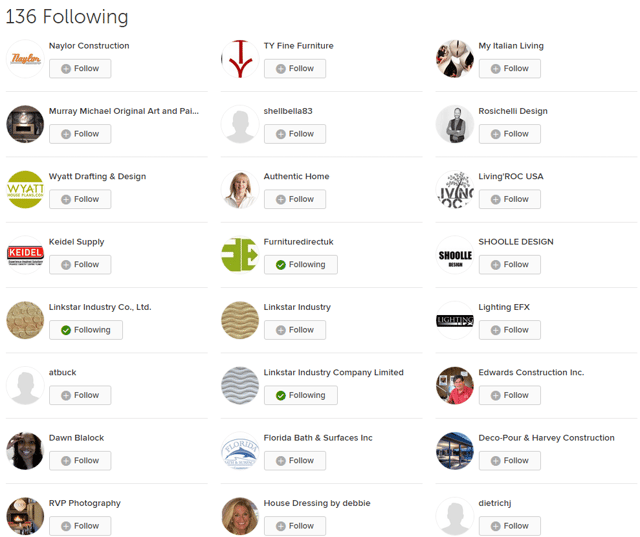
Another advantage to social media is the ability to connect with potential clients on a more meaningful level. On Houzz, for example, a home builder can follow anyone who is following them. This creates an opportunity to gain insight into what other information that user has available on Houzz and also to open a dialogue.
Fischer Homes, for example, is following not only design studios and construction companies. They are following homeowners. With this simple strategy, Fischer Homes is able to collaborate on projects with people who are openly creating project boards on Houzz — practically begging for a remodeler or home builder to reach out to them!
4. Habitat for Humanity International (Twitter)
Looking for a great example of how to engage on Twitter? Check out Habitat for Humanity International. It’s easy to shoot out a couple tweets and cross your fingers that you’ll become an overnight sensation.
But unless you’re Lady Gaga, this probably won’t get you very far. Habitat is great at using hashtags to draw already interested viewers in, posting correctly sized images for these viewers to connect with and relate to, and then a link to their blog to pull people to their website.
According to Buffer, “tweets with images receive 18% more clicks, 89% more favorites and 150% more retweets.” The ultimate goal of social media is to pull a potential client to your website to learn more about you and why you are the right decision for them. Habitat for Humanity International does just that.
5. Pulte Homes (Facebook)

Another great way to engage with people through Facebook is by responding to their comments. Think of it this way: each person who engages with something you post on social media is the same as someone engaging with you in person.
If someone told you they loved a fireplace you designed to your face, would you reply? Treat social media as an opportunity to have conversations with people you may not reach on a daily basis. Pulte Homes does a great job of interacting with anyone who comments on their Facebook page, developing relationships and trust with each touch.
6. Wallmark Custom Homes (Pinterest)
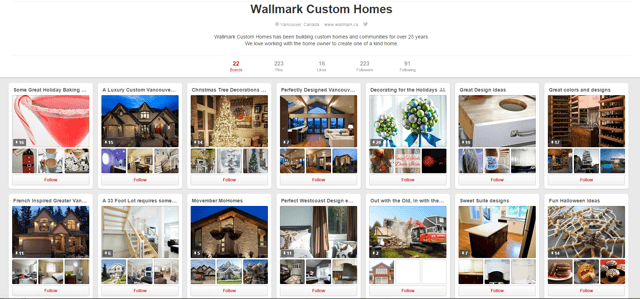
Pinterest is a largely untapped platform that offers the opportunity to reach an estimated 100 million users searching for pictographic ideas, inspiration, and information. In the home building and remodeling industries in particular, this is the perfect place to showcase some of your finest work.
Beyond just posting your own work, however, Pinterest is an excellent way to interact directly with users who are “pinning” on boards for their own upcoming projects. You can also remain relevant by pinning images of upcoming holidays (for example, Thanksgiving decorations or recipes).
Keeping up with what’s trending will help you get noticed by those looking for trending topics. Wallmark Custom Homes does a great job of creating relevant boards with trending topics and resonant boards with their own images from projects.
7. Reed Design Build (Houzz)
Another way to interact with users on Houzz is through responses to comments. Houzz is like the love child of Pinterest and Facebook — it lends itself to building interactive projects with users as well as comments and rating.
Reed Design Build does an excellent job of responding to comments and garnering reviews. Both show not only how much they care about their potential clients by answering their questions but also how much they care about their past customers by collecting several 5-star ratings.

8. Shea Homes (Pinterest)
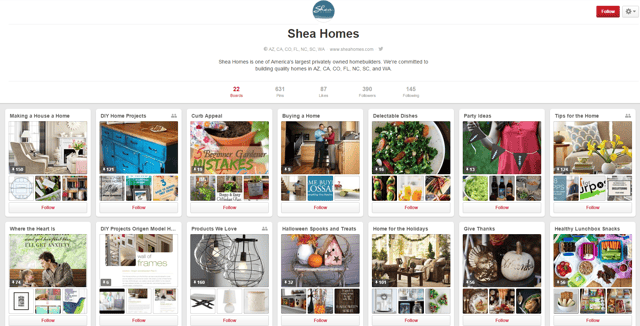
Pinterest can be a tricky platform to remain sticky. Without someone directly seeking out your brand in the search, it can be a challenge to put out content that will be found. Take a page out of Shea Homes’ book.
This home builder produces several boards pertaining largely to relevant and trending topics in an effort to remain top of mind for those searching for related topics. Once they draw someone to their profile, however, they have several powerful boards outlining their brand. One board is even filled with pins to their own blog, spanning over 75+ topics of interest for home buyers.
Shea Homes is harnessing the power of external links to build their SEO and increasing the number of places they can be found by potentially interested customers with their Pinterest strategy. According to Moz, “Top SEOs believe that external links are the most important source of ranking power,” so this is not a strategy to be overlooked!
9. Toll Brothers (Instagram)
Instagram might not be your top-product-selling platform as a Marketer, but it just may be your top-brand-selling platform. This app gives you unique experience of connecting with your audience in a visually captivating manner.
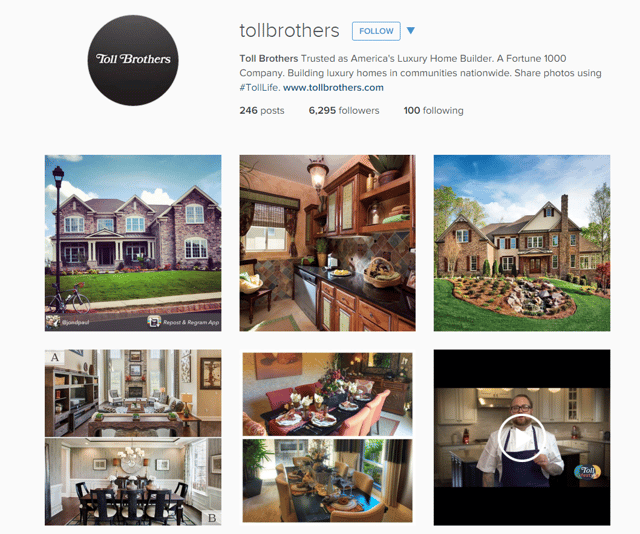
Toll Brothers is particularly strong on Instagram, utilizing not only a hashtag (#TollLife) but also the regram capability to discover when people are talking about them and to then highlight these shared images. This brand cleverly takes the hashtag to the next level; when someone posts a picture on Instagram with their hashtag, Toll Brothers reposts (“regrams” for all you fluent Insta-tongues) the picture on their own profile as a feature.
This strategy generates excitement around the brand and around producing powerful photography surrounding the brand. Some might call this free marketing and publicity, actually, by letting those using the brand speak for themselves.
10. Drees Homes (Twitter)
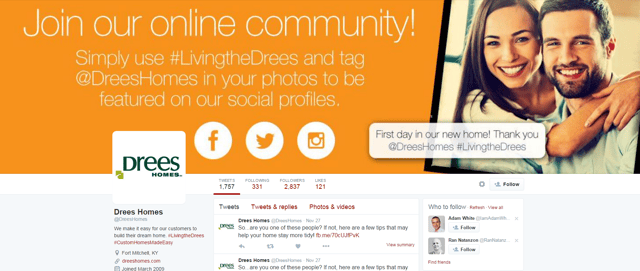
So, I mentioned hashtags. Let’s talk about them. Drees Homes is hitting this strategy out of the park! By inviting anyone who encounters their brand to use the hashtag #LivingTheDrees, Drees Homes is not only showcasing their creativity in hashtag development but also their commitment to starting a conversation around their brand.
With continual upkeep, Drees Homes manages to keep their hashtags relevant and fun, including #HappyHollyDrees for the holiday season for example. I wish I lived in a Drees home just so I could interact on their online community with all of their fun hashtags and customer features! And, according to Sprout Social, ” Seeing as how they’ve been integrated into most of the popular social media platforms, and social media has entered almost every facet of our lives,” hashtags are here to stay. So, #EmbraceTheHashtag!
Social media strategy is not something that works alone in a vacuum. Each platform has a unique audience and should accordingly be treated as a different opportunity. In building your social media strategy, keep in mind that it takes continual upkeep and honing, and that it works best with a comprehensive marketing plan to get the most out of each touch point.
Starting a social media strategy for your own home building or remodeling business? Check out the free ebook below.


48 C# Interview Questions Any Interview Worth Their Salt Will Ask
With over 7,000 C#.Net programming jobs advertised every month that have an average salary of over $90,000, the demand for this type of developer has exploded. But why is the C#.Net labor market so hot right now? Well, more and more engineering departments are adopting C#.Net to build their software because it’s similar to other common C-type languages like C++ and Java. This makes the language intuitive to learn — in fact — it’s the fifth most popular programming language for building software.
To help you prepare for your next C#.Net developer interview and land the job, check out the following C#.Net interview questions most interviewers will ask you.
48 C#.Net Interview Questions
1. What is C#?
2. What are the advantages of using C#?
3. What are an object and class?
4. What is an Object Pool?
5. What is an abstraction?
6. What is polymorphism?
7. Is C# managed or unmanaged code?
8. How do you inherit a class in C#?
9. What’s the difference between Interface and Abstract Class?
10. What are sealed classes in C#?
11. What’s the difference between a struct and a class in C#?
12. What’s the point of using statement in C#?
13. How is Exception Handling applied in C#?
14. What are boxing and unboxing in C#?
15. What are the three types of comments in C#?
16. Can multiple catch blocks be executed in C#?
17. What’s the difference between static, public, and void? What’s the outcome of each one?
18. What are value types and reference types?
19. What’s the difference between ref and out parameters?
20. Can “this” be used within a static method?
21. What are Arrays in C#?
22. What is a jagged array in C#?
23. What’s the difference between Array and ArrayList?
24. What’s the difference between System.Array.CopyTo() and System.Array.Clone()?
25. What’s the difference between string and StringBuilder?
26. What are delegates in C#?
27. What’s a multicast delegate?
28. What is a Reflection in C#?
29. What is a Generic Class?
30. What are Get and Set Accessor properties?
31. What is Multithreading?
32. What is Serialization?
33. What are the different ways a method can be overloaded?
34. What is the accessibility modifier “protected internal”?
35. What are the different ways a method can be overloaded?
36. What is an object pool in .Net?
37. What are the most commonly used types of exceptions in .Net?
38. What are accessibility modifiers in C#?
39. What are nullable types in C#?
40. What’s the difference between is and as operators in C#?
41. What are Indexers?
42. What are Singleton Design Patterns?
43. Given an array of ints, write a C# method to total all the values that are even numbers.
44. Is it possible to store mixed data types like int, string, float, and char all in one array?
45. Describe dependency injection.
46. Write a C# program that accepts a distance in kilometers, converts it into meters, and then displays the result.
47. What’s the difference between the “constant” and “readonly” variables when using C#? When would you use each one?
48. Which preference of IDE do you have when using C#? Why?

Recruiter-Approved Answers to “Where Do You See Yourself in 5 Years?”
When I was job hunting and in the process of interviewing, one of the scariest questions I came across was this one — “So, Caroline, where do you see yourself in five years?”
At the time, I was a month out of graduation. I barely had an inkling of an idea what I wanted to do in six months, never mind five years.
I struggled to find the line between honesty, genuine confusion, and fantasy.
I wondered if I should say, “I hope to be at your company, perhaps leading the marketing team!”, to suggest my steadfast loyalty to the company for which I was interviewing.
Alternatively, perhaps I should let them know my biggest fantasy — “In five years, I hope to be traveling and writing a book.”
Sometimes, I simply settled for the truth — “In five years … huh. I have no idea.”
However, none of these responses are answers you’ll want to copy for yourself. Here, we’re going to explore what interviewers actually want to know when they ask you that question, and how you can answer it to demonstrate your value as a candidate.

Why Interviewers Want to Know “Where You See Yourself in Five Years”
When an interviewer asks you, “Where do you see yourself in five years?”, they want to know one thing — whether your goals align well with the potential career path of the role for which you’re applying.
Ultimately, they want to hire a candidate who they can hire and train for the long-haul. They’re asking this question to gauge whether you’ll likely want to stay with the company for a long time, and whether the company can fulfill some of your long-term needs.
You might be thinking — “Okay, but so what if I quit after a year or two? I still put in my hard work during that time.”
Unfortunately, it’s more expensive to replace an employee, and bring a new hire up-to-speed, than you might think. In fact, the average company loses anywhere between 1% and 2.5% of their total revenue on the time and effort it takes to train a new hire.
Additionally, companies don’t want high turnover rates, which can decrease team morale and productivity.
For instance, let’s say you’re applying for a customer service position but tell the interviewer, “In a few years, I’d like to get more involved in SEO and marketing analytics.”
This can be a great answer, if the company has a department for that.
But if the company outsources for their SEO needs, then the recruiter just learned you’ll likely become frustrated by the lack of opportunities internally, and leave the company within the next few years.
Of course, if this is the case, she’ll choose to hire a candidate who’s long-term growth plan aligns well with opportunities her company can offer.
Now that we’ve clarified that, let’s take a look at how you should answer, “Where do you see yourself in five years?”
How to Answer, “Where do you see yourself in five years?”
To ensure accuracy, I spoke with internal HubSpot recruiters to find out what type of answer they deem most appropriate for this question.
Holly Peterson, a Senior Recruiter at HubSpot, told me, “A good answer to this question is an honest one. If you don’t know where you see yourself in five years — that’s okay, but you should have something prepared, to at least share your thoughts surrounding the question.”
Peterson further noted, “Responding ‘I have no idea’, isn’t ideal, but saying something like ‘I’m not sure the exact role I want to be in, but I want to continue on a growth trajectory in X field — whether that develops into a people management role, or functional expert, it’s hard to say at this point in time. Overall, I want to make sure no matter what position I’m in, I’m constantly seeking growth opportunities in and outside my role.’ That way, whether you have a concrete goal or not, you set yourself up as someone who has a growth mindset, i.e. you’re a continual learner. All employers want to hire this type of person.”
HubSpot Recruiter Rich Lapham also advises candidates to avoid making a statement if they can’t back it up. He told me, “Whatever your answer, think through the follow-up question, ‘Why?’. When candidates can’t articulate their why it often feels as though they aren’t presenting their authentic self, and to me that’s a red flag. For instance, if I ask a candidate and they respond with ‘I want to be a manager’ and I ask ‘Why?’, you can usually tell the difference between people who are really interested in management versus people who say it because they think it is the right thing to say.”
Additionally, Olivia Chin, a Technology Recruiter at HubSpot, said, “I like to hear tangible, measurable answers that show candidates have done their research and also have personal drive. i.e. ‘I noticed a lot of Tech Leads at HubSpot started as Software Engineers. I am interested in people management and it’d be great to develop those skills on the job.'”
Chin, who recruits for both entry-level and senior, also mentioned, “I always appreciate honesty. If a candidate doesn’t have a set plan or timeline, a good answer might be, ‘As a junior-level candidate I want to learn as much as I can, and in a year or two I’ll have a better idea of what I want next’.”
Finally, Glory Montes, a HubSpot Associate Campus Recruiter, told me, “Before answering this question, think about the size and culture of the company you’re interviewing for. Are they a fast-paced startup? If so, make sure your answer aims high! If they are slower-paced, make sure you are staying realistic about what kind of progress you can make in that organization. Also, the focus doesn’t always have to be on job titles. You can also focus on hard or soft skills you want to develop, relationships you want to make, or even personal goals to give the recruiter a better idea of your priorities.”
Sample Answers to “Where do you see yourself in five years?”
1. “As a social media manager, I’d like to focus short-term on developing my skill set to become incredibly proficient on the job. Then, in five years’ time, I’d like to have become adept at design and know how to use programs like Photoshop — ideally, I’d take online or evening courses to help with this. I have an interest in video marketing, and I think there’s a compelling alignment between social media and video and it could be interesting to figure out how to intersect those passions long-term to help grow your social media audience.”
2. “In five years, I’d like to have completed your leadership training course. I read about it on your website and think it’s a phenomenal program. Once I’ve completed that course, I’d like to develop my skill set to eventually become a project manager for my team.”
3. “My goal is to find a company where I can grow my career and develop new professional skills. In five years, I imagine I’d like to be in a leadership position — additionally, I’m interested in learning more about the content strategy side of the business. However, I find it most important to find a company that encourages continuous learning, as yours does.”
4. “Right now I’d like to continue to develop my writing skills, which is why I’m excited about the opportunity to be a blogger at your company. In five years, I would be delighted to see this role turn into a bit more of an editorial position, where I also help edit other writers’ work, and offer ideas for the editorial strategy of the team.”
5. “In five years I’d like to have developed a deep expertise of video strategy and how to use video to promote brands, which is why I’m excited about this position. I know my role will require me to become a master at video, which aligns well with my long-term goals. Additionally, in a few years I could see myself enjoying the project management aspect of video strategy, as well.”

Recruiter-Approved Answers to “Where Do You See Yourself in 5 Years?”
When I was job hunting and in the process of interviewing, one of the scariest questions I came across was this one — “So, Caroline, where do you see yourself in five years?”
At the time, I was a month out of graduation. I barely had an inkling of an idea what I wanted to do in six months, never mind five years.
I struggled to find the line between honesty, genuine confusion, and fantasy.
I wondered if I should say, “I hope to be at your company, perhaps leading the marketing team!”, to suggest my steadfast loyalty to the company for which I was interviewing.
Alternatively, perhaps I should let them know my biggest fantasy — “In five years, I hope to be traveling and writing a book.”
Sometimes, I simply settled for the truth — “In five years … huh. I have no idea.”
However, none of these responses are answers you’ll want to copy for yourself. Here, we’re going to explore what interviewers actually want to know when they ask you that question, and how you can answer it to demonstrate your value as a candidate.
Why Interviewers Want to Know “Where You See Yourself in Five Years”
When an interviewer asks you, “Where do you see yourself in five years?”, they want to know one thing — whether your goals align well with the potential career path of the role for which you’re applying.
Ultimately, they want to hire a candidate who they can hire and train for the long-haul. They’re asking this question to gauge whether you’ll likely want to stay with the company for a long time, and whether the company can fulfill some of your long-term needs.
You might be thinking — “Okay, but so what if I quit after a year or two? I still put in my hard work during that time.”
Unfortunately, it’s more expensive to replace an employee, and bring a new hire up-to-speed, than you might think. In fact, the average company loses anywhere between 1% and 2.5% of their total revenue on the time and effort it takes to train a new hire.
Additionally, companies don’t want high turnover rates, which can decrease team morale and productivity.
For instance, let’s say you’re applying for a customer service position but tell the interviewer, “In a few years, I’d like to get more involved in SEO and marketing analytics.”
This can be a great answer, if the company has a department for that.
But if the company outsources for their SEO needs, then the recruiter just learned you’ll likely become frustrated by the lack of opportunities internally, and leave the company within the next few years.
Of course, if this is the case, she’ll choose to hire a candidate who’s long-term growth plan aligns well with opportunities her company can offer.
Now that we’ve clarified that, let’s take a look at how you should answer, “Where do you see yourself in five years?”
How to Answer, “Where do you see yourself in five years?”
To ensure accuracy, I spoke with internal HubSpot recruiters to find out what type of answer they deem most appropriate for this question.
Holly Peterson, a Senior Recruiter at HubSpot, told me, “A good answer to this question is an honest one. If you don’t know where you see yourself in five years — that’s okay, but you should have something prepared, to at least share your thoughts surrounding the question.”
Peterson further noted, “Responding ‘I have no idea’, isn’t ideal, but saying something like ‘I’m not sure the exact role I want to be in, but I want to continue on a growth trajectory in X field — whether that develops into a people management role, or functional expert, it’s hard to say at this point in time. Overall, I want to make sure no matter what position I’m in, I’m constantly seeking growth opportunities in and outside my role.’ That way, whether you have a concrete goal or not, you set yourself up as someone who has a growth mindset, i.e. you’re a continual learner. All employers want to hire this type of person.”
HubSpot Recruiter Rich Lapham also advises candidates to avoid making a statement if they can’t back it up. He told me, “Whatever your answer, think through the follow-up question, ‘Why?’. When candidates can’t articulate their why it often feels as though they aren’t presenting their authentic self, and to me that’s a red flag. For instance, if I ask a candidate and they respond with ‘I want to be a manager’ and I ask ‘Why?’, you can usually tell the difference between people who are really interested in management versus people who say it because they think it is the right thing to say.”
Additionally, Olivia Chin, a Technology Recruiter at HubSpot, said, “I like to hear tangible, measurable answers that show candidates have done their research and also have personal drive. i.e. ‘I noticed a lot of Tech Leads at HubSpot started as Software Engineers. I am interested in people management and it’d be great to develop those skills on the job.'”
Chin, who recruits for both entry-level and senior, also mentioned, “I always appreciate honesty. If a candidate doesn’t have a set plan or timeline, a good answer might be, ‘As a junior-level candidate I want to learn as much as I can, and in a year or two I’ll have a better idea of what I want next’.”
Finally, Glory Montes, a HubSpot Associate Campus Recruiter, told me, “Before answering this question, think about the size and culture of the company you’re interviewing for. Are they a fast-paced startup? If so, make sure your answer aims high! If they are slower-paced, make sure you are staying realistic about what kind of progress you can make in that organization. Also, the focus doesn’t always have to be on job titles. You can also focus on hard or soft skills you want to develop, relationships you want to make, or even personal goals to give the recruiter a better idea of your priorities.”
Sample Answers to “Where do you see yourself in five years?”
1. “As a social media manager, I’d like to focus short-term on developing my skill set to become incredibly proficient on the job. Then, in five years’ time, I’d like to have become adept at design and know how to use programs like Photoshop — ideally, I’d take online or evening courses to help with this. I have an interest in video marketing, and I think there’s a compelling alignment between social media and video and it could be interesting to figure out how to intersect those passions long-term to help grow your social media audience.”
2. “In five years, I’d like to have completed your leadership training course. I read about it on your website and think it’s a phenomenal program. Once I’ve completed that course, I’d like to develop my skill set to eventually become a project manager for my team.”
3. “My goal is to find a company where I can grow my career and develop new professional skills. In five years, I imagine I’d like to be in a leadership position — additionally, I’m interested in learning more about the content strategy side of the business. However, I find it most important to find a company that encourages continuous learning, as yours does.”
4. “Right now I’d like to continue to develop my writing skills, which is why I’m excited about the opportunity to be a blogger at your company. In five years, I would be delighted to see this role turn into a bit more of an editorial position, where I also help edit other writers’ work, and offer ideas for the editorial strategy of the team.”
5. “In five years I’d like to have developed a deep expertise of video strategy and how to use video to promote brands, which is why I’m excited about this position. I know my role will require me to become a master at video, which aligns well with my long-term goals. Additionally, in a few years I could see myself enjoying the project management aspect of video strategy, as well.”
Recruiter-Approved Answers to “Where Do You See Yourself in 5 Years?”
When I was job hunting and in the process of interviewing, one of the scariest questions I came across was this one — “So, Caroline, where do you see yourself in five years?”
At the time, I was a month out of graduation. I barely had an inkling of an idea what I wanted to do in six months, never mind five years.
I struggled to find the line between honesty, genuine confusion, and fantasy.
I wondered if I should say, “I hope to be at your company, perhaps leading the marketing team!”, to suggest my steadfast loyalty to the company for which I was interviewing.
Alternatively, perhaps I should let them know my biggest fantasy — “In five years, I hope to be traveling and writing a book.”
Sometimes, I simply settled for the truth — “In five years … huh. I have no idea.”
However, none of these responses are answers you’ll want to copy for yourself. Here, we’re going to explore what interviewers actually want to know when they ask you that question, and how you can answer it to demonstrate your value as a candidate.
Why Interviewers Want to Know “Where You See Yourself in Five Years”
When an interviewer asks you, “Where do you see yourself in five years?”, they want to know one thing — whether your goals align well with the potential career path of the role for which you’re applying.
Ultimately, they want to hire a candidate who they can hire and train for the long-haul. They’re asking this question to gauge whether you’ll likely want to stay with the company for a long time, and whether the company can fulfill some of your long-term needs.
You might be thinking — “Okay, but so what if I quit after a year or two? I still put in my hard work during that time.”
Unfortunately, it’s more expensive to replace an employee, and bring a new hire up-to-speed, than you might think. In fact, the average company loses anywhere between 1% and 2.5% of their total revenue on the time and effort it takes to train a new hire.
Additionally, companies don’t want high turnover rates, which can decrease team morale and productivity.
For instance, let’s say you’re applying for a customer service position but tell the interviewer, “In a few years, I’d like to get more involved in SEO and marketing analytics.”
This can be a great answer, if the company has a department for that.
But if the company outsources for their SEO needs, then the recruiter just learned you’ll likely become frustrated by the lack of opportunities internally, and leave the company within the next few years.
Of course, if this is the case, she’ll choose to hire a candidate who’s long-term growth plan aligns well with opportunities her company can offer.
Now that we’ve clarified that, let’s take a look at how you should answer, “Where do you see yourself in five years?”
How to Answer, “Where do you see yourself in five years?”
To ensure accuracy, I spoke with internal HubSpot recruiters to find out what type of answer they deem most appropriate for this question.
Holly Peterson, a Senior Recruiter at HubSpot, told me, “A good answer to this question is an honest one. If you don’t know where you see yourself in five years — that’s okay, but you should have something prepared, to at least share your thoughts surrounding the question.”
Peterson further noted, “Responding ‘I have no idea’, isn’t ideal, but saying something like ‘I’m not sure the exact role I want to be in, but I want to continue on a growth trajectory in X field — whether that develops into a people management role, or functional expert, it’s hard to say at this point in time. Overall, I want to make sure no matter what position I’m in, I’m constantly seeking growth opportunities in and outside my role.’ That way, whether you have a concrete goal or not, you set yourself up as someone who has a growth mindset, i.e. you’re a continual learner. All employers want to hire this type of person.”
HubSpot Recruiter Rich Lapham also advises candidates to avoid making a statement if they can’t back it up. He told me, “Whatever your answer, think through the follow-up question, ‘Why?’. When candidates can’t articulate their why it often feels as though they aren’t presenting their authentic self, and to me that’s a red flag. For instance, if I ask a candidate and they respond with ‘I want to be a manager’ and I ask ‘Why?’, you can usually tell the difference between people who are really interested in management versus people who say it because they think it is the right thing to say.”
Additionally, Olivia Chin, a Technology Recruiter at HubSpot, said, “I like to hear tangible, measurable answers that show candidates have done their research and also have personal drive. i.e. ‘I noticed a lot of Tech Leads at HubSpot started as Software Engineers. I am interested in people management and it’d be great to develop those skills on the job.'”
Chin, who recruits for both entry-level and senior, also mentioned, “I always appreciate honesty. If a candidate doesn’t have a set plan or timeline, a good answer might be, ‘As a junior-level candidate I want to learn as much as I can, and in a year or two I’ll have a better idea of what I want next’.”
Finally, Glory Montes, a HubSpot Associate Campus Recruiter, told me, “Before answering this question, think about the size and culture of the company you’re interviewing for. Are they a fast-paced startup? If so, make sure your answer aims high! If they are slower-paced, make sure you are staying realistic about what kind of progress you can make in that organization. Also, the focus doesn’t always have to be on job titles. You can also focus on hard or soft skills you want to develop, relationships you want to make, or even personal goals to give the recruiter a better idea of your priorities.”
Sample Answers to “Where do you see yourself in five years?”
1. “As a social media manager, I’d like to focus short-term on developing my skill set to become incredibly proficient on the job. Then, in five years’ time, I’d like to have become adept at design and know how to use programs like Photoshop — ideally, I’d take online or evening courses to help with this. I have an interest in video marketing, and I think there’s a compelling alignment between social media and video and it could be interesting to figure out how to intersect those passions long-term to help grow your social media audience.”
2. “In five years, I’d like to have completed your leadership training course. I read about it on your website and think it’s a phenomenal program. Once I’ve completed that course, I’d like to develop my skill set to eventually become a project manager for my team.”
3. “My goal is to find a company where I can grow my career and develop new professional skills. In five years, I imagine I’d like to be in a leadership position — additionally, I’m interested in learning more about the content strategy side of the business. However, I find it most important to find a company that encourages continuous learning, as yours does.”
4. “Right now I’d like to continue to develop my writing skills, which is why I’m excited about the opportunity to be a blogger at your company. In five years, I would be delighted to see this role turn into a bit more of an editorial position, where I also help edit other writers’ work, and offer ideas for the editorial strategy of the team.”
5. “In five years I’d like to have developed a deep expertise of video strategy and how to use video to promote brands, which is why I’m excited about this position. I know my role will require me to become a master at video, which aligns well with my long-term goals. Additionally, in a few years I could see myself enjoying the project management aspect of video strategy, as well.”
How to Improve Your YouTube Video Exposure: 6 Useful Tools

Want more people to watch your YouTube videos? Wondering how to outrank your competitors in YouTube search? In this article, you’ll learn how to use six tools that can help you get the eyeballs you’ve always wanted. #1: Perform Initial YouTube Keyword Research With Keyword Tool Keyword Tool is one of my go-to resources for […]
The post How to Improve Your YouTube Video Exposure: 6 Useful Tools appeared first on Social Media Marketing | Social Media Examiner.
from Social Media Marketing | Social Media Examiner http://bit.ly/2RAAEww
via socialmediaexaminer
How to Do Market Research: A 6-Step Guide
Today’s buyers hold all of the power when making a purchasing decision. You’re also likely aware that they’re doing some of their research online.
But have you really adapted your marketing plan to match the way today’s customers shop and buy?

Consider three recent statistics about modern buyer behavior:
- 80% of Instagram users currently follow a business account, according to 2017 data from Instagram.
- 75% of smartphone owners turn to a search engine first to address immediate needs, according to 2018 data from Google.
- Emails that don’t display clearly or correctly on mobile devices may be deleted within 3 seconds, according to 2018 data reported by HubSpot.
What’s a marketer to do to make sure your buyers find you early and often? Go where they’re going.
That might sound obvious, but how deeply do you understand exactly where your buyers are doing their research and what is influencing their decisions? That’s where market research comes into play.
Whether you’re a newbie or experienced with market research, this guide will give you a blueprint for conducting a thorough study of your product, target audience, and how you fare in your industry.
Primary vs. Secondary Research
There are two main types of market research that businesses conduct to collect the most actionable information on their products: primary research and secondary research.
Primary Research
Primary research is the pursuit of firsthand information on your market and its customers. You can use focus groups, online surveys, phone interviews, and more to gather fresh details on the challenges your buyers face and the brand awareness behind your company.
Primary research is useful when segmenting your market and establishing your buyer personas, and this research tends to fall into one of two buckets:
- Exploratory Research: This kind of primary market research is less concerned with measurable customer trends and more about potential problems that would be worth tackling as a team. It normally takes place as a first step before any specific research has been performed, and can involve open-ended interviews or surveys with small numbers of people.
- Specific Research: This kind of primary market research often follows exploratory research, and is used to dive into issues or opportunities the business has already identified as important. In specific research, the business can take a smaller or more precise segment of their audience and ask questions aimed at solving a suspected problem.
Secondary Research
Secondary research is all the data and public records you have at your disposal to draw conclusions from. This includes trend reports, market statistics, industry content, and sales data you already have on your business.
Secondary research is particularly useful for analyzing your competitors. Here are three types of secondary research sources that make this process so beneficial:
- Public Sources: These sources are your first and most accessible layer of material when conducting secondary market research. Being free to find and read — usually — they offer the most bang for your buck. Government statistics are arguably your most common public sources, according to Entrepreneur. Two U.S. examples of public market data are the U.S. Census Bureau and the Bureau of Labor & Statistics, both of which offer helpful information on the state of various industries nationwide.
- Commercial Sources: These sources often come in the form of market reports, consisting of industry insight compiled by a research agency like Pew, Gartner, or Forrester. Because this info is so portable and distributable, it typically costs money to download and obtain.
- Internal Sources: Internal sources deserve more credit for supporting market research than they generally get. Why? This is the market data your organization already has in-house. Average revenue per sale, customer retention rates, and other historical data on the health of old and new accounts can all help you draw conclusions on what your buyers might want right now.
How to Do Market Research
- Define your buyer persona.
- Identify a portion of that persona to engage.
- Engage your market research participants.
- Prepare your research questions.
- List your primary competitors.
- Summarize your findings.
1. Define your buyer persona.
Before you dive into how customers in your industry make buying decisions, you must first understand who they are. This is the beginning of your primary market research — where buyer personas come in handy.
Buyer personas — sometimes referred to as marketing personas — are fictional, generalized representations of your ideal customers. They help you visualize your audience, streamline your communications, and inform your strategy. Some key characteristics you should be keen on including in your buyer persona are:
- Age
- Gender
- Location
- Job title(s)
- Job titles
- Family size
- Income
- Major challenges
The idea is ultimately to use this persona as a guideline for when you reach and learn about actual customers in your industry (you’ll do this in the steps below).
To get started with creating your personas, check out these free templates, as well as this helpful tool. These resources are designed to help you organize your audience segments, collect the right information, select the right format, and so on.
You may find that your business lends itself to more than one persona — that’s fine! You just need to be sure that you’re being thoughtful about the specific persona you are optimizing for when planning content and campaigns.
2. Identify a portion of that persona to engage.
Now that you know who your buyer personas are, you’ll need to find a representative sample of your target customers to understand their actual characteristics, challenges, and buying habits.
These should be folks who recently made a purchase (or purposefully decided not to make one), and you can meet with them in a number of ways:
- In-person via a focus group
- Administering an online survey
- Individual phone interviews
We’ve developed a few guidelines and tips that’ll help you get the right participants for your research. Let’s walk through them.
Choosing Which Buyers to Survey
When choosing whom you want to engage to conduct market research, start with the characteristics that apply to your buyer persona. This will vary for every organization, but here are some additional guidelines that will apply to just about any scenario:
- Shoot for 10 participants per buyer persona. We recommend focusing on one persona, but if you feel it’s necessary to research multiple personas, be sure to recruit a separate sample group for each one.
- Select people who have recently interacted with you. You may want to focus on folks that have completed an evaluation within the past six months — or up to a year if you have a longer sales cycle or niche market. You’ll be asking very detailed questions, so it’s important that their experience is fresh.
- Aim for a mix of participants. You want to recruit people who have purchased your product, folks who purchased a competitor’s product, and a few who decided not to purchase anything at all. While your own customers will be the easiest to find and recruit, sourcing information from others will help you develop a balanced view.
3. Engage your market research participants.
Market research firms have panels of people they can pull from when they want to conduct a study. The trouble is, most individual marketers don’t have that luxury — and that’s not necessarily a bad thing. In fact, the time you’ll spend recruiting exclusively for your study will often lead to better participants.
Here’s a simple recruiting process to guide your efforts:
- Pull a list of customers who made a recent purchase. As we mentioned before, this is usually the easiest set of buyers to recruit. If you’re using a CRM system, you can run a report of deals that closed within the past six months and filter it for the characteristics you’re looking for. Otherwise, you can work with your sales team to get a list of appropriate accounts from them.
- Pull a list of customers who were in an active evaluation, but didn’t make a purchase. You should get a mix of buyers who either purchased from a competitor or decided not to make a purchase. Again, you can get this list from your CRM or from whatever system your Sales team uses to track deals.
- Call for participants on social media. Try reaching out to the folks that follow you on social media, but decided not to buy from you. There’s a chance that some of them would be willing to talk to you and tell you why they ultimately decided not to buy your product.
- Leverage your own network. Get the word out to your coworkers, former colleagues, and LinkedIn connections that you’re conducting a study. Even if your direct connections don’t qualify, some of them will likely have a coworker, friend, or family member who does.
- Choose an incentive. Time is precious, so you’ll need to think about how you will motivate someone to spend 30-45 minutes on you and your study. On a tight budget? You can reward participants for free by giving them exclusive access to content. Another option? Send a simple handwritten ‘thank you’ note once the study is complete.
4. Prepare your research questions.
The best way to make sure you get the most out of your conversations is to be prepared. You should always create a discussion guide — whether it’s for a focus group, online survey, or a phone interview — to make sure you cover all of the top-of-mind questions and use your time wisely.
(Note: This is not intended to be a script. The discussions should be natural and conversational, so we encourage you to go out of order or probe into certain areas as you see fit.)
Your discussion guide should be in an outline format, with a time allotment and open-ended questions allotted for each section.
Wait, all open-ended questions?
Yes — this is a golden rule of market research. You never want to “lead the witness” by asking yes/no questions, as that puts you at risk of unintentionally swaying their thoughts by leading with your own hypothesis. Asking open-ended questions also helps you avoid those painful one-word answers.
Here’s a general outline for a 30-minute survey of one B2B buyer. You can use these as talking points for an in-person interview, or as questions posed on a digital form to administer as a survey to your target customers.
Background Information (5 Minutes)
Ask the buyer to give you a little background information (their title, how long they’ve been with the company, and so on). Then, ask a fun/easy question to warm things up (first concert attended, favorite restaurant in town, last vacation, etc.).
Remember, you want to get to know your buyers in pretty specific ways. You might be able to capture basic information such as age, location, and job title from your contact list, there are some personal and professional challenges you can really only learn by asking. Here are some other key background questions to ask your target audience:
- Describe to me how your work team is structured.
- Tell me about your personal job responsibilities.
- What are the team’s goals and how do you measure them?
- What has been your biggest challenge in the past year?
Now, make a transition to acknowledge the specific purchase or interaction they made that led to you including them in the study. The next three stages of the buyer’s journey will focus specifically on that purchase.
Awareness (5 Minutes)
Here, you want to understand how they first realized they had a problem that needed to be solved without getting into whether or not they knew about your brand yet.
- Think back to when you first realized you needed a [name the product/service category, but not yours specifically]. What challenges were you facing at the time?
- How did you know that something in this category could help you?
- How familiar were you with different options on the market?
Consideration (10 Minutes)
Now you want to get very specific about how and where the buyer researched potential solutions. Plan to interject to ask for more details.
- What was the first thing you did to research potential solutions? How helpful was this source?
- Where did you go to find more information?
If they don’t come up organically, ask about search engines, websites visited, people consulted, and so on. Probe, as appropriate, with some of the following questions:
- How did you find that source?
- How did you use vendor websites?
- What words specifically did you search on Google?
- How helpful was it? How could it be better?
- Who provided the most (and least) helpful information? What did that look like?
- Tell me about your experiences with the sales people from each vendor.
Decision (10 Minutes)
- Which of the sources you described above was the most influential in driving your decision?
- What, if any, criteria did you establish to compare the alternatives?
- What vendors made it to the short list and what were the pros/cons of each?
- Who else was involved in the final decision? What role did each of these people play?
- What factors ultimately influenced your final purchasing decision?
Closing
Here, you want to wrap up and understand what could have been better for the buyer.
- Ask them what their ideal buying process would look like. How would it differ from what they experienced?
- Allow time for further questions on their end.
- Don’t forget to thank them for their time and confirm their address to send a thank-you note or incentive.
5. List your primary competitors.
Understanding your competitors begins your secondary market research. But keep in mind competition isn’t always as simple as Company X versus Company Y.
Sometimes, a division of a company might compete with your main product or service, even though that company’s brand might put more effort in another area. Apple is known for its laptops and mobile devices, for example, but Apple Music competes with Spotify — which doesn’t sell hardware (yet) — over its music streaming service.
From a content standpoint, you might compete with a blog, YouTube channel, or similar publication for inbound website visitors — even though their products don’t overlap with yours at all. A toothpaste developer, for example, might compete with magazines like Health.com or Prevention on certain blog topics related to nutrition, even though these magazines don’t actually sell oral care products.
Identifying Industry Competitors
To identify competitors whose products or services overlap with yours, determine which industry or industries you’re pursuing. Start high-level, using terms like education, construction, media & entertainment, food service, healthcare, retail, financial services, telecommunications, agriculture, etc.
The list goes on, but find an industry term that you identify with, and use it to create a list of companies that also belong to this industry. You can build your list the following ways:
- Review your industry quadrant on G2 Crowd. In certain industries, this is your best first step in secondary market research. G2 Crowd aggregates user ratings and social data to create “quadrants,” where you can see companies plotted as contenders, leaders, niche, and high performers in their respective industries. G2 Crowd specializes in digital content, IT services, HR, ecommerce, and related business services.
- Download a market report. Companies like Forrester and Gartner offer both free and gated market forecasts every year on the vendors who are leading their industry. On Forrester’s website, for example, you can select “Latest Research” from the navigation bar and browse Forrester’s latest material using a variety of criteria to narrow your search. These reports are good assets to have saved on your computer.
- Search using social media. Believe it or not, social networks make great company directories if you use the search bar correctly. On LinkedIn, for example, select the search bar and enter the name of the industry you’re pursuing. Then, under “More,” select “Companies” to narrow your results to just the businesses that include this or a similar industry term on their LinkedIn profile.
Identifying Content Competitors
Search engines are your best friends in this area of secondary market research. To find the online publications with which you compete, take the overarching industry term you identified in the section above, and come up with a handful of more specific industry terms your company identifies with.
A catering business, for example, might generally be a “food service” company, but also consider itself a vendor in “event catering,” “cake catering,” “baked goods,” and more.
Once you have this list, do the following:
- Google it. Don’t underestimate the value in seeing which websites come up when you run a search on Google for the industry terms that describe your company. You might find a mix of product developers, blogs, magazines, and more.
- Compare your search results against your buyer persona. Remember the buyer persona you created during the primary research stage, earlier in this article? Use it to examine how likely a publication you found through Google could steal website traffic from you. If the content the website publishes seems like the stuff your buyer persona would want to see, it’s a potential competitor, and should be added to your list of competitors.
After a series of similar Google searches for the industry terms you identify with, look for repetition in the website domains that have come up. Examine the first two or three results pages for each search you conducted. These websites are clearly respected for the content they create in your industry, and should be watched carefully as you build your own library of videos, reports, web pages, and blog posts.
6. Summarize your findings.
Feeling overwhelmed by the notes you took? We suggest looking for common themes that will help you tell a story and create a list of action items.
To make the process easier, try using your favorite presentation software to make a report, as it will make it easy to add in quotes, diagrams, or call clips. Feel free to add your own flair, but the following outline should help you craft a clear summary:
- Background. Your goals and why you conducted this study.
- Participants. Who you talked to. A table works well so you can break groups down by persona and customer/prospect.
- Executive Summary. What were the most interesting things you learned? What do you plan to do about it?
- Awareness. Describe the common triggers that lead someone to enter into an evaluation. Note: Quotes can be very powerful.
- Consideration. Provide the main themes you uncovered, as well as the detailed sources buyers use when conducting their evaluation.
- Decision. Paint the picture of how a decision is really made by including the people at the center of influence and any product features or information that can make or break a deal.
- Action Plan. Your analysis probably uncovered a few campaigns you can run to get your brand in front of buyers earlier and/or more effectively. Provide your list of priorities, a timeline, and the impact it will have on your business.
Conducting market research can be a very eye-opening experience. Even if you think you know your buyers pretty well, completing the study will likely uncover new channels and messaging tips to help improve your interactions.
Not to mention, you’ll be able to add “market research” as a skill to your resume.


Forms Aren’t Dead: The State of Email Lead Capture in 2019
Email lead capture is the process marketers use to collect information from their website visitors. Typically, this is done through a traditional web form, although you can also capture leads through popups, chatbots, live chat, quizzes, surveys, and more.
Despite the process being fairly straightforward, our strategies often fluctuate in how we accomplish lead capture. Similarly, the results we achieve can vary quite a bit, too.
Unfortunately, the diversity of lead capture strategies, tools, and results can make it difficult to know precisely which process you should follow with your own marketing team — which is why we decided to conduct a survey.
We wanted to see, in 2019, what tools marketers are using for lead capture, what strategies they are using to optimize their efforts, and what kind of results and conversion rates people are seeing.
To ensure you’re able to optimize your lead capture strategy in 2019, keep reading.

Survey Methodology and Respondent Data
Any survey you conduct is limited by the sample you can reach. In our case, we received 173 valid survey responses. We filtered for marketers working full-time on lead capture and lead generation. Here are some quick statistics about our sample.
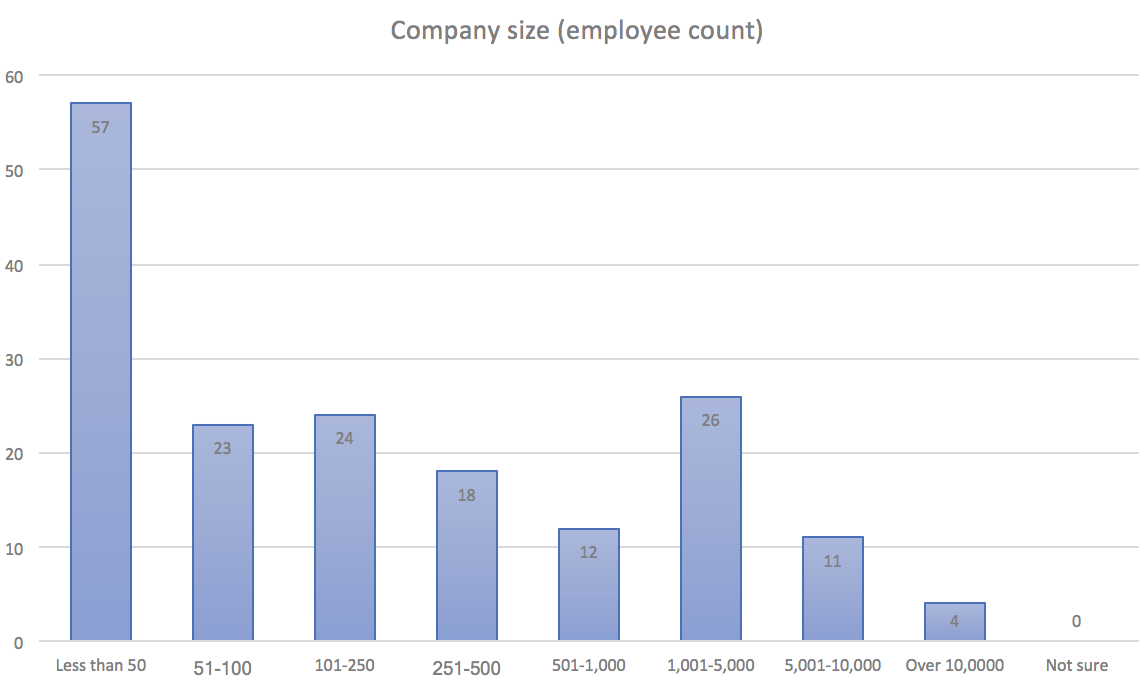
A large percentage of our respondents work at small businesses, with roughly 33% reporting less than 50 employees, although the distribution evens out among the other responses:
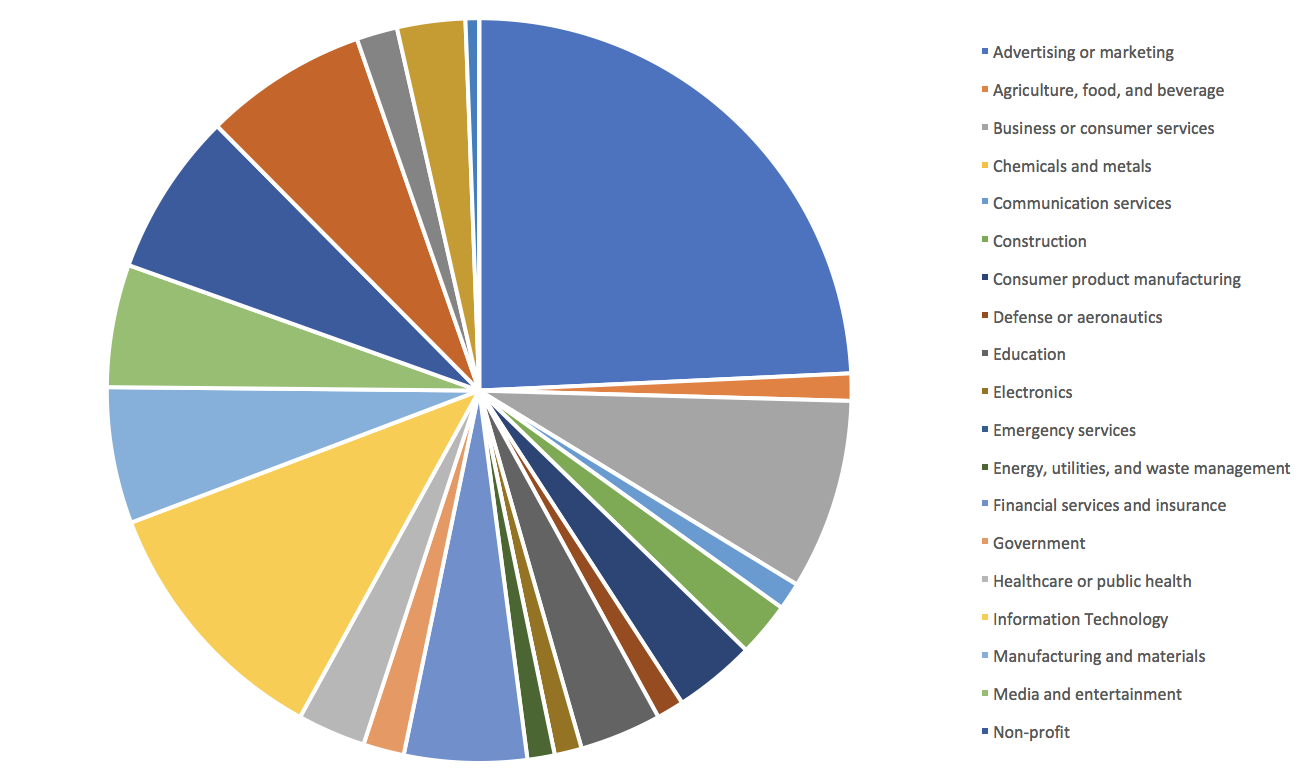
Additionally, a good chunk of our respondents (24%) work in advertising and marketing, but the rest is fairly diverse and split evenly between other industries.
Everyone in our sample works full-time and said they were “very” or at least “somewhat” involved in lead generation and lead capture efforts at their companies.
As with any research you conduct, there are some limitations with our dataset, as well. We’ll cover sample limitation and quirks later in this article.
Key Lead Capture Statistics and Findings
Here’s a quick overview of the most interesting statistics we learned about lead capture in 2019:
- Forms aren’t dead. 74% of marketers are using web forms for lead generation, and 49.7% of marketers say that web forms are their highest converting lead generation tool.
- Chatbots still have low adoption, but still, 17% of marketers are using chatbots today. However, only 6.5% say its their highest converting lead capture tool.
- The average length of a web form in 2019 is about 5 form fields. Because contexts vary so wildly, this is neither good nor bad, though we have seen in consistent studies that fewer form fields usually result in higher conversion rates.
- Conversion rates are highly variable and contextual. Reported conversion rates varied consistently across reported categories, but the mean conversion rate from our study is 21.5% (*read more below about the limitations with our reported conversion rates).
- Data-driven marketers are outpacing everyone. Running A/B tests, using form analytics, and running user tests are all correlated with higher form conversion rates and satisfaction with lead generation efforts.
- Multi-step forms convert 86% higher. Only 40% of marketers use them, but those that do report 17% higher satisfaction rates with their lead generation efforts, and their self reported conversion rates are 86% higher.
- Only half of marketers use “lead magnets” to capture email addresses. Marketers who use lead magnets, or downloadable resources after a website visitor shares their email address, report marginally higher satisfaction rates and conversion rates than those who do not use lead magnets.
- Ebooks are the most popular lead magnet, with 27.7% of marketers using them. However, 24.9% are using webinars and almost as many (21.3%) are using free tools to get email addresses.
- The average Ebook length is between 5k and 10k words. Barely anyone writes an Ebook that is larger than 10,000 words, and the most common length is between 5,000 and 10,000 words.
- Marketers overemphasize on total lead volume and not enough on lead quality. It’s reported that only 56.4% of marketers have a lead qualification strategy, and only 39.5% are using any sort of predictive lead scoring. It appears we overemphasize on volume on leads without considering the quality of each lead.
Now that we’ve covered that, let’s explore a few of these statistics more in-depth.
Takeaway #1: Forms aren’t dead.
Online forms are the most commonly used type of lead capture tool, with 74% of respondents reporting they use them.
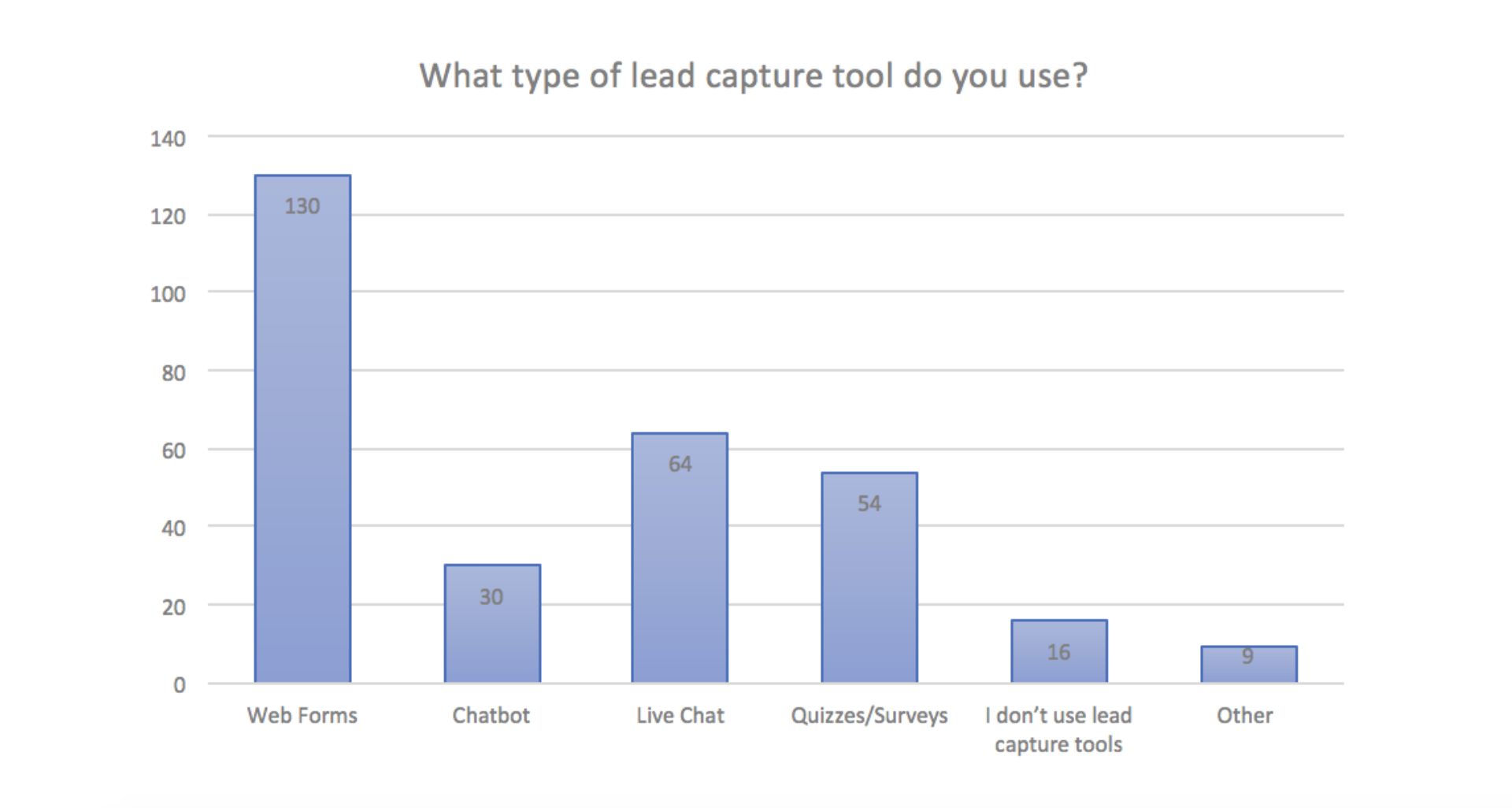
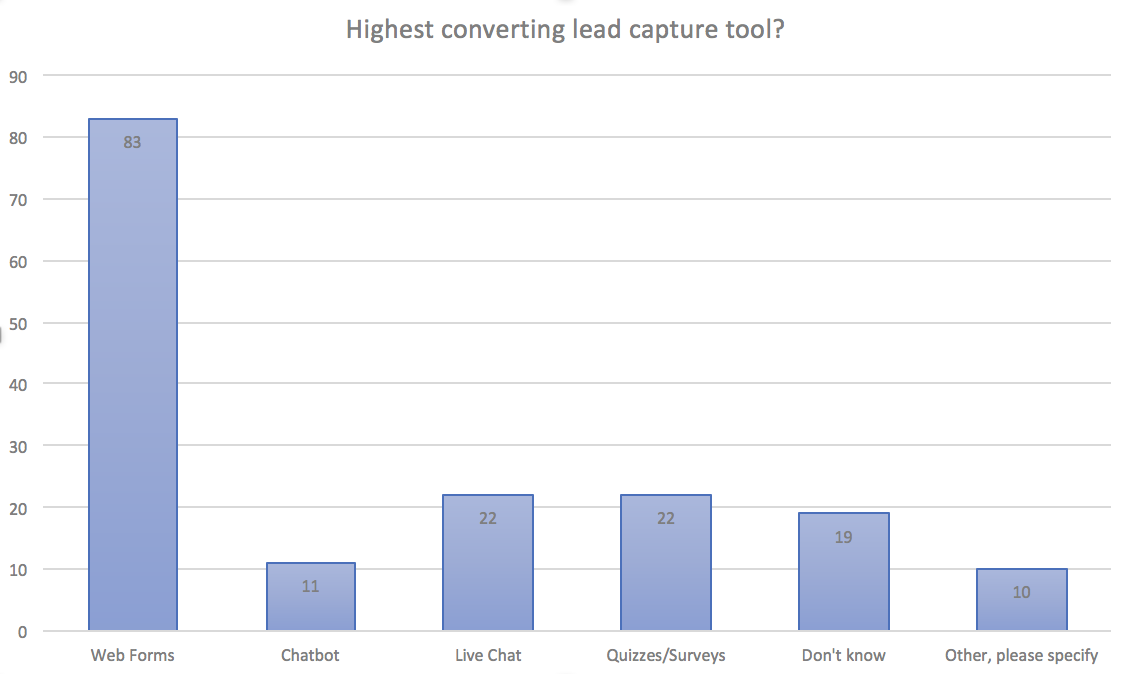
Half of our respondents reported forms gave them the highest conversion rates, making online forms the highest-converting lead capture tool for marketers.
Takeaway #2: Chatbots still have comparatively low adoption.
Many marketers report using more than one type of lead capture tool, but roughly 40% report only using one tool. And, while 37% of respondents use live chat, only 17% use a chatbot.
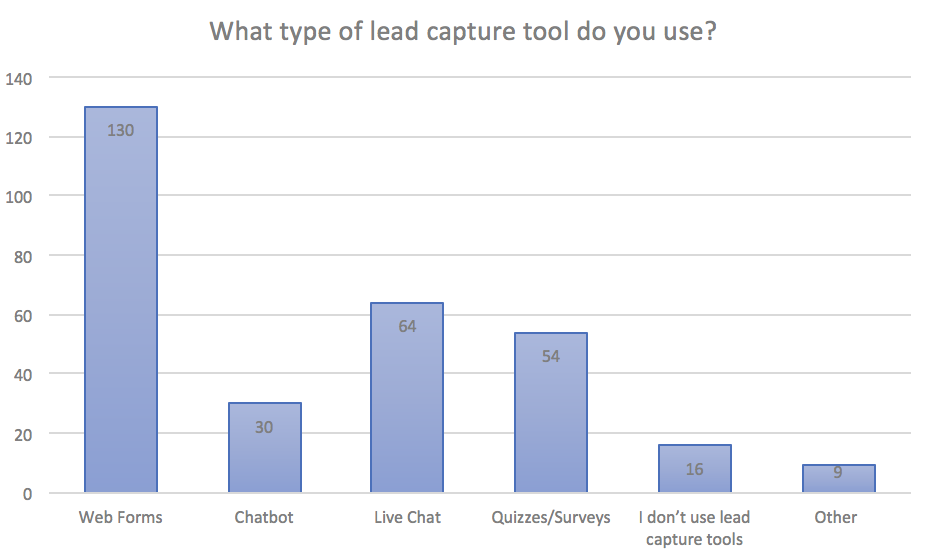
Additionally, only 7% of respondents said chatbots were their highest converting tool. By comparison, around 13% reported live chat or quizzes/surveys being the most effective tool.
It would appear from this data that, despite hype and trends, the old school web form is still alive and well for marketers.
Takeaway #3: The average length of a web form in 2019 is about 5 form fields.
Forms are popular and pretty well loved in 2019, but what does the average form look like?
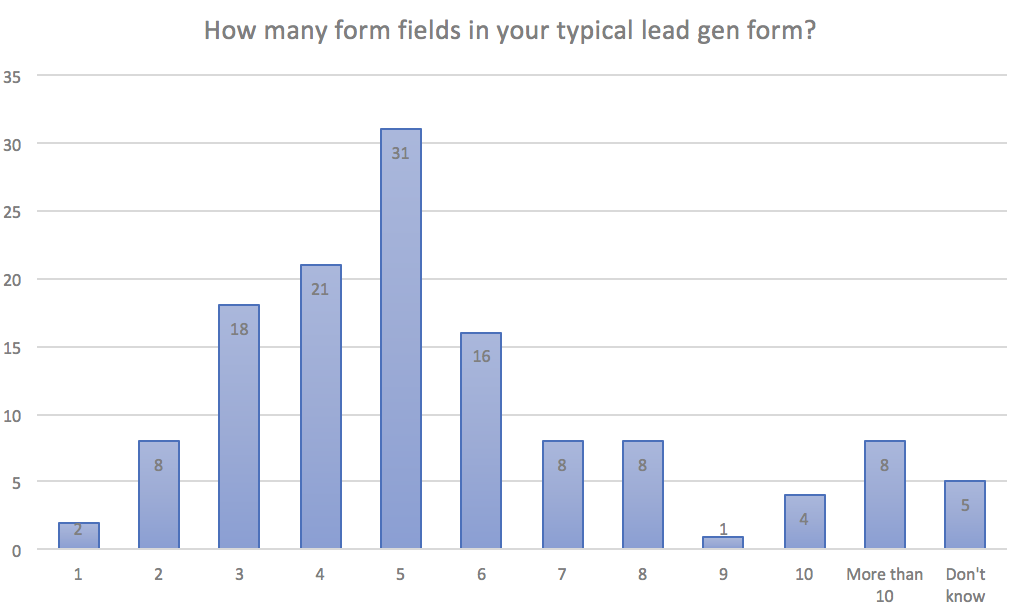
For starters, we found that marketers use, on average, 4.92 form fields on their forms (with five being the most popular answer). The number of form fields mostly resembles a normal distribution that centers around five, although there is a small spike of marketers who use more than 10 form fields.
Takeaway #4: Conversion rates are highly variable and contextual.
Average conversion rates are pretty varied, with a pretty stable distribution of reported conversion rates. Very few people report conversion rates in the 51-100% bucket.
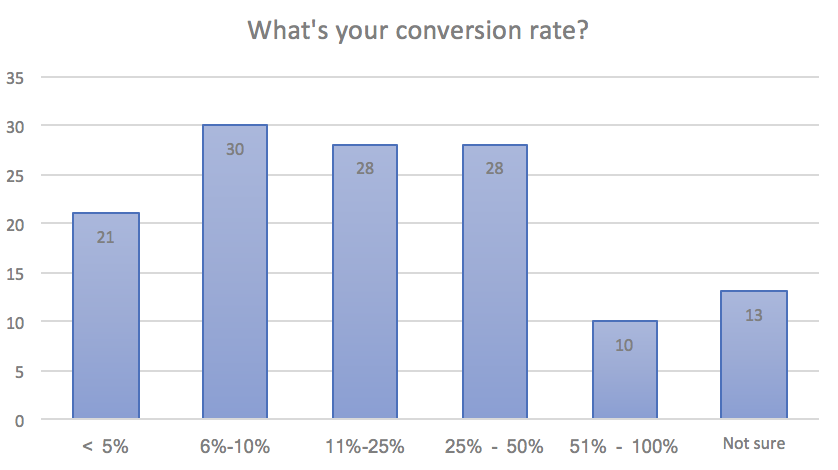
This is one piece of data we need to take with a grain of salt, as with any self-reported KPI or metric. We don’t know exactly how our respondents define a conversion, how they measure conversion rates, or what their offers are, so we lack a lot of context.
Still, when we couple our conversion rate data with our data on self-reported satisfaction rates, we start to see interesting patterns.
First, take a look at our aggregated satisfaction rates:
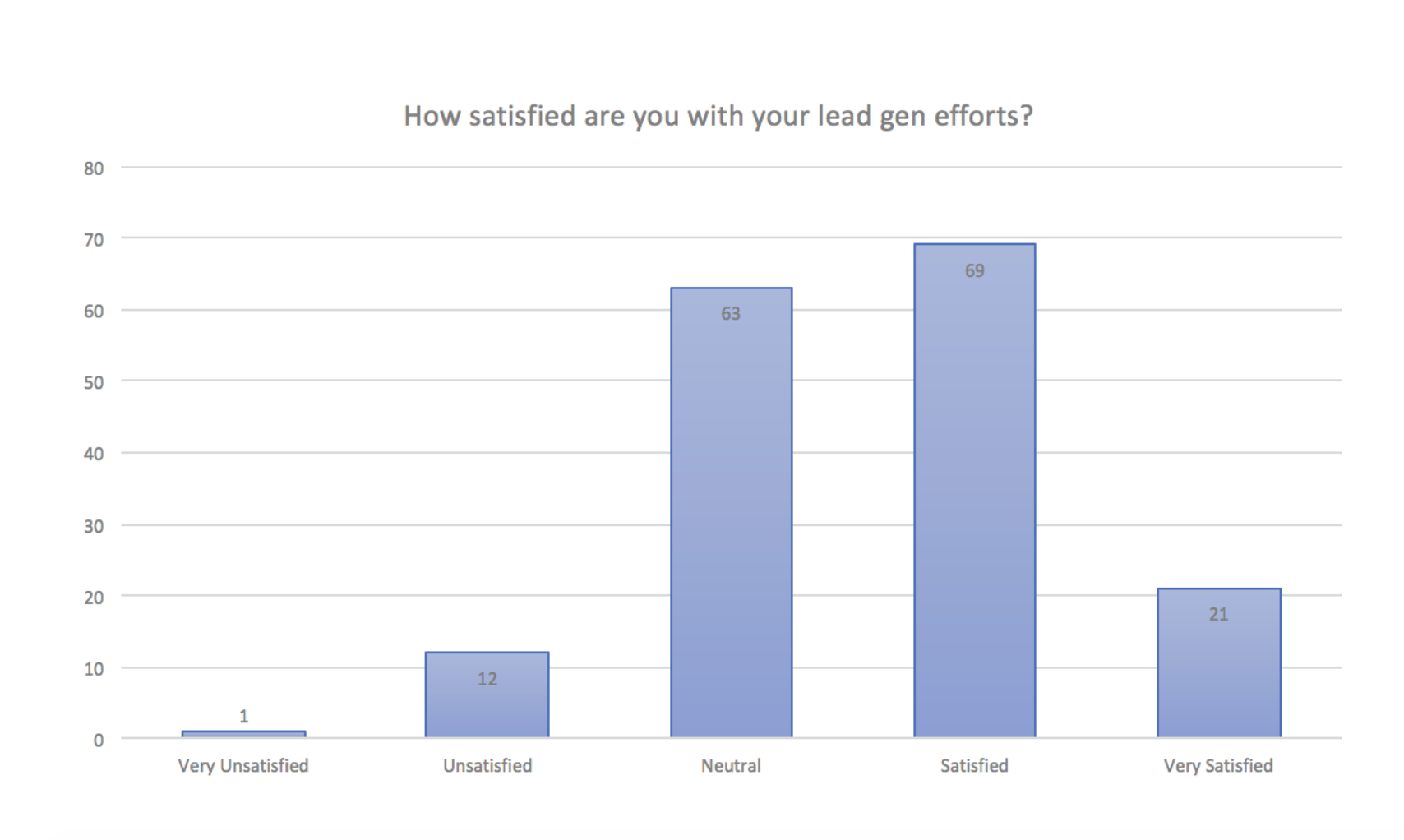
Very few people (8%) are dissatisfied with their lead generation efforts, but only 12% report being very satisfied.
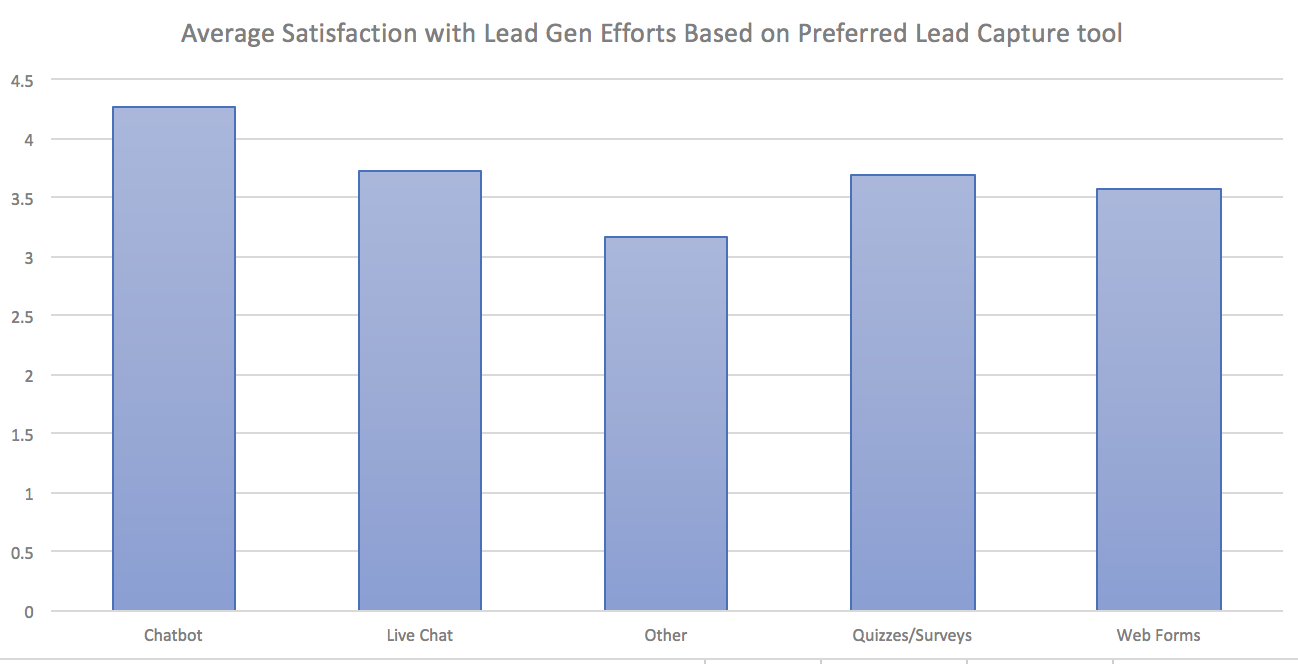
It also gets interesting when you examine these answers in conjunction with others. For instance, we found that those who are most satisfied with their lead generation efforts are those who use chatbots and report chatbots as their top converting lead capture tool.
Takeaway #5: Data-driven marketers are outpacing everyone.
Generally speaking, marketers who use methods to improve the customer experience, and specifically those who are using data to drive experiences, are outperforming those who don’t.
For instance, marketers who run A/B tests on their forms tend to be more satisfied than those who don’t, and they also report roughly 10% higher conversion rates than those who don’t run A/B tests.
Following the trend, those who use form analytics report 15% higher satisfaction with their lead generation efforts and 19% higher conversion rates.
But what about user testing? A user test is a type of usability test in which you have users run through your website and attempt a task, and analyze their ability to do so.
Most people are running between one and five per year, but a full 36% never run user tests on their forms.

Again, we found that people who run user tests are more satisfied with their lead generation programs than those who don’t, and that the satisfaction rating increases as the number of user tests rises.
This is a big area of opportunity. Combined with a form analytics tool like Formisimo, you can learn a lot about user behavior from occasionally running user tests. To learn more about form optimization in general, check out this CXL Institute course.
Takeaway #6: Multi-step forms convert 86% higher.
Only 39% of marketers report using multi-step forms. Those who do, however, report 17% higher satisfaction rates with their lead generation efforts, and their self reported conversion rates are 86% higher (16.05% for those who don’t use multi-step, and 29.76% for those who do).

A small majority of marketers report using lead magnets in their campaigns, but 40% report not using them at all.
Takeaway #7: Only half of marketers use “lead magnets” to capture email addresses.
A lead magnet is simply something of value you give in exchange for a visitor’s contact information.
We found that a small majority of marketers use lead magnets to capture emails, but a full 40% don’t use them (and roughly 10% don’t know if they are or aren’t).
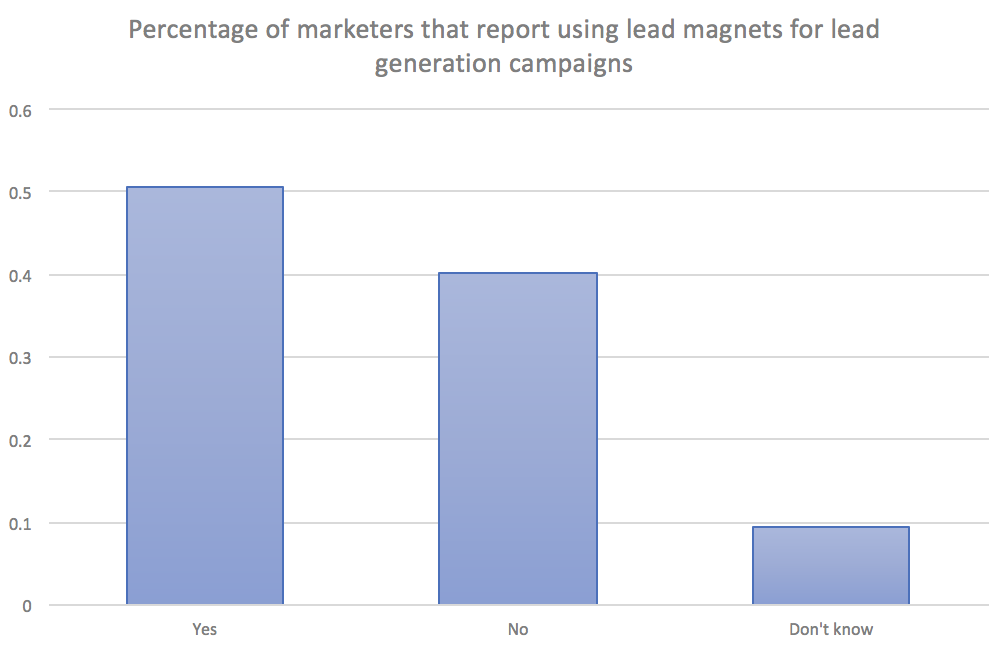
Creating a relevant and valuable lead magnet is one of the most effective ways to increase conversion rates on lead capture forms. If you’re not doing this, it might be time to consider trying it out.
Takeaway #8: Ebooks are the most popular lead magnet.
If you’re wondering what type of lead magnets people generally use, Ebooks lead the way — but webinars, checklists, and free tools are close behind.
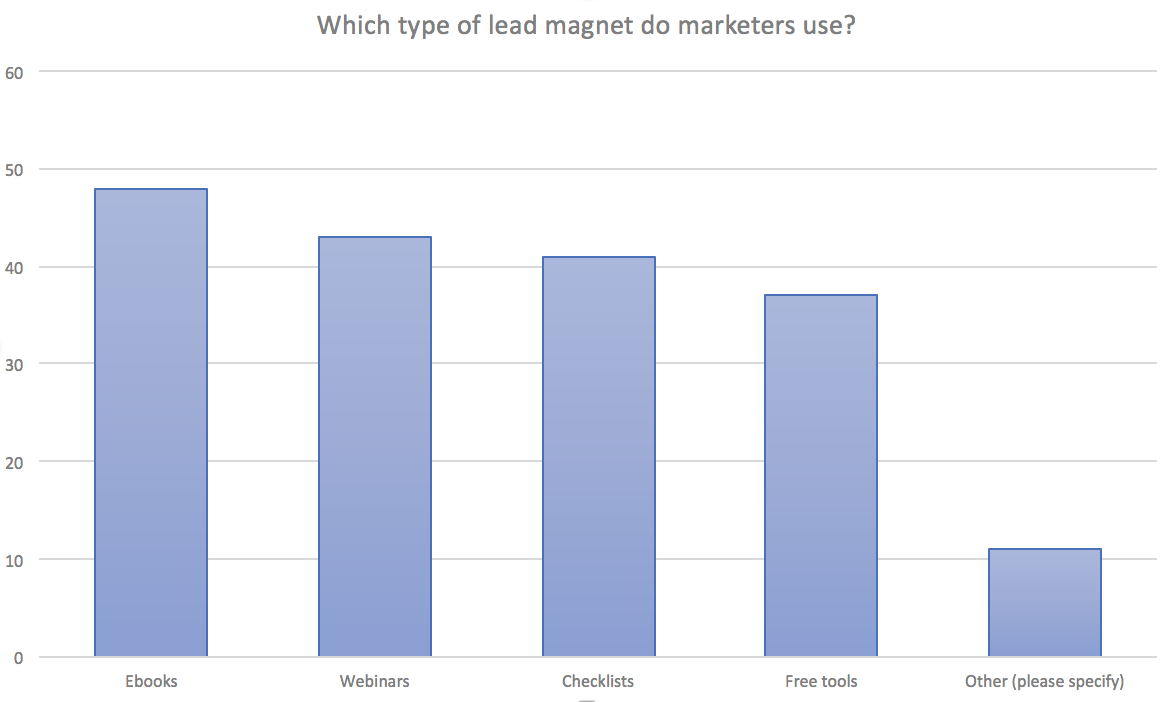
Other answers included “Qualifying email lists”, “Rewards”, “Customized vehicle brochure”, and “Property information”, meaning it’s largely made up of industry-specific offers that are related to the product or service in question.
Takeaway #9: The average Ebook length is between 5k and 10k words.
Very few marketers create Ebooks with greater than 10,000 words, and most fall within the area of 5,000-10,000 words long.

Takeaway #10: Marketers overemphasize on total lead volume and not enough on lead quality.
Collecting a lead is a small part of the overall process. It’s important, of course, but you also need to worry about where you’re storing the data, and how you’re qualifying and nurturing leads.
Most marketers use more than one tool to store their leads — something that definitely jives with my personal experience.
Because we’re often using a myriad of tools for our marketing efforts, we need to store leads in many places and integrate many systems together to build a coherent system.
Specifically, we found that the most common tool for lead storage is a CRM, with 57% of marketers reporting using one. 48.8% report using an email marketing tool for storage, and 43.6% report using spreadsheets.
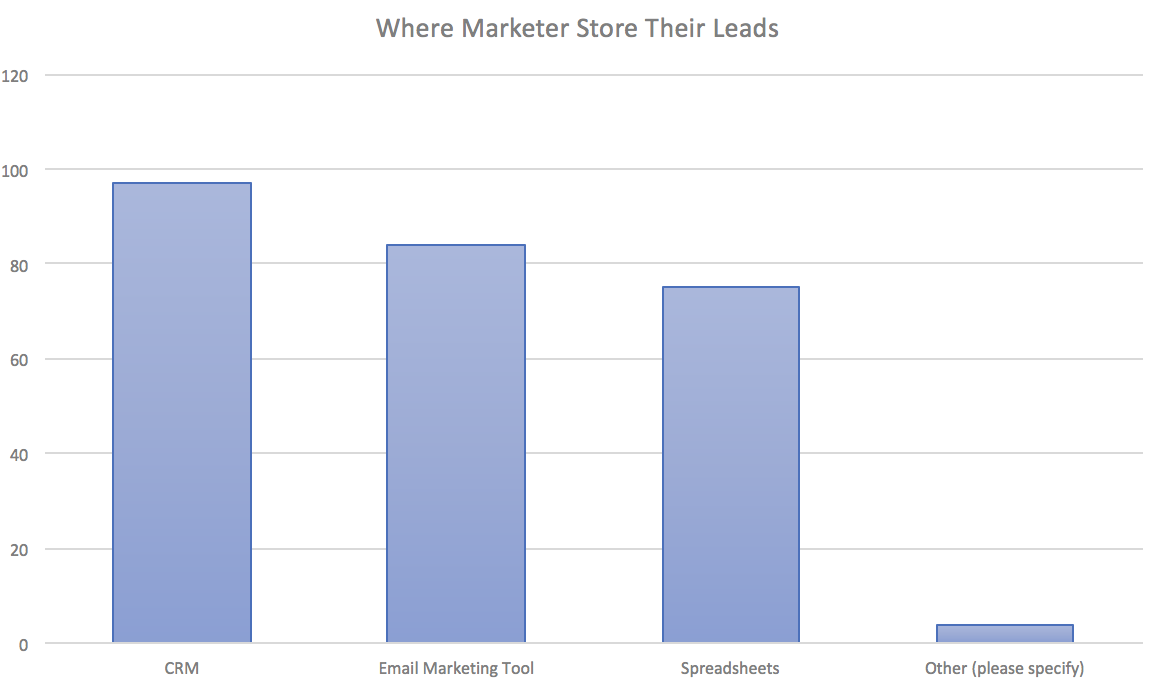
Of course, capturing leads is just one step of the process. What we do with them matters as well, as the end goal isn’t just to store them in a CRM or an email tool, but to turn them into customers. Part of this approach is qualifying leads and reacting appropriately based on their quality.
Do marketers normally have a strategy for lead qualification? It appears that, yes, this is the norm, with 56.4% of marketers saying they do have a documented lead qualification process. However, that leaves 34.9% with no documented process.
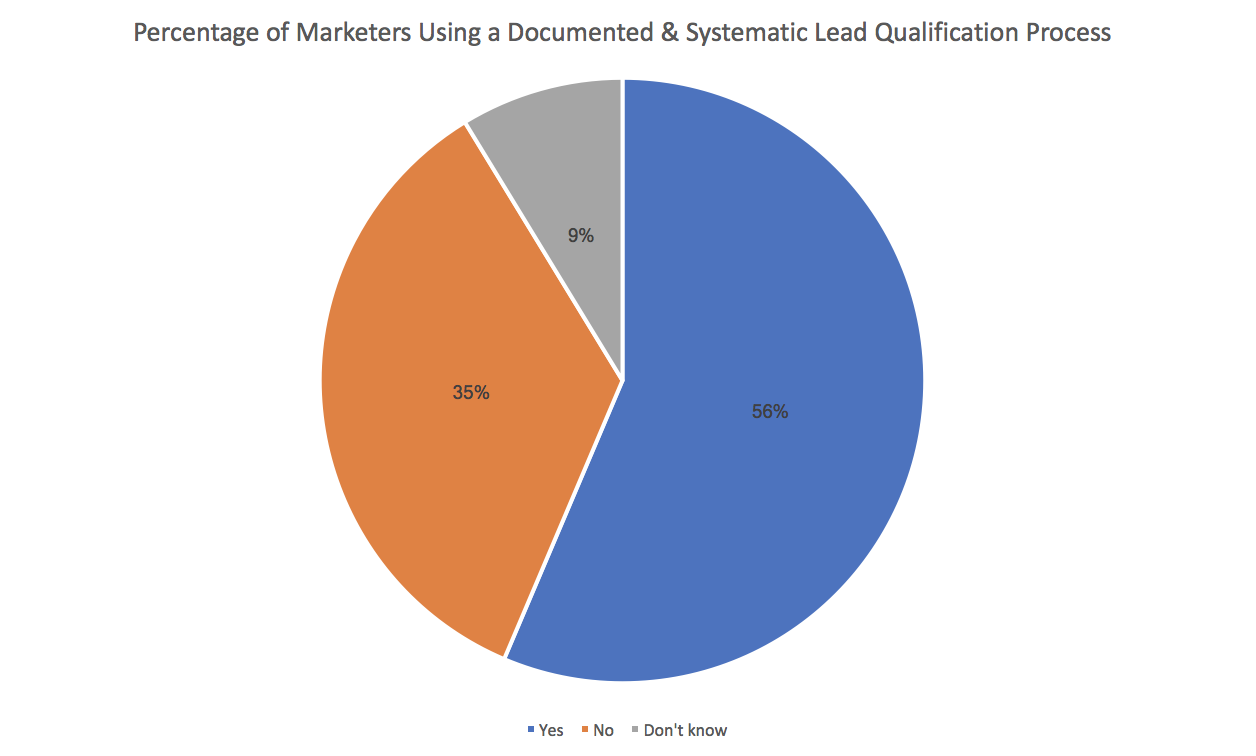
This is important because, as you would logically suppose, those who have a documented lead qualification process report 21.4% higher satisfaction ratings with their lead generation efforts.
While 39.5% of marketers are using predictive lead scoring in their marketing strategy, roughly half of marketers (48.8%) are not (and 11.6% don’t know if they are or not).
Limitations and Quirks With Our Data
As with any collection of data, you need to question its quality thoroughly. Especially with surveys and self-reported data, the nature of the questions can affect the output of answers. In our case, we can draw a lot of valid insights about lead generation and marketing in 2019, but we need to be careful about generalizing some of it.
The big question we need to consider is the “average conversion rate” of lead capture forms.
Naturally, this depends on how you calculate conversion rates, where your web form is, what your offer is, etc. For instance, the conversion rate of an offer for a free tool that is only seen by targeted paid traffic and only has an email address field is entirely different than a pop-up form that everyone on an ecommerce site sees.
Ultimately, conversion rates are wildly contextual.
How people calculate conversion rates is also different. Do you calculate by those who see your form, those who count as a page view (despite not scrolling to the form), or those who start filling out the form but never finish?
None of this is straightforward, so it can be tough to generalize findings about this metric.
As evidence for this quirkiness, look at this chart:

Our respondents seem to get better and better conversion rates the more form fields they use. While this is possible, it’s incredibly unlikely, at least when all other variables are controlled for. Almost all historical research has shown that increasing the number of form fields has an inverse effect on conversion rates (although not all studies have shown that).
That’s not to say the data is inherently untrustworthy. Just take any “average conversion rate” data with a grain of salt!
Additionally, we believe our sample is quite representative, as it had been filtered to include only those who work full-time on lead generation and lead capture efforts. But a greater sample would have been desirable. There is a lot of nuance — in industries, company size, etc. — that we couldn’t dive into because our sample size was only 173.
Looking to the Future
The process of capturing email leads is a huge part of inbound marketing. Parts of it change over time, such as the lead capture tools we use and the specific tactics around lead magnets, form optimization, and lead scoring and storage.
However, much remains the same, such as the core ideas of crafting relevant offers and building a lead capture tool with as little friction as possible.
It appears from this survey that less has changed than one would expect. Despite new “conversational” tools like live chat and chatbots, most people still use forms, and most people still entice visitors with Ebooks and webinars.
To no one’s surprise, those who run A/B tests, conduct user tests, and use form analytics, are more successful than those who don’t.
It will be interesting to see how things change in the next few years, as inbound marketing channels become more crowded and lead capture tools get “smarter” and more interactive.
Will we still be writing 7,500 word Ebooks in exchange for five form fields’ worth of information?
That’s where we stand today. Where will we be next year?

18 Core Company Values That Will Shape Your Culture & Inspire Your Employees
Consider one of American Express’s company values — “Customer Commitment”. Ideally, if you’ve had a positive experience with one of American Express’s customer service reps, you’ve seen this value displayed first-hand.
Alternatively, take a look at one of Google’s values — “Focus on the user and all else will follow.”
Any Google search will show you they stand by their purpose to serve the user. Undoubtedly, you find most answers to your common questions on page one of Google, and more recently, it’s likely separated in its own featured snippet, as well.

Having core company values can help you ensure each of your employees, from top leadership to entry-level, are working towards the same common goal, and share a bigger purpose.
Purpose is undeniably critical for employee satisfaction. In fact, an Imperative survey of LinkedIn members found 73% of purpose-oriented members are satisfied in their jobs, compared to 64% who are not purpose-oriented.
Plus, purpose doesn’t just improve employee satisfaction — it also increases your bottom line. The same Imperative survey found 58% of companies with a clearly articulated and understood purpose experienced growth of +10%, compared to just 42% of companies that don’t prioritize purpose.
Ultimately, core values are critical if you want to create a long-lasting, successful, and motivating place to work.
Whether you work for a new company in need of core-value inspiration, or an older company in need of a value revamp, you’re in luck — here, we’ve cultivated a list of some of the best company values. Additionally, we’ll examine how some companies truly honor their values.
Company Values
- Integrity
- Boldness
- Honesty
- Trust
- Accountability
- Commitment to Customers
- Passion
- Fun
- Humility
- Continuous Learning
- Ownership
- Constant Improvement
- Leadership
- Diversity
- Innovation
- Quality
- Teamwork
- Simplicity
Examples of Companies with Inspiring Core Values
1. American Express
- Customer Commitment: We develop relationships that make a positive difference in our customers’ lives.
- Quality: We provide outstanding products and unsurpassed service that, together, deliver premium value to our customers.
- Integrity: We uphold the highest standards of integrity in all of our actions.
- Teamwork: We work together, across boundaries, to meet the needs of our customers and to help our Company win.
- Respect for People: We value our people, encourage their development and reward their performance.
- Good Citizenship: We are good citizens in the communities in which we live and work.
- A Will to Win: We exhibit a strong will to win in the marketplace and in every aspect of our business.
- Personal Accountability: We are personally accountable for delivering on our commitments.
American Express doesn’t just hit the bare minimum when it comes to polite, helpful customer service — they go above-and-beyond to solve for their customers, even when there’s no protocol in place.
For instance, Raymond Joabar, the Executive Vice President at American Express, recently told this story in a Forbes interview: “One time, a hotel café manager [an Amex merchant] alerted my team that he had accidentally sold a display cake with harmful chemicals and needed to find the customers before they ate it. Obviously, there’s no procedure for that, but our team took ownership of the problem. They gathered all the information they could from the record of charge, identified 21 Card Members who used their cards at the café during that time frame, reviewed the accounts to find the right match, and then called the Card Member in time before they served the cake at an anniversary party.”
“The important point here,” Joabar noted, “other than that everybody ended up safe and sound — is that there isn’t a script for every situation, so we empower our care professionals to do what’s right for the customer. And we recognize what they do with this empowerment as well. We give awards to employees who go above and beyond to help customers and we share their stories across the company.”
This anecdote exemplifies American Express employees’ commitment to their customers even when it’s not easy, and demonstrates the company’s dedication to living by its values.
2. Google
- Focus on the user and all else will follow.
- It’s best to do one thing really, really well.
- Fast is better than slow.
- Democracy on the web works.
- You don’t need to be at your desk to need an answer.
- You can make money without doing evil.
- There’s always more information out there.
- The need for information crosses all borders.
- You can be serious without a suit.
- Great just isn’t good enough.
On Google’s philosophy page, they don’t just list their core values — they also provide examples.
For instance, consider their value, “You can make money without doing evil.” While many companies likely tout the benefits of integrity, Google references strategic efforts its made to avoid “evil” business, including — “We don’t allow ads to be displayed on our results pages unless they are relevant where they are shown … We don’t accept pop–up advertising, which interferes with your ability to see the content you’ve requested … [and] Advertising on Google is always clearly identified as a ‘Sponsored Link,’ so it does not compromise the integrity of our search results.”
Ultimately, a core value doesn’t have much power if your company can’t list intentional, calculated decisions it’s made to put values ahead of profit.
3. Coca Cola
- Leadership: The courage to shape a better future.
- Collaboration: Leverage collective genius.
- Integrity: Be real.
- Accountability: If it is to be, it’s up to me.
- Passion: Committed in heart and mind.
- Diversity: As inclusive as our brands.
- Quality: What we do, we do well.
Coca Cola demonstrates its diversity core value with its public Global Diversity Missionpage, which lists the company’s diversity-related efforts, such as, “[collecting employee] feedback through formal surveys and informally through their participation in our business resource groups, various diversity education programs and our Resolution Resources Program, where associates can work to resolve issues they face in our Company.”
Additionally, Coca Cola’s Global Diversity Mission page exemplifies their commitment to accountability, as well — they’ve publicly included pie charts with statistics regarding their global employee gender and race ratios. By acknowledging both their efforts and their shortcomings, Coca Cola is able to show their desire to live up to their values, while taking responsibility for any mis-match between their ideals and reality.
4.Whole Foods
- We Satisfy And Delight Our Customers — Our customers are the lifeblood of our business and our most important stakeholder. We strive to meet or exceed their expectations on every shopping experience.
- We Promote Team Member Growth And Happiness — Our success is dependent upon the collective energy, intelligence, and contributions of all of our Team Members.
- We Care About Our Communities And The Environment — We serve and support a local experience. The unique character of each store is a direct reflection of a community’s people, culture, and cuisine.
- We Practice Win-Win Partnerships With Our Suppliers — We view our trade partners as allies in serving our stakeholders. We treat them with respect, fairness and integrity – expecting the same in return.
Underneath each of its values on its core value page, Whole Foods provides a link, such as, “Learn more about how we care about our communities and the environment.”
Ultimately, their page demonstrates their ability to walk the walk. For instance, to exemplify their commitment to local communities, Whole Foods created a Local Producer Loan Program, in which they provide up to $25 million in low-interest loans to independent local farmers and food artisans.
Additionally, Whole Foods provides a list of environmentally-friendly efforts they’ve practiced since 1980, including “Printing and packaging using recycled paper and water- or vegetable-based, composting to decrease landfill waste, and no single-use plastic bags at checkout since 2008”.
If you’ve ever been to a Whole Foods, you know they’re serious about their efforts to reduce waste and help the local community. In fact, its part of the reason so many customers are brand loyalists — because they support those efforts, too.
Ultimately, good core values can help an audience identify with, and stay loyal to, your brand, rather than flipping between you and competitors. To ensure long-term success andlong-term employee retention, it’s critical you create — and live by — certain non-negotiable company values.

5 Facebook Ad Mistakes That Could Be Hurting You

Are your Facebook ads underperforming? Are you unsure how to get your ads to work better? In this article, you’ll discover five issues that impact Facebook ad performance and how to fix them. #1: You’re Bidding Against Yourself The way Facebook ads work is that you’re in an online auction bidding for the chance for […]
The post 5 Facebook Ad Mistakes That Could Be Hurting You appeared first on Social Media Marketing | Social Media Examiner.
from Social Media Marketing | Social Media Examiner http://bit.ly/2CxHwQX
via socialmediaexaminer
4 Social Media Calendar Tools to Plan All of Your Content [Template]
What do cross-country road trips, wedding speeches, and social media marketing have in common?
You could improvise all three, but it’s better to have a plan for what direction you’re heading — especially when developing your social media content strategy.
By now, most marketers recognize that social media plays an integral role in an effective inbound marketing strategy. And with so many social networks to manage and publish on, it’s important to stay organized and have a plan for when and what you’re going to share on these platforms.
In this post, we’ve rounded up some of the most helpful tools and templates for building out an effective social media content plan. Check them out below.
The Benefits of Using a Social Media Content Calendar
We’re all busy. And when we’re busy without a plan in place for the tasks we have to get done, things inevitably slip through the cracks. Social media content is no exception.
Just like with blogging, a successful social media strategy requires regular publishing and engaging with followers to see positive results — whether that be in terms of SEO, brand recognition, lead generation, or all three.
So, if you’re not already using a social media content calendar, hear me out:
- Calendars help you get organized to avoid the dreaded scramble when things come up. With a social media calendar, marketers can plan out posts for entire weeks or months in advance, which frees up working hours to strategize for the future — and to dash off any posts about breaking news in your industry. Otherwise, you’ll spend valuable time each day searching the internet for that day’s content to share, which is a known productivity killer.
- A calendar helps you plan for each social network to customize posts instead of spamming all platforms with the same message. Social media marketers should take the time to craft custom messages for each network, and doing this in advance will save time throughout the week and ensure you’re being thoughtful and intentional when you do post.
- Calendars can help you track performance and plan for future posts. Without a calendar, social media marketers are publishing content into the void and are unable to track big-picture and past performance. With a calendar, marketers can look back and analyze which content performed best so they can adjust their strategy accordingly.
- With the help of a calendar, marketers can plan for holidays and observance days, such as National Cat Day, when they can tailor their content and engage with a wider audience.
- Social media calendars improve efficiency. According to Content Marketing Institute, 72% of B2B marketers attribute the success (which has increased annually) of their content to the development of a formal content strategy.
Now that you understand the merits of having a social media content calendar in place, check out our list of top tools to stay organized and on top of your game.
4 Social Media Content Calendar Tools to Plan Your Messaging
1. Trello
Trello is another organizational tool that’s highly effective for team collaboration. More specifically, social media managers can use Trello’s flexible assignment “cards” and customizable “boards” and “lists” to map out to-do lists, manage a content calendar, plan a campaign, and house ideas from a brainstorm.
Here’s an example of a Trello board a social media marketing team might use to plan posts for the upcoming week:
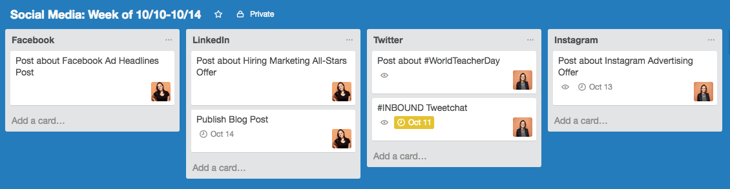
But you’re not limited to just one structure: Users can customize boards according to their needs. For example, a team could create a board to organize social media posts for a given week, on a specific platform, or post ideas around a topic, such as a campaign or awareness day.
Trello cards allow for a ton of customization as well. Here’s a fictitious social media editorial calendar card with Twitter copy options around a piece of blog content. Note that you can track progress toward completing a checklist, which could be useful for social media marketers looking to track campaign progress.
Additionally, Trello cards can be assigned to different team members, marked with due dates, and commented on. Users can even customize the labels (as in the image below) with different publication statuses so the entire team can see the progress of their social media posts and when they’re due on the calendar. The labels could also indicate different social networks that content is being published on.
Source: BlueGlass
Trello also offers a full calendar view (shown below) which makes it easy to visualize what content is going out, and when.
Source: BlueGlass
2. Microsoft Excel
Marketers might already use Excel for different types of reports and data analysis in their roles, but it’s a highly useful tool for social media content calendar organization, too. Excel can be customized according to whatever priorities or metrics a team is focused on, so it’s a great tool for planning ahead.
The good news? We’ve already done the heavy lifting for you by creating a free, downloadable social media content calendar template using Microsoft Excel. Marketers can use this template to easily plan out individual social media posts — monthly or annually — while keeping an eye on bigger picture events, holidays, publications, and partnerships.
For more on how to use the templates, check out this in-depth guide from my colleague Lindsay Kolowich.

Use the Monthly Planning Calendar Tab above to get a bird’s-eye view of what’s coming down their content pipeline in a given month.

In the Content Repository tab, users can record the content they’re publishing on this tab to keep track of which pieces have been promoted and to easily recall older content that can be re-promoted on social media.

On the Social Network Update tabs, users can draft and plan out social media posts in advance. These tabs are for organizational purposes, and the content of the posts themselves must be uploaded into a social media publisher.
This free resource can be used to draft social media posts, or it can be bulk-uploaded into a publishing app to maximize efficiency. (HubSpot customers: You can use this spreadsheet to organize content and upload it directly into Social Inbox. For instructions on how to do so, check out the template’s cover sheet here.)
3. Evernote
Evernote is a note-taking app that marketers can use to keep track of all the moving parts that comprise a social media campaign.
The tool also features yearly, monthly, weekly, and hourly logs, which make it easy to keep track of when you’re publishing content on social media, when you’re producing blog content, and other team-wide priorities. (Evernote offers customizable templates for each of these that can be downloaded into the app.)
Another useful feature? Evernote’s Web Clipper extension for Chrome. Marketers can use this tool to easily save links to their Evernote Notebook for sharing later on.
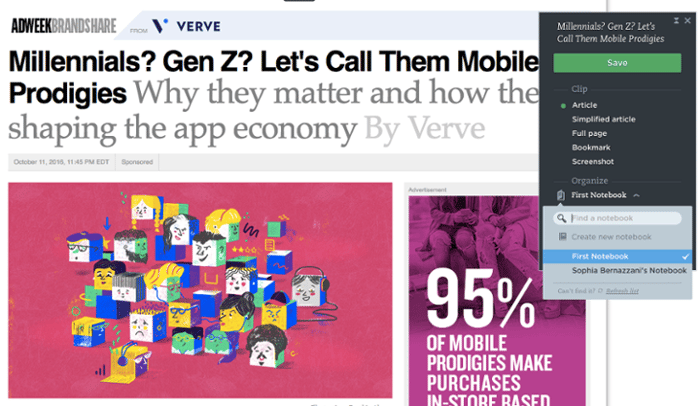
The Evernote mobile app also boasts some interesting features to help marketers keep their social content ideas straight. For example, you can easily snap a photo and save it to your Evernote files for review later.
Source: Evernote
This feature is of particular valuable for social content creators looking to maintain a backlog of photos to publish on Instagram.
4. Google Drive
Google Drive has several helpful features that make it easy for social media marketers to build out an effective content calendar.
Here’s an example of how a team might use Google Calendar to track both their editorial and social media calendars to make sure they’re aligning posts with new blog content. These calendars can be easily shared with multiple teams to avoid scheduling conflicts and ensure that campaigns are aligned.
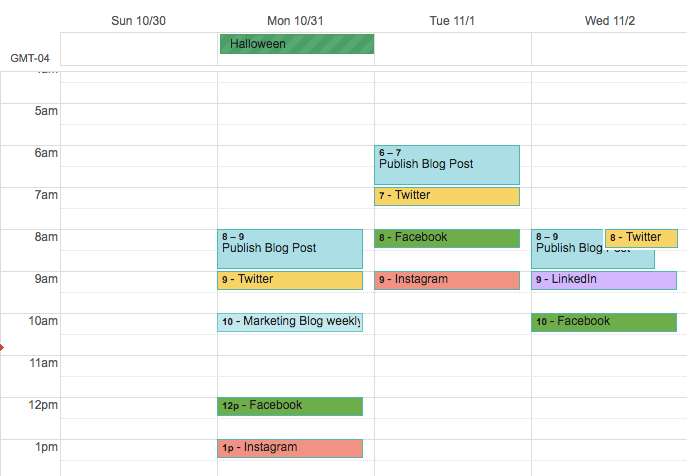
Marketers can also use shared Google Sheets to schedule posts on social media, track the status of different pieces of content, and assign tasks to team members — all on the same platform as their calendar.
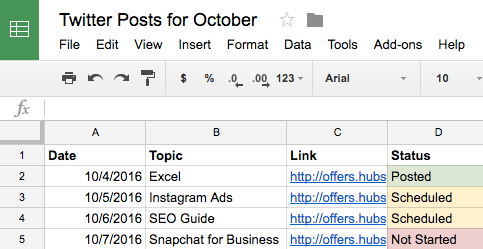
With the help of Google Docs, users can keep comments all in one place and can collaborate on different projects without emailing back-and-forth or having to schedule a meeting. This is a particularly useful feature when editing content for social media, which may need to be drafted and approved quickly.
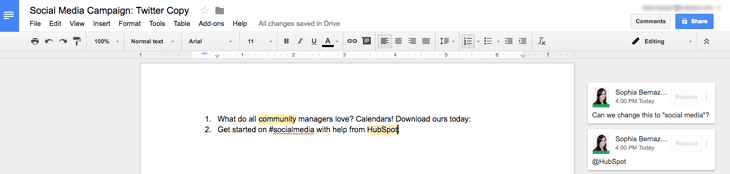
(HubSpot customers: You can link your Google Drive account to your HubSpot portal to easily upload files from Drive into your HubSpot software.)
Now that we’ve reviewed a few helpful tools to kick your social media strategy into high gear, experiment with them. Every social media team is different, and it could be a combination of these tools that helps you execute your strategy efficiently to drive ROI. For getting all of your ideas down and developing a big-picture plan for your social assets, we recommend starting with our template and going from there.
What tools do you use to build your social media content calendar? Share with us in the comments below.



The Ultimate Guide to Selling on Amazon in 2019
You might think most consumers start their online shopping sessions with a visit to Google, but according to a poll conducted by NPR and Marist, Amazon is actually the most common starting point for online shoppers.
With 44% of shoppers starting on Amazon (which is 11% more than Google) and 40% of Americans buying products on the website at least once every month, Amazon has become the central hub for online shopping.
If you’re in the eCommerce industry, selling on Amazon is your best bet for maximizing your reach and, ultimately, your revenue. To help you set up shop on Amazon, we’ve created this ultimate guide that’ll teach you how to list your products, set up your shipping options, promote your products, manage your reviews, and analyze your performance. Read on to learn how to sell on the eCommerce platform in 2019.
The Ultimate Guide to Selling on Amazon in 2019
1. Figure out if the product you want to sell needs approval from Amazon.
On Amazon, there are 20 categories open to all sellers, so if you want to sell products under any of these categories, you don’t need approval from Amazon. However, there are 15 categories that do require approval from Amazon, so if you want to sell products under any of these categories, you need to apply for a Professional Selling Plan subscription.
Amazon limits the number of sellers in each of these categories because they want to maintain the quality of their products. So if you believe your products are up to par and want to sell them under these categories, you need to request approval from Amazon by filling out their application. Amazon will let you know if they’ve approved you or if they need additional information from you in up to three business days.
Here are two lists of Amazon’s product categories that are open to all sellers or require approval.
Product Categories Open to All Sellers
1. Amazon Device Accessories
2. Amazon Kindle
3. Baby Products
4. Beauty
5. Books
6. Camera & Photo
7. Cell Phones
8. Clothing & Accessories
9. Electronics
10. Handmade
11. Health & Personal Care
12. Home & Garden
13. Musical Instruments
14. Office Products
15. Outdoors
16. Software & Computer Games
17. Sports
18. Tools & Home Improvement
19. Toys & Games
20. Video Games & Video Game Consoles
Product Categories That Require Approval From Amazon
1. Automotive & Powersports
2. B2B Business Products
3. Collectible Coins
4. Fashion Jewelry
5. Fine Jewelry
6. Fine Art
7. Grocery & Gourmet Food
8. Industrial & Scientific
9. Luggage & Travel Accessories
10. Personal Computers
11. Professional Services
12. Shoes, Handbags, & Sunglasses
13. Sports Collectibles
14. Video, DVD, & Blu-Ray
15. Watches
2. Pick a selling plan that suits your business model.
Amazon offers two selling plans: the Individual Plan and Professional Plan.
If you choose the Individual Plan, you’ll pay Amazon $0.99 for every item you sell plus referral and variable closing fees. According to Amazon, the Individual Plan is best for sellers who sell less than 40 items per month.
If you choose the Professional Plan, you can sell an unlimited number of products while only paying Amazon a subscription fee of $39.99 plus referral and variable closing fees. According to Amazon, the Professional Plan is best for sellers who sell more than 40 items per month.
3. Register for a seller account and list your products.
To register for a seller account on Amazon, visit Amazon Seller Central and click the “Start selling” button. Amazon Seller Central is also where you’ll manage your selling account.
After you’ve created your account, you can start listing your products on Amazon. If you have the Individual Plan, you can add one product to the Amazon Marketplace catalog at a time. If you have the Professional Plan, you can add batches of products to the catalog.
Additionally, if you’re selling products that are already listed on Amazon, all you have to do is tell them the amount of product you plan to sell, the condition of your product, and its shipping options.
If you’re selling products that aren’t listed on Amazon yet, the process is a little more complicated. You have to tell them what each of your product’s universal product code (UPC) and stock keeping unit (SKU) is and then list each product’s features on Amazon, like its title, description, and price.
If you don’t know what a UPC is, it consists of a 12-digit numeric code and a barcode. The American branch of GS1, an organization that develops and maintains global business communication standards, assigns a permanent UPC to a product for its entire shelf life. So even if multiple retailers sell the product, it’ll still have the same UPC at each store. For example, every box of a certain brand’s blackberries will have the same UPC at every store they’re sold at.
A SKU is similar to a UPC, but it differs from it by being a distinct string of letters and numbers that helps retailers identify every product in their inventory and each product’s specific traits, like its manufacturer, brand, price, style, color, and size. Retailers create their own internal SKU codes to quickly and accurately pinpoint and track every single piece of inventory in their retail stores, e-commerce stores, catalogs, warehouses, and product fulfillment centers.
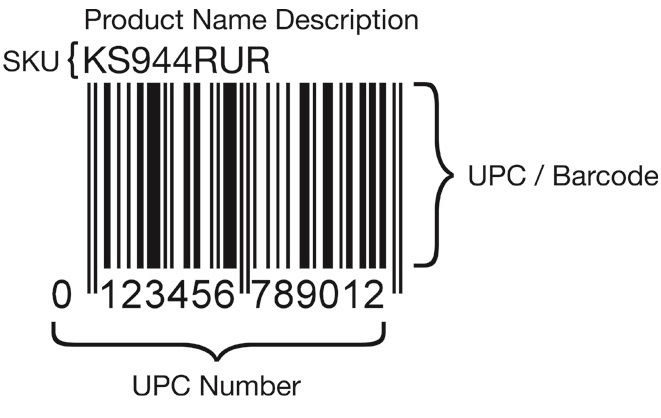
Image Credit: FitSmallBusiness
4. Set up your shipping options.
Even if you sell on Amazon, you’ll always have the option to ship products on your own. But Amazon offers a truly unique and advantageous shipping service for all their sellers that’s incredibly hard to pass up — Fulfillment by Amazon. With Fulfillment by Amazon, all you have to do is send your inventory to an Amazon fulfillment center and they’ll store your products, package them, and ship them to your customers.
Signing up for Fulfillment by Amazon also makes your products eligible for Amazon Prime free two-day shipping, free shipping, and customer service and returns. Shipping costs are already included in your seller plan, so all you have to pay for is storage space and and a fee for each order Amazon fulfills.
5. Sell and promote your products.
After you’ve set up your shipping options, you’re ready to start selling on Amazon. To attract as many potential customers as possible, make sure to craft compelling product listings that have clear and concise titles, benefits-rich descriptions, and vivid pictures.
If you want to increase your products’ visibility on Amazon, consider running sponsored product ads directly on the platform. These ads are pay per click and will be placed alongside people’s search results. Amazon also offers an automatic ad targeting tool, which leverages their search algorithm to suggest a list of potentially lucrative keywords that you can bid on and promote your products through.
-7.png)
Image Credit: Shopify
Once people buy your products on Amazon, they’ll deposit payments into your bank account on a regular basis and send you a notification when they pay you.
6. Encourage reviews.
Reviews are crucial for driving sales on Amazon. The more reviews you have, the more credible and trustworthy customers will perceive your products to be. Fortunately, Amazon lets sellers send follow up emails to customers after they order one of their products and ask for product reviews. They even let you automate the process, but Amazon also requires you to follow a strict set of guidelines, which don’t allow you to include marketing messages, link to other websites, or ask for, demand, or incentivize positive reviews in these emails.
In 2016, Amazon banned incentivized reviews — which were customer reviews given to brands in exchange for a free or discounted product as long as the reviewers revealed they received an incentive for their feedback. These incentives were artificially inflating brands’ average ratings, so Amazon decided they needed to level the playing field. With this in mind, don’t even think about trying to incentivize a positive review. Just send your customers emails that politely ask for a candid product review.
7. Analyze your performance.
On your Amazon Seller Central account, you’ll have access to a sales dashboard, which displays a snapshot of your orders for the day, quantity of units sold, the amount of sales you’ve generated for the day, and other metrics.
-4.png)
Image Credit: Salesbacker
You’ll also have access to business reports that display metrics like sales by item, sales and orders by month, page views, brand performance, inventory in stock, and more.
-3.png?width=350&name=pasted%20image%200%20(3)-3.png)
Image Credit: Salesbacker
Additionally, you’ll have access to a “Compare Sales” graph that can compare any day’s sales to each other, which helps you discover seasonal trends and patterns.
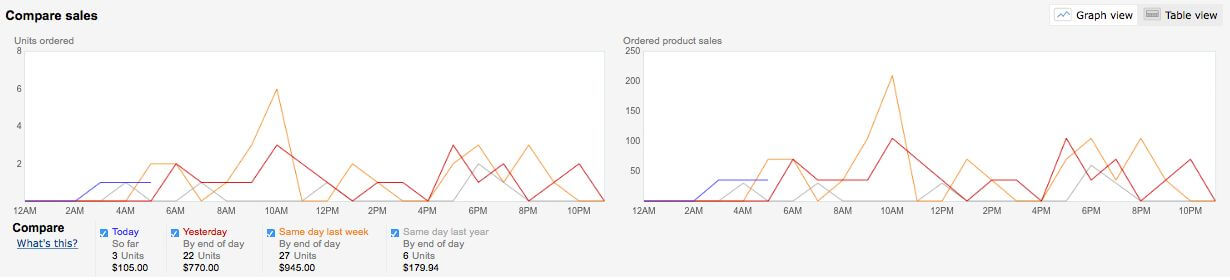
Image Credit: Salesbacker
Finally, you’ll have access to a sales reporting tool that can pull any of your account’s metrics to produce a graphical representations of your sales data. This’ll help you truly grasp how your Amazon account is performing.
-3.png)
Salesbacker
